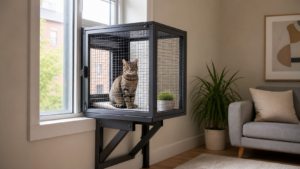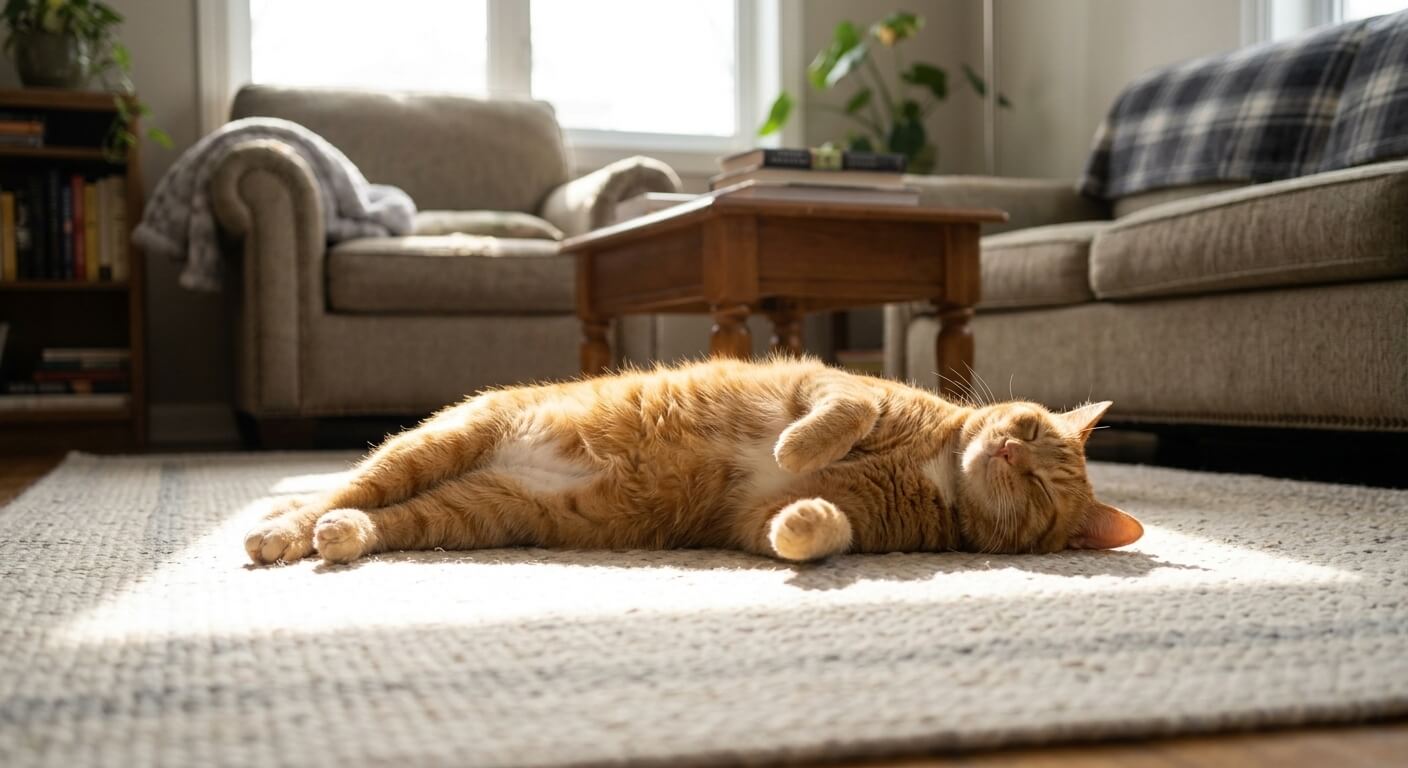
Why does my cat sleep so much? In many cases, frequent naps are part of normal feline behavior. Cats divide their rest across the day and night, and kittens, senior cats, highly active cats, and cats living in quiet indoor homes may spend different amounts of time asleep.
The number of hours matters less than your cat’s normal pattern and behavior while awake. A normally sleepy cat should still wake and respond, eat and drink, use the litter box, move comfortably, groom, and show interest in familiar people or activities.
A sudden increase in sleep deserves attention when it occurs with reduced appetite, weakness, hiding, weight change, vomiting, diarrhea, pain, breathing changes, confusion, reduced mobility, or a loss of interest in normal routines. These signs can indicate lethargy or illness rather than ordinary sleep.
Quick Answer
Many adult cats spend a large part of each 24-hour period sleeping or resting, but published estimates vary and home observation cannot reliably separate true sleep from quiet rest. Cats take multiple naps and may change their schedule according to age, activity, household routine, temperature, and individual temperament. Judge a change against your cat’s established pattern and normal function rather than a fixed hour target.
Normal sleep is usually easy to interrupt. Your cat wakes, recognizes you, changes position, stretches, eats, grooms, uses the litter box, and participates in familiar routines. Lethargy is different: the cat may be unusually difficult to engage, weak, withdrawn, reluctant to move, or uninterested in food and activities.
Contact your veterinarian when increased sleep is sudden, persistent, or accompanied by another change. Seek urgent veterinary care for breathing difficulty, collapse, inability to stand, severe weakness, repeated vomiting, suspected poisoning, significant trauma, or a cat who is unresponsive.
Important Health Note
This guide helps you observe sleep patterns; it cannot diagnose the reason for a behavior change. Pain, fever, anemia, heart or lung disease, infection, endocrine disease, kidney disease, gastrointestinal illness, dental disease, medication effects, stress, and many other conditions can reduce activity or make a cat appear sleepy.
Do not delay veterinary care while trying enrichment, changing beds, or waiting for a new routine to work if your cat is showing illness signs. Cats often hide discomfort, so a meaningful change from the individual cat’s baseline can be more important than a precise sleep-hour estimate.
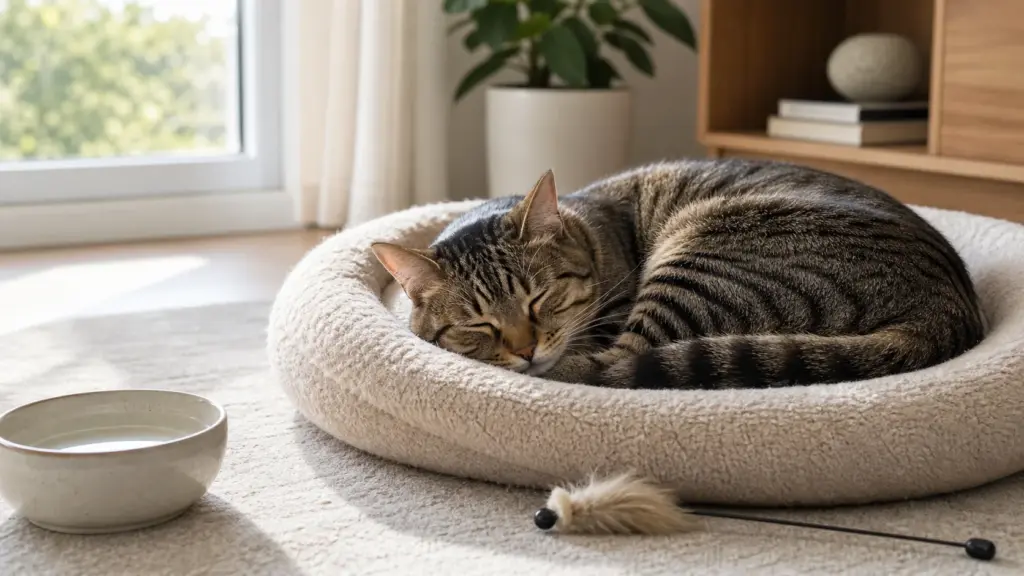
Table of Contents
How Much Sleep Is Normal for a Cat?
There is no single correct number for every cat. Research comparing sleep across animal species and general veterinary guidance support the basic point that cats sleep for a substantial part of the day, but home estimates are imprecise. Owners may count quiet resting, drowsiness, and true sleep as the same thing, while cats often shift rapidly between them.
Use a rough hour range only as context. A healthy cat may sleep longer after active play, during a quiet day, or while recovering from an unusually stimulating event. Another healthy cat may appear awake more often because they follow household activity, watch a busy window, or live with other animals.
The more useful questions are:
- Is this amount of sleep normal for my cat?
- Did the pattern change suddenly or gradually?
- Does my cat wake and respond normally?
- Is appetite stable?
- Are drinking and litter-box habits unchanged?
- Is movement comfortable?
- Does my cat still groom and interact?
- Are there any breathing, digestive, pain, or neurologic signs?
If these areas remain normal and the sleep pattern is stable, frequent napping is more likely to reflect ordinary feline rest. If several areas change together, call your veterinarian.
Cat Sleep, Quiet Rest, and Lethargy Are Not the Same
A cat lying still is not necessarily asleep. Cats spend time quietly observing with their eyes partly closed, resting while remaining responsive to sound and movement. This light resting state can make the total appear higher than it is.
Lethargy is not simply “a lot of sleep.” It describes an abnormal reduction in energy, alertness, interest, or ability to perform normal activities. Because lethargy is a nonspecific sign, it does not identify one disease. It tells you that a veterinary assessment may be needed, especially when it represents a clear change.
| Observation | More Consistent With Normal Sleep | More Concerning for Lethargy or Illness |
|---|---|---|
| Waking | Wakes readily to food, sound, touch, or routine | Difficult to engage, unusually dull, weak, or unresponsive |
| Appetite | Eats normal meals with usual interest | Eats less, refuses food, or cannot approach the bowl normally |
| Movement | Stretches and walks comfortably after waking | Stiff, painful, unstable, reluctant to jump, or unable to stand |
| Interaction | Responds to familiar people, play, windows, or household events | Withdraws, hides continuously, or loses interest in familiar activities |
| Grooming | Maintains a generally normal coat-care routine | Stops grooming, develops mats, or grooms one painful area excessively |
| Litter box | Urination and stool pattern remain normal | Straining, repeated trips, accidents, diarrhea, constipation, or major output changes |
| Breathing | Quiet, comfortable breathing at rest | Labored, open-mouth, noisy, or visibly effortful breathing |
When in doubt, record a short video of the behavior for your veterinarian. A video can show posture, breathing effort, walking, responsiveness, coughing, or other details that may not occur during the appointment.
7 Important Clues to Evaluate Your Cat’s Sleep
1. Compare the Pattern With Your Cat’s Baseline
Begin with change, not a universal hour target. If your cat has always slept through most afternoons and wakes for dinner, that pattern may be normal. If the same cat suddenly remains in bed through meals, ignores a favorite routine, or stops greeting you, the change matters.
Think about the previous few days and weeks. Note whether the change followed travel, visitors, construction noise, a new pet, a household schedule change, medication, vaccination, illness, injury, or reduced access to favorite areas. Context can help a veterinarian, but it should not be used to dismiss medical signs.
2. Check How Your Cat Wakes Up
A normally sleeping cat generally becomes alert when something meaningful happens. Ears may turn toward a sound before the eyes open. The cat may stretch, change position, walk to the kitchen, or investigate a familiar person.
A concerning cat may remain unusually dull after waking, struggle to rise, seem disoriented, or immediately lie down again because movement appears difficult. Do not repeatedly shake, startle, or force a cat to stand. Observe calmly and seek veterinary advice if responsiveness is clearly abnormal.
3. Watch Appetite and Drinking
Sleep and appetite should be considered together. A cat who sleeps frequently but wakes for meals and eats normally presents a different pattern from a cat who sleeps more and refuses food.
Contact your veterinarian promptly if appetite drops substantially, your cat skips expected meals, or eating appears painful. Also report a meaningful increase or decrease in drinking. These changes can accompany many medical problems and should not be attributed to boredom or age without evaluation.
If you need a broader daily observation framework, use our cat health check at home guide, but do not use a checklist as a substitute for veterinary care.
4. Review Litter-Box Habits
Check whether urine clump size, frequency, stool, posture, and litter-box visits have changed. A sleeping cat should still be able to reach and use the box normally.
Repeated attempts to urinate, straining, vocalizing in the box, producing little or no urine, or showing distress can be an emergency, particularly in male cats. Seek urgent veterinary care rather than waiting to see whether more rest helps.
Vomiting, diarrhea, constipation, or accidents outside the box can also occur with illness, pain, stress, or reduced mobility. Record what you see and contact your veterinarian when the change is persistent, severe, or accompanied by reduced appetite or energy.
5. Observe Movement and Pain Signals
Cats may reduce activity when movement hurts. Arthritis, injury, abdominal discomfort, dental pain, and other problems can change where a cat sleeps, how long they remain in one position, and whether they climb or jump.
Look for hesitation before jumping, missed jumps, stiffness after rest, lower sleeping locations, difficulty entering the litter box, reluctance to use stairs, sensitivity to touch, an altered gait, or a hunched posture. Senior cats should not automatically be labeled lazy when mobility changes.
If increased sleep appears alongside aging changes, our guide to how long indoor cats live explains the health and home-care factors that influence lifespan without treating every change as normal aging.
Do not give human pain medication. Many common human medicines are dangerous to cats. Ask your veterinarian about examination and feline-appropriate treatment.
6. Check Breathing and Body Position
Comfortable sleep should not require visible breathing effort. Seek urgent help if your cat breathes with an open mouth, stretches the neck to breathe, cannot settle, has blue or very pale gums, collapses, or shows obvious chest or abdominal effort.
Do not stress a cat with breathing difficulty by repeatedly handling them. Call a veterinary clinic or emergency service and follow transport instructions.
Snoring or an unusual sleeping position is not enough to diagnose a problem, but a new breathing sound or posture deserves attention when paired with reduced energy, coughing, nasal discharge, poor appetite, or exercise intolerance.
7. Look at Interaction, Grooming, and Mental Sharpness
A normally sleepy cat should still have recognizable awake periods. They may seek affection, watch a window, scratch, groom, explore food, or respond to play even if the sessions are brief.
Loss of interest in all familiar activities can be more meaningful than a high sleep estimate. Also watch for a greasy or matted coat, excessive grooming, new hiding, unusual vocalization, staring, getting stuck in corners, altered social behavior, or nighttime confusion.
Older cats may experience pain, sensory decline, cognitive changes, or medical disease. New confusion, reversed sleep-wake cycles, night vocalization, house-soiling, or altered interaction deserves veterinary discussion rather than being accepted as inevitable aging.
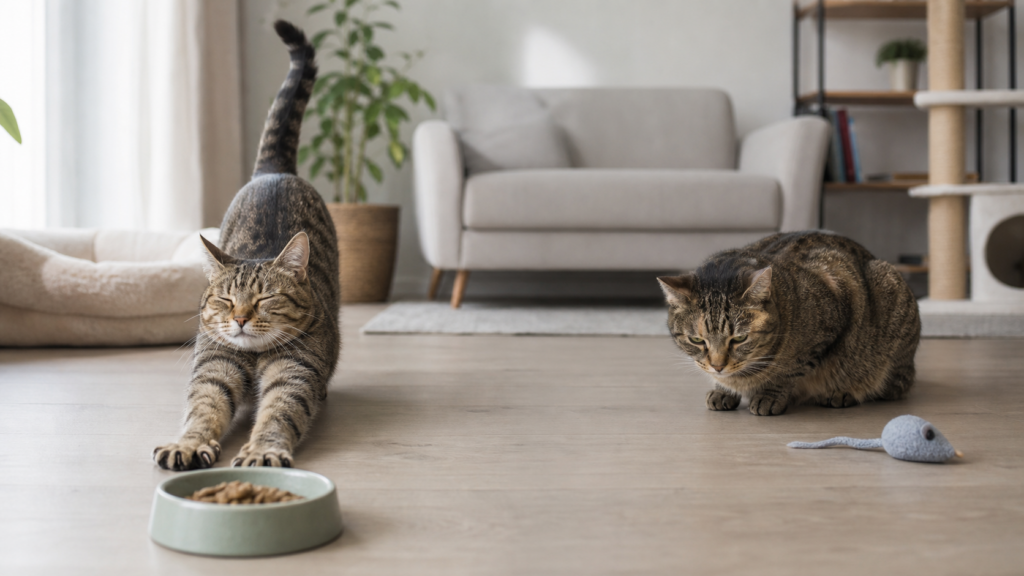
Why Cats Sleep So Much
Feline Activity Comes in Short Bursts
Cats do not necessarily organize sleep like people. They may alternate brief periods of activity with many periods of rest. A cat can play intensely, eat, groom, and then sleep again without anything being wrong.
Domestic cats often show increased activity around dawn and dusk, but individual schedules adapt to food timing, human routines, light exposure, other animals, and the home environment. It is more accurate to describe cats as flexible in their daily activity than to expect every cat to follow an identical clock.
Rest Supports Recovery and Energy Conservation
Sleep serves important neurologic and physical functions across mammals. Cats also conserve energy between active periods. This normal biology helps explain frequent napping, but it should not be used to explain away a sudden loss of energy.
Indoor Homes Can Be Quiet and Predictable
An indoor cat may have fewer unpredictable events competing with sleep. Meals arrive on schedule, temperature is relatively stable, and territory may not change much. A quiet environment can create more opportunities to rest.
That does not automatically mean the cat is bored or unhappy. Judge the whole day. A well-adjusted indoor cat may sleep often and still use scratching surfaces, explore, play, observe the environment, and interact normally when awake.
Temperature and Comfortable Resting Places Matter
Cats often choose warm, secure, or elevated sleeping locations. They may remain in a sunny window, heated room, covered bed, or quiet closet longer when the location feels comfortable.
Seasonal routines can change, but there is no reliable rule that every cat must sleep a fixed number of additional hours in winter. Treat a major behavioral change as an individual observation, particularly if appetite, weight, mobility, or responsiveness changes too.
Sleep Patterns by Life Stage
Kittens
Kittens alternate energetic play with substantial rest while they grow. Their sleep may appear deep, but they should also wake for feeding, elimination, social contact, and age-appropriate activity.
Young kittens can become ill quickly. Contact a veterinarian promptly for poor nursing or appetite, weakness, persistent crying, vomiting, diarrhea, breathing changes, feeling unusually cold, or difficulty waking.
Healthy Adult Cats
Adult cats often develop a predictable household rhythm. The most useful baseline is the cat’s usual pattern across meals, play, grooming, litter-box use, social contact, and sleep.
A stable adult who sleeps much of the day but remains normal during awake periods may not need a schedule intervention. A sudden decline in activity or a combination of sleep and other changes should be evaluated.
Senior Cats
Senior cats may rest more, but aging is not a diagnosis. Pain, arthritis, kidney disease, hyperthyroidism, diabetes, dental disease, hypertension, sensory decline, cognitive dysfunction, and other conditions can alter activity or sleep.
Regular veterinary examinations become especially important as cats age. Tell your veterinarian about subtle changes in sleep location, jumping, nighttime behavior, appetite, thirst, grooming, weight, and social interaction. These observations may help identify problems earlier.
Could Boredom Make an Indoor Cat Sleep More?
A quiet or under-stimulating home may leave a cat with fewer reasons to be active, but boredom should be considered only after health concerns are addressed. Sleeping frequently does not prove boredom, and adding stimulation will not treat illness or pain.
When your cat is healthy and responsive, offer several modest opportunities to choose activity:
- one or two short interactive play sessions
- a safe window view
- scratching surfaces in useful locations
- vertical space with safe access
- food puzzles appropriate for the cat’s ability
- toy rotation instead of permanent clutter
- predictable social interaction
- hiding and resting options away from household traffic
Do not repeatedly wake or force an uninterested cat to play. Offer activity when the cat is naturally awake, begin gently, and stop if the cat shows pain, breathlessness, fear, or frustration.
For a broader setup, see our indoor cat enrichment in small apartments guide.
Should You Wake a Sleeping Cat?
You usually do not need to wake a healthy cat simply to reduce the total amount of sleep. Let the cat rest and offer play, food, or interaction during naturally alert periods.
There are exceptions. A veterinarian may prescribe meal, medication, glucose-monitoring, or recovery schedules that require specific timing. Follow the individual medical plan rather than general internet advice.
Gently check a sleeping cat when something appears abnormal—for example, unusual breathing, a fall, possible toxin exposure, failure to appear for a normal meal, or markedly reduced responsiveness. If the cat is difficult to wake or appears weak, treat that as a health concern.
When to Contact a Veterinarian
Arrange veterinary advice when increased sleep is new, persistent, or associated with:
- reduced or absent appetite
- unexplained weight loss or gain
- increased or decreased drinking
- vomiting or diarrhea
- constipation or litter-box changes
- stiffness, limping, pain, or reduced jumping
- new hiding or withdrawal
- reduced grooming or a changed coat
- excessive vocalization or confusion
- coughing, nasal discharge, or reduced exercise tolerance
- weakness or difficulty standing
- a significant change after starting medication
Seek urgent or emergency care for:
- open-mouth or visibly labored breathing
- collapse or unresponsiveness
- inability to stand
- repeated attempts to urinate with little or no urine
- severe or repeated vomiting with weakness
- suspected poisoning
- major trauma
- seizures
- blue, gray, or very pale gums
If you are unsure how urgent the change is, call your veterinary clinic and describe the cat’s responsiveness, breathing, appetite, mobility, litter-box output, and the timing of the change.
What to Record Before the Veterinary Visit
Useful observations include:
- when the sleep change began
- whether it was sudden or gradual
- meal and water intake
- urine and stool changes
- vomiting, coughing, or sneezing
- walking, jumping, and posture
- medication or supplement changes
- recent travel, stress, injury, or toxin exposure
- approximate weight change
- short videos of breathing, walking, or responsiveness
Avoid delaying an appointment to build a perfect log. The purpose is to communicate what you already observe, not to diagnose the problem at home.
Frequently Asked Questions
Is it normal for an indoor cat to sleep all day?
It can be normal for a cat to sleep or rest through much of the day if the pattern is stable and the cat wakes normally, eats, drinks, uses the litter box, moves comfortably, grooms, and interacts during awake periods. A sudden change or loss of normal function is more concerning than the clock total alone.
How do I know whether my cat is sleepy or lethargic?
A sleepy cat wakes and behaves normally afterward. A lethargic cat shows an abnormal loss of energy or responsiveness and may be weak, withdrawn, reluctant to move, uninterested in food, or unlike their normal self. Contact your veterinarian when you suspect lethargy.
Why does my cat sleep so much more than usual?
Possible explanations range from a quieter routine or recent activity to pain, illness, medication effects, stress, or age-related change. Because many conditions can reduce activity, look for other changes and contact your veterinarian when the increase is sudden, persistent, or accompanied by symptoms.
Do indoor cats sleep more than outdoor cats?
There is no hour rule that applies to every indoor and outdoor cat. Indoor cats may have more predictable opportunities to rest, while outdoor cats encounter more environmental activity. Health, age, individual temperament, safety, and daily routine create substantial variation.
Do bored cats sleep more?
Some healthy cats may rest more when little invites activity, but sleep alone does not prove boredom. Rule out pain or illness when the pattern changes, then offer voluntary play, observation, scratching, climbing, and foraging opportunities.
Do senior cats sleep more?
Some senior cats rest more, but a major change should not be dismissed as normal aging. Pain, medical disease, sensory decline, or cognitive change can affect sleep. Report changes in weight, appetite, mobility, nighttime behavior, litter-box habits, or interaction to your veterinarian.
Should I wake my cat for daytime play?
Usually, offer play when your cat is already awake instead of repeatedly interrupting sleep. Use short sessions and let the cat choose whether to participate. Follow a veterinarian’s instructions when a medical feeding or medication schedule requires waking the cat.
Can a new medication make my cat sleep more?
Some medicines can change alertness or activity, but the expected effect and its importance depend on the drug, dose, condition, and individual cat. Contact the prescribing veterinarian before changing or stopping medication, especially if sedation is marked or accompanied by weakness, poor appetite, vomiting, or breathing changes.
Final Thoughts
Why does my cat sleep so much? Frequent sleep is often normal when the pattern is stable and the cat functions normally while awake. The most useful comparison is not your cat against a universal hour target; it is your cat today against their established baseline.
Check responsiveness, appetite, drinking, litter-box habits, movement, breathing, grooming, and interest in familiar routines. When several things change together—or when the sleep increase is sudden or persistent—contact your veterinarian.
Healthy indoor cats benefit from both secure rest and voluntary opportunities for activity. Provide comfortable sleeping locations, predictable routines, play, scratching, observation, and enrichment without forcing a tired or uncomfortable cat to participate.
References
- Campbell SS, Tobler I. Animal sleep: a review of sleep duration across phylogeny. Neuroscience & Biobehavioral Reviews. 1984;8(3):269–300. https://pubmed.ncbi.nlm.nih.gov/6504414/
- Quimby J, Gowland S, Carney HC, DePorter T, Plummer P, Westropp J. 2021 AAHA/AAFP Feline Life Stage Guidelines. Journal of Feline Medicine and Surgery. 2021. https://doi.org/10.1177/1098612X21993657
- Ray M, Carney HC, Boynton B, et al. 2021 AAFP Feline Senior Care Guidelines. Journal of Feline Medicine and Surgery. 2021. https://doi.org/10.1177/1098612X211021538
- Cornell Feline Health Center. Feline Health Topics. https://www.vet.cornell.edu/departments-centers-and-institutes/cornell-feline-health-center/health-information
- VCA Animal Hospitals. Recognizing Signs of Illness in Cats. https://vcahospitals.com/know-your-pet/recognizing-signs-of-illness-in-cats