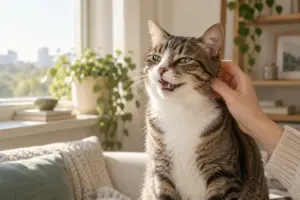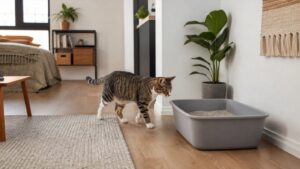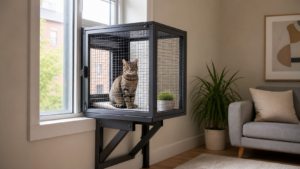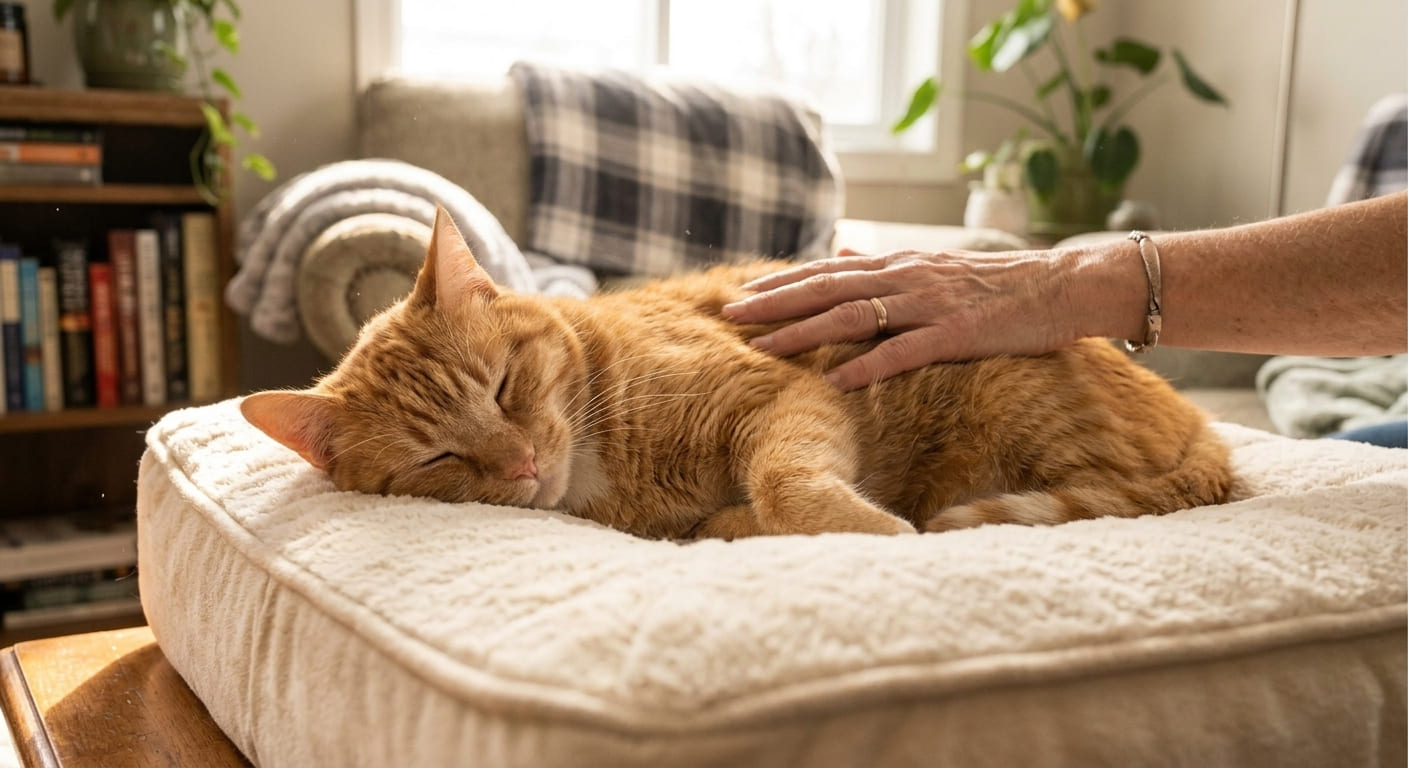
Senior indoor cat care starts with making everyday life easier for an older cat: softer resting spots, lower litter box entry, easier food and water access, gentle play, mobility support, and regular veterinary checkups.
The biggest mistake is treating mobility decline, appetite changes, hydration, litter access, and delayed vet checks as a personality flaw. Most indoor cats are responding to access, timing, scent, boredom, discomfort, hunger, stress, or learned rewards. When the environment changes, the behavior usually changes too. The goal is to make the healthier option obvious, repeatable, and low-friction for both you and your cat.
For apartment cats, the practical question is not “What would be perfect?” It is “What can I repeat on a normal weekday when I am tired, the floor space is limited, and the neighbors can hear every loud crash?” A good plan survives real life: work schedules, tiny kitchens, rental rules, shared walls, and the fact that cats notice patterns faster than we do.
Use this guide as a decision framework. Start with the lowest-risk change, observe your cat’s response for a few days, and then adjust. If the issue involves pain, appetite change, vomiting, urinary signs, sudden aggression, severe fear, or major behavior change, treat it as a veterinary question before treating it as a training problem.
Quick Answer
Senior indoor cat care should focus on prevention, comfort, mobility, hydration, weight tracking, litter box access, dental health, and regular veterinary monitoring. Many cats are considered senior around age 10, but care changes should begin earlier if your cat has weight changes, stiffness, dental disease, kidney disease, diabetes risk, arthritis, or behavior changes.
The safest senior cat plan is not one big makeover. It is a steady routine: make food and water easy to reach, reduce jumping strain, keep the litter box accessible, track small changes, schedule regular vet exams, and adjust the apartment before your cat is forced to struggle.
For a broader view of the factors that shape longevity—not just age—see our guide to how long indoor cats live.
If you want the broader prevention system behind this routine, use our indoor cat health prevention guide alongside this senior care plan.
Safety Note
This guide is for educational purposes only and does not replace veterinary advice.
If your cat has a diagnosed medical condition, sudden symptoms, appetite changes, weight loss, vomiting, urination problems, breathing difficulty, severe pain, poisoning risk, or rapid decline, contact your veterinarian before relying on a product or home-care change.
Indoor Cat Expert articles are created by the Indoor Cat Expert Editorial Team and follow our Editorial Policy.
Senior care works best when it connects home monitoring, vet visits, dental care, mobility, weight, and early disease signs. For the full framework, see our indoor cat health guide.
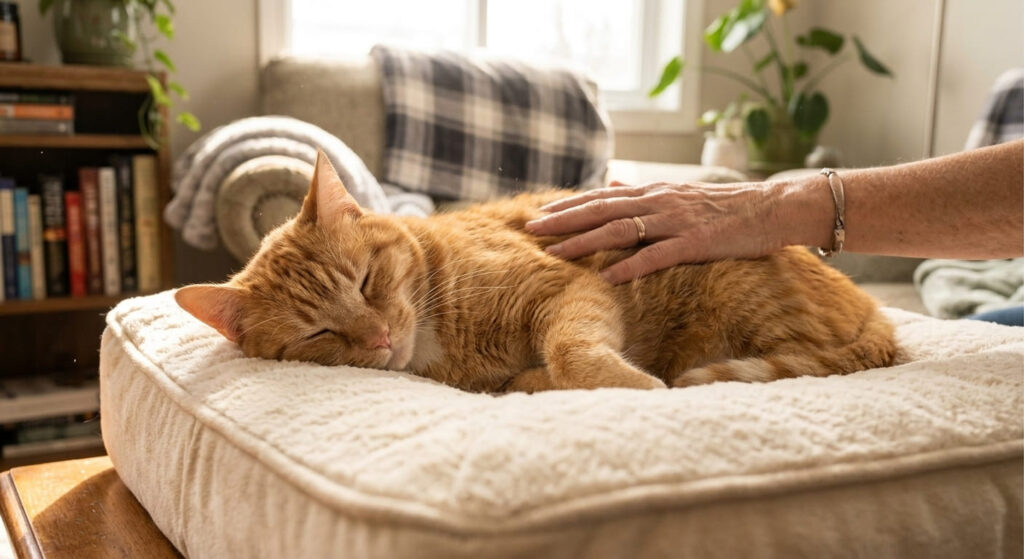
Table of Contents
Why Senior Indoor Cat Care Matters
Indoor cats may be protected from traffic, predators, and many outdoor hazards, but aging still changes the body. A senior cat may lose muscle, develop arthritis, drink more because of kidney changes, struggle with dental pain, gain or lose weight, become less tolerant of stress, or show early cognitive changes.
The challenge is that many of these changes look small at first. A cat may still eat, purr, and use the litter box while quietly avoiding high jumps, sleeping more, grooming less, or choosing softer resting places. Owners often notice the problem only after the cat has already been compensating for weeks or months.
In an apartment, small changes matter even more. A slippery floor, high bed, covered litter box, noisy hallway, or food bowl in a crowded corner can become a daily barrier for an older cat. Senior care is about removing those barriers early.
Senior Indoor Cat Care Checklist
| Area | What to Watch | Helpful Change |
|---|---|---|
| Weight | Weight loss, belly gain, muscle loss | Weigh monthly and discuss trends with your vet |
| Mobility | Hesitating before jumps, stiffness, low activity | Add steps, ramps, low perches, and non-slip paths |
| Litter box | Accidents, missed box, slow entry | Use low-entry boxes and easy access routes |
| Hydration | Drinking more or less than usual | Add water stations and monitor thirst changes |
| Dental health | Bad breath, drooling, chewing on one side | Schedule oral exams and use safe home care |
| Behavior | Confusion, night vocalizing, hiding | Track patterns and ask about cognitive decline |
| Comfort | Restlessness, pressure spots, cold floors | Offer warm, soft, reachable resting areas |
What Changes Are Normal, and What Changes Are Not
Some changes are expected as cats age. A senior cat may sleep more, choose warmer resting places, become less playful, groom a little less intensely, or prefer routines that feel predictable. These changes still deserve attention, but they do not automatically mean something is wrong.
The concern begins when the change is sudden, progressive, painful, or paired with another sign. A cat who sleeps more but still eats well, moves comfortably, uses the litter box, and seeks normal contact may simply need a gentler routine. A cat who sleeps more and is also losing weight, missing jumps, drinking more, hiding, or avoiding touch needs a veterinary check.
Our guide to normal versus concerning cat sleep explains how responsiveness, appetite, movement, grooming, breathing, and litter-box habits help distinguish ordinary rest from a possible health change.
This distinction matters because many senior cat problems are manageable when they are found early. Arthritis can often be supported with environmental changes and veterinary pain management. Dental disease can be treated before eating becomes difficult. Kidney disease, thyroid disease, diabetes, and high blood pressure may be easier to monitor when trends are caught before the cat is in crisis.
Record any new change so you can see whether it persists or progresses. Contact your veterinarian about sudden, worsening, painful, or repeated changes, and about behavior changes accompanied by weight loss, appetite or thirst changes, vomiting, weakness, breathing changes, urinary signs, or reduced mobility.
7 Essential Senior Indoor Cat Care Tips
1. Schedule Senior Vet Checks Before Problems Look Obvious
Senior cats benefit from more proactive veterinary care because many age-related conditions are easier to manage when found early. Your vet may recommend physical exams, weight checks, dental exams, bloodwork, urine testing, blood pressure checks, thyroid screening, kidney monitoring, or diabetes screening depending on age and symptoms.
For healthy adult cats, annual visits may be enough. For many senior cats, exams every six months are more useful because a year is a long time in an older cat’s body. If your cat is losing weight, drinking more, vomiting often, hiding, limping, or missing the litter box, do not wait for the next routine visit.
For a broader prevention routine, pair this page with our annual vet visit indoor cat guide.
2. Track Weight, Appetite, and Muscle Loss
Weight is one of the most useful senior cat signals, but it can be misleading if you only look at the belly. A senior cat can lose muscle over the back legs and spine while still having a soft belly. Another cat may gain fat because activity has dropped, arthritis has reduced movement, or food portions no longer match energy needs.
Weigh your senior cat monthly if possible. If you cannot weigh the cat directly, weigh yourself holding the cat, then subtract your weight. Also run your hands gently over the ribs, spine, hips, and thighs. You are looking for trends, not one perfect number.
Watch for:
- eating normally but losing weight
- eating more but getting thinner
- eating less or walking away from food
- begging more than usual
- muscle loss over the back legs
- difficulty jumping to food or water areas
If your cat’s weight is changing, use our indoor cat diet guide for feeding context, but involve your veterinarian before making major diet changes.
3. Make Mobility Easier Before Your Cat Starts Falling
Arthritis is common in older cats, but many cats do not limp clearly. Instead, they stop jumping to favorite places, hesitate before climbing, sleep lower, groom less, or become irritable when handled. Some cats still reach high surfaces, but they land awkwardly or avoid repeating the jump.
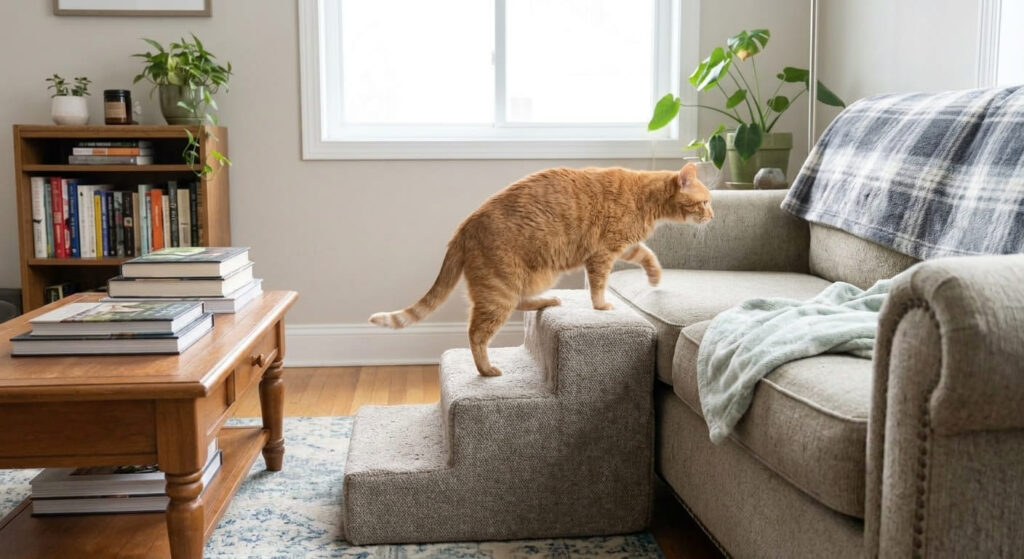
A senior-friendly apartment should reduce forced jumping. Add a step beside the bed, a low stool near the sofa, a ramp to a favorite window, and non-slip rugs along common walking paths. Keep food, water, resting spots, and litter boxes reachable without requiring a big jump.
For older cats who need a softer, easier-to-enter resting spot, our guide to the best orthopedic cat bed options compares heated, non-heated, low-entry, and large-cat beds.
If stiffness, reluctance to jump, or back-leg weakness appears, compare the signs with our cat arthritis guide.
Senior Cat Mobility Setup by Room
A senior cat does not need the whole apartment redesigned at once. Start with the places your cat uses every day: sleeping area, food area, litter box path, window perch, and favorite human seating area.
In the bedroom, make the bed reachable without a high jump. A low bench, stable step, or pet stair can help, but stability matters more than appearance. If the step slides, wobbles, or feels narrow, many older cats will avoid it. Keep the landing area soft and clear so the cat does not jump down onto clutter.
In the living room, protect the route between the sofa, window, scratcher, and resting spots. Slick floors can make senior cats hesitant, especially after waking. A washable rug or runner can help your cat move with more confidence. Avoid placing food, water, or litter access behind furniture that requires tight turns.
Near windows, lower the perch height if needed. Many senior cats still enjoy watching birds, people, cars, and outdoor movement, but they may no longer want to leap onto a tall narrow sill. A lower perch can preserve enrichment without forcing the joints to do all the work.
In the litter area, remove barriers. A beautiful hidden box is not useful if the cat has to step high, squeeze through a small entrance, walk across a slippery floor, or pass another pet. For senior cats, easy access is more important than hiding the box.
4. Improve Litter Box Access
Litter box problems in senior cats are often caused by pain, urgency, constipation, kidney disease, diabetes, cognitive changes, or access problems. Do not assume your cat is being stubborn.
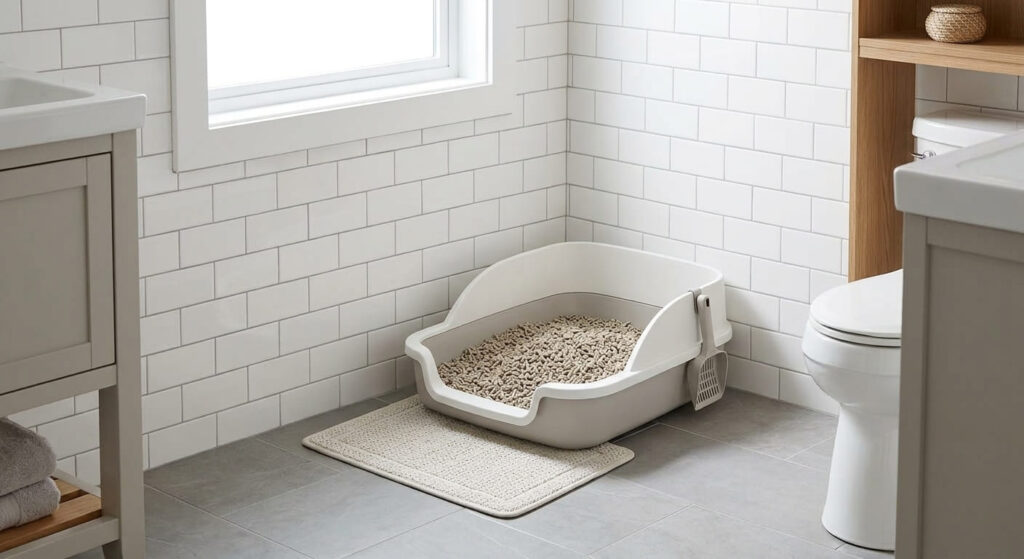
A senior litter box should be easy to enter, easy to exit, and easy to reach. Covered boxes, high sides, narrow doors, slippery floors, and long walks across the apartment can all become barriers. A low-entry box may be better than a stylish covered box if your cat has arthritis or urgency.
For senior cats, consider:
- one low-entry box
- one box near the cat’s main living area
- unscented litter
- soft lighting at night
- non-slip flooring around the box
- frequent scooping
- avoiding hidden locations that are hard to reach
If accidents begin suddenly, treat that as a health signal. Urinary pain, constipation, kidney disease, diabetes, arthritis, and cognitive decline can all change litter box behavior.
If your senior cat still needs higher walls for urine spray but struggles with entry, compare options carefully in our best high-sided litter box guide.
5. Support Hydration and Kidney Health
Many senior cat health plans include hydration because kidney disease and dehydration risk become more important with age. You do not need to force water, but you should make drinking easy and observe changes.
Place water in more than one location. Keep bowls away from the litter box. Try wide shallow bowls if your cat dislikes whisker contact. Some cats drink better from fountains, while others prefer still water. Wet food can also help increase moisture intake, but diet changes should match your cat’s medical needs.
Call your vet if you notice sudden increased thirst, larger urine clumps, weight loss, vomiting, poor appetite, or weakness. These are not just normal senior changes.
How to Monitor Drinking Without Obsessing
Owners often notice senior cat health changes first through the water bowl or litter box. The goal is not to measure every sip perfectly. The goal is to recognize a new pattern.
Start by noticing what is normal for your cat. How often do you refill the bowl? Are urine clumps small, medium, or large? Does your cat drink from one location or several? Does thirst change when wet food increases or the weather becomes warmer?
A sudden increase in drinking deserves attention, especially when paired with weight loss, larger urine clumps, vomiting, poor coat quality, appetite changes, or weakness. Kidney disease, diabetes, thyroid disease, and other conditions can change thirst and urination.
At the same time, do not panic over one warm day or one empty bowl. Look for repeated patterns. If you are unsure, write down what you notice for several days and call your veterinarian. A simple note such as “water bowl empty every morning this week” is more useful than guessing.
For apartments, place water where your cat already travels. One bowl near the feeding area and one bowl near the main resting area may work better than a single bowl in a busy kitchen. Wash bowls often, because senior cats may become more sensitive to stale water, odors, or bowl residue.
6. Take Dental Health Seriously
Dental disease can affect appetite, comfort, grooming, and behavior. A senior cat with mouth pain may still eat, but chew on one side, drop food, avoid hard kibble, drool, resist face touching, or develop bad breath.
Home care can help prevent plaque buildup, but it cannot remove disease below the gumline or fix broken teeth. Senior cats need regular oral exams, and some may need professional dental cleaning or treatment.
For a detailed home routine, use our indoor cat dental health guide.
7. Watch for Cognitive and Behavior Changes
Some senior cats develop cognitive changes that affect sleep, orientation, litter box habits, vocalizing, and interaction. A cat may cry at night, stare at walls, seem lost, forget routines, sleep at odd times, or become more clingy or withdrawn.
Do not assume every behavior change is dementia. Pain, high blood pressure, thyroid disease, kidney disease, diabetes, sensory loss, and stress can also change behavior. The useful first step is tracking: when it happens, how often, what changed in the home, and whether appetite, thirst, weight, litter box habits, or mobility changed too.
If confusion, night vocalizing, or disorientation is increasing, compare signs with our senior cat dementia signs guide.
Senior Cat Apartment Setup
A senior cat apartment should be boring in the best way: predictable, reachable, soft, clean, and easy to navigate.
Place the most important resources where your cat already spends time. A senior cat should not need to cross the whole home to drink water, climb onto a high surface to rest, or squeeze into a hidden litter box. Use stable furniture, soft bedding, and clear pathways.
Good senior setup changes include:
- a low bed or step near the sofa
- a warm resting spot away from drafts
- water in more than one room
- low-entry litter box access
- non-slip rugs on slick floors
- night lights near litter routes
- quiet feeding areas
- easy grooming tools
- fewer sudden furniture changes
The goal is not to make the apartment look like a clinic. The goal is to remove friction before your cat starts avoiding normal activities.
Common Senior Cat Care Mistakes
Mistake 1: Calling Every Change “Old Age”
Age increases risk, but it does not explain everything. Weight loss, drinking more, limping, vomiting, hiding, bad breath, litter box accidents, and appetite changes all deserve attention.
Mistake 2: Waiting Until the Cat Cries in Pain
Cats often hide pain. Arthritis, dental disease, and urinary problems may show as avoidance, irritability, reduced jumping, or routine changes long before obvious crying.
Mistake 3: Making the Home Too Hard to Use
A high bed, covered box, slippery hallway, or distant water bowl may be fine for a young cat and stressful for a senior cat. Change access before your cat is forced to fail.
Mistake 4: Changing Food Too Quickly
Senior cats may need diet adjustments, but sudden changes can cause digestive upset or food refusal. If your cat has kidney disease, diabetes, weight loss, obesity, or dental pain, ask your vet before changing the diet.
Mistake 5: Ignoring the Quiet Cat
The quiet senior cat may be the one struggling most. Less jumping, more sleeping, and fewer demands can look peaceful, but they can also signal pain, weakness, or reduced confidence.
Monthly Senior Cat Home Check
Once a month, do a simple home check:
- weigh your cat
- feel ribs, spine, hips, and thighs
- watch your cat jump up and down
- check whether grooming looks normal
- notice breath, drooling, or chewing changes
- inspect litter box clump size and frequency
- watch walking speed and posture
- note appetite and thirst changes
- check whether your cat still uses favorite resting places
- write down anything new
A home check works best when it connects to professional care. For a simple monthly routine, use our cat health check at home guide to monitor breathing rate, gum color, hydration clues, weight, appetite, mobility, and litter box changes.
Simple Senior Cat Care Routine by Week
A senior care routine works best when it is small enough to repeat. You do not need to inspect everything every day. Divide the routine into simple weekly habits.
Week one can focus on weight and appetite. Weigh your cat if possible, notice whether meals are finished normally, and check whether your cat is chewing comfortably. If your cat leaves food, eats slower, drops pieces, or avoids one texture, write it down.
Week two can focus on movement. Watch your cat get up from rest, walk across the room, jump onto a favorite surface, and use the litter box. Look for hesitation, stiffness, awkward landings, or avoidance. These signs are easy to miss if you only look for obvious limping.
Week three can focus on litter and hydration. Notice urine clump size, stool consistency, box entry, box exit, and water use. Senior cats may show early health changes through the litter box before other signs are obvious.
Week four can focus on comfort and behavior. Check bedding, warm spots, hiding places, grooming quality, night vocalizing, confusion, and social behavior. A cat who becomes clingier, more withdrawn, more irritable, or more restless may be communicating discomfort.
At the end of the month, look for trends. The goal is not to create a perfect spreadsheet. The goal is to avoid missing slow changes because each individual day looked normal.
Frequently Asked Questions
1. At what age is a cat considered senior?
Many cats are considered senior around age 10, though some cats need senior-style support earlier. The right time to start senior indoor cat care is when your cat’s needs begin changing: mobility, weight, appetite, litter box habits, dental health, or behavior.
2. How often should a senior indoor cat see the vet?
Many senior cats benefit from veterinary exams every six months, especially if they have kidney disease risk, arthritis signs, weight changes, dental disease, diabetes risk, thyroid concerns, or behavior changes. Your veterinarian can recommend the right schedule.
3. Is weight loss normal in senior cats?
No. Some muscle loss can occur with aging, but noticeable weight loss should be checked. Senior cats can lose weight from dental disease, kidney disease, thyroid disease, diabetes, cancer, digestive disease, or chronic pain.
4. How do I know if my senior cat has arthritis?
Common signs include hesitating before jumps, sleeping lower, grooming less, stiffness after rest, irritability when handled, avoiding stairs, or missing the litter box. Many cats do not limp clearly.
5. Should I change my senior cat’s food?
Do not change food only because your cat is older. Diet should match body condition, dental health, kidney values, diabetes risk, appetite, and your vet’s recommendations.
6. Why is my senior cat meowing at night?
Night vocalizing can come from cognitive changes, pain, hunger, thyroid disease, sensory loss, stress, or routine disruption. Track the pattern and ask your vet if it is new or increasing.
7. Can I care for a senior cat in a small apartment?
Yes. A small apartment can work very well for a senior cat if resources are easy to reach, floors are safe, the litter box is accessible, and the routine is predictable.
Final Thoughts
Senior indoor cat care is not about treating age as a crisis. It is about noticing small changes early and making the home easier to use. A senior cat who can reach food, water, litter, warmth, rest, and attention without pain or stress has a much better daily life.
Start with the basics: regular vet checks, monthly tracking, easier mobility, accessible litter boxes, hydration support, dental care, and a calmer routine. The earlier you make those changes, the less your cat has to struggle in silence.
References
- AAHA, 2023 AAHA Senior Care Guidelines for Dogs and Cats
- Cornell Feline Health Center, “The Special Needs of the Senior Cat”
- Cornell Feline Health Center, “Loving Care for Older Cats”
- Epstein, M., et al. (2005). AAFP senior care guidelines. Journal of Feline Medicine and Surgery, 7(1), 3–32. https://journals.sagepub.com/doi/10.1016/j.jfms.2004.11.002
- Hardie, E. M., et al. (2002). Radiographic evidence of degenerative joint disease in geriatric cats: 100 cases (1994–1997). Journal of the American Veterinary Medical Association, 220(4), 628–632. https://avmajournals.avma.org/view/journals/javma/220/4/javma.2002.220.628.xml