Chronic kidney disease cats signs can be easy to miss because many cats look “mostly normal” while kidney function is gradually changing. Increased thirst, larger urine clumps, weight loss, appetite changes, vomiting, and poor coat quality may look like aging at first, but together they deserve veterinary attention.
This article is not meant to diagnose kidney disease at home. A cat cannot be confirmed to have chronic kidney disease from symptoms alone. Diagnosis usually requires a veterinary exam, bloodwork, urinalysis, urine specific gravity, blood pressure assessment, and sometimes repeat testing.
Keep a simple record of changes in drinking, litter-box output, appetite and weight. Bring that record to your veterinarian rather than trying to diagnose kidney disease from one sign.
Quick Answer: What Are the Earliest Chronic Kidney Disease Cats Signs?
The most common chronic kidney disease cats signs include increased thirst, larger or more frequent urine clumps, reduced appetite, gradual weight loss, nausea, poor coat quality, and vomiting. These signs do not prove kidney disease by themselves, but they are strong reasons to schedule a veterinary exam, especially in cats over seven years old.
Early screening often includes bloodwork, SDMA, creatinine, BUN, phosphorus, urinalysis, urine specific gravity, and blood pressure. According to ISFM and IRIS guidance, staging and treatment decisions should be based on veterinary testing, not symptoms alone.
Kidney warning signs are easier to notice when you already track thirst, litter box output, appetite, weight, and coat changes. For the full monitoring routine, use our indoor cat health guide.
Safety Note
This guide is for educational purposes only and does not replace veterinary advice.
If your cat has a diagnosed medical condition, sudden symptoms, appetite changes, weight loss, vomiting, urination problems, breathing difficulty, severe pain, poisoning risk, or rapid decline, contact your veterinarian before relying on a product or home-care change.
Indoor Cat Expert articles are created by the Indoor Cat Expert Editorial Team and follow our Editorial Policy.
Table of Contents
Why Early Kidney Changes Are Often Missed
Early CKD can be present without obvious symptoms. The often-quoted percentages of kidney function lost before test results change are broad estimates, not a rule that predicts when an individual cat will look ill.
The kidneys have substantial functional reserve, so outward appearance alone cannot show how much function remains.
Screening and comparison with a cat’s previous results can therefore be useful even when behavior appears normal.
What this means for home monitoring:
- A cat that looks well can still have kidney disease.
- The symptom-free period varies between cats.
- A result within a laboratory reference range does not, by itself, exclude early disease.
- Treatment can help at different stages; visible illness is not a reason to assume it is too late for care.
Kidney monitoring is one part of protecting how long your indoor cat will live, alongside nutrition, dental care and assessment of other illnesses. Early detection helps guide care, but does not guarantee a particular lifespan.
7 Chronic Kidney Disease Cats Signs to Watch For
Sign 1: The Water Bowl Obsession (Polydipsia)
Increased thirst can occur with CKD, but also with other conditions. A sustained change from your cat’s usual drinking pattern deserves veterinary attention.
Loss of urine-concentrating ability can increase water losses and thirst. Urine concentration is assessed with testing; it cannot be classified reliably from bowl visits or urine color.
What to watch for:
- Visiting the water bowl or fountain noticeably more frequently than previous baseline
- Drinking from unusual sources — sink drips, bathtub residue, glasses left on counters
- Longer duration drinking sessions than previously observed
- Vocalizing near empty water bowls
How to record drinking: Note the amount of water offered, refills and what remains, while allowing for spills, evaporation, wet food and other pets. Do not restrict water to test your cat. Report a persistent increase rather than using one home-measured cutoff to diagnose CKD.
Sign 2: The Full Litter Box (Polyuria)
Polyuria means increased urine volume. Larger clumps can be useful observations, but do not identify the cause.
Urine color and clump size are affected by factors besides kidney function, including water intake and litter type. Veterinary urinalysis is needed to assess concentration.
Include litter-box changes in a senior cat wellness routine at home. A home log complements, rather than replaces, clinical testing. Repeated straining with little or no urine is an emergency, not a typical sign to monitor at home.
What to watch for:
- Clump size that is noticeably larger than your established baseline
- More clumps per day than your established baseline
- Litter box that fills faster than usual
- A persistent change in urine color or output; color alone does not identify kidney disease
Sign 3: The Picky Eater Shift (Reduced Appetite)
CKD may cause nausea and appetite loss. A cat approaching food and walking away could also have dental pain or another illness; this behavior is not specific to kidney disease.
Repeated food changes should not replace assessment of a new or persistent appetite change.
Appetite changes to report, without assuming CKD is the cause:
- The change is progressive — food that worked three weeks ago is increasingly rejected
- Approaching food but repeatedly failing to eat
- Weight loss occurs despite apparently normal or only mildly reduced intake
- The cat may eat small amounts frequently rather than completing normal meal portions
Sign 4: The Weight Loss That Hides in Plain Sight
Weight and muscle loss can develop gradually and may be hidden by a thick coat.
Reduced food intake and illness-related metabolic changes may contribute. Other diseases can also cause weight loss.
Why this sign is missed:
- Owners who see their cat daily do not perceive gradual changes the way a veterinarian who examines the cat every six months does
- A fluffy long-coated cat can lose significant muscle mass that is completely concealed beneath the coat
- Weight loss is frequently normalized as “getting older” rather than recognized as a clinical sign
Home monitoring: Use a suitable pet scale and record weight consistently. Report unexplained weight or muscle loss promptly; do not wait for a 10% loss or several months before asking for advice.
For a broader monthly monitoring routine, read our guide on how to do a cat health check at home.
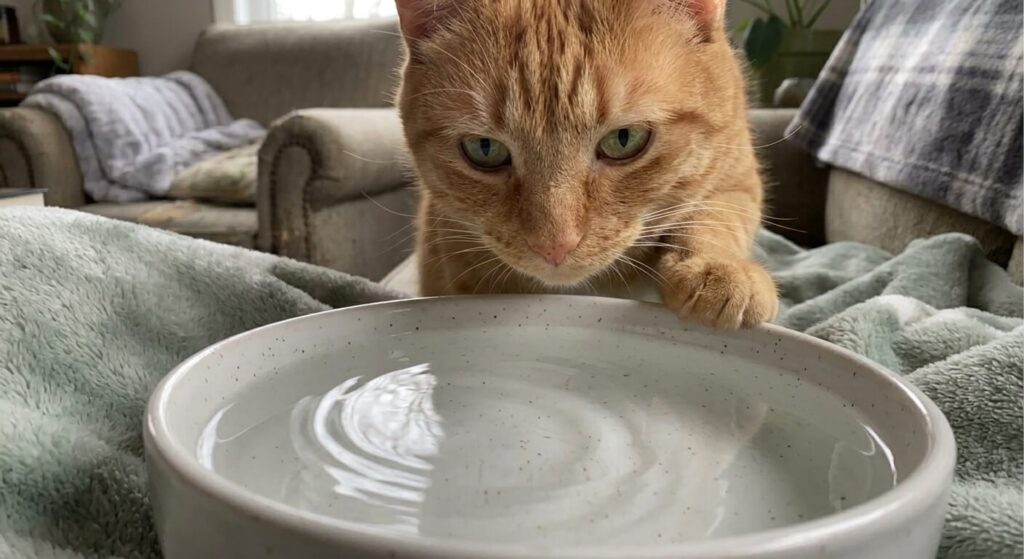
Sign 5: The Staring at Water Posture (Nausea and Malaise)
Standing near water without drinking is not a validated way to identify CKD. If this is a new behavior, note it alongside appetite, drinking and activity changes.
Do not infer nausea or a specific kidney stage from posture alone. A veterinarian can assess possible pain, nausea, dehydration and other causes.
Additional malaise-associated postures:
- Sitting in a hunched, slightly tucked position with elbows drawn inward
- A new preference for unusual resting places; this alone does not identify anemia or kidney disease
- Decreased interest in the environment — less window-watching, less response to sounds and movement that previously generated interest
Sign 6: The Coat Quality Collapse
An unkempt coat can accompany illness, but its appearance does not reliably date the onset of CKD.
Changes in grooming and general health can affect coat condition. Dental disease, arthritis and skin problems also need consideration.
Coat changes to monitor:
- Loss of the healthy sheen that reflects light across the coat surface
- Dry, brittle, or harsh texture on palpation that was previously soft
- Increased dandruff or a change in skin condition, without assuming a nutritional deficiency
- New matting or less effective grooming
Sign 7: The Episodic Vomiting Pattern
Repeated vomiting deserves veterinary assessment, whether or not hair is present.
The contents, timing or frequency of vomit cannot reliably distinguish CKD from other diseases. There is no diagnostic CKD pattern of two to four episodes per week.
Information to record for the veterinarian:
- What came up, and whether blood or foreign material was present
- How often vomiting occurs and whether it is increasing
- Its timing in relation to meals or medication
- Other changes, including appetite, weight, thirst and activity
- Any treatments or supplements already given; do not delay assessment while repeatedly trying hairball remedies
SDMA, Creatinine, and Urinalysis: How Vets Screen for CKD
SDMA and creatinine are blood markers used to help assess kidney filtration. Neither is a stand-alone diagnosis.
Understanding the difference:
Creatinine is influenced by muscle mass, hydration and laboratory methods. Trends interpreted with urine testing are more useful than treating one value as a precise percentage of kidney function remaining.
SDMA is less affected by muscle mass than creatinine. It may identify reduced filtration earlier in some cats, but does not promise a fixed number of years of warning. IRIS explains the limitations of both markers.
How the tests complement each other:
| Test | Useful context |
|---|---|
| Creatinine | Interpret with muscle mass, hydration and previous results |
| SDMA | An additional filtration marker; not a guaranteed early-warning interval |
| Urinalysis | Adds urine concentration and protein information |
| Combined assessment | Veterinary examination and repeat testing may be needed |
In a cat losing muscle, creatinine can underestimate the degree of kidney dysfunction. SDMA can add information, but results still require clinical interpretation and, when indicated, repeat testing.
IRIS staging applies after CKD has been diagnosed, in a clinically stable, adequately hydrated cat. The feline ranges below are reproduced as factual reference values from the 2026 iCatCare consensus guidelines, Table 1. Blood pressure and urine protein are assessed separately. Do not use this table to diagnose a cat or choose treatment at home.
| IRIS stage | Creatinine (mg/dL) | SDMA (µg/dL) |
|---|---|---|
| 1 | <1.6 | <18 |
| 2 | 1.6–2.8 | 18–25 |
| 3 | 2.9–5.0 | 26–38 |
| 4 | >5.0 | >38 |
Ask your veterinarian when to begin kidney screening and how often to repeat it, based on age, previous results and other conditions. There is no single testing schedule or cost-saving guarantee for every cat.
Kidney care can become expensive over time, especially if repeat bloodwork, urine testing, blood pressure checks, prescription food, medication, or emergency visits are needed. For the cost-planning side, read our guide on whether pet insurance is worth it for indoor cats.
For senior cats, kidney screening fits best into a consistent wellness routine. See our guide to the annual vet visit for an indoor cat for what to review before each appointment.
Diet and Phosphorus: What to Discuss With Your Vet
Once chronic kidney disease is confirmed, diet becomes one of the most important management conversations to have with your veterinarian. For many CKD cats, veterinary renal diets are designed to manage phosphorus, protein balance, calories, sodium, potassium, and palatability. But the right diet depends on the cat’s stage, blood phosphorus level, appetite, hydration, body condition, and other diseases.
Do not switch a cat to a renal diet just because you notice possible chronic kidney disease cats signs. A cat who is losing weight or eating poorly may need calories and appetite support before diet restriction. Your veterinarian can use bloodwork, urinalysis, blood pressure, and IRIS staging to decide whether a renal diet, phosphate binder, fluids, nausea medication, or appetite support is appropriate.
Why phosphorus matters:
Phosphorus control is an important part of CKD management, but the diet and any additional treatment should be selected from the cat’s test results and nutritional assessment.
Practical dietary guidance:
- Veterinary renal diets: Existing options discussed here include Hills k/d, Royal Canin Renal and Purina NF. Ask which formulation is appropriate; evidence for renal dietary management is not proof that every product suits every stage.
- Treats and supplements: Ask the veterinarian to review the whole diet and its phosphorus content. Ingredient names alone do not establish whether a complete food is suitable.
- Protein and calories: Avoid making a low-protein diet at home. Maintaining adequate intake and muscle condition matters, especially when appetite is poor.
- Hydration: Moist food can help water intake, but the chosen food must also meet the cat’s nutritional needs and be eaten reliably. Keep fresh water available.
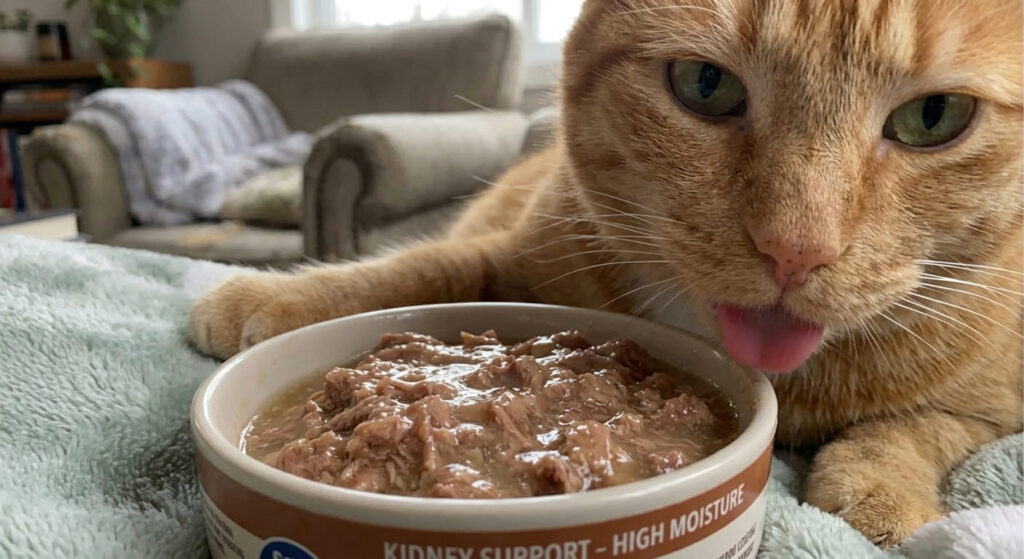
Phosphate binders may be needed when dietary measures do not achieve the veterinarian’s phosphorus target. Product selection, dose and monitoring require veterinary guidance.
FAQ
1. Can you reverse kidney disease in cats?
CKD generally cannot be cured. Treatment aims to support comfort and quality of life and may slow progression.
Some cats remain stable for a long time; others deteriorate faster. Monitoring allows the care plan to change with the individual cat.
Kidney changes are easier to notice when you already track thirst, appetite, weight, litter box output, and vet visit history. For a broader monitoring system, see our indoor cat health prevention guide.
What is the best food for a cat with early kidney disease?
There is no one best food for every cat with early CKD. Hills Prescription Diet k/d, Royal Canin Veterinary Renal and Purina Pro Plan Veterinary NF are examples already discussed in this guide, not a prescription for every stage. Let the veterinarian select the formulation and check calorie intake, body condition and blood results.
Both wet and dry therapeutic foods can be useful. Moist food adds water, but a cat must eat enough; do not allow prolonged food refusal while insisting on one formulation. Cornell discusses diet acceptance and hydration.
How do vets confirm chronic kidney disease in cats?
Veterinarians usually confirm chronic kidney disease by looking at a pattern of findings, not one symptom alone. Testing may include bloodwork, SDMA, creatinine, BUN, phosphorus, urinalysis, urine specific gravity, urine protein testing, blood pressure, and repeat testing over time. Your vet may also check for dehydration, urinary tract infection, hyperthyroidism, high blood pressure, and other conditions that can affect kidney values.
Should I change my cat’s food if I suspect kidney disease?
No, not without veterinary guidance. A renal diet can be very helpful for cats with confirmed CKD, but appetite, weight, hydration, phosphorus levels, and disease stage matter. If your cat is eating poorly or losing weight, the first priority may be diagnosis, nausea control, hydration support, and maintaining calories. Call your veterinarian before changing food, adding supplements, or using phosphorus binders.
How long can a cat live with chronic kidney disease?
Survival varies with disease severity, progression, other illnesses and response to care. A published average is not an individual prediction.
Ask your veterinarian about the trend in your cat’s results, current comfort, nutritional status and signs that should trigger an earlier recheck.
Final Thoughts
Chronic kidney disease cats signs are worth taking seriously, but they should not be used as a home diagnosis. The useful pattern is not one isolated clue. It is a combination of changes: more drinking, larger urine clumps, weight loss, appetite shifts, vomiting, coat decline, and reduced energy.
Keep previous laboratory reports and a brief home log together. Bring new changes to the clinic even if the last blood test was normal.
References
- Sparkes, A. H., Caney, S., Chalhoub, S., Elliott, J., Finch, N., Gajanayake, I., Langston, C., Lefebvre, H. P., White, J., & Quimby, J. (2016). ISFM Consensus Guidelines on the Diagnosis and Management of Feline Chronic Kidney Disease. Journal of Feline Medicine and Surgery, 18(3), 219–239.
- International Renal Interest Society. IRIS Staging of CKD.
- Hall, J. A., Yerramilli, M., Obare, E., Yerramilli, M., & Jewell, D. E. (2014). Comparison of serum concentrations of symmetric dimethylarginine and creatinine as kidney function biomarkers in cats with chronic kidney disease. Journal of Veterinary Internal Medicine, 28(6), 1676–1683.
- American Animal Hospital Association. (2023). 2023 AAHA Senior Care Guidelines for Dogs and Cats.