Cat hairball prevention starts with one simple idea: reduce how much loose fur your cat swallows, and pay attention when “hairballs” start looking like repeated vomiting, coughing, or unproductive retching.
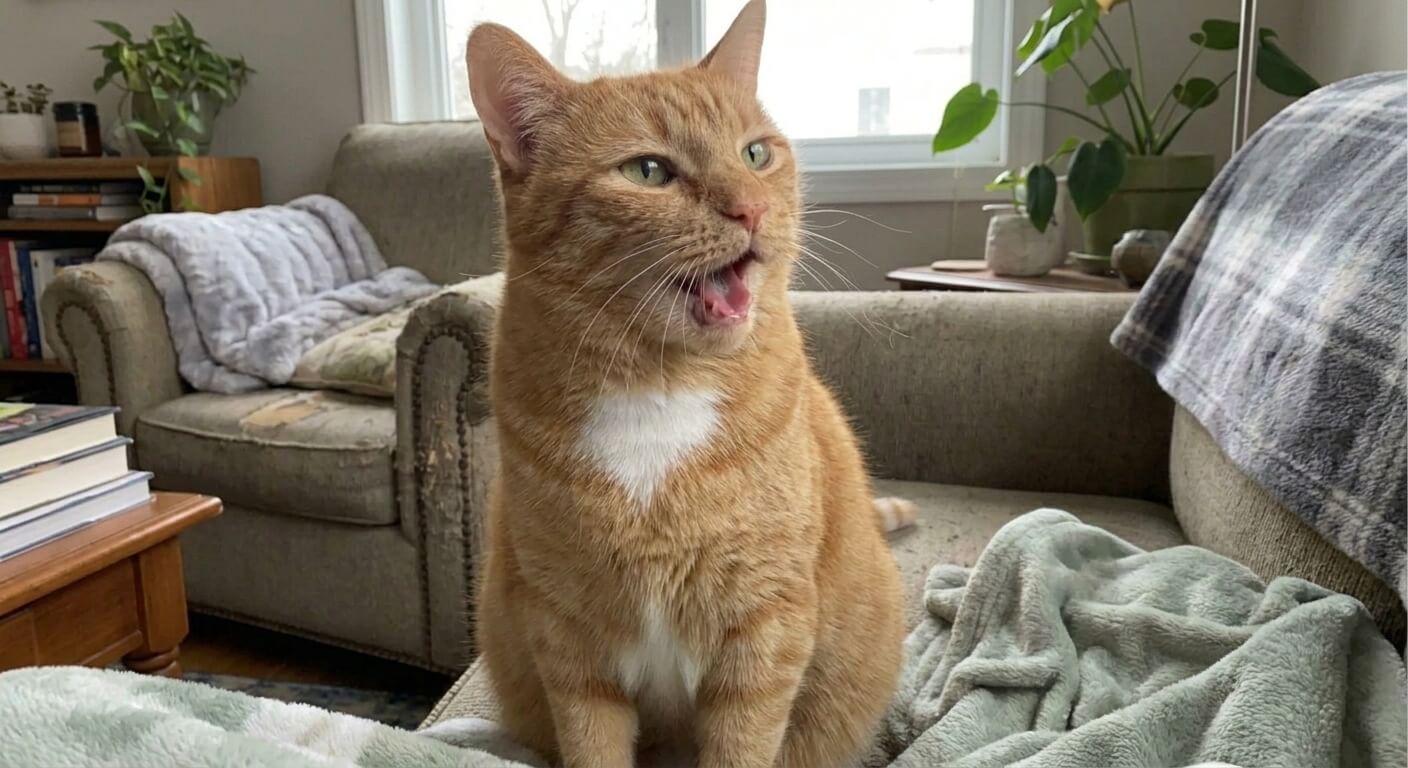
Oliver used to make the classic 2 AM hacking sound every couple of weeks. Sometimes he produced a compact tube of fur. Sometimes nothing came up at all, which was the part that worried me more. Occasional hairballs can happen, especially in long-haired or heavy-shedding cats, but frequent gagging, vomiting, appetite loss, constipation, or repeated retching without producing a hairball should not be treated as normal.
This guide explains five practical ways to reduce hairballs in indoor cats: daily brushing, better hydration, fiber support, cautious use of hairball gels, and safe cat grass. It also explains when a “hairball problem” needs a veterinarian instead of another home remedy.
Quick Answer: How Can I Achieve Effective Cat Hairball Prevention?
The best cat hairball prevention plan combines daily brushing, hydration, appropriate dietary fiber, safe feline hairball gels when needed, and monitoring for warning signs. Brushing removes loose fur before your cat swallows it. Wet food, water fountains, and added moisture can help support normal digestion. Fiber and lubricating gels may help some cats, but they should be used carefully and not as a substitute for veterinary care.
Call your veterinarian if your cat has repeated unproductive retching, frequent vomiting, appetite loss, lethargy, constipation, weight loss, abdominal pain, or hairballs more than once a week. Those signs may point to vomiting, asthma-like coughing, gastrointestinal disease, or obstruction rather than a simple hairball issue.
Important Hairball Safety Note
Occasional hairballs can happen, especially during shedding season or in long-haired cats. But repeated vomiting should not automatically be treated as normal hairballs. A cat who vomits often, retches without producing anything, loses weight, stops eating, becomes lethargic, has diarrhea or constipation, hides, or seems painful should be checked by a veterinarian.
Hairball prevention can support normal grooming and digestion, but it cannot diagnose vomiting, intestinal blockage, inflammatory bowel disease, food intolerance, parasites, kidney disease, thyroid disease, diabetes, or other medical problems. When in doubt, treat repeated vomiting as a health issue first.
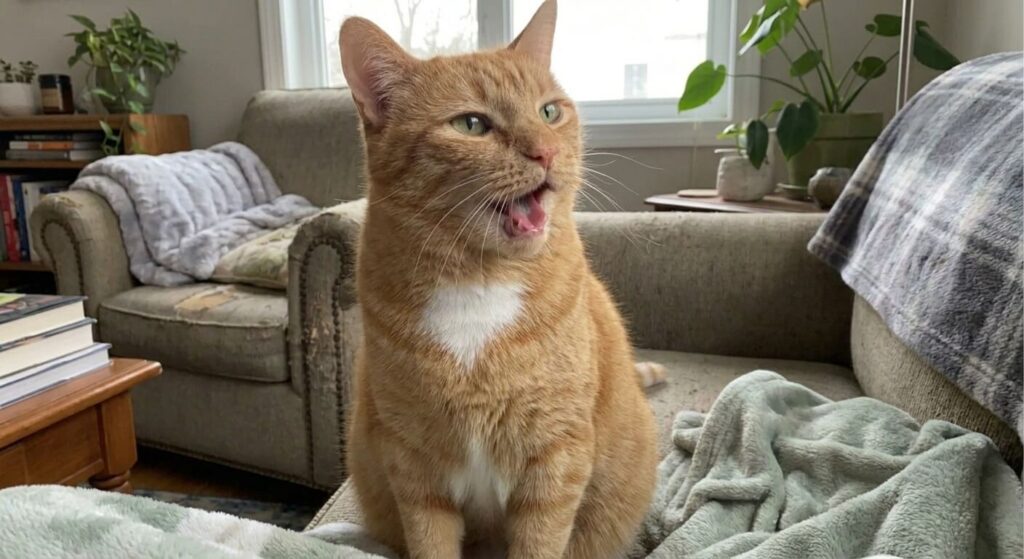
Table of Contents
The Biology of the Hairball: Why the Cat Tongue is a Trap
To understand cat hairball prevention, you need to understand why cats ingest fur at all — and why their anatomy makes it nearly impossible to avoid.
The feline tongue is covered in papillae — hollow, backward-facing keratin spines that function like a biological comb during grooming. These papillae are extraordinarily effective at removing loose and dead fur from the coat, which is their intended function.
The problem is their orientation: because the papillae face backward toward the throat, any fur caught on them during grooming has essentially one direction to travel. Swallowing is not a choice the cat makes — it is the anatomical consequence of the papillae’s design.
What happens to that ingested fur:
- Small amounts of fur are typically passed through the gastrointestinal tract and appear in the stool without incident
- When fur accumulates in the stomach faster than gastric motility can move it into the small intestine, it begins to compact
- The compacted mass — a trichobezoar — absorbs gastric fluid and becomes increasingly difficult to move
- The stomach responds by attempting to eject the mass through reverse peristalsis — the hacking and retching behavior
- If the trichobezoar is small and well-lubricated, it is expelled orally (the hairball on the floor)
- If it is large, dry, or has migrated into the intestine, expulsion is not possible — and this is the medical emergency
The frequency of hairball production is directly related to two variables: how much fur the cat ingests (determined by grooming frequency, coat type, and shedding rate) and how efficiently the gastrointestinal tract moves ingested material (determined by gastric motility, hydration, and diet). Effective cat hairball prevention targets both variables simultaneously.
Why indoor cats are at higher risk:
- Indoor cats groom more frequently than outdoor cats — a displacement behavior and stress response to environmental monotony
- Central heating and air conditioning accelerate the shedding cycle, increasing the volume of loose fur available for ingestion
- Sedentary indoor lifestyle reduces the physical activity that supports normal gastrointestinal motility
- Stress-related over-grooming — seen in indoor cats with insufficient enrichment — dramatically increases daily fur ingestion volume
Hairball vs. Vomiting: Why the Difference Matters
Many owners call every pile on the floor a hairball, but not every vomiting episode is caused by hair. A true hairball usually contains a compact tube or clump of hair mixed with fluid or food material. Vomiting may contain food, liquid, bile, foam, or no visible hair at all.
This difference matters because hairball prevention methods do not solve every cause of vomiting. Brushing may reduce swallowed hair, but it will not fix nausea, food intolerance, intestinal disease, parasites, kidney disease, or thyroid problems.
A useful habit is to notice what actually comes up. Is there visible hair? Is it food? Is it liquid or foam? How often does it happen? Does your cat act normal afterward, or do they hide, skip meals, or seem uncomfortable?
If vomiting is frequent, forceful, or changing, do not rely only on hairball remedies. Use hairball prevention as supportive care, not as a substitute for veterinary evaluation.
If you are not sure what came up, compare the signs in our cat vomiting vs hairball guide before assuming it is only a hairball problem.
5 Practical Ways to Reduce Cat Hairballs
Strategy 1: Daily Brushing — The Mechanical Foundation
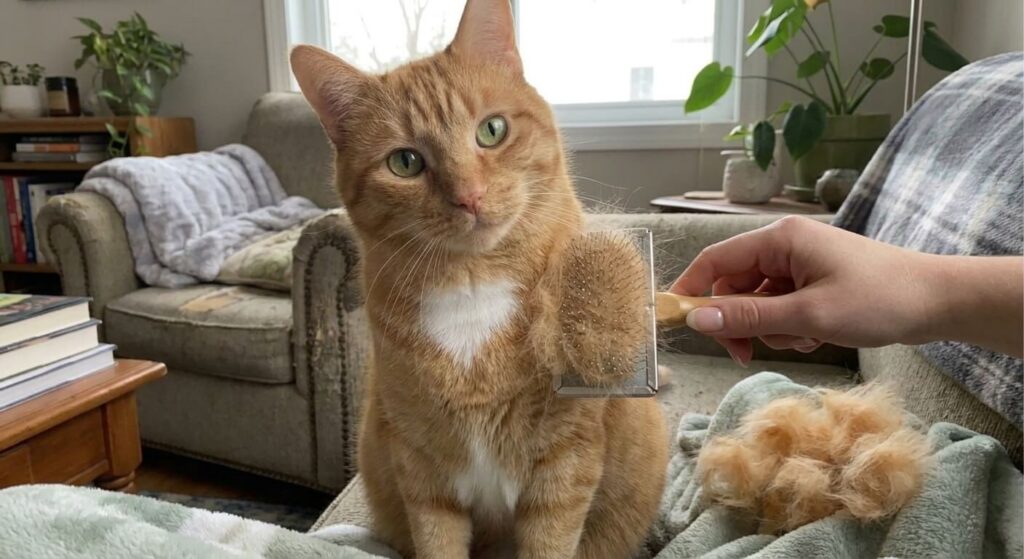
The most direct intervention in cat hairball prevention is physical removal of loose fur from the coat before the cat’s tongue reaches it. Fur that you remove with a brush is fur that does not end up in the stomach.
If your cat fights the brush, do not force daily sessions immediately. Start with our guide for a cat who hates being brushed so hairball prevention does not become a fear routine.
If you are not sure which tool fits your cat’s coat, compare our guide to the best cat brushes for indoor cats before buying a slicker brush, rubber brush, glove, or undercoat tool.
Brushing removes loose hair before the cat swallows it, but the amount varies with coat, shedding, tool, and tolerance. No fixed percentage of swallowed hair reduction is established here.
Selecting the right tools for your cat’s coat type is the first step in physical fur removal, and our comprehensive guide to the best cat grooming brushes for every coat type breaks down the specific tool recommendations for short, medium, and long coats with the clinical reasoning behind each selection.
The daily brushing protocol for cat hairball prevention:
- Choose the correct tool for coat type — a fine-toothed comb for short coats, a slicker brush followed by a deshedding tool for medium and long coats
- Brush in the direction of hair growth — against the grain increases static and causes discomfort that reduces the cat’s tolerance for brushing
- Focus on high-density shedding zones — the lower back, the base of the tail, and the belly in cats who allow it
- Use short, comfortable sessions appropriate to the coat and tolerance. Stop for pain or distress; adjust frequency with veterinary or grooming guidance when needed.
For grooming-resistant cats, you must use slow desensitization to make daily brushing possible — and our detailed protocol for introducing brushing to a touch-sensitive cat provides a week-by-week desensitization plan that has worked for Oliver and for dozens of cats I have seen in clinical settings.
Keeping the right grooming kit assembled and accessible is essential for indoor cat hygiene and prevention — and our complete indoor cat grooming kit guide covers every tool category with specific product recommendations organized by coat type and budget.
For tool choices by coat type, see our guide to the best cat brushes for indoor cats.
Brushing Schedule by Coat Type
Short-haired cats may only need brushing a few times per week, but heavy shedders may need more frequent sessions during seasonal changes. A rubber brush or grooming glove can work well because it removes loose surface hair without pulling too hard.
Medium-haired cats often need attention around the chest, armpits, back legs, and base of the tail. These areas trap loose hair and can increase swallowed hair during grooming.
Long-haired cats usually need daily or near-daily maintenance. Waiting until tangles form makes grooming harder and can increase hair ingestion because the cat may lick, chew, or pull at uncomfortable areas.
Senior, overweight, or arthritic cats may need extra help even with a short coat. These cats may not reach the back, hips, belly, or rear body as easily. If grooming ability changes suddenly, review the issue with your veterinarian.
For a full routine, connect this section with our indoor cat grooming guide.
Strategy 2: Fiber Support for Normal Digestion
The second pillar of cat hairball prevention addresses the gastrointestinal side of the equation — not reducing how much fur is ingested, but improving the efficiency with which ingested fur is moved through the digestive tract before it compacts into a trichobezoar.
Gastric motility — the rate at which the stomach contracts and moves content into the small intestine — is directly supported by dietary fiber. Insoluble fiber increases the bulk and water content of gastrointestinal content, stimulates the stretch receptors in the gut wall that trigger peristaltic contractions, and reduces the transit time that allows fur to compact and accumulate.
Fiber sources that support cat hairball prevention:
- Psyllium or other fiber supplements: ask the veterinarian whether one is appropriate and obtain product-specific instructions. Do not use a universal teaspoon dose or treat possible obstruction with a home supplement. See Cornell’s hairball guidance.
- Pumpkin is not a complete diet or a standardized hairball treatment. Discuss any food addition with the veterinarian rather than assuming a household measure is suitable for every cat.
- Beet pulp — the fiber source used in most commercial hairball formula diets; effective but variable in quality depending on the food formulation
- Inulin — a prebiotic fiber that supports the gut microbiome alongside its motility effects
The fiber approach to cat hairball prevention is most effective when combined with adequate hydration — dry fiber without water draws moisture from the intestinal contents rather than adding bulk, which can worsen rather than improve transit.
Strategy 3: Hydration as a Motility Tool
Water is the component of cat hairball prevention that is most consistently undervalued, and its mechanism is straightforward: hydrated gastrointestinal contents have significantly better transit characteristics than dry, compacted contents.
A cat who consumes adequate moisture keeps the fur they ingest in a more fluid suspension in the stomach, from which it passes into the intestine and through the colon in the stool rather than compacting into a trichobezoar. The difference between a cat passing ingested fur in the stool and a cat producing a hairball is frequently the hydration status of the gastrointestinal contents at the time the fur arrives.
Practical hydration interventions:
- Transition to wet food as the primary diet — this single change produces the most dramatic improvement in daily water intake; wet food is approximately 70–80% moisture versus 10% in dry food
- Add water or low-sodium broth to wet food — increases moisture content further; some cats will accept this addition, some will not
- Offer a clean fountain only if the cat prefers it, while keeping other water sources available. Not every cat drinks more from a fountain.
- Multiple water stations — placing water sources in several apartment locations increases the frequency of spontaneous drinking behavior
Apartment Hydration Tips for Hairball Prevention
Hydration can support normal digestive movement, but many cats do not drink much from a single bowl in a busy kitchen. In a small apartment, placement matters.
Try placing water away from the litter box and away from loud appliances. Some cats drink more from a wide shallow bowl because their whiskers do not touch the sides. Others prefer a fountain. Some cats take in more moisture through wet food than through drinking.
Do not force water or use unapproved additives. The goal is to make normal hydration easier. If your cat suddenly drinks much more or much less than usual, that is not just a hairball issue. Increased thirst can be linked to kidney disease, diabetes, thyroid disease, or other health problems.
Strategy 4: Hairball Gels and Supplements
Lubricating gels — petroleum-based or plant-based formulations designed specifically for feline use — work by coating ingested fur in the stomach with a slippery medium that reduces the friction coefficient between fur fibers and the gastric mucosa, facilitating passage into the small intestine rather than compaction into a trichobezoar.
This strategy is the most targeted of the five for cat hairball prevention because it acts directly on fur that has already been ingested and is already in the stomach.
Product categories and clinical notes:
- Petroleum-based hairball gels: use only with veterinary approval and the exact product instructions. Frequency and suitability depend on the product, symptoms, diet, and medicines.
- Lecithin supplements: do not substitute egg-yolk and sunflower preparations or give a generic dose. Evidence and suitability should be reviewed with the veterinarian before use.
- Malt-based gels — palatable formulations that combine a mild laxative base with a malt flavoring most cats accept readily directly from the tube
Application and frequency should come from the veterinarian and the specific product label. Do not increase use during shedding season on your own, and do not force oral administration.
Strategy 5: Cat Grass and Plant Fiber
Cat grass can be offered as optional enrichment when correctly identified and grown safely. It should not be used to induce vomiting or treat a suspected blockage.
The mechanism of cat grass in cat hairball prevention is not fully established in the scientific literature, but three proposed mechanisms have reasonable biological support:
- Mechanical stimulation — the coarse grass fibers physically stimulate the gastric mucosa and increase peristaltic activity
- Vomiting after eating grass does not show that the cat is deliberately treating a hairball. Do not encourage vomiting as a home remedy.
- Fiber supplementation — the indigestible cellulose in grass adds bulk to gastrointestinal contents and supports transit
For apartment cats without outdoor access, growing cat grass indoors is straightforward. Seeds are available inexpensively, germinate in 5–7 days in a small pot of standard potting soil, and provide a genuinely useful enrichment and digestive support resource simultaneously.
Correctly identified cereal grass is different from a toxic houseplant, but any plant material can upset digestion. Limit access if chewing causes problems and keep toxic or unidentified plants inaccessible.
When to Call the Vet About Hairballs
Cat hairball prevention is partly about owner education regarding when the hairball situation has moved beyond home management territory.
If you are not sure whether your cat is coughing, vomiting, or bringing up a true hairball, read our cat vomiting vs hairball guide before assuming it is only a grooming issue.
A trichobezoar that reaches the intestine rather than being expelled from the stomach presents as a gastrointestinal obstruction — a genuinely life-threatening emergency that cannot be managed at home and deteriorates rapidly without veterinary intervention.
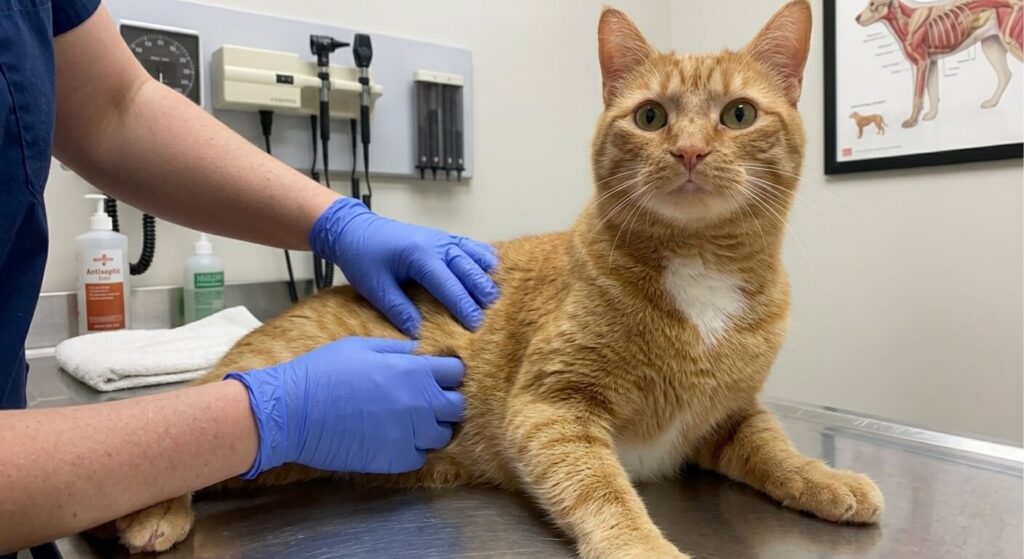
Red flags that require immediate veterinary attention:
- Repeated unproductive retching, difficulty breathing, or persistent vomiting: contact a veterinarian promptly rather than waiting for a fixed episode count.
- Refusal to eat, especially with vomiting, lethargy, pain, or known illness: contact the veterinarian promptly; do not wait for a fixed duration before seeking advice.
- Lethargy disproportionate to normal sleeping — a cat who cannot be roused for food, play, or interaction
- Distended or painful abdomen — visible swelling or a cat who reacts to abdominal palpation with vocalization or aggression
- Reduced or absent stool with vomiting, straining, pain, or appetite loss: seek veterinary advice promptly. A suspected obstruction cannot be diagnosed or treated with a home timing rule.
- Vomiting without fur content — repeated vomiting of bile or food without hairball material suggests a different pathology than simple hairball formation
Returning to normal behavior after an episode is reassuring but does not exclude illness. Repeated episodes, unproductive retching, or any associated appetite, breathing, energy, or abdominal changes deserve veterinary assessment.
What to Track Before Calling the Vet
If you are worried about hairballs or vomiting, write down a few details before the appointment. This helps your veterinarian see the pattern.
Track:
- how often it happens
- whether there is visible hair
- whether food, foam, liquid, or bile is present
- whether your cat retches without producing anything
- whether appetite changes
- whether weight changes
- whether stool changes
- whether your cat hides or seems painful
- whether shedding or grooming changed
- whether a new food, supplement, or routine started
A short note is enough. For example: “Three episodes in two weeks, two had visible hair, one was mostly food, appetite normal, stool normal.” That is much more useful than guessing whether every episode was a hairball.
The Truth About “Hairball Formula” Foods
The commercial “hairball formula” cat food category deserves honest evaluation, because it is one of the areas where marketing and clinical reality diverge most significantly.
What hairball formula foods actually do:
Most commercial hairball formula diets increase dietary fiber content — typically through the addition of beet pulp, cellulose, or psyllium — relative to the brand’s standard formulation. This is a legitimate cat hairball prevention strategy, as discussed in the fiber section above, and for cats who show improved stool quality and reduced hairball frequency on these foods, the product is doing what it claims.
What hairball formula foods often do not address:
- Hydration — most hairball formula foods are dry kibble, which means the cat is still consuming approximately 10% moisture regardless of the fiber content. The dehydration effect of dry food feeding may partially offset the motility benefit of the increased fiber
- Grooming frequency — no food formulation reduces the amount of fur the cat ingests
- The underlying cause of excessive grooming — if a cat is over-grooming due to stress, allergic skin disease, or parasites, a hairball formula diet addresses none of those primary drivers
Do not assume that switching to wet food will outperform a particular hairball diet. Diet suitability and any response need individual assessment; persistent vomiting should not be managed by repeated food experiments.
If a cat eating wet food still has repeated hairballs or vomiting, consult the veterinarian rather than adding fiber or gel by default. Product choice and cost do not establish the cause or the best treatment.
If you are unsure whether an episode produced a true hairball, our cat vomiting vs hairball guide explains how to compare hairballs, vomiting, regurgitation, and coughing.
Simple Weekly Hairball Prevention Routine
A simple routine works better than panic-cleaning after every hairball.
Once or twice a week, brush your cat based on coat type. During shedding season, increase brushing before hairballs become frequent. Wash or shake favorite blankets so loose hair does not keep transferring back onto the coat.
Check whether your cat is grooming normally. A cat who suddenly grooms less, develops mats, or looks greasy may have pain, obesity, dental disease, arthritis, or illness. A cat who overgrooms one area may have itching, stress, or pain.
Keep water easy to access and monitor appetite, stool, and weight. If hairballs increase despite brushing and normal care, or if vomiting does not contain much hair, treat it as a reason to call your veterinarian rather than simply adding more hairball products.
Frequently Asked Questions
1. How often is it normal for a cat to throw up a hairball?
The clinical guideline used in most veterinary practices is that hairball production once or twice per month in a medium to long-coated cat is within the range of normal for a cat not on any hairball prevention protocol.
Once per week or more frequently should prompt a review of the cat’s grooming management, diet, and hydration status. Daily or near-daily hacking — whether or not it produces a trichobezoar — is not normal and warrants a veterinary examination to rule out underlying causes including inflammatory bowel disease, hyperthyroidism (which accelerates gastric motility in a paradoxical way that can increase hairball frequency), or allergic skin disease causing excessive grooming.
Repeated hairballs or vomiting in a short-coated cat warrant a review of grooming, skin health, diet, and other possible causes. Frequency alone cannot diagnose overgrooming.
2. Can cat grass help with hairballs?
Cat grass may provide enrichment for cats who enjoy it, but it should not be presented as an established treatment for recurrent hairballs.
Evidence does not establish a reliable clinical hairball benefit from grass. A cat choosing to chew grass is not proof of successful self-treatment.
Use only correctly identified grass grown without unsafe chemicals, and remove it if it causes gastrointestinal upset. It is optional enrichment, not a substitute for assessment.
3. What is the best home remedy for cat hairball prevention?
The safest starting points are comfortable grooming, normal access to water, and observation of vomiting, appetite, stool, and coat changes. Diet changes or hairball products should be discussed with the veterinarian rather than prescribed as a universal home protocol.
Wet food can contribute dietary water, but changing food is not a proven universal hairball treatment. A suitable complete diet and any change should reflect the individual cat’s health and tolerance.
Do not automatically add fiber to a hairball routine. Recurrent vomiting, retching, appetite change, or altered stool needs assessment before supplements are introduced.
Final Thoughts
Cat hairball prevention works best when you treat hairballs as a pattern, not a one-time mess on the floor. Brush before loose fur is swallowed, improve hydration, use fiber or hairball gels carefully, and watch for changes in appetite, stool, energy, or vomiting frequency.
Oliver still grooms like a professional, but daily brushing, wet food, extra water, and occasional hairball gel have made his hairballs much less frequent. The goal is not to stop normal grooming. The goal is to reduce swallowed fur and notice early when a “hairball” may actually be something more serious.
References
- Cannon, M. (2013). Hair balls in cats: A normal nuisance or a sign that something is wrong? Journal of Feline Medicine and Surgery, 15(1), 21–29. https://doi.org/10.1177/1098612X12470437
- Freiche, V., Houston, D., Weese, H., Evason, M., Bhalerao, D., & Gabel, G. (2011). Uncontrolled study assessing the impact of a psyllium-enriched extruded dry diet on faecal consistency in cats with constipation. Journal of Feline Medicine and Surgery, 13(12), 903–911. https://doi.org/10.1016/j.jfms.2011.07.013