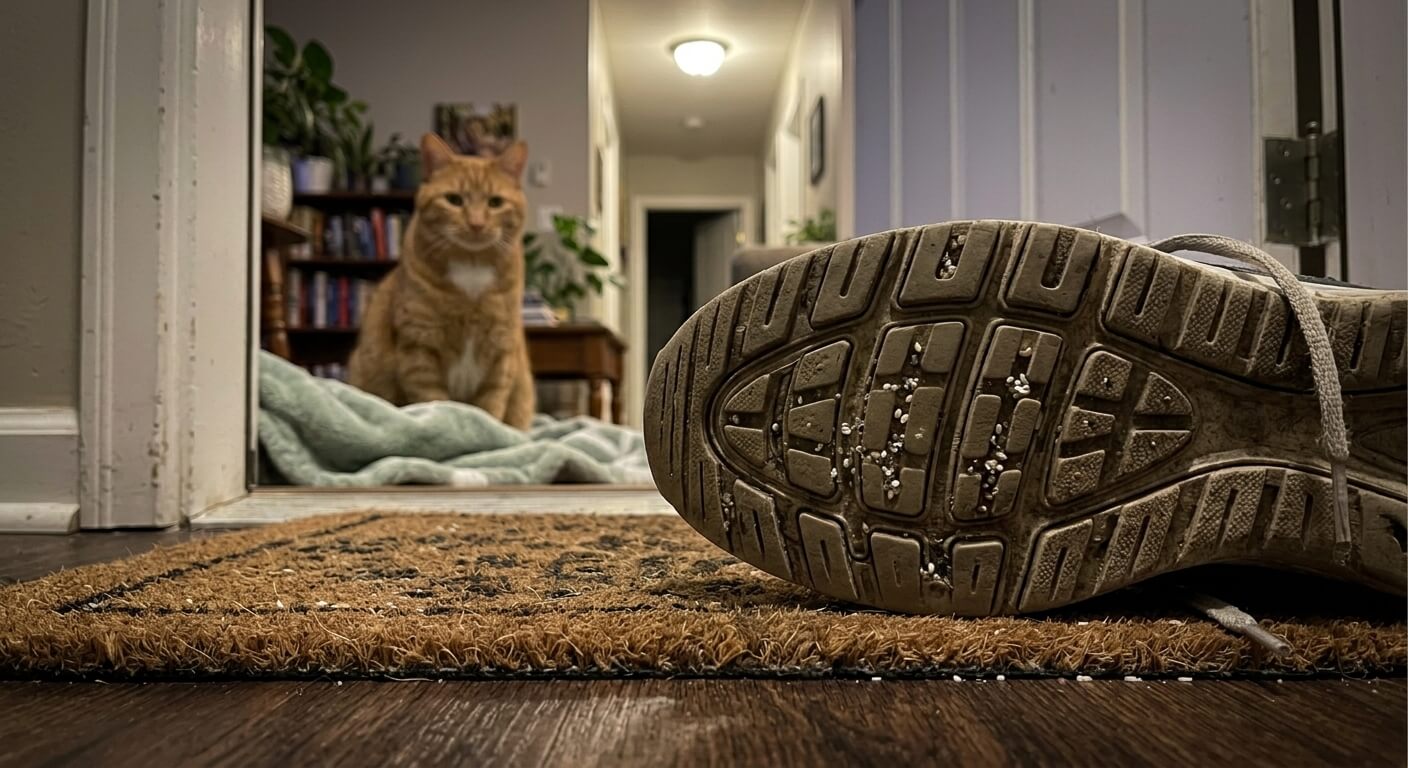
Do indoor cats need flea treatment? Indoor living lowers flea exposure, but it does not reduce the risk to zero. The Companion Animal Parasite Council recommends year-round flea control for all cats, while the FDA notes that outdoor flea seasons vary by location and that fleas can persist inside warm homes year-round. Ask your veterinarian which cat-labeled product and schedule fit your cat’s health, age, weight, location, and household exposure.
Use the risk check below to identify realistic exposure, then ask your veterinarian which cat-labeled product and schedule fit your cat. This guide stays focused on flea prevention; heartworm and intestinal parasites are mentioned only where they affect that decision.
Quick Answer: Do Indoor Cats Need Flea Treatment?
Indoor cats can still get fleas, so prevention should be discussed during routine veterinary care. CAPC recommends year-round lifelong flea control for all cats. The exact product must still be selected for the individual cat’s species, age, weight, health history, medications, location, and household risk.
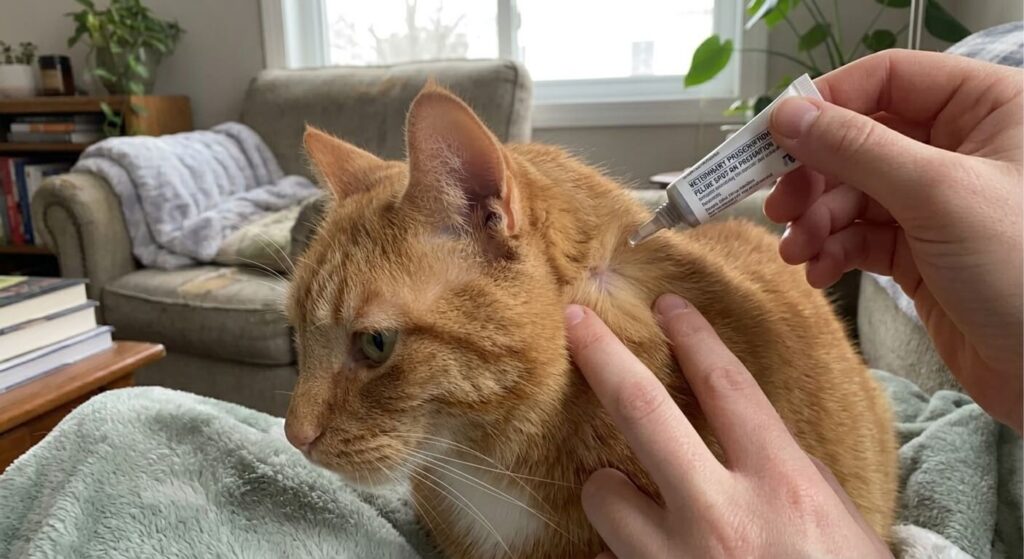
Use only a product specifically labeled for cats and for your cat’s correct age and weight range. Never apply a dog-labeled flea or tick product to a cat. Read the complete label every time, do not combine products unless instructed by a veterinarian, and monitor your cat for an adverse reaction after application.
If you find live fleas, flea dirt, persistent scratching, hair loss, scabs, pale gums, or signs of illness, contact your veterinarian. Every dog and cat in a flea-infested household may need an appropriate treatment plan, and controlling an established home infestation can take time.
Important Veterinary Note
This article is for general parasite-prevention education only. Do not use dog flea products on cats, and do not combine flea, tick, worm, or heartworm products without veterinary guidance. Some products can be toxic if used on the wrong species, wrong weight range, sick cats, kittens, pregnant cats, or cats taking other medications. If your cat has tremors, drooling, vomiting, weakness, seizures, trouble breathing, or sudden collapse after any flea product exposure, seek emergency veterinary care.
Indoor Cat Flea Risk Check: Low, Moderate, or High?
The decision is not simply “indoor” versus “outdoor.” Use the household factors below to prepare for a veterinary discussion. A lower-risk cat can still get fleas, and a higher-risk cat still needs a product chosen for the individual cat.
| Risk level | Typical household pattern | Practical next step |
|---|---|---|
| Lower | One strictly indoor cat, no dogs or foster animals, no flea history, no boarding, and limited access to shared animal areas | Discuss local flea pressure and prevention at routine veterinary visits; continue regular coat checks |
| Moderate | A dog goes outdoors, the cat uses a patio or shared hallway, occasional boarding or travel, visiting animals, or fleas have occurred in the building | Ask whether continuous or seasonal cat-labeled prevention best fits the household |
| Higher | Current fleas or flea dirt, a previous home infestation, foster or newly adopted animals, frequent boarding, outdoor access, or suspected flea allergy dermatitis | Contact the veterinarian promptly for a whole-household plan; every pet may need appropriate treatment |
Geography and climate matter. Flea prevalence and seasonality vary, while heated indoor spaces can support the flea life cycle. CAPC recommends lifelong flea control but also states that prevention programs should be tailored to the individual pet and geographic risk. Your veterinarian can reconcile that general recommendation with your cat’s age, weight, health history, medications, local conditions, and actual exposure.
Why Indoor Cats Can Still Be Exposed to Fleas
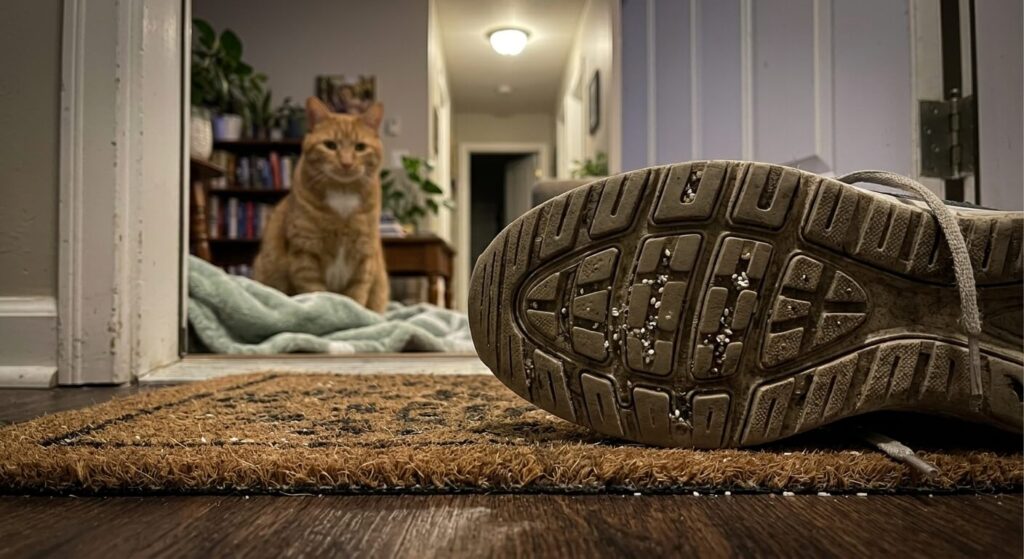
Indoor living lowers a cat’s exposure to fleas, but homes are not completely isolated from other animals or the surrounding environment. Risk is higher when the household includes a dog with outdoor access, a newly adopted or foster animal, a previous flea infestation, boarding or grooming visits, travel, or occasional access to hallways, balconies, patios, or outdoor spaces.
Adult fleas feed and reproduce on an animal. Their eggs can fall into bedding, carpets, furniture, and floor gaps, where larvae and pupae continue developing away from the pet. This is why an infestation may persist even when only a few adult fleas are visible.
Warm indoor conditions can allow fleas to survive during seasons when outdoor activity is lower. However, flea pressure varies by climate, location, building, season, and household exposure. Do not assume that every visitor or shared surface is carrying fleas; base prevention decisions on realistic risk factors.
Parasite prevention belongs in the same conversation as annual veterinary examinations, vaccines, travel, fostering, and the health needs of every pet in the household. For the vaccine part of that plan, read our indoor cat vaccination schedule.
Risk 1: Other Pets Can Bring Fleas Into the Home
A dog or cat that spends time outdoors, visits boarding or grooming facilities, or has contact with other animals can bring fleas into a shared home. Adult fleas usually remain on an animal to feed, while their eggs fall into bedding, carpets, floor gaps, and upholstered furniture.
In a multi-pet household, finding fleas on one animal means every dog and cat should be evaluated. Treating only one pet may allow the flea life cycle to continue on another animal or in the home environment.
Look for live fleas, reddish-black flea dirt, frequent scratching, over-grooming, small scabs, and hair loss. A veterinarian can help confirm whether fleas are responsible and recommend a species-appropriate plan for every pet in the household.
Risk 3: An Indoor Flea Infestation Can Be Easy to Miss
Adult fleas spend most of their time feeding on an animal. Their eggs can then fall from the animal into bedding, carpets, furniture, and floor gaps, where immature flea stages may continue developing.
A cat may remove fleas while grooming, so owners do not always see live adult fleas. Early signs may instead include increased scratching, over-grooming, small scabs, thinning hair, restlessness, or reddish-black flea dirt in the coat.
Use a fine-toothed flea comb around the neck, back, tail base, belly, and inner thighs. Place any dark debris collected from the comb onto a damp white tissue or paper towel. Flea dirt may produce a reddish-brown stain as it becomes wet, but this home check does not replace veterinary examination.
If fleas are suspected or confirmed, contact your veterinarian and evaluate every dog and cat in the household. Controlling an established infestation may require both species-appropriate treatment for the pets and repeated environmental cleaning because immature flea stages can remain away from the animal.
Risk 4: Brief Outdoor and Shared-Space Exposure
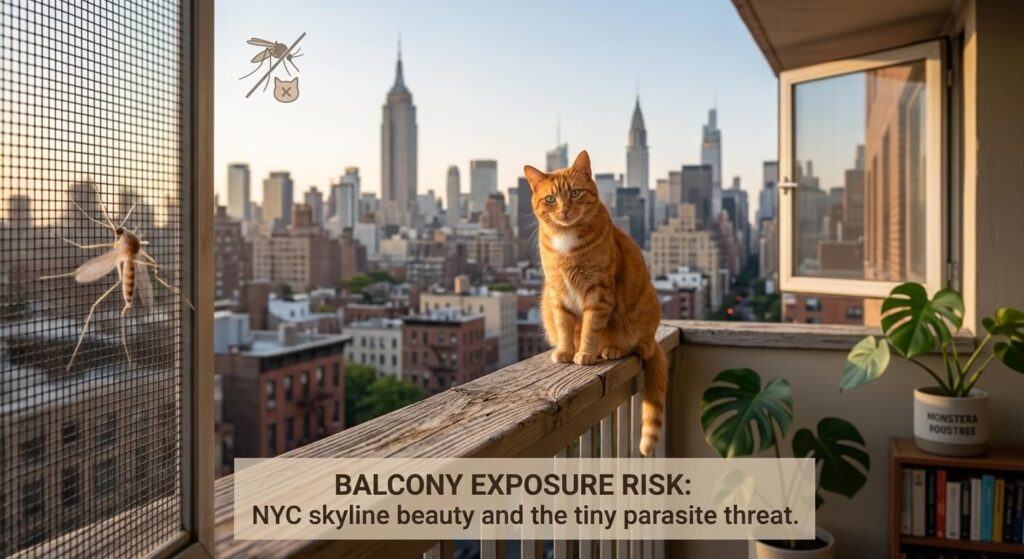
Some indoor cats occasionally enter hallways, balconies, patios, veterinary waiting areas, boarding facilities, grooming facilities, or other spaces used by animals. These short exposures can change a cat’s parasite risk even when the cat normally lives indoors.
The actual risk depends on the building, location, season, other animals, and whether fleas are already present in the surrounding environment. A brief hallway escape does not automatically mean a cat has fleas, but it is useful information to share with your veterinarian when choosing a prevention plan.
Balcony and open-window access may also increase mosquito exposure. Check screens and doors, supervise balcony use, and tell your veterinarian about any regular access to shared or semi-outdoor spaces.
Risk assessment should be based on the cat’s real lifestyle rather than fear of every visitor or shared surface. Focus on documented exposures, other pets, foster animals, travel, boarding, flea history, and local parasite activity.
Risk 5: Foster Animals, Boarding, and Temporary Exposure
A new foster animal, recently adopted pet, or visiting animal may arrive with fleas even when no live fleas are immediately visible. Kittens and animals coming from outdoor, shelter, or multi-animal environments may have a higher likelihood of parasite exposure.
Before introducing a foster or newly adopted animal to resident pets, follow the shelter’s intake instructions and arrange veterinary evaluation when appropriate. Keep the new animal’s bedding and grooming supplies separate until its health and parasite-control needs have been assessed.
Boarding, grooming visits, travel, pet sitting, and temporary stays with other animals can also change an indoor cat’s exposure risk. Tell your veterinarian about these activities when discussing whether your cat needs seasonal or year-round flea control.
If fleas are confirmed, every dog and cat in the household may need an appropriate, species-specific treatment plan. Environmental cleaning may also be necessary because flea eggs, larvae, and pupae can remain in bedding, carpets, furniture, and floor gaps.
Flea Treatment Options to Discuss With Your Vet
There is no single flea product that is safest or most appropriate for every indoor cat. Available options may include topical treatments, oral medications, collars, or products that combine flea control with protection against other parasites. Product availability, approval status, parasite coverage, and prescription requirements vary by country.
Some products control fleas only, while others may also address ticks, ear mites, intestinal parasites, or heartworm prevention. Do not assume that one product covers every parasite listed in an advertisement. Read the approved label and ask your veterinarian which risks are relevant to your cat.
Questions to Ask Before Choosing a Product
- Is this product specifically labeled for cats?
- Is it approved for my cat’s current age and weight?
- Does my cat’s health history or medication list affect the choice?
- Does my cat have a history of tremors, seizures, balance problems, or other neurologic signs?
- Which parasites does this exact product cover?
- How often should it be given or applied?
- What should I do if a dose is late or missed?
- How long should treated pets be separated from one another?
- Which side effects require a veterinary call or emergency care?
- Is the product approved or registered by the appropriate regulator in my country?
Critical Flea-Product Safety Rules
- Never use a product labeled only for dogs on a cat.
- Match the product to the cat’s exact species, age, life stage, and weight range.
- Read the complete label every time because directions and warnings may change.
- Do not divide a larger-animal dose or estimate a smaller dose yourself.
- Do not combine flea, tick, heartworm, or deworming products unless your veterinarian has checked the active ingredients.
- Tell your veterinarian about previous seizures, tremors, medication reactions, pregnancy, nursing, chronic illness, and current medications.
- Keep pets from licking one another after topical application and follow the label’s separation and drying instructions.
- Save the packaging and product lot information in case a reaction needs to be reported.
- Monitor your cat after treatment, especially after the first use of a new product.
If your cat develops excessive drooling, vomiting, weakness, severe skin irritation, tremors, poor coordination, breathing difficulty, collapse, or seizures after treatment, contact a veterinarian or emergency clinic immediately. Bring the package or a clear photo of the label so the veterinary team can identify the active ingredients and dose.
Flea Allergy Dermatitis: Why Small Exposures Can Matter
Flea allergy dermatitis is an allergic reaction to proteins in flea saliva. A sensitive cat may develop significant itching and skin irritation even when only a small number of fleas are present and the owner never sees a live flea.
Possible signs include persistent scratching, over-grooming, small crusted bumps or scabs, hair thinning, redness, and irritated skin. Changes may be especially noticeable around the lower back, tail base, neck, abdomen, or thighs, but appearance and location alone cannot confirm the cause.
Other conditions—including mites, skin infection, food allergy, environmental allergy, pain, and behavioral over-grooming—can produce similar signs. A veterinarian may use the cat’s history, physical examination, flea-comb findings, response to flea control, and additional tests to determine the likely cause.
Managing suspected flea allergy dermatitis may involve consistent cat-safe flea control, appropriate treatment for every pet in the household, environmental cleaning, and veterinary treatment for itching, inflammation, or secondary skin infection. Do not apply extra doses or combine flea products in an attempt to stop itching quickly.
If scratching, over-grooming, scabs, or sudden skin irritation appears, record when it started and where it occurs. Our cat health check at home guide can help you organize observations before contacting your veterinarian.
FAQ
Are heartworm and worm prevention the same as flea treatment?
No. Heartworm is transmitted by mosquitoes, and some tapeworm infections can follow swallowing an infected flea, but a flea-control product does not automatically prevent heartworm or every intestinal parasite. Check the approved label for the exact parasites covered and ask your veterinarian which risks apply in your location. Do not combine products or give a dewormer simply because a parasite is suspected.
Can I use dog flea treatment on my cat?
No. Never use a flea or tick product labeled for dogs on a cat. Some dog products contain ingredients that can be highly toxic to cats, and exposure can happen through direct application, grooming contact, or contact with a recently treated dog. If your cat is exposed to a dog flea product and shows drooling, tremors, vomiting, weakness, seizures, or trouble breathing, seek emergency veterinary care.
Do indoor cats need flea treatment all year?
CAPC recommends year-round flea control for all cats because fleas can survive indoors and infestations are easier to prevent than eliminate. FDA consumer guidance also notes that outdoor flea seasons vary by location and that fleas can live inside a warm home throughout the year. Ask your veterinarian to choose the exact cat-labeled product and determine whether broader parasite coverage is appropriate for your location, building, other pets, travel, foster animals, and your cat’s health.
What is the safest flea treatment for indoor cats?
There is no single flea treatment that is safest for every indoor cat. The appropriate choice must be specifically labeled for cats and match the cat’s age, weight, health history, local parasite risk, and household situation.
Ask your veterinarian to compare the exact parasites covered, application schedule, possible drug interactions, and known adverse effects. Tell them if your cat has experienced seizures, tremors, balance problems, medication reactions, chronic illness, pregnancy, or nursing.
Check the product label for its FDA approval or EPA registration information when applicable, purchase it from a reliable source, and follow the directions exactly. Never use a dog-labeled product on a cat, divide a larger-animal dose, combine products without professional guidance, or assume that a flea product also prevents heartworm or intestinal parasites.
Final Thoughts
Do indoor cats need flea treatment? Indoor living lowers exposure but does not make flea risk zero. The most useful decision considers other pets, fostering, boarding, shared spaces, prior infestations, local flea pressure, and the cat’s health—not the indoor label alone.
Discuss prevention during routine veterinary care and sooner if you find fleas, flea dirt, persistent itching, hair loss, scabs, or pale gums. Use only a cat-labeled product that matches the cat’s age and weight, follow the complete label, and never substitute a dog product. If fleas are already present, ask for a plan that addresses every pet and the home environment rather than repeatedly treating one cat.
References
- Companion Animal Parasite Council. Fleas.
https://capcvet.org/guidelines/fleas/ - Companion Animal Parasite Council. Parasite Guidelines.
https://capcvet.org/guidelines/ - U.S. Food and Drug Administration. Safe Use of Flea and Tick Products in Pets.
https://www.fda.gov/consumers/consumer-updates/safe-use-flea-and-tick-products-pets - U.S. Food and Drug Administration. Fact Sheet for Pet Owners and Veterinarians About Potential Adverse Events Associated With Isoxazoline Flea and Tick Products.
https://www.fda.gov/animal-veterinary/animal-health-literacy/fact-sheet-pet-owners-and-veterinarians-about-potential-adverse-events-associated-isoxazoline-flea - U.S. Environmental Protection Agency. Controlling Fleas and Ticks on Your Pet.
https://www.epa.gov/pets/controlling-fleas-and-ticks-your-pet - American Heartworm Society. Heartworm in Cats.
https://www.heartwormsociety.org/pet-owner-resources/heartworm-in-cats - American Heartworm Society. Do Indoor Cats Need Heartworm Prevention?
https://www.heartwormsociety.org/in-the-news/908-do-indoor-cats-need-heartworm-prevention