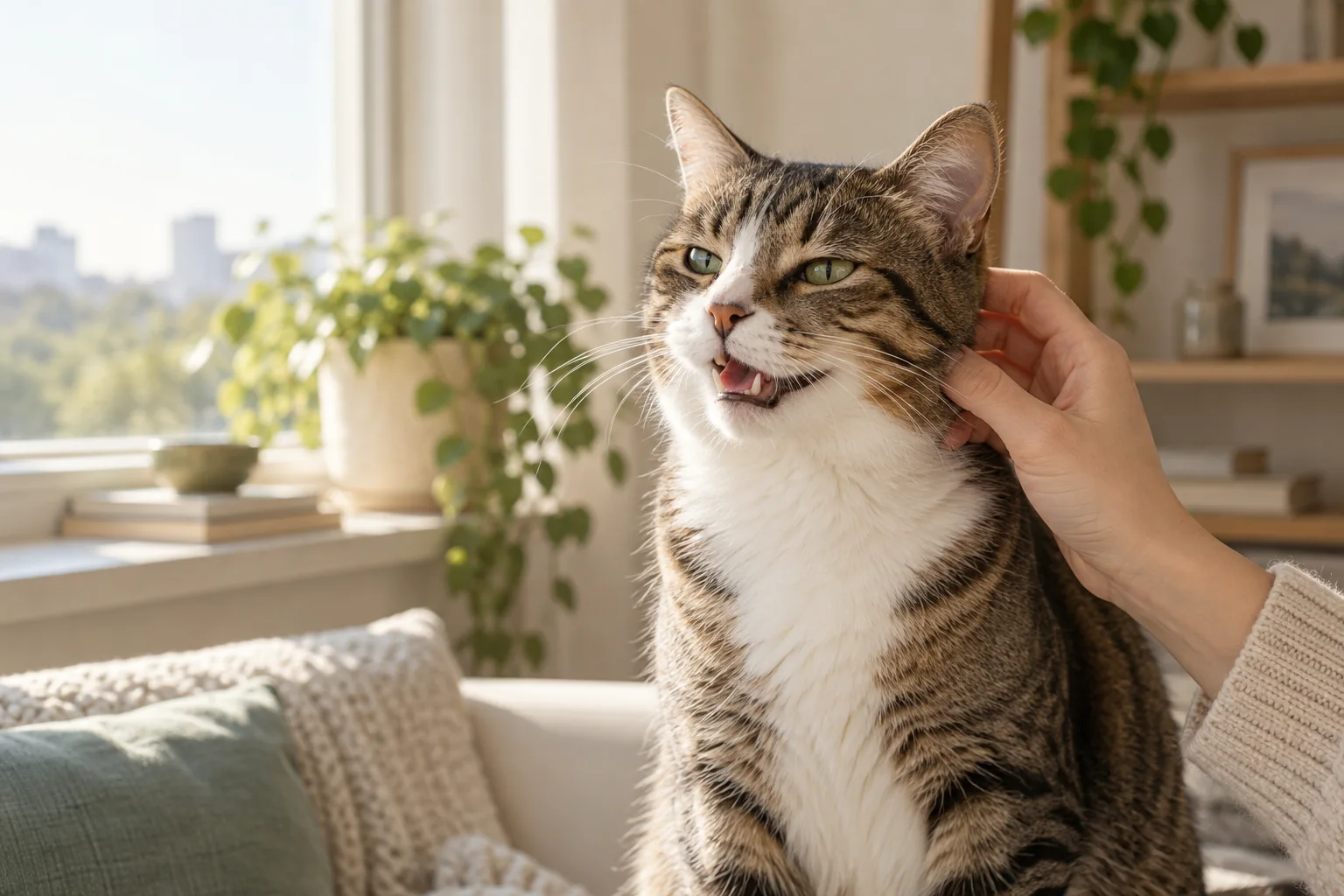
Cat bad breath may be a brief food smell, but persistent or offensive odor is not considered normal. If the smell returns day after day—or appears with red gums, drooling, dropped food, one-sided chewing, facial swelling, or reduced appetite—arrange a veterinary examination. A cat can keep eating while its mouth hurts, so appetite alone cannot rule out dental disease.
This guide helps you decide what to observe, what to record, and when an indoor cat needs veterinary care. Breath odor is a clue, not a diagnosis, and a normal-looking home check cannot rule out disease below the gumline.
Quick Decision Guide
| What you notice | What it may mean | What to do |
|---|---|---|
| A mild food smell immediately after a meal that fades | Temporary food odor is possible | Note when it happens and check again later |
| Bad breath that persists, recurs, or suddenly becomes worse | Oral disease is common, but other causes are possible | Schedule a veterinary oral examination |
| Bad breath with red or bleeding gums, drooling, dropped food, or one-sided chewing | The mouth may be painful | Contact your veterinarian promptly; do not start brushing a painful mouth |
| Facial swelling, uncontrolled bleeding, trouble breathing, collapse, or inability to eat | Urgent illness or injury is possible | Seek same-day or emergency veterinary care |
Do not use the odor alone to identify kidney disease, diabetes, liver disease, or a specific dental problem. The same smell can be described differently by different people, and several conditions can occur at the same time.
When Cat Breath May Simply Smell Like Food
Wet food, fish-based food, and strongly scented treats can leave a temporary odor. A food smell is more reassuring when all of the following are true:
- it appears immediately after eating;
- it fades rather than lingering through the day;
- it is not becoming stronger or more frequent;
- the gums do not look red, swollen, or bloody;
- your cat eats, grooms, and accepts normal face handling without a change;
- there is no drooling, pawing at the mouth, dropped food, or facial swelling.
Even then, “it smells like food” is an observation, not a diagnosis. If the odor keeps returning between meals, becomes unpleasant, or is new for your cat, record the change and arrange a dental check.
Why Persistent Bad Breath Deserves Attention
The American Animal Hospital Association identifies bad breath as a common early sign of dental disease. Cornell’s Feline Health Center also notes that a healthy cat’s breath should not be offensive and that periodontal disease is the most common problem associated with persistent bad breath.
Dental disease can develop gradually, and cats often hide discomfort. Some continue to eat by swallowing pieces with little chewing, using the less painful side of the mouth, or choosing softer food. A full bowl at the end of the day does not prove that the mouth is pain-free.
Common Mouth-Related Causes of Cat Bad Breath
Plaque, gingivitis, and periodontal disease
Plaque forms on teeth and can contribute to gum inflammation. As disease progresses below the gumline, it can damage the tissues that support the teeth. You may see tartar or red gums, but the visible tooth surface does not show everything happening around the roots.
Persistent odor may be the first change an owner notices. Later signs can include bleeding gums, loose teeth, drooling, food dropping from the mouth, or reluctance to have the face touched.
Tooth resorption
Tooth resorption is a painful condition in which tooth structure breaks down. It can be difficult to recognize at home because part of the damage may be hidden. Cornell’s overview of feline dental disease includes tooth resorption among the important feline dental disorders and explains why professional assessment matters.
Gingivostomatitis, oral injury, or an oral mass
Severe inflammation, an injured tooth, tissue trauma, or an oral mass can also change breath odor. These problems cannot be distinguished safely by smell. A veterinarian needs to examine the mouth and decide whether additional testing is required.
Material caught in the mouth
Food, hair, or another object can become trapped between teeth or under the gums. If you see thread or string in the mouth, do not pull or cut it; material may extend farther than you can see. Prevent further chewing if you can do so safely and contact a veterinarian promptly for instructions.
Can Bad Breath Come From Outside the Mouth?
Yes. Cornell lists systemic and non-dental possibilities, including kidney disease, diabetes, liver disease, respiratory disease, skin disease near the lips, and oral trauma. These are reasons to take persistent odor seriously, not reasons to diagnose a disease from a particular smell.
Tell your veterinarian about changes outside the mouth, including:
- increased thirst or larger urine clumps;
- weight loss;
- vomiting or diarrhea;
- reduced appetite;
- weakness or unusual hiding;
- coughing, nasal discharge, or breathing changes;
- a recent injury or possible toxin exposure.
This additional context helps the clinic decide how quickly your cat should be seen and whether the examination should extend beyond the mouth.
Five Oral Signs That Need a Veterinary Check
1. Bad breath that persists or suddenly worsens
An odor that remains between meals or becomes noticeably stronger deserves an examination, especially when it is new.
2. Red, swollen, or bleeding gums
Inflamed gums may be painful. Do not begin brushing over tissue that is red, bleeding, or visibly sore.
3. Drooling or blood-tinged saliva
New drooling can accompany oral pain, inflammation, injury, nausea, or other illness. Blood in the saliva should not be treated with a breath-freshening product.
4. A change in eating
Watch for food falling from the mouth, chewing on one side, head tilting while eating, walking away from the bowl, swallowing dry food without normal chewing, or suddenly preferring soft food. AAHA’s dental guidance includes several of these changes among signs of dental disease.
5. Facial swelling or reluctance to have the face touched
Swelling around the cheek, jaw, or below an eye can accompany serious dental or oral problems. Arrange prompt veterinary care.
A Safe Home Check: Observe Without Forcing the Mouth
Choose a calm moment and start with observation. Note the time, the most recent food, how long the odor lasts, and whether eating or behavior has changed.
If your cat is relaxed and already accepts face handling, you may briefly lift the lip to look at the outer teeth and gums. Stop if your cat pulls away, vocalizes, growls, drools, or appears painful.
Do not:
- force the jaws open;
- scrape tartar with a tool;
- probe the gums;
- wiggle a loose or damaged tooth;
- pull thread or string from the mouth;
- apply human toothpaste, mouthwash, essential oils, peroxide, or household products;
- brush a mouth that appears inflamed or painful.
A normal-looking home check does not rule out disease below the gumline or around the tooth roots.
When Is Cat Bad Breath Urgent?
Call your veterinarian promptly if bad breath occurs with mouth pain, drooling, bleeding, a loose or fractured tooth, reduced appetite, weight loss, or a visible oral abnormality.
Seek same-day or emergency guidance when your cat:
- cannot eat or repeatedly tries and fails to eat;
- has marked facial swelling;
- has uncontrolled mouth bleeding;
- has trouble breathing, open-mouth breathing, collapse, or severe weakness;
- may have chewed an electrical cord or contacted a toxin;
- has string or another object lodged in the mouth;
- is rapidly worsening.
If your cat stops eating, do not wait for a dental treat or home-cleaning routine to solve the problem.
What a Veterinarian May Check
The visit may begin with an awake oral examination and a review of appetite, weight, water intake, urination, medications, and other changes. An awake look can identify some abnormalities, but it cannot fully assess every tooth surface, periodontal pocket, root, or area below the gumline.
Depending on the findings, the veterinarian may recommend an anesthetized dental assessment, cleaning above and below the gumline, dental radiographs, treatment of painful teeth, or tests for a non-dental cause. The goal is to identify and treat the source rather than cover the odor.
For a full prevention routine after pain has been ruled out, see Cat Dental Care at Home.
Can Dental Treats Fix Bad Breath?
Dental treats may help control plaque or tartar when used consistently and as directed, but they do not diagnose the cause of bad breath, treat an infected or painful tooth, remove disease below the gumline, or replace veterinary care.
The Veterinary Oral Health Council lists products that have met its requirements for a stated plaque or tartar-control claim. The claim is specific: a product accepted for tartar control should not be presented as a treatment for pain or existing dental disease.
If your veterinarian says treats are appropriate, compare current feline options in Best Cat Dental Treats. Stop and seek advice if chewing seems painful, food falls from the mouth, or your cat begins refusing a previously accepted treat.
How to Reduce Future Breath Problems
Once a veterinarian has confirmed that the mouth is comfortable enough for home care:
- Introduce toothbrushing gradually with toothpaste made for cats.
- Use only feline dental products that fit your cat’s health, diet, and chewing behavior.
- Check the current VOHC claim rather than relying on package phrases such as “fresh breath.”
- Watch for changes in odor, gums, eating, grooming, and face-touch tolerance.
- Include oral health in routine veterinary examinations.
Prevention works best before the mouth becomes painful. Breath fresheners should never delay an examination of persistent odor.
Frequently Asked Questions
Is it normal for a cat’s breath to smell like food?
A mild smell immediately after eating may be temporary. Odor that persists between meals, recurs every day, worsens, or appears with other mouth signs should be checked by a veterinarian.
Does bad breath always mean dental disease?
No. Dental disease is a common cause, but oral injuries, trapped material, masses, respiratory problems, and systemic illness can also contribute. Smell alone cannot identify the cause.
Can my cat have dental pain and still eat?
Yes. Cats may continue eating while adapting how they chew. Dropped food, one-sided chewing, slower eating, soft-food preference, and reluctance to have the face touched can be more useful clues.
Should I brush my cat’s teeth when the breath smells bad?
First check for signs of pain or inflammation. Do not brush red or bleeding gums, a damaged tooth, or a mouth that seems painful. Arrange a veterinary examination before starting or restarting brushing.
How quickly should dental treats improve bad breath?
Do not use a deadline for fresher breath as a medical test. Dental treats can support plaque or tartar control, but persistent odor needs a diagnosis rather than longer product use.
Final Thoughts
Brief food odor can fade after a meal. Persistent cat bad breath is different: it can be an early warning that deserves a veterinary oral examination. Look for accompanying changes in the gums, saliva, chewing, appetite, weight, and behavior, but do not force the mouth or diagnose a disease from smell.
Record what changed, contact your veterinarian when odor persists, and treat dental products as prevention tools—not pain treatment.
References
- American Animal Hospital Association. Dog & cat dental disease: Signs, professional cleanings, anesthesia, and home care. Updated January 26, 2026. Verified September 17, 2026.
- Cornell University College of Veterinary Medicine, Feline Health Center. Bad Breath: Sign of Illness?. Verified September 17, 2026.
- Cornell University College of Veterinary Medicine, Feline Health Center. Feline Dental Disease. Verified September 17, 2026.
- Veterinary Oral Health Council. Accepted Products. Verified September 17, 2026.