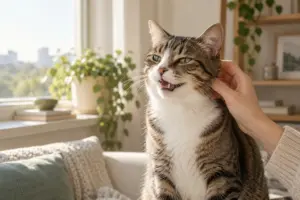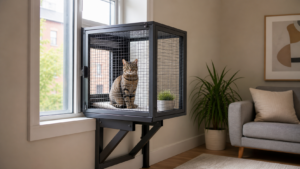
Signs an indoor cat is stressed can include hiding, less interest in play, changes in eating or grooming, litter-box problems, tense interactions, or difficulty settling. These are clues to investigate, not proof of stress: pain and illness can cause similar changes. This guide explains seven patterns and what to record for your veterinarian.
For a broader routine check, use our cat health check at home guide. Do not use a home checklist to rule out disease.
Quick Answer
Compare your cat with their own usual behavior. Note what changed, when it began, and whether eating, drinking, toileting, movement, and interaction have changed too. Reduce obvious pressure without forcing contact. Sudden or persistent changes need veterinary advice; trouble breathing, collapse, or repeated straining with little or no urine needs urgent care.
This is general educational information from the editorial team, not a diagnosis or a claim of veterinary examination.
Seven Stress-Related Patterns to Notice
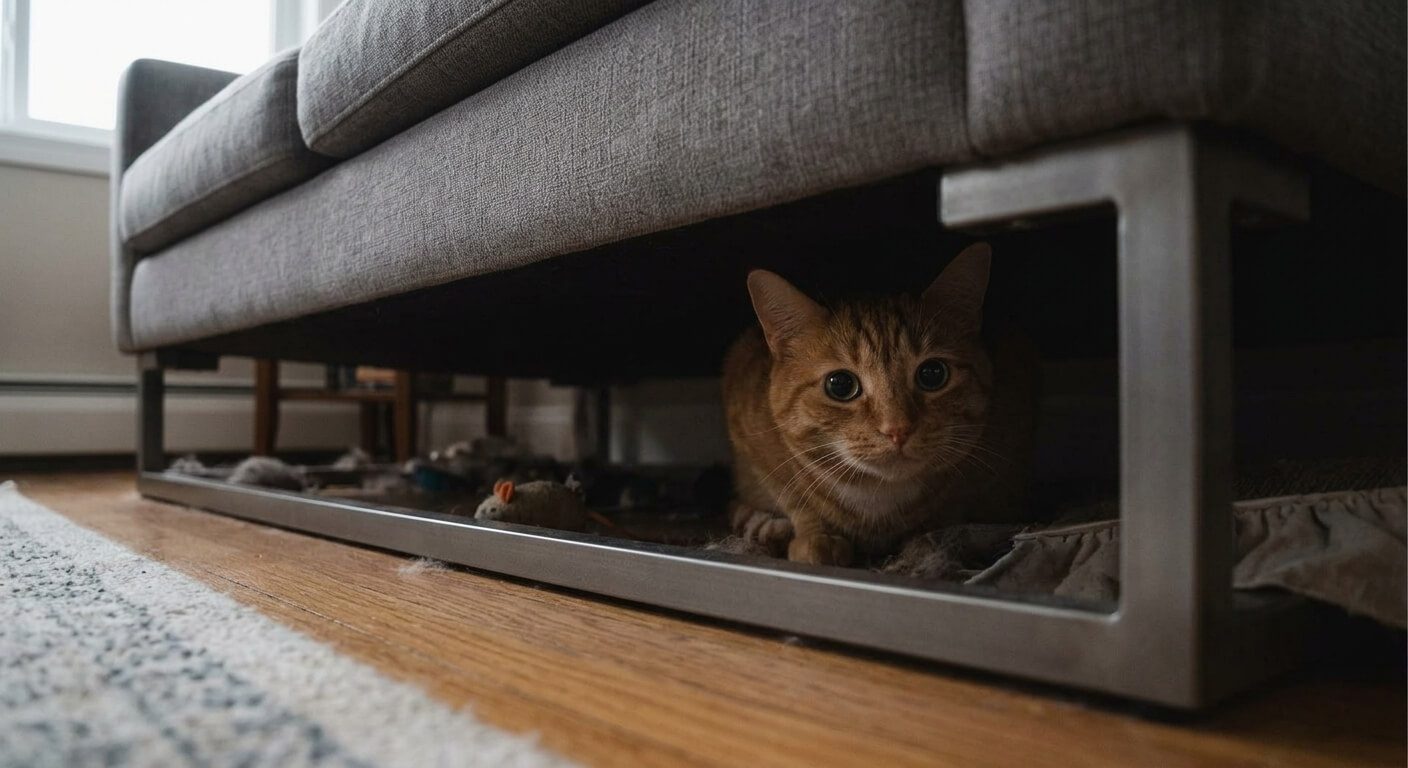
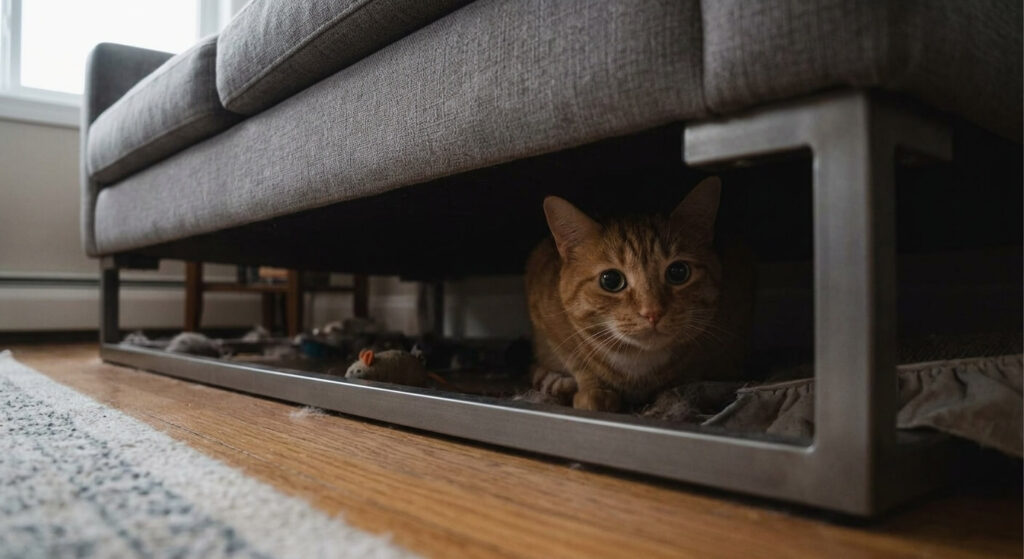
1. Hiding or avoiding familiar people
A cat choosing an occasional quiet nap is different from a cat suddenly spending much more time hidden or retreating whenever someone approaches. Leave the hiding place accessible and note whether the cat still comes out to eat and use the litter box. Do not pull the cat out to test sociability.
2. Less play or exploration
Record which normal activities have stopped: greeting you, watching a window, exploring, or joining a familiar game. Reduced activity can also reflect pain or illness. Offer a brief invitation to play without chasing or insisting, and report a sustained change.
3. Eating differently
Measure what is offered and what remains instead of judging from an apparently full bowl. In multi-cat homes, check which cat actually eats. Reduced appetite is not something to explain away as mood; contact your veterinarian promptly, especially if your cat stops eating or seems unwell.
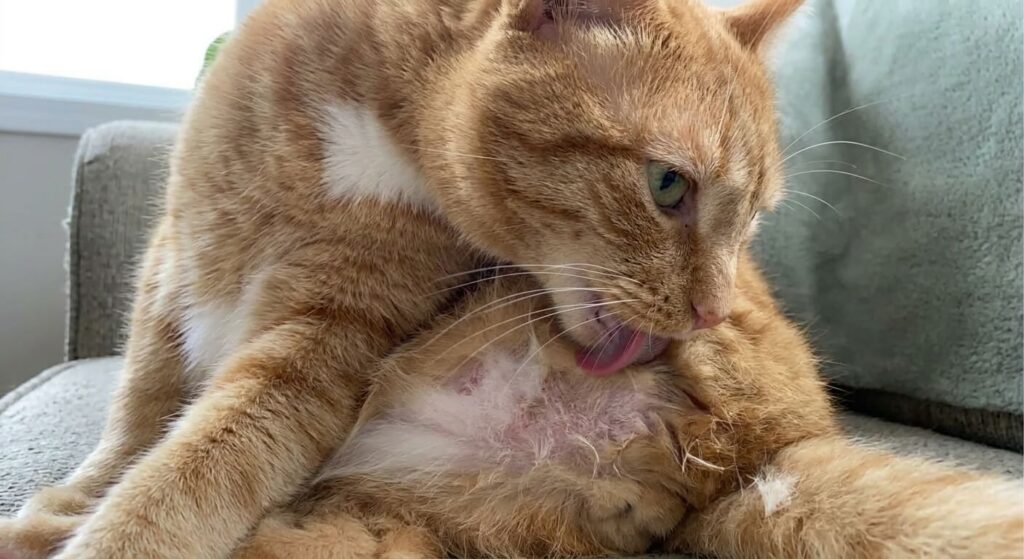
4. Grooming more, less, or in a new pattern
Repeated attention to one area, thinning fur, sore skin, or a newly unkempt coat warrants assessment. Stress is one possible factor, but skin disease, parasites, discomfort, and difficulty reaching the coat also need consideration. Photograph changes rather than assuming the cause.
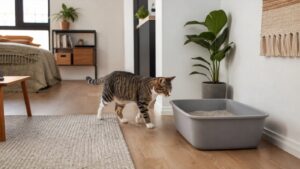
5. Litter-box changes or urine marking
Record accidents, repeated visits, crying, blood, or apparent difficulty passing urine. These observations do not distinguish stress from urinary disease. Repeated straining with little or no urine can be an emergency. See Cornell’s urinary disease guidance and seek care instead of trying a calming product first.
6. Tense or defensive interactions
Notice whether your cat freezes, flattens their ears, retreats, hisses, or reacts differently to touch. Stop the interaction and allow space. Record the context, including another animal, a blocked passage, or handling of one body area; do not provoke the response to obtain a video.
7. Restlessness, new vocalizing, or changed rest
Pacing, repeated calling, or difficulty resting may deserve attention, particularly if new. Note time of day and nearby noise, but do not infer anxiety from sound alone. A change in an older cat also needs a health assessment rather than an automatic behavior explanation.
What to Do in an Apartment
Make a simple room sketch showing the hiding places and the routes to food, water, and litter. Mark the busy doorway, noisy appliance, and any place one cat blocks another. This turns “the apartment seems stressful” into a specific change you can discuss or test.
- Keep a familiar retreat available; do not close its door unexpectedly.
- Let your cat choose whether to approach people. Ask visitors to do the same.
- Separate resources where space permits so that one crowded corner is not the only option.
- Keep necessary care predictable while avoiding a rigid schedule that prevents responding to illness.
These environmental principles are described in the FelineVMA environmental-needs handout. For layout ideas, see our small-apartment enrichment guide.
A Useful Observation Note
Write down the date, the exact change, the situation before it, food eaten, litter observations, and how the cat behaved afterward. For example: “Hid after hallway drilling; later came out for dinner” is more useful than “was stressed.” This is an example of a note, not a reported patient outcome. Do not wait to finish a log before seeking care.
When a Product Is Not the Answer
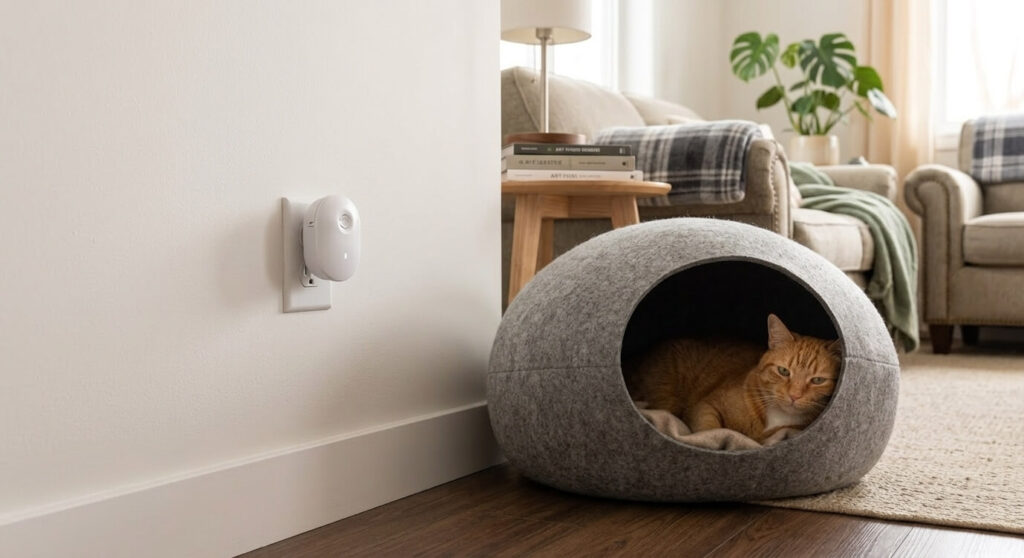
A diffuser, bed, or toy cannot determine why behavior changed. Correct a blocked route or noisy resting location where possible, and ask your veterinarian about persistent distress. Medication decisions and treatment plans require individual assessment; there is no universal supplement, drug, or recovery deadline.
Frequently Asked Questions
Does one sign prove stress?
No. Look at the change from normal, its context, and associated health signs. A veterinarian may need an examination and tests to evaluate other causes. Cats Protection’s stress guidance also emphasizes assessment rather than assuming a behavioral cause.
What if the trigger cannot be removed?
For continuing construction or a household change, discuss a management plan with your veterinarian or a qualified behavior professional. Identify the quietest available retreat and protect access to daily resources. Support should be adjusted to the individual cat, not to a fixed week-by-week promise.
Should I get a calming diffuser first?
It can be considered as an adjunct, not as a substitute for care or environmental changes. Our calming diffuser comparison describes product choices; it cannot diagnose the cause of these signs.
Related Apartment Guides
- cat health check at home guide
- indoor cat enrichment in small apartments guide
- cat peeing outside litter box guide
- moving apartment with cat guide
- best cat calming diffusers
Final Thoughts
Notice changes early, describe them precisely, and respond to health concerns promptly. The aim is not a perfectly quiet cat; it is a cat who can eat, rest, move, toilet, and interact comfortably with choices and appropriate care.