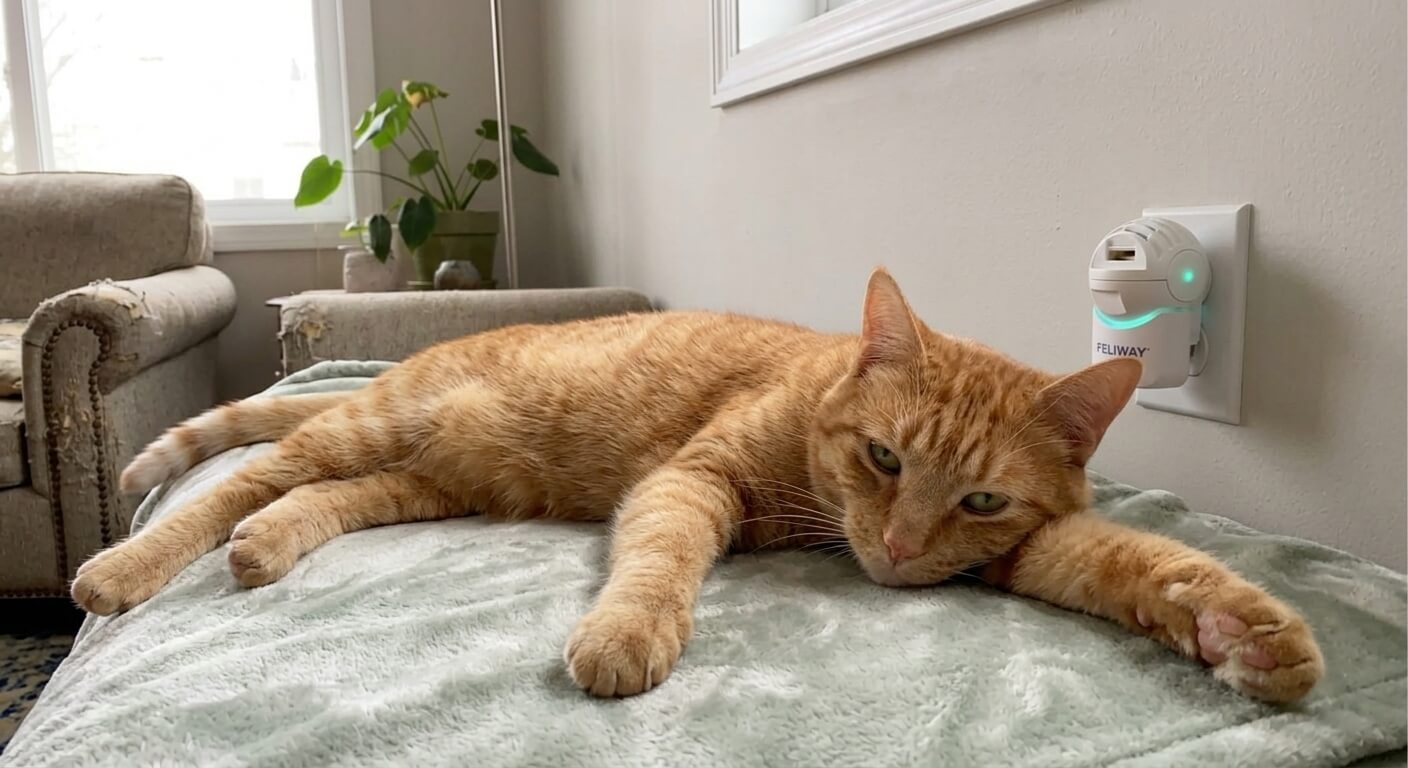
The best cat calming diffuser for most households is FELIWAY Optimum when the goal is broad stress support. FELIWAY Classic is the more targeted choice for urine marking and environmental change, while FELIWAY MultiCat is designed for tension between cats. Comfort Zone Cat Calming Diffuser is a fragrance-free alternative for owners who prefer a non-FELIWAY product. These are feline pheromone diffusers, not sedatives or essential-oil diffusers. Results vary, so pair the diffuser with veterinary evaluation when behavior changes suddenly and measure one specific behavior over a 30-day trial.
A diffuser should not be the only response to a sudden behavior change. Pain, urinary disease, dental problems, gastrointestinal illness, cognitive changes, and other medical issues can look like “stress.” Arrange a veterinary examination when behavior starts suddenly, is severe, or comes with changes in appetite, drinking, urination, mobility, or sleep. A male cat repeatedly straining to urinate, producing little or no urine, crying in the litter box, vomiting, or becoming weak needs emergency veterinary care.
The Best Cat Calming Diffusers at a Glance
| Situation to address | Option to compare | Recurring supplies | Decision boundary |
|---|---|---|---|
| Several stress-related behaviors or a household change | FELIWAY Optimum | 48 mL refill about every 30 days; diffuser head every 6 months, per US instructions | Broad manufacturer positioning is not a guarantee of benefit for an individual cat. |
| Marking or scratching linked to the home environment | FELIWAY Classic | Budget for the correct refill and replacement device specified on its label | Do not assume every litter-box problem is territorial marking. |
| Tension, chasing or blocking between household cats | FELIWAY MultiCat | Include supplies for each occupied room that needs coverage | Separate resources and manage introductions; a diffuser alone cannot make an unsafe interaction safe. |
| A non-FELIWAY alternative for marking or scratching | Comfort Zone Cat Calming Diffuser | Compare refill price per unit, not only the starter-kit price | Choose the exact formula; do not assume the Calming and Multi-Cat products are interchangeable. |
Coverage claims describe ideal open-room conditions. Walls, closed doors, furniture, airflow, and the rooms your cat actually uses matter more than the square footage printed on a package. A large or divided home may need more than one unit.
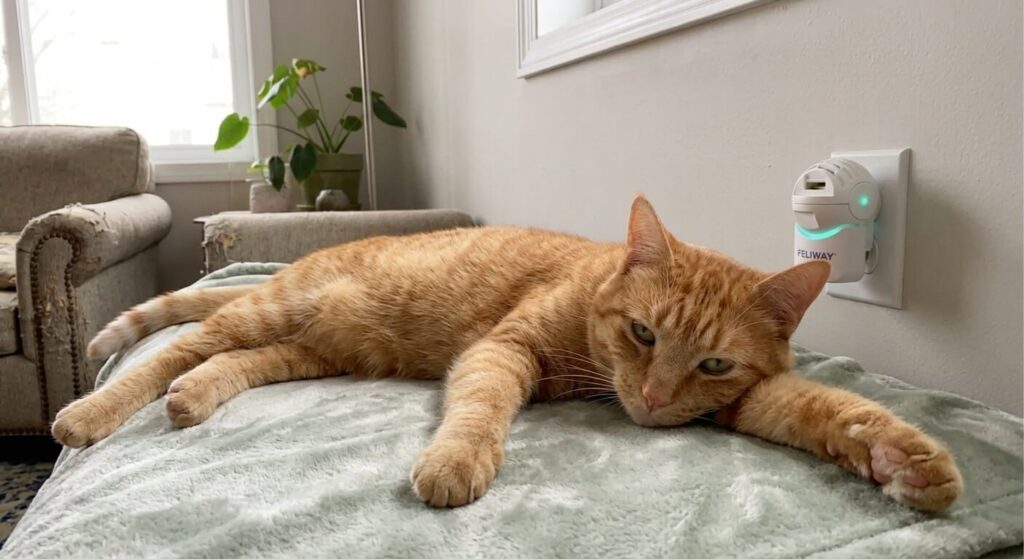
Table of Contents
How We Chose These Cat Calming Diffuser Picks
These recommendations are based on each product’s intended use, current manufacturer directions, formulation category, room-placement requirements, and the available veterinary evidence for synthetic feline pheromones. They are not presented as the results of personal laboratory testing or as proof that one product will work for every cat.
We gave preference to products that:
- clearly identify their intended feline behavior problem;
- provide current instructions for coverage, refill life, and diffuser replacement;
- are fragrance-free rather than marketed as essential-oil aromatherapy;
- can remain plugged in continuously as directed;
- are widely available with replacement refills;
- fit a distinct use case instead of duplicating another pick; and
- can be combined with environmental and behavioral changes.
The scientific evidence deserves a realistic explanation. Veterinary guidelines include synthetic feline pheromones as a possible supportive tool, especially when combined with environmental management. However, effects may be modest, vary by individual cat, and be overwhelmed when a cat still perceives danger. Research on particular behaviors has also produced mixed results. A diffuser is therefore best viewed as one low-effort part of a broader plan, not a cure or a substitute for diagnosis.
1. FELIWAY Optimum — Best Overall
FELIWAY Optimum is the most practical first choice when a cat shows several possible stress signs and you cannot reduce the problem to one behavior. The manufacturer markets it for urine spraying, scratching, hiding, tension between cats, and stress associated with changes in the home.
This broad positioning makes it useful for situations such as:
- moving to a new apartment;
- rearranging furniture or renovating;
- visitors, a new baby, or a changing household schedule;
- hiding, restlessness, or reduced confidence;
- scratching or urine marking associated with environmental stress; and
- a household with mild tension between cats.
The current U.S. instructions state that one diffuser covers up to 700 square feet, a 48 mL refill lasts about 30 days, and the unit should remain on continuously. The company also instructs users to replace the diffuser head after six months. Follow the packaging sold in your country because instructions and hardware can differ by market.
Why It Is Our Best Overall Pick
Optimum avoids forcing owners to decide immediately whether a behavior fits a facial-pheromone or cat-appeasing-pheromone category. That convenience is valuable in a home where stress signs overlap. For example, a recently adopted cat may hide, scratch near doorways, and react defensively to a resident cat. A broad product can be a reasonable trial while the owner also improves hiding areas, feeding stations, litter-box access, and introductions.
The main drawback is price. It may cost more than Classic or Comfort Zone, and paying more does not guarantee a response. If the problem is clearly urine marking or clearly conflict between cats, a more targeted option may be sufficient.
Best Way to Use It
Plug it into the room where the cat spends the most time, not automatically into a hallway or utility room. Keep the diffuser upright in a standard wall outlet and leave clear space above it. Do not hide it behind furniture or curtains. Continue the trial for at least a full refill while tracking behavior, unless your veterinarian recommends a different schedule.
2. FELIWAY Classic — Best for Urine Marking and Scratching
FELIWAY Classic is designed to mimic the facial pheromone signal cats leave when they rub their cheeks against familiar objects. It is a sensible choice when the main concern is urine marking, stress-related scratching, hiding, or adjustment to a changed environment.
It may fit a cat that:
- sprays small amounts of urine on vertical surfaces;
- scratches doorframes or furniture more often after a change;
- hides after moving home;
- becomes unsettled by visitors, construction, or new furniture; or
- needs support while adapting to a carrier or a new room.
Before treating urine outside the litter box as a behavioral problem, distinguish spraying from ordinary urination. Spraying often involves a small amount deposited on a vertical surface while the cat stands with the tail raised. A cat eliminating on a horizontal surface, making repeated litter-box trips, straining, or producing abnormal urine needs veterinary assessment. Read our guide to a cat peeing outside the litter box for the practical differences and first steps.
Why Choose Classic Instead of Optimum?
Classic has a narrower role and may be a more economical trial when the problem clearly matches that role. It also has a long history of use. That does not mean it is proven to resolve every case. Urine marking can be driven by outdoor cats visible through a window, conflict inside the home, poor litter-box placement, pain, or changes in territory. Scratching is also a normal feline behavior; the goal is to redirect it, not eliminate it.
Pair the diffuser with the cause-specific change:
- block the view of outdoor cats if they trigger marking;
- clean marked areas with an appropriate enzymatic cleaner;
- provide sturdy scratching surfaces beside the locations already used;
- add litter boxes in separate, accessible locations;
- avoid punishment, which may increase fear; and
- ask a veterinarian to rule out medical causes.
What to Expect
Do not expect an immediate personality change. Track the number of marking or scratching incidents each week. Improvement means a meaningful reduction from the cat’s own baseline, not necessarily zero incidents. If there is no clear change after a correctly placed, uninterrupted trial, reconsider the diagnosis and the environment instead of buying refill after refill indefinitely.
3. FELIWAY MultiCat — Best for Tension Between Cats
FELIWAY MultiCat is the most targeted option in this guide for homes where conflict between cats is the primary concern. The product is intended to mimic a cat-appeasing pheromone associated with social reassurance.
Possible signs of intercat tension include more than obvious fighting:
- staring and freezing;
- blocking halls, stairs, doors, or litter boxes;
- chasing one cat away from food or resting places;
- one cat consistently hiding when the other enters;
- swatting, growling, or hissing;
- urine marking near shared routes;
- one cat using only a small portion of the home; and
- unequal access to play, attention, windows, or elevated spaces.
These quiet patterns are easy to miss. A household can look peaceful while one cat is avoiding resources to prevent confrontation. Our guide to cat resource guarding explains how to recognize and reduce this pressure.
A Diffuser Cannot Replace Resource Separation
MultiCat may support a calmer emotional environment, but it cannot make one litter box adequate for several cats, create escape routes, or turn a rushed introduction into a safe one. Each cat should have reliable access to food, water, resting areas, scratching surfaces, elevated positions, hiding places, and litter boxes without passing a cat that frightens them.
Distribute resources rather than lining them up in one location. Three bowls beside each other may look like three feeding stations to a person but function like one contested station to cats. The same principle applies to litter boxes placed side by side.
For a new arrival, plug in the diffuser before direct introductions when practical, then use scent exchange, visual barriers, short positive sessions, and gradual increases in contact. See how to introduce a second cat in a small apartment for a staged plan.
When Professional Help Is Needed
Separate cats safely if fights cause injury or one cat cannot move through the home normally. Do not place your hands between fighting cats. A veterinarian should assess both animals because pain and illness can lower tolerance. Severe or persistent cases may need a veterinary behaviorist or another qualified feline behavior professional. Medication can be appropriate for some cats, but that decision belongs to a veterinarian.
4. Comfort Zone Cat Calming Diffuser — Best Alternative
Comfort Zone Cat Calming Diffuser is a useful fragrance-free, drug-free alternative for owners who do not want a FELIWAY product. Its official ingredient information identifies a feline pheromone analog in an isoparaffinic hydrocarbon carrier. It is not a lavender or chamomile essential-oil diffuser.
The manufacturer instructs users to place one diffuser in each room where the cat spends substantial time, keep it upright with the vents facing up, and leave it on continuously. A refill is designed to last about 30 days. The company recommends replacing the diffuser unit every 12 months, which differs from the current six-month replacement instruction for FELIWAY Optimum. Follow the directions for the exact device you own rather than applying one brand’s schedule to another.
Who Should Consider It?
Comfort Zone can be considered when:
- you want a generally available non-FELIWAY option;
- fragrance-free formulation is important;
- your cat’s problem is mild and you are planning a measured trial; or
- replacement refills are easier to obtain where you live.
The brand also sells a Multi-Cat version. Choose the product whose label matches your primary problem rather than selecting by package color or price alone.
Limitations
“Drug-free” does not mean a product must work, and “pheromone” on a label is not enough to establish quality or effectiveness. Veterinary guidance notes that the term is not protected in a way that guarantees every product contains a meaningful feline pheromone analog. Buy from a reputable retailer, verify the exact product, and avoid unbranded plug-ins with vague ingredients or extraordinary promises.
How Does a Cat Calming Diffuser Work?
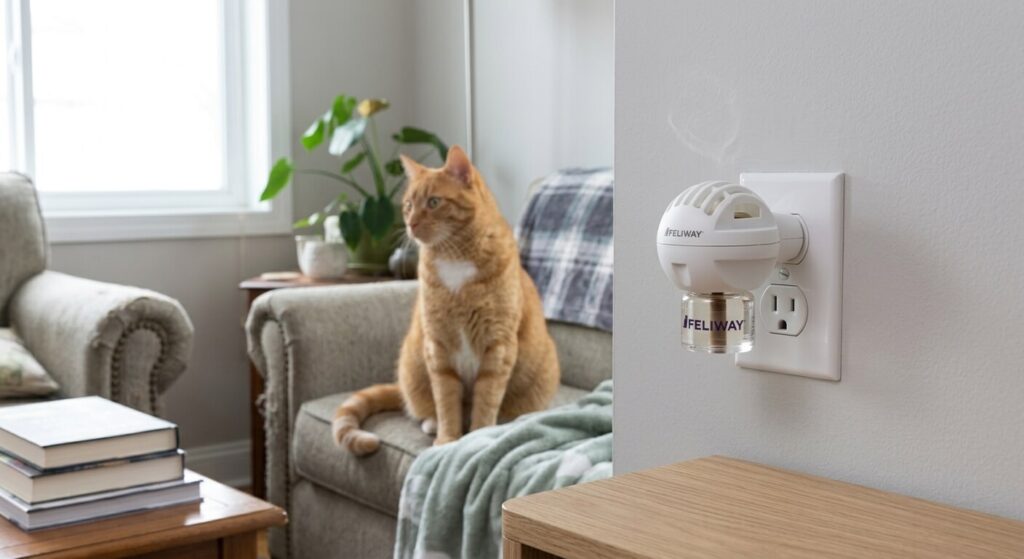
Cats use chemical signals as part of communication and environmental assessment. When a cat rubs its face against a familiar object, for example, it deposits chemical information. Commercial feline pheromone diffusers use synthetic analogs intended to resemble certain reassuring signals.
The refill liquid is warmed by the plug-in device and disperses into the room. Humans generally do not smell the pheromone analog. It is not intended to perfume the home, sedate the cat, or work like an anti-anxiety medication.
The most accurate expectation is that a diffuser may make a supportive environment feel safer to some cats. It cannot override an active threat. If another cat guards the only litter box, a dog repeatedly chases the cat, or construction noise continues beside the hiding place, changing the environment is more important than increasing the number of diffusers.
Do Cat Calming Diffusers Really Work?
The answer is “sometimes, for some cats and some behaviors.”
Feline veterinary guidelines recognize synthetic pheromones as a possible component of environmental and behavior plans. At the same time, reviews of the evidence have found variation among studies, behaviors, products, and methods. A meta-analysis of feline urine-spraying treatments suggested pheromone therapy may add value, while also calling for stronger randomized trials. An earlier systematic review found insufficient evidence for several claimed outcomes.
That mixed evidence does not make a diffuser useless. It means owners should use one as a monitored trial with a defined goal.
Set a Measurable Goal
Instead of deciding that a cat “seems calmer,” record something observable:
- urine marks per week;
- chasing episodes per day;
- minutes spent hiding after a predictable trigger;
- scratching incidents at the problem location;
- meals skipped during a transition; or
- times one cat blocks another from a resource.
Record a baseline for several days if the situation is safe. Then install the diffuser correctly and keep the other major variables as consistent as practical. Review the numbers weekly. A log also gives your veterinarian better information.
Allow a Fair Trial
Some owners report changes quickly, while others notice gradual improvement. Manufacturer timelines are not a guarantee. A practical trial is about 30 days because that corresponds to a full refill and gives you enough time to compare weekly patterns. Do not delay veterinary attention for a month when the cat is ill, injured, not eating, unable to urinate, or living in serious conflict.
Know When to Stop
Stop and reassess if:
- the behavior becomes worse;
- the device overheats, leaks, or is damaged;
- your cat shows respiratory or other physical signs;
- there is no measurable benefit after correct use; or
- the underlying trigger remains unresolved.
How to Choose the Right Diffuser for Your Cat
Start With the Behavior, Not the Brand
Choose Optimum for mixed stress signs, Classic for marking or scratching associated with environmental stress, and MultiCat for conflict between cats. Comfort Zone is an alternative general calming product, with a separate multi-cat option available.
Rule Out Medical Causes
A diffuser can waste valuable time if pain or disease is driving the change. Schedule an examination for new litter-box problems, aggression, excessive grooming, appetite changes, vocalization, disrupted sleep, reduced jumping, or persistent hiding. Sudden aggression can be associated with pain, fear, redirected arousal, or neurological and endocrine problems; our guide to an indoor cat suddenly becoming aggressive covers immediate safety steps.
Consider the Trigger
Match the plan to the source:
- Moving: create one quiet base room with familiar bedding and predictable resources.
- Visitors: give the cat a voluntary retreat rather than forcing interaction.
- Fireworks: reduce sound and light, provide a covered hiding area, and prepare before the event. See how to calm a cat during fireworks.
- Being alone: assess routine, enrichment, and attachment-related behavior. A diffuser alone will not resolve cat separation anxiety.
- Multi-cat conflict: separate resources and rebuild safe associations.
- Outdoor-cat triggers: use privacy film or adjust access to windows where marking occurs.
Check Ongoing Cost
Compare the cost of the starter kit, monthly refills, and periodic diffuser-head replacement. Avoid selecting only by the cheapest initial kit because refill availability and device life affect the real cost. Prices change frequently, so fixed dollar amounts quickly become inaccurate.
Correct Placement: Where to Plug In a Cat Calming Diffuser
Placement is one of the easiest ways to accidentally undermine a trial.
- Choose the cat’s main living area. Put the diffuser where the target behavior occurs or where the cat spends the most time.
- Use a standard wall outlet. Insert the device upright with its vents facing the correct direction.
- Leave at least four feet of clear space above it when required by the manufacturer. Shelves and cabinets can block circulation and collect residue or heat.
- Keep it out from behind furniture and curtains. These can obstruct dispersal and may create a safety issue.
- Do not use an extension cord, adapter, or power strip unless the manufacturer explicitly permits it.
- Keep it switched on continuously. Repeatedly unplugging it makes the trial inconsistent.
- Use enough units for separated spaces. Pheromone released in one closed room will not meaningfully cover rooms behind closed doors.
Do not place the diffuser based solely on the location of the nearest outlet. A hallway the cat only crosses briefly is usually less useful than the room where the cat rests or where tension occurs.
Safe Use and Maintenance
Use the diffuser only as the instructions describe. Plug-in devices produce heat, so inspect the outlet, plug, and unit periodically. A warm diffuser can be normal, but scorching, discoloration, a burning smell, leaking liquid, a loose outlet, or unusual heat is a reason to unplug it safely and contact the manufacturer or an electrician as appropriate.
Use the refill made for the same brand and device. Do not pour another liquid into the bottle, combine brands, add essential oils, or use a refill with a generic heater. Product-specific wick, temperature, and formulation differences matter.
Write the refill date on a calendar. A bottle may appear to contain a small amount of liquid near the end of its expected life; follow the manufacturer’s replacement schedule rather than waiting for behavior to return. Replace the diffuser head on the schedule printed for your model.
Keep bottles and loose caps away from cats and children. If liquid contacts skin or eyes, or a cat chews or spills a refill, follow the product instructions and contact a veterinarian or animal poison service for case-specific advice.
Pheromone Diffusers Are Not Essential-Oil Diffusers
A feline pheromone diffuser and an aromatherapy diffuser are different products. Do not add lavender, chamomile, peppermint, eucalyptus, tea tree, citrus, or any other essential oil to a pheromone unit.
Essential-oil risk depends on the oil, concentration, route of exposure, duration, ventilation, and the cat’s health. Concentrated oils can be absorbed through the gastrointestinal tract, skin, lungs, and mucous membranes. Active ultrasonic or nebulizing diffusers may put microdroplets into the air; droplets can settle on fur and be swallowed during grooming. Cats with asthma or other respiratory disease may be especially vulnerable to airborne irritants.
Possible signs of harmful exposure include drooling, vomiting, unsteadiness, tremors, coughing, wheezing, difficulty breathing, lethargy, or abnormal body temperature. Move the cat away from the exposure if it is safe to do so and contact a veterinarian or animal poison-control service promptly. Do not induce vomiting unless a veterinary professional specifically directs you.
This does not mean every brief exposure produces poisoning. It means essential oils should not be treated as a natural substitute for a feline pheromone product, and concentrated oil should never be applied directly to a cat.
A 30-Day Cat Calming Diffuser Plan
Days 1–3: Establish the Baseline
Define the target behavior and record its frequency, location, and likely trigger. Photograph resource locations and note where each cat sleeps, eats, hides, and travels. If the behavior is new or medically concerning, contact your veterinarian before starting.
Day 4: Install the Right Product
Choose the product by use case and install it according to its manual. Record the date, room, and outlet. Do not hide the device behind furniture. If possible, avoid making several unrelated changes on the same day so you can interpret what follows.
Week 1: Fix Immediate Environmental Problems
Add or redistribute essential resources. Provide escape routes and elevated resting places. Block visual triggers where needed. Stop punishment and forced interaction. For multi-cat tension, prevent ambushes and separate cats if safety is uncertain.
Week 2: Compare, Do Not Guess
Compare the current weekly count with baseline. Look for reduced intensity as well as reduced frequency. A chase that stops quickly without cornering may represent progress even if the count has not yet reached zero.
Weeks 3–4: Refine the Plan
Continue the diffuser without interruption. Adjust environmental factors carefully and record changes. If behavior is unchanged, confirm that the product matches the problem and that placement is correct. Discuss persistent concerns with your veterinarian.
End of Day 30: Make a Decision
Continue if there is a meaningful, repeatable benefit and ongoing support is needed. If improvement is absent, do not assume that more refills will solve the problem. Reassess medical causes, diagnosis, triggers, resources, and the need for professional behavior support.
Common Mistakes
Expecting a Diffuser to Sedate the Cat
Pheromone products are not sedatives. A cat should remain alert and behave normally. For travel, severe fear, or predictable high-stress events, ask a veterinarian about a complete plan.
Using the Wrong Formula
A general facial-pheromone product may not be the most targeted choice for serious conflict between cats. Conversely, a multi-cat formula is not an explanation for painful urination or litter-box avoidance.
Plugging It Into a Convenient but Irrelevant Room
The diffuser must be in the cat’s functional territory. A unit beside the front door does little for a cat that spends almost all day upstairs behind a closed door.
Blocking the Airflow
Shelves, desks, cabinets, curtains, and furniture above or in front of the unit can interfere with dispersal and safe operation.
Ignoring Resource Competition
No chemical signal can make a guarded resource reliably accessible. Create multiple separated options with more than one route of approach and escape.
Punishing Stress Behavior
Yelling, spraying water, rubbing a cat’s nose in urine, or forcing cats together increases threat. Use management, reinforcement, gradual exposure, and professional support instead.
Changing Everything at Once
When safety allows, make planned changes and keep notes. Otherwise, you may see improvement without knowing which part helped. Safety interventions should never be delayed merely to preserve a perfect experiment.
Frequently Asked Questions
What is the best cat calming diffuser?
FELIWAY Optimum is the best general starting point for mixed stress signs. FELIWAY Classic better targets urine marking, scratching, and environmental change, while FELIWAY MultiCat is designed for tension between household cats. Comfort Zone is a fragrance-free alternative. The best choice depends on the behavior and its cause.
How long does a cat calming diffuser take to work?
There is no guaranteed timeline. Some owners notice changes within days, while others need several weeks. Use the product continuously and evaluate measurable behavior over a roughly 30-day trial. Seek veterinary help sooner when symptoms suggest illness or welfare is compromised.
Can I use two different pheromone diffusers together?
Veterinary guidelines sometimes describe using different feline pheromone analogs as part of a multi-cat introduction plan. However, never put one brand’s refill into another brand’s device or mix liquids. If you are considering multiple products in the same area, check current manufacturer directions and ask your veterinarian.
How many diffusers do I need?
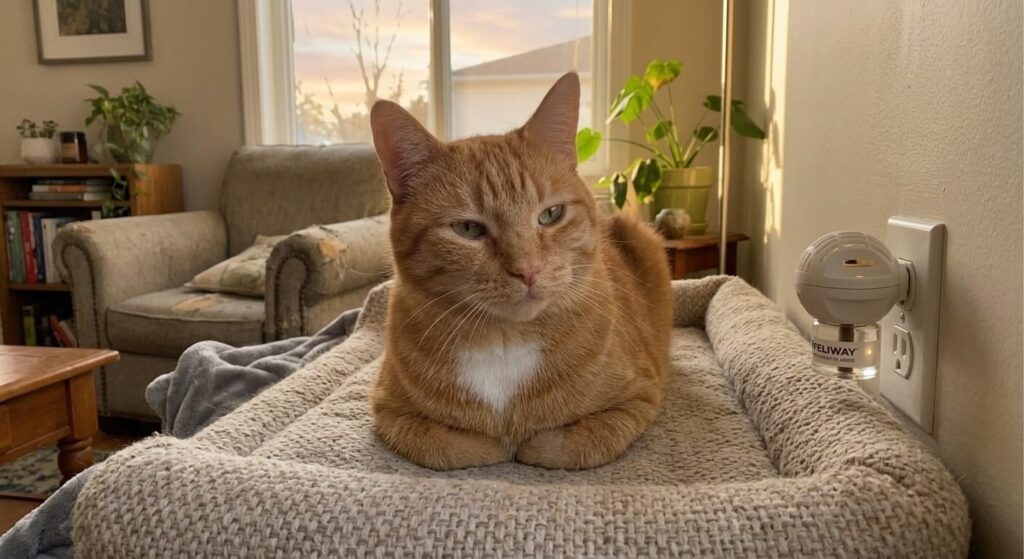
Start with one in the main room for the target cat and follow the product’s stated coverage. Closed doors and divided living areas limit distribution, so separate rooms may need separate units. Coverage should reflect the cat’s actual territory, not only total home square footage.
Can I plug a diffuser in near the litter box?
Use the room where the problem occurs if the outlet meets all placement instructions and airflow is unobstructed. Do not treat the diffuser as a substitute for enough clean, accessible litter boxes in separated locations.
Are cat calming diffusers safe to leave on all day?
The products in this guide are designed to remain plugged in continuously when used with the correct refill in a suitable wall outlet. Inspect the device and outlet, keep the required clearance, and replace the unit on the manufacturer’s schedule. Unplug a damaged, leaking, discolored, or abnormally hot device.
Can a diffuser stop cats from fighting?
It may support a broader behavior plan, but it cannot make unsafe cats live together peacefully by itself. Separate resources, prevent blocking and ambushes, use gradual reintroduction, and obtain veterinary or behavior help for persistent aggression.
Will a diffuser help a cat during a move?
It may help as one part of the transition. Set up a quiet base room with familiar bedding, hiding spaces, food, water, scratching surfaces, and a litter box. Keep routines predictable and expand access at the cat’s pace.
Can I use a cat pheromone diffuser around dogs?
Feline pheromone analogs are intended to communicate with cats and are not expected to calm dogs. Follow the product label for household safety and ask your veterinarian if another species has respiratory disease or other vulnerabilities.
Does a calming diffuser replace anxiety medication?
No. Do not start, stop, or change prescribed medication because you installed a diffuser. Medication, behavior modification, and environmental management address different parts of a problem and should be coordinated with a veterinarian.
Final Thought
Choose the cat calming diffuser that matches the behavior rather than the package with the biggest promise. FELIWAY Optimum is the strongest all-purpose starting point, FELIWAY Classic is suited to marking and scratching associated with stress, FELIWAY MultiCat targets tension between cats, and Comfort Zone offers a fragrance-free alternative.
The diffuser is only one layer. Veterinary assessment, sufficient and separated resources, predictable routines, safe hiding and climbing spaces, gradual introductions, and careful measurement matter more than any plug-in. Used in that context, a pheromone diffuser can be a reasonable, low-effort trial for helping a cat feel safer at home.
References
- American Association of Feline Practitioners. “2024 AAFP Intercat Tension Guidelines: Recognition, Prevention and Management.” Journal of Feline Medicine and Surgery, 2024.
- Mills DS, Redgate SE, Landsberg GM. “A Meta-Analysis of Studies of Treatments for Feline Urine Spraying.” PLoS ONE, 2011.
- Frank D, Beauchamp G, Palestrini C. “Systematic Review of the Use of Pheromones for Treatment of Undesirable Behavior in Cats and Dogs.” Journal of the American Veterinary Medical Association, 2010.
- FELIWAY. “FELIWAY Diffusers.” Accessed July 2026. https://us.feliway.com/collections/feliway%C2%AE-diffusers
- FELIWAY. “FELIWAY Optimum Diffuser and Refill Kit.” Accessed July 2026. https://us.feliway.com/products/feliway-optimum-diffuser-refill-kit-48ml-30-day
- Comfort Zone. “Comfort Zone Cat Calming Diffuser.” Accessed July 2026. https://www.comfortzone.com/all-products/comfort-zone-calming-diffuser
- Comfort Zone. “Comfort Zone Multi-Cat Diffuser.” Accessed July 2026. https://www.comfortzone.com/all-products/comfort-zone-multi-cat-diffuser
- Merck Veterinary Manual. “Toxicoses From Essential Oils in Animals.” Reviewed March 2025. https://www.merckvetmanual.com/toxicology/toxicoses-from-household-hazards/toxicoses-from-essential-oils-in-animals
- ASPCA Animal Poison Control Center. “The Essentials of Essential Oils Around Pets.” https://www.aspca.org/news/essentials-essential-oils-around-pets