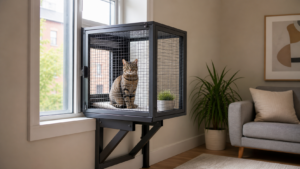
To introduce second cat small apartment life safely, start with separation, scent, and patience before face-to-face contact. A small apartment gives cats fewer escape routes, so the introduction needs to be more structured, not more rushed.
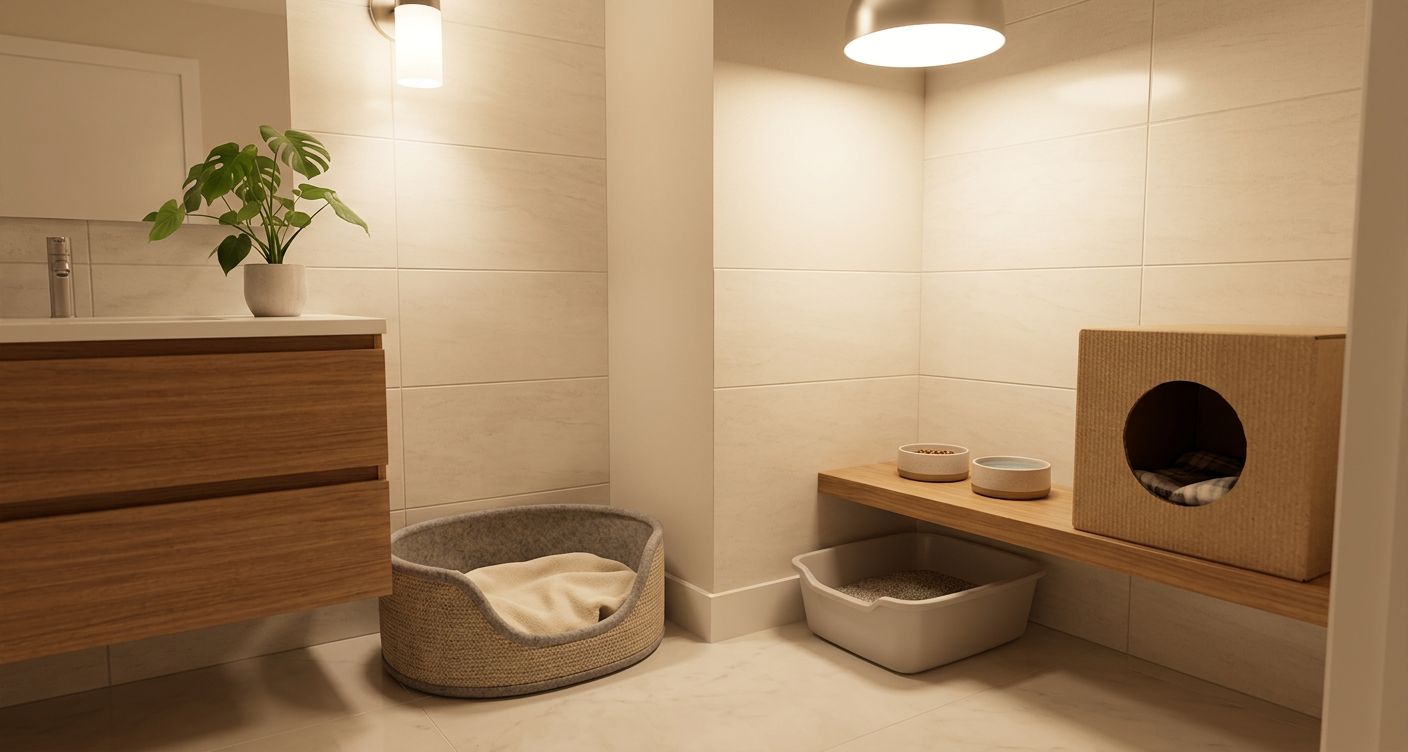
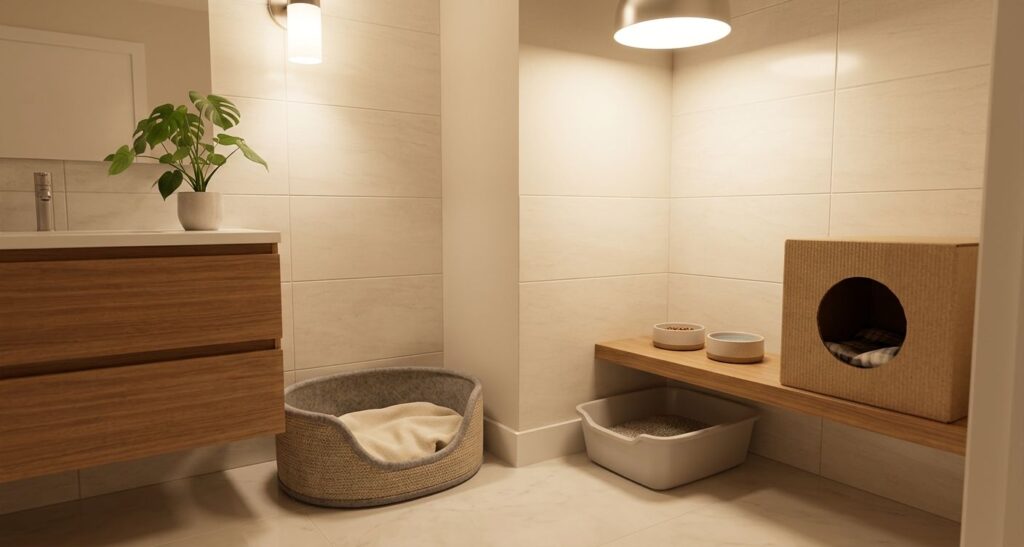
In a one-bedroom apartment, a bathroom or bedroom with a secure door can serve as a transition room. Prepare separate food, water, litter, hiding and resting areas before the new cat arrives; do not expect the cats to resolve tension on their own.
This guide shows you a six-step small-apartment cat introduction plan: basecamp setup, scent swapping, door feeding, controlled visual contact, short supervised meetings, and long-term resource planning.
How to Introduce a Second Cat in a Small Apartment(Quick Answer)
To introduce a second cat in a small apartment, first provide the newcomer with a secure transition room and each cat with separate resources. Let them become comfortable with the other cat’s scent before using a secure visual barrier. Move to short, supervised shared-space sessions only when both cats can remain relaxed and retreat freely. Progress depends on behavior, not a fixed number of days.
There is no reliable four-to-eight-week timetable: introductions can take weeks or longer, and some cats may never be comfortable living together. Hissing, hiding, or brief growling does not always mean failure, but hard staring, blocking exits, repeated chasing, fighting, not eating, or litter box avoidance means you should slow down and consider veterinary or certified behavior support.
If the newcomer is intended as a playmate for a lone young kitten, review our single kitten syndrome guide first; a compatible companion may help some homes, but adopting another cat is not a universal behavior fix.
Important Safety Note
This guide is for normal, low-level introduction tension such as hissing, hiding, and cautious avoidance. If either cat refuses food, contact your veterinarian promptly; do not wait several days. Also pause the introduction and seek veterinary or qualified feline-behavior help if either cat cannot use the litter box safely, is injured, repeatedly attacks, or remains highly distressed.
Table of Contents
Why Cat Introductions Fail — Especially in Small Spaces
Introducing cats too quickly can create tension, but it is not the only cause. Pain or illness, resource competition, the cats’ prior experiences and the introduction of a new cat can all affect how they respond.
In a small apartment, cats may have fewer ways to avoid each other. Plan separate resting areas, litter boxes, food and water stations, and safe routes so that neither cat has to pass the other to reach an essential resource. Staring, blocking, hiding, urine marking or fighting can indicate tension; they do not prove that one cat is trying to dominate the other.
Some cats can learn to coexist when introductions proceed gradually and resources are well distributed. Others may remain distressed despite careful changes and need veterinary or qualified behavior support; living together is not guaranteed.
Before You Begin: What You Need in Place
Before the new cat arrives, set up a secure transition room and the resources listed below. Preparing the space in advance reduces the need for a rushed first encounter.
Supplies checklist:
- A separate food bowl, water bowl, and litter box for the new cat — fully set up in the basecamp room before arrival
- A carrier, a hiding spot (even a cardboard box), and a soft bed in the basecamp room
- A tall baby gate or pet gate with a small cat door, or a screen door if available — for later visual introduction stages
- A synthetic feline pheromone diffuser is optional; it may help some cats, but it does not replace separation, scent swapping, and enough individual resources
- Your existing cat’s favorite bedding and toys distributed normally — don’t rearrange your resident cat’s environment right before introducing a newcomer
Step 1: The Basecamp — Begin with Separation
The moment the new cat arrives, they go directly into the basecamp room. The door closes. This is not isolation — it is foundation.
The new cat needs a safe, contained space to recover from transport and explore without an immediate encounter. The resident cat can notice the new scent from behind a closed door. Keep both cats physically separated while they adjust and seek veterinary advice if either stops eating or appears unwell.
Setting Up the Basecamp Successfully
The basecamp should contain everything the new cat needs: food, water, litter, hiding options, a soft resting surface, and, if available, a familiar item such as your clean, worn t-shirt. Spend time in the basecamp room daily — sitting quietly, letting the new cat approach on their terms, building association between your presence and safety.
What to watch for after arrival:
- A new cat may hide after arrival. If the cat refuses food, contact your veterinarian promptly rather than assuming this is normal adjustment; a sustained loss of appetite can become serious within 24 hours in an adult cat, and young kittens need help sooner.
- The resident cat may sniff near the door, vocalize or change its usual routine; observe without forcing contact
- Do not open the door to force a meeting or expect the cats to “work it out”
Keep the door closed, maintain calm routines for your resident cat, and let the under-door scent exchange begin its work.
Step 2: Scent Swapping — The Introduction That Happens Before Any Introduction
Scent is one important way cats gather information. Allow each cat to investigate an item carrying the other cat’s scent at a comfortable distance, without forcing contact. Continue only while both cats can return to normal eating, resting and exploration.
The Blanket Swap Protocol
Once both cats are settling in their separate areas:
- Take a soft blanket or towel that the new cat has been sleeping on and place it in the main living area where your resident cat can investigate it freely
- Take a blanket from the resident cat’s favorite sleeping spot and place it in the basecamp room
- Repeat the exchange when both cats remain comfortable; do not follow a fixed daily schedule
Watch both cats’ reactions. If either repeatedly avoids the scented item, freezes, stops eating or shows sustained distress, increase distance or pause. Move forward when each can encounter the scent and resume normal behavior; this has no reliable universal timetable.
If a cat willingly accepts gentle handling, a soft cloth touched near the cheek can collect scent for the other cat to explore. Do not restrain or force either cat to interact with the cloth.
This same safe-room concept also helps during territory disruption. If you are changing apartments, use our moving apartment with cat guide to plan the room, door control, and scent setup before the move begins.
Step 3: The Door Feed — Building Positive Association With Each Other’s Presence
If both cats are eating normally, you may offer meals on opposite sides of the closed door at distances where each remains relaxed. This is an optional positive association exercise, not a reason to place bowls close together or restrict food.
Running the Door Feed Correctly
Begin with food stations well away from the door. If each cat eats calmly, adjust the distance gradually only if neither appears tense. They do not need to eat right against the door to make progress.
Signs the door feed is working:
- Both cats approach their bowl without hesitation
- No sustained growling or hissing during the meal
- Cats may investigate under the closed door; judge their overall comfort by whether they can return to normal eating and movement
If either cat will not eat near the door, return the bowl to its usual comfortable location and pause this exercise. If a cat refuses food altogether, contact a veterinarian promptly.
Step 4: Visual Contact Through a Secure Barrier
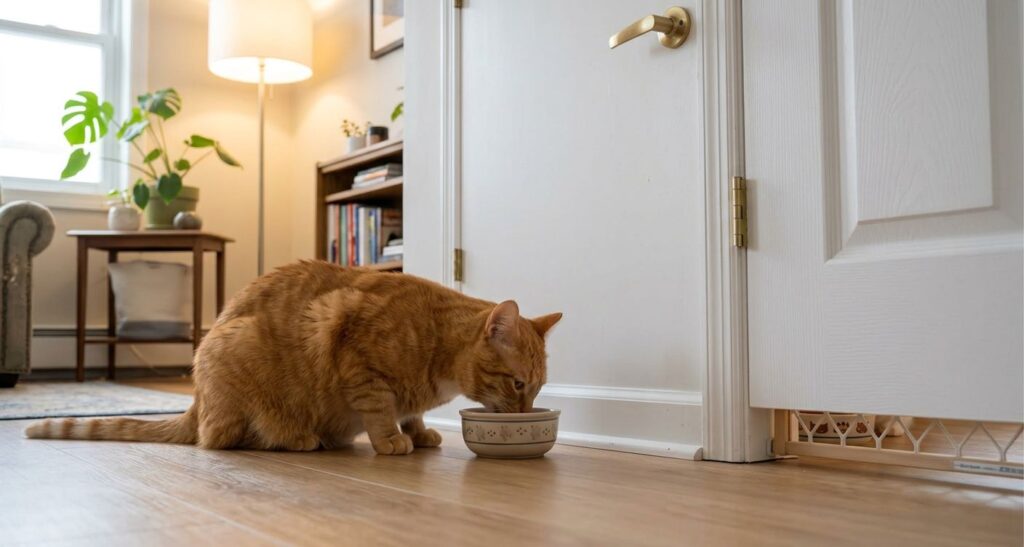
When both cats can eat, rest and move normally while aware of each other through the closed door, you may introduce brief visual contact through a secure barrier. If either cat freezes, repeatedly stares, blocks access or retreats in distress, return to the previous step.
Use a sturdy screen or gate that neither cat can climb over, push aside or squeeze through. Arrange the space so both cats can move away from the barrier. A partly open door held by a loose doorstop may not prevent an unexpected encounter.
Progressing to a Tall Pet Gate
Continue with the secure barrier while the cats can notice each other and disengage without sustained tension. Keep essential resources separate and out of view when needed. Do not advance merely because a preset number of days has passed.
If one cat steals meals or blocks the other cat from eating, a microchip feeder can help protect separate portions; compare safe options in our best microchip cat feeder guide.
What good visual introduction behavior looks like:
- Approaching the gate, sniffing, then walking away calmly
- Brief eye contact followed by disengagement and a return to normal activity
- Eating and playing normally while the other cat is visible
What requires slowing down:
- Sustained hard staring with dilated pupils
- Flattened ears, puffed tail, or crouched aggressive posture
- Repeated hissing or growling, especially when either cat cannot retreat or settle
This stage may take different amounts of time for different cats. Repeated calm encounters and normal eating, resting and litter-box use matter more than a calendar target.
Urine marking or house-soiling can signal distress, but it can also have a medical cause. Pause the introduction and consult a veterinarian rather than assuming the cats are establishing a hierarchy. For observation tips, see our cat spraying vs peeing guide.
Step 5: Supervised Mingling — The First Shared Space Sessions
The first time both cats are in the same space together, every variable should be in your favor.
In small spaces, horizontal distance isn’t always possible. For layout planning in very small spaces, use our guide to living with two cats in a studio apartment.
Choose a quiet time when both cats are calm and normally fed. Provide more than one retreat route and places to rest out of sight. Open access only for a supervised session when both can disengage; do not withhold food to create interest in treats.
Managing the First Sessions
Keep initial shared-space sessions brief and end before either cat becomes distressed. Adjust the duration to their behavior rather than a fixed minute limit. If staring, chasing or blocking appears, use a barrier and separate them safely.
Your role during supervised mingling:
- Move calmly and avoid sudden actions that could startle either cat
- If tension rises, place a solid object such as a cushion or cardboard between the cats to interrupt eye contact, then redirect them separately or return them to separate spaces; do not toss food between them
- Watch for changes in body language and access to exits. Do not pick up or put your hands between highly aroused cats
- If one cat blocks the other’s exit or access to a resource, interrupt the interaction with a visual barrier and separate them safely; blocking is a sign of tension, not a certain prediction of attack
Gradually extend session length only as both cats demonstrate that they can occupy the same space without sustained stress. Full unsupervised access should only come when you’ve observed multiple calm, uneventful sessions.
Competition over food, litter, resting spots or passageways is one possible source of intercat tension. Pain or illness and changes in the household may also matter. See our cat resource guarding guide for layout ideas.
Step 6: Permanent Cohabitation — Setting Up for Long-Term Peace
Once both cats are tolerating shared space, the physical setup of your apartment remains important for safe access and opportunities to avoid one another.
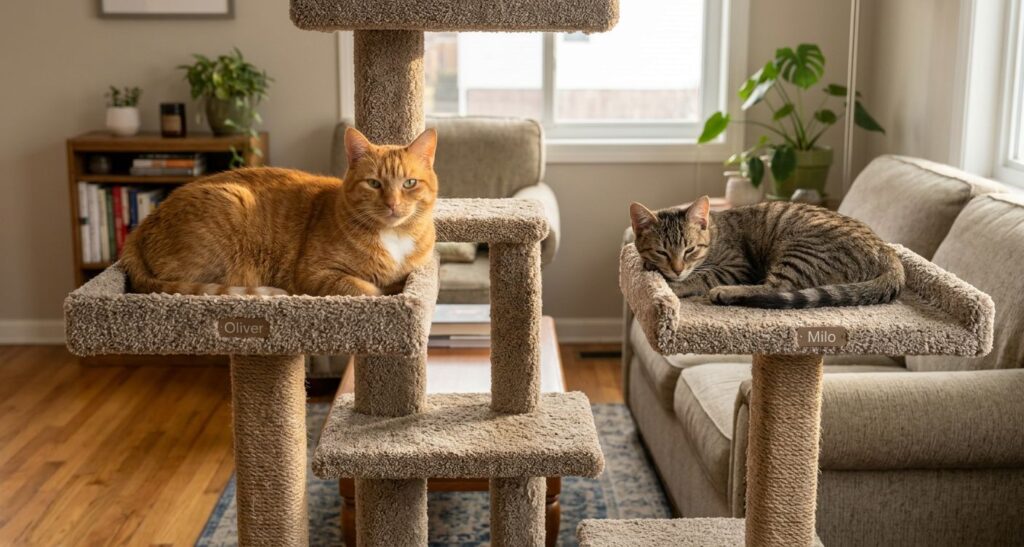
Cats need several ways to avoid unwanted contact. Offer each cat safe resting places at heights that cat prefers, including floor-level hiding options and elevated perches when practical. A higher perch does not mean the cat occupying it is dominant.
In a small home, shelves, cat trees, visual barriers and more than one route through the room can reduce forced encounters. The aim is choice and safe access to resources, not a hierarchy of status. For a room-by-room setup, see our indoor cat enrichment in small apartments guide.
The Resource Distribution Rule
Distribute food, water, litter boxes, scratching surfaces and resting places across separate locations, with visual barriers where needed. If one cat blocks another’s access, revisit the layout before allowing more shared time; our cat resource guarding guide offers examples.
- Litter boxes: A common FelineVMA rule of thumb is one box per cat plus one extra: three for two cats, placed in different accessible locations. Check that neither cat can block the other’s path to a box. Treat this as a practical starting point rather than a guarantee that every cat will be comfortable.
- Keep boxes clean and accessible. In a tight apartment, plan a consistent scooping and odor-control routine; see how to keep litter box from smelling in a small apartment.
- Food and water: Provide separate stations, ideally out of each other’s sight when there is tension; putting bowls at opposite ends of the same surface may still create competition.
- Resting spots: Multiple options at multiple heights — no single “best” spot that both cats want
Readiness Guide: When to Move to the Next Stage
| Phase | Move forward when | Pause or step back when |
|---|---|---|
| Separate transition room | Both cats eat, rest and use the litter box normally in their own spaces | Either stops eating, is ill, or remains highly distressed |
| Scent swapping | Each can investigate the other’s scent and return to normal behavior | Either freezes, avoids the item repeatedly or cannot settle |
| Closed-door meals or play | Both remain comfortable at their chosen distance from the door | Either refuses food or becomes tense near the door |
| Secure visual barrier | Both can notice the other, disengage and move away | Staring, blocking, repeated growling or loss of an escape route occurs |
| Supervised shared space | Repeated brief meetings stay calm, with safe retreats available | Chasing, fighting or resource blocking occurs |
| More shared access | Both consistently use resources and rest normally without supervision concerns | New tension, hiding or litter-box avoidance appears |
These phases have no universal duration. Observe both cats at each step and return to an easier stage if either shows persistent stress. Some cats will need professional help or may never be comfortable sharing the home.
If aggression appears suddenly or the cats’ behavior changes despite separation, ask a veterinarian to assess possible medical causes. See our guide to sudden aggression in indoor cats for warning signs.
FAQ
How long does the process take when learning how to introduce a second cat in a small apartment?
There is no standard number of weeks from arrival to safe shared access. Progress when both cats repeatedly remain relaxed, use their resources normally and can retreat freely. Age alone does not predict whether two cats will accept one another.
Some pairs adjust with gradual introductions and some do not. If tension persists or either cat cannot safely eat, rest or use the litter box, consult a veterinarian or qualified feline behavior professional rather than waiting for a particular week on the calendar.
My cats hissed at each other through the gate. Is this a bad sign?
A brief hiss followed by withdrawal can be a warning that the cat needs space. Do not treat it as an automatic failure or force the cats to stay together; assess the whole pattern of behavior.
Sustained staring, crouching, repeated vocalization, blocking and inability to retreat call for slowing down or returning to a previous stage. Do not wait a set number of weeks before responding to persistent tension.
Is a one-bedroom apartment too small for two cats permanently?
A one-bedroom apartment can work for some compatible pairs, but floor area alone cannot tell you whether these particular cats will be comfortable. Each needs access to separate food, water, litter, hiding and resting spaces, plus routes that do not require passing the other cat. Some cats prefer to live alone.
Before adopting another cat, check whether you can provide a secure transition room and distribute resources in different locations. If those needs cannot be met, or the resident cat already has significant medical or behavioral stress, discuss the plan with a veterinarian or qualified feline behavior professional.
Should I introduce two cats faster if they seem calm?
Calm behavior through a door or barrier shows that the current stage is tolerable; it does not prove readiness for unsupervised access. Advance in small supervised steps while both cats can disengage and use resources normally.
What if my resident cat refuses to eat near the new cat’s door?
Move the bowl farther away from the door and rebuild the association from a distance where your cat can still eat normally. A cat who will not eat is over threshold. The goal is not closeness; the goal is relaxed eating while the other cat’s scent is present.
When should I stop the introduction and ask for help?
Pause the introduction and ask your veterinarian or a qualified feline behavior professional for help if either cat is injured, repeatedly attacks, stops eating, avoids the litter box, hides continuously, or cannot relax even with the cats separated again.
Final Thoughts
Introducing a second cat in a small apartment is not about forcing friendship. It is about giving both cats enough time, scent information, escape routes, and separate resources to decide that the other cat is not a threat.
In a smaller home, plan the transition room, secure barriers, separate resources and retreat routes before adding shared time. Watch both cats rather than a fixed schedule, and seek professional help when tension or changes in eating or litter-box use persist.
References
Barry, K. J., & Crowell-Davis, S. L. (1999). Gender differences in the social behavior of the neutered indoor-only domestic cat. Applied Animal Behaviour Science, 64(3), 193-211.
Ellis, S. L. H., Rodan, I., Carney, H. C., Heath, S., Rochlitz, I., Shearburn, L. D., Sundahl, E., & Westropp, J. L. (2013). AAFP and ISFM Feline Environmental Needs Guidelines. Journal of Feline Medicine and Surgery, 15(3), 219-230.
Levine, E., Perry, P., Scarlett, J., & Houpt, K. A. (2005). Intercat aggression in households following the introduction of a new cat. Applied Animal Behaviour Science, 90(3-4), 325-336.
American Association of Feline Practitioners. (2024). 2024 AAFP intercat tension guidelines: recognition, prevention and management. Journal of Feline Medicine and Surgery.
FelineVMA Cat Friendly Homes. Are you thinking of getting another cat? Guidance on separate resources and considering whether cats can live together.