Oliver is usually a social cat. He follows me from room to room, supervises the kitchen, and normally wants to know exactly what I am doing.
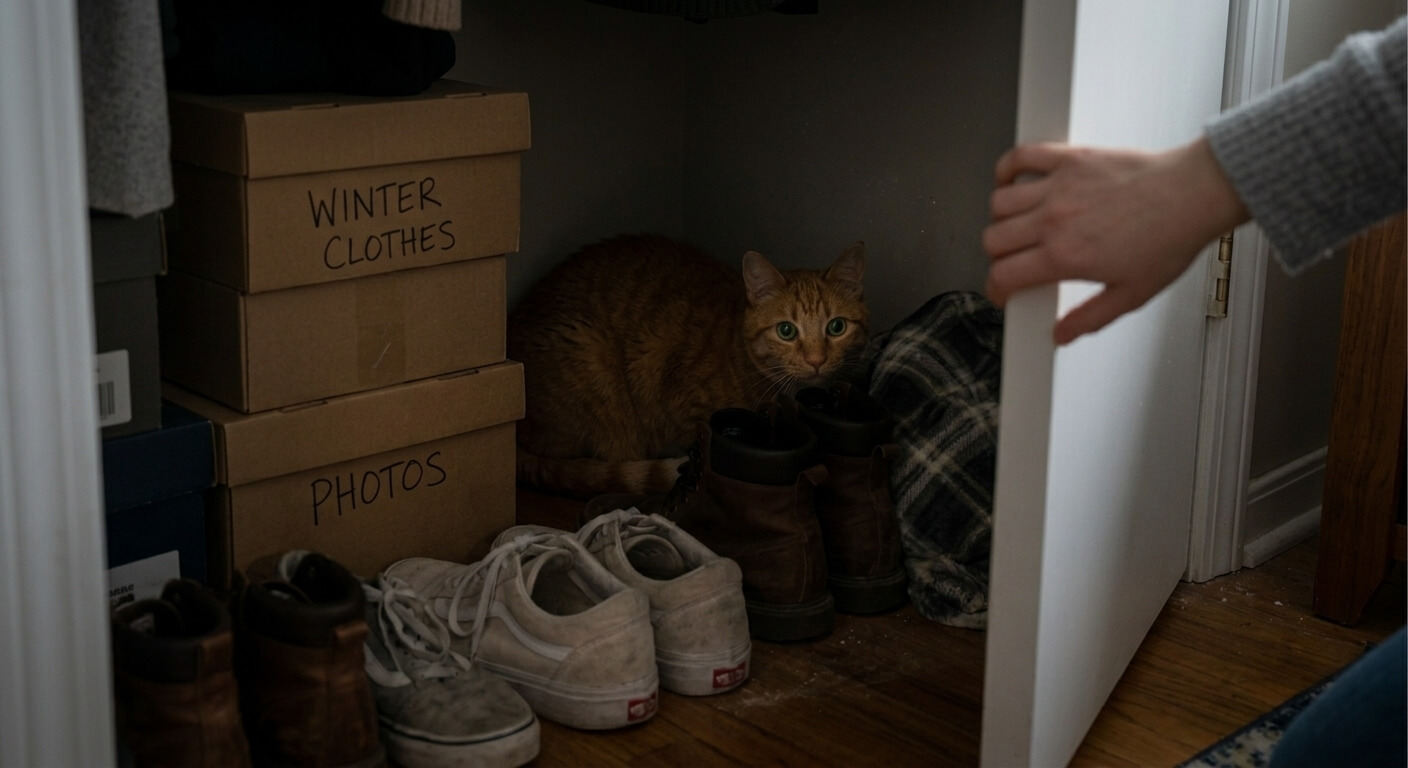
So when hallway renovation started outside my apartment and Oliver disappeared into the back of the bedroom closet for eight hours, I noticed. He was not being dramatic. He was responding to noise, vibration, unfamiliar footsteps, and a temporary loss of environmental security.
If you are asking “why is my cat hiding,” the answer can be completely normal: stress, noise, visitors, new smells, or the need for a safe place. But hiding can also be one of the first signs that a cat is painful, sick, frightened, or overwhelmed. The goal is not to drag your cat out. The goal is to decide whether they need quiet space, environmental support, or a veterinarian.
Quick Answer: Why Is My Cat Hiding Suddenly?
A cat may hide because they feel safer in a protected space, especially after noise, visitors, moving furniture, new smells, conflict with another pet, or a stressful routine change. Short-term hiding after a clear trigger is often normal if your cat still eats, drinks, uses the litter box, and comes out when the environment calms down.
Hiding becomes more concerning when it is sudden, prolonged, or paired with appetite loss, lethargy, vomiting, limping, weight loss, hiding in unusual places, litter box changes, or signs of pain. Senior cats and cats with new hiding behavior should be watched especially closely.
If hiding begins after anesthesia or a procedure, use the clinic’s discharge sheet and our cat post surgery care guide to check the recovery area, incision protection, appetite, elimination, medication, and urgent warning signs.
If hiding appears alongside aggression, litter box changes, night vocalizing, or attention-seeking behavior, compare the pattern with our indoor cat behavior guide.
Do not discourage safe cardboard retreats. If your cat chooses boxes often, read our guide to why cats like boxes and how to use them for indoor enrichment.
Important Veterinary Note: Contact your veterinarian promptly if your cat hides and refuses food, cannot urinate, strains in the litter box, cries, limps, breathes abnormally, seems weak, has pale gums, vomits repeatedly, or suddenly hides despite normally being social. If a male cat is hiding and straining to urinate, treat it as an emergency.
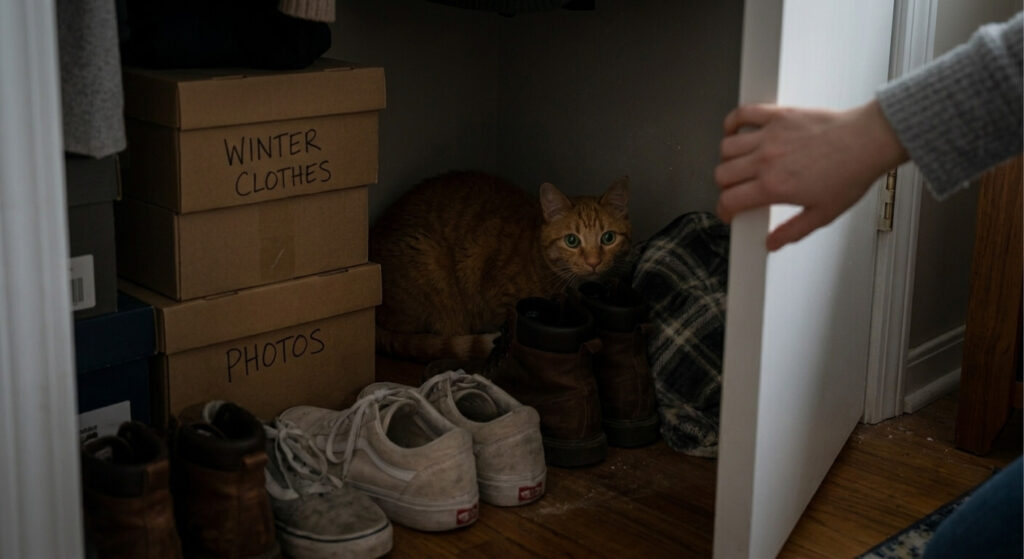
Table of Contents
The Biology of Concealment: Why Predators Need Privacy
To understand why is my cat hiding, we need to start with an evolutionary paradox that defines the domestic cat’s behavioral profile: they are simultaneously predator and prey.
The Dual-Role Animal
Felis catus occupies a unique ecological niche. As a predator, the cat is a highly effective hunter of small mammals and birds. As a relatively small mammal themselves, they are prey for larger carnivores — eagles, coyotes, foxes, large snakes, and other cats in the wild.
This dual status has produced a behavioral system that integrates hunting strategies with survival strategies — and concealment serves both functions simultaneously.
As a predator, hiding allows:
- Ambush positioning — the concealed cat can observe prey without being detected
- Energy conservation between hunts — rest without vulnerability exposure
- Observation of territory from a secure vantage point
As prey, hiding allows:
- Removal from the detection range of larger predators
- Recovery from injury without advertising vulnerability
- Physiological downregulation of stress hormones in a secure environment
The Security-Vantage Axis
Research in environmental enrichment for cats describes what is called the security-vantage preference: cats seek locations that provide both concealment (security from perceived threats) and visual access to the environment (vantage for monitoring).
This is why cats favor:
- High locations with wall backing (top of a wardrobe against a corner wall)
- Enclosed spaces with a single entry point they can monitor (under the bed, inside a box)
- Elevated positions that overlook high-traffic areas (cat tree platforms above a doorway)
The classic cardboard box phenomenon — a cat will choose an Amazon box over a $200 cat bed — is a direct expression of this security-vantage preference. The box provides three walls of concealment, a single entry point the cat can monitor, and a contained microenvironment that feels controllable.
Understanding this biology reframes the question of why is my cat hiding from “what is wrong with my cat” to “what is my cat’s security-vantage system responding to?” — which is the more clinically useful question.
Normal vs. Concerning Concealment
Not all hiding is equal. The critical clinical distinction is between:
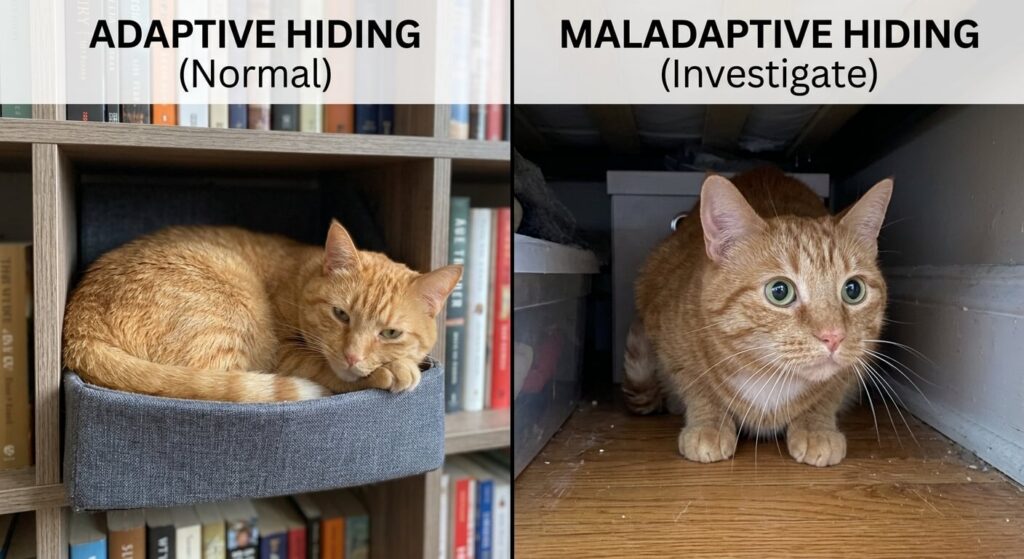
Adaptive Hiding: Concealment behavior that is contextually appropriate, time-limited, and followed by a return to normal behavior. Oliver’s closet retreat during the renovation was Adaptive Hiding — the stimulus was real, the response was proportionate, and when the drilling stopped, Oliver emerged, ate his dinner, and resumed his counter-supervision duties.
Maladaptive Hiding: Concealment behavior that is disproportionate to observable stimuli, persistent beyond the resolution of the apparent trigger, or accompanied by other clinical signs. Maladaptive Hiding is the pattern that warrants veterinary investigation — it is the cat’s behavioral system communicating that something is wrong at a level beyond a passing environmental stressor.
The remainder of this guide is built around helping you distinguish between the two.
5 Common Reasons Your Cat Is Hiding
These are the five causes of feline hiding behavior that I encounter most frequently — both clinically and in my own household. Several of them will surprise owners who have assumed the answer to why is my cat hiding is simply “cats are weird.”
Reason #1: Micro-Stress Triggers You May Not Notice
The most common and most underestimated driver of Adaptive Hiding in indoor cats is what I call the “micro-stress” trigger — environmental changes that humans find trivial or don’t notice at all, but that represent significant disruption to a cat’s finely calibrated territorial awareness.
Cats maintain a detailed cognitive map of their territory. Every object in your apartment has a location in Oliver’s mental model of his space. Deviation from that model — even small deviations — triggers an arousal response that may manifest as hiding while the cat reassesses the changed environment from a secure position.
Common micro-stress triggers:
- New furniture or rearranged existing furniture: That chair was in a specific position. It is now in a different position. Oliver doesn’t know why, and the unknown is assessed as potential threat.
- A new scent introduction: A bag from a pet store, a friend’s cat whose scent came in on clothing, a new cleaning product. Olfactory novelty is processed as potential territorial incursion.
- Schedule disruption: Cats are exquisitely attuned to routine. A meal delivered 90 minutes late, a work-from-home day breaking the usual quiet daytime pattern, a visitor who arrives at an unexpected time — all of these can trigger brief hiding episodes.
- Sound-based triggers: A smoke alarm chirp, a car alarm, a neighboring apartment’s renovation, a child’s birthday party two floors up. Cats detect frequencies humans miss entirely.
- Olfactory changes: A new candle, a changed laundry detergent, fresh paint on a wall. The apartment smells different, and different-smelling territory requires re-evaluation from a safe vantage.
What to look for:
Micro-stress hiding typically resolves within hours of the triggering event ending. The cat emerges, investigates the changed element at their own pace (often through sniffing from a distance, then cautious approach), and returns to normal behavior within 24 hours.
If you’re asking why is my cat hiding and can identify a recent environmental change — however small — start there.
Reason #2: Hidden Pain or Illness
This is the reason that makes the question why is my cat hiding clinically urgent rather than merely behaviorally interesting.
Cats hide pain. This is one of the most consistent, most clinically consequential facts in feline medicine — and it is rooted in the same evolutionary logic as their predator-prey dual status. An animal that advertises injury attracts predators. The behavioral imperative to conceal vulnerability is so deeply embedded in feline behavioral programming that many cats in significant pain will maintain relatively normal activity and social behavior until the pain becomes overwhelming — and then they simply disappear.
The hiding-as-pain-signal pattern:
A cat in Chronic Pain typically doesn’t suddenly collapse and vocalize — that’s an acute pain presentation, and it’s relatively rare. Instead, Chronic Pain produces a gradual behavioral shift:
- Increasingly frequent retreats to a preferred hiding spot
- Reduced participation in activities that were previously routine (greeting the owner at the door, jumping to the cat tree)
- Subtle postural changes — the classic “meatloaf” posture (cat sitting with all four paws tucked under body, head slightly lowered) indicates pain or nausea
- Reduced grooming (particularly of difficult-to-reach areas) in arthritis; increased grooming of a specific painful area in injury or dermatological pain
- Reduced appetite — not always dramatic, sometimes just slightly smaller meal consumption over days
- Subtle facial changes per the Feline Grimace Scale — orbital tightening, muzzle tension, ear rotation
Conditions that commonly present as hiding:
- Dental disease: One of the most prevalent and most underdiagnosed sources of Chronic Pain in cats. A cat with a resorptive lesion or periodontal abscess may simply eat less and hide more — owners rarely associate this with oral pain.
- Arthritis: Particularly in senior cats. The joints hurt more at rest (when the cat has stopped moving and the inflammatory process dominates). Hiding in a warm, low-traffic location is a pain-management behavior.
- Urinary obstruction: A male cat hiding in the litter box or in an unusual location is a potential medical emergency until proven otherwise. Urinary obstruction can kill within 24–48 hours.
- Abdominal pain: Pancreatitis, intestinal obstruction, constipation — all can produce the hiding + meatloaf posture + appetite reduction triad.
- Trauma: An indoor cat who has fallen, been stepped on, or caught a limb may hide the injury while hiding their body. Check for limping, asymmetrical posture, or pain responses to touch.
Reason #3: Sensory Overload
The third answer to why is my cat hiding is one that apartment dwellers in particular need to understand, because the urban acoustic environment is genuinely challenging for an animal with the auditory sensitivity of a domestic cat.
The feline auditory system is not scaled for apartments. Cats can detect frequencies from 48 Hz to 85 kHz — a range that includes not only the sounds humans hear, but ultrasonic frequencies produced by:
- Electronic devices (high-frequency interference from TVs, computers, charging cables)
- Building infrastructure (water pipes, elevator mechanisms, HVAC systems)
- Urban soundscape (frequencies that penetrate walls and windows that humans don’t consciously register)
What constitutes sensory overload for a cat:
- Sustained loud noise (construction, parties, domestic arguments)
- Sudden startling sounds (smoke alarms, fireworks, thunderstorms, car alarms)
- High-frequency electronic interference
- Multiple simultaneous novel sounds
- Sound combined with vibration (construction is particularly overwhelming because it combines acoustic and tactile stimuli)
The hiding response to sensory overload is immediate, often dramatic (the cat may flee at full speed to their chosen concealment spot), and typically resolves within hours of the triggering sounds ceasing.
For apartment-specific management:
- Identify the acoustic hotspots in your apartment (hallway adjacent to shared walls, windows facing a construction site) and ensure your cat has access to the quietest interior rooms
- Provide concealment options that also offer acoustic buffering — an enclosed bed inside a closet, a covered crate in an interior room
- White noise machines reduce the relative intensity of variable external sounds
Hiding is the most logical response to explosive sounds. If hiding happens during fireworks, storms, or construction noise, use our guide on how to calm a cat during fireworks.
Reason #4: Social Fatigue
Not every cat is Oliver — a social, engagement-seeking extrovert of a cat who actively enjoys company. Many cats, particularly those with less extensive early socialization, fall on the introverted end of the feline social spectrum. And even socially comfortable cats have a social tolerance threshold.
Social fatigue hiding occurs when:
- Visitors are present, particularly children or unfamiliar adults
- A household has multiple humans with different interaction styles
- A cat has been handled more than their tolerance threshold allows
- A new person has moved into the household
- A cat from a quieter household is visiting (even if beloved)
This is Adaptive Hiding in its most benign form — the cat is self-regulating their social exposure. The hiding spot is a recovery space, and the cat will emerge when they have downregulated and feel ready to re-engage.
What not to do:
The most common mistake in social fatigue hiding is attempting to retrieve the cat from their hiding spot to “introduce them” to visitors or to demonstrate that the cat is “friendly really.” This removes the cat’s agency over their own social exposure and can escalate Adaptive Hiding into Maladaptive Hiding through forced exposure that exceeds the cat’s regulatory capacity.
What to do:
Provide the hiding spot, inform visitors that the cat will emerge when ready, and allow the process to unfold at the cat’s pace. A cat who hides from visitors for 20 minutes and then emerges to investigate on their own terms is a cat who is managing their social world effectively. Let them.
Reason #5: Temperature Regulation
The fifth and most frequently overlooked answer to why is my cat hiding is thermodynamic rather than psychological.
Cats have a thermoneutral zone (the environmental temperature range within which they maintain body temperature without metabolic effort) of approximately 30–38°C (86–100°F) — significantly warmer than the typical human comfort range of 18–22°C. This means that most indoor apartments, air-conditioned in summer and inadequately heated in winter, are below a cat’s thermoneutral optimum for significant portions of the year.
Hiding as temperature regulation:
Enclosed spaces trap body heat. A cat in a closet, under a bed, inside a covered bed, or in a box is not just seeking concealment — they are maintaining their body temperature more efficiently than they could in open space where convective heat loss is greater.
When temperature-regulation hiding becomes a clinical signal:
Increased heat-seeking behavior — beyond the cat’s normal baseline — can indicate:
- Fever: A febrile cat will seek warm locations to support the metabolic cost of the immune response
- Hypothermia: A cat who is losing heat faster than normal (anemia, shock, hypothyroidism) seeks warmth compensatorily
- Chronic illness: Many systemic illnesses reduce thermoregulatory efficiency
The clinical rule: If your cat has always been a heat-seeker and hides in warm locations routinely, that’s constitutional preference. If a cat who previously didn’t hide in enclosed warm spots suddenly begins doing so intensively — that’s a change worth investigating.
Hiding vs. Withdrawing: The Vet Tech’s Diagnostic Checklist
When I’m assessing a hiding cat — either clinically or at home with Oliver — I work through a systematic checklist that distinguishes Adaptive Hiding from Maladaptive Hiding in a structured way. Here is that checklist, adapted for owner use.
Part 1: Context Assessment
Answer these questions before approaching the cat:
- Is there an identifiable trigger? (construction noise, visitor, rearranged furniture, weather event) — If yes, Adaptive Hiding is more likely
- When did the hiding start? (Within the last hour/during a specific event = likely Adaptive; gradually increasing over days/weeks = investigate)
- Is this behavior new or established? (New behavior in a cat who doesn’t normally hide = investigate regardless of apparent trigger)
- What is the cat’s age? (Senior cats hiding warrants lower threshold for veterinary contact)
- Has anything changed medically recently? (New medication, recent vaccination, recent travel)
Part 2: Remote Behavioral Observation
Observe the cat from a distance before approaching:
| Observation | Adaptive Hiding | Maladaptive Hiding |
|---|---|---|
| Body posture | Relaxed, tucked, eyes partially closed | Tense, meatloaf, wide eyes |
| Breathing | Normal rate and depth | Rapid, labored, or open-mouth |
| Response to your presence | Ear flick, acknowledgment | No response, or flinching |
| Grooming | Normal or paused | Absent or excessive in one location |
| Vocalizations | Silent or normal | Growling when approached, or crying |
| Pupils | Normal to slightly dilated | Fully dilated regardless of light level |
Part 3: The 4-Hour Rule Assessment
Apply these criteria at the 4-hour mark of hiding:
- Has the cat eaten or drunk anything in the last 12 hours?
- Has the cat used the litter box in the last 24 hours?
- Can the cat be gently encouraged to walk to another location? (Does not require carrying — does the cat move normally when they choose to?)
- Is there any vocalization when touched or moved? (Indicates pain)
- Are the gums pink and moist? (Pale, white, or tacky gums = emergency)
If any of these assessments raises a concern — call your veterinarian.
Part 4: The Newly Adopted Cat Exception
A newly adopted cat hiding is almost universally Adaptive Hiding — and requires a completely different management approach than established-cat hiding.
If hiding happens mainly when you leave or return home, compare the pattern with our guide to cat separation anxiety signs. — For newly adopted cats, hiding is a standard and expected component of the decompression phase. Our comprehensive cat socialization guide explains the decompression timeline, the “rule of 3” adaptation framework (3 days, 3 weeks, 3 months), and the specific environmental setup that supports a shy cat’s transition from hiding to confident exploration at their own pace.
The cardinal rule for newly adopted cats who are hiding: do not rush the process. Forced exposure and repeated retrieval from hiding spots dramatically extends the decompression timeline and can create lasting anxiety associations. Provide the hiding spots, allow the process, and let the cat set the pace.
Hiding is normal for new arrivals. Hiding is normal for many new arrivals. To help a fearful cat build trust gradually, follow our guide on how to socialize a scared cat.
When to Call the Vet: 3 Serious Hiding Red Flags
Having established the diagnostic framework, here are the three serious red flags that transform why is my cat hiding from a behavioral question into a medical emergency:
Red Flag #1: Hiding With Appetite Refusal Beyond 24 Hours
A healthy cat who is hiding for behavioral reasons will typically eat when food is offered — they may be cautious, they may eat quickly and return to the hiding spot, but they eat.
A cat who refuses food for 24+ hours while hiding is may be showing a medical problem that needs veterinary attention.
The specific danger for cats is hepatic lipidosis (fatty liver disease) — a condition unique to cats that can develop within 48–72 hours of significant caloric restriction, particularly in overweight cats. When a cat stops eating for any reason, their body rapidly mobilizes fat stores, overwhelming the liver’s processing capacity and causing hepatic dysfunction. Hepatic lipidosis is life-threatening but treatable when caught early.
Additional appetite-related red flags:
- Approaching the food bowl but not eating (suggests oral pain — dental disease, ulceration)
- Eating a small amount and immediately retreating (suggests nausea or abdominal pain)
- Drinking significantly more or less than usual alongside hiding
Red Flag #2: Hiding With Litter Box Changes
Any alteration in urinary or fecal patterns alongside hiding requires veterinary evaluation:
Urinary:
- Not urinating for more than 24 hours — potential urinary obstruction (emergency)
- Urinating outside the litter box while hiding (may be unable to reach box due to pain)
- Blood in urine
- Crying or straining in the litter box
Fecal:
- No defecation for 48–72 hours
- Diarrhea combined with hiding and lethargy (systemic illness pattern)
- Straining without production
The urinary obstruction emergency: A male cat who is hiding and has not urinated in 12–24 hours is a veterinary emergency until proven otherwise. For a fuller prevention and warning-sign overview, read our indoor cat urinary health guide. Urinary obstruction causes rapidly progressive kidney damage and death without intervention — it is one of the true feline emergencies where hours matter.
Red Flag #3: Sudden Hiding in a Senior Cat
The third red flag addresses the population where the stakes of missed diagnosis are highest.
If hiding is part of a larger behavior pattern, check the broader signs your indoor cat is stressed.— Sudden onset hiding in a senior cat (over age 10) should trigger veterinary contact rather than watchful waiting, because the differential diagnosis list is significantly longer and more serious than in a younger cat. Our comprehensive senior cat health guide details the conditions most commonly responsible for behavioral changes in older cats — including cognitive dysfunction, arthritis, hyperthyroidism, and CKD — all of which can present initially as hiding behavior before other clinical signs become apparent.
The senior-specific hiding differentials:
- Feline Cognitive Dysfunction: Disorientation drives the cat to seek enclosed, defined spaces where spatial confusion is minimized
- Arthritis: Pain-driven Chronic Pain hiding, particularly on cold days or after periods of rest
- Hyperthyroidism: Neurological hyperirritability causes sensitivity to environmental stimuli and increased hiding
- Hypertension: Can cause sudden neurological events (apparent stroke-like episodes) that drive acute hiding
- End-of-life behavior: A cat who is seriously ill and approaching the end of their life will often seek isolation — this is a deeply instinctive behavior and one of the most heartbreaking aspects of caring for a senior cat
The clinical rule for senior cats:For older cats, hiding should be considered alongside appetite, thirst, weight, grooming, and mobility changes. If you notice these patterns, review our guide to chronic kidney disease cats signs before your vet visit so you know what to observe. New hiding behavior lasting more than 6–8 hours, or hiding accompanied by any change in appetite, water intake, litter box use, or mobility = same-day veterinary contact.
Creating ‘Legal’ Hiding Spots in a Small Apartment
Here is the component of answering why is my cat hiding that most articles miss entirely: rather than trying to prevent hiding, the goal is to provide appropriate, safe, monitored hiding options — and to ensure that your cat has no reason to seek dangerous or inaccessible concealment locations.
The ‘Legal Hiding’ Philosophy
A cat who cannot access appropriate hiding spots will create them — behind the refrigerator, inside the box spring, on a high ledge reached by precarious climbing. Providing deliberate, safe, accessible hiding options gives you three advantages:
- You know where to find them — a cat hiding in their designated spot can be observed; a cat hiding behind the appliances cannot
- The hiding is safer — no risk of becoming trapped, injured, or lost
- The hiding is more effective for the cat — a properly designed hiding spot reduces stress hormones faster than a makeshift location, shortening the recovery period
Hiding Spot Design for Apartments
Principles of an effective legal hiding spot:
- Single entry point the cat can monitor: Not a pass-through — one entrance that the cat can face
- Body-size appropriate: Snug but not cramped. The cat should be able to turn around and change position.
- Acoustically buffered: Interior locations, away from exterior walls and noisy appliances
- Thermally comfortable: Warmer than the ambient room temperature (enclosed spaces retain heat)
- Familiar scent: A worn piece of owner clothing in the space significantly reduces stress hormones in bonded cats
- Accessible at all times: A hiding spot that is sometimes closed off is less effective because the cat cannot rely on its availability as a safety net
Specific implementations for small apartments:
| Option | Setup | Notes |
|---|---|---|
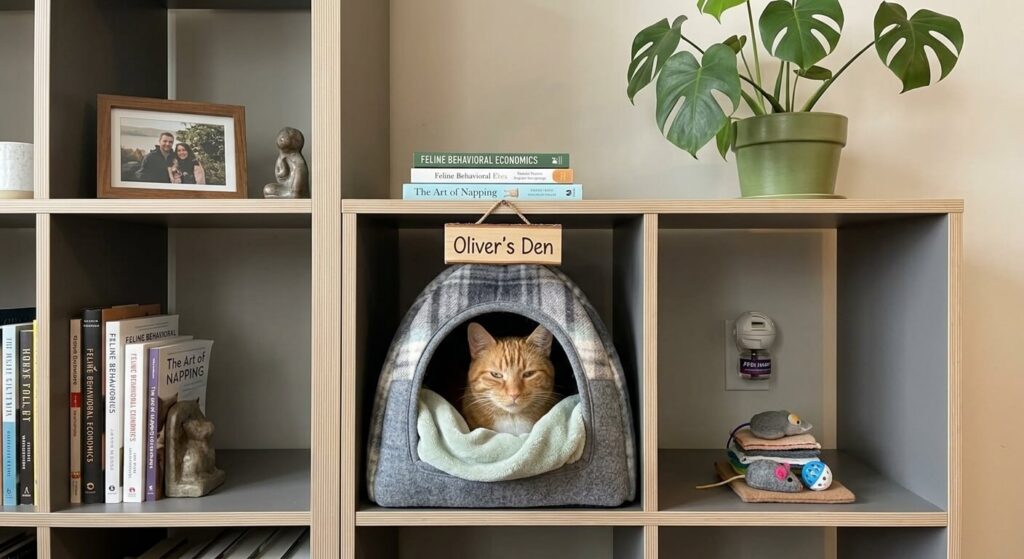
| Covered cat bed in bookshelf cubby | Place a hooded cat bed inside a bookshelf opening at cat height | Excellent security-vantage combination |
| Dedicated closet shelf | Clear a low shelf in a bedroom closet; add a fleece pad | Keep door ajar permanently with a doorstop |
| Under-bed box | Place a covered box under the bed as a deliberate hiding zone | Better than the cat hiding in the open under the bed |
| Cat cube/tunnel | Commercial fabric cube with single entry | Portable; easy to reposition as needed |
| Modified cardboard box | Cut a cat-sized entry hole, add padding | Free; cats love the cardboard texture and smell |
The Vertical Dimension
Elevated hiding spots serve the vantage component of the security-vantage preference — the cat is hidden but has visual oversight of the space below. In apartments where floor space is limited:
- Top of a wardrobe (add a non-slip pad and a small fleece)
- High cat tree platform against a wall
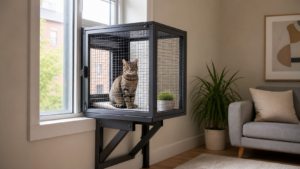
- Wall-mounted cat shelf in a corner position
The corner advantage: Hiding spots in corners provide three solid walls of concealment and limit the approach angle to a single monitored direction — maximizing the cat’s sense of security at the same location.
Frequently Asked Questions
1. Is It Okay to Pull a Cat Out of Hiding?
Almost never — and in some situations, it can be genuinely dangerous for both of you.
Here is why the instinct to retrieve a hiding cat is counterproductive:
The behavioral argument: Hiding is a self-regulatory behavior. The cat is in their concealment spot because their arousal system has determined that this is the appropriate response to current conditions. Forced removal removes the cat’s agency over their own stress management — which escalates rather than reduces the physiological stress response. You are extending the recovery period, not shortening it.
The safety argument: A cat in a heightened arousal state who is forcibly removed from their hiding spot may redirect fear or defensive aggression onto the person retrieving them. These bites and scratches are serious — cat bites introduce bacteria deep into puncture wounds and carry a high infection risk. A cat who bites when retrieved from hiding is not a “bad cat” — they are a frightened animal executing a defensive response.
When forced retrieval is medically necessary:
The exception to this rule is medical assessment. If your cat has been hiding for 24+ hours, is not eating, or you have observed clinical signs that concern you, you need to get them to the veterinarian. In this context:
- Approach calmly and slowly, narrating your movements in a quiet voice
- Use a towel to gently wrap the cat for transport — this provides compression that many cats find calming, and protects you from defensive scratching
- Do not chase — if the cat retreats further, step back and try again in 10–15 minutes, or allow the cat to enter a carrier placed near the hiding spot with an attractive food reward inside
The golden rule: Allow a cat to leave their hiding spot voluntarily whenever possible. Approach only when medically necessary and with appropriate safety precautions.
2. How Long Is Too Long for a Cat to Hide?
There is no single universal threshold, but here is the clinical framework I use:
| Duration | Assessment | Action |
|---|---|---|
| Under 4 hours with identifiable trigger | Adaptive Hiding — normal | Monitor; allow the trigger to resolve |
| 4–8 hours with identifiable trigger | Adaptive Hiding — extended but acceptable | Ensure food and water accessible near hiding spot; monitor |
| 8–12 hours, trigger has resolved | Borderline — investigate | Offer food; assess for clinical signs |
| 12–24 hours, no clear trigger | Maladaptive Hiding — investigate | Veterinary contact; assess appetite and elimination |
| 24+ hours with appetite refusal | Clinical emergency concern | Same-day veterinary assessment required |
| Any duration with elimination changes | Clinical concern regardless of duration | Veterinary contact |
| Any duration in a senior cat (10+) | Lower threshold for concern | Veterinary contact at 8–12 hours |
| Newly adopted cat | Extended hiding is normal | May hide for days to weeks; maintain decompression protocol |
The modifier that changes every calculation: behavioral normalcy when the cat does emerge. A cat who hides for 10 hours during a thunderstorm and then emerges to eat, use the litter box, and resume normal interaction has had an extended but Adaptive Hiding episode. A cat who hides for 6 hours, emerges briefly, does not eat, and returns to hiding has displayed a pattern requiring investigation regardless of the shorter individual episodes.
3. Should I leave food and water near a hiding cat?
Yes, but place them near the hiding area rather than directly inside the hiding spot. Your cat should be able to eat, drink, and use the litter box without feeling trapped or watched. Use quiet observation instead of forcing interaction. If your cat does not eat for 24 hours, drinks much more or less than usual, vomits, seems weak, or cannot use the litter box normally, contact your veterinarian.
4. Does Hiding Mean My Cat Is Dying?
Hiding alone does not indicate a cat is dying. But hiding combined with specific additional signs can indicate serious illness — and understanding the difference is important.
Hiding does NOT mean dying when:
- There is a clear environmental trigger (noise, visitor, change)
- The cat emerges and eats, drinks, and eliminates normally
- The cat’s body posture in the hiding spot is relaxed rather than tense
- The behavior resolves within hours of the trigger resolving
- The cat is young to middle-aged with no concurrent clinical signs
Hiding MAY indicate serious illness when:
- The cat is refusing food for 24+ hours
- The cat is not using the litter box
- The cat is not responding to stimuli that would normally elicit a response
- The cat has lost significant weight recently
- The gums are pale, white, or tacky
- Breathing is labored or the cat is breathing with an open mouth
End-of-life hiding — what it looks like:
A cat who is genuinely near the end of life due to progressive illness will often seek quiet, concealed spaces and stay there with increasing persistence. This is not Adaptive Hiding — it is the feline expression of a deeply instinctive withdrawal behavior. Signs that distinguish end-of-life withdrawal from acute illness hiding:
- The cat has a known terminal or serious chronic condition (cancer, end-stage CKD)
- Body condition has declined significantly over weeks to months
- The cat is responsive but clearly weakened
- Appetite has been declining for days to weeks, not hours
If you believe your cat may be near the end of their life, your veterinarian is the most important resource — both for confirming the clinical picture and for discussing palliative care, quality of life assessment, and humane end-of-life options.
The compassionate truth is that hiding does not automatically mean a cat is dying. It is more often a stress response, a need for security, or a sign of a treatable medical problem. It is usually biology, stress response, or a treatable medical condition. Investigating the hiding behavior rather than assuming the worst is both the most compassionate and the most medically responsible response.
Final Thoughts
Oliver emerged from the closet approximately forty minutes after the hallway drilling stopped. He walked directly to his food bowl, ate with focused commitment, used his litter box, and then came to sit beside me on the sofa with the air of someone who has had a difficult day at the office and would like to decompress in silence.
I let him. Because knowing why is my cat hiding — understanding the biology, the stress response, the clinical red flags, and the difference between a cat who needs space and a cat who needs a veterinarian — meant I could make an informed decision rather than a worried one.
I monitored. I assessed. I did my vet tech forensics on the situation and concluded: this is Adaptive Hiding, executed appropriately, resolved completely.
And then I invested in a proper covered cat bed for the closet shelf, positioned it with a piece of my worn clothing inside, and accepted that Oliver’s emergency safety architecture now includes my shoe storage area.
Some negotiations in a small apartment have no winning side.
References
- Rochlitz, I. (2005). A review of the housing requirements of domestic cats (Felis silvestris catus) kept in the home. Applied Animal Behaviour Science, 93(1–2), 97–109. https://doi.org/10.1016/j.applanim.2005.01.002
- Stella, J., Croney, C., & Buffington, T. (2013). Effects of stressors on the behavior and physiology of domestic cats. Applied Animal Behaviour Science, 143(2–4), 157–163. https://doi.org/10.1016/j.applanim.2012.10.014