Finding urine on a bag, rug, or bed is frustrating. Investigate the cause rather than punish the cat.
Cat peeing outside litter box is not revenge, spite, or bad manners. It is a sign that something about your cat’s body, litter box, stress level, mobility, territory, or environment needs attention. Sometimes the cause is simple, like a dirty box or a disliked litter texture. Sometimes it is medical, including bladder inflammation, urinary obstruction risk, kidney disease, diabetes, arthritis, or pain.
This guide walks through the safest order of action: rule out medical causes first, clean urine correctly, evaluate the litter box setup, reduce stress, and separate true urination from spraying or marking.
Quick Answer: Why Is My Cat Peeing Outside the Litter Box?
Cat peeing outside litter box usually means one of three things is happening: your cat feels pain or urgency, the litter box setup is not working for them, or stress has changed how safe the box feels. It is not revenge, stubbornness, or “bad behavior.” It is information.
The safest first step is a veterinary exam, especially if the change is sudden or your cat is entering the box often, straining, crying, producing small amounts of urine, licking the genital area, hiding, or showing blood. Urinary problems can become serious quickly, especially in male cats.
Once medical causes are addressed or ruled out, fix the setup in a calm order: clean urine with an enzymatic cleaner, scoop more often, use unscented litter, add enough boxes, make the box easy to enter, move it away from noisy or trapped-feeling spots, and reduce conflict in multi-cat homes.
Safety Note
This guide is for educational purposes only and does not replace veterinary advice.
If your cat has a diagnosed medical condition, sudden symptoms, appetite changes, weight loss, vomiting, urination problems, breathing difficulty, severe pain, poisoning risk, or rapid decline, contact your veterinarian before relying on a product or home-care change.
Indoor Cat Expert articles are created by the Indoor Cat Expert Editorial Team and follow our Editorial Policy.
Table of Contents
The Medical Rule: Why a Vet Visit Is Step One
I know how tempting it is to start with the litter box. Move it, scrub it, change the litter, buy a new one, hope the problem stops. I would still start with the vet when the change is sudden, painful, repeated, or unusual for your cat.
The reason is simple: behavioral fixes cannot solve urinary pain. If your cat is peeing outside the box because the bladder hurts, the box may become part of the fear, but it is not the root cause.
Here is why the order matters:
Behavioral Interventions Cannot Fix Medical Problems
The nine reasons for cat peeing outside litter box in this guide include both medical and behavioral causes. The medical causes — urinary tract infections, bladder inflammation, kidney disease, diabetes, hyperthyroidism — produce clinical signs that are behaviorally indistinguishable from purely behavioral inappropriate elimination.
A cat with a urinary tract infection who is peeing outside the box needs antibiotics, not a different litter. A cat with Feline Idiopathic Cystitis (FIC) needs medical management for bladder pain, not a relocated litter box. Implementing behavioral fixes for a medical problem wastes time during which the cat is in pain, allows the medical condition to progress, and produces no improvement — leading owners to escalate behavioral interventions that are similarly ineffective.
The Medical Causes to Rule Out
Feline Idiopathic Cystitis (FIC):
Feline Idiopathic Cystitis (FIC) is the most common cause of lower urinary tract signs in cats under age 10 — accounting for approximately 55–65% of feline lower urinary tract disease cases. The “idiopathic” designation reflects that despite extensive research, the exact cause remains unclear, though stress, diet, and environmental factors are implicated.
Clinical signs:
- Frequent trips to the litter box with small or no urine production
- Visible straining or discomfort during urination
- Blood in the urine (hematuria) — may appear pink or red
- Excessive licking of the genital area
- Urination in unusual locations — the cat associates the litter box with pain and begins avoiding it
- In male cats: potential urethral obstruction (life-threatening emergency). For prevention basics and early warning signs, read our indoor cat urinary health guide.
The behavioral component of Feline Idiopathic Cystitis (FIC) is particularly important: the pain associated with urination creates a classical conditioning response where the litter box becomes associated with pain. The cat begins eliminating outside the box to avoid the painful location — a behavior that looks exactly like litter box aversion but has a medical root cause.
Urinary Tract Infection (UTI):
Less common in cats than in dogs or humans, but occurs — particularly in female cats, senior cats, and cats with diabetes or kidney disease. Bacterial UTI produces urgency, frequency, and discomfort that drives outside-box elimination. Urine culture (not just urinalysis) is required to definitively diagnose a bacterial UTI and identify the appropriate antibiotic.
Chronic Kidney Disease (CKD):
CKD produces polyuria (increased urine production) as the kidneys lose concentrating ability. A cat who is producing significantly more urine than their litter box can absorb before the next cleaning — or more urine than they can comfortably retain until they reach the box — will have accidents. This looks like cat peeing outside litter box but is actually a volume management problem driven by renal insufficiency.
Diabetes Mellitus:
Like CKD, diabetes causes polyuria from the osmotic diuresis of glycosuria. Dramatic increases in litter box visits, large urine clumps, and outside-box urination in a previously reliable cat over age 7 should trigger a diabetes screening.
Hyperthyroidism:
Elevated thyroid hormone accelerates metabolic rate and increases urine production. An older cat who has suddenly become a cat peeing outside litter box problem may be hyperthyroid — the behavioral change is a symptom of the endocrine disorder.
Bladder stones or crystals:
Urolithiasis — mineral deposits in the urinary tract — causes pain, obstruction, and inflammation that produces all the clinical signs of Feline Idiopathic Cystitis (FIC). Diagnosis requires radiographs or ultrasound; treatment requires specific dietary management or surgical removal depending on stone type.
The Minimum Veterinary Workup
For any cat with new or worsening cat peeing outside litter box behavior:
- ✅ Complete physical examination including abdominal palpation of the bladder
- ✅ Urinalysis (specific gravity, pH, sediment examination, blood, protein, glucose)
- ✅ Urine culture (if urinalysis suggests infection)
- ✅ Bloodwork (BUN, creatinine, SDMA, glucose, T4 for cats over age 7)
- ✅ Radiographs or ultrasound if urolithiasis is suspected
- ✅ Blood pressure measurement in senior cats
Only after medical causes have been excluded or treated does behavioral and environmental intervention become the primary focus.
9 Serious Reasons for Cat Peeing Outside Litter Box
With the medical foundation established, here are the nine reasons — medical and behavioral — that I address systematically when working through a cat peeing outside litter box case.
Reason #1: Dirty Litter Box or Odor Buildup
One of the simplest causes is also one of the easiest to underestimate: the box smells worse to your cat than it does to you.
A litter box can seem “fine” from across the room and still be unpleasant at cat-nose level. If your cat steps in, sniffs, turns around, or starts using the floor near the box, treat odor and cleanliness as a real possibility before assuming the cat is being difficult.
The hygiene standards that prevent litter box aversion:
- Scoop at minimum twice daily — ideally once per 4–6 hours of use
- Full litter replacement: Clumping litter — complete replacement every 2–4 weeks; non-clumping — every 1–2 weeks
- Box washing: Mild unscented soap and warm water every 2–4 weeks; rinse thoroughly — soap residue is aversive
- Replace plastic boxes annually — plastic scratches over time, creating micro-grooves that harbor bacteria and odor that cannot be removed regardless of cleaning
If odor is part of the problem, compare safer options in our guide to the best cat litter for odor control in apartments. I would not jump straight to heavily scented litter. In many homes, the better fix is cleaner timing, unscented clumping litter, and a box that has not absorbed months of old odor.
If your cat has already decided the box smells unsafe or unpleasant, cleaning once may not be enough. You may need to wash the box thoroughly, replace scratched plastic, refresh the litter type slowly, and make the area feel like a clean bathroom again.
The scented litter trap:
Many owners respond to litter odor by purchasing strongly scented litters. This is counterproductive — the strong artificial fragrance that covers human-detectable odor is itself aversive to feline olfactory sensitivity. Unscented clumping litter, cleaned frequently, is the gold standard.
Reason #2: Litter Texture Problems
Cats have strong preferences for elimination substrate — and these preferences are established during the sensitive developmental period and maintained with significant consistency throughout life. A change in litter type that seems minor to the owner can constitute a Substrate Aversion trigger for a cat with established texture preferences.
Common substrate aversion triggers:
- Switching from fine-grain clumping to coarse or pellet litter
- Switching from clay to silica crystal litter
- Introducing scented litter to a cat accustomed to unscented
- Switching to a novel material (paper, wood pellet, corn cob)
- Adding a litter additive (deodorizer, attractant) that changes the texture or scent
The substrate preference assessment:
If you’ve recently changed litter types and cat peeing outside litter box behavior has begun, the substrate is the first variable to investigate. Revert to the previous litter and monitor response over 7 days.
For cats with unknown substrate preferences (newly adopted cats, cats with established aversion):
Run a substrate preference test — offer 2–3 litter boxes side by side with different substrates and allow the cat to self-select. Most cats show clear preference within 5–7 days.
Research finding: Studies consistently show that unscented, fine-grain clumping clay litter is preferred by the majority of cats — it most closely mimics the sandy soil texture that feline elimination instinct evolved around.
Reason #3: Box Size, Depth, or Cover Problems
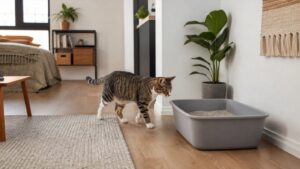
Box size matters more than most people expect. A cat should be able to enter, turn around, dig, squat, and leave without feeling cramped. Many standard litter boxes are technically usable but still too small for comfortable daily use, especially for large cats.
As a rough rule, the box should be about 1.5 times your cat’s body length from nose to tail base. For Oliver, that means a much larger box than the small trays sold as “apartment friendly.” A large storage tote with a low entry cut into one side often works better than a tiny covered box.
Litter depth matters too. If the litter is too shallow, your cat may hit hard plastic while digging. If the sides are too low, urine may escape even when your cat is technically using the box correctly.
Covered boxes are mixed. Some cats like the privacy. Others hate the trapped odor and single exit. If your cat started avoiding a covered box, remove the lid for a week and watch what changes.
If the main problem is urine going over the side rather than full box avoidance, compare our guide to the best high sided litter box options before switching to a covered box that may trap odor or leak through the seam.
Reason #4: Poor Litter Box Location
The cat peeing outside litter box trigger that apartment dwellers most frequently create without realizing it: placing the litter box in a location that generates anxiety.
Anxiety-producing litter box locations:
- High-traffic areas: Near frequently used doorways, kitchen entrances, main hallways — the cat is interrupted mid-elimination by human movement
- Adjacent to appliances: Near the washing machine, dryer, or dishwasher — the sudden noise of a cycle beginning mid-elimination is a powerful aversive conditioning event
- Near food and water: Cats instinctively avoid eliminating near food sources — a litter box too close to feeding stations will be avoided
- Single-exit locations: A box placed in a corner or alcove with one approach path — if another cat (or even the owner) is between the cat and the box exit, the cat may redirect
- Basement or remote locations: A box that requires traversing stairs or a long distance may not be reached in time, particularly for senior cats, arthritic cats, or cats with urinary urgency
For a cleaning routine that fits small spaces, read our litter box odor control apartment guide. In small apartments, poor litter box placement is one of the most common triggers for elimination anxiety. Our apartment-specific litter placement guide covers the optimal placement geometry for studios and small apartments where ideal placement is genuinely constrained.
The ideal litter box location:
- Quiet, low-traffic area
- Multiple exit paths
- Away from feeding stations (minimum 6 feet)
- Away from appliances with noise cycles
- Accessible 24 hours without barriers
- In a location the cat already frequents voluntarily
Reason #5: Not Enough Litter Boxes
In multi-cat households, insufficient litter box number is a primary driver of cat peeing outside litter box behavior — through both direct competition (one cat blocking another’s box access) and through hygiene failure (boxes that are shared by multiple cats become unacceptably soiled faster than single-cat boxes).
The N+1 Rule: For N cats, provide N+1 litter boxes, in separate locations.
- 1 cat → 2 boxes
- 2 cats → 3 boxes
- 3 cats → 4 boxes
Even for single-cat households: Two boxes in different locations provides:
- A backup when the primary box is soiled
- An option in a closer location if the primary box is far away
- A choice that reduces the individual box’s hygiene degradation rate
Box distribution in apartments:
The N+1 Rule requires boxes in multiple locations — not multiple boxes in one room. Three boxes in the same bathroom are functionally one resource if one cat can blockade the bathroom entrance.
Reason #6: Territorial Marking or Spraying
Sometimes the problem is not ordinary urination at all. It is marking or spraying, and that needs a different plan.
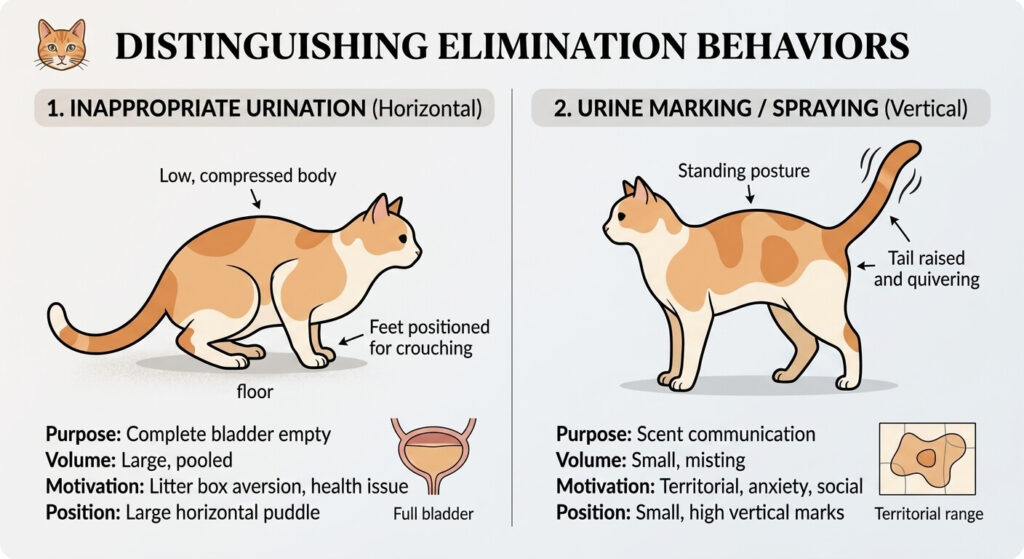
With spraying, the cat often backs up to a vertical surface, raises the tail, and leaves a smaller amount of urine on walls, furniture, doors, curtains, or bags. Regular peeing is more often a larger puddle on a horizontal surface.
If you are not sure which pattern you are seeing, compare the signs in our cat spraying vs peeing guide before changing the whole litter setup.
Common marking triggers include:
| Feature | Normal Inappropriate Elimination | Urine Marking/Spraying |
|---|---|---|
| Posture | Squatting | Standing, tail vertical and quivering |
| Volume | Larger pool | Small amount |
| Location | Horizontal surfaces (floors, rugs) | Vertical surfaces (walls, furniture legs) |
| Target | Typically absorbent surfaces | Objects with social significance |
| Cause | Box aversion, medical, anxiety | Territorial stress, intact hormones |
| Distribution | Concentrated near box or resting area | Near windows, doors, new objects |
Marking triggers:
- Intact reproductive status can contribute to spraying; spaying or neutering can reduce hormonal influence, but does not guarantee that marking will stop.
- A new cat in the household or visible outdoor cat
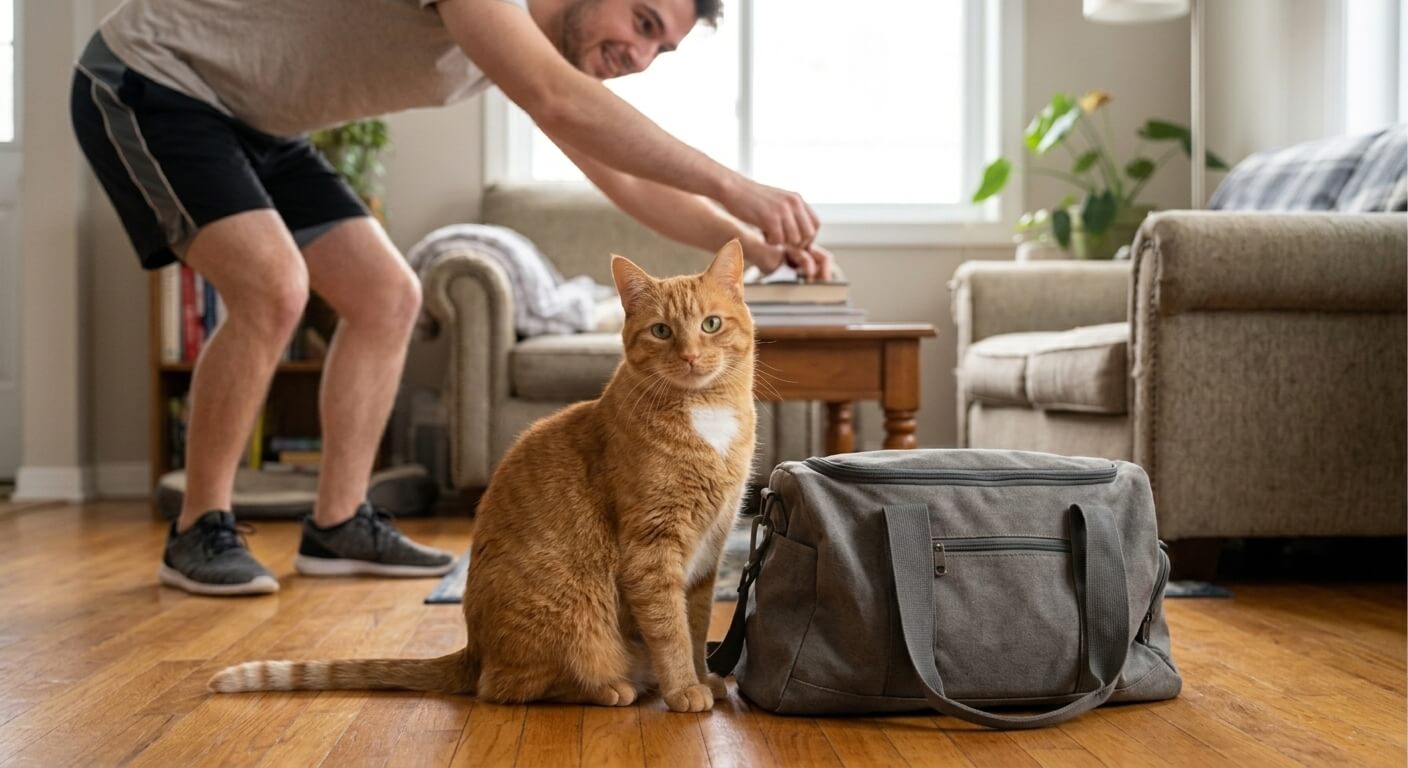
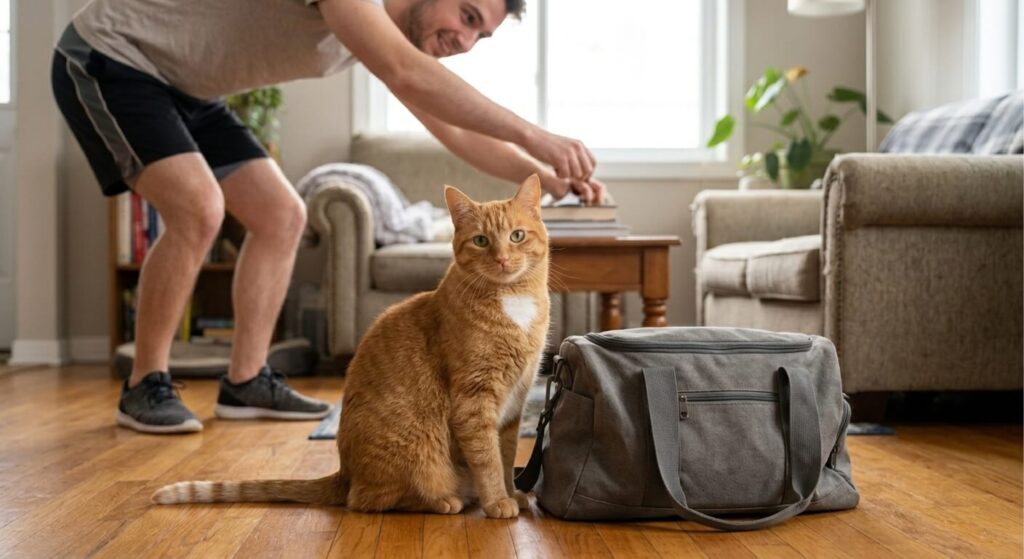
- New objects introduced to the territory (furniture, bags, visitors’ belongings)
- Social instability in a multi-cat household
- Environmental changes (renovation, new home)
Reason #7: Pain, Arthritis, or Mobility Trouble
Chronic Pain from osteoarthritis — one of the most prevalent and most underdiagnosed conditions in senior cats — drives cat peeing outside litter box behavior through a straightforward physical mechanism: the cat cannot safely or comfortably navigate box entry and exit, and begins eliminating wherever they are when the urge arrives.
Signs that pain may be the cause:
- The outside-box elimination occurs near the litter box (the cat is trying to use the box but cannot complete the entry)
- The cat is stiff, slow to rise, or reluctant to jump
- The accidents occur on soft, accessible surfaces near the cat’s resting areas
- The cat is over age 10
The solution:
- Very low-sided litter box (modify a storage container if necessary)
- Multiple boxes distributed throughout the apartment to reduce travel distance
- Ramps or steps to assist entry if the current box configuration requires any step-up
- Veterinary assessment and pain management — adequate analgesia dramatically improves litter box reliability in arthritic cats
Reason #8: Stress and Feline Idiopathic Cystitis
Stress is both a direct behavioral trigger for cat peeing outside litter box behavior and an indirect medical trigger through its role in precipitating Feline Idiopathic Cystitis (FIC) flares.
The documented stress-FIC connection is one of the most important concepts in feline urinary medicine: psychological stressors in indoor cats produce neuroendocrine responses that directly alter bladder mucosal integrity, increase sensory nerve sensitivity, and produce the inflammation of Feline Idiopathic Cystitis (FIC) without any infectious cause.
Common stress triggers for FIC and inappropriate elimination:
- New pet introduction
- Owner schedule change (new job, working from home, travel)
- Moving or apartment renovation
- New household member (baby, partner, roommate)
- Building construction or significant noise changes
- Changes in multi-cat household social dynamics
- Resource competition (insufficient food stations, litter boxes, perches)
The stress-elimination cycle:
Stress → Feline Idiopathic Cystitis (FIC) flare → pain with urination → litter box avoidance → outside-box elimination → owner frustration/response → additional stress → cycle continues
Breaking this cycle requires addressing both the medical (FIC management) and environmental (stress reduction) components simultaneously.
Reason #9: Cognitive Changes in Senior Cats
Feline Cognitive Dysfunction Syndrome — feline dementia — produces disorientation that includes spatial memory loss for litter box location, forgetting established elimination habits, and confusion about the purpose of the litter box itself.
Signs that suggest cognitive dysfunction rather than behavioral or medical cause:
- Cat over age 11 with no prior history of inappropriate elimination
- Elimination is seemingly random — no pattern by surface type or location
- Associated with other cognitive signs (nighttime vocalization, disorientation, altered social behavior)
- The cat appears to “forget” what the litter box is or looks confused when placed inside it
Management:
- Multiple litter boxes positioned throughout the apartment to reduce spatial navigation requirements
- High-sided boxes replaced with very low-sided options to reduce the “puzzle” of box entry
- Placement of boxes directly in the cat’s most frequented rest areas
- Veterinary assessment for cognitive dysfunction and concurrent medical causes
What the Pee Spot Can Tell You: Rugs vs. Hard Floors
The place your cat chooses is not random. It can give you a clue about what feels comfortable, painful, familiar, or stressful in the moment.
Soft Surface Selection (Rugs, Laundry, Beds, Furniture)
A cat peeing on soft surfaces — rugs, bath mats, laundry, duvets, upholstered furniture — is typically indicating one of two things:
Substrate preference driven by litter aversion:
If the cat is avoiding their litter (which is a soft substrate) and choosing a different soft surface, the cat may be seeking a specific texture that their current litter doesn’t provide. This is counterintuitive — you’d expect a cat to want the litter substrate. But some cats with litter box aversion continue to seek soft elimination surfaces while avoiding the specific litter material.
Surface preference for elimination:
Some cats establish a texture-based elimination preference for soft materials — particularly if they had early positive elimination experiences on soft surfaces (common in cats raised without litter access). The soft surface is the preferred elimination location, not the litter box.
Diagnostic action: What is the texture of the preferred surface? If the cat consistently selects similar textures (always rugs, always laundry), substrate preference is likely. Experiment with a different litter substrate that more closely mimics the preferred texture.
Hard Surface Selection (Tile, Hardwood, Linoleum)
A cat peeing on hard floors — typically cool, smooth surfaces — is often indicating:
Medical urgency:
A cat who cannot reach the box in time due to urinary frequency or urgency from Feline Idiopathic Cystitis (FIC), UTI, or diabetes may eliminate wherever they are standing when the urge becomes irresistible. Hard floor elimination near the litter box is particularly suggestive of this mechanism.
Litter aversion to texture:
Some cats who have developed litter box aversion specifically to the substrate texture (too coarse, too deep, too wet) may choose hard surfaces as the “least aversive” available option.
Marking behavior:
Hard surface urination near walls, furniture legs, or doorways is more consistent with marking behavior than substrate-preference driven elimination.
Clean the Urine So the Spot Stops Calling Your Cat Back
Cleanup matters because cats can return to places that still smell like urine, even when the spot seems clean to you.
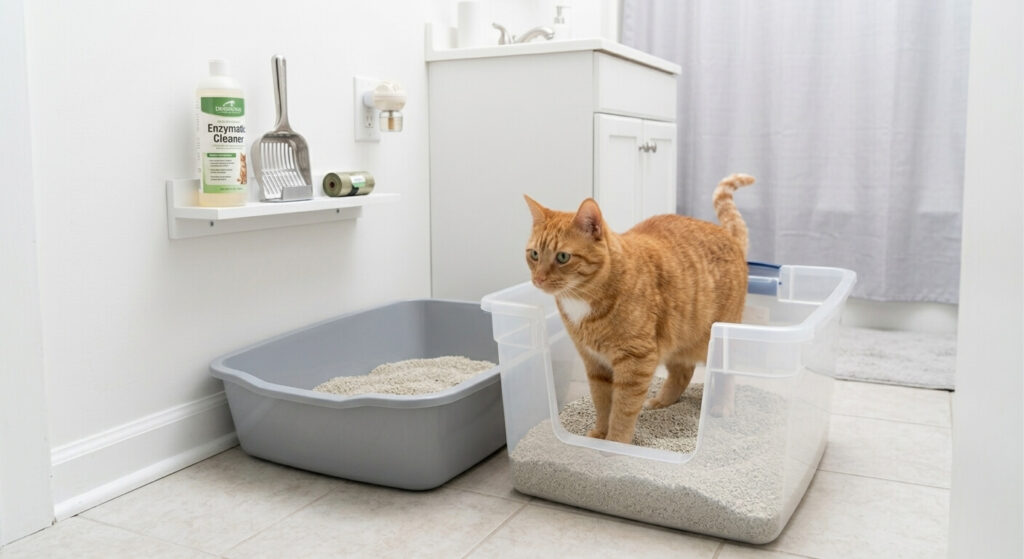
For old or recurring urine spots, use an enzymatic cleaner designed specifically for pet urine. The product must reach every contaminated layer and remain for the contact time stated on its label. Compare surface-compatible options in our guide to the best enzyme cleaner for cat urine.
Regular cleaners may remove the visible mess and some surface odor, but old cat urine can linger in carpet backing, wood seams, mattresses, and upholstery. That is why an enzymatic cleaner made for pet urine is usually the better first tool.
The enzymatic cleaning protocol:
- Blot (do not rub) as much liquid as possible with paper towels
- Apply enzymatic cleaner liberally — the solution must reach the depth the urine penetrated
- Follow the enzymatic cleaner label for saturation, contact time, rinsing, drying and surface compatibility; do not invent a universal dwell time.
- Allow to fully air-dry — do not rinse with other cleaning products which will deactivate the enzymes
- Repeat if any odor is detectable after complete drying
For porous surfaces (carpet, mattress, upholstered furniture):
The urine penetrates to the backing, pad, and subfloor. Surface application alone is insufficient — the cleaner must be applied in sufficient volume to reach the depth of the contamination.
When Another Cat Is Part of the Problem
In multi-cat homes, litter box problems are not always about the box itself. Sometimes one cat is quietly blocking a hallway, guarding a room, staring from the doorway, or making another cat feel rushed while using the box.
If accidents happen near doorways, in corners, beside furniture, or after tense interactions, look at access and social pressure. A cat may avoid a perfectly clean box if getting to it feels risky.
The Peace Protocol Components
Step 1 — Resource Audit:
Walk through the apartment and count:
- Litter boxes: Do you have N+1? Are they in genuinely separate locations?
- Food stations: Are they separated to prevent competition?
- Water sources: Multiple locations?
- Elevated resting spots: Does each cat have exclusive access to at least one?
Any deficit in the N+1 Rule across these resources is a stress driver that contributes to inappropriate elimination.
Step 2 — Social Mapping:
Observe and log the pattern long enough to identify location, posture, timing and household triggers without delaying veterinary care.
- Which cat uses which litter box?
- Does any cat block another’s box access?If one cat is blocking access to food, water, resting spots, or litter boxes, compare the pattern with our cat resource guarding guide.
- Are there specific times of day when box competition occurs?
- Which cat initiates approach at resource locations?
This social map identifies the guarding dynamic that may be preventing box access for subordinate cats.
Step 3 — The Separation Feeding Protocol:
Feed cats in separate locations or with doors closed during meal times. Post-meal is the highest Inter-cat Tension period — feeding separately reduces tension in the minutes when litter box use naturally follows eating.
Step 4 — Pheromone Support:
A feline pheromone product may be considered as one part of an environmental plan, but response varies and it should not replace veterinary assessment or litter-box changes.
Step 5 — The Reintroduction Protocol:
If inappropriate elimination has been associated with the introduction of a new cat, a formal reintroduction protocol — complete separation, scent swapping, progressive visual access, supervised physical access — may be required before normal litter box behavior is reliably restored.
Identifying the Eliminator in Multi-Cat Households
One of the most practical challenges in multi-cat cat peeing outside litter box management: identifying which cat is the actual source of the inappropriate elimination.
Techniques:
- Fluorescein: A veterinarian may use oral fluorescein to help identify which cat is urinating in a multi-cat home. Do not administer dyes without veterinary direction.
- Temporary separation: If needed, ask a veterinarian or behavior professional how to monitor cats without creating prolonged stress or restricting normal resources.
- Wildlife cameras: Motion-activated cameras positioned near elimination sites capture the eliminator in the act — providing definitive identification without chemical intervention.
In multi-cat homes, litter box accidents can come from blocked access, territorial pressure, or one cat quietly controlling the box area. For a broader setup plan, see our multi-cat apartment living guide.
When It’s Not the Bladder: Marking vs. Urinating
Marking and peeing can look similar when you are tired, annoyed, and staring at another wet spot. But they are not the same problem, and they usually do not respond to the same fix.
Confirming the Distinction
Use this clinical checklist to differentiate:
Characteristics suggesting marking behavior:
- Vertical surface deposits (sprayed onto walls, furniture, doors)
- Small volume deposits — not a full bladder emptying
- Multiple small deposits in a spatial pattern (along a wall, near entry points)
- Intact cat hormonal status
- Recent household change that altered territorial perception (new pet, new person, visible outdoor cat)
- Cat observed in standing-tail-raised posture during the event
Characteristics suggesting inappropriate urination (not marking):
- Horizontal surface deposits — floor, rug, laundry
- Larger volume deposits — full bladder emptying
- Random or single-location distribution
- Squatting posture during elimination
- Concurrent litter box avoidance
- Medical signs (straining, blood, frequency)
Managing Marking Behavior
Discuss spaying or neutering with your veterinarian if your cat is intact. It can reduce hormone-related spraying, but persistent marking needs further assessment. Cornell’s house-soiling guidance notes that neutered cats can still spray.
For neutered cats who mark:
- Identify and address the territorial stressor (cover windows to block outdoor cat visibility, use Feliway Multicat, manage multi-cat social tension)
- Clean marked locations completely with enzymatic cleaner — the scent of prior marking attracts re-marking
- Place a feeding station at the most frequently marked location — cats avoid marking where they eat
- For persistent cases, ask a veterinarian or veterinary behaviorist whether medication is appropriate; these are prescription drugs requiring diagnosis and monitoring.
If you are not sure whether the deposit is spraying or full urination, use our cat spraying vs peeing guide before choosing a fix.
Frequently Asked Questions
1. When is cat peeing outside the litter box an emergency?
It can be an emergency if your cat is straining, crying, producing little or no urine, repeatedly entering the litter box, licking the genital area, vomiting, hiding, or acting weak. Male cats are at special risk for urinary blockage, which can become life-threatening quickly. If you see these signs, contact an emergency veterinarian immediately. Do not wait to see if the problem improves overnight.
2. Will My Cat Stop Peeing Outside the Box After Being Neutered?
Spaying or neutering may help hormone-related spraying, but it is not a guaranteed solution to urination outside the litter box.
Discuss the likely benefit for your individual cat with the veterinarian:
- Male cats: Neutering can reduce the hormonal drive to spray; response varies, and a fixed recovery deadline should not be promised.
- Female cats: Spaying may reduce hormone-related marking, but persistent spraying still needs assessment.
The important caveats:
Surgery alone is not a complete treatment plan for:
- Inappropriate urination driven by Feline Idiopathic Cystitis (FIC) or other medical causes
- Litter box aversion established through conditioning (the box-pain association)
- Substrate preference-based inappropriate elimination
- Marking behavior that has become habitual over a long intact period — some cats who have been spraying for years continue to spray after neutering due to the established behavioral habit, though the frequency typically decreases
Neutering age and marking prevention:
Discuss the appropriate timing of spaying or neutering with your veterinarian. Sterilized cats can still develop stress-related marking; investigate new urinary signs.
If your cat is peeing outside the box and is intact, neutering is the first clinical recommendation — but a concurrent veterinary workup for medical causes is still required, as neutering won’t resolve a concurrent Feline Idiopathic Cystitis (FIC) or UTI.
3. Is White Vinegar Effective for Cat Urine?
Partially — and for specific purposes. Not for complete uric acid elimination.
Here is the honest breakdown of white vinegar’s effectiveness for cat urine:
What white vinegar does:
- Vinegar may change odor on some surfaces, but it is not a reliable way to remove all urine compounds.
- The pH reduction from the acid creates a less hospitable environment for some odor-causing bacteria
- Its strong odor can be unpleasant to cats and does not prove the site is fully cleaned.
What white vinegar does not do:
- It does not perform Enzymatic Breakdown of uric acid crystals
- Uric acid is not acid-labile — it is not broken down by acetic acid treatment
- The uric acid crystals remain intact and continue to attract re-marking by the cat even when the urine smell is not detectable by human nose
The practical implication:
Do not rely on vinegar as a universal urine-removal method. Cornell advises avoiding vinegar and ammonia when cleaning soiled areas. Use a surface-compatible product intended for pet urine and follow its label.
The correct tool: Enzymatic cleaner — specifically formulated to enzymatically break down the uric acid, urea, and urochrome components of cat urine.— Our guide to professional-grade enzymatic cleaners identifies the specific enzyme formulations required for complete uric acid neutralization, with application protocols for different surface types.
Can vinegar be used in combination?
Do not mix cleaning products or layer vinegar with an enzymatic cleaner unless the product manufacturer specifically permits it. Test any cleaner on a hidden area first.
4. Can a New Baby Cause My Cat to Pee Outside the Box?
Yes — this is one of the most well-documented household change triggers for stress-related cat peeing outside litter box behavior.
The mechanism is multifactorial:
A newborn changes household scents and routines. Introduce baby-related items gradually and provide the cat with predictable resources and a quiet retreat.
New sounds may be unsettling. Give your cat a quiet retreat; do not assume that a baby’s crying proves the cause of a urinary problem.
Routine disruption:
A new baby radically disrupts the owner’s schedule — feeding times change, the owner’s availability for cat interaction decreases, nighttime routines are altered, and the cat’s previously predictable environment becomes unpredictable. Routine disruption is one of the most consistent FIC triggers.
Spatial displacement:
Rooms that were previously cat-accessible may become restricted (nursery), and furniture arrangements change. The cat’s territorial map is disrupted.
Prevention strategies (implemented before the baby arrives):
- Begin baby-scent introduction early: bring home a blanket with the baby’s scent before the baby arrives; allow the cat to investigate from a distance
- Maintain the cat’s feeding, play, and grooming routine as consistently as possible despite the new schedule demands
- Establish the N+1 Rule for litter boxes before the baby’s arrival — not after inappropriate elimination has begun
- If considering a pheromone diffuser, discuss placement and expectations with your veterinarian; it is optional, not a guaranteed preventive measure.
- Maintain at least one brief play session daily with the cat — even a 5-minute wand toy session maintains the relationship and reduces stress
After the baby arrives:
- Always supervise the baby and cat together and prevent access to the baby’s sleeping space. Establish nursery boundaries before the baby arrives and provide alternatives for the cat. See Cats Protection’s guidance.
- Ask a helper to maintain the cat’s routine during the high-demand newborn period
- Monitor litter box use carefully in the first 2–4 weeks — early detection of cat peeing outside litter box behavior allows intervention before conditioning is established
Final Thoughts
Cat peeing outside litter box is one of the most frustrating indoor cat problems because it feels personal. It is not. Your cat is not trying to punish you. Something about their body, box, territory, stress level, mobility, or routine is not working.
Start with safety: rule out urinary pain, obstruction risk, infection, bladder inflammation, kidney disease, diabetes, arthritis, and other medical causes. Then work through the environment calmly: clean urine deeply, make the box easier to use, remove odor, reduce noise, add enough boxes, and watch for conflict between cats.
Match the plan to the cause. Record where and when accidents happen to help the veterinarian review progress.
The goal is not to win a battle with your cat. The goal is to make the right place feel safe, clean, easy, and obvious again.
References
- Stella, J. L., Lord, L. K., & Buffington, C. A. T. (2011). Sickness behaviors in response to unusual external events in healthy cats and cats with feline interstitial cystitis. Journal of the American Veterinary Medical Association, 238(1), 67–73. https://doi.org/10.2460/javma.238.1.67
- Buffington, C. A. T., Westropp, J. L., Chew, D. J., & Bolus, R. R. (2006). Clinical evaluation of multimodal environmental modification (MEMO) in the management of cats with idiopathic cystitis. Journal of Feline Medicine and Surgery, 8(4), 261–268. https://doi.org/10.1016/j.jfms.2006.02.002
Related Health & Behavior Issues: