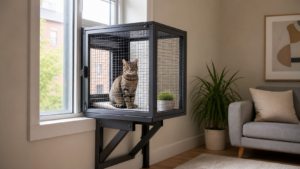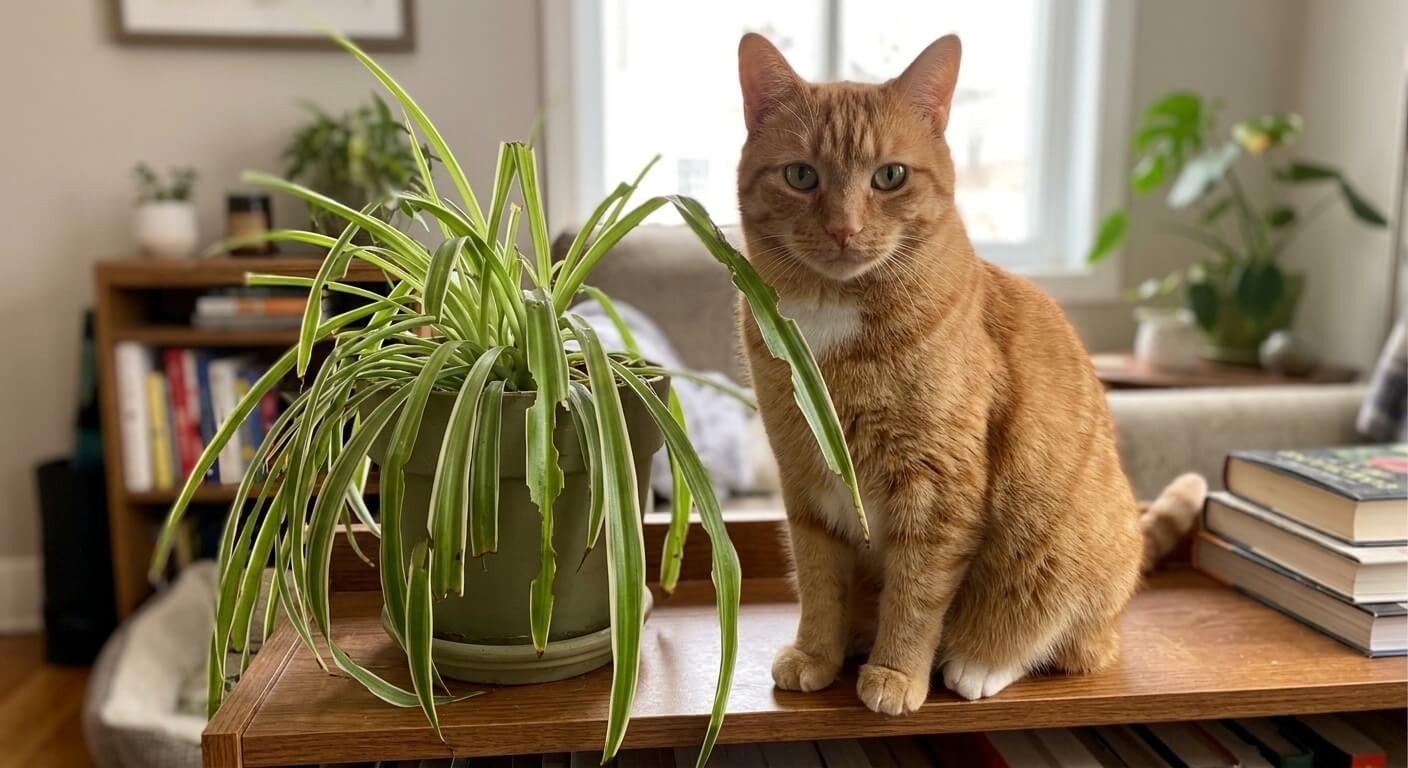
How to stop cat from eating plants safely: begin by identifying every plant and removing or fully blocking access to anything toxic or unknown. Do not rely on training, bitter sprays, or scent deterrents when a plant could poison your cat.
True lilies and daylilies require special caution. Leaves, petals, pollen, and vase water can all be dangerous to cats, and even a small exposure can cause acute kidney injury. Treat any suspected exposure as an emergency, even if your cat currently seems normal.
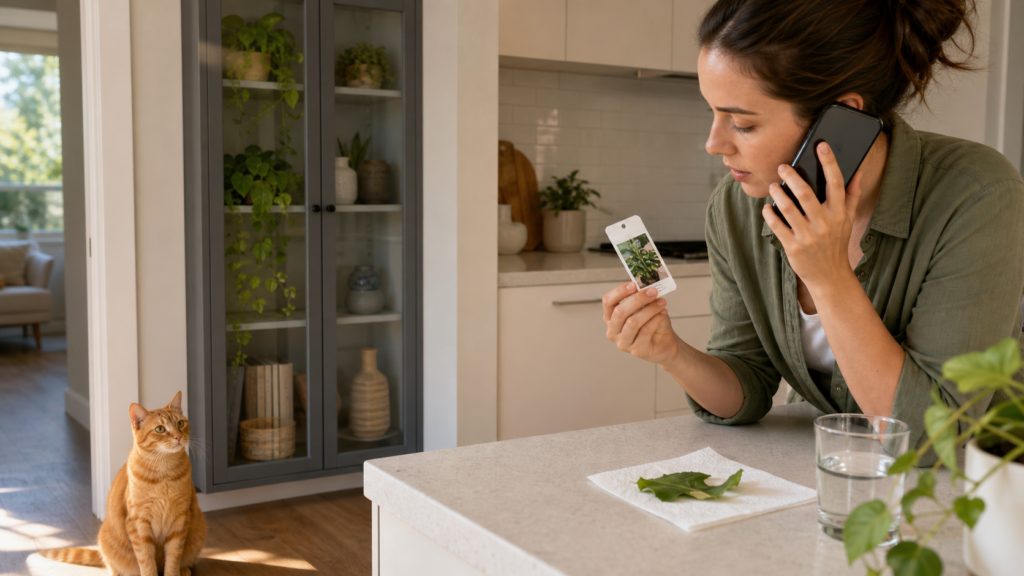
If your cat may have chewed a toxic or unidentified plant, remove access, photograph the plant, label, and damaged area, and contact your veterinarian, an emergency veterinary clinic, or an animal poison control service. Do not wait for symptoms and do not induce vomiting unless a veterinary or poison-control professional specifically instructs you to do so.
Once toxic plants are removed, redirect the behavior with cat-safe grass, secure plant placement, physical barriers, and more daily play or foraging opportunities. If plant chewing begins suddenly, becomes repetitive, or occurs with vomiting, appetite changes, weight loss, or chewing other non-food items, arrange a veterinary evaluation.
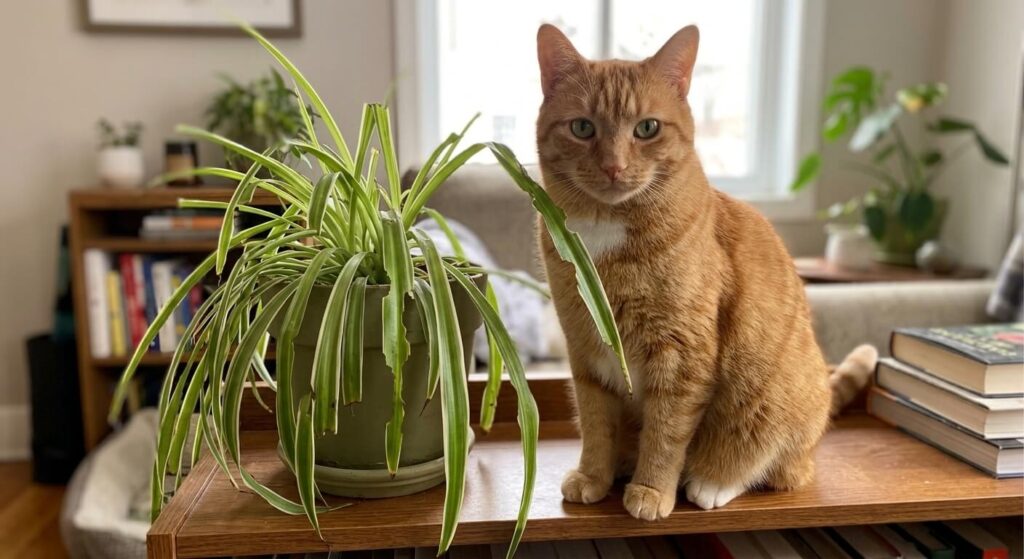
Table of Contents
Why Cats Chew Houseplants
Plant chewing in cats does not have one proven cause. Some cats investigate leaves because of their texture, movement, or smell. Others repeat the behavior because the plant is easy to reach, chewing is stimulating, or they have limited opportunities for play and foraging indoors.
Do not assume that plant chewing proves a folate deficiency, fiber deficiency, or deliberate attempt to induce vomiting. These explanations have not been established well enough to guide treatment or supplementation. A cat eating a complete and balanced diet should not receive vitamins, minerals, fiber supplements, or digestive remedies solely because they chew plants.
Occasional investigation is different from repeatedly swallowing plant material. Contact your veterinarian if the behavior begins suddenly, becomes compulsive, involves large amounts, includes fabric, plastic, string, or other non-food materials, or occurs with vomiting, appetite changes, weight loss, abnormal stool, abdominal discomfort, or lethargy.
While the cause is being evaluated, prevent access to houseplants and provide safer activities such as supervised cat grass, food puzzles, appropriate chewing alternatives, and interactive play. Cat grass is optional enrichment; it is not a treatment for a suspected nutritional or medical problem.
The Danger Zone: Common Apartment Plants That Are Toxic
Plant toxicity cannot be safely judged by a simple “mild, moderate, or severe” home checklist. The plant’s exact species, the part involved, the amount, your cat’s condition, and the time since exposure can all change the response. If a plant is toxic or cannot be confidently identified, contact a veterinarian or animal poison-control service rather than waiting for symptoms.
Plants That Require Immediate Action
True Lilies and Daylilies
True lilies in the Lilium genus and daylilies in the Hemerocallis genus are medical emergencies for cats. Leaves, petals, stems, pollen, and vase water can all be dangerous. Even a small suspected exposure warrants immediate veterinary or poison-control guidance, including when a cat currently appears normal.
Sago Palm
All parts of a sago palm are toxic, with the seeds generally containing the highest concentration. Exposure can cause severe gastrointestinal signs, bleeding problems, liver injury, liver failure, and death. Contact a veterinarian or animal poison-control service immediately after any suspected ingestion.
Oleander
Oleander contains cardiac glycosides that can affect the heart. All parts of the plant should be treated as hazardous. Suspected chewing or ingestion requires immediate professional advice.
Autumn Crocus
Autumn crocus can cause severe gastrointestinal injury and systemic illness. Do not confuse it with other plants that share the word “crocus.” Obtain professional identification and veterinary guidance after a suspected exposure.
Azalea and Rhododendron
Azaleas and rhododendrons can affect the gastrointestinal, cardiovascular, and nervous systems. Contact a veterinarian or poison-control service if your cat may have chewed one.
Irritant Plants Still Need Professional Guidance
Pothos, philodendron, dieffenbachia, peace lily, and calla lily contain insoluble calcium oxalate crystals. Chewing can cause immediate mouth pain, drooling, pawing at the face, vomiting, and difficulty swallowing. These plants are different from true lilies and daylilies, but exposure should still be discussed with a veterinarian or poison-control professional, especially when signs are severe or breathing and swallowing are affected.
Do not use an online plant list to decide that an unidentified exposure is safe to monitor at home. Take a clear photo of the plant and its label, remove access, and obtain species-specific advice.
The Spider Plant Question
Spider plants (Chlorophytum comosum), also called ribbon plants or spider ivy, are listed by ASPCA Animal Poison Control as non-toxic to cats. They are not expected to cause the systemic poisoning associated with highly dangerous plants such as true lilies, sago palms, or oleander.
However, non-toxic does not mean that a cat should be encouraged to eat the plant. Chewing or swallowing plant material can still cause mild digestive upset, especially if a cat consumes a large amount. Soil, fertilizer, pesticides, leaf-cleaning products, and pieces of the pot may create additional risks unrelated to the plant itself.
There is no reliable veterinary evidence supporting the common online claim that spider plants contain opium-like hallucinogens or that a cat acting “loopy” after chewing one is experiencing a harmless euphoric effect. If your cat becomes disoriented, weak, unusually sleepy, vomits repeatedly, or behaves abnormally after chewing any plant, contact your veterinarian rather than assuming the reaction is harmless.
If your cat repeatedly targets a spider plant, move it out of reach, clean up fallen leaves, and provide cat-safe grass or another appropriate foraging activity. Persistent or compulsive plant chewing should be discussed with a veterinarian.
The ASPCA Toxic List Resource
The ASPCA Animal Poison Control Center maintains the most comprehensive, regularly updated database of plant toxicity for cats at aspca.org/pet-care/animal-poison-control/toxic-and-non-toxic-plants. Before purchasing any houseplant for a cat-occupied home, cross-reference it on this list. If you believe your cat has ingested a toxic plant, the ASPCA Poison Control hotline (888-426-4435) operates 24 hours daily.
How to Stop Cat from Eating Plants: 5 Safe Strategies
These five strategies address different dimensions of the plant-eating behavior — biological, environmental, physical, and sensory. Implementing them in combination produces significantly more reliable results than any single intervention.
Strategy #1: Offer Cat Grass and Safe Foraging
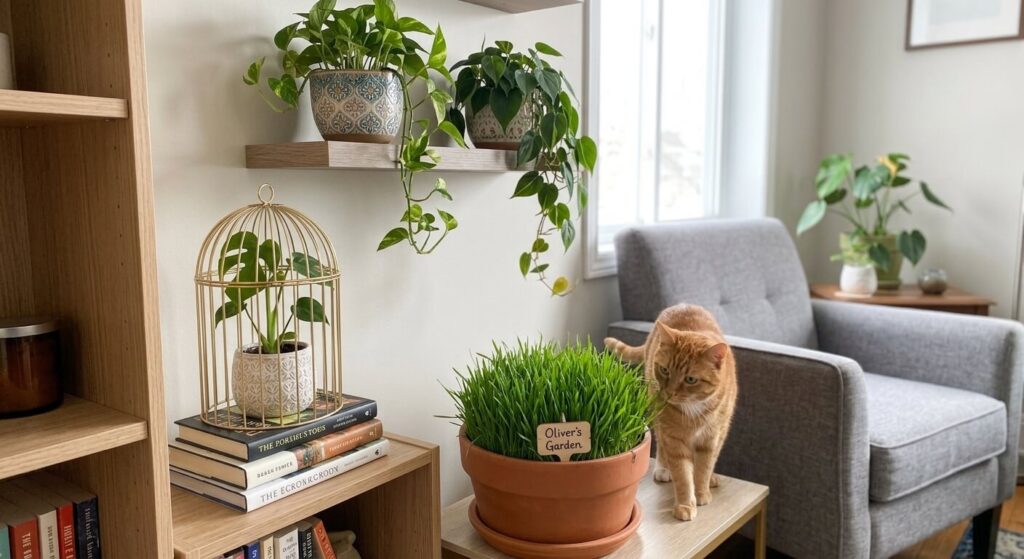
Cat grass can provide a safer target for cats that enjoy chewing fresh plant material. Choose seeds or a growing kit intended for pets, and avoid grass treated with pesticides, herbicides, decorative chemicals, or unknown fertilizers.
Place the grass in a stable, shallow container that cannot tip easily. Introduce it while you are present so you can confirm that your cat nibbles normally rather than pulling out soil, swallowing large clumps, or chewing the container. Discard grass that becomes moldy, slimy, chemically treated, or contaminated with standing water.
For a dedicated chewing option, compare our guide to the best cat grass kits for indoor cats. Cat grass should remain separate from decorative plants so your cat has a clear, consistent legal option.
Cat grass does not make a toxic houseplant safe, and it should not be used as proof that your cat needs more fiber or vitamins. Stop access and contact your veterinarian if grass or plant chewing leads to repeated vomiting, diarrhea, appetite loss, abdominal discomfort, or compulsive ingestion.
If you want decorative greenery, start with our guide to cat-safe plants for apartments.
Strategy #2: Use Barriers Instead of Irritating Deterrents
Taste and scent deterrents are not reliable enough to protect a cat from a toxic plant. If a plant is poisonous or cannot be confidently identified, remove it from the home or keep it in a completely inaccessible room. Do not treat a shelf, hanging basket, or unpleasant smell as sufficient protection.
Avoid putting cayenne pepper, chili powder, essential oils, concentrated citrus oils, vinegar mixtures, or homemade citrus sprays on plants or soil. Powders can transfer to a cat’s paws, coat, face, and eyes, while sprays may create unnecessary skin, eye, or respiratory exposure. They can also damage plant leaves without reliably stopping a determined cat.
Commercial bitter sprays should not be the main safety measure either. Product formulations and permitted surfaces vary. If you consider using one on a confirmed non-toxic plant, choose only a product specifically labeled for use around cats and on that surface, follow the label exactly, and prevent access until the treated area is dry. Never apply a deterrent directly to your cat, cat grass, food, or water.
For confirmed non-toxic plants, use physical prevention instead:
- Keep plants in a closed room your cat cannot enter.
- Use a stable plant cabinet or enclosure with ventilation.
- Remove nearby furniture that creates an easy jumping route.
- Collect fallen leaves promptly.
- Secure pots so they cannot tip or spill soil.
- Provide cat-safe grass or another approved chewing alternative in a separate area.
Physical barriers work only when they remove access completely. Cornell notes that blocking access is the dependable way to protect cats from hazardous houseplants. For true lilies and daylilies, removal from a cat-occupied home is the safest option because leaves, petals, pollen, and vase water can all be dangerous.
Strategy #3: Move Plants Out of Reach
For a toxic or unidentified plant, “out of reach” should mean out of the home or behind a closed, secure door. A high shelf, refrigerator top, hanging basket, or ceiling planter is not dependable protection because cats can climb, jump, knock down containers, and reach fallen leaves.
True lilies and daylilies should not be kept in a cat-occupied home. Pollen, dropped petals, and vase water can remain dangerous even when the main arrangement appears inaccessible.
For a plant confirmed to be non-toxic, use a closed room, stable ventilated cabinet, or secure enclosure when possible. Check the entire route around the plant, including nearby furniture, window ledges, shelving, and cat trees. Remove fallen leaves promptly and secure the pot against tipping.
Do not rely on fixed jumping-distance rules. Cats differ greatly in age, size, mobility, confidence, and climbing ability. If your cat has reached the area once, treat it as accessible.
Strategy #4: Add Physical Barriers and Plant Cages
Physical barriers are appropriate for plants that have already been confirmed as non-toxic. They should prevent access without creating sharp points, loose pieces, unstable structures, or new chewing hazards.
Safer options include:
- A stable, ventilated plant cabinet with a secure door
- A smooth plant enclosure with no sharp wire ends
- A fitted soil cover that cannot be lifted, chewed, or swallowed
- A wide, heavy pot that resists tipping
- A closed room that remains unavailable to the cat
- Removal of nearby furniture that creates an easy launch point
Avoid spike mats, upward-facing plastic points, wooden skewers, sharp wire cages, and other barriers that could injure a paw, eye, mouth, or face. Loose gravel, small decorative stones, pine cones, moss, and potting materials may also become ingestion hazards for cats that chew non-food objects.
A barrier must not interfere with drainage, airflow, or safe plant care. It must also remain stable if your cat paws, leans, or jumps against it. Continue checking the floor for fallen leaves, soil, fertilizer pellets, and broken pieces of the container.
Strategy #5: Redirect the Foraging Drive
Increase appropriate activities so the plant is not the easiest or most interesting object in the apartment. Useful options include food puzzles, short interactive play sessions, cardboard scratching surfaces, window observation, safe climbing routes, and supervised scent enrichment.
Use part of your cat’s normal daily food allowance in puzzle feeders rather than adding extra calories. Start with an easy puzzle and increase the difficulty only after your cat uses it confidently. Do not hide food near toxic plants, electrical cords, cleaning products, unstable furniture, or places where your cat could become trapped.
Interactive play can also help, but there is no single required session length or schedule for every cat. Choose a routine appropriate for your cat’s age, mobility, health, and interest. Put string, ribbon, yarn, and wand toys away after supervised play.
For cats that need more mental work around meals, compare options in our best cat puzzle feeders guide.
Do not add psyllium husk, pumpkin, vitamins, minerals, or a high-fiber diet solely because your cat eats plants. Plant chewing alone does not diagnose a fiber deficiency. Dietary supplements and prescription diets should be selected with your veterinarian for a specific nutritional or medical reason.
What to Do If Your Cat Chews a Plant
Remove your cat from the area and prevent further exposure. If your cat is unconscious, having difficulty breathing, bleeding, collapsing, or having seizures, go directly to an emergency veterinary clinic.
Take clear photos of the plant, pot label, damaged area, and any material your cat may have vomited. Record when the exposure may have happened, which part of the plant was involved, and the largest possible amount. Do not delay contacting a professional while trying to calculate an exact dose.
Call your veterinarian, an emergency veterinary clinic, ASPCA Animal Poison Control at 888-426-4435, or another recognized animal poison-control service. Even if your cat appears normal, do not wait when the plant is toxic, unidentified, or may be a true lily, daylily, sago palm, oleander, or autumn crocus.
Do not induce vomiting or give hydrogen peroxide, salt, oil, milk, food, water, activated charcoal, medication, or a home remedy unless a veterinarian or poison-control professional specifically instructs you to do so. The correct response depends on the exact plant and your cat’s condition.
If the exposure involves a true lily or daylily, treat it as urgent even when only pollen, a small leaf piece, or vase water may be involved.
Keep These Details Ready
Maintain an accessible emergency record containing:
- The common and scientific names of plants in your home
- Clear photos of each plant and its label
- Your regular veterinarian’s phone number
- The nearest emergency veterinary clinic
- ASPCA Animal Poison Control: 888-426-4435
- An accessible carrier for transportation
- Your cat’s current medications and major medical conditions
Choosing Safer Plants
Check the exact scientific name of every plant against the ASPCA Toxic and Non-Toxic Plant Database before bringing it home. Common names can refer to different species, so a name such as “lily,” “palm,” or “ivy” is not enough to establish safety.
A plant listed as non-toxic is not automatically harmless in unlimited amounts. Plant material may still cause digestive upset, while soil, fertilizer, pesticides, decorative moss, and containers may introduce separate risks.
Frequently Asked Questions
1. Why Is My Cat Suddenly Eating Plants?
A sudden interest in plants may follow a change in access, routine, enrichment, stress level, or the novelty of a new plant. Nausea, oral discomfort, gastrointestinal illness, compulsive behavior, or another health problem may also contribute in some cats.
Plant eating by itself does not diagnose a folate deficiency, fiber deficiency, parasites, anemia, inflammatory bowel disease, or hyperthyroidism. Do not add supplements or change to a therapeutic diet based on this behavior alone.
Contact your veterinarian if the behavior begins suddenly, becomes frequent or compulsive, involves swallowing large amounts, includes other non-food objects, or occurs with vomiting, appetite changes, weight loss, abnormal stool, pain, or lethargy.
2. What should I do if my cat ate part of a houseplant?
First, identify the plant and remove your cat’s access to it. Take a clear photo of the plant, the pot label if available, and the chewed area. Then call your veterinarian, an emergency clinic, ASPCA Animal Poison Control, or Pet Poison Helpline for species-specific advice. Do not wait for vomiting or lethargy if the plant might be toxic. Do not induce vomiting at home unless a veterinary professional tells you to. If the plant was a lily, treat it as urgent even if your cat seems normal.
3. Is There a Spray That Stops Cats from Eating Plants?
No spray can make a toxic plant safe. Toxic or unidentified plants should be removed from the home or kept behind a genuinely secure closed door.
Avoid homemade cayenne, chili, vinegar, essential-oil, and concentrated citrus deterrents. They may cause unnecessary eye, skin, mouth, or respiratory exposure and do not reliably prevent access.
For a plant confirmed as non-toxic, physical barriers are preferable. If you still consider a commercial deterrent, use only a product specifically labeled for use around cats and on the intended surface, follow the label exactly, and prevent access until the treated area is dry. Never apply a deterrent directly to your cat, cat grass, food, or water.
4. Are Spider Plants Safe for Cats?
ASPCA Animal Poison Control lists spider plants (Chlorophytum comosum) as non-toxic to cats. However, eating plant material can still cause digestive upset, particularly when a cat consumes a large amount.
There is no reliable veterinary evidence that spider plants contain opium-like compounds that safely make cats euphoric or hallucinate. If your cat appears disoriented, weak, unusually sleepy, vomits repeatedly, or behaves abnormally after chewing any plant, contact your veterinarian.
Move the plant out of reach if your cat repeatedly damages or swallows it, clean up fallen leaves, and offer an appropriate alternative such as supervised cat grass.
Final Thoughts
To stop a cat from eating plants safely, begin with identification and access control. Remove toxic or unidentified plants, use secure barriers for confirmed non-toxic plants, and provide appropriate alternatives such as supervised cat grass, food puzzles, and interactive play.
Do not rely on irritating sprays, high shelves, homemade remedies, or dietary supplements to make a hazardous plant safe. Repeated plant chewing may be behavioral, environmental, or health-related, and sudden or compulsive changes deserve veterinary attention.
If your cat may have chewed a toxic or unidentified plant, take a photo, remove access, and contact a veterinarian or animal poison-control service without waiting for symptoms. Prevention matters, but a clear emergency response plan matters just as much.
References
- U.S. Food and Drug Administration. Lovely Lilies and Curious Cats: A Dangerous Combination. https://www.fda.gov/animal-veterinary/animal-health-literacy/lovely-lilies-and-curious-cats-dangerous-combination
- Cornell Feline Health Center. Feline Behavior Problems: Destructive Behavior — Houseplant Chewing. https://www.vet.cornell.edu/departments-centers-and-institutes/cornell-feline-health-center/health-information/feline-health-topics/feline-behavior-problems-destructive-behavior
- ASPCA Animal Poison Control. Toxic and Non-Toxic Plants. https://www.aspca.org/pet-care/aspca-poison-control/toxic-and-non-toxic-plants
- ASPCA Animal Poison Control. What to Do if Your Pet Is Poisoned. https://www.aspca.org/news/what-do-if-your-pet-poisoned
- ASPCA Animal Poison Control. Spider Plant. https://www.aspca.org/pet-care/aspca-poison-control/toxic-and-non-toxic-plants/spider-plant
- ASPCA Animal Poison Control. The Dangers of the Sago Palm. https://www.aspca.org/news/dangers-sago-palm
- ASPCA Animal Poison Control. Oleander. https://www.aspca.org/pet-care/aspca-poison-control/toxic-and-non-toxic-plants/oleander