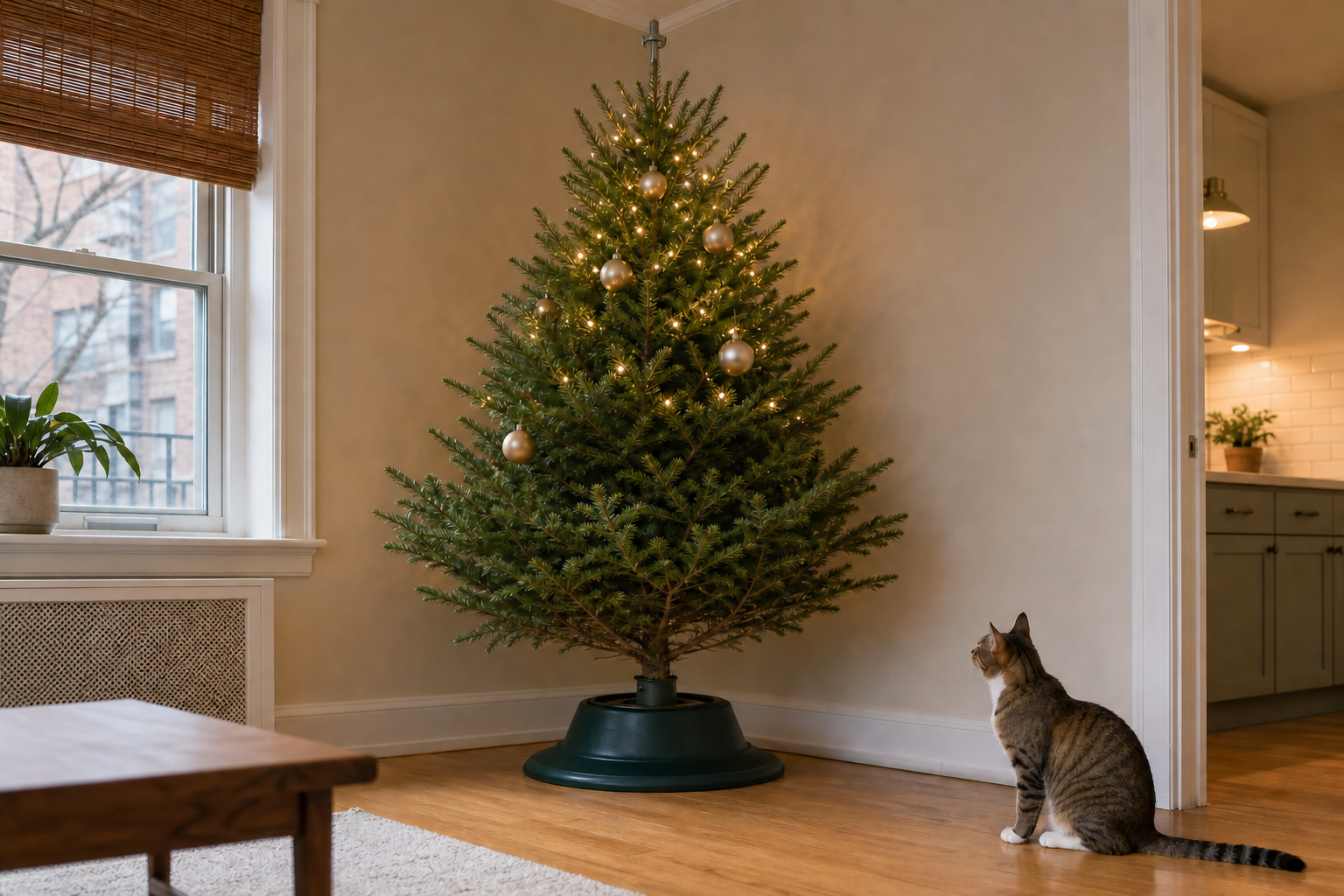
A cat proof Christmas tree starts with preventing the hazards that can cause the most harm. Use a wide, stable stand, anchor the tree when possible, cover the tree-water reservoir, protect electrical cords, and unplug the lights when the tree is unattended. Skip tinsel, thin ribbon, low glass ornaments, edible decorations, real candles, and any flocking or artificial snow your cat may lick or chew.
In a small apartment, place the tree away from sofas, shelves, window perches, cat trees, and other launch points. Keep the lowest branches simple, move breakable ornaments higher, and provide a scratching post, resting place, or floor-level play area away from the tree. If the setup cannot be made safe when you are asleep or away, close the room, use a secure barrier, choose a smaller tree, or leave the tree undecorated.
Contact a veterinarian promptly if your cat chews an electrical cord or may have swallowed tinsel, ribbon, string, ornament hooks, glass, fake snow, or another decoration. Treat any possible lily exposure as urgent, and do not wait for symptoms before calling a veterinarian or animal poison control service.
Quick Answer
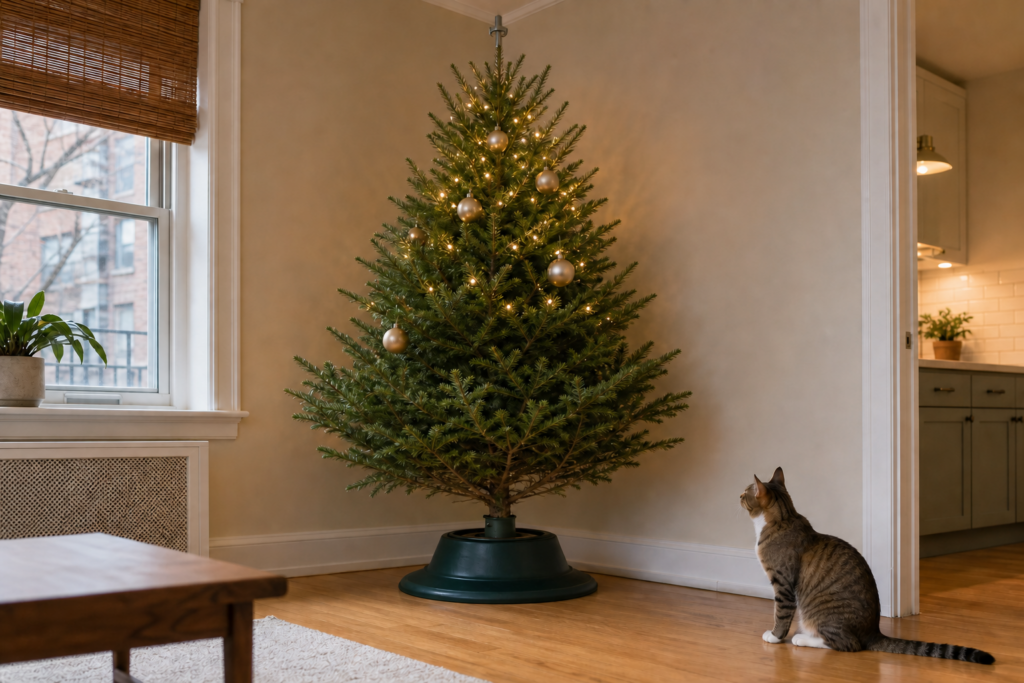
To cat proof a Christmas tree, start with a wide, stable stand and a secure anchor that your cat cannot reach. Cover the tree-water reservoir, protect and shorten electrical cords, unplug lights when the tree is unattended, and keep tinsel, thin ribbon, breakable ornaments, sharp hooks, edible decorations, candles, and accessible flocking off the tree.
Place the tree away from sofas, shelves, cat trees, window perches, and other launch points. Keep the lower branches undecorated or use only large, soft, securely attached decorations. Supervise access at first, but do not rely on supervision alone: close the room or use a secure barrier whenever the tree cannot be made safe for an unsupervised cat.
Important Safety Note
Contact a veterinarian or emergency clinic immediately if your cat chews a live electrical cord, may have swallowed tinsel, ribbon, string, ornament hooks, glass, batteries, or another foreign object, or may have contacted any part of a true lily. Do not wait for vomiting or weakness before seeking advice after a possible lily exposure or linear-object ingestion.
Call your veterinarian or an animal poison control service promptly after exposure to an unknown decoration, tree-water additive, flocking product, scented oil, holiday plant, or other potentially toxic material. Bring or photograph the product label when possible. Repeated vomiting, drooling, breathing difficulty, weakness, abdominal pain, collapse, or refusal to eat requires urgent veterinary attention.
Do not use essential oils, strong fragrance sprays, punishment, or frightening devices to keep a cat away from the tree. Prevention should rely on physical stability, inaccessible hazards, protected cords, safer decorations, and blocked access when supervision is not possible.
Table of Contents
Why Christmas Trees Attract Cats
Christmas trees are almost designed to interest cats. They are tall, climbable, full of movement, covered in dangling objects, placed in a social room, and often introduced suddenly into the cat’s territory.
A cat may investigate the tree because it offers:
- height
- hiding spots
- dangling toys
- new smells
- texture
- attention
- lights
- water
- chewable branches
- a new route through the room
In a small apartment, the tree may also block a normal path, sit beside a window, or replace a favorite resting area. That can make the cat more curious or frustrated.
Why Cat Proofing Matters More in Small Apartments
In a small apartment, the Christmas tree often shares space with the sofa, window, shelves, feeding area, and the cat’s normal travel routes. Nearby furniture can become a launch point, while limited floor space may place cords, tree water, and low ornaments within easy reach.
Start with layout before decorating. Move the tree away from climbable furniture, preserve access to food, water, litter boxes, and preferred resting areas, and leave enough space to install a wide stand or barrier. A smaller tree in a controllable location is safer than a full-height tree that cannot be stabilized or isolated.
Treat the tree as a temporary high-risk object. Stability, cord protection, covered water, safer decorations, and reliable no-access periods matter more than trying to make the tree unattractive with scents or punishment.
7 Essential Ways to Cat Proof a Christmas Tree
1. Choose the Safest Tree Location
Place the tree away from launch points. Avoid putting it next to a sofa, bookcase, cat tree, window perch, shelf, dining chair, or other surface your cat can use to jump into the branches.
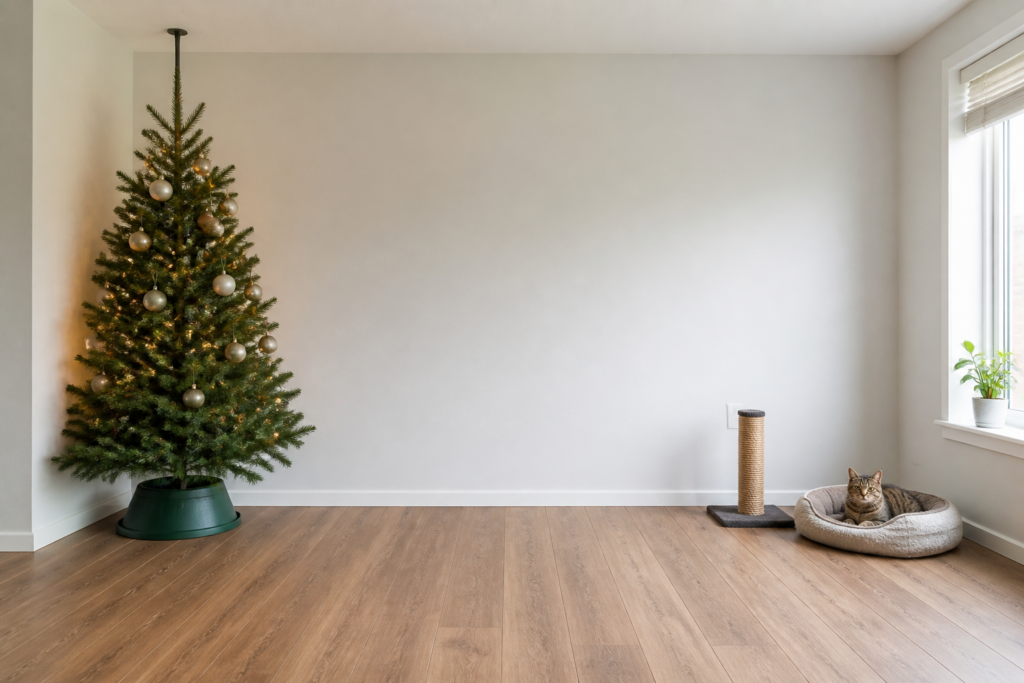
Choose a corner if possible. A corner gives the tree more support and reduces the number of approach angles. Keep the tree away from food bowls, litter boxes, favorite beds, and high-traffic cat routes.
If your apartment is small, use a smaller tree. A stable 4-foot tree may be safer than a dramatic full-height tree that dominates the only living room.
2. Secure the Base and Anchor the Tree
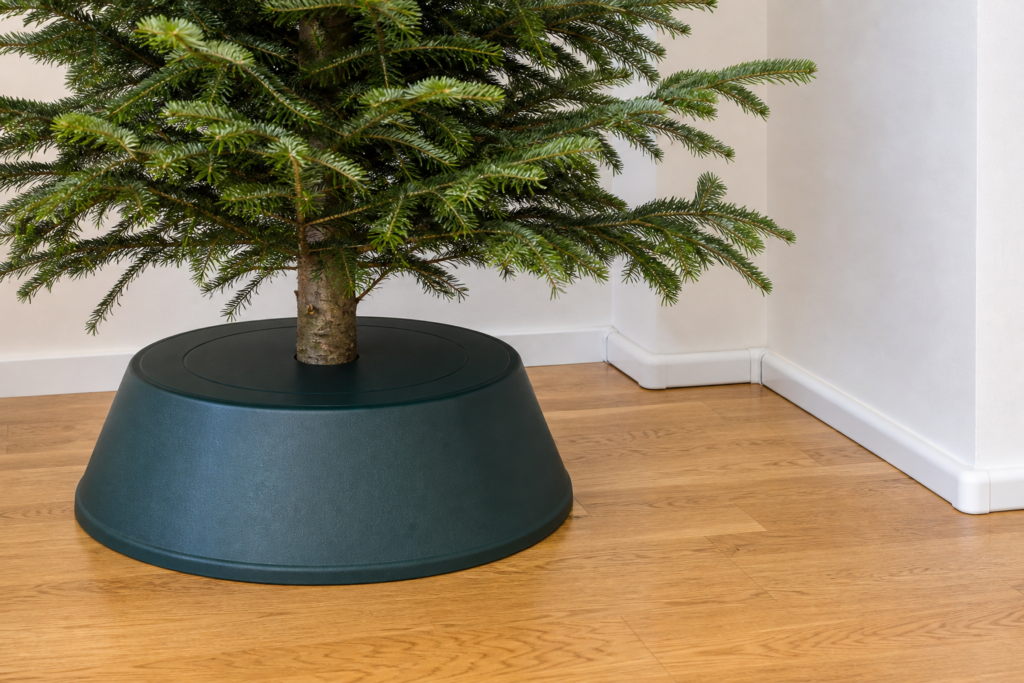
Choose the widest, heaviest stand that correctly fits the tree. Confirm that the trunk is centered, the stand fasteners are tight, and the tree does not wobble before adding lights or ornaments. A tree skirt, wrapped gifts, or decorative basket must not be treated as structural support.
When permitted, attach the upper trunk to a fixed structural anchor with hardware and a strap rated for the load. Keep every line, strap, and fastener tight, inaccessible to the cat, and away from the neck or entanglement level. Do not anchor the tree to curtains, blinds, unstable furniture, or another object that could fall.
If drilling or structural anchoring is not allowed, choose a shorter and lighter tree, place it in a protected corner, reduce decorations, and use a secure barrier or closed room when unsupervised. A tabletop tree is only safer when the table cannot tip and the cat cannot reach or jump onto it.
3. Protect Electrical Cords
Keep light cords short, covered, secured against the wall, and inaccessible behind the tree. Use intact products according to their instructions, avoid overloaded outlets or power strips, and inspect cords regularly for tooth marks, exposed wire, heat damage, or loose connections.
Unplug the lights whenever the tree is unattended or the household is asleep. If your cat persistently seeks electrical cords, do not use electric tree lights in an accessible area. If a cat bites a live cord or develops mouth burns, coughing, breathing difficulty, weakness, or collapse, disconnect the power safely and seek emergency veterinary care.
4. Choose Safer Ornaments
Do not use tinsel, thin ribbon, yarn, edible ornaments, salt-dough ornaments, glass, sharp metal hooks, or decorations that break into small pieces. These items can create intestinal, choking, cutting, or toxicity hazards rather than simply making a mess.
For any decoration within reach, choose a large, lightweight, shatter-resistant item with no loose string, feather, bell, hook, battery, or detachable part. Attach it tightly with a short enclosed fastener. If your cat chews or climbs, leave the lower part of the tree undecorated and keep fragile or sentimental ornaments off the tree entirely.
Use three practical zones:
- Lower zone: leave undecorated whenever possible.
- Middle zone: use only large, lightweight, securely attached, shatter-resistant decorations.
- Upper zone: use fragile decorations only if the cat cannot climb or reach the tree.
Fewer moving decorations usually create fewer pawing opportunities. A simple tree is easier to inspect and keep safe than one covered with dangling objects.
5. Make the Lower Tree Boring
Leave the lowest branches undecorated whenever possible. Do not place ribboned gifts, food, shiny ornaments, bells, feathers, crinkly paper, or other toy-like objects beneath the tree.
“Boring” does not mean adding an unpleasant scent. It means removing movement, sound, food, loose material, and easy-to-grab objects while preventing access to cords and tree water.
6. Offer a Better Alternative
Cats need something else to do. If the tree is the only exciting new object in the room, it will attract more attention.
Add a legal alternative nearby but not directly beside the tree:
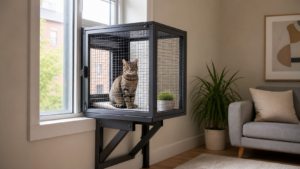
- a cat tree
- window perch
- scratcher
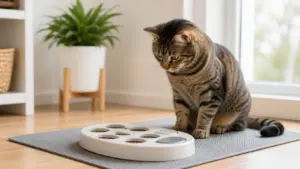
- puzzle feeder
- cardboard box
- wand play session
- treat hunt
- cozy bed away from the tree
If your cat is bored or under-stimulated, pair this setup with our indoor cat enrichment in small apartments guide.
7. Supervise the First Week
Observe your cat closely when the tree is first installed and again after lights, ornaments, gifts, or plants are added. Watch for chewing, climbing, pawing, hiding in the branches, pulling decorations, approaching electrical cords, or drinking tree water.
Correct the setup as soon as a hazard becomes accessible. Remove the specific object, change the layout, strengthen the barrier, or block the room. Do not wait for repeated attempts before making a safety change.
Supervision is not a substitute for prevention. If your cat can reach a serious hazard when you leave the room, the setup is not yet safe for unsupervised access.
Christmas Tree Safety Table
| Risk | Why It Matters | Safer Action |
|---|---|---|
| Tinsel, ribbon, yarn, or string | Can act as a dangerous linear foreign body if swallowed | Do not use it on or under the tree |
| Glass ornaments or sharp hooks | Breakage, cuts, choking, or gastrointestinal injury | Use large shatter-resistant decorations with enclosed fasteners |
| Electrical cords | Chewing can cause burns, electrical shock, or breathing complications | Cover and secure cords; unplug lights when unattended |
| Tree-water reservoir | Water may contain bacteria or added preservatives and is easy to revisit | Use plain water when appropriate and keep the reservoir securely covered |
| Flocking or artificial snow | Ingredients vary and accessible material may be licked or swallowed | Avoid it when the cat can reach the tree |
| Candles or hot decorations | Fire and burn risk | Use no open flame near an accessible tree |
| Unstable tree or stand | A falling tree can injure a cat or person | Use a correctly sized wide stand and a secure structural anchor when permitted |
| Lilies in holiday arrangements | True lilies can cause acute kidney failure in cats | Keep lilies out of the home and treat possible exposure as urgent |
Real vs. Artificial Christmas Trees
A real tree introduces a water reservoir and may shed needles or sap that some cats investigate. Use only the water recommended for the tree, do not add homemade mixtures or unverified preservatives, and keep the reservoir securely covered so the cat cannot drink from it.
An artificial tree avoids tree water but does not remove climbing, cord, ornament, flocking, or chewing hazards. Plastic branches and detachable pieces should not be accessible to a cat that chews non-food objects.
Neither type is automatically cat-safe. Choose the tree that you can stabilize, simplify, inspect, and block off when necessary. For a persistent climber or chewer, a smaller undecorated tree in a protected location—or no accessible tree—may be the safest choice.
Holiday plant risk also varies widely. Check each plant by its exact name before bringing it home; do not assume that every seasonal plant has the same toxicity. For safer everyday options, see our cat safe plants apartment guide.
Holiday Decorations and Plants to Keep Away From Cats
Keep tinsel, ribbon, yarn, string garlands, ornament hooks, glass decorations, loose bells, accessible batteries, salt-dough ornaments, candles, liquid potpourri, scented oils, and edible decorations away from cats. Collect gift ribbon and string immediately after presents are opened, and do not place wrapped food, chocolate, alcohol, bread dough, medication, or other tempting hazards beneath the tree.
Plant risks are not equal. True lilies are an emergency for cats because even small exposures can cause acute kidney failure. Mistletoe and holly can cause illness, while poinsettia sap more commonly causes mouth or stomach irritation and is generally less dangerous than lilies. The safest approach is to keep questionable holiday plants out of reach and verify the exact plant before bringing it home.
Do not use essential oils, liquid potpourri, strong fragrance sprays, citrus-oil mixtures, punishment, or frightening devices as tree deterrents. Use physical prevention: remove attractive objects, protect cords and water, provide safer enrichment, and block access when the tree cannot be supervised.
If your cat already chews leaves or greenery, address that behavior before adding seasonal plants. Use our guide on how to stop a cat from eating plants before bringing in tempting holiday decor.
Apartment Layout Tips
Studio Apartment
Use a smaller tree, place it away from the bed and sofa if possible, and block access when you sleep. If the tree is in the only room, supervision and boring lower branches matter more.
One-Bedroom Apartment
Close the living room or bedroom door when you cannot supervise if the layout allows it. Keep the tree away from the cat’s main sleeping and feeding zones.
Multi-Cat Home
One cat may start the trouble and another may join. Watch whether play, chasing, or resource pressure is happening around the tree. If the tree creates conflict, move beds, food, or resting spots away from it.
Renter Apartment
Choose damage-free or low-damage stabilization when possible, but do not rely on a weak stand alone. A smaller tree may be the safest renter-friendly choice.
How to Redirect Tree Interest
Redirect your cat before they reach the tree. Lead them to a wand-toy session, scratcher, food puzzle, resting place, or other activity positioned away from the tree. Reward use of the safer option without placing treats beside the tree itself.
Redirection cannot make an accessible hazard safe. Continue to cover cords, remove string-like decorations, cover tree water, stabilize the tree, and block access when you cannot supervise. If nearby furniture is being used as a launch point, move it when possible and use the same consistent setup principles described in our keep cat off counters guide.
Signs Your Christmas Tree Cat Proofing Plan Is Working
A safer setup is one in which serious hazards remain inaccessible even when your cat is curious. Check the tree every day during the first several days and after guests, gift opening, or decoration changes.
Look for these signs:
- the tree remains upright and does not wobble;
- cords and plugs remain covered and undamaged;
- the tree-water cover stays secure;
- no ribbon, string, hooks, broken pieces, or batteries reach the floor;
- lower branches remain free of accessible decorations;
- your cat uses the alternative scratcher, perch, bed, or play area; and
- the barrier or closed-room plan works when no one is supervising.
If your cat can still climb into the branches, chew cords, drink tree water, or pull decorations loose, remove access and revise the setup. Do not wait for an accident before correcting an accessible hazard.
Frequently Asked Questions
1. How do I cat proof a Christmas tree without ruining the look?
Use a stable base, anchor the tree discreetly, keep fragile ornaments high, make the lower branches simple, use soft decorations, hide cords, and choose a coordinated tree skirt or barrier. A safe tree can still look intentional.
2. Is fake snow or flocking safe for cats?
There is no single safety answer because flocking and artificial-snow products vary. Avoid them when your cat can lick, chew, or contact the treated branches. If exposure occurs, check the product label and contact your veterinarian or an animal poison control service for product-specific advice.
3. Should I let my cat explore the tree?
Brief supervised investigation from the floor may help you identify what attracts your cat, but do not allow climbing, cord chewing, tree-water access, or play with ornaments. Block access whenever you cannot actively supervise, especially after new lights, gifts, plants, or decorations are added.
4. What should I do if my cat drinks Christmas tree water?
Prevent further access and identify anything added to the water. Contact your veterinarian or an animal poison control service promptly if the water contained a preservative, fertilizer, homemade additive, or unknown product, or if your cat vomits, drools, develops diarrhea, seems weak, or stops eating. Keep the reservoir securely covered afterward.
5. Can I use citrus or bitter sprays?
Do not use essential oils or homemade citrus-oil mixtures as cat deterrents. A bitter product should be used only when its label specifically permits that use around cats and on the intended surface, and it should never replace physical protection. When uncertain, ask your veterinarian and use a barrier, cord cover, or no-access room instead.
6. What if my cat keeps climbing the tree?
Remove low decorations, block access when unsupervised, add a better climbing alternative, anchor the tree, or switch to a smaller tabletop tree in a protected location.
Final Thoughts
A cat proof Christmas tree depends on prevention, not punishment. Start with a stable stand and secure anchor, protect cords, cover tree water, remove string-like and breakable decorations, keep dangerous plants out of the home, and block access whenever the setup cannot be supervised safely.
Recheck the tree after decorating, gift opening, guests, or any change in your cat’s behavior. If a serious hazard remains accessible, simplify the tree or move it to a protected location. Contact a veterinarian promptly after suspected electrical injury, foreign-object ingestion, toxic exposure, or any concerning symptoms.
References
- American Society for the Prevention of Cruelty to Animals. Holiday Safety Tips. https://www.aspca.org/pet-care/general-pet-care/holiday-safety-tips
- U.S. Food and Drug Administration. Keep Your Dogs and Cats Safe From Holiday Hazards. https://www.fda.gov/consumers/consumer-updates/keep-your-dogs-and-cats-safe-holiday-hazards
- U.S. Food and Drug Administration. Take the “Oh No!” Out of Your and Your Pets’ Holiday “Ho-Ho-Ho!”. https://www.fda.gov/animal-veterinary/animal-health-literacy/take-oh-no-out-your-and-your-pets-holiday-ho-ho-ho
- American Veterinary Medical Association. Household Hazards. https://ebusiness.avma.org/files/productdownloads/HouseholdHazards-En.pdf
- American Society for the Prevention of Cruelty to Animals. Toxic and Non-Toxic Plants List — Cats. https://www.aspca.org/pet-care/animal-poison-control/cats-plant-list