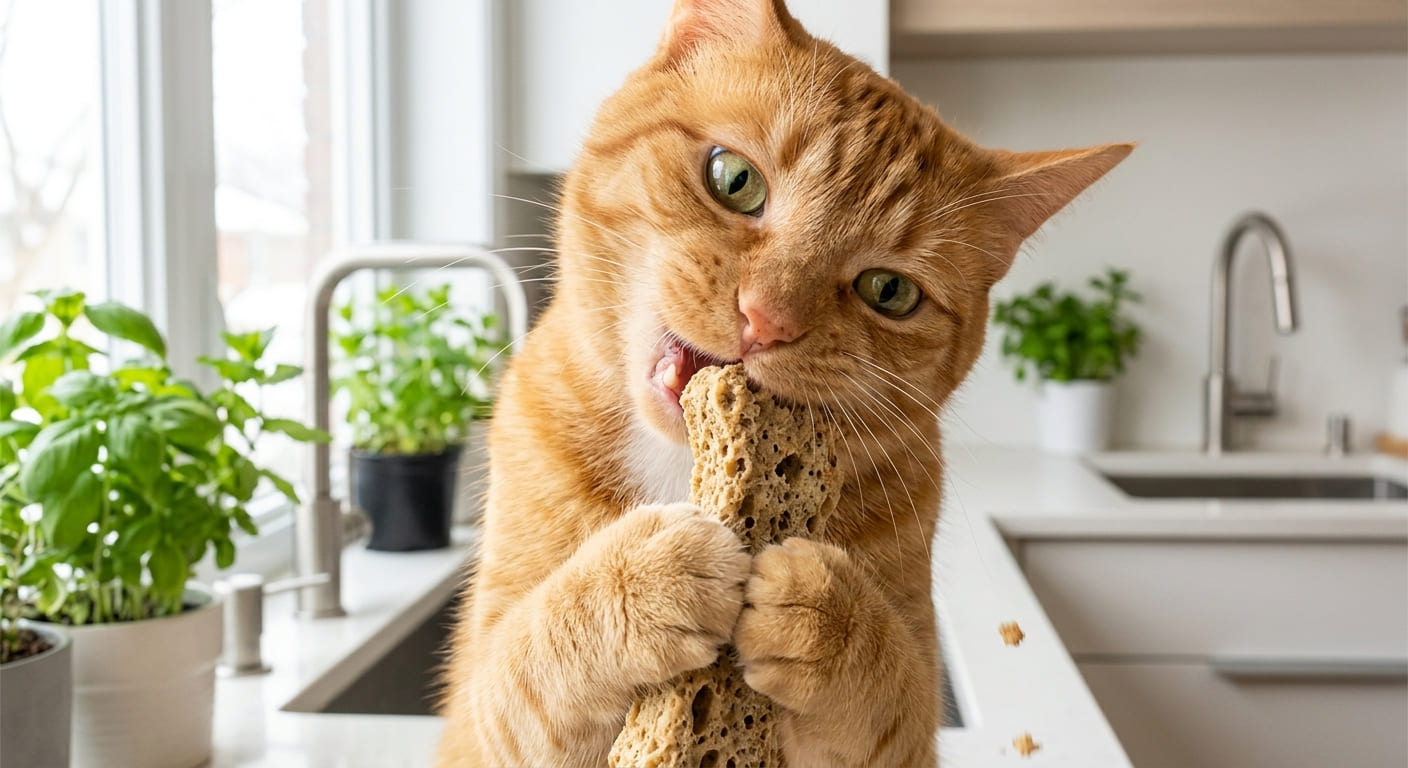
The best cat dental treats are products your cat will chew consistently and that have evidence supporting a specific plaque- or tartar-control claim. Dental treats should be easy to use, appropriate for your cat’s health and diet, and realistic enough to become part of a regular oral-care routine.
The current Veterinary Oral Health Council (VOHC) accepted-products list includes four edible dental treats for cats:
- Feline Greenies Dental Treats
- Purina DentaLife Daily Oral Care Cat Treats
- Purina Pro Plan Veterinary Diet Dental Bites
- Whiskas Dentabites Cat Treats
For many healthy adult cats, Feline Greenies and Purina DentaLife are practical consumer options. Purina Pro Plan Veterinary Diet Dental Bites carries VOHC claims for both plaque and tartar control. Whiskas Dentabites may be easier to find in some markets outside the United States.
Dental treats can support oral hygiene, but they cannot replace toothbrushing, veterinary dental examinations, or treatment for painful dental disease. If your cat already has persistent bad breath, bleeding gums, drooling, difficulty chewing, or appetite changes, arrange a veterinary examination instead of trying to solve the problem with treats.
VOHC status last checked: July 2026. Product status, formulations, package directions, and availability can change. Confirm the exact product on the current VOHC accepted-products list and check the current label before purchasing.
Table of Contents
Quick Comparison
| Dental treat | VOHC claim | Best for | Main limitation |
|---|---|---|---|
| Feline Greenies Dental Treats | Tartar | A widely available everyday option | Some cats may swallow rather than chew |
| Purina DentaLife Daily Oral Care | Tartar | Owners wanting a Greenies alternative | Availability varies by location |
| Purina Pro Plan Veterinary Diet Dental Bites | Plaque and tartar | Owners prioritizing the broadest listed claim | Check suitability for special diets |
| Whiskas Dentabites | Tartar | Cats in markets where it is readily available | Limited availability in some countries |
How We Chose the Best Cat Dental Treats
This guide prioritizes products that appear on the current VOHC accepted-products list for cats. We did not treat vague claims such as “freshens breath” or “supports oral health” as equivalent to a specific accepted plaque or tartar claim.
Our selection criteria included:
- current VOHC acceptance for cats
- the exact plaque or tartar claim listed by VOHC
- consumer availability
- feeding directions and ease of daily use
- treat size, shape, and texture
- whether a cat is likely to chew instead of swallow the treat whole
- suitability for an indoor cat’s calorie budget
- ingredient and diet considerations
- limitations for cats with dental pain or medical conditions
- whether the product can fit into a broader oral-care routine
VOHC acceptance does not mean a product is automatically appropriate for every cat. Age, dental condition, allergies, chewing behavior, calorie needs, prescription diets, and other medical considerations still matter. The best product on paper will not be useful if your cat refuses it, cannot chew it comfortably, or should not eat it because of a health condition.
We also separate dental support from dental treatment. A treat may help control plaque or tartar accumulation when used as directed, but it cannot repair a broken tooth, remove advanced calculus, diagnose periodontal disease, or make a painful mouth healthy again.
Dental Health Safety Note
Dental treats are intended for routine oral-care support, not diagnosis or treatment.
Schedule a veterinary examination if your cat has:
- bad breath that is persistent or suddenly becomes worse
- red, swollen, or bleeding gums
- drooling or blood-tinged saliva
- pawing at the mouth
- difficulty picking up or chewing food
- food falling from the mouth
- chewing on only one side
- a sudden preference for soft food
- facial swelling
- loose, damaged, or missing teeth
- reduced appetite or unexplained weight loss
- a sudden refusal to eat treats the cat previously enjoyed
Cats frequently continue eating despite dental discomfort, so a normal appetite does not always rule out oral disease. A subtle change in chewing speed, food preference, grooming, or willingness to have the face touched may also deserve attention.
Before using a treat to freshen breath, check whether the odor is only temporary food smell or a cat bad breath warning sign that needs a veterinary examination.
Cats with known dental disease, missing teeth, diabetes, kidney disease, food allergies, obesity, prescription diets, or weight-control plans should use dental treats only after their suitability has been confirmed. Kittens and senior cats may also need different textures or a more cautious approach.
For a broader home-care routine, see our indoor cat dental health guide.
What Does VOHC-Accepted Mean?
VOHC stands for the Veterinary Oral Health Council. The organization reviews submitted evidence for dental products intended for dogs and cats. A product that meets the relevant requirements can receive a Seal of Acceptance for a specific claim.
The wording of that claim is important. A product may be accepted for:
- helping control plaque
- helping control tartar
- helping control both plaque and tartar
Plaque and tartar are related, but they are not interchangeable terms. Plaque is a soft bacterial film that accumulates on teeth. Over time, some plaque can mineralize into harder tartar, also called calculus. A product listed for tartar control should not automatically be described as having a plaque-control claim.
VOHC acceptance is a useful evidence-based filter, but it does not mean that:
- the product cleans every tooth surface
- every cat will chew it effectively
- it replaces toothbrushing
- it treats gingivitis or periodontal disease
- it is safe for every medical condition
- it eliminates the need for veterinary dental care
- every flavor or similarly named product has the same status
Always check the exact species and product name. A dog dental chew is not interchangeable with a cat product, and a manufacturer may sell several similar products that do not all carry the same accepted claim.
Why Chewing Behavior Matters
Dental treats are only useful if the cat can eat them safely and in the manner intended. Some cats take several bites and chew thoroughly. Others swallow crunchy treats after one bite or attempt to gulp them whole.
When introducing a dental treat, observe:
- how many times your cat chews before swallowing
- whether pieces break into a manageable size
- whether your cat coughs, gags, or vomits
- whether eating appears comfortable
- whether the treat is dropped repeatedly
- whether the cat avoids chewing on one side
- whether the cat loses interest because the texture is too hard
Do not assume that a larger or harder treat is automatically better. A treat must still be appropriate for the cat’s mouth, dental condition, and chewing habits. Cats with painful teeth may need veterinary care rather than a more challenging chew.
Supervise the first several servings. If your cat repeatedly attempts to swallow a product whole, stop and reconsider the choice. Do not alter a product in a way that conflicts with its label directions.
1. Feline Greenies Dental Treats
Best overall for many healthy adult cats
VOHC status: Accepted for tartar control
Feline Greenies are one of the most recognizable and widely available VOHC-accepted dental treats for cats. They can be a practical starting point for owners who want an accessible product that fits into a consistent routine.
Their main advantage is convenience. A dental product only has a chance to help when the owner can obtain it regularly and the cat will accept it. Greenies are commonly sold through pet retailers and online stores, and multiple flavors may make it easier to find one a cat enjoys.
They are most appropriate for healthy adult cats that chew crunchy treats comfortably. The product may be less useful for cats that swallow treats immediately without chewing. Watch your cat during the first servings rather than assuming the intended chewing action is happening.
Why they may be a good choice
- VOHC-accepted for tartar control
- widely available in many markets
- convenient for a regular routine
- multiple flavor options may be available
- familiar format for cats that already eat crunchy treats
What to consider
- some cats may swallow the treat after minimal chewing
- calories must be counted as part of daily intake
- flavor does not determine dental effectiveness
- cats with painful teeth may avoid or struggle with the texture
- feeding amounts should come from the current package
Greenies should not be treated as free dental medicine. They are still food and still contribute calories. If your cat receives training treats, food toppers, supplements, and table scraps in addition to dental treats, the total extra calorie intake can become meaningful.
Check the current label for feeding directions, age recommendations, and storage instructions. If your cat has food sensitivities or follows a therapeutic diet, review the ingredient list and speak with your veterinarian before introducing a daily treat.
2. Purina DentaLife Daily Oral Care Cat Treats
Best alternative to Feline Greenies
VOHC status: Accepted for tartar control
Purina DentaLife Daily Oral Care Cat Treats provide another consumer-available VOHC option for tartar control. They may suit cats that reject the taste, smell, or texture of another dental treat.
Having a second mainstream option matters because acceptance varies widely among cats. One cat may eagerly chew a particular treat while another sniffs it and walks away. Consistency is more realistic when the product is both appropriate and palatable.
DentaLife may also appeal to owners who prefer to compare product shape, texture, package directions, availability, and cost before committing to a routine. Those practical differences can determine whether a product is used consistently.
Why they may be a good choice
- VOHC-accepted for tartar control
- consumer-available rather than restricted to a clinic
- useful as an alternative when another brand is refused
- designed to fit into a regular oral-care routine
What to consider
- availability varies between countries and retailers
- a willing cat may still swallow instead of chew
- serving directions and product formulation can change
- treat calories must be included in the daily food budget
- suitability should be checked for allergies or restricted diets
Introduce the product gradually and observe how your cat handles it. A cat that seems hesitant may simply need time to investigate a new smell or texture, but a cat showing pain, dropping food, or chewing abnormally should be evaluated rather than pressured to continue.
Use the feeding instructions printed on the current package. Do not rely on quantities copied from an older review because manufacturers can update product size, formulation, or directions.
3. Purina Pro Plan Veterinary Diet Dental Bites
Best for owners prioritizing both plaque and tartar claims
VOHC status: Accepted for plaque and tartar control
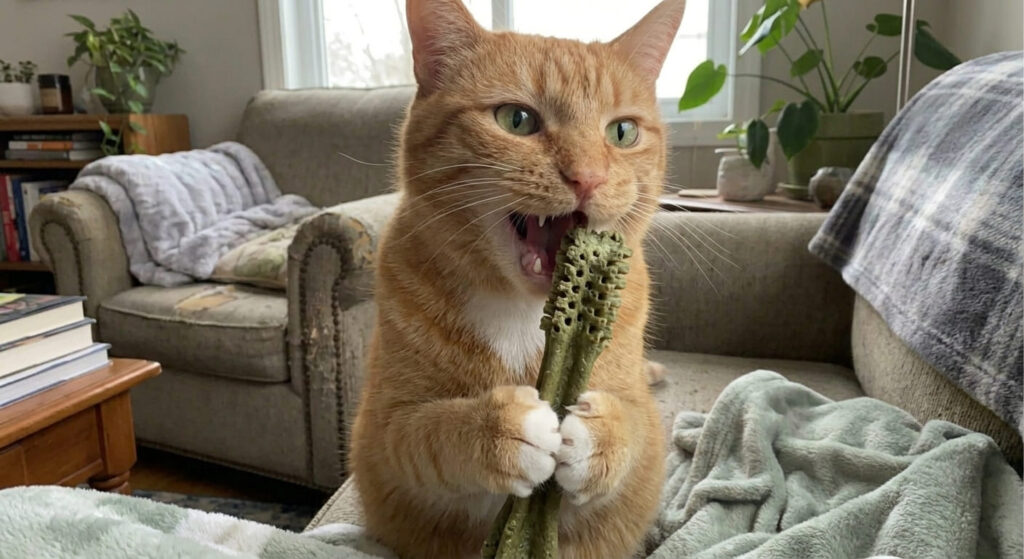
Purina Pro Plan Veterinary Diet Dental Bites stand out because the current VOHC listing includes claims for both plaque and tartar control.
That broader listed claim can make the product attractive to owners looking for an evidence-based oral-care option. However, it does not automatically make Dental Bites the right choice for every cat. Availability, chewing behavior, ingredients, calorie needs, existing dental health, and veterinary recommendations still matter.
Despite the “Veterinary Diet” name, owners should check the current availability and product information in their market. The name should not be interpreted as permission to use the product without considering the cat’s broader diet or health needs.
Why they may be a good choice
- VOHC-accepted for both plaque and tartar control
- useful for owners comparing the exact accepted claims
- can form one part of a structured oral-care routine
- offers an alternative to tartar-only listed treats
What to consider
- availability may be more limited than mainstream treats
- the product still cannot treat established dental disease
- cats on prescription or restricted diets need individual guidance
- current label directions must be followed
- a cat still needs to chew the product comfortably
If your cat has kidney disease, diabetes, obesity, food allergies, gastrointestinal sensitivities, or a prescription diet, consult your veterinarian before adding a daily treat. A product with a strong dental claim may still conflict with another dietary priority.
Watch for comfort as well as enthusiasm. A cat that rushes to eat a treat may still have an inefficient chewing pattern, while a cat that approaches slowly may be showing caution or oral discomfort.
4. Whiskas Dentabites Cat Treats
Best for markets where they are readily available
VOHC status: Accepted for tartar control
Whiskas Dentabites are another VOHC-accepted option for tartar control. They may be particularly relevant in countries where Whiskas products are easier to find than some North American alternatives.
Availability differs substantially by country, and product names can be similar. Verify that the exact cat product and flavor correspond to the current VOHC listing instead of assuming that every Whiskas dental-style treat carries the same status.
Dentabites can be a useful alternative for cats that refuse other accepted treats, provided the cat chews comfortably and the product fits the cat’s diet.
Why they may be a good choice
- VOHC-accepted for tartar control
- may be readily available in some international markets
- gives owners another flavor and texture option
- can support a consistent routine when other products are unavailable
What to consider
- availability may be limited in the United States
- package names and flavors may differ by market
- the exact product must be confirmed
- calorie and ingredient information should be checked locally
- dental treats cannot replace treatment for mouth pain or disease
Buy from a source that provides a clear product label and current expiration information. If the packaging, product name, or country-specific formulation differs from the official listing, confirm the status before describing it as VOHC-accepted.
As with the other products, introduce Dentabites under supervision and watch whether your cat chews, swallows, drops, or avoids the treat.
Cat Dental Treat Decision Guide
Choosing among the four products is less about finding one universal winner and more about matching the product to the cat.
| Situation | Practical starting point | Why | Main caution |
|---|---|---|---|
| You want a widely available option | Feline Greenies | Easy to find in many markets | Watch for whole swallowing |
| Your cat refuses Greenies | Purina DentaLife | Offers a different option | Availability varies |
| You prioritize both listed claims | Purina Pro Plan Dental Bites | Listed for plaque and tartar | Check diet suitability |
| You live where Dentabites are common | Whiskas Dentabites | May be locally accessible | Confirm exact product |
| Your cat has bad breath or pain | Veterinary examination | Symptoms may indicate disease | Do not mask symptoms with treats |
| Your cat is overweight | Vet-guided calorie plan | Treat calories affect intake | Do not guess serving reductions |
| Your cat swallows treats whole | Reassess the product | Chewing behavior matters | Do not force a harder product |
| Your cat follows a prescription diet | Ask the prescribing veterinarian | Diet priorities may conflict | Avoid unapproved additions |
How to Introduce Dental Treats Safely
A gradual introduction gives you time to evaluate acceptance, digestion, and chewing behavior.
Step 1: Check the mouth first
Do not start a crunchy dental treat when your cat has obvious mouth pain, bleeding, drooling, facial swelling, or difficulty eating. Arrange an examination first.
Step 2: Read the entire label
Check the species, age guidance, serving directions, calorie information, ingredients, storage instructions, and warnings. Confirm that the exact product appears on the current VOHC list.
Step 3: Offer one under supervision
Place the treat where you can observe your cat. Watch whether the cat bites several times, swallows quickly, coughs, drops the treat, or appears uncomfortable.
Step 4: Monitor digestion
Any new food can cause digestive upset in a sensitive cat. Stop and seek advice if vomiting, diarrhea, persistent coughing, or another concerning reaction occurs.
Step 5: Build a consistent routine
If the product is suitable, use it according to the label. A routine connected to another daily event—such as after an evening play session—may be easier to remember.
Step 6: Reassess regularly
Check whether your cat still chews the treat and whether body weight remains stable. A change in chewing behavior can be a reason to examine the mouth.
Calories and Weight Management
Dental treats contribute calories and should be included in your cat’s total daily food intake. This is especially important for indoor cats, which may have lower energy needs than the serving assumptions owners expect.
Avoid using a universal calorie number copied from another article. Product formulations, treat sizes, and feeding directions can change. Use the current label for the exact product in your home.
Also count other extras:
- training treats
- food toppers
- table food
- lickable treats
- supplements that contain calories
- food used to administer medication
If your cat is overweight or on a calorie-controlled plan, do not independently make large reductions to a complete diet simply to accommodate treats. Ask your veterinarian how dental treats should fit into the feeding plan.
A kitchen scale can help owners measure the main diet consistently, but medical weight-loss targets and calorie changes should be individualized.
For broader feeding considerations, see our cat feeding and weight-control guide.
Dental Treats vs. Toothbrushing
Dental treats are convenient, but they cannot contact every tooth surface in a controlled way. Toothbrushing provides more direct mechanical cleaning when performed safely with a cat-appropriate toothbrush and toothpaste.
Never use human toothpaste. Ingredients and foaming agents intended for people are not designed to be swallowed by cats.
Many cats need a slow introduction to brushing:
- Begin by touching the cheek and lifting the lip briefly.
- Reward calm behavior.
- Introduce a cat-safe toothpaste for the cat to taste.
- Progress to touching the outer tooth surfaces.
- Keep sessions short and stop before the cat becomes distressed.
- Increase duration gradually rather than forcing the mouth open.
Some cats will tolerate only a few seconds at first. A short, calm session repeated consistently is more realistic than an aggressive attempt that makes future handling harder.
Dental treats can complement brushing, but they should not be used to justify skipping veterinary examinations. Professional assessment is still needed when disease, pain, or advanced tartar is present.
What About Dental Diets, Water Additives, and Oral Gels?
Edible dental treats are only one category on the VOHC cat list. Depending on the cat, other accepted products may include dental diets, water additives, oral gels, powders, toothpaste systems, or wipes.
These categories solve different practical problems:
- Dental diets may suit cats whose veterinarian recommends changing the main food.
- Water additives may be easier for cats that refuse treats, but they can change water taste and may reduce drinking in a sensitive cat.
- Oral gels and sprays may offer direct application, but handling tolerance varies.
- Toothbrush and toothpaste systems provide direct cleaning but require training.
- Food additives or powders must be compatible with the cat’s diet and medical needs.
Do not combine several products automatically. More products do not necessarily produce a better routine, and they can complicate calorie intake, palatability, or medical diets. Start with a simple plan that your cat tolerates, then discuss additions with your veterinarian.
Common Cat Dental Treat Mistakes
Choosing by marketing language alone
Terms such as “dental,” “oral care,” and “fresh breath” do not all mean the same thing. Look for the exact accepted claim and verify the product.
Assuming bad breath is normal
Persistent bad breath may be associated with oral disease. A treat that temporarily changes odor does not identify or treat the cause.
Ignoring whole swallowing
A cat can enjoy a dental treat without chewing it effectively. Observe the eating behavior instead of relying only on enthusiasm.
Forgetting calories
Owners often count meals but forget the combined calories from dental treats, lickable treats, toppers, and training rewards.
Using dog dental chews for cats
Dog products may be the wrong size, texture, formulation, or dosage. Choose a product specifically intended for cats.
Giving hard treats to a painful mouth
A cat with dental disease may continue trying to eat despite discomfort. Reluctance, dropping food, or one-sided chewing should not be treated as stubbornness.
Treating a seal as a complete dental plan
VOHC acceptance helps identify evidence for a particular claim. It does not replace brushing, examinations, dental X-rays when indicated, professional cleaning, or treatment.
Frequently Asked Questions
1. What are the best cat dental treats?
The best starting options are edible cat dental treats currently accepted by VOHC. The current list includes Feline Greenies, Purina DentaLife, Purina Pro Plan Veterinary Diet Dental Bites, and Whiskas Dentabites.
The best individual choice depends on availability, chewing behavior, diet, medical conditions, and veterinary guidance.
2. Are Greenies good for cats’ teeth?
Feline Greenies are VOHC-accepted for tartar control when used according to directions. They can support an oral-care routine, but they do not replace toothbrushing, oral examinations, or treatment for dental disease.
3. What cat dental treats are VOHC-accepted?
The current VOHC edible-treat list for cats includes:
- Feline Greenies Dental Treats
- Purina DentaLife Daily Oral Care Cat Treats
- Purina Pro Plan Veterinary Diet Dental Bites
- Whiskas Dentabites Cat Treats
Check the current official list before purchasing because product status can change.
4. Do cat dental treats actually work?
VOHC-accepted products have evidence supporting the specific plaque or tartar claim shown on their listing when used as directed. Results in an individual cat can still depend on chewing behavior, consistency, dental condition, and the rest of the oral-care routine.
5. Can dental treats replace brushing?
No. Dental treats may provide additional plaque or tartar support, but they do not clean every tooth surface as directly as brushing.
6. Can dental treats remove existing tartar?
Do not expect a treat to remove established heavy tartar or treat periodontal disease. A veterinarian can determine whether professional cleaning or other treatment is needed.
7. Are dental treats safe for cats with bad teeth?
Not always. Cats with loose teeth, bleeding gums, difficulty chewing, drooling, facial swelling, or mouth pain should be examined before receiving hard or crunchy treats.
8. How many dental treats should a cat receive?
Follow the current package directions for the exact product. Serving amounts differ among products and may change when formulations are updated.
If your cat is overweight, has a medical condition, or follows a prescription diet, ask your veterinarian how the treats should fit into the feeding plan.
9. What if my cat swallows dental treats whole?
If your cat consistently swallows treats without chewing, the expected mechanical benefit may be limited. Reassess the choice rather than forcing the cat to eat a harder product.
Do not cut, enlarge, soften, or otherwise alter a product in a way that conflicts with its directions.
10. What if my cat refuses every dental treat?
Do not force the issue. Ask your veterinarian about other oral-care options, which may include gradual toothbrushing, an appropriate dental diet, an oral gel, wipes, or another accepted product category.
11. Can kittens have dental treats?
Follow the product’s age guidance. A kitten’s size, developing teeth, diet, and calorie needs differ from those of an adult cat. Ask your veterinarian if the label or suitability is unclear.
12. Should senior cats eat dental treats?
Some senior cats can use dental treats, while others have missing teeth, painful dental disease, kidney disease, or dietary restrictions. A dental examination and individualized recommendation are particularly important when chewing behavior changes.
13. How quickly should dental treats improve bad breath?
Dental treats should not be used as a test or treatment for persistent bad breath. Odor may have several causes, including dental disease. Arrange an examination if bad breath is persistent, strong, or accompanied by other symptoms.
Final Thoughts
The best cat dental treats are VOHC-accepted products that fit your cat’s health, diet, chewing behavior, and daily routine.
Feline Greenies and Purina DentaLife are practical consumer options for many healthy adult cats. Purina Pro Plan Veterinary Diet Dental Bites carries listed claims for both plaque and tartar control. Whiskas Dentabites may be a useful alternative in markets where they are readily available.
Choose the exact product carefully, follow its current label, count the calories, and watch how your cat chews. Most importantly, use dental treats as support—not as a substitute for brushing, veterinary examinations, or treatment for dental disease.
References
- Veterinary Oral Health Council. “Accepted Products.”
- Veterinary Oral Health Council. “VOHC Accepted Products for Cats.” Updated March 2026.
- Logan, E. I. (2006). “Dietary Influences on Periodontal Health in Dogs and Cats.” Veterinary Clinics of North America: Small Animal Practice, 36(6), 1385–1401.