By a cat parent who came very close to making a decision based on aesthetically pleasing Instagram content.
It started with a video. Someone’s beautifully lit kitchen counter, a wooden cutting board, perfectly portioned raw chicken thighs and organ meat arranged like a charcuterie board, a happy cat eating from a ceramic bowl.
Then another video. And another. By the time I had spent forty minutes in this particular corner of social media, I was thoroughly convinced that a raw food diet indoor cat owners could prepare at home was the obvious, natural, ancestrally appropriate choice for Oliver, and I was mentally reorganizing my refrigerator to accommodate meal prep.
My veterinarian’s response to this plan was measured but unambiguous. She walked me through the specific bacterial contamination risks, the documented cases of nutritional deficiency illness in home-prepared raw fed cats, and the particular vulnerability of an indoor cat — whose immune system has different exposure history than an outdoor cat — to pathogen load from raw protein.
I left that appointment having agreed to do actual research before changing anything. What I found was more nuanced than either the enthusiastic social media community or the reflexively dismissive “never feed raw” position. Here is the complete, honest picture.
Quick Answer
A raw food diet indoor cat owners prepare at home offers potential benefits including improved coat condition, higher moisture content, and reduced stool volume — but carries documented risks of bacterial contamination (Salmonella, E. coli, Listeria) and life-threatening nutritional imbalance. The FDA and most veterinary organizations advise against DIY raw diets. Commercially prepared, HPP-treated freeze-dried raw food represents the most evidence-supported middle-ground option for owners interested in raw feeding principles.
The Appeal: Why Are Raw Diets Trending?
The raw diet movement for cats is not without legitimate biological reasoning. Understanding the genuine appeal — separate from the social media aesthetics — is important for evaluating it fairly.
The Evolutionary Argument
The foundational argument for raw feeding is straightforward: cats evolved eating fresh prey, and fresh prey is raw. Their digestive system — short intestinal transit time, high stomach acid pH, specific enzymatic profile — is calibrated for processing raw animal protein and fat, not cooked or heavily processed food.
This argument has genuine merit at the biological level. Cats are obligate carnivores whose nutritional requirements are derived entirely from animal tissue. The cooking process does alter some nutritional properties of food:
- Heat denatures some proteins — changes their structural configuration, though digestibility effects are debated
- Cooking reduces moisture content — raw meat is approximately 60–70% moisture; cooking removes a significant portion
- Some heat-sensitive nutrients are reduced — thiamine and certain amino acid configurations change under high heat
- Taurine can be reduced through cooking, though this varies by cooking method and temperature
Claimed Benefits with Evidence Levels
Higher moisture content:
This is the most robustly supported benefit. Raw meat is roughly 60–70% moisture — comparable to high-quality wet food. For indoor cats at risk of chronic low-grade dehydration and urinary disease, dietary moisture is genuinely important. This benefit, however, is equally achievable through high-quality commercial wet food without the additional risks of raw feeding.
Improved coat condition:
Many raw-fed cat owners report improved coat quality — increased shine, reduced shedding, better texture. The proposed mechanism involves the fatty acid profile of fresh raw meat versus processed alternatives. This is a commonly reported anecdotal observation, but controlled peer-reviewed evidence specifically isolating raw feeding as the variable is limited.
Reduced stool volume and odor:
Raw-fed cats typically produce smaller, less odorous stools. The proposed mechanism is higher digestibility of raw versus processed protein — less undigested material means smaller stool volume. This observation is relatively consistent across raw feeding reports.
Better dental health:
The claim that raw meaty bones clean teeth has some biological plausibility — the mechanical action of chewing through raw bone and connective tissue may provide dental abrasion. However, raw bones also carry fracture and obstruction risks that significantly complicate this claimed benefit.
Weight management:
Lower carbohydrate content in a properly formulated raw diet may support lean body condition in cats prone to weight gain on high-carbohydrate dry food. Again, this benefit is achievable through low-carbohydrate wet food without raw feeding risks.
The Veterinary Reality Check: Pathogens and Parasites
This is the section that my veterinarian covered in detail, and it is the one where the social media content was most conspicuously silent.
Bacterial Contamination: The Documented Risk
The peer-reviewed literature on raw pet food bacteriological testing is consistently concerning. Studies examining commercial raw pet food products have found:
- Salmonella detected in 20–48% of commercial raw pet food samples tested in various studies
- Listeria monocytogenes detected in 15–32% of samples
- E. coli (including pathogenic strains) detected across multiple studies
- Campylobacter species detected in significant proportions of raw poultry-based products
These are not rare contaminants in an otherwise safe food category. They are consistently found at rates that the FDA and the American Veterinary Medical Association have cited as the basis for their official positions against raw feeding.
The 2013 JAVMA review by Freeman et al. — one of the most comprehensive assessments of raw diet risks and benefits published in peer-reviewed veterinary literature — concluded that the documented risks of pathogen contamination outweigh the unproven benefits for most pet populations.
Why Indoor Cats May Be More Vulnerable
This was the point that most surprised me in my research. The argument that cats “evolved to handle raw meat” is complicated by the reality of what domestic indoor cats are:
- Limited pathogen exposure history — an indoor cat’s immune system has not had the repeated low-level exposure to environmental pathogens that builds tolerance over time
- Controlled, consistent environment — the relative sterility of an indoor environment means the cat’s immune system is calibrated differently than a cat with continuous outdoor exposure
- No natural selection pressure for pathogen resistance — domestic indoor cats have not been selected by survival pressure for resistance to the pathogens present in commercially sourced raw meat
The indoor cat who eats a piece of Salmonella-contaminated chicken is not the same as the wild cat who caught and ate a fresh kill minutes after the kill. The bacterial load, the bacterial species, the cat’s immune history, and the contamination pathway are all fundamentally different.
Parasites
Raw meat — particularly pork, lamb, venison, and some fish — can contain parasites including:
- Toxoplasma gondii — cats are the definitive host; infection can cause neurological disease and is transmissible to humans
- Trichinella spiralis — from raw pork; causes muscle inflammation
- Various tapeworm species — from raw fish and meat containing intermediate hosts
Freezing kills many (though not all) parasites, which is one reason some raw feeding protocols specify previously frozen meat. This addresses parasites but does not address bacterial contamination.
The Human Health Dimension
This aspect is non-trivial and often unacknowledged in raw feeding advocacy.
Raw-fed pets shed significantly higher quantities of Salmonella, Listeria, and other pathogens in their feces than conventionally fed pets. A study published in peer-reviewed veterinary literature found that raw-fed cats had Salmonella shedding rates significantly higher than kibble-fed controls.
In a household with:
- Young children (developing immune systems)
- Elderly individuals (reduced immune function)
- Immunocompromised people (chemotherapy, HIV, immunosuppressive medication)
- Pregnant individuals (Listeria and Toxoplasma carry specific pregnancy risks)
— raw feeding represents a household-level pathogen introduction that extends well beyond the cat’s food bowl.
The Nutritional Balancing Act: The Fatal Risk of Getting It Wrong
Bacterial contamination is the most commonly discussed risk of raw feeding. Nutritional deficiency may be the most underappreciated one.
Why Cats Cannot Tolerate Nutritional Imbalance
Cats’ obligate carnivore status means their nutritional requirements are non-negotiable at specific levels. Unlike omnivores, whose metabolic flexibility allows some degree of nutritional insufficiency to be compensated for through other pathways, cats require specific nutrients at specific minimums to remain healthy.
The consequences of deficiency are not gradual weight loss or mild lethargy. They are organ failure, blindness, cardiac death, and paralysis.
Taurine: The Non-Negotiable
Taurine deficiency in cats causes:
- Dilated cardiomyopathy (DCM) — heart muscle disease that causes heart failure; often not detected until it is advanced
- Central retinal degeneration — leading to blindness; typically irreversible
- Reproductive failure in breeding cats
Raw meat contains taurine, but the amount varies enormously by:
- Species — dark poultry meat contains more than white; shellfish contains very high levels; plant-based proteins contain essentially none
- Tissue type — heart muscle is particularly high; skeletal muscle varies widely
- Storage and processing — taurine degrades with extended storage, oxidation, and some preparation methods
A home-prepared raw diet that does not deliberately account for taurine content across every ingredient, in the correct proportions, on a consistent basis, will produce taurine deficiency over time. This process is silent — there are no early visible symptoms — until the point of cardiac or retinal presentation.
Calcium-Phosphorus Ratio
Raw muscle meat is very high in phosphorus and very low in calcium. Calcium and phosphorus must be present in a specific ratio (approximately 1.2:1 calcium to phosphorus) for proper bone metabolism, nerve function, and cardiac muscle function.
A raw diet of muscle meat without bones, or without appropriate calcium supplementation, produces:
- Nutritional secondary hyperparathyroidism — the body pulls calcium from bone to compensate for dietary deficiency
- Pathological bone fractures in severe cases
- Developmental bone deformities in kittens
Raw bones provide calcium but introduce their own risks — fracture of teeth, gastrointestinal perforation, obstruction. Ground bone in appropriate quantity is the standard raw diet calcium source, but accurate measurement requires both knowledge of the appropriate ratio and precise weighing equipment.
Additional Nutrient Deficiencies Documented in Home-Prepared Raw Diets
Peer-reviewed analysis of home-prepared raw cat diets has found deficiencies in:
- Vitamin D — cats require dietary vitamin D3 (from animal sources); insufficient in muscle-meat-heavy raw diets
- Iodine — deficiency causes thyroid dysfunction
- Manganese, zinc, copper — documented insufficient in multiple analyzed home raw formulations
- Vitamin E — required in higher amounts in high-fat diets; deficiency causes neurological disease
The AAFCO (Association of American Feed Control Officials) nutrient profiles exist precisely because feline nutritional requirements are so specific and the consequences of getting them wrong are so severe. Meeting these profiles with a home-prepared diet requires veterinary nutritionist consultation, not online recipe guidance.
Commercial vs. DIY: The Safest Raw Food Diet Indoor Cat Options
If you’ve read the previous two sections and still want to provide your cat with the nutritional profile associated with raw feeding — higher moisture, higher bioavailable protein, lower carbohydrate — without building a home diet from scratch, there is an evidence-supported middle path.
DIY Raw: The Risk Summary
| Risk Category | DIY Raw | Severity |
|---|---|---|
| Bacterial contamination | High — handling and preparation introduce pathogen exposure | High |
| Nutritional deficiency | High — requires veterinary nutritionist formulation | High — potentially fatal |
| Parasite exposure | Moderate — requires appropriate sourcing and freezing protocol | Moderate |
| Human health risk | High — raw meat handling in home kitchen | High (vulnerable household members) |
| Cost | High — quality sourcing, supplements, storage equipment | Significant |
HPP-Treated Commercially Prepared Freeze-Dried Raw
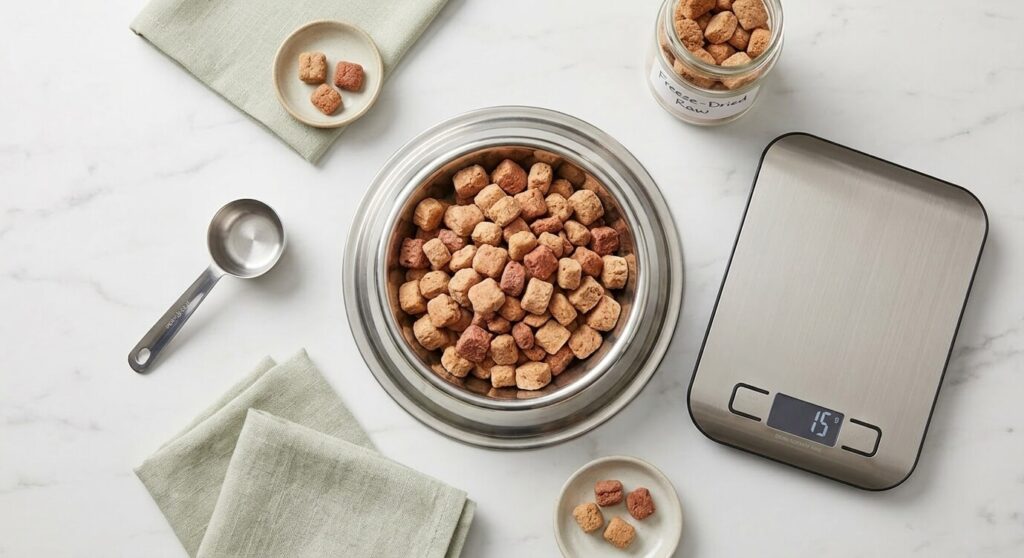
High Pressure Processing (HPP) is a cold-pasteurization technology that eliminates bacterial pathogens from raw pet food through extremely high pressure (up to 87,000 psi) rather than heat — preserving the raw nutritional profile while eliminating the bacterial contamination risk.
HPP-treated freeze-dried raw cat food:
- Is formulated to meet AAFCO nutrient profiles — nutritional deficiency risk is addressed
- Has undergone pathogen reduction processing — bacterial risk is substantially reduced
- Does not require home raw meat handling — human health risk is minimized
- Maintains a moisture-rich nutritional profile when rehydrated — the primary claimed benefit of raw is preserved
Freeze-drying removes moisture from HPP-treated raw food to create a stable, shelf-safe product that rehydrates with water before feeding. The nutritional profile of the rehydrated product is close to fresh raw.
What to look for when choosing commercial freeze-dried raw:
- “HPP-treated” or “cold-pressure-processed” stated clearly on the packaging
- AAFCO “complete and balanced” statement for your cat’s life stage
- Named animal protein source as the first ingredient
- Taurine listed in the guaranteed analysis or ingredient list
- Manufactured in facilities with pathogen testing protocols — look for this in the company’s quality assurance documentation
Raw food is a highly debated component of the overall feline nutrition framework — and it makes most sense in the context of understanding what cats actually need at a macronutrient level, which we mapped out completely in our ultimate indoor cat diet guide. [Read our complete indoor cat diet and nutrition guide here → The Complete Indoor Cat Diet Guide: Nutrition Made Simple]
Non-Negotiable Hygiene Rules If You Feed Raw
If you decide, in full awareness of the risks and ideally in consultation with a veterinary nutritionist, to incorporate any form of raw food into your cat’s diet — these hygiene protocols are non-negotiable from a human and household safety perspective.
Handling and Preparation
- ☐ Dedicated cutting board and utensils for raw pet food — never shared with human food preparation surfaces
- ☐ Wash hands thoroughly with soap and warm water for minimum 20 seconds after any raw food contact
- ☐ Disinfect all surfaces that have contacted raw food with an appropriate antimicrobial solution after every meal preparation
- ☐ Store raw food in sealed containers in a dedicated refrigerator section or dedicated small refrigerator, away from human food
- ☐ Thaw raw food in the refrigerator, never on the counter — room temperature thawing allows rapid bacterial multiplication
Bowl and Surface Management
- ☐ Use non-porous stainless steel or glazed ceramic bowls only — plastic develops micro-scratches that harbor bacteria regardless of washing; a stainless steel bowl can be properly sanitized
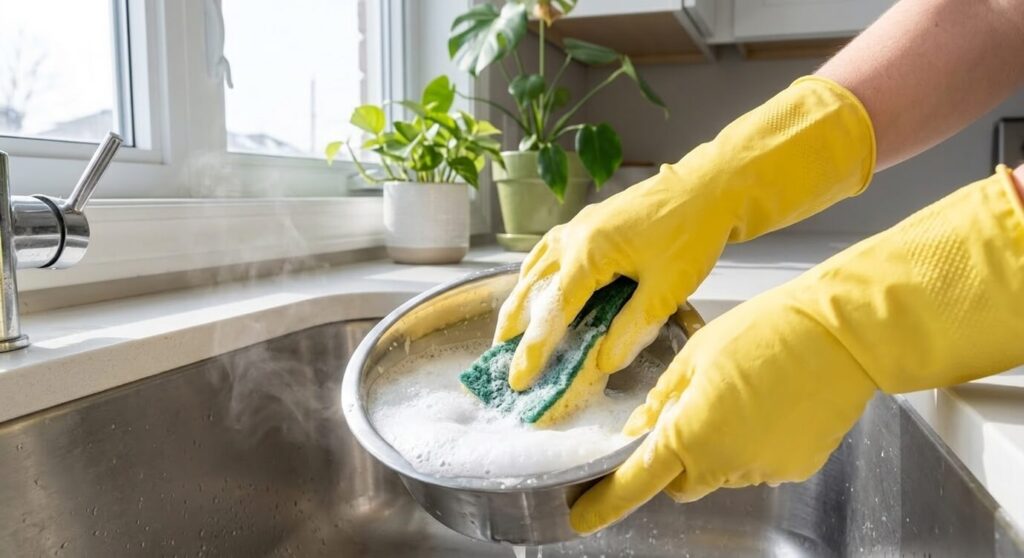
- ☐ Wash the food bowl with hot water and dish soap after every single meal — do not allow a raw food bowl to sit between meals without washing
- ☐ Sanitize the feeding area floor surface after each meal — raw food splatter on any surface is a pathogen distribution vector
- ☐ Do not allow the raw-fed cat to lick human faces or have access to surfaces where food preparation occurs — their saliva will carry elevated bacterial loads
Litter Box Management for Raw-Fed Cats
- ☐ Scoop the litter box twice daily minimum — raw-fed cats shed higher levels of pathogens in their feces
- ☐ Wear gloves for litter box cleaning — this is a stronger recommendation for raw-fed cats than for conventionally fed ones
- ☐ Wash hands thoroughly after litter box management — regardless of glove use
Vulnerable Household Members
If anyone in your household is immunocompromised, pregnant, elderly, or a young child, the decision to feed raw should include a direct conversation with that person’s physician about the specific risks of increased pathogen exposure. This is not a hypothetical concern — it is a documented public health consideration that extends beyond your cat’s health outcomes.
Regardless of what texture or type of food you feed Oliver, making meals interactive by using puzzle feeders or scatter feeding is a foundational component of indoor cat enrichment that we’ve discussed extensively — it engages the hunting sequence and provides cognitive stimulation that completes the predatory behavior cycle your cat is wired for. [Read our complete guide to indoor cat enrichment and why it matters here → The Small Apartment Cat Survival Guide: 7 Pillars of Indoor Enrichment]
My Personal Position After the Research
I want to be transparent about where I landed after doing this research, because I started this article genuinely open to the possibility that switching Oliver to raw was the right choice.
I decided against home-prepared raw feeding. The combination of bacterial contamination risk, the genuine complexity of achieving a nutritionally complete formulation, and the human health implications for anyone who visits our home convinced me that the risks are not justified when high-quality commercial wet food already delivers the primary evidence-supported benefit — moisture — alongside complete and balanced nutrition without the pathogen exposure.
I do occasionally include small amounts of HPP-treated freeze-dried raw as a high-value food topper or treat. Oliver finds it extremely palatable, and at the quantities I use it — less than 20% of his total caloric intake — the risk profile is acceptable.
This is my personal position for Oliver’s specific circumstances. It is not a prescription for every cat. A cat with a specific medical condition, a household without vulnerable members, and an owner willing to work with a veterinary nutritionist to formulate a complete diet may make a different and equally valid decision.
FAQ
1. What is the real risk of feeding a raw food diet indoor cat owners typically prepare at home?
The real risk of a raw food diet indoor cat owners prepare themselves operates on two levels simultaneously. The immediate risk is bacterial contamination — Salmonella, E. coli, Listeria, and Campylobacter are documented at significant rates in raw pet food, both commercial and home-prepared.
These pathogens cause illness in cats and can be shed in feces and saliva at elevated rates, creating human household exposure. The long-term risk is nutritional deficiency — and this is the one most likely to be missed, because it develops silently over months to years before producing the irreversible organ damage (DCM, retinal degeneration) that brings a cat to the vet at a stage where intervention may be limited.
The combination of these two risk categories is why the FDA and the majority of veterinary professional organizations do not recommend raw feeding.
2. Can raw food make the humans in my household sick?
Yes — this is a documented risk, not a theoretical one. Raw-fed pets shed significantly higher quantities of Salmonella and other bacterial pathogens in their feces than conventionally fed pets, and the food preparation process itself introduces pathogen exposure through surface contamination and hand contact.
Children, elderly individuals, pregnant people, and immunocompromised individuals are at highest risk for serious illness from these exposures. The FDA explicitly includes human health risk as a primary basis for their advisory against raw pet food. If your household includes any higher-risk individuals, this consideration should weigh heavily in your feeding decision and be discussed with both your veterinarian and the relevant household member’s physician.
3. Is freeze-dried raw actually different from fresh raw in terms of safety?
Yes — when evaluating a **raw food diet indoor cat** protocol, this is an important qualification.
HPP-treated freeze-dried raw is meaningfully safer than fresh raw from a bacterial contamination standpoint because the high-pressure processing step eliminates Salmonella, Listeria, and most other bacterial pathogens before freeze-drying.
The resulting product carries dramatically lower bacterial risk than fresh raw meat. The qualification: HPP does not eliminate all pathogens — Clostridium spores can survive HPP treatment, and not all freeze-dried products undergo HPP processing. Check the packaging and manufacturer documentation explicitly for HPP certification rather than assuming all freeze-dried products are equivalent.
From a nutritional standpoint, commercially prepared freeze-dried raw that carries an AAFCO complete and balanced statement addresses the nutritional deficiency risk that makes DIY raw dangerous. It is not zero-risk, but it is a substantially different and more manageable risk profile than fresh home-prepared raw.
References
- Freeman, L. M., et al. (2013). Current knowledge about the risks and benefits of raw meat–based diets for dogs and cats. Journal of the American Veterinary Medical Association, 243(11), 1549–1558. https://avmajournals.avma.org/view/journals/javma/243/11/javma.243.11.1549.xml
- U.S. Food and Drug Administration (FDA). (n.d.). Get the Facts! Raw Pet Food Diets can be Dangerous to You and Your Pet. https://www.fda.gov/animal-veterinary/animal-health-literacy/get-facts-raw-pet-food-diets-can-be-dangerous-you-and-your-pet
Disclaimer: This article reflects the personal research and experience of a cat owner and draws on published veterinary nutrition literature and FDA guidance. It is not a substitute for individualized advice from a licensed veterinarian or board-certified veterinary nutritionist. Any significant dietary change for your cat should be discussed with your veterinary care team, particularly if your cat has existing health conditions.