Raw food diet indoor cat safety begins with two separate questions: Is the diet complete and balanced, and can raw animal protein be stored, handled, and served without creating unacceptable risks for the cat or household? Indoor living does not remove the risks of foodborne pathogens, household contamination, or nutritional imbalance.
The CDC does not recommend feeding raw pet food or treats to cats and dogs. FDA testing has also found raw pet food more likely to contain disease-causing bacteria than other pet foods. Freezing, freeze-drying, and dehydration may reduce some germs, but they do not reliably eliminate all pathogens.
Homemade raw diets can also be incomplete or unbalanced unless they are formulated for the individual cat by a qualified veterinary nutrition professional. This guide explains five important risks, how commercial and homemade raw diets differ, which households face greater danger, and what to discuss with your veterinarian before changing your cat’s diet.
Quick Answer
A raw food diet indoor cat owners prepare or purchase is not necessary for good health, and it is not the lowest-risk feeding option.
For most indoor cats, the safer default is a commercially prepared food labeled complete and balanced for the cat’s life stage. If you are considering a raw diet, discuss the product or recipe with your veterinarian or a qualified veterinary nutrition professional before making the change.
Households with young children, pregnant people, adults over 65, or immunocompromised family members should be especially cautious because foodborne germs can spread through hands, bowls, kitchen surfaces, floors, and the cat’s saliva or feces.
Important Veterinary Note
This article is general education for indoor cat owners, not a diagnosis or medical nutrition plan. If your cat has sudden behavior change, appetite change, weight loss, vomiting, diarrhea, urinary signs, weakness, pain, breathing changes, or a known medical condition, speak with your veterinarian before changing food, routines, supplements, or activity levels. Health-related behavior changes can look like training problems in the apartment, but they may need examination, lab work, medication, or a veterinary diet plan.
Table of Contents
What Counts as Raw Food for Cats?
Raw cat food includes uncooked meat, organs, bones, eggs, or unpasteurized animal products that have not been heated sufficiently to kill harmful germs. It may be sold fresh, frozen, freeze-dried, dehydrated, or used as a treat or meal topper.
Freeze-dried and high-pressure-processed products are still considered raw. These processes may reduce some microorganisms, but owners should not assume that they eliminate every pathogen. Product testing, handling instructions, storage, and the complete-and-balanced statement still matter.
A raw product used only as an occasional topper creates different nutritional concerns from a raw food used as the cat’s complete diet. Any food providing most of a cat’s daily calories should be complete and balanced for the cat’s life stage.
Raw Diet Risk Overview
| Raw Diet Type | Main Concern | What to Verify | Professional Input |
|---|---|---|---|
| Fresh or frozen commercial raw | Pathogens and household contamination | Final-product testing, storage instructions, complete-and-balanced statement | Veterinarian |
| Freeze-dried or dehydrated raw | Pathogens may remain after processing | Processing method, pathogen testing and label instructions | Veterinarian |
| Homemade raw diet | Nutritional imbalance and contamination | Individually formulated recipe and required supplements | Veterinary nutrition professional |
| Raw bones | Tooth fractures, choking or digestive obstruction | Size, hardness and whether bones are appropriate for the individual cat | Veterinarian |
| Raw treats or toppers | Contamination and dilution of the balanced diet | Serving amount, handling instructions and product testing | Veterinarian |
Risk 1: Foodborne Pathogens Can Affect Cats and People
Raw meat can carry disease-causing microorganisms including Salmonella, Listeria monocytogenes, E. coli, and Campylobacter. These pathogens may affect the cat eating the food, but the risk does not stop at the feeding bowl.
Raw food juices can contaminate hands, utensils, cutting boards, counters, refrigerator surfaces, floors, and feeding areas. Cats may also spread contamination after eating through contact with their mouth, coat, paws, saliva, vomit, or feces. In a small indoor home, food preparation and feeding often happen close to shared human living spaces, making careful hygiene especially important.
In an FDA study of 196 commercially available raw dog and cat food samples, 15 tested positive for Salmonella and 32 tested positive for Listeria monocytogenes. This does not mean every raw product is contaminated, but it demonstrates that contamination is a documented risk rather than a theoretical concern.
Households containing children under five, adults over 65, pregnant people, or anyone with a weakened immune system face greater potential consequences from foodborne illness. Owners in these households should discuss the risk with both their veterinarian and the relevant healthcare professional before using raw pet food.
Risk 2: Homemade Raw Diets Can Be Nutritionally Incomplete
Cats have precise nutritional requirements that cannot be met by feeding muscle meat alone. A complete feline diet must provide appropriate amounts and ratios of protein, fat, taurine, essential fatty acids, vitamins, minerals, calcium, and phosphorus.
Homemade raw recipes may contain too little of an essential nutrient or too much of another. Diets containing excessive bone can create mineral imbalances and constipation, while meat-heavy recipes may provide insufficient calcium. Missing taurine, thiamine, or other essential nutrients can lead to serious health problems over time.
Nutritional deficiencies may not produce immediate symptoms. A cat can appear willing to eat a homemade diet while an imbalance develops gradually. Recipes copied from social media, blogs, or general recipe books should not be assumed to provide complete feline nutrition, especially when ingredients or supplements are substituted.
If raw food will provide most of the cat’s daily calories, check that a commercial product is labeled complete and balanced for the cat’s life stage. A homemade diet should be formulated for the individual cat by a board-certified veterinary nutrition professional and followed without unapproved substitutions.
Risk 3: Raw Bones Can Cause Dental and Digestive Injuries
Raw bones are sometimes promoted as a natural way to clean a cat’s teeth, but chewing bones can create physical risks that are separate from bacterial contamination. A bone that appears appropriately sized can still be too hard, splinter, or break into a piece the cat can swallow.
Possible injuries include fractured teeth, damage to the gums or mouth, choking, and pieces becoming lodged in the esophagus, stomach, or intestines. Bone fragments may also contribute to painful constipation or, in severe cases, injure the digestive tract.
Cooked bones should not be fed because heating can make them more brittle and likely to splinter. Raw bones are not automatically safe: they can still damage teeth, create an obstruction, and carry foodborne pathogens.
There is no single bone type or size that is safe for every cat. A cat’s age, dental condition, chewing behavior, digestive history, and existing medical conditions all affect the risk. Ask your veterinarian before offering bones, and do not use raw bones as a substitute for veterinary dental care.
WSAVA – Raw Meat-Based Diets for Pets
Risk 4: Processing Does Not Make Raw Food Risk-Free
Commercial raw foods may use freezing, freeze-drying, dehydration, irradiation, or high-pressure processing to reduce microbial contamination or extend shelf life. These methods are not identical, and none should automatically be interpreted as proof that a product is free from pathogens.
Freezing preserves food but does not reliably kill every harmful microorganism. Freeze-drying and dehydration remove moisture and may reduce some germs, but pathogens can survive these processes. High-pressure processing can reduce certain microorganisms when it is correctly validated and applied, but its effectiveness depends on the organism, pressure, treatment time, temperature, and manufacturing controls.
The CDC continues to classify frozen, freeze-dried, and dehydrated products containing uncooked animal protein as raw pet food. Owners should therefore follow the product’s storage and hygiene instructions even when the packaging uses terms such as “freeze-dried,” “HPP-treated,” or “pathogen-reduction process.”
Before buying a commercial raw product, ask whether the manufacturer tests the finished product—not only the ingredients—for Salmonella, Listeria, and E. coli. Also check how frequently lots are tested, whether a veterinary nutrition professional formulates the food, and whether it is labeled complete and balanced for the cat’s life stage.
A complete-and-balanced statement addresses nutritional adequacy; it does not guarantee that a raw product is pathogen-free.
Risk 5: Some Cats and Households Face Higher Consequences
Foodborne pathogens and nutritional imbalances do not affect every cat or person in the same way. Some cats have less ability to tolerate infection, dehydration, digestive upset, or dietary errors, making the consequences of a raw diet potentially more serious.
Higher-risk cats include kittens, senior cats, pregnant or nursing cats, cats taking immune-suppressing medication, and cats with chronic medical conditions. Cats with kidney disease, diabetes, pancreatitis, gastrointestinal disease, urinary disorders, or a history of nutritional deficiency require an individualized feeding plan rather than a general internet recipe.
A raw diet should not be used to diagnose, treat, or prevent a medical condition without veterinary guidance. It may conflict with a prescribed therapeutic diet or provide unsuitable levels of fat, phosphorus, minerals, calories, or other nutrients for the individual cat.
Human household risk also matters. Children under five, adults over 65, pregnant people, and people with weakened immune systems are more likely to experience serious complications from foodborne illness. Contamination can spread during preparation, feeding, cleaning, or contact with the cat and its waste.
Before changing a higher-risk cat to raw food, ask the veterinarian to review the cat’s health, current medications, calorie needs, and the exact product or recipe. If vomiting, diarrhea, appetite loss, weakness, fever, dehydration, or sudden behavior changes occur after a diet change, stop experimenting and contact the veterinarian.
FDA – Raw Pet Food Diets Can Be Dangerous

If You Still Choose Raw: Risk-Reduction Checklist
The safest way to avoid raw-food contamination is not to feed raw food. If an owner chooses raw despite the documented risks, careful handling may reduce exposure but cannot make the diet completely risk-free.
Use the following precautions every time raw food is stored, prepared, served, or discarded:
- Wash hands with soap and water for at least 20 seconds before and after handling raw pet food.
- Keep raw pet food separate from human food in the refrigerator and freezer.
- Thaw frozen raw food in the refrigerator inside a sealed container, not on the counter or in the sink.
- Do not rinse raw meat because splashing water can spread contaminated droplets to nearby surfaces.
- Use dedicated bowls, utensils, containers, and cutting boards that are not used for human food.
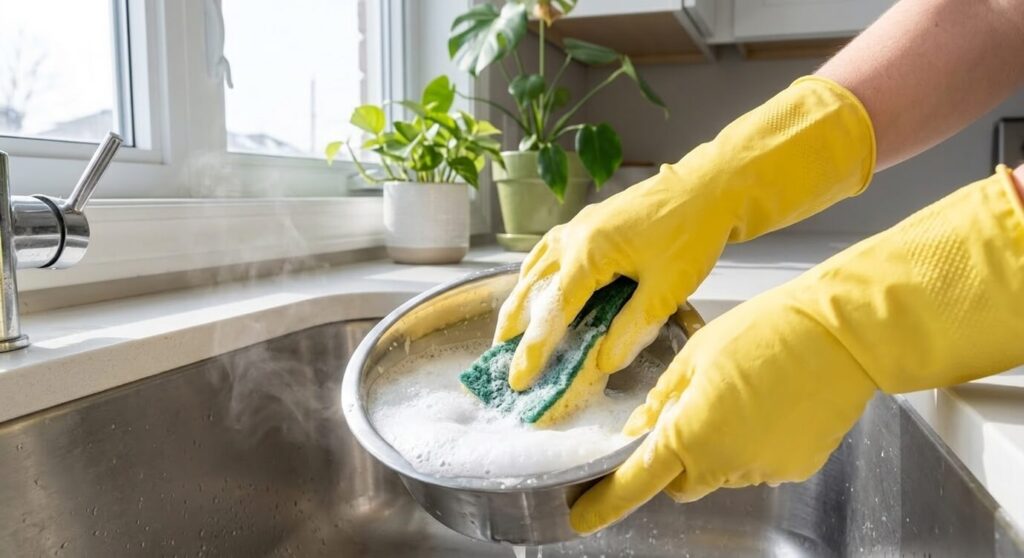
- Wash preparation surfaces with hot soapy water and then use an appropriate disinfectant.
- Wash feeding bowls after every raw meal and replace deeply scratched plastic bowls.
- Follow the manufacturer’s instructions for refrigeration, thawing, serving time, and disposal.
- Promptly discard uneaten food rather than returning it to the original package.
- Do not allow the cat to lick people’s faces immediately after eating.
- Wash hands carefully after cleaning the litter box, vomit, or feces.
- Keep children and higher-risk household members away from raw-food preparation and feeding areas.
- Stop using any product affected by a recall and follow the manufacturer’s and FDA’s instructions.
These precautions reduce opportunities for contamination, but they do not guarantee that the cat, food, feeding bowl, kitchen, or household will remain pathogen-free.
Questions to Ask a Commercial Raw Food Manufacturer
Marketing terms such as “natural,” “human grade,” “premium,” “freeze-dried,” or “HPP-treated” do not answer the most important safety and nutrition questions.
Before choosing a commercial raw product, ask the manufacturer:
- Is the finished product tested for Salmonella, Listeria, and E. coli?
- Is every production lot tested, or only occasional samples?
- What validated process is used to reduce pathogens?
- Who formulates the diet, and what veterinary nutrition qualifications do they hold?
- Is the product complete and balanced for cats, and for which life stage?
- Can the company provide a typical nutrient analysis?
- How are production lots traced if a safety problem or recall occurs?
- What are the exact storage, thawing, serving, and discard instructions?
- How should owners report a suspected adverse reaction or contaminated product?
Reliable manufacturers should answer these questions clearly and provide written information rather than relying only on marketing claims. An unwillingness to discuss pathogen testing, nutritional formulation, lot tracking, or recall procedures is a reason to choose another product.
FDA — Raw Pet Food Diets Can Be Dangerous to You and Your Pet
https://www.fda.gov/animal-veterinary/animal-health-literacy/get-facts-raw-pet-food-diets-can-be-dangerous-you-and-your-pet
CDC — About Pet Food Safety
https://www.cdc.gov/healthy-pets/about/pet-food-safety.html
FAQ
1. Do Indoor Cats Need a Raw Food Diet?
No. Indoor cats do not require raw food to remain healthy. They require a complete and balanced diet that supplies the correct nutrients and calories for their life stage and medical needs.
A properly formulated cooked wet or dry food can meet those requirements without introducing the same level of raw-meat handling risk. Owners considering raw food should discuss the exact product or recipe with their veterinarian rather than assuming that “raw” automatically means healthier or more natural.
2. Can Raw Cat Food Make People in the Household Sick?
Yes. Raw meat can contain pathogens such as Salmonella, Listeria, E. coli, and Campylobacter. People may be exposed while preparing the food, washing bowls, cleaning surfaces, handling leftovers, or cleaning the cat’s vomit or feces.
Children under five, adults over 65, pregnant people, and people with weakened immune systems face a greater risk of serious foodborne illness. These household risks should be considered before introducing raw pet food.
3. Is Freeze-Dried or HPP-Treated Raw Food Safer Than Fresh Raw Meat?
Some processing methods, including high-pressure processing, may reduce certain microorganisms when properly validated and applied. Freeze-drying and dehydration may also reduce moisture and affect microbial survival.
However, these processes do not guarantee that every pathogen has been eliminated. The CDC still considers uncooked frozen, freeze-dried, and dehydrated animal proteins to be raw pet food. Owners should continue following raw-food hygiene precautions and should ask manufacturers for finished-product testing information.
4. Can a Homemade Raw Diet Be Complete and Balanced?
It is possible to formulate a nutritionally complete homemade diet, but combining meat, organs, and bones does not automatically produce balanced feline nutrition. Cats have specific requirements for taurine, fatty acids, vitamins, minerals, calcium, phosphorus, and other nutrients.
If a homemade raw diet will provide most of the cat’s calories, it should be individually formulated by a board-certified veterinary nutrition professional. The recipe and supplement amounts should be followed exactly, without casual ingredient substitutions.
5. Are Raw Bones a Safe Way to Clean a Cat’s Teeth?
Raw bones are not a risk-free substitute for veterinary dental care. Bones can fracture teeth, injure the mouth, cause choking, contribute to constipation, or become lodged in the digestive tract.
Cooked bones are especially dangerous because they can become brittle and splinter. Ask a veterinarian about appropriate dental care instead of assuming that any particular bone type or size is safe for the individual cat.
6. What Should I Check on a Commercial Raw Cat Food Label?
Look for a statement showing that the product is complete and balanced for the cat’s life stage. Confirm whether it is intended as a complete diet, a treat, a topper, or for intermittent feeding only.
Also check the storage and thawing instructions, lot number, manufacturer contact information, pathogen-control process, and recall information. Marketing words such as “natural,” “premium,” “human grade,” or “HPP-treated” do not replace nutritional adequacy and finished-product safety testing.
7. When Should I Contact a Veterinarian?
Contact your veterinarian if the cat develops vomiting, diarrhea, appetite loss, unusual tiredness, weakness, fever, dehydration, abdominal discomfort, difficulty passing stool, or other concerning changes after starting a raw diet.
Seek urgent veterinary care for choking, difficulty breathing, collapse, repeated vomiting, bloody diarrhea, severe weakness, or suspected bone or intestinal obstruction. Stop experimenting with the diet until the cat has been professionally assessed.
Related Indoor Cat Nutrition Guides
Before changing your cat’s diet, start with our Indoor Cat Diet Guide for an overview of complete nutrition, feeding routines, and life-stage needs.
If you are comparing moisture, convenience, and feeding formats, read Wet Food vs Dry Food for Indoor Cats.
If weight management is the main reason you are considering raw food, use our Indoor Cat Weight-Loss Guide to build a calorie-controlled plan with veterinary guidance.
Cats with kidney disease require an individualized nutrition plan. Review the warning signs in our Cat Kidney Disease Guide and speak with your veterinarian before changing food.
Final Thoughts
A raw food diet is not necessary for an indoor cat, and “raw” should not be treated as a synonym for healthier, more natural, or nutritionally complete. The decision involves two separate questions: whether the diet supplies complete and balanced nutrition, and whether the food can be stored, handled, and served without exposing the cat or household to unacceptable risk.
Commercial raw products may provide clearer labeling and manufacturing controls than improvised homemade recipes, but processing terms and marketing claims do not make a product risk-free. Homemade raw diets require professional formulation, exact supplementation, and strict hygiene.
The consequences can be more serious for kittens, senior cats, cats with chronic illness, and households containing young children, pregnant people, older adults, or immunocompromised individuals. These risks should be discussed with a veterinarian before making a diet change.
If an owner still chooses raw food, the safest approach is to select a complete-and-balanced product from a transparent manufacturer, verify finished-product pathogen testing, follow storage and handling instructions exactly, and monitor the cat closely. Contact a veterinarian promptly if digestive illness, appetite changes, weakness, dental injury, or other concerning symptoms appear.
References
Centers for Disease Control and Prevention. “About Pet Food Safety.” Healthy Pets, Healthy People. Updated January 30, 2025.
https://www.cdc.gov/healthy-pets/about/pet-food-safety.html
U.S. Food and Drug Administration. “Get the Facts! Raw Pet Food Diets Can Be Dangerous to You and Your Pet.” Center for Veterinary Medicine.
https://www.fda.gov/animal-veterinary/animal-health-literacy/get-facts-raw-pet-food-diets-can-be-dangerous-you-and-your-pet
American Veterinary Medical Association. “Raw or Undercooked Animal-Source Protein in Cat and Dog Diets.”
https://www.avma.org/resources-tools/avma-policies/raw-or-undercooked-animal-source-protein-cat-and-dog-diets
World Small Animal Veterinary Association Global Nutrition Committee. “Raw Meat-Based Diets for Pets.” Global Nutrition Toolkit.
https://wsava.org/wp-content/uploads/2021/04/Raw-Meat-Based-Diets-for-Pets_WSAVA-Global-Nutrition-Toolkit.pdf
Freeman, L. M., Chandler, M. L., Hamper, B. A., and Weeth, L. P. “Current Knowledge About the Risks and Benefits of Raw Meat–Based Diets for Dogs and Cats.” Journal of the American Veterinary Medical Association, 243(11), 1549–1558, 2013.
https://avmajournals.avma.org/view/journals/javma/243/11/javma.243.11.1549.xml