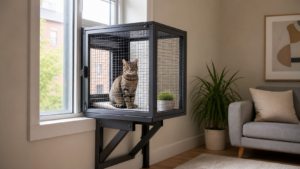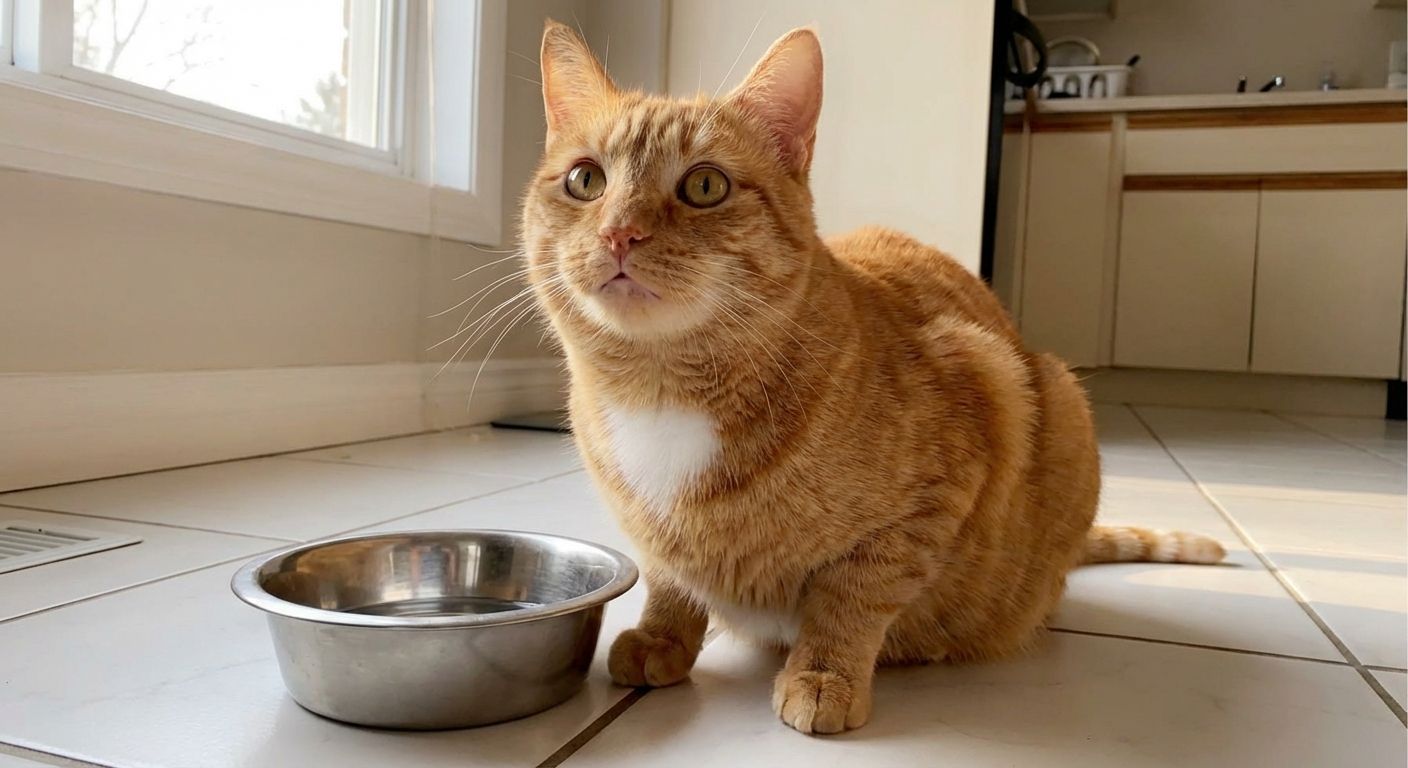
Helping an indoor cat lose weight should be slow, measured, and safe. Indoor cats often gain weight gradually from extra calories, free-feeding, treats, lower activity, food stealing, or age-related changes. The goal is not to make a cat lose weight quickly. The goal is to protect muscle, reduce excess fat, maintain appetite, and avoid unsafe calorie restriction.
Before changing food, confirm whether your cat is overweight, understand why the weight gain happened, and ask your veterinarian for guidance if your cat is obese, senior, diabetic, underweight in muscle, or medically complex.
This guide gives you a practical step-by-step plan for safe indoor cat weight loss.
Quick Answer
To help indoor cat lose weight safely, start by confirming body condition, getting a realistic target weight, measuring current food, counting treats, switching to measured meals, adding gentle daily movement, and tracking progress every few weeks. Weight loss should be gradual, not sudden.
Do not crash diet your cat. Cats who stop eating or lose weight too quickly can become seriously ill. If your cat is obese, senior, diabetic, has kidney disease, has urinary issues, or has any appetite or behavior changes, work with your veterinarian before making major diet changes.
Safety Note
This guide is for educational purposes only and does not replace veterinary advice.
If your cat has a diagnosed medical condition, sudden symptoms, appetite changes, weight loss, vomiting, urination problems, breathing difficulty, severe pain, poisoning risk, or rapid decline, contact your veterinarian before relying on a product or home-care change.
Indoor Cat Expert articles are created by the Indoor Cat Expert Editorial Team and follow our Editorial Policy.
Table of Contents
Before You Start: Confirm the Goal
Before you help an indoor cat lose weight, make sure weight loss is actually needed. Some cats look large because of body frame, long fur, or a normal primordial pouch. Others may look heavy but also be losing muscle, especially senior cats.
Start with these questions:
- Can you feel the ribs with light pressure?
- Is there a visible waist from above?
- Is the belly heavy or just a loose pouch?
- Has weight increased over time?
- Has movement or grooming changed?
- Has appetite, thirst, or litter box use changed?
If you are not sure, start with our guide: Is My Cat Overweight?
If your cat is definitely gaining weight and you are trying to understand the cause, read: Why Is My Indoor Cat Getting Fat?
7 Safe Steps to Help an Indoor Cat Lose Weight
Step 1: Get a Safe Target Weight
Do not guess the final number. A safe target weight depends on body frame, age, muscle condition, health status, and current weight. Ask your veterinarian for a target weight or body condition goal, especially if your cat is obese or senior.
A target helps prevent two mistakes: giving up too early or pushing weight loss too far.
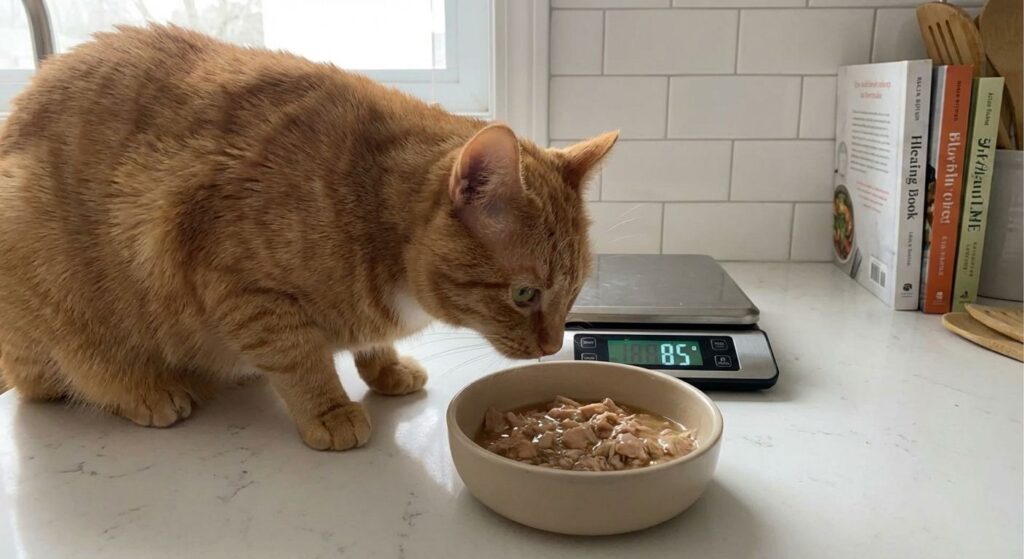
Step 2: Measure the Current Food
Before cutting anything, measure what your cat already eats.
Track for one week:
- dry food amount
- wet food amount
- treats
- lickable treats
- dental treats
- table scraps
- food stolen from other pets
- food left out all day
This shows the real starting point. Many owners discover the problem is not the main meal but treats, refills, or shared bowls.
Step 3: Count Treats and Hidden Calories
Treats must be counted as food. Lickable treats, dental treats, pill pockets, and training rewards can add up quickly.
You do not have to remove every treat. Instead, set a daily treat budget. Use smaller pieces. Replace some food rewards with brushing, play, window time, or affection.
If multiple people feed the cat, write down a shared rule. One person should not reduce meals while another keeps giving extras.
Step 4: Switch to Measured Meals
Measured meals make weight loss possible because you know what your cat is eating. Free-feeding can work for some cats, but it often makes weight control harder.
Options include:
- two measured meals per day
- three smaller meals per day
- wet food meals with a measured dry portion
- timed feeder portions
- puzzle feeder portions
For portion planning, use our guide: How Much to Feed an Indoor Cat
How to Transition From Free-Feeding to Measured Meals
If your cat is used to grazing all day, do not remove the bowl suddenly and expect them to understand the new routine. A smoother transition reduces stress and begging.
Start by measuring the current daily amount before changing anything. Put out the same total amount, but divide it into planned portions. For the first few days, you can keep the schedule familiar while making the quantity visible.
A gentle transition might look like this:
| Day | Change |
|---|---|
| Days 1-3 | Measure the normal daily amount without reducing it |
| Days 4-7 | Divide the same amount into 2-3 meal windows |
| Week 2 | Remove random refills and count treats |
| Week 3 | Adjust portions only if your cat is stable and eating normally |
If your cat becomes anxious, add structure rather than extra calories. Use play before meals, puzzle feeders, or a small portion saved for later in the evening.
The goal is to teach predictability. Your cat should learn that food still arrives reliably, just not through an always-full bowl.
Step 5: Add Gentle Daily Movement
Exercise helps, but food control usually matters more for weight loss. Do not expect play alone to fix overeating. Use movement to support muscle, confidence, and calorie balance.
Start small:
- two 5-minute play sessions
- wand toy chase
- slow treat hunts
- stair or perch movement if safe
- puzzle feeding
- gentle climbing routes
An overweight cat may tire quickly. That is okay. Build gradually.
Low-Impact Exercise Ideas for Overweight Indoor Cats
An overweight cat may not want to sprint, jump high, or chase for long. That does not mean exercise is impossible. It means the movement plan should be gentle.
Good low-impact options include:
- slow wand toy movement across the floor
- short hallway chase games
- treat hunts using part of the daily food
- stepping onto a low platform
- walking between rooms for a meal
- reaching upward for a toy without jumping
- batting soft toys from a lying position
- puzzle feeders that require paw work
- short climbing routes with stable steps
Keep sessions short. Two or three minutes is enough for some cats at first. Stop before your cat is exhausted. A successful session should end with the cat still confident, not frustrated.
For very inactive cats, start with “micro-play.” Move a wand toy within reach while the cat lies down. Let them bat, grab, and kick. Over time, increase distance slightly.
Do not force movement by chasing your cat or withholding all food until they exercise. Exercise should make the routine better, not scary.
Step 6: Track Weight and Body Condition
Track progress every two to four weeks. Do not weigh every day and panic over tiny changes.
Track:
- weight
- rib feel
- waist
- belly shape
- energy
- grooming
- jumping
- appetite
- stool and vomiting
If weight does not change, do not immediately slash food. Recheck hidden calories and ask your veterinarian before making large reductions.
How to Tell If Weight Loss Is Too Fast or Too Slow
Safe progress should be gradual. The exact rate should be guided by your veterinarian, especially if your cat is obese or has medical issues.
Possible signs the plan is too aggressive:
- appetite drops
- cat refuses food
- vomiting increases
- weakness
- hiding
- irritability
- rapid weight loss
- poor coat
- lethargy
- food obsession becomes extreme
Possible signs the plan may be too weak:
- weight does not change after several weeks
- treats are still frequent
- food is still being guessed
- another person is feeding extra
- another pet’s food is accessible
- activity is still very low
- dry food portions are larger than expected
If progress is too fast, stop and call your veterinarian. If progress is too slow, do not immediately cut food sharply. First check measurement accuracy, treat calories, and food stealing.
Weight loss is not a straight line. Some weeks may show little change. The bigger question is whether the overall trend is safe and steady.
Step 7: Adjust Slowly
Safe weight loss takes time. If progress is too fast, your cat may be at risk. If progress is too slow, the plan may need adjustment.
Make one change at a time:
- reduce treats
- measure dry food more accurately
- add a small play session
- split meals differently
- use a puzzle feeder
- adjust calories with veterinary guidance
The goal is a plan you can maintain for months, not a dramatic one-week push.
Indoor Cat Weight Loss Plan Table
| Step | What to Do | Why It Matters |
|---|---|---|
| Confirm body condition | Check ribs, waist, belly, weight trend | Prevents unnecessary dieting |
| Ask for target weight | Use vet guidance when needed | Keeps the plan safe |
| Measure food | Track real intake | Finds hidden overfeeding |
| Count treats | Include all extras | Prevents calorie leaks |
| Use measured meals | Stop guessing | Makes progress trackable |
| Add movement | Build muscle and confidence | Supports healthy weight loss |
| Recheck progress | Weigh every few weeks | Allows slow adjustment |
4-Week Indoor Cat Weight Loss Starter Plan
This four-week plan is not a crash diet. It is a safe setup period that helps you measure, stabilize, and adjust without shocking your cat’s routine.
Week 1: Measure Everything
Do not change the food immediately. First, learn the current routine.
Track:
- exact dry food amount
- exact wet food amount
- treats
- lickable treats
- dental treats
- table scraps
- who feeds the cat
- whether food is left out
- play time
- weight if available
At the end of the week, look for calorie leaks. Many weight plans improve simply by removing unmeasured extras.
Week 2: Create Measured Meals
Move toward measured meals instead of guessing. If your cat is used to grazing, transition gradually.
Possible changes:
- divide the daily food into two or three meals
- remove random refills
- use a measured treat budget
- keep a written feeding note
- use a timed feeder if needed
The goal is not to make the cat feel deprived. The goal is to make intake visible.
Week 3: Add Gentle Movement
Add short, realistic movement sessions. Do not expect an overweight cat to sprint for long periods.
Try:
- 5 minutes of wand play twice daily
- treat hunts using part of the daily food
- low jumps onto safe furniture
- slow climbing routes
- food puzzles
- short hallway chase games
Stop before your cat becomes exhausted. Consistency matters more than intensity.
Week 4: Review and Adjust
At the end of four weeks, review weight, body condition, appetite, energy, and behavior. If your cat is stable and comfortable, continue. If weight is not changing, look again for hidden calories before reducing food.
If your cat is losing too quickly, eating poorly, vomiting, hiding, or seeming weak, stop the plan and call your veterinarian.
How to Manage Hunger and Begging
Begging does not always mean your cat needs more food. It may come from habit, boredom, fast eating, attention-seeking, or meal timing.
Try:
- smaller meals more often
- puzzle feeders
- play before meals
- adding water to wet food if accepted
- using part of the daily food for treat hunts
- avoiding food immediately after loud begging
- giving non-food attention
Do not reward the loudest behavior. If meowing always produces food, the behavior becomes stronger.
If meal timing is the main struggle, use our indoor cat feeding schedule guide to plan a more predictable routine.
A weight loss plan works best when the whole feeding routine is structured. Use our apartment cat feeding and weight control guide to connect portions, schedules, hydration, treats, and feeder tools.
Hunger Management Table
| Problem | What It May Mean | Safer Response |
|---|---|---|
| Begging right after meals | Fast eating, habit, boredom | Use puzzle feeders or smaller meals |
| Waking you early | Learned food routine | Use timed feeder or shift a measured portion |
| Following you to the kitchen | Food association | Give attention away from the kitchen |
| Stealing other pets’ food | Access problem | Feed separately |
| Meowing all evening | Boredom or routine gap | Add play before dinner |
| Acting frantic around food | Too few meals, stress, or medical issue | Split meals and call vet if sudden |
| Chewing packaging | Food-seeking or boredom | Secure food and add enrichment |
The key is to avoid rewarding the loudest behavior. If your cat begs and immediately receives food, begging becomes the strategy. Feed on a schedule, use measured portions, and reward calm behavior instead.
Multi-Cat Weight Loss Problems
Multi-cat homes need extra structure. One cat may steal food while another eats too little.
Use:
- separate rooms
- supervised meals
- microchip feeders
- timed feeders
- picking up bowls after meals
- tracking each cat separately
If one cat is gaining and another is losing, shared feeding is probably not working.
Tools That Can Help, But Do Not Replace the Plan
Tools can make weight loss easier, but they do not solve the problem by themselves.
Helpful tools may include:
- kitchen scale for food
- pet scale or regular weigh-ins
- timed feeder
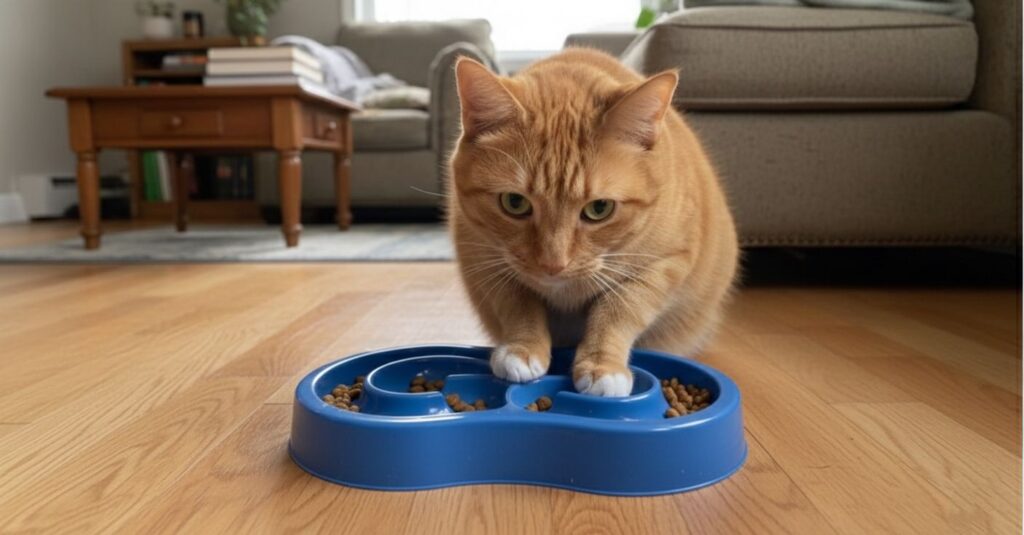
- puzzle feeder
- slow feeder
- microchip feeder for multi-cat homes
- written feeding chart
- treat jar with daily limit
A timed feeder can help with schedule consistency. A puzzle feeder can slow eating and add enrichment. A microchip feeder can protect portions in multi-cat homes. But none of these tools work if the total daily calories are still too high.
Use tools to support measurement, not to avoid measurement.
What Not to Do
Do not:
- crash diet
- skip meals
- suddenly cut food in half
- force intense exercise
- ignore vomiting or appetite changes
- assume begging always means hunger
- let multiple people give untracked treats
- feed all cats from one bowl during weight loss
- delay veterinary care if symptoms appear
Weight loss should protect health, not create a new problem.
Safe Substitutions for Common Weight-Loss Mistakes
Instead of removing too much food, remove uncertainty. Measure meals, count treats, and stop random refills.
Instead of ignoring begging, change the routine. Add play before meals, use puzzle feeders, or split the same daily calories into smaller portions.
Instead of forcing exercise, lower the difficulty. Use floor play, short sessions, and gentle food hunts.
Instead of buying every weight-loss product, fix the feeding system first. Tools help only when portions are measured.
Instead of comparing your cat to another cat, track your cat’s own trend. Frame size, age, muscle, and medical history all matter.
Instead of waiting for a dramatic change, review small signs weekly: appetite, energy, grooming, jumping, stool, and body shape.
The safer pattern is simple: measure, observe, adjust slowly, and involve your veterinarian when the change is significant.
When to Call Your Veterinarian
Call your veterinarian if your cat:
- stops eating
- loses weight quickly
- vomits repeatedly
- becomes weak
- drinks much more water
- urinates more
- strains in the litter box
- has diarrhea
- seems painful
- hides suddenly
- is senior and changing shape
- has diabetes, kidney disease, urinary problems, or another diagnosis
For long-term prevention, connect weight loss with your indoor cat health prevention guide and your apartment cat feeding and weight control guide.
Frequently Asked Questions
How fast should an indoor cat lose weight?
Cats should lose weight gradually. The safe rate depends on starting weight, health status, and veterinary guidance. Do not try to make your cat lose weight quickly.
Can I just feed my cat less?
Not aggressively. Small measured adjustments may be appropriate, but sudden severe restriction can be dangerous. First measure current food, count treats, and ask your veterinarian if your cat needs significant weight loss.
Is wet food better for cat weight loss?
Wet food can help some cats feel fuller because it contains more moisture and volume, but calories still matter. Some cats lose weight safely with wet food, dry food, or mixed feeding when portions are measured.
If you are comparing wet foods before buying, our low calorie cat wet food label guide explains how to check kcal per container, kcal per kilogram, package size, nutritional adequacy, and intended life stage.
How do I help my cat lose weight if they beg all day?
Check whether the food amount is safe, then manage begging with meal timing, puzzle feeders, play, smaller meals, and non-food attention. Do not feed immediately after demanding behavior.
Can exercise alone make my cat lose weight?
Usually not. Exercise supports muscle and health, but food portions and treats are usually the bigger part of weight loss. Use both.
What if I have multiple cats?
Feed separately and track each cat. Shared bowls make it hard to know who eats what. A microchip feeder or supervised meals may help.
Should I buy diet cat food?
Maybe, but not automatically. Some cats can lose weight safely by measuring current food and reducing hidden calories. Others benefit from a veterinarian-recommended weight management food, especially if they need more satiety with fewer calories.
Ask your veterinarian before choosing a diet food for an obese, senior, diabetic, or medically complex cat.Raw food is not a shortcut to safe weight loss; review our raw food diet indoor cat safety guide before using an uncooked diet for calorie control.
If your veterinarian recommends lower-calorie wet food, compare options in our best wet cat food for weight loss guide.
Why is my cat not losing weight even though I reduced food?
Common reasons include hidden treats, inaccurate measuring, other family members feeding, food stealing, low activity, or a calorie target that still maintains the current weight. Medical issues can also complicate weight change.
Track everything for one week before reducing more.
How do I keep my cat from feeling deprived?
Use smaller meals, puzzle feeders, play before meals, measured treat hunts, and non-food attention. A good plan should feel predictable, not punishing.
When should I ask a vet for help?
Ask your veterinarian if your cat is obese, senior, diabetic, has kidney disease, has urinary problems, stops eating, loses weight quickly, or needs a structured calorie plan.
Final Thoughts
To help indoor cat lose weight safely, focus on measurement, patience, and consistency. Confirm the goal, measure food, count treats, use structured meals, add gentle movement, and track progress slowly.
Do not crash diet. Do not rely on exercise alone. Do not ignore medical changes.
A safe weight loss plan should help your cat feel better, move more comfortably, and maintain long-term health without stress or unsafe restriction.