Cat feeding and weight control in an apartment sounds simple until real life gets involved: one cat steals another cat’s food, wet food dries out during the workday, a bored cat begs for snacks, or a low-activity indoor cat slowly gains weight.
Use this page as the central map for your feeding setup. If you are not sure where to start, choose the problem that matches your cat right now: weight gain, fast eating, food stealing, hydration, meal timing, or special diets.
This guide brings together our most useful feeding, diet, hydration, feeder, and weight-control articles for apartment cat owners. Start with the section that matches your current problem, then use the related guides to build a feeding setup that is easier to manage in a small home.
Important Feeding Safety Note
This page is for educational purposes only and does not replace veterinary nutrition advice. Contact your veterinarian if your cat has sudden appetite changes, weight loss, repeated vomiting, diarrhea, increased thirst, increased urination, weakness, diabetes, kidney disease, urinary disease, food allergies, or any diagnosed medical condition that affects diet.
Never put a cat on a crash diet. Rapid weight loss can be dangerous for cats and should be managed carefully.
If your cat is overweight, underweight, diabetic, senior, eating a prescription diet, vomiting often, or suddenly eating differently, use this page for organization only and ask your veterinarian for the actual calorie and diet plan.
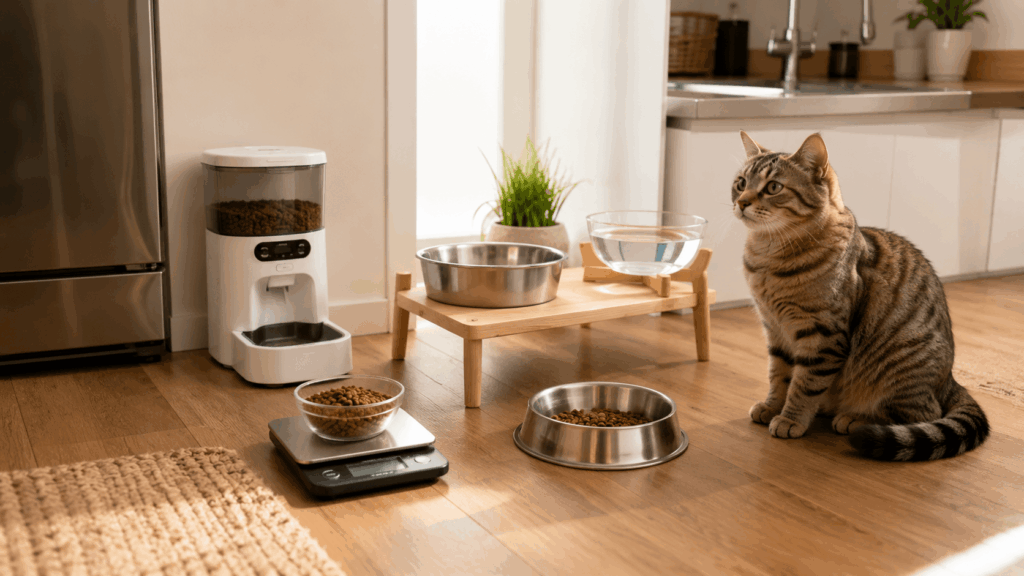
Table of Contents
Cat Feeding and Weight Control: Start Here
If you are setting up a better feeding routine, start with the guide that matches your main problem:
- Not sure what to feed? Start with the indoor cat diet guide.
- Not sure when to feed? Start with the indoor cat feeding schedule.
- Not sure how much to feed? Start with the portion guide.
- Cat is gaining weight? Start with the overweight cat guide.
- Cat eats too fast? Start with the slow feeder guide.
- One cat steals food? Start with the multi-cat feeding guides.
Indoor Cat Diet Guide
A practical overview of what indoor cats need from food, how indoor activity levels affect calories, and how to avoid overfeeding in a small home.
Read next: Indoor Cat Diet Guide
Indoor Cat Feeding Schedule
A consistent schedule can reduce begging, night waking, food anxiety, and overeating. This guide explains how to plan meals around work hours, sleep, and multi-cat routines.
Read next: Indoor Cat Feeding Schedule
Wet Food vs Dry Food for Indoor Cats
Wet food, dry food, and mixed feeding can all work, but each has tradeoffs for hydration, cost, storage, convenience, and weight control.
Read next: Wet Food vs Dry Food for Indoor Cats
How Much to Feed an Indoor Cat
Portion size should be based on calories, body condition, activity level, age, and health status, not just a scoop size or a guess. This guide helps you turn feeding into a measured routine.
Read next: How Much to Feed an Indoor Cat
Weight Control for Indoor Cats
Indoor cats often burn fewer calories than cats with outdoor access. That does not mean they need a harsh diet, but it does mean portions, activity, treats, hydration, and enrichment need to work together.
Is My Cat Overweight?
Before changing food, check whether your cat is actually overweight. Body condition, waist shape, rib feel, grooming ability, mobility, and vet guidance matter more than appearance alone.
Read next: Is My Cat Overweight?
Why Indoor Cats Gain Weight
Indoor weight gain usually comes from a combination of extra snacks, low activity, large portions, boredom, free-feeding, and learned begging routines. The goal is not to feed less blindly, but to make food more structured.
Read next: Why Is My Indoor Cat Getting Fat?
Help an Indoor Cat Lose Weight Safely
Weight loss should be gradual and measured. A safer plan usually includes calorie tracking, regular weigh-ins, meal structure, activity, and veterinary input when weight gain is significant.
Read next: Help Indoor Cat Lose Weight
Best Wet Cat Food for Weight Loss
If your cat needs help losing weight, wet food can be useful because it often supports fullness and hydration. This guide compares practical options for indoor cats.
Read next: Best Wet Cat Food for Weight Loss
Low Calorie Cat Wet Food
For cats who need fewer calories without feeling deprived, low-calorie wet food can help when paired with measured portions and a realistic feeding routine.
Read next: Low Calorie Cat Wet Food
Hydration and Water Support
Hydration is part of nutrition, especially for indoor cats who eat mostly dry food or have a history of urinary concerns. Water support does not replace veterinary care, but it can make daily routines healthier.
Cat Water Fountain Benefits
Some cats drink more readily from moving water. A fountain may help with hydration, routine, and water interest when it is cleaned regularly and placed well.
Read next: Cat Water Fountain Benefits
How to Get a Cat to Drink More Water
If your cat barely drinks, small changes can help: better bowl placement, clean water, multiple water stations, wet food, fountains, and avoiding water near stressful areas.
Read next: How to Get Cat to Drink More Water
Best Cat Water Fountains
A good fountain should be easy to clean, quiet, stable, and made from materials that fit your cat’s needs and your apartment routine.
Read next: Best Cat Water Fountains
Automatic Feeders and Portion Control
Feeders are especially useful in apartments when your schedule is irregular, your cat wakes you early for food, or you need more precise portions. Choose the feeder based on the problem: automatic feeders help with timing, slow feeders help with speed eating, puzzle feeders help with boredom, and microchip feeders help with protected access.
Best Automatic Cat Feeders for Indoor Cats
Automatic feeders can help with meal timing, portion control, and workday feeding. The best choice depends on whether your cat eats dry food, wet food, or a mixed diet.
Read next: Best Automatic Cat Feeders for Indoor Cats
Best Slow Feeder Cat Bowl
For cats who eat too fast, vomit after meals, or inhale dry food, a slow feeder can make meals last longer and reduce food-related stress.
Read next: Best Slow Feeder Cat Bowl
Best Puzzle Feeders for High-Energy Indoor Cats
Puzzle feeders can slow meals, reduce boredom, and turn part of your cat’s daily food into an activity.
Read next: Best Cat Puzzle Feeders
Multi-Cat Feeding Problems
Food conflict is common in small homes because cats cannot always create distance from each other. Do not solve multi-cat food problems by simply reducing portions. First make sure each cat can access their own food without pressure, stealing, or guarding. If one cat eats faster, guards food, or pushes another cat away, the feeding setup needs to change.
How to Feed Multiple Cats Separately
Separate feeding is one of the most important habits in multi-cat apartments. It prevents food stealing, helps track appetite, and makes special diets easier to manage.
Read next: How to Feed Multiple Cats Separately
How to Stop One Cat Stealing Another Cat’s Food
Food stealing can lead to obesity in one cat and underfeeding in another. This guide explains practical tactics such as separate rooms, vertical feeding, slow feeders, and microchip feeders.
Read next: How to Stop One Cat Stealing Other Cats Food
Best Microchip Cat Feeder
Microchip feeders are useful when one cat needs a different diet, eats too much, or steals from another cat. They are especially helpful in apartments where separate feeding rooms are limited.
Read next: Best Microchip Cat Feeder
Microchip Cat Feeder for Prescription Diets
If one cat eats prescription food for kidney disease, urinary issues, allergies, diabetes, or weight control, food separation becomes more important. A microchip feeder can protect the medical diet from other cats.
Read next: Microchip Cat Feeder Prescription Diet
Treats, Dental Snacks, and Food Enrichment
Treats can be useful for training and bonding, but they can quietly add a lot of calories. For indoor cats, treats should have a job: training, dental care, enrichment, medication help, or puzzle feeding.
Best Cat Dental Treats
Dental treats are not a replacement for veterinary dental care, but some can support a cleaner routine when used correctly. They should still count toward the daily calorie budget. If you use them every day, compare our guide to the best cat dental treats and subtract those calories from meals.
Read next: Best Cat Dental Treats
Cat Grass Kits for Indoor Cats
Cat grass can be a safe indoor chewing outlet for some cats, especially when plant chewing is part of the problem. It should not replace a balanced diet.
Read next: Best Cat Grass Kits for Indoor Cats
Practical Apartment Feeding Setup
For most apartment cat owners, a good feeding setup includes:
- measured portions instead of guessing
- a consistent meal schedule
- separate feeding spots for multi-cat homes
- wet food or water support for hydration
- slow feeders or puzzle feeders for fast eaters
- microchip feeders when one cat needs protected food
- treats counted as part of daily calories
- regular weight checks
- veterinary guidance for medical diets
If your cat is gaining weight, losing weight, refusing food, drinking much more water, vomiting often, or showing sudden appetite changes, contact your veterinarian. Feeding guides can help with routine setup, but they cannot diagnose medical problems.
Recommended Next Step
If you have one cat, start with the Indoor Cat Diet Guide and Indoor Cat Feeding Schedule.
If your cat may be overweight, start with Is My Cat Overweight? before changing food.
If you have multiple cats, start with How to Feed Multiple Cats Separately and How to Stop One Cat Stealing Other Cats Food.
If your cat needs a special diet, start with Microchip Cat Feeder Prescription Diet.