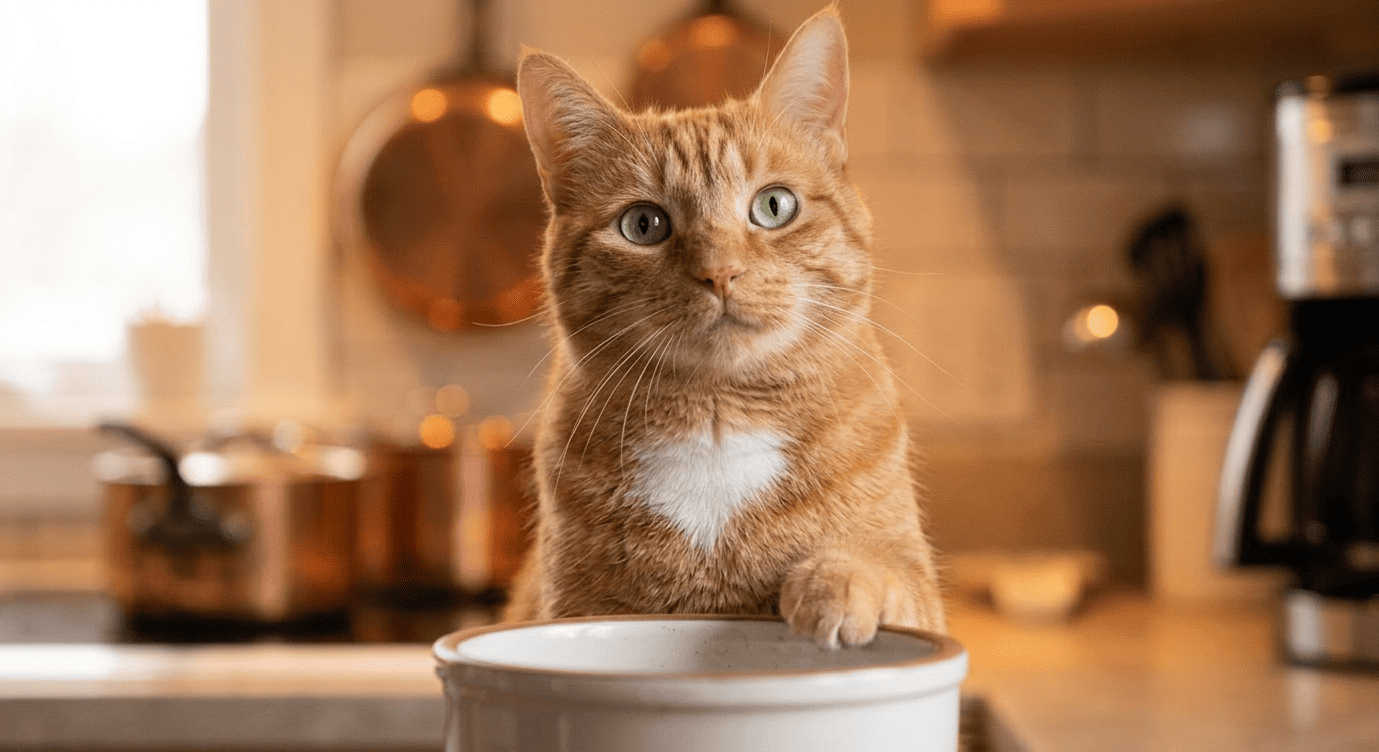
An indoor cat feeding schedule should make portions and appetite easier to track while fitting your cat’s age, health, and household routine. The times below are planning examples, not medical feeding prescriptions. A predictable meal does not guarantee that begging or nighttime waking will stop.
Quick Answer
Choose manageable meal times, measure the full daily allowance, and divide that allowance between meals and food-based enrichment. Healthy adults, growing kittens, and cats receiving treatment may need different plans. Ask your veterinarian to set an appropriate amount and adjust it using weight, body condition, appetite, and health—not a universal percentage cut.
Before Choosing a Routine
- Write down the current food and its calorie information, including treats and food used in puzzles.
- Note who feeds the cat and how portions are recorded so meals are not accidentally doubled.
- Record the current pattern of eating and leftovers before making changes.
- Check whether another cat can take the food.
- Agree on a backup caregiver or feeder plan for a missed meal.
Use our indoor cat diet guide for the broader setup and portion planning guide for organizing food quantities. A package guide is a starting point, not an individualized prescription.
Measured Meals Versus Food Left Available
Unlimited top-ups make intake hard to track. A measured daily amount left available is a different arrangement, although it can still be difficult to know who ate it in a multi-cat home. Neither an always-full bowl nor scheduled feeding alone tells you whether nutrition is appropriate.
Choose a method that lets you record intake and notice change. For shared homes, review multi-cat resource guarding. If weight is rising, discuss the whole daily intake; the indoor weight-gain guide helps organize possible contributors without assuming food timing is the sole cause.
Three Sample Feeding Routines
The percentages below are illustrative ways to divide a daily allowance that has already been chosen for the cat. They are not additional calories. Change times and meal sizes to match the actual feeding plan.
Routine 1: The 9-to-5 Workday
| Time | Example share | Practical check |
|---|---|---|
| 7:00 AM | 40% | Measure breakfast and note leftovers |
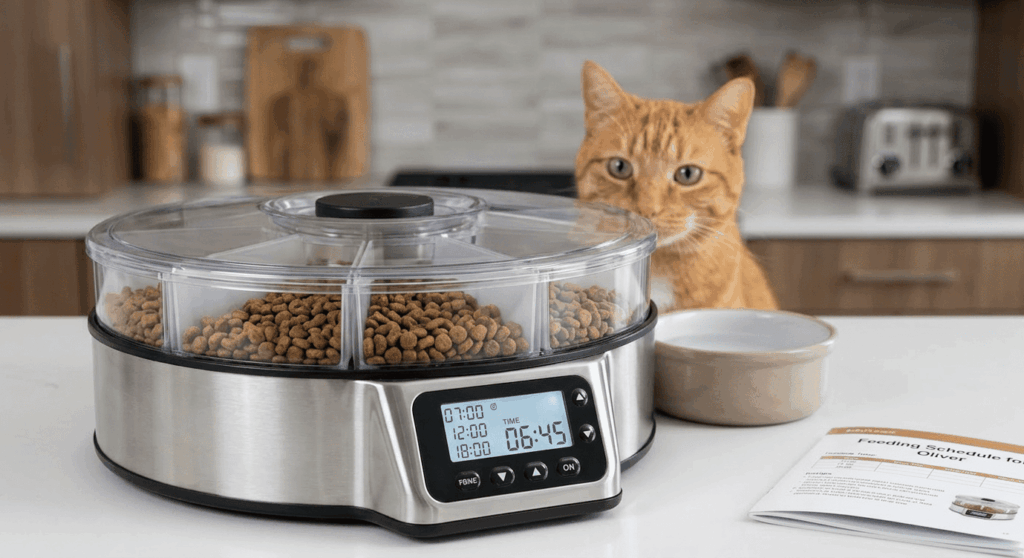
| 12:00 PM | 20% | Use a tested feeder suitable for the food |
| 7:00 PM | 40% | Check the midday portion was actually eaten |
If you cannot serve the midday meal, test the automatic feeder while you are home first. Confirm release, portion size, cleaning access, and what happens after a power or battery problem. A camera may help show a visit, but it does not prove how much was swallowed; see our pet camera comparison.
Routine 2: The Work-From-Home Day
| Time | Example share | Practical check |
|---|---|---|
| 7:30 AM | 35% | Start with a measured portion |
| 12:30 PM | 30% | Count any training treats within the day’s plan |
| 6:30 PM | 35% | Record uneaten food rather than automatically topping up |
Keep a visible log if more than one person serves food. Respond to new or persistent food-seeking by checking intake, weight, and health rather than labeling the cat manipulative. Quiet enrichment between meals is optional, not a way to ignore possible hunger.
A food puzzle can hold part of the measured allowance. Compare puzzle feeders and begin with easy puzzle training. Keep an accessible alternative if the cat cannot complete the task.
Routine 3: A Veterinarian-Approved Smaller-Meal Plan
| Time | Example share | Practical check |
|---|---|---|
| 7:00 AM | 25% | Follow the agreed food and medication plan |
| 12:00 PM | 25% | Record appetite, not only food offered |
| 5:00 PM | 25% | Arrange help if you cannot serve this meal |
| 9:00 PM | 25% | Check the daily total and any symptoms |
Use this template only if smaller meals suit the cat’s plan. Age alone does not determine a medical schedule, and these four equal portions are not instructions for diabetes, kidney disease, vomiting, or appetite loss. Keep routine veterinary checks alongside day-to-day observations.
What About Kittens?
Growing kittens need a diet appropriate for growth and a feeding pattern suited to their age and development. Do not use an adult weight-loss routine for a kitten. Ask for a written plan when adopting, and review it as the kitten grows rather than keeping the same amount indefinitely. Cornell’s feeding guidance explains life-stage food selection and individual nutritional needs.
Food Handling and Water
Follow the food label for refrigeration, storage, and time after serving. Do not assume an ordinary timed dispenser makes wet food safe for an entire workday; check the exact feeder’s cooling and handling instructions. Discard food when its safe handling limit is exceeded or it is contaminated.
Compare wet and dry food considerations before choosing equipment. Our raw food safety guide covers a separate safety question; a schedule does not remove foodborne risks.
Keep fresh water available independently of meal times. Offer convenient, clean locations and observe use. A fountain is an option, not a guarantee of increased drinking. Do not add broth or flavorings without checking suitability with your veterinarian.
Play Before Meals: An Option, Not a Sleep Guarantee
If your cat enjoys a short play session before a meal, make it part of the routine. Stop when the cat disengages or seems uncomfortable. Cats do not all follow an automatic play-eat-groom-sleep sequence, and this is not a treatment for unexplained nighttime vocalizing.
Use our indoor exercise routine and small-apartment enrichment guide for activity ideas. Choose a slow bowl only if the cat can eat comfortably and sufficiently from it.
Transition and Monitoring
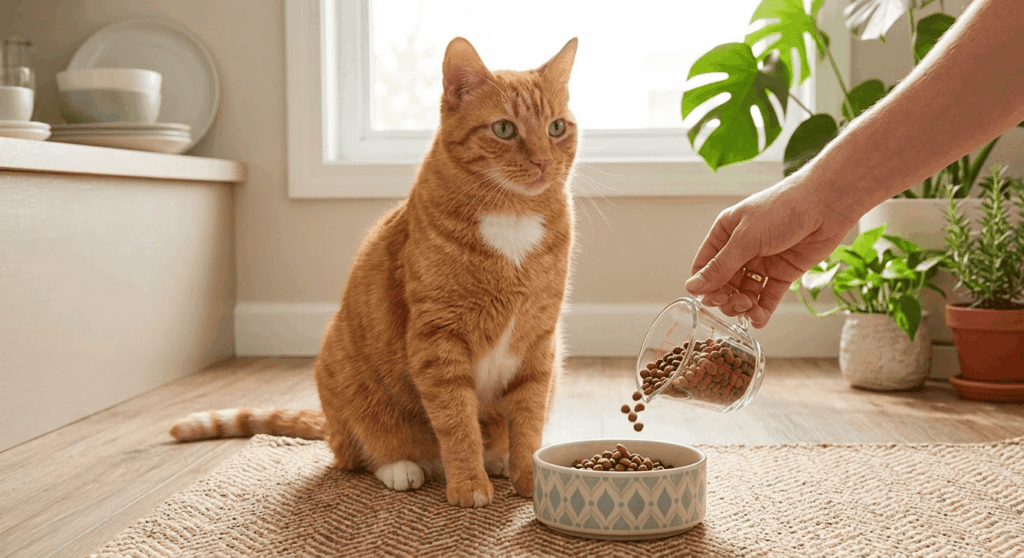
Keep a record of time, food amount, leftovers, and behavior while changing the routine. There is no reliable deadline by which every cat will stop begging or adapt. Do not impose prolonged food withholding to enforce the new schedule. Seek veterinary advice promptly if appetite falls, food is refused, or the cat seems unwell.
Do not automatically reduce intake by 10% or wait four weeks when a concerning change appears. Planned weight management needs an individual target and follow-up. Our weight-management food comparison is a discussion aid, not a substitute for that plan.
Changes in appetite, thirst, or weight can have health causes. The guides to diabetes signs and kidney disease signs explain observations to report, not diagnoses to make from a feeding log.
Frequently Asked Questions
Does licking the bowl clean mean the portion is right?
No. A clean bowl does not establish nutritional adequacy. Use the measured intake, body condition, weight trend, and veterinary plan together.
Should I ignore all begging?
No blanket rule can distinguish habit from hunger or illness. Avoid unrecorded extra feeding, but investigate a new or persistent change and ensure the cat receives the agreed amount.
Can a feeder cover a weekend away?
A device is not a replacement for hands-on care. Use the weekend care checklist to arrange a caregiver and checks for food, water, litter, and health.
Final Thoughts
A useful schedule makes it clear what was offered, what was eaten, and what changed. Keep the routine workable, the portions visible, and the plan flexible enough to respond to the cat—not just the clock.