By a cat parent who paid $100 to learn that his cat is, in fact, a cat.
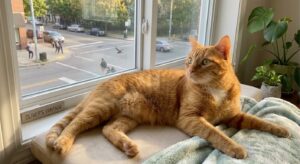
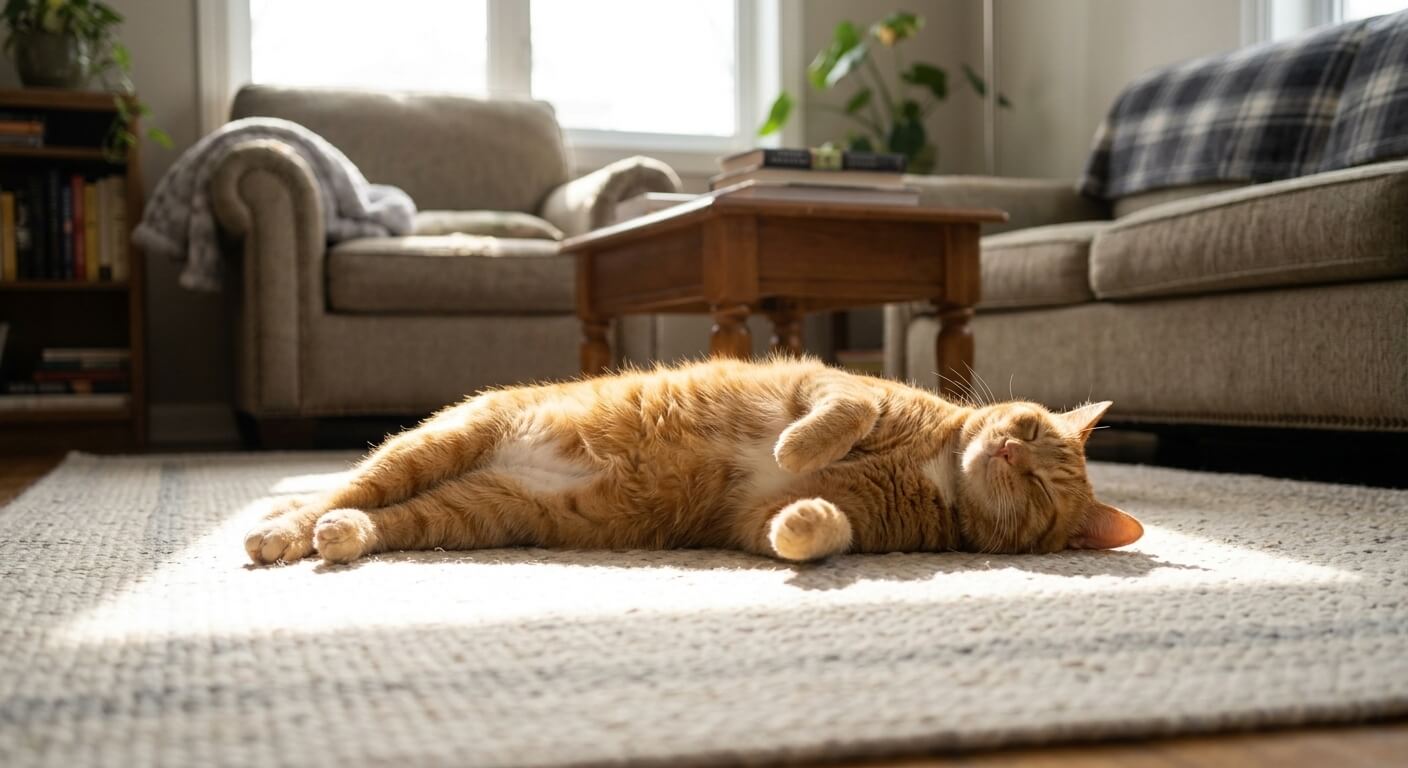
Six months into life with Oliver, I became convinced something was seriously wrong. I had read enough about cat behavior to know that lethargy was a symptom of approximately everything terrible, and Oliver was sleeping — deeply, completely, with the boneless abandon of someone who had no responsibilities and no apologies about it — for what seemed like the entire day. I started timing it. Sixteen hours. Sometimes more. I made a vet appointment.
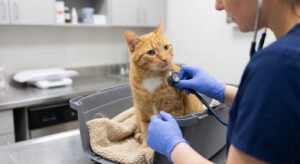
I described my concerns with genuine worry in my voice. Dr. Chen examined Oliver thoroughly, found absolutely nothing wrong, and then looked at me with the specific expression that experienced vets reserve for first-time cat owners who have just discovered Google. “Congratulations,” she said. “He’s a perfectly normal cat.”
The question of why does my cat sleep so much turns out to have a fascinating biological answer that makes complete sense once you understand what your cat actually is — and what their body is built to do. The $100 was expensive, but the education was worth it. Here is everything I learned, for free.
Quick Answer
If you’re wondering why does my cat sleep so much, the answer is evolutionary biology. Cats are crepuscular predators whose bodies are optimized for short, explosive bursts of high-intensity hunting at dawn and dusk — activity patterns that require sustained rest between sessions. Sleeping 12 to 16 hours daily is not lethargy. It is your cat operating exactly as designed.
The Biology of the Feline Nap: Crepuscular Predators
The word that explains almost everything about feline sleep behavior is crepuscular — a term that refers to animals most active during the twilight hours of dawn and dusk, rather than primarily during the day (diurnal) or night (nocturnal).
Understanding what this means in practice requires thinking about what cats are built to do.
The Energetics of a Hunter
A wild cat’s hunting strategy is not the sustained pursuit that defines many predators. It is stalk, burst, strike — an approach that demands explosive anaerobic energy in very short windows, followed by recovery. Think of it as the feline equivalent of sprinting rather than marathon running.
The metabolic math of this lifestyle:
- A successful hunt might last ten to thirty seconds of full-intensity activity
- That activity burns through available glucose and ATP reserves rapidly
- Full restoration of those energy reserves requires extended rest
- The most energetically productive hunting windows are dawn and dusk, when prey animals are active but visibility still allows precision stalking
A wild cat might make multiple hunting attempts at dawn, rest through the heat of the day, make more attempts at dusk, and sleep through the night. The rest periods are not incidental to this lifestyle — they are the biological foundation that makes the hunting bursts possible.
Your domestic indoor cat has inherited this entire system — the crepuscular activity peaks, the explosive energy bursts, and the deep recovery sleep — without the hunting. Oliver doesn’t hunt mice, but his nervous system is still running the same energy management program that his ancestors used on the African savanna.
The Predator-Prey Efficiency Equation
There is another dimension to feline sleep biology that is often overlooked: caloric efficiency.
A cat’s diet in the wild is high-protein and moderate-fat — prey animals. Digesting a high-protein meal is metabolically demanding and benefits from the reduced activity of sleep. A cat who has eaten rests deeply because their digestive system is doing significant work.
This is why Oliver reliably disappears for a two-hour nap approximately thirty minutes after every meal. He is not being lazy. He is running a metabolically efficient post-prandial recovery cycle that has been refined over millions of years.
Deep Sleep vs. “Cat Naps”: How Cats Actually Sleep
Not all of Oliver’s sixteen hours are equivalent. Feline sleep has a structure — a cycling between different depths of unconsciousness — that explains both the heavy, apparently comatose periods and the lighter dozing where his ears are still rotating toward sounds.
The Two Sleep States
Slow-Wave Sleep (SWS) — Light Sleep:
This is the “cat nap” state that gave the phrase its name. During slow-wave sleep:
- Brain activity reduces but does not reach the deep synchronization of REM sleep
- Muscle tone is maintained — a cat in light sleep can spring to their feet instantly
- Sensory monitoring continues — Oliver’s ears rotate toward sounds during this phase; he will wake immediately to an unusual noise
- This phase typically lasts fifteen to thirty minutes per cycle
REM Sleep — Deep Sleep:
The deeper phase, where genuine restoration occurs:
- Brain activity increases to near-waking levels, producing the dream state
- Muscle tone drops significantly — you may observe twitching whiskers, small paw movements, or even soft vocalizations
- Full arousal takes several seconds — a cat in REM sleep does not wake instantly
- REM is essential for memory consolidation, immune function, and neurological restoration
The Sleep Cycle Structure
Cats cycle between light sleep and REM sleep in approximately twenty to thirty minute cycles, with brief wake periods between cycles. The extended sleep duration comes not from single uninterrupted sleep periods but from many of these cycles across the day.
This is why Oliver can appear to be asleep for four hours while actually being in a lighter state for much of it — his brain is cycling through these phases repeatedly, with varying depth throughout.
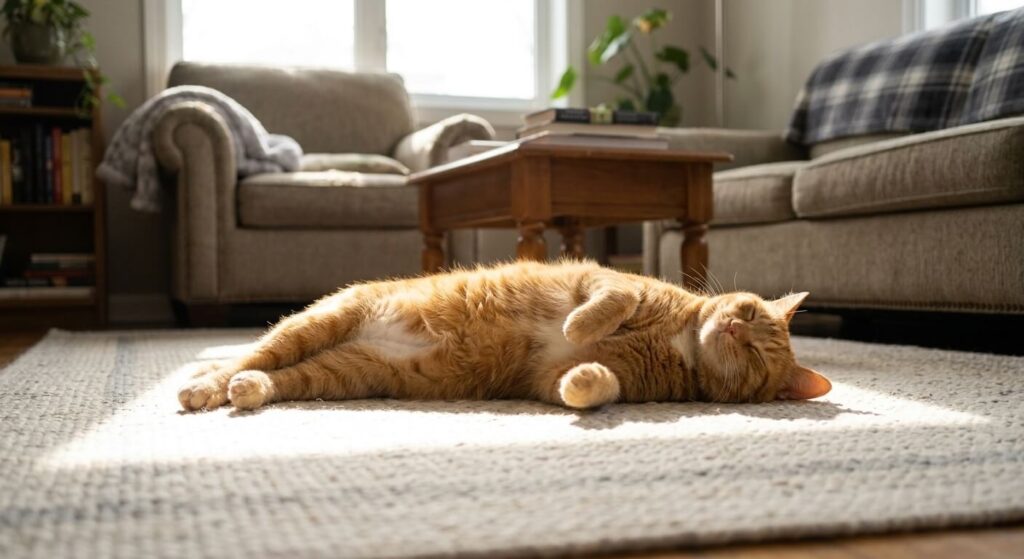
The “loaf” position — paws tucked under the body, eyes partially closed — is typically light sleep. The fully sprawled, twitching, heavy-breathing state is active REM. Both are normal. Both serve different restorative functions.
Dream Content in Cats
The twitching and vocalizing that occurs during REM sleep is understood to reflect active dream processing. Neurological research on mammalian dream states suggests that dreaming involves replay of recent experiences and learned behaviors.
What does Oliver dream about? The running paw movements and the occasional muffled chirp suggest he is probably hunting something. The fact that he sometimes wakes from these dreams and immediately begins grooming suggests the hunt did not go as planned.
Age Matters: Kittens, Adults, and Senior Sleep Habits
The baseline sixteen-hour figure applies to healthy adult cats, but sleep requirements shift significantly across the lifespan — and knowing where your cat falls helps calibrate what “normal” looks like for them specifically.
Kittens (0–6 months): Up to 20 Hours
Kittens sleep more than adult cats — substantially more — for reasons that are directly tied to their development.
Why kittens sleep so much:
- Growth hormone is released primarily during sleep; the rapid physical growth of kittenhood literally requires extended sleep time
- Neurological development — the brain is building its architecture during this period; sleep is when that construction happens
- Immune system calibration — developing immunity is metabolically expensive and benefits from rest
A kitten sleeping eighteen to twenty hours per day is not a concerning kitten. A kitten who cannot be roused, who does not show interest in food or play when awake, or who is obviously weak — that is a concerning kitten. The distinction is in the quality of their waking hours, not the quantity of their sleeping ones.
Adult Cats (1–7 years): 12–16 Hours
The range for adult cats is wide because individual variation is genuine. Some cats naturally sleep toward the lower end of this range; others consistently hit sixteen hours. Both can be completely normal for that individual.
Factors that shift within the normal range:
- Weather — cats sleep significantly more on overcast, cold, or rainy days; this appears to be a genuine meteorological sensitivity rather than boredom
- Season — longer dark periods in winter correlate with longer sleep duration in many cats
- Post-play recovery — a cat who has had intensive play sessions will sleep more deeply and for longer in the following hours
- Diet — cats fed larger, less frequent meals tend to have more extended post-meal sleep periods than those fed small, frequent meals
Senior Cats (7+ years): 16–20 Hours
Senior cats sleep more than adult cats, and this shift is expected and normal — but it requires monitoring because some causes of increased sleep in senior cats are medical rather than age-normal.
Normal reasons for increased senior sleep:
- Reduced overall metabolic rate
- Joint discomfort that makes activity less comfortable and rest more appealing
- Natural sensory decline — less environmental stimulation reaching the brain
- Reduced muscle mass requiring more rest to maintain
Medical reasons to investigate:
- Hyperthyroidism — counterintuitively, can cause increased lethargy in some presentations despite causing weight loss
- Chronic kidney disease — the waste products that accumulate with reduced kidney function cause fatigue
- Anemia — reduced oxygen-carrying capacity makes everything effortful
- Pain — arthritis, dental pain, or other chronic pain sources that make movement uncomfortable
The monitoring principle for senior cats: Note not just how much they sleep, but the quality of their waking hours. A senior cat who sleeps eighteen hours but is engaged, interactive, and appetitive when awake is likely age-normally sleepy. A senior cat whose waking periods seem dull, disoriented, or appetite-suppressed warrants bloodwork.
Why Does My Cat Sleep So Much: Normal Sleep vs. Lethargy
This is the section I needed three years ago, and it is the one that will save the most anxious cat owners a $100 consultation fee.
The clinical distinction between normal extensive feline sleep and medically significant lethargy is not primarily about quantity — it is about the quality of waking periods and the pattern of change.
Signs That What You’re Seeing Is Normal Sleep
- Your cat wakes with apparent interest in food at regular meal times
- When awake, they groom normally and show interest in their environment
- They respond to stimulation — a toy, your voice, an interesting sound
- The sleep pattern is consistent with their established baseline
- They use normal postures — loaf, curled, sprawled — and shift positions periodically
Signs That Warrant a Vet Call
Contact your veterinarian if you observe:
- Sudden change from established baseline — a cat who normally sleeps fourteen hours and is now sleeping twenty hours; the change is more informative than the absolute number
- Difficulty rousing — a cat who cannot be woken to a normal state with gentle contact or a food stimulus
- Weakness when awake — stumbling, difficulty jumping to normally accessible surfaces, hind leg weakness
- Appetite change accompanying increased sleep — not eating combined with unusual sleepiness is a red flag combination
- Hiding combined with increased sleep — the retreat-and-rest pattern is associated with illness across species
- Any sleep change in a cat over ten years — in senior cats, behavioral change warrants investigation rather than watchful waiting
- Sleeping in unusual locations — a cat who suddenly sleeps in cold, hard, or inaccessible locations rather than their established spots may be seeking coolness (fever) or isolation (pain or illness)
The pattern rule: sudden change from an established normal baseline is the signal, not the absolute number of hours.
Because cats are crepuscular, their internal clock drives a burst of energy precisely at the hours when you’re winding down for the night — and without a structured evening play routine to channel that energy appropriately, that crepuscular activity peak becomes the 2 AM zoomies that disrupts everyone’s sleep. [Read our complete guide to managing nighttime activity and stopping cat zoomies here → How to Tire Out an Indoor Cat Before Bed (A Routine That Finally Gave Me My Sleep Back)]
How to Optimize Your Cat’s Sleeping Environment
Understanding the biology of feline sleep suggests clear principles for creating sleeping environments that support deep, restorative rest — which in turn produces the calm, well-regulated waking behavior that makes living with a cat genuinely pleasant.
The Temperature Factor
Cats are drawn to warm sleeping spots with a biological consistency that goes beyond mere comfort preference. Their thermoregulatory system operates at a higher set point than humans — a cat’s normal body temperature is 100.5–102.5°F (38–39.2°C) — and maintaining that temperature during sleep, when metabolic heat generation drops, requires external warmth.
Self-heating thermal mats — pads that reflect the cat’s own body heat back without requiring electricity or heating elements — are among the most consistently used cat products I’ve introduced into Oliver’s environment. He relocates to his thermal mat within thirty minutes of its introduction to any surface and will choose it over soft fabric alternatives when the ambient temperature drops.
Natural sunbeams are the original thermal sleeping resource, and cats pursue them with the methodical dedication of solar panel engineers. A window perch positioned to receive morning or afternoon direct sunlight provides both thermal warmth and the sensory stimulation of outdoor observation — the dual combination that makes window sleeping spots so consistently preferred.
The Security Factor
Where a cat chooses to sleep is determined as much by perceived safety as by physical comfort. A sleeping cat is a vulnerable cat — unconscious, with reduced sensory monitoring. The instinct to sleep in protected locations is not optional behavioral preference; it is a survival-calibrated response.
Characteristics of a preferred sleeping location from your cat’s perspective:
- Elevated — height provides visual monitoring range and physical distance from floor-level threats
- Enclosed or partially enclosed — back and sides protected; observable entry point
- Familiar scent saturation — their own smell, your smell
- Away from high-traffic paths — not in a location where they will be stepped over or startled by passing movement
Cats prefer to sleep where they feel genuinely secure — which is why vertical resting spaces and elevated platforms are a fundamental component of indoor enrichment, not optional luxury additions. [Read our complete guide to building vertical enrichment and safe resting territory for indoor cats here → The Small Apartment Cat Survival Guide: 7 Pillars of Indoor Enrichment]
Bed Selection: What Actually Gets Used
Enclosed “donut” or cave beds:
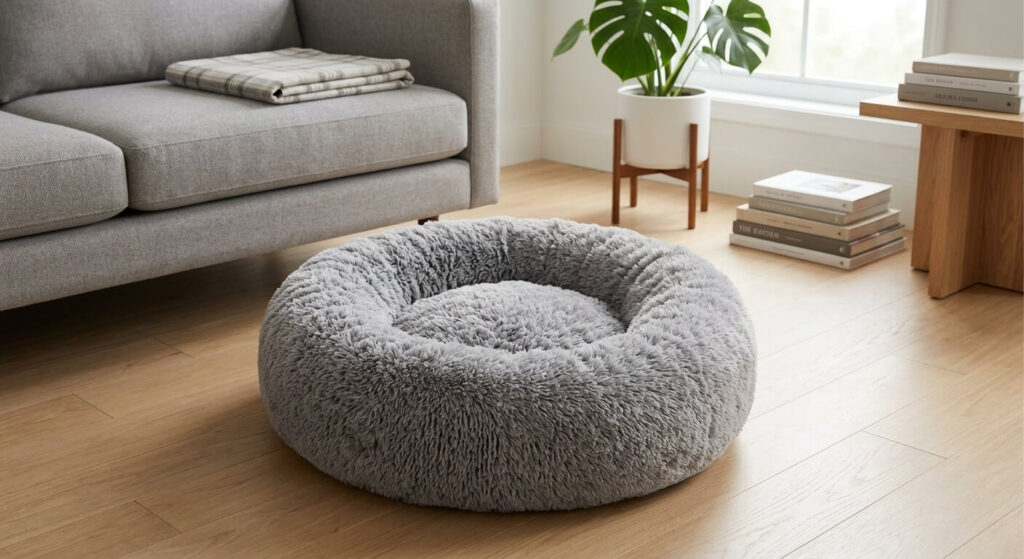
The round, deep-walled donut bed — with a raised rim that a cat can curl against or rest their chin on — fulfills the enclosed security preference while providing the soft, warm contact surface that triggers the kneading-and-settling behavior cats exhibit before sleep. Oliver has three cat beds and uses the donut-style one approximately 80% of the time.
What makes a good donut bed:
- Rim height sufficient to provide actual back support when curled — at least four to five inches from base to rim
- Interior diameter large enough for your cat to fully extend if they choose — measure your cat from nose to base of tail and add four to six inches
- Removable, machine-washable insert — a bed that cannot be cleaned is a bed that accumulates allergens and bacterial load; washing every one to two weeks is appropriate
- Self-warming or fleece interior — smooth fabric does not retain heat the way plush or fleece does; cats prefer higher-loft, warmer textures
Elevated window perches:
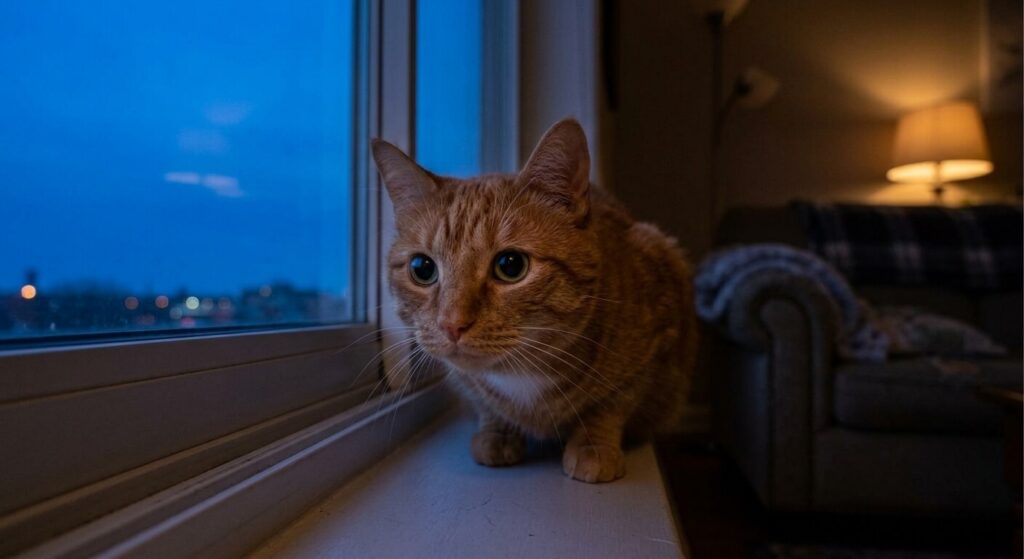
For the sunbathing-and-watching sleep that Oliver engages in for two to three hours daily, a window perch at the primary bird-watching window provides both thermal comfort and environmental stimulation. This is not the same behavioral function as the enclosed donut bed — it is active observation that eventually transitions to a light-sleep state, not the deep recovery sleep of the donut bed.
Both serve different functions. Most cats benefit from both options.
FAQ
1. Is there a simple answer to why does my cat sleep so much more in winter than summer?
The seasonal shift in why does my cat sleep so much more during winter months is a documented feline behavioral pattern that appears to track two environmental variables: daylight duration and ambient temperature.
Cats, like many mammals, show sleep duration responses to photoperiod changes — the shorter days and longer dark periods of winter correlate with longer sleep in many individuals. Additionally, cooler ambient temperatures increase the thermal appeal of warm sleeping spots, encouraging cats to seek and maintain contact with heat-retaining surfaces for extended periods.
The behavioral result is a cat who sleeps noticeably more between November and February than between May and August. This is generally considered a normal adaptation and not a cause for concern, provided the cat’s waking quality remains normal and appetite is unaffected.
2. Do indoor cats sleep more than outdoor cats?
Yes, on average — and the reason is behavioral rather than purely biological. Outdoor cats have continuous environmental stimulation that activates their waking behavior throughout their crepuscular activity periods: territorial patrol, hunting opportunities, social encounters with other cats, weather variations, and the constant novel sensory input of an outdoor environment.
Indoor cats experience a significantly lower level of environmental stimulation during their potential waking hours, which means there is simply less pulling them out of a resting state. An indoor cat with excellent enrichment — structured play sessions, window perches, puzzle feeders, and vertical territory — will typically sleep fewer hours than an under-stimulated indoor cat, because their environment is actively engaging their waking nervous system.
The sleep difference between outdoor and indoor cats is partially biological and partially a reflection of enrichment quality.
3. Should I wake my cat up to play with them during the day?
Generally, no — and for a specific reason. Disrupting your cat’s sleep cycles during their natural rest periods works against their biological programming rather than with it. A cat forcibly woken during deep REM sleep is a cat whose recovery cycle is interrupted — they wake disoriented, often irritable, and the restorative function of that sleep cycle is lost.
A far more effective approach is scheduling play sessions during the natural waking periods that align with your cat’s crepuscular activity peaks — the approximately thirty to sixty minutes after waking in the morning and the dusk period in the early evening. During these windows, your cat’s nervous system is already primed for activity; play engagement is easier to initiate, more intense, and more satisfying for both of you.
Working with the biological clock rather than against it produces better play sessions and a better-rested, more contented cat.
References
- Campbell, S. S., & Tobler, I. (1984). Animal sleep: a review of sleep duration across phylogeny. Neuroscience & Biobehavioral Reviews, 8(3), 269–300. https://pubmed.ncbi.nlm.nih.gov/6504414/
- Bradshaw, J. W. S. (2012). The behaviour of the domestic cat. CABI. https://www.cabi.org/bookshop/book/9781845939922/
Disclaimer: This article reflects the personal experience of a cat owner and draws on published research in feline behavioral science and sleep biology. It is intended for informational purposes and does not replace professional veterinary assessment. If your cat’s sleep patterns change suddenly or are accompanied by changes in appetite, mobility, or demeanor, please consult a licensed veterinarian.