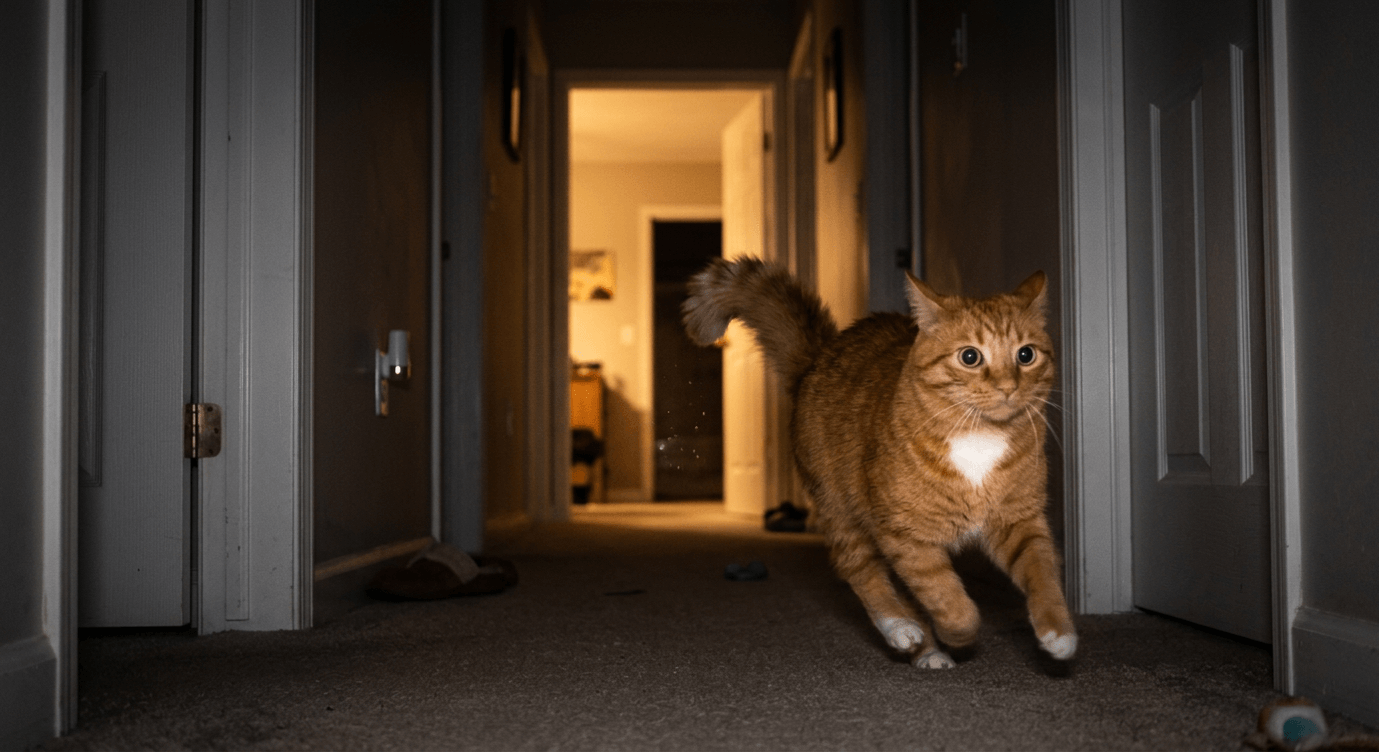
Cat zoomies at night are usually a mix of normal feline energy, underused hunting behavior, feeding timing, and daytime boredom. The goal is not to punish the sprinting. The goal is to move more activity into the evening routine so your cat is ready to settle when you are. For a complete daily plan, use our indoor cat exercise routine guide to spread movement across morning, afternoon, and evening.
Oliver’s version used to start after midnight: hallway sprints, furniture parkour, and one dramatic launch across the bed. What finally helped was not scolding. It was a predictable pre-bed routine: play, meal, grooming, sleep.
This guide explains the most common causes of nighttime zoomies and how to reduce them safely in an apartment.
Quick Answer
Cat zoomies at night are often caused by unused energy, crepuscular biology, inconsistent feeding routines, boredom, or a lack of hunting-style play before bed. A short evening play session followed by dinner can help complete the hunt-eat-groom-sleep cycle and reduce late-night sprinting.
If the behavior is sudden, extreme, paired with crying, appetite changes, weight loss, pain, confusion, or starts in a senior cat, ask your veterinarian. Not every nighttime activity problem is behavioral.
For older cats with nighttime pacing, confusion, or changed sleep cycles, compare the pattern with our senior cat dementia signs guide. Not every nighttime activity problem is behavioral.
If meal timing is part of the problem, pair this routine with a consistent indoor cat feeding schedule.
Important Veterinary Note
Nighttime activity is common in healthy cats, but sudden behavior changes deserve attention. Contact your veterinarian if your cat’s zoomies are new, frantic, painful-looking, paired with hiding, aggression, appetite changes, weight loss, excessive thirst, vomiting, or senior confusion.
Table of Contents
What Are Cat Zoomies (FRAPs), Exactly?
Cat zoomies at night are often called FRAPs, or Frenetic Random Activity Periods. The phrase sounds funny, but the behavior is real: a cat suddenly bursts into running, jumping, skidding, climbing, or chasing invisible prey for a short period of time.
FRAPs are not automatically a behavior problem. In many healthy cats, they are a normal way to discharge energy. The issue is timing. A five-minute sprint at 6 PM is usually harmless. A five-minute sprint across your pillow at 2 AM feels like a household emergency.
Cats are commonly described as nocturnal, but that is not quite accurate. Most cats are crepuscular, meaning their natural activity peaks tend to happen around dawn and dusk. Those windows match the hunting rhythm of many small prey animals. Indoor life does not remove that rhythm. It just moves it into a living room, hallway, kitchen, or bedroom.
That is why the solution is not to suppress zoomies completely. A cat who never runs, jumps, chases, or plays may be bored, painful, overweight, frightened, or under-stimulated. The better goal is to give your cat enough structured activity during normal waking hours so the most intense energy does not erupt after you go to bed.
Think of nighttime zoomies as a timing problem first, not a discipline problem. Your cat’s body is asking for a hunt cycle. You can answer that need with interactive play, scheduled feeding, climbing opportunities, and a calmer evening environment.
The 4 Main Causes of Midnight Crazies
Not all zoomies are created equal. Understanding why your specific cat is doing the 2 AM wall-of-death sprint helps you target the right solution.
- Their Body Clock Peaks at Dawn and Dusk
The first cause is biology. Cats are built for bursts of activity rather than long endurance exercise. A cat may sleep for much of the day, wake sharply in the evening, sprint hard for a few minutes, and then settle again.
This is especially obvious in apartments because the space is smaller and every sound is amplified. A hallway becomes a racetrack. A sofa becomes a launch platform. A rug becomes a skid zone. The behavior may be normal, but the apartment makes it feel much bigger.
What helps:
- Schedule one active play session around dusk.
- Use a wand toy or prey-style toy rather than only leaving toys on the floor.
- Let your cat catch the toy several times so the session has a clear ending.
- Follow the session with dinner or a planned small meal.
Key point: your cat is not being difficult. Their activity rhythm is landing at the wrong time for your sleep.
- They Have Too Much Unused Daytime Energy
Indoor cats often sleep because nothing else is happening. That does not always mean they are fully rested. It may mean the environment is predictable, flat, and low-stimulation.
If your cat spends the whole day with no window activity, no puzzle feeder, no vertical space, no scent variety, and no play routine, that unused energy has to go somewhere. For many cats, it shows up as cat zoomies at night.
Apartment cats need environmental jobs. They need things to watch, climb, sniff, chase, investigate, and solve. That does not require a large home. It requires intentional placement.
Useful daytime enrichment options:
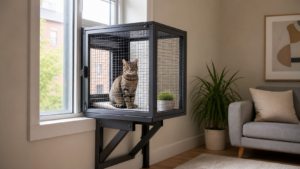
- A secure window perch with something interesting to watch outside. If your apartment lacks safe observation spots, use our cat window perch apartment guide to choose a renter-friendly setup.
- A food puzzle for one measured meal or snack.
- A rotating toy basket with only a few toys available at once.
- A safe climbing route, such as a cat tree, shelf, or cleared furniture path.
- Short owner-led play breaks before work, after work, or before dinner.
If the zoomies come with destructive behavior, attention-seeking, or over-sleeping during the day, compare the pattern with our signs indoor cat is bored guide.
- Their Feeding Rhythm Does Not Match Their Hunting Rhythm
Meal timing can make nighttime zoomies better or worse. Cats naturally follow a hunt, catch, eat, groom, sleep sequence. When food is available all day, or dinner happens too early, that sequence may never line up with bedtime.
Free-feeding can also make it harder to use food as part of a calming routine. If the bowl is always available, dinner does not create a strong post-meal wind-down. But when a measured evening meal follows play, the routine becomes predictable.
What helps:
- Use measured meals instead of constantly topping up the bowl.
- Put the biggest planned meal after the evening play session.
- Avoid giving random snacks every time your cat asks at night.
- Use an automatic feeder if your cat wakes you early for breakfast. If early-morning food demands are part of the problem, compare portion-control options in our best automatic cat feeders for indoor cats guide.
If meal timing is part of the problem, pair this routine with a consistent indoor cat feeding schedule.
- Age, Stress, and Health Can Change the Pattern
Young cats and kittens often have more intense zoomies because their bodies are developing and their play drive is high. Adult cats may still have zoomies, but the timing usually becomes easier to manage with routine.
Senior cats are different. New or increasing nighttime activity in an older cat should not be dismissed as cute or random. Some older cats become restless at night because of pain, hyperthyroidism, blood pressure changes, sensory decline, or cognitive changes. Other cats vocalize because they feel disoriented in the dark or cannot settle comfortably.
Ask your veterinarian if nighttime zoomies are new, intense, paired with crying, paired with appetite changes, or happening in a cat over seven years old. For older cats with nighttime pacing, confusion, or changed sleep cycles, compare the pattern with our senior cat dementia signs guide.
Apartment-Specific Triggers That Make Night Zoomies Worse
Small apartments do not cause zoomies by themselves, but they can make the behavior more intense, louder, and harder to ignore. A cat in a larger home may sprint through several rooms and disappear. In a studio or one-bedroom apartment, that same sprint happens beside your bed.
Here are the apartment triggers I would check first:
Too much open floor at night
If your cat has a straight hallway or open living-room path, it may become a runway. That does not mean you need to block movement completely, but you can redirect it. Put a rug runner, cat tunnel, cardboard scratcher, or low climbing object in the path so the sprint becomes more controlled and less slippery.
No legal climbing outlet
Cats who cannot climb safely may create their own route across counters, shelves, curtains, or furniture. A small cat tree, wall shelf, or stable window perch gives the body a place to spend energy without turning your apartment into a crash zone. For compact climbing options, compare the best cat trees for small apartments before using unstable furniture as a launch path.
Evening noise or light changes
Some cats become more active when the apartment changes from daytime noise to nighttime silence. Others react to hallway sounds, neighbors, elevators, pipes, or outdoor lights. If your cat sprints after a specific sound, the problem may be arousal rather than simple energy.
Owner attention at the wrong time
If you talk, laugh, chase, feed, or get up every time your cat sprints at night, the behavior may become more rewarding. That does not mean ignoring medical signs. It means avoiding accidental training when the cat is simply trying to start a game.
If nighttime activity is paired with repeated meowing, pawing, or waking the household, our guide to cat attention seeking explains how to separate a learned request from boredom, stress, or a possible health change.
The Infamous Post-Poop Zoomies: A Special Category
We need to talk about this because it deserves its own section.
You’ve seen it. Your cat uses the litter box, then immediately launches into a victory lap around the entire apartment like they’ve just won the Super Bowl. There are a few theories on why this happens:
- The vagus nerve theory: The act of defecating stimulates the vagus nerve, which can produce a euphoric, energized sensation — in humans and cats. Yes, really.
- Relief response: In the wild, eliminating makes an animal vulnerable. The sprint afterward may be an instinctual “get away from my scent trail” response.
- Pure celebration: Oliver’s personal theory, apparently.
The fix: If post-poop zoomies are waking you up, make sure your litter box is clean (cats are more likely to rush out of a dirty box), and consider whether the box location is causing stress.
How to Stop Cat Zoomies at Night (Without Locking Them in Another Room)
Here’s where we get practical. I want to be clear: you will not eliminate FRAPs entirely, and you shouldn’t try to. They’re healthy and normal. What you can do is shift them to more civilized hours and reduce their intensity.
Build a Consistent Pre-Bedtime Play Routine
This is, without question, the single most effective thing you can do.For a more detailed evening routine, read our guide on how to tire out an indoor cat before bed.
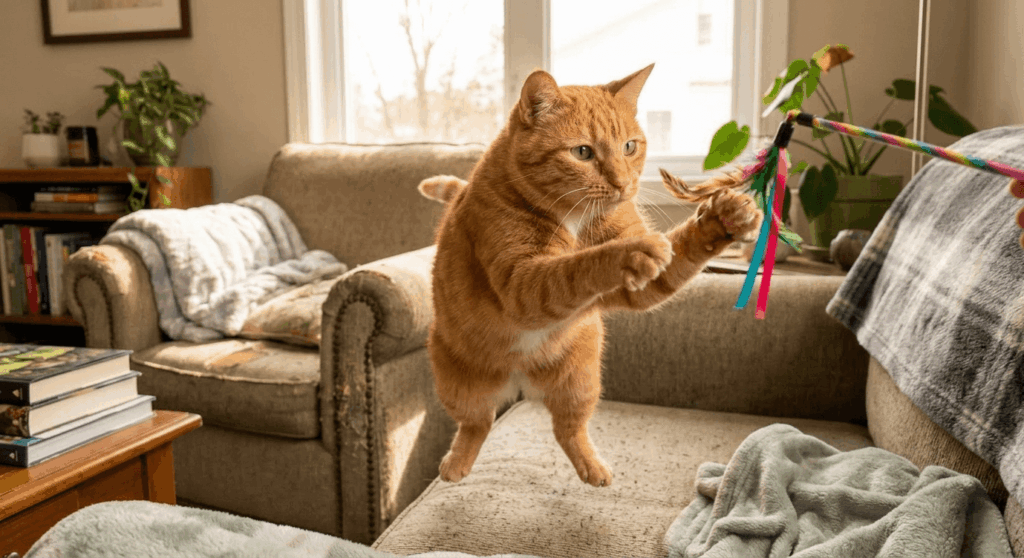
Interactive play — using a wand toy, laser pointer, or feather teaser — mimics the hunt cycle. When you bring that “prey” to a natural end (letting the cat catch and “kill” the toy), it signals to their brain that the hunt is over. The eat-groom-sleep sequence follows naturally.
The timing matters:
- Interactive play session: 15–20 minutes of active wand toy play, 60–90 minutes before your bedtime
- Feeding: Offer their largest meal immediately after play ends
- Quiet time: They will groom, wind down, and often crash within 30 minutes
I developed a specific 15-minute nighttime routine built around this exact sequence, and it transformed Oliver’s nights — you can find the full step-by-step process here: how to tire out an indoor cat before bed.
Add Daytime Environmental Enrichment
A tired cat at night starts with a stimulated cat during the day. Some of my favorite low-effort upgrades:
- Window perch with a bird feeder outside — passive enrichment that can occupy a cat for hours
- Puzzle feeders for at least one meal per day
- Rotating toy selection — leave out 3–4 toys, swap them every few days to maintain novelty
- Cat TV — yes, YouTube bird videos actually work. Oliver has opinions about which channel is best.
- Vertical space — cat trees, wall shelves, or even a cleared bookshelf give cats territory to patrol mentally
If the zoomies come with destructive behavior, attention-seeking, or over-sleeping during the day, compare the pattern with our signs indoor cat is bored guide.
If your cat gets nighttime zoomies because daytime meals are too easy, a cat puzzle feeder can turn one measured meal into a longer problem-solving session.
Adjust Meal Timing Strategically
If you take one actionable tip from this entire article, let it be this:
Stop free-feeding and switch to scheduled meals.
- Feed 2–3 measured meals per day
- Make the last meal the largest, timed 30–60 minutes before your desired sleep time
- After eating, cats almost always groom and then sleep — you’re hacking their biology in the best possible way
Consider a Second Cat (Carefully)
Two cats can absolutely entertain each other during the day, which means less pent-up energy at night. However — and this is a big however — a poorly matched cat pair creates far more stress than zoomies ever will.
If you’re considering this route:
- Match energy levels and ages when possible
- Always do a proper slow introduction (weeks, not days)
- Don’t assume your cat wants a companion — some genuinely don’t
Use Calming Aids as a Supplement (Not a Fix)
Some cats benefit from:
- Feliway diffusers (synthetic pheromones that reduce anxiety-driven energy)
- L-theanine supplements (available in calming treats)
- Chamomile or valerian-based toys
These are tools, not solutions. They work best alongside a good play and feeding routine, not instead of one.
When Cat Zoomies at Night Are Not Just Zoomies
Most nighttime sprints are normal, but some patterns deserve a closer look. The safest rule is this: if the behavior is sudden, extreme, painful-looking, or paired with other changes, do not treat it as a training issue first.
Call your veterinarian if you notice:
- New nighttime activity in a senior cat.
- Loud crying, yowling, or seeming lost.
- Increased thirst or larger urine clumps.
- Weight loss despite normal or increased appetite.
- Limping, stiffness, or reluctance to jump.
- Hiding, irritability, or sudden aggression.
- Vomiting, diarrhea, or appetite changes.
- Restlessness that seems anxious rather than playful.
These signs do not prove a medical problem at home, but they are enough to justify a veterinary conversation. Hyperthyroidism, pain, cognitive changes, urinary discomfort, blood pressure issues, and other conditions can all change nighttime behavior.
If the night activity is sudden, intense, or paired with appetite, weight, litter box, mobility, confusion, or behavior changes, step back and review the bigger health picture. Our indoor cat health prevention guide can help you connect home observations with vet care, dental health, weight tracking, and early warning signs.
If night zoomies come with hiding, aggression, attention seeking, or litter box changes, compare the pattern with our indoor cat behavior guide.
What NOT to Do
Let’s save you from making the mistakes I made before I knew better about cat zoomies at night:
- Don’t play with your cat right before you sleep (if you just want five more minutes of play at midnight — this resets their energy cycle and signals hunt time)
- Don’t punish zoomies — yelling, spraying water, or any negative reaction creates anxiety, which makes FRAPs worse
- Don’t shut them out of the room as a first solution — the scratching and meowing at the door is its own nightmare
- Don’t ignore a sudden change in a senior cat — new or intensified nighttime activity after age 7 deserves a vet conversation
A 7-Day Reset Plan for Cat Zoomies at Night
If you want a practical starting point, use this one-week reset. It is not a magic fix, but it gives your cat a consistent pattern to learn.
Day 1: Track the pattern
Write down when the zoomies happen, how long they last, whether your cat vocalizes, whether they used the litter box first, and what happened in the two hours before bedtime. Do not change everything yet. Just observe.
Day 2: Add one daytime enrichment point
Choose one simple daytime job: a window perch, a food puzzle, a toy rotation, or a treat hunt. Keep it easy enough that your cat succeeds.
Day 3: Start the evening play window
Play for 10 to 15 minutes about 60 to 90 minutes before your bedtime. Use a wand toy with low, prey-like movement. Avoid frantic random waving, which can overstimulate some cats.
Day 4: Add the post-play meal
Feed dinner or a planned small portion immediately after play. This helps complete the hunt-eat-groom-sleep pattern.
Day 5: Reduce accidental rewards
If your cat sprints at night but seems healthy and safe, do not get up to play, feed, or chase. Keep the response boring. Reward the routine before bedtime, not the interruption after bedtime.
Day 6: Adjust the apartment path
If the sprint route is slippery or dangerous, add traction, close risky doors, move fragile objects, and provide a legal climbing or scratching option.
Day 7: Review what changed
If the zoomies moved earlier, became shorter, or became less intense, the routine is working. Keep going for another two to three weeks. If the behavior became worse or came with health changes, involve your veterinarian.
The Honest Truth About Timelines
I want to set realistic expectations, because the internet is full of “fix it in three days!” promises.
When I implemented the play-feed-sleep routine with Oliver, here’s what actually happened:
- Week 1: Marginal improvement. He still zoomed, but slightly earlier (11 PM instead of 2 AM — I’ll take it)
- Week 2: More consistent. He started crashing after his evening meal more reliably
- Week 3–4: Significant improvement. The 2 AM sprints became rare rather than nightly
Consistency is everything. Cats are creatures of routine, and they adapt to new schedules — but they need time.
Frequently Asked Questions
1. Should I punish my cat for midnight zoomies?
Absolutely not. Punishment — whether that’s raising your voice, using a spray bottle, or any other negative response — doesn’t teach your cat why the behavior is unwanted. It only creates fear and anxiety, which paradoxically makes FRAPs more frequent. Zoomies are a normal feline behavior. The goal is redirection and routine adjustment, not discipline.
2. Why do cat zoomies at night seem so much worse in winter?
Great observation. During winter months, indoor cats get less natural light stimulation (which regulates their circadian rhythm), spend more time sleeping overall, and have fewer environmental stimuli — less open windows, fewer outdoor sounds, fewer birds to watch. The combination means even more pent-up energy concentrated into the night hours. Adding a UV-spectrum window light and increasing daytime enrichment helps significantly during darker months.
3. Is it normal for my cat to have zoomies every single night?
Daily zoomies in a young or adult cat are completely within the range of normal, especially if they’re not getting adequate daytime stimulation. If the frequency is bothering you (and your sleep), the play-feed-sleep routine outlined above should reduce the intensity and timing over 2–4 weeks. If your cat is older than 7 and has suddenly started having frequent nighttime FRAPs that they didn’t have before, schedule a vet visit to rule out thyroid issues or cognitive changes.
4. When should cat zoomies at night worry me?
Yes, short bursts of nighttime running can be normal, especially in young cats and cats who sleep most of the day. The concern is not one playful sprint. The concern is a sudden change, frantic behavior, vocalizing, pain signs, weight loss, appetite changes, or senior disorientation.
5. What time should I play with my cat to reduce night zoomies?
For many cats, the best timing is 30 to 90 minutes before your bedtime. Use a short hunting-style play session, then feed dinner or a small planned portion. This helps align the natural hunt-eat-groom-sleep rhythm with your sleep schedule.
6. Why does my cat get zoomies after using the litter box?
Post-litter-box zoomies can happen because of relief, arousal, scent-avoidance instinct, or simple energy release. Occasional running after a normal bowel movement is usually not concerning. Contact your veterinarian if your cat strains, cries, has diarrhea, produces very hard stool, avoids the box, or suddenly starts sprinting after every litter box visit.
7. Can an automatic feeder help with cat zoomies at night?
An automatic feeder can help if your cat wakes you for early breakfast or has trouble with predictable meal timing. It works best when paired with evening play and measured portions. The feeder should not add extra calories; it should simply move part of the planned daily food into a more useful time slot.
Final Thoughts
Cat zoomies at night are usually not a sign that your cat is trying to ruin your sleep. They are a signal that energy, feeding, enrichment, or routine is landing at the wrong time of day.
Start with the safest fixes: more daytime enrichment, a better evening play session, and a consistent feeding rhythm. If the pattern is sudden or paired with health changes, involve your veterinarian before assuming it is just behavior.
References
1.Cornell Feline Health Center. Behavior Problems.
2.Ellis, S. L. H., Rodan, I., Carney, H. C., Heath, S., Rochlitz, I., Shearburn, L. D., Sundahl, E., & Westropp, J. L. (2013). AAFP and ISFM Feline Environmental Needs Guidelines. Journal of Feline Medicine and Surgery, 15(3), 219-230.
3.American Association of Feline Practitioners. Feline Behavior Guidelines.