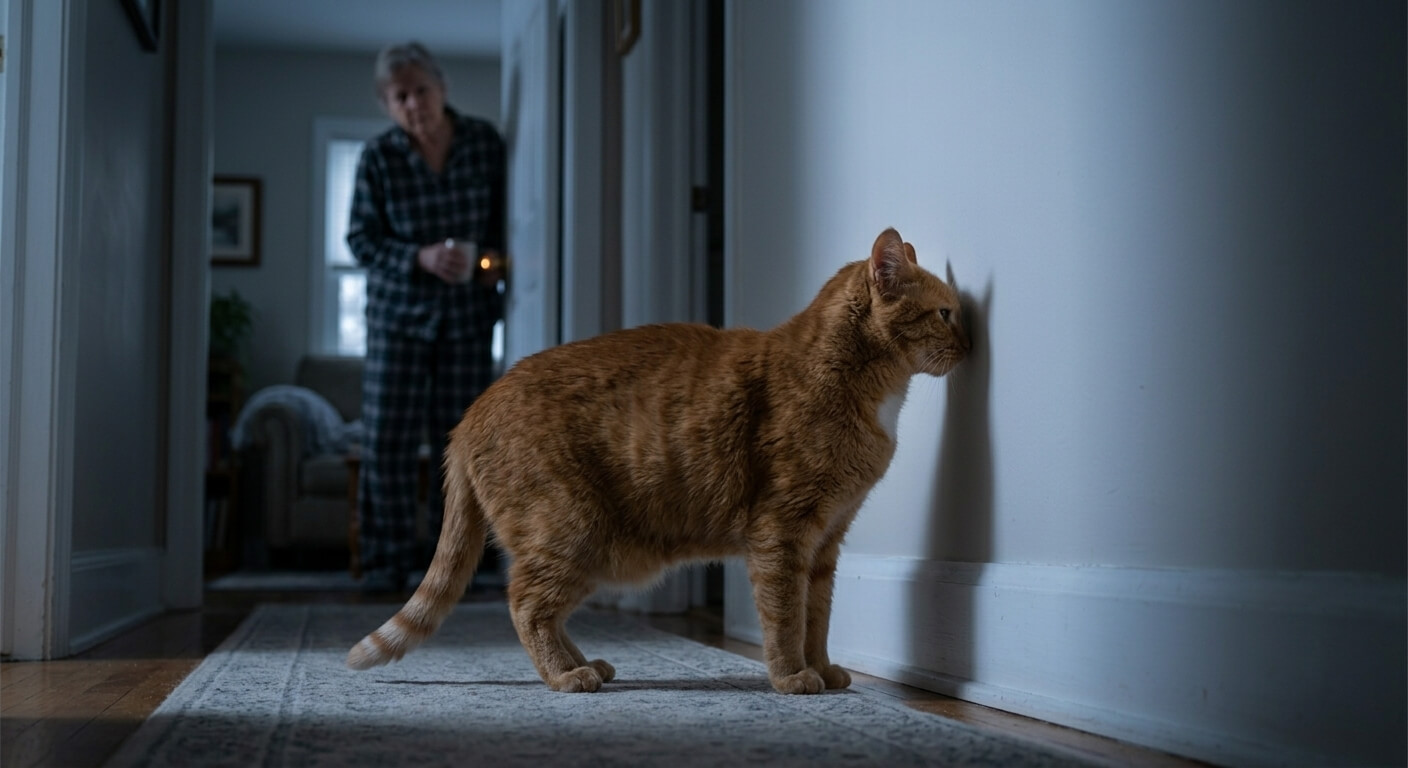
Senior cat dementia signs can be easy to mistake for “normal aging,” especially when the changes happen slowly. Night yowling, staring at walls, getting lost in familiar rooms, house soiling, sleep changes, and new confusion can all be part of feline cognitive dysfunction, but they can also come from pain, kidney disease, hyperthyroidism, high blood pressure, vision loss, or urinary problems.
I first took this seriously with Oliver after a 3 AM hallway yowl that sounded different from his usual attention call. He looked disoriented, not dramatic.
This guide explains the senior cat dementia signs to track, what the DISHA checklist means, what your veterinarian needs to rule out first, and how to make an apartment easier for an aging cat to navigate.
Quick Answer: What Are the Most Common Senior Cat Dementia Signs?
The most common senior cat dementia signs include disorientation, changed interaction, sleep-wake disruption, house soiling, activity changes, night vocalizing, staring at walls, getting lost in familiar spaces, and repetitive or confused behavior. Many veterinarians use the DISHA or DISHAA framework to organize these changes.
However, feline cognitive dysfunction should not be diagnosed at home. Similar signs can come from kidney disease, hyperthyroidism, high blood pressure, arthritis pain, urinary disease, diabetes, vision loss, hearing loss, or other neurologic problems. A senior cat with new behavior changes needs a veterinary workup before the changes are labeled dementia.
Important Veterinary Note
This article is for education, not diagnosis. Senior cat dementia signs overlap with many treatable medical problems. If your older cat suddenly vocalizes at night, urinates outside the litter box, stares at walls, hides, seems confused, loses weight, drinks more, walks stiffly, or changes appetite, schedule a veterinary exam. Bloodwork, urinalysis, blood pressure, pain assessment, thyroid testing, and vision or hearing checks may be needed before feline cognitive dysfunction is considered.
What Is Feline Cognitive Dysfunction (FCD)?
Before we can meaningfully discuss senior cat dementia signs, we need to understand what’s actually happening inside the aging feline brain — because FCD is not simply “getting old.” It is a distinct, progressive neurological condition with documented pathological changes that mirror those seen in human Alzheimer’s disease.
What May Happen in the Aging Feline Brain
As cats age, the brain undergoes a series of changes that gradually compromise cognitive function:
- Beta-amyloid plaque accumulation: Just as in human Alzheimer’s disease, aging cat brains develop deposits of beta-amyloid protein between neurons. These plaques disrupt normal neural communication and are directly associated with cognitive decline.
- Oxidative stress: The brain’s high metabolic demand makes it particularly vulnerable to free radical damage over time. Accumulated oxidative damage impairs mitochondrial function in neurons.
- Cerebral blood flow reduction: Aging causes microvascular changes that reduce oxygen and glucose delivery to brain tissue — essentially, the brain begins to slowly starve.
- Neurotransmitter depletion: Levels of key neurotransmitters, particularly dopamine, decline with age, affecting motor control, mood regulation, and cognitive processing.
- Progressive Neurodegeneration: Neurons are lost and not replaced, leading to measurable brain atrophy in affected cats.
These changes may contribute to cognitive decline in some aging cats. — a gradual decline in cognitive capacity for some cats that manifests in the behavioral signs we’ll discuss throughout this guide.
How Common Is FCD?
The prevalence data is striking, and frankly alarming when you consider how often the condition goes undiagnosed:
| Age Range | Estimated Prevalence of FCD |
|---|---|
| 11–14 years | ~28% of cats affected |
| 15+ years | ~50% of cats affected |
| 16–20 years | Reports suggest up to 80%+ |
The reason these numbers matter is that cats are living longer than ever before — advances in nutrition, veterinary medicine, and indoor lifestyles have pushed feline life expectancy well into the late teens and beyond. More years of life means more cats reaching the age at which FCD becomes a significant risk.
And yet, in a 2019 survey, fewer than 1 in 4 owners of cognitively affected cats had reported any behavioral changes to their veterinarian — because they’d attributed them to “normal aging.”
That normalization is what I want to change.
The DISHA Checklist: A Vet Tech’s Diagnostic Tool
The DISHA Acronym is the clinical framework I reach for — both in the clinic and in my own home with Oliver — whenever I’m assessing a senior cat for potential cognitive dysfunction. It was developed as a behavioral screening tool and remains the most practical, owner-accessible diagnostic framework we have.
DISHA stands for:
D — Disorientation
The cat appears confused or lost in familiar environments. This might look like:
- Standing in the middle of a room appearing uncertain of where to go next
- Getting “stuck” in corners
- Failing to find the food bowl, litter box, or favorite sleeping spot
- Staring blankly at walls, floors, or into space
- Not recognizing familiar people or housemates
I — Interaction Changes
Alterations in how the cat relates to the people and animals in their household:
- Withdrawal from family members they previously sought out
- Conversely — sudden clinginess or separation anxiety in a cat that was previously independent
- Reduced or absent response to their name
- Aggression toward familiar pets or people (pain and confusion combined)
- Loss of interest in social play or interaction
S — Sleep-Wake Cycle Disturbances
Perhaps the most disruptive sign for owners — and one of the most diagnostically significant:
- Nighttime Yowling — long, loud, repetitive vocalizations at night with no apparent cause
- Sleeping throughout the day and becoming active and disoriented at night (circadian reversal)
- Restlessness and pacing after dark
- Difficulty settling or self-soothing at night
H — House Soiling
Urinating or defecating outside the litter box in a cat with no prior history of this behavior:
- Forgetting where the litter box is located
- Failing to make it to the litter box in time (reduced spatial memory)
- Using corners, rugs, or open floor spaces instead
- Apparent unawareness that they have soiled
(Note: House soiling must always trigger a physical health workup first — UTIs, kidney disease, and arthritis are common physical causes that must be excluded before attributing this to FCD.)
A — Activity Changes
Shifts in overall activity level and engaged behaviors:
- Decreased exploration and play in a previously active cat
- Repetitive behaviors — pacing the same route, staring at the same spot
- Reduced grooming (unkempt coat)
- Increased grooming to the point of self-trauma (anxiety-driven)
- Staring into space for extended periods
- Loss of learned behaviors (responding to commands, using the cat door)
How to Use the DISHA Checklist
I recommend printing this framework and keeping it on your fridge if you have a cat over age 10. Once a month, run through each category and ask yourself: Have I noticed any of these behaviors this month?
If you’re checking boxes in two or more categories, that’s a conversation to have with your veterinarian — not next year, but at your next visit.
7 Senior Cat Dementia Signs to Track Carefully
These are the specific, observable behaviors that I watch for in Oliver and flag for clients. Knowing these senior cat dementia signs in granular detail gives you the power to act early — when intervention makes the greatest difference.
Sign #1: The ‘Staring at Walls’ Look
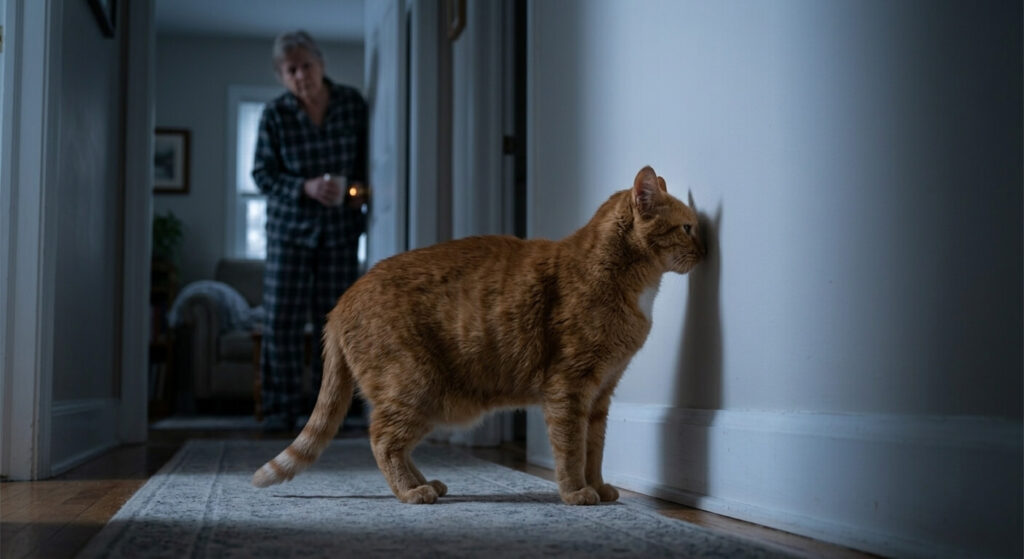
This was the sign that stopped me cold in that hallway at 3 AM, and it remains one of the most diagnostically evocative of all senior cat dementia signs.
A cat experiencing FCD may stand or sit facing a wall, a corner, or an empty patch of floor — staring with a fixed, unfocused gaze that has none of the alert, tracking quality of normal feline attention. They are not watching a spider on the wall or detecting a sound behind the plaster. They are simply… absent. Present in body, somewhere else entirely in mind.
What distinguishes this from normal cat behavior:
- Duration: This isn’t the brief pause before a pounce — it can last minutes
- Frequency: It happens repeatedly, often in the same locations
- Quality: The eyes are not tracking; there is no ear swivel or whisker engagement
- Context: It often occurs at night or in low-light conditions when disorientation worsens
What to do: Note the time, duration, and location. Photograph or video if possible. This visual documentation is invaluable for your vet.
Sign #2: Nighttime Yowling and Vocalization
Nighttime Yowling is the sign that most reliably drives owners to veterinary consultation — because unlike the subtle signs that can be rationalized away, an elderly cat screaming into the darkness at 2 AM is impossible to ignore.
The vocalization associated with FCD has a distinct quality that owners consistently describe using the same words: hollow, haunted, lost. It is different from the demand vocalizations of hunger or the distress calls of pain. It is the sound of a mind that has temporarily lost its moorings.
Why it happens:
- Sundowning effect: Cognitive function typically worsens in low-light conditions and at night
- Disorientation peaks when environmental cues (light, activity, familiar sounds) are absent
- The cat may genuinely not know where they are or how to find their safe space
- Anxiety compounds confusion in a feedback loop that escalates without reassurance
What to do:
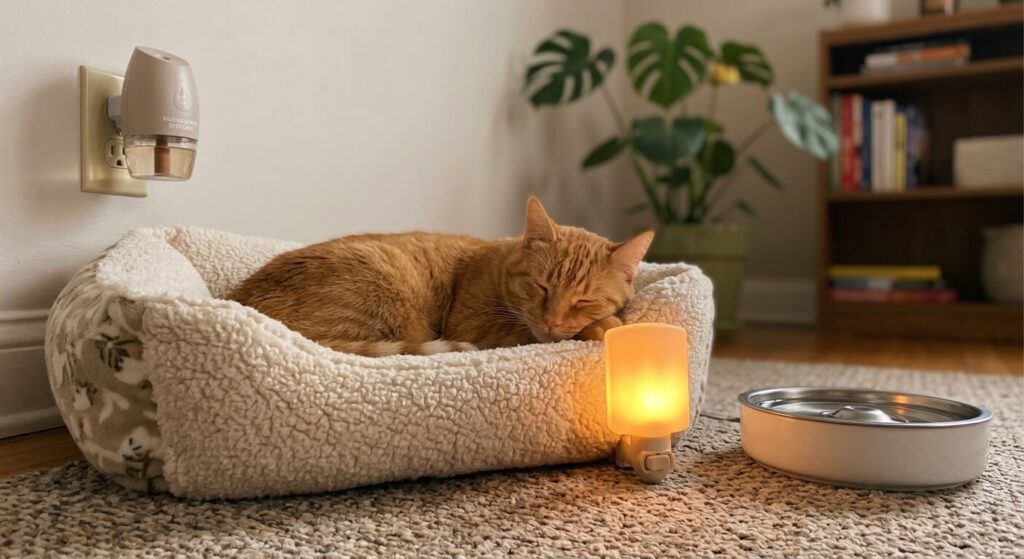
- Leave a nightlight on in the cat’s sleeping area
- Place a warm, familiar-smelling blanket in an easily accessible location
- Consider pheromone diffusers as one part of the environment plan; our guide to the best cat calming diffusers explains placement, limits, and realistic expectations.— pheromone diffusers are one of our most clinically supported tools for soothing the nighttime anxiety and vocalization that accompany FCD, and our comprehensive guide walks through the best options and placement strategies for maximum effect.
- Never punish or scold nighttime vocalization — the cat is not being disruptive intentionally; they are frightened and confused
Sign #3: Forgetting the Litter Box
House soiling in a senior cat who has been reliably litter-trained for years is one of the most emotionally distressing senior cat dementia signs for owners to experience — and one of the most frequently misattributed.
The FCD-related mechanism is specifically spatial memory loss — the cat knows, at some level, that elimination should happen somewhere specific, but they can no longer reliably locate or navigate to that space. By the time the urge is urgent, the box is forgotten.
How to distinguish FCD-related soiling from physical causes:
| Characteristic | FCD-Related | Physical Cause (UTI, CKD, Arthritis) |
|---|---|---|
| Location | Random — corners, open floor | Often near (but not in) litter box |
| Frequency | Irregular | Often frequent, small amounts |
| Cat’s response | Appears unaware | May show distress, straining |
| Associated signs | Confusion, Nighttime Yowling | Crying during urination, blood in urine |
| Bloodwork/UA | Normal | Abnormal |
Important: Always complete a veterinary workup before attributing litter box issues to FCD. Physical causes are more common and more immediately treatable.
Because urinary disease is common in older cats, new house soiling should also be compared with our indoor cat urinary health guide before assuming dementia.
Sign #4: Getting Lost in Familiar Spaces
A cat who has lived in the same apartment for twelve years and can no longer find their food bowl is not being lazy or difficult. They are experiencing genuine spatial disorientation — one of the earliest and most reliably documented senior cat dementia signs.
Observable manifestations:
- Wandering into rooms and appearing confused about why they’re there
- Standing at the wrong wall when they typically scratch or look out a window
- Walking past their food bowl without recognizing it
- Getting into a corner and being unable to navigate back out
- Hesitating at the top or bottom of stairs they’ve used for years
This spatial confusion is often worse in new environments — even minor rearrangements of furniture can significantly exacerbate disorientation in an FCD-affected cat. Stability and predictability of environment are therapeutic in themselves.
Sign #5: Personality and Interaction Changes
One of the most heartbreaking senior cat dementia signs is the shift in the emotional relationship between cat and owner — because it can go in either direction, and both are disorienting for everyone involved.
The withdrawn cat:
- Stops seeking affection from family members they’ve bonded with for years
- Doesn’t greet owners at the door as they once did
- Shows reduced response to their name
- Appears emotionally flat or detached
The suddenly clingy cat:
- Becomes intensely anxious when separated from their primary caregiver
- Follows owners from room to room, vocalizing if they lose sight of them
- Shows distress when routines are disrupted
The irritable or aggressive cat:
- Reacts with unexpected swatting or biting to touch that was previously welcomed
- Shows low frustration tolerance
- May redirect anxiety-driven aggression toward other pets in the household
A note on individual differences: naturally active, vocal, or highly interactive cats may show more obvious changes when their normal patterns shift. If nighttime activity looks more like sudden high-energy running than confusion, compare it with our guide to cat zoomies at night.— Highly intelligent and naturally active breeds — Siamese, Bengals, Abyssinians — may show more dramatic and earlier behavioral shifts when cognitive dysfunction begins to develop. If you have a particularly bright or communicative cat, changes in their signature behaviors may be your earliest signal.
Sign #6: Sleep-Wake Cycle Reversal
Cats are naturally crepuscular — most active at dawn and dusk — but within that framework, they typically settle into predictable sleep routines that align loosely with their household’s schedule. FCD disrupts the biological clock.
What sleep-wake reversal looks like:
- Sleeping deeply and being difficult to rouse during daylight hours
- Becoming active, restless, and vocal after midnight
- Appearing alert and almost agitated in the hours before dawn
- Pacing repetitive routes through the home at night
This circadian disruption is caused by Neurodegeneration affecting the suprachiasmatic nucleus — the brain’s internal clock — as well as the general cognitive disorientation that worsens in darkness.
Management strategies:
- Increase structured daytime activity: play sessions, food puzzles, grooming sessions — anything that provides mental and physical engagement during daylight hours
- Establish a consistent pre-sleep ritual: a small meal, gentle brushing, and quiet settling time
- Use nightlights throughout the home
- Discuss melatonin supplementation with your veterinarian (dosing in cats requires professional guidance)
Sign #7: Repetitive Behaviors and Apparent Confusion
The seventh of our key senior cat dementia signs is perhaps the most diagnostically nuanced — the emergence of repetitive, seemingly purposeless behaviors combined with episodes of apparent blank confusion.
What to observe:
- Pacing the same short route repeatedly without apparent goal or destination
- Repeatedly approaching the food bowl, eating a bite, walking away, and returning — seemingly forgetting they’ve already eaten
- Grooming the same small patch of fur excessively
- Opening and closing the mouth (silent meowing) without vocalizing
- Sitting in unusual locations — inside a closet, behind a toilet, under a low piece of furniture — without clear reason
- Extended periods of blank staring that are unresponsive to environmental stimuli
These repetitive and dissociative behaviors reflect the fragmentation of normal cognitive processing. The brain is attempting to execute familiar routines but losing the thread midway.
Diagnosis of Exclusion: Why Your Vet Must Rule Out Kidney Disease and Pain First
This section is critically important, and I want to be direct: Feline Cognitive Dysfunction is a Diagnosis of Exclusion.
That means FCD can only be accurately diagnosed after all other medical conditions that can cause identical behavioral signs have been systematically ruled out. This is not a formality — it is clinically essential, because many of the conditions that mimic FCD are treatable, and treating them can restore your cat’s quality of life dramatically.
The Mimics: Conditions That Look Like FCD
Chronic Kidney Disease (CKD):
Toxin accumulation in failing kidneys creates a state called uremia that profoundly affects brain function. An uremic cat may be disoriented, lethargic, vocalize at night, and lose litter box reliability — a presentation almost indistinguishable from FCD without bloodwork.
Frequent vomiting, increased thirst, weight loss, poor appetite, or litter box changes alongside confusion should prompt a kidney discussion with your vet. For the owner-observable warning signs, read our chronic kidney disease cats signs guide.(as referenced in our vomiting guide) — early bloodwork is the only way to confirm kidney disease, and early detection dramatically changes treatment outcomes.
Hyperthyroidism:
Elevated thyroid hormone causes hyperactivity, vocalization, personality changes, weight loss, and disrupted sleep — again, clinically overlapping with cognitive dysfunction. A simple T4 blood test rules this in or out.
Hypertension (High Blood Pressure):
Severely elevated blood pressure can cause acute neurological changes including disorientation, altered mentation, and sudden behavioral shifts. It is often secondary to CKD or hyperthyroidism. Blood pressure measurement takes less than five minutes and is always part of our senior cat workup.
Pain (Particularly Osteoarthritis):
A cat in chronic pain may become withdrawn, irritable, lose litter box reliability (the box is too hard to climb into), and vocalize at night. Pain is the great behavioral masquerader in senior cats, and it is dramatically underdiagnosed. If your senior cat is stiff, avoids jumping, hesitates on stairs, or dislikes being touched near the hips or back, compare the pattern with our guide to signs of cat arthritis.
Sensory Decline:
Partial or complete hearing loss and declining vision both cause disorientation, increased vocalization, and reduced responsiveness that owners frequently interpret as cognitive decline.
Neurological Conditions:
Brain tumors, cerebrovascular events (strokes), and other intracranial pathology can produce acute or subacute cognitive changes.
The Senior Cat Diagnostic Workup
Before an FCD diagnosis can be made, I recommend — and your vet should perform — the following:
- Complete Blood Count (CBC) — infection, anemia, systemic illness
- Comprehensive Chemistry Panel — kidney values (BUN, creatinine, SDMA), liver enzymes, glucose, electrolytes
- Total T4 — thyroid function
- Urinalysis — kidney concentrating ability, infection, glucose
- SDMA — early kidney disease marker, detects CKD up to 17 months before creatinine rises
- Blood Pressure — hypertension assessment
- Ophthalmologic exam — hypertensive retinopathy, vision assessment
- Orthopedic assessment — pain scoring, mobility evaluation
- Neurological assessment — cranial nerve reflexes, gait, posture
In select cases, advanced imaging (MRI or CT) may be indicated to evaluate intracranial pathology. For a broader preventive schedule, use our annual vet visit for indoor cats guide so behavior changes, blood pressure, dental pain, weight loss, and mobility changes are checked before they become obvious.
Only when this workup returns without findings that explain the behavioral signs does FCD become the working diagnosis. This is not pessimism — it is the most responsible and caring approach to senior cat medicine.
Supportive Care: Creating a Senior-Friendly Apartment
Once FCD is diagnosed — or strongly suspected pending workup — there is meaningful, evidence-informed action you can take to improve your cat’s daily experience and slow cognitive decline.
Managing cognitive decline works best as part of a broader senior care plan. For apartment-specific routines, mobility support, and daily checks, read our senior indoor cat care guide. — Our senior cat home care guide provides detailed environmental modification checklists designed specifically for apartment dwellers with aging cats, including space planning, accessibility modifications, and enrichment protocols.
Here is the foundation of what I’ve implemented for Oliver and what I recommend to clients:
1. Environmental Stability: The Number One Rule
The cognitively impaired brain relies on environmental familiarity as a scaffold for orientation. Every rearrangement of furniture, every moved food bowl, every changed litter box location is a potential source of significant distress and disorientation.
Implement these stability principles:
- Do not move furniture or make significant layout changes
- Keep food, water, and litter box in the same locations permanently
- Maintain consistent daily routines — feeding times, play times, bedtime rituals
- Introduce any necessary changes (new litter box location) gradually, with both old and new locations available during transition
2. Accessibility Modifications
FCD frequently co-occurs with osteoarthritis and general physical decline. The environment must accommodate both cognitive and physical limitations:
- Low-sided litter boxes: Standard boxes with high sides become barriers for arthritic cats. Use shallow trays or cut a low entry into existing boxes.
- Ramps and steps: Replace jumping requirements with gradual ramps to favorite elevated resting spots
- Food and water at floor level: Eliminate the need to navigate to raised surfaces for essentials
- Multiple resource stations: Place additional food, water, and litter options throughout the home to reduce navigation distance
3. Lighting and Nighttime Environment
Given that disorientation worsens in darkness, lighting modifications are among the most immediately impactful interventions:
- Nightlights in every room the cat frequents, particularly the hallway, sleeping area, and litter box location
- Maintain a warm ambient temperature — thermoregulation is often compromised in senior cats; cold exacerbates physical discomfort and agitation
- Provide a warm, padded sleeping area with low sides, in a location that is quiet but not isolating
4. Pheromone Therapy
Synthetic pheromone products — particularly those replicating the feline facial pheromone (Feliway Classic) — have meaningful clinical evidence supporting their role in reducing anxiety-related behaviors in cats, including Nighttime Yowling and stress-induced disorientation.
For product selection and placement, use our best cat calming diffusers guide. — Pheromone diffusers represent one of our most consistently recommended tools for managing the anxiety and vocalization that accompany FCD. Our detailed guide covers product selection, placement optimization, and realistic expectations for response timelines.
Practical placement:
- In the room where the cat sleeps
- In the hallway where nighttime wandering most frequently occurs
- Replace refills on schedule — efficacy drops significantly when the diffuser runs dry
5. Cognitive Enrichment
Neurodegeneration may be progressive, but evidence suggests that mental stimulation supports cognitive reserve and may slow functional decline:
- Food puzzles appropriate for the cat’s physical capacity — start with easy-level enrichment
- Short, gentle play sessions during daylight hours using low-intensity toys
- Sensory enrichment: Bird feeders visible from a window, species-appropriate audiovisual content (cat TV), safe herbs like catnip and valerian
- Gentle grooming sessions: Physical contact and grooming stimulate social bonding neurotransmitters and provide predictable, calming sensory input
6.Nutritional Support
Nutrition may be part of a cognitive support plan, but it should be chosen with your veterinarian. Senior cats often have overlapping kidney disease, dental disease, weight loss, appetite changes, diabetes, hyperthyroidism, or digestive problems, so a cognitive-support diet is not automatically the right choice for every cat.
Ask your veterinarian whether omega-3 fatty acids, antioxidant support, a senior diet, or a prescription cognitive-support diet makes sense for your cat’s lab results, body condition, appetite, and other diagnoses.
7.Veterinary Medication Options
There is no one-size-fits-all medication plan for feline cognitive dysfunction. Your veterinarian may discuss sleep support, anxiety support, pain control, or other medications depending on the signs your cat is showing and what the diagnostic workup finds.
Do not start melatonin, gabapentin, selegiline, CBD, supplements, or human medications without veterinary guidance. Older cats are more likely to have kidney, liver, thyroid, blood pressure, and medication-interaction concerns.
Frequently Asked Questions
At What Age Do Senior Cat Dementia Signs Usually Appear?
Senior cat dementia signs typically become clinically apparent after age 10–11, though the underlying Neurodegeneration likely begins years earlier. The prevalence escalates sharply with age:
- 10–12 years: Subtle signs may be present; often dismissed as “slowing down”
- 13–15 years: Signs frequently become obvious enough to prompt veterinary consultation
- 15+ years: Majority of cats show at least some cognitive impairment
The challenge is that cats in the 10–12 year range are still frequently perceived as “middle-aged” or only beginning to enter their senior years, so senior cat dementia signs in this age group are routinely attributed to normal aging rather than recognized as early FCD.
My recommendation: Begin monthly DISHA checklist assessments at age 10. Don’t wait for the signs to become dramatic.
Can senior cat dementia signs appear suddenly?
Sudden confusion, yowling, stumbling, house soiling, or staring should not be assumed to be dementia. Feline cognitive dysfunction usually develops gradually. Sudden changes can point to pain, high blood pressure, kidney disease, urinary disease, hyperthyroidism, diabetes, vision loss, neurologic disease, or toxin exposure. If the change feels abrupt, call your veterinarian promptly.
What should I track before the vet visit?
Track the time, duration, and context of each change. Note night vocalizing, staring, getting lost, litter box accidents, appetite, drinking, weight changes, vomiting, mobility, sleep schedule, aggression, and hiding. Short videos are especially useful because they let your veterinarian see the posture, awareness, and environment instead of relying only on memory.
Can Cat Dementia Be Cured?
No — there is currently no cure for Feline Cognitive Dysfunction. The Neurodegeneration underlying FCD is progressive and irreversible with our current understanding and tools.
However, “no cure” is meaningfully different from “nothing can be done.” The goals of FCD management are:
- Slowing progression through antioxidant nutrition, cognitive enrichment, and neuroprotective supplementation
- Managing symptoms to reduce distress and maintain quality of life
- Treating concurrent conditions (pain, hypertension, anxiety) that amplify cognitive signs
- Supporting the human-animal bond through behavioral modification strategies that reduce caregiver burden
Many cats with well-managed FCD maintain a good quality of life for months to years after diagnosis. The key is early recognition, thorough workup, and consistent, compassionate support. The senior cat dementia signs we’ve discussed throughout this guide are your earliest opportunity to intervene — not to cure, but to protect, support, and preserve.
Why Does My Old Cat Yowl at Night?
Nighttime Yowling in senior cats is one of the most distressing senior cat dementia signs for owners to experience, and it has several potential causes that must be distinguished:
FCD-related yowling:
- Occurs in the context of other cognitive signs (DISHA)
- Quality is hollow, repetitive, unfocused
- Cat appears confused or disoriented when found
- Worsens in darkness; improves with light and presence
Hyperthyroidism-related yowling:
- Often accompanied by weight loss, increased appetite, hyperactivity
- T4 blood test will be elevated
- Responds to thyroid-specific treatment
Hypertension-related yowling:
- May be sudden in onset
- Associated with dilated pupils, apparent vision changes
- Blood pressure measurement is diagnostic
Pain-related yowling:
- Cat may be uncomfortable in specific positions
- May show reluctance to move, abnormal posture
- Responds to pain management
Hearing loss:
- Cat may yowl because they cannot hear themselves or environmental sounds
- No other cognitive signs present
The most important message: Do not dismiss Nighttime Yowling as “just something old cats do.” It is a signal — from your cat, about their experience — and it deserves investigation, diagnosis, and a management plan.
Final Thoughts
Senior cat dementia signs are not something to panic about, but they are something to document. Night yowling, staring at walls, getting lost, house soiling, changed sleep, and altered interaction can all matter, especially when they appear in a pattern.
Oliver’s 3 AM hallway yowl taught me not to dismiss senior behavior changes as “just old age.” Sometimes the most loving thing you can do is write down what changed, take a short video, and make the vet appointment.
The goal is not to diagnose dementia at home. The goal is to notice patterns early, rule out treatable medical causes, and make your senior cat’s apartment more predictable, accessible, and comforting.
Scientific References
- Landsberg, G. M., Nichol, J., & Araujo, J. A. (2012). Cognitive dysfunction syndrome: A disease of canine and feline brain aging. Veterinary Clinics of North America: Small Animal Practice, 42(4), 749–768.
- Gunn-Moore, D., Moffat, K., Christie, L. A., & Head, E. (2007). Cognitive dysfunction and the neurobiology of ageing in cats. Journal of Small Animal Practice, 48(10), 546–553.
- Cornell Feline Health Center. Cognitive Dysfunction. https://www.vet.cornell.edu/departments-centers-and-institutes/cornell-feline-health-center/health-information/feline-health-topics/cognitive-dysfunction
- Cornell Feline Health Center. The Special Needs of the Senior Cat. https://www.vet.cornell.edu/departments-centers-and-institutes/cornell-feline-health-center/health-information/feline-health-topics/special-needs-senior-cat
- AAHA. 2023 AAHA Senior Care Guidelines for Dogs and Cats. https://www.aaha.org/resources/2023-aaha-senior-care-guidelines-for-dogs-and-cats/
- VCA Animal Hospitals. Nutrition for Cats with Cognitive Dysfunction Syndrome.
-300x169.png)
-300x169.png)
-300x169.png)