Cat attention seeking can be completely normal. Your cat may meow, follow you, sit on your keyboard, tap your arm, knock an object over, or appear every time you start a video call. These behaviors often mean that your cat wants social contact, play, food, access to a resource, or help with something in the environment.
The important question is not simply, “How do I make my cat stop?” It is, “What need or result is this behavior connected to?” A cat that asks for a brief greeting after you come home needs a different response from a cat that suddenly begins yowling, pacing, or clinging to you at night.
Most attention-seeking behavior improves when you identify the trigger, meet your cat’s needs proactively, reward a calm alternative, and avoid accidentally turning disruptive behavior into the fastest way to get a reaction. However, a new or intense behavior change can also be associated with pain, illness, sensory decline, or age-related changes. In that situation, a veterinary assessment comes before a training plan.
This guide explains seven common reasons for cat attention seeking, how to respond without punishment, and when the behavior deserves medical or professional help.
Quick Answer
Cats seek attention for many reasons, including normal bonding, a learned reward pattern, insufficient play, food routines, environmental stress, tension with another cat, or a health change. Start by observing when the behavior happens and what your cat receives immediately afterward.
Give your cat predictable opportunities for play and positive social contact before the usual problem time. Reward calm behaviors such as sitting on a nearby perch, touching a target, or waiting quietly. Reduce the payoff for disruptive behavior only when you are confident that your cat is safe and their physical and environmental needs have been met.
Do not ignore sudden vocalizing, restlessness, clinginess, aggression, appetite changes, litter box changes, reduced mobility, or other new symptoms. Contact your veterinarian if the behavior is new, escalating, or accompanied by a change in health or daily function.
Safety note: Never yell, spray water, push, frighten, or physically punish a cat for asking for attention. Punishment can increase fear and stress without showing the cat what to do instead.
Table of Contents
What Does Cat Attention Seeking Look Like?
Attention seeking is any behavior a cat uses to start or prolong an interaction with a person. The behavior itself is not automatically a problem. Cats are social individuals, and many prefer brief, frequent interactions that they can initiate. A greeting, head rub, soft meow, or quiet request for play can be part of a healthy relationship.
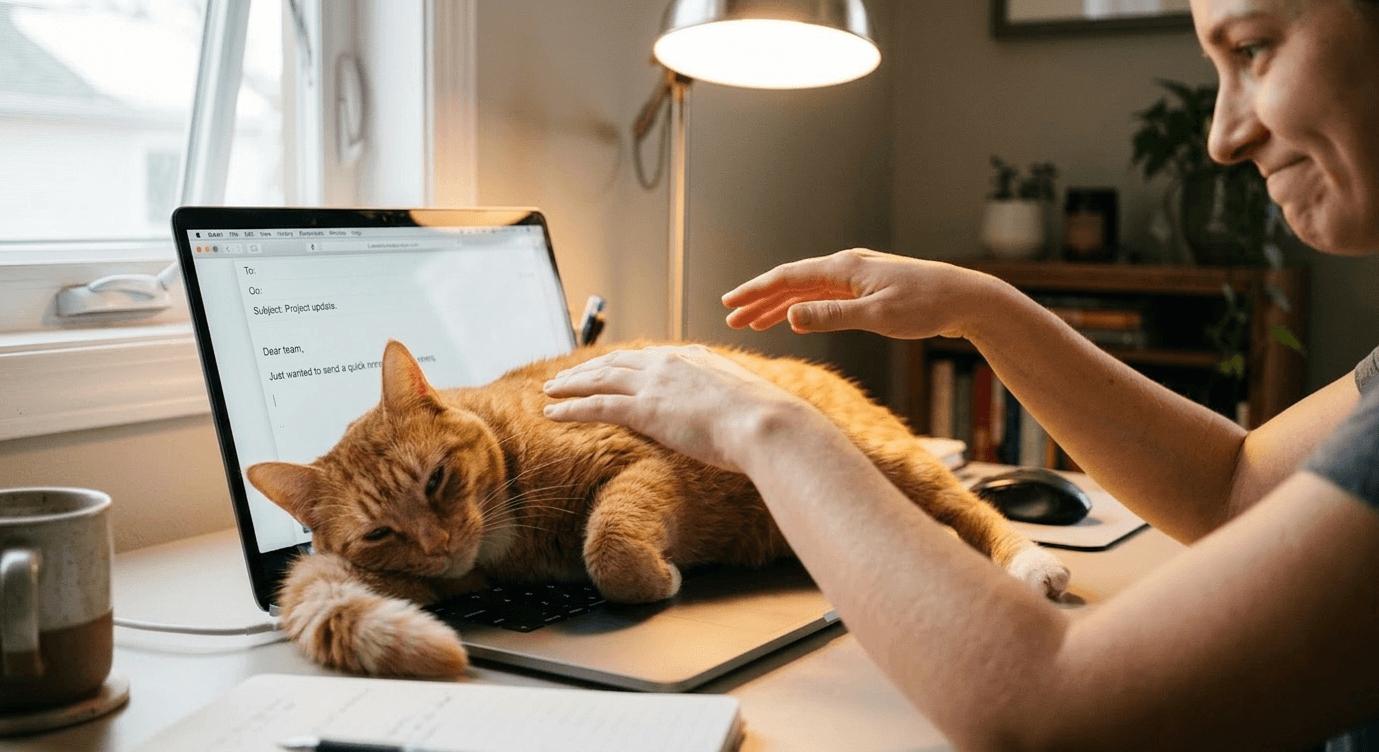
Common examples include following you, meowing during work, pawing, bringing a toy, lying on a laptop, knocking desk objects, waking you before breakfast, or pushing between you and another pet.
The context matters more than the label. A cat that brings a toy and waits is communicating clearly. A cat that repeatedly bites an ankle after a long, inactive day may need a safer play outlet. A cat that cries near the litter box may not be seeking social attention at all; the cat may be signaling discomfort or difficulty using the box.
Before changing anything, record the time, place, behavior, and immediate result for several days. This short log often reveals a pattern that is easy to miss in the moment.
| What happens | Possible reason to investigate | First response |
|---|---|---|
| Meowing before a regular meal | Predictable food cue or learned routine | Check the feeding schedule and avoid moving meals earlier each day |
| Walking on the keyboard | Social contact, warmth, elevated surface, or learned reaction | Add a nearby perch and reward the cat for using it |
| Pawing after petting stops | Request for continued contact | Offer short, consent-based interaction and pause before overstimulation |
| Knocking objects while you watch | Play, exploration, or a reliable human reaction | Secure unsafe objects and provide a safe activity before work time |
| Following you after a household change | Uncertainty or loss of routine | Restore predictable resources, refuge, and daily interaction |
| Sudden nighttime crying or clinginess | Pain, illness, sensory or cognitive change | Arrange a veterinary assessment |
This table is a starting point, not a diagnosis. The same behavior can have more than one cause.
7 Reasons Cats Seek Attention
1. Normal Social Contact and Bonding
Some cats simply enjoy being near their people. They may follow you, sleep beside you, greet you at the door, or ask for short periods of petting throughout the day. This can be normal social behavior, especially when the cat remains relaxed and can also eat, play, explore, groom, rest, and spend time independently.
A healthy request usually has flexible timing and a clear end. The cat approaches with a relaxed body, receives a little interaction, and then settles or moves on. Let body language guide the type and duration of contact.
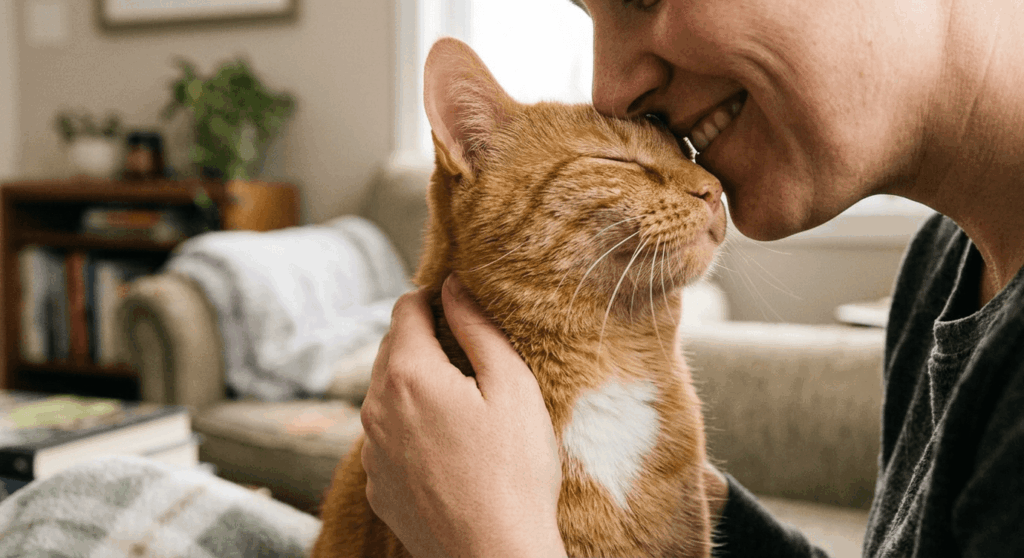
If your cat asks politely, it is fine to respond. You do not need to withhold all affection out of fear that you will “spoil” the cat. Instead, build a predictable pattern: greet the cat when you return, offer several short social moments, and stop before the cat becomes restless or overstimulated.
Choice matters. Invite contact rather than trapping the cat on your lap or continuing to pet when the cat turns away, stiffens, flicks the tail, rotates the ears, or shifts position. A cat that trusts you to respect a pause may communicate more gently over time.
2. The Behavior Has Produced a Reward Before
Cats learn from consequences. If meowing, pawing, scratching, or knocking something over reliably makes a person talk, stand up, provide food, open a door, or begin play, the behavior may be repeated.
This does not mean that the cat is manipulative or spiteful. It means the behavior has worked. Even an annoyed reaction can provide movement, sound, eye contact, or social engagement. Inconsistent responses can make the pattern especially persistent. If a person sometimes ignores ten meows but serves food after the eleventh, the cat may learn that persistence is necessary.
Identify the exact reward. Does the cat obtain food, petting, play, access, or simply a dramatic reaction? Then create a calmer way to obtain the same appropriate outcome.
For example, reward sitting on a mat during food preparation, give attention on a bed beside your desk, start play when the cat brings a toy or waits calmly, and consider an automatic feeder if early-morning food delivery has become tied to waking you.
Do not remove attention abruptly when the behavior might reflect pain, fear, or a missing resource. First confirm that litter, water, food, resting areas, temperature, access, and health are not the underlying issue.
3. Your Cat Needs More Play, Foraging, or Choice
An indoor cat can have plenty of toys and still lack meaningful activity. Toys left on the floor every day may lose their novelty. Many cats need opportunities to stalk, chase, pounce, capture, climb, scratch, search, observe, and make choices.
Boredom-related attention seeking often appears when the household becomes quiet or the owner begins a predictable task. Racing, attacking feet, pushing objects, or interrupting work can create stimulation in an otherwise uneventful period.
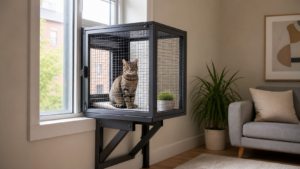
Build activity around your individual cat rather than a fixed internet schedule. Some cats enjoy several brief wand-toy sessions. Others prefer food searches, cardboard boxes, tunnels, climbing routes, target training, or watching outdoor movement from a secure window perch. Rotate a few safe toys instead of leaving every toy available continuously.
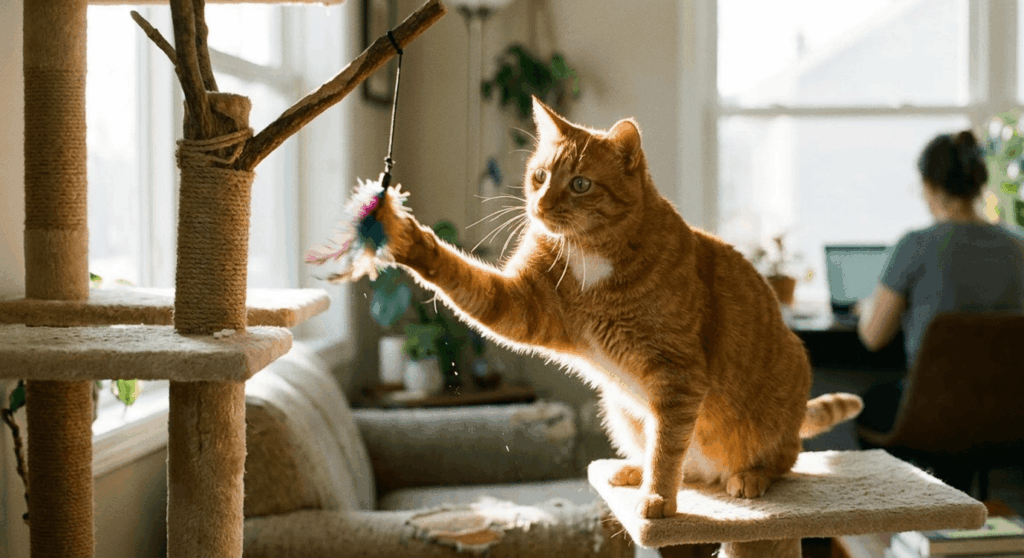
A useful play sequence is to let the cat observe, stalk, chase, and catch the toy. Keep movements away from the cat rather than repeatedly pushing the toy into the cat’s face. End before the cat becomes exhausted or frustrated, and put string or wand toys away after supervised use.
If your cat spends long periods alone, see our guide to entertaining a cat while you work and our small-apartment enrichment setup. Enrichment should support normal behavior without forcing constant activity.
4. Food and Daily Routines Have Become Attention Cues
Cats notice sequences. An alarm, a coffee machine, a laptop closing, or a person walking toward the kitchen can predict food. Meowing around those events may be less about general neediness and more about a strong learned schedule.
First check whether the daily amount and feeding plan are appropriate for your cat. Do not assume every food request is behavioral, especially if hunger has increased suddenly or the cat is losing weight. Your veterinarian can help assess body condition, calorie needs, and health changes.
If the cat is healthy and the issue is routine-based, make meals predictable without letting the request move them progressively earlier. Divide the measured daily food into a schedule that fits the cat and household. A timed feeder can separate the person from one problematic meal, while a puzzle feeder can provide foraging for a cat that enjoys manipulating food.
Avoid giving unmeasured extras every time the cat vocalizes. Food can quietly become the main form of interaction, particularly when owners are busy. Try offering a brief greeting, grooming if the cat enjoys it, play, training, or access to a perch at other times so that attention is not always edible.
5. Stress, Change, or Lack of Predictability
A cat may seek more contact when the environment feels uncertain. Moving furniture, visitors, construction noise, a changed work schedule, a new baby, a new pet, loss of a companion, or blocked access to a favorite place can alter the cat’s sense of safety.
Look for hiding, startling, reduced play, overgrooming, marking, changed sleep locations, or reduced tolerance of touch. A clingy cat may be using proximity to you as a source of security rather than asking for entertainment.
Restore predictability where possible. Keep litter boxes, water, food, scratching surfaces, hiding places, and resting sites easy to reach. Provide a refuge where the cat can withdraw without being followed. Preserve familiar bedding and scents during household changes. Offer normal interaction, but do not force the cat to face a frightening visitor, noise, carrier, or another animal.
Punishment is especially counterproductive when stress is involved. It adds another unpredictable event and may weaken the cat’s sense of safety around you.
6. Another Cat Is Blocking Space or Resources
In multi-cat homes, attention seeking can be connected to tension that owners do not immediately see. Conflict is not limited to obvious fights. Staring, blocking a hallway, guarding a litter box, following another cat, occupying a doorway, or consistently taking a preferred resting place can affect where and when the other cat eats, rests, plays, or approaches people.
A cat may stay close to you because a route or resource feels unsafe. Another may interrupt whenever you pet a housemate because access to social contact has become competitive. Watch the cats separately and note who yields space, changes direction, waits to eat, or avoids certain rooms.
Provide separated, easy-to-access food, water, toileting, scratching, resting, elevated, and hiding resources. Visual barriers and more than one route through important areas can help in small homes.
Do not hold cats together, punish warning signals, or force them to share a bed or bowl. Persistent chasing, blocking, fear, urine marking, injury, or fighting deserves help from a veterinarian or qualified feline behavior professional.
7. Pain, Illness, Aging, or Sensory Change
A new behavior pattern should be treated as information. Cats may become more vocal, restless, irritable, or dependent when they are uncomfortable, disoriented, less mobile, or having difficulty seeing or hearing. Some medical conditions can also change appetite, sleep, activity, elimination, or vocalization.
Avoid trying to identify a specific disease from one behavior. Instead, look for change from your cat’s normal baseline. Contact your veterinarian when attention seeking is sudden, intense, increasing, or paired with:
- appetite or weight change;
- increased thirst or urination;
- vomiting, diarrhea, or constipation;
- litter box accidents or straining;
- reduced jumping, stiffness, or reluctance to be touched;
- hiding, aggression, or reduced grooming;
- nighttime pacing, confusion, or unusual vocalizing;
- breathing changes, weakness, or collapse.
Urgent signs such as difficulty breathing, repeated straining to urinate, collapse, severe weakness, major injury, or suspected toxin exposure require prompt veterinary care rather than an online behavior plan.
Older cats deserve particular attention because physical and behavioral changes should not automatically be dismissed as “just age.” Simple home adjustments—lower-entry litter boxes, steps to a favorite perch, night lights, warmer resting areas, and resources on the same floor—may help, but they do not replace an examination when behavior changes.
How to Respond Without Reinforcing Disruptive Behavior
The goal is not to ignore your cat. The goal is to make appropriate communication effective and disruptive behavior unnecessary.
Step 1: Identify the Pattern
For three to seven days, note:
- the exact behavior;
- time and location;
- what happened immediately before it;
- what each person did afterward;
- whether food, play, access, touch, or a reaction followed;
- any health, appetite, litter, mobility, or household change.
Patterns are often specific. “My cat wants attention all day” may become “my cat paws me during the first 20 minutes of every work call” or “my cat cries when another cat sits near the hallway to the litter box.” A specific pattern is easier to change safely.
Step 2: Meet Needs Before the Usual Problem Time
Use the log to act early. If interruptions begin after a long quiet morning, schedule a brief interactive activity before work. If they happen before dinner, offer a predictable non-food interaction or use part of the measured meal in a foraging activity. If the cat crowds your desk, prepare an equally comfortable nearby station before opening the laptop.
Proactive care is not rewarding bad behavior because it happens before the disruptive behavior begins. It reduces the need for the cat to escalate.
Step 3: Choose a Simple Alternative
Decide what you want the cat to do instead. “Stop bothering me” is not a trainable action. “Sit on this mat,” “use this perch,” “touch this target,” or “bring this toy” is clear.
Reward the alternative with something the cat values: a small portion of measured food, a toss of a safe toy, gentle petting, access to a perch, or a brief interaction. Keep early practice easy and reward frequently enough for the alternative to matter.
For a desk cat, place a stable bed or perch beside the workspace. Reward any voluntary investigation, then relaxed sitting. Gradually lengthen the time between rewards while continuing occasional attention there. The station must be comfortable and well positioned; a cold bed on the floor will not compete with a warm laptop near your face.
Step 4: Make Unsafe or Disruptive Options Less Available
Management prevents rehearsal while training develops. Store fragile objects, medication, cords, toxic plants, food, and small swallowable items securely. Use lidded drinks and clear the edge of a desk or nightstand. Close access to unsafe rooms when appropriate, but do not block essential resources.
If a harmless attention behavior occurs after needs have been met, keep your response calm and brief. Avoid shouting, chasing, laughing, negotiating, or immediately producing food. Wait for a small pause or alternative behavior, then respond to that. Safety and medical needs are exceptions; intervene immediately when necessary.
Step 5: Keep the Household Consistent
Everyone should use the same plan. If one person rewards quiet sitting while another feeds the cat during loud meowing, the pattern remains unpredictable. Agree on meal times, acceptable alternatives, and how to handle nighttime or work interruptions.
Improvement may be uneven. If a previously successful behavior becomes more persistent, do not punish the cat. Recheck whether the alternative is easy and rewarding enough. Seek guidance if distress or aggression increases.
A Practical Daily Routine for an Attention-Seeking Cat
There is no universal number of minutes or sessions that suits every cat. Use this flexible structure and adjust it to age, health, personality, and household schedule.
Morning
- check appetite, litter use, mobility, and general behavior;
- offer a brief greeting or interaction the cat enjoys;
- provide a measured meal, with a portion used for safe foraging if appropriate;
- refresh water and make sure essential routes are open.
During the Day
- provide access to a refuge, resting places, scratching surfaces, and a view or observation point;
- rotate safe independent activities;
- offer short social contact when the cat approaches calmly;
- use a nearby station during work rather than repeatedly removing the cat from the desk;
- store string, ribbon, and wand toys after supervised play.
Evening
- offer interactive play or another preferred activity;
- let the cat catch the toy and finish calmly;
- serve the planned meal on a consistent schedule;
- include quiet social time if the cat seeks it;
- prepare a safe overnight environment with accessible litter, water, and resting places.
Keep core resources dependable while allowing minor variation in the routine.
What Not to Do
Do Not Punish or Frighten the Cat
Yelling, spraying water, shaking objects, scruffing, pushing, or chasing can increase fear and stress. It may suppress behavior only while you are present, damage trust, or produce a different problem.
Do Not Assume the Cat Is Being Spiteful
Describe what the cat does and what follows. “Meows beside the food cabinet at 5 a.m.” gives you useful information. “Is trying to control me” does not identify a safe solution.
Do Not Ignore Every Request
Normal social contact is part of cat care. Ignoring a request for litter access, water, comfort, help, or medical attention can be harmful. Selectively reduce reactions only after you understand the pattern and provide an appropriate alternative.
Do Not Use Food as the Only Form of Attention
Constant treats can add calories and strengthen begging. Use measured food when appropriate, but also offer play, training, grooming, choice, environmental access, and calm companionship.
Do Not Force Affection
A cat can seek proximity without wanting to be held or petted continuously. Let the cat approach and leave. Pause when body language changes and respect the cat’s preferred type of contact.
When to Ask for Professional Help
Start with your veterinarian when the behavior is new, intense, medically suspicious, or accompanied by changes in eating, drinking, elimination, sleep, movement, grooming, weight, or temperament. Bring your behavior log and, if safe, short videos of the pattern.
After medical causes have been assessed, a veterinarian with behavioral expertise or a qualified feline behavior professional can help when:
- vocalizing or disruption continues despite a consistent plan;
- the cat bites, scratches, or attacks people;
- cats in the home block, chase, stalk, or fight;
- separation-related distress is suspected;
- the owner cannot safely interrupt the behavior;
- household stress is severe;
- the cat’s welfare or the human-cat relationship is deteriorating.
Avoid advice based on dominance, intimidation, flooding, or guaranteed timelines. A good plan considers health, environment, learning history, and the cat’s emotional state.
Frequently Asked Questions
Why does my cat want attention all the time?
The behavior may be normal sociability, a learned routine, insufficient activity, food expectation, stress, resource conflict, or a health change. Track when it happens and what follows. If your cat can settle, play, eat, rest, and spend time independently, the pattern may be managed with predictable interaction and a reinforced alternative. Sudden or extreme neediness deserves a veterinary check.
Should I ignore an attention-seeking cat?
Do not ignore every request. First check health, safety, and access to essential resources. Give predictable social contact and enrichment, and reward a calm alternative. For a harmless learned behavior, reduce dramatic reactions and respond after a quiet pause. Never ignore distress, pain signs, litter box problems, breathing trouble, or other medical concerns.
Why does my cat follow me everywhere?
Your cat may enjoy proximity, expect an activity, feel safer near you, or have learned that following leads to food or contact. Following is not automatically a problem if the cat is relaxed and functions normally. A sudden change, pacing, nighttime crying, or inability to settle should be discussed with your veterinarian.
Why does my cat demand attention when I work?
Your work routine may predict a long period without interaction, and the laptop offers warmth, height, movement, and access to you. Give the cat an attractive nearby perch, offer activity before work, and reward use of the station. Keep unsafe desk objects secured and avoid turning every interruption into a chase.
Why does my cat meow for attention at night?
Possible reasons include a learned feeding schedule, insufficient daytime activity, environmental triggers, stress, pain, sensory change, or age-related disorientation. Check the full pattern rather than assuming boredom. New nighttime vocalizing—particularly in an older cat—warrants veterinary advice.
Is it bad to give my cat attention when they ask?
No. Responding to relaxed, appropriate communication supports the relationship. Problems arise when unsafe or disruptive behavior becomes the only reliable way to obtain every resource. Make calm requests effective, provide predictable interaction, and teach a practical alternative for work, sleep, or meal preparation.
Why does my cat bite after asking to be petted?
The cat may want proximity but tolerate only a short amount or certain types of touch. Watch for tail movement, skin twitching, ear rotation, tension, head turning, or attempts to leave. Pause earlier, let the cat choose whether to return, and avoid touching painful areas. A new sensitivity to touch should be assessed by a veterinarian.
Can another cat cause attention-seeking behavior?
Yes. Subtle blocking or competition can make a cat stay close to a person or interrupt interactions. Provide separated resources, multiple routes, hiding and elevated areas, and individual positive contact. Persistent tension, fear, marking, or aggression needs professional assessment.
How long does it take to change the behavior?
There is no reliable fixed timeline. Progress depends on health, motivation, how long the pattern has been practiced, household consistency, and whether the alternative truly meets the cat’s need. Track frequency and intensity weekly rather than expecting immediate elimination of every request.
Final Thoughts
Cat attention seeking is communication, not a character flaw. The most effective response begins with observation: what happens before the behavior, what your cat obtains, and what else has changed in the cat’s health or environment.
Meet normal needs before the problem time, give the cat a clear and rewarding alternative, manage unsafe opportunities, and keep family responses consistent. Continue giving affection and social contact in ways your cat enjoys. The goal is a predictable relationship in which the cat does not need to escalate to be understood.
If the behavior is sudden, intense, or paired with physical or behavioral changes, involve your veterinarian early. A training plan cannot replace diagnosis or pain relief.
References
Cornell Feline Health Center: The Special Needs of the Senior Cat
FelineVMA: Training Techniques for Addressing Undesirable Behaviors
FelineVMA: Meeting the Physical and Emotional Needs of Owned Indoor Cats
FelineVMA: 2024 Intercat Tension Guidelines
Ohio State University Indoor Pet Initiative: Basic Indoor Cat Needs