Signs indoor cat is bored can be subtle at first. A bored cat may sleep more, beg for food, knock things over, meow for attention, chase feet, scratch furniture, or become restless at night. Some cats become loud and disruptive. Others become quiet and inactive.
Indoor boredom happens when a cat’s daily environment does not provide enough hunting, climbing, scratching, exploring, problem-solving, social contact, or routine variation. The goal is not to fill your apartment with toys. The goal is to understand which need is missing and add the right kind of enrichment.
This guide explains the most common boredom signs, what each behavior may mean, and how to respond safely without creating clutter.
Quick Answer
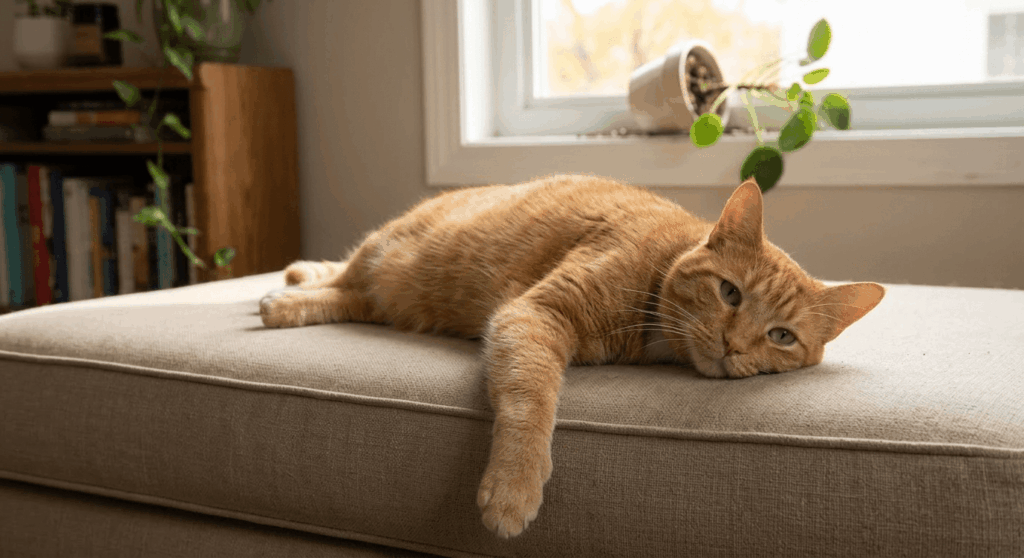
Common signs indoor cat is bored include destructive behavior, excessive meowing, knocking things over, overeating, night zoomies, chasing feet, overgrooming, sleeping more than usual, losing interest in toys, or staring out windows for long periods. Boredom often appears when a cat has too little hunting-style play, vertical space, food puzzles, scratching outlets, or predictable interaction.
Start by adding one or two targeted changes: short daily play, toy rotation, puzzle feeding, window access, scratching surfaces, or safe climbing routes. If behavior changes suddenly or appears with appetite, weight, litter box, grooming, mobility, or stress changes, contact your veterinarian.
If your cat is food-motivated, our guide on how to teach a cat to use a puzzle feeder shows how to begin with an easy setup and increase difficulty without creating frustration.
Important Safety Note
Do not assume every behavior problem is boredom. Pain, dental disease, arthritis, urinary problems, stress, anxiety, sensory decline, and illness can also change behavior. If your cat suddenly becomes withdrawn, aggressive, restless, overgrooms, stops eating, drinks more, loses weight, or changes litter box habits, check with your veterinarian.
Table of Contents
Why Indoor Cat Boredom Happens
Indoor cat boredom usually happens when the home does not offer enough opportunities to perform normal cat behaviors. Cats need more than food and sleep. They need chances to stalk, chase, pounce, scratch, climb, hide, watch, sniff, solve small problems, and control distance from people or other pets.
Outdoor cats may find some of this through hunting, patrolling, climbing, and exploring. Indoor cats depend on the home to provide safe substitutes. If the home is too predictable, the cat may create stimulation through behaviors owners find annoying: knocking things over, meowing, chewing, scratching furniture, waking people at night, or turning food into entertainment.
Boredom is not the same as laziness. Many bored cats do not look energetic. Some become less active because nothing in the environment is worth engaging with. Others become demanding because they have learned that disrupting people is the fastest way to make something happen.
Indoor boredom is especially common when:
- toys are always available but never rotated
- play sessions are too short or too random
- there is no vertical space
- meals are the only exciting event
- the cat is alone for long workdays
- window access is limited
- scratching surfaces are poor
- the cat has no safe hiding or exploring options
- the owner responds only when the cat misbehaves
The fix is not necessarily more stuff. It is better use of space, timing, rotation, and routine.
Boredom Is a Pattern, Not One Behavior
One behavior does not prove boredom. A cat who knocks over one pen may simply be curious. A cat who has zoomies one night may just have extra energy. A cat who sleeps all afternoon may be normal.
Boredom becomes more likely when behaviors repeat, cluster together, and improve when the environment becomes more engaging.
Look for patterns such as:
- the same behavior at the same time each day
- more disruption when the owner is busy
- food-seeking when the cat is not truly hungry
- night activity after a quiet day
- destructive behavior with no good play outlet
- attention-seeking that improves after scheduled play
- restlessness in a home with little climbing or exploration
The more patterns you see, the more likely boredom is part of the picture.
10 Signs Your Indoor Cat Is Bored
Sign 1: Destructive Scratching or Chewing
Scratching is normal cat behavior. It becomes a boredom clue when your cat scratches more intensely, targets unusual surfaces, or chews objects out of restlessness.
Your cat may need:
- a better scratching post
- a different texture
- more vertical space
- daily play before high-energy times
- safe chew alternatives if they chew objects
Do not punish scratching. Give legal scratching options near the places your cat already targets.
Sign 2: Excessive Meowing or Demanding Attention
A bored indoor cat may meow, follow you, paw at you, interrupt work, or demand attention because you are the most interesting part of the environment.
The fix is not constant attention. It is planned attention. Add short play sessions before work, before dinner, or before bed. Reward calm behavior instead of only responding when the cat escalates.
If attention-seeking is the main issue, see our cat attention seeking behavior guide.
Sign 3: Knocking Things Over
Cats often knock objects over because movement and sound are rewarding. But if the behavior increases when your cat is under-stimulated, it may be a boredom sign.
Provide better outlets:
- rolling toys
- puzzle feeders
- soft balls
- wand toy play
- safe shelf routes
- a toy basket with rotating items
If this is your main problem, use our guide to why cats knock things over.
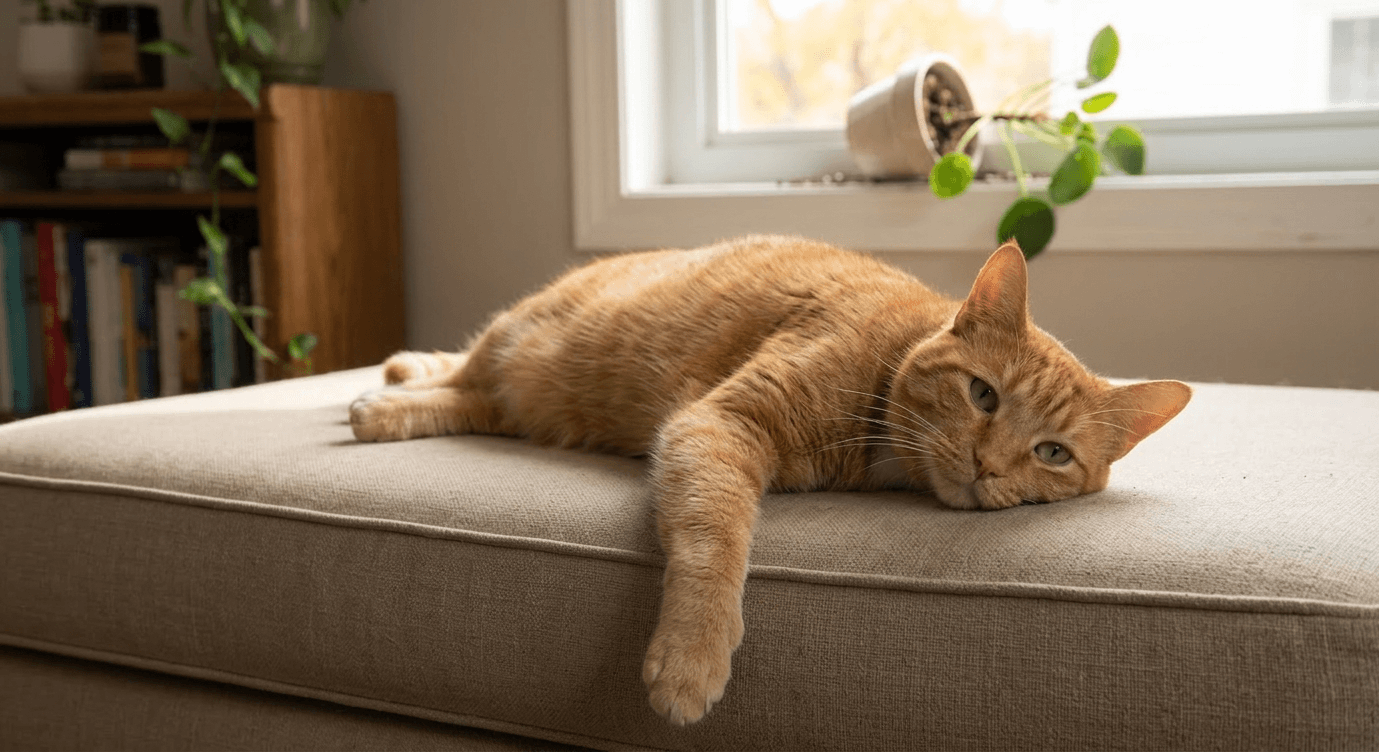
Sign 4: Sleeping More Than Usual
Cats sleep a lot, so sleeping alone does not prove boredom. But if your cat seems awake without interest, avoids play, moves less, or has no daily engagement, the environment may be too predictable.
Try a small routine change:
- five minutes of wand play
- window perch time
- food puzzle
- treat hunt
- toy rotation
- new cardboard box
If sleep increases suddenly or your cat seems weak, painful, or less responsive, call your veterinarian.
Sign 5: Overeating or Food Obsession
Some bored cats turn food into entertainment. They beg, follow people to the kitchen, wake owners early, or eat quickly because meals are the most exciting part of the day.
Do not solve boredom by adding more food. Use puzzle feeders, measured meals, play before meals, and non-food attention.
This connects closely with indoor weight control. For feeding structure, see our apartment cat feeding and weight control guide.
Food-Seeking vs True Hunger
Food-seeking is one of the hardest boredom signs to interpret because the behavior looks like hunger. A cat may meow at the kitchen, follow you, stare at the bowl, or act dramatic around meals. Sometimes the cat is hungry. Sometimes the cat is bored, routine-driven, or seeking interaction.
Ask these questions:
- Is your cat maintaining a healthy weight?
- Is the daily food measured?
- Are treats counted?
- Does begging happen at predictable times?
- Does play reduce the food-seeking?
- Does the cat beg from multiple people?
- Is another cat stealing food?
- Did the behavior start suddenly?
If your cat is losing weight, eating more but getting thinner, drinking more, vomiting, or acting suddenly food-obsessed, contact your veterinarian. If body condition is stable and begging follows a routine, boredom or learned behavior may be involved.
Use food more intentionally. Puzzle feeders, treat hunts, and measured meals can turn food into enrichment without adding extra calories.
Sign 6: Night Zoomies
Night zoomies can happen because cats are naturally active at dawn and dusk, but boredom can make them worse. If your cat sleeps all day with little stimulation, they may unload energy at night.
Use evening play to shift the routine:
- wand toy chase
- climbing route
- food puzzle
- small measured meal after play
- calm lights and predictable bedtime
For a full routine, see our cat zoomies at night guide.
If late-night energy is the main issue, pair this with our guide on how to tire out a cat before bed.
Sign 7: Chasing Feet or Ambushing
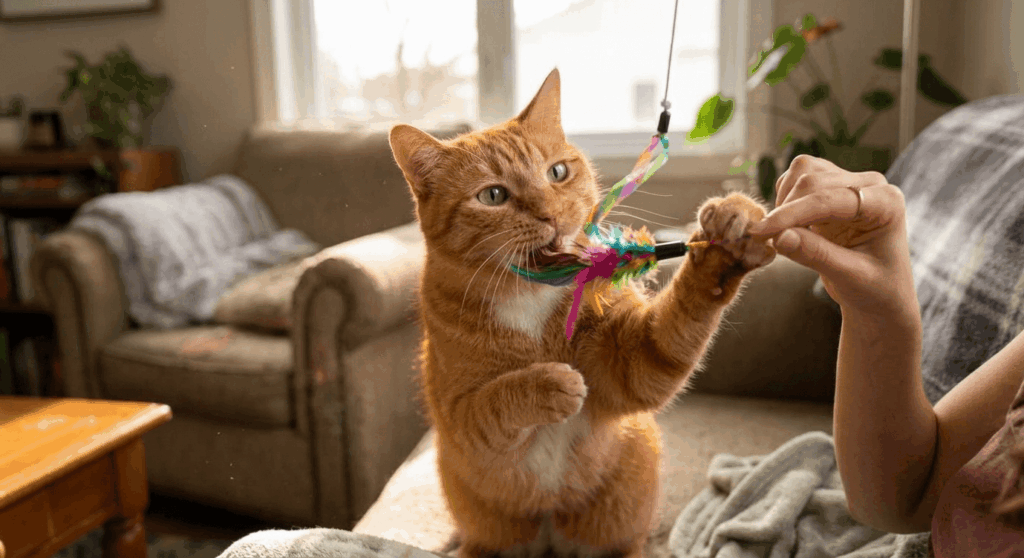
If your cat hides, pounces on ankles, or grabs feet, they may be practicing hunting on the only moving target available.
Redirect to:
- wand toys
- kicker toys
- tunnels
- chase games
- treat hunts
Do not use hands or feet as toys. Give your cat a moving target that is safe to attack.
Sign 8: Overgrooming or Repetitive Behavior
Overgrooming can be related to boredom, stress, pain, allergies, parasites, or skin irritation. Do not assume it is harmless.
If your cat licks one area repeatedly, creates bald patches, or seems unable to settle, contact your veterinarian. If medical issues are ruled out, enrichment and stress reduction may help.
Sign 9: Losing Interest in Toys
A cat may ignore toys because the toys are boring, always available, too difficult, too loud, or not matched to the cat’s play style.
Try rotation instead of buying more toys. Put most toys away and bring out a few at a time. Use wand toys actively instead of leaving them on the floor. Make play feel like prey movement: hide, pause, dart, and let the cat catch.
For a practical rotation, compare these interactive cat toys for solo play by activity type, apartment fit, and supervision limits.
Sign 10: Staring, Restlessness, or Window Fixation
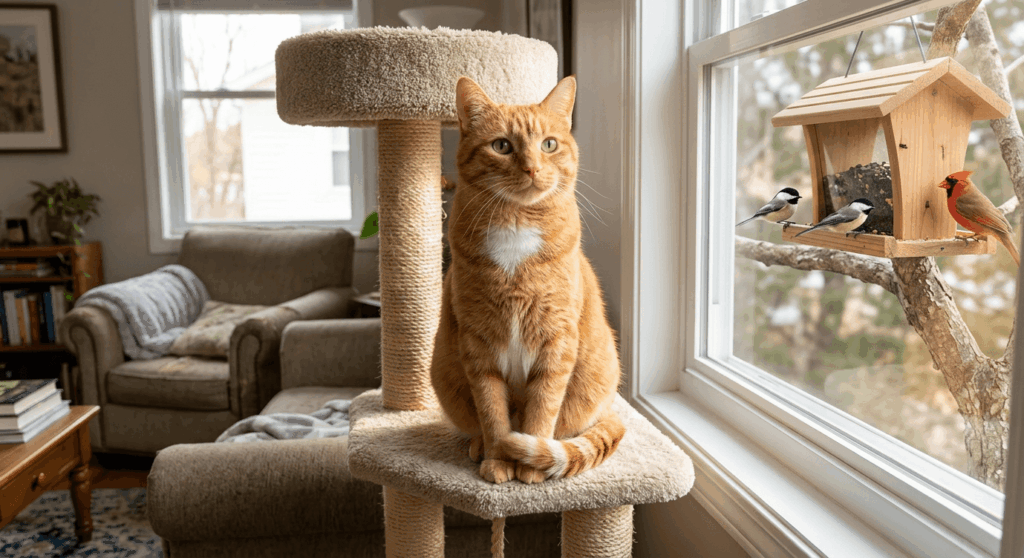
Window watching is healthy enrichment for many cats, but constant restless staring may mean your cat needs more variety. Add safe scent enrichment, puzzle feeding, climbing, or play after high-interest window times.
If an outdoor cat is causing stress, close blinds temporarily or block the view at problem times.
Boredom vs Medical or Stress Signs
Boredom usually improves when the environment becomes more interesting. Medical or stress-related behavior may not.
Call your veterinarian if you notice:
- appetite changes
- weight loss
- increased thirst
- litter box changes
- vomiting
- diarrhea
- hiding
- aggression
- overgrooming
- reduced jumping
- pain signs
- sudden behavior changes
If your cat’s behavior changed suddenly, treat it as a health question first.
If the behavior looks anxious rather than bored, compare it with our guide to signs your indoor cat is stressed.
Indoor Cat Boredom Fix Table
| Boredom Sign | Possible Need | First Fix |
|---|---|---|
| Knocking things over | Movement and cause-effect play | Rolling toys or puzzle feeders |
| Excessive meowing | Social routine or stimulation | Scheduled play and calm attention |
| Overeating | Food as entertainment | Puzzle feeding and measured meals |
| Night zoomies | Unused energy | Evening play routine |
| Chasing feet | Hunting outlet | Wand toys and kicker toys |
| Scratching furniture | Better scratching surface | Place scratcher near target area |
| Sleeping all day | Low stimulation | Short daily play and window access |
| Overgrooming | Stress or medical issue | Vet check first |
| Ignoring toys | Low novelty | Toy rotation |
| Restlessness | Variety and structure | Enrichment schedule |
7-Day Boredom Reset Plan
Use this as a simple test. Do not buy everything at once. Add structure and watch what changes.
Day 1: Observe the Pattern
Write down when the boredom behavior happens. Is it morning, work hours, evening, or night? What happens right before it? What does your cat get afterward?
Day 2: Add One Short Play Session
Choose one predictable time and add 5-10 minutes of wand toy play. End with a catch so your cat gets a satisfying finish.
Day 3: Rotate Toys
Put away ignored toys. Leave out only two or three. Bring back older toys after several days so they feel more interesting.
Day 4: Add Food Puzzle Work
Use part of the normal daily food in a puzzle feeder, treat hunt, or snuffle mat. Do not add extra calories; move calories from the bowl into the activity.
Day 5: Improve One Vertical or Window Spot
Add a stable perch, clear a window area, or create a safe route to a favorite viewing spot. Cats need places to observe.
Day 6: Add a Non-Food Attention Routine
Brush, play, talk, or sit with your cat at a predictable time. This helps reduce attention-seeking that only appears when the cat misbehaves.
Day 7: Review What Worked
Which behavior improved? Which toy was used? Did night activity change? Did begging reduce? Keep the useful change and ignore the rest.
A boredom plan should become simpler over time, not more complicated.
How to Add Enrichment Without Clutter
You do not need a room full of toys. Small-space enrichment works best when it is targeted and rotating.
Start with:
- one wand toy
- one scratching surface
- one window perch or window-view spot
- one food puzzle
- one tunnel or box
- one vertical route if possible
Rotate toys weekly. Put away unused toys. Bring them back later so they feel new.
For a complete setup, see our indoor cat enrichment in small apartments guide.
If you are away during the day, use our guide on how to entertain an indoor cat while at work.
Enrichment by Apartment Area
You can add enrichment without turning your home into a toy store. Think by area.
Window Area
A window can provide visual enrichment. Add a stable perch, keep cords safe, and make sure the cat cannot push through a screen. If outdoor cats cause stress, limit access during trigger times.
Living Room
Use one scratcher, one rotating toy basket, and one vertical option if possible. Keep toys stored when not in use so they feel new.
Hallway
A hallway can become a chase zone. Use short wand sessions, soft balls, or treat tosses. Avoid hard toys that create too much noise for neighbors.
Desk or Work Area
If your cat interrupts work, add a nearby bed, perch, or puzzle feeder. The goal is to give your cat a place to be close without sitting on your keyboard.
Bedroom
If night activity is a problem, remove noisy toys before bed and add structured evening play. Do not reward nighttime meowing with food unless a timed feeder is part of the plan.
Kitchen
Food-seeking cats often focus on the kitchen. Keep food sealed, avoid random treats, and use puzzle feeding away from the main food storage area.
Common Mistakes
Mistake 1: Buying More Toys Without Changing the Routine
A pile of toys does not fix boredom if none of them move, rotate, or match your cat’s play style.
Mistake 2: Punishing Bored Behavior
Punishment can increase stress. Redirect the need instead.
Mistake 3: Using Food for Every Problem
Food is easy, but it can lead to weight gain. Use play, scent, climbing, and attention too.
Mistake 4: Ignoring Quiet Boredom
Not every bored cat is destructive. Some simply sleep more and engage less.
Mistake 5: Missing Medical Signs
Overgrooming, sudden inactivity, appetite changes, or aggression may need veterinary attention.
How to Know the Enrichment Is Working
A boredom fix is working when the problem behavior becomes less frequent, less intense, or easier to redirect.
Positive signs include:
- less meowing for attention
- fewer night disruptions
- less object knocking
- better use of scratchers
- more relaxed sleep
- more interest in play
- less food obsession
- more confident exploration
- calmer workday behavior
- fewer destructive episodes
Do not expect perfection in one day. Some cats need time to learn new routines. If your cat has been getting attention through misbehavior for months, the behavior may continue briefly before fading.
Track one or two behaviors rather than everything. For example, count how many times your cat wakes you at night, or how often they knock things off your desk. If the number drops, the plan is helping.
If behavior does not improve at all after consistent enrichment, reconsider the cause. Stress, pain, medical problems, or resource conflict may be involved.
When to Call a Veterinarian
Call your veterinarian if boredom-like behavior is sudden, intense, or paired with:
- appetite changes
- weight loss
- vomiting
- diarrhea
- increased thirst
- litter box changes
- overgrooming
- bald spots
- limping
- reduced jumping
- hiding
- aggression
- confusion
- signs of pain
Frequently Asked Questions
1. Can indoor cats be bored even if they have toys?
Yes. Toys that never move, never rotate, or do not match the cat’s play style may become background objects. Many cats need interactive play, puzzle feeding, climbing options, and novelty, not just more toys on the floor.
2. How many play sessions does an indoor cat need?
Many cats benefit from one or two short play sessions per day. Even 5-10 minutes can help if the play is engaging and consistent. Some high-energy cats need more, while seniors may need shorter and gentler sessions.
3. Is boredom worse in apartments?
It can be, because apartments may have less floor space, fewer windows, fewer climbing routes, and more repeated routines. But a small apartment can still work well if it includes vertical space, toy rotation, food puzzles, and predictable play.
4. What if enrichment makes my cat more excited?
Some cats get overstimulated if play is too intense or ends abruptly. Use shorter sessions, let your cat catch the toy, and end with a calm routine or meal. If excitement turns into aggression, reduce intensity and review the play style.
5. How do I know if my indoor cat is bored?
Look for repeated behavior patterns such as excessive meowing, knocking things over, chasing feet, overeating, night zoomies, destructive scratching, overgrooming, or sleeping more with little engagement. If the behavior improves with enrichment, boredom may be part of the cause.
6. Do indoor cats get bored easily?
Some do, especially if the home has little play, no climbing options, no window access, no scratching variety, and no hunting-style activity. Indoor cats need daily outlets for normal feline behavior.
7. Is sleeping all day a sign my cat is bored?
Maybe. Cats sleep a lot naturally, but if your cat is awake without interest, avoids play, gains weight, or seems less engaged, boredom may be involved. Sudden lethargy should be checked by a veterinarian.
8. Can boredom make a cat overeat?
Yes. Some indoor cats use food as entertainment. They may beg, steal food, or focus heavily on meals if there are not enough non-food outlets.
9. What is the fastest way to help a bored indoor cat?
Start with one short daily play session and one food puzzle or treat hunt. Then add toy rotation and a better window or climbing spot.
10. Do I need to buy more toys?
Not always. Many cats need better toy rotation and interactive play, not more toys. A few well-used toys are better than a pile of ignored ones.
11. When should I worry that it is not boredom?
Worry if behavior changes suddenly or appears with appetite, weight, thirst, litter box, grooming, mobility, or pain changes. In that case, call your veterinarian.
Final Thoughts
Signs indoor cat is bored can look like misbehavior, but they are usually communication. Your cat may need more hunting play, movement, novelty, food puzzles, scratching, climbing, or predictable attention.
Start small. Add one useful outlet, watch the response, and rotate what works. Do not fill your apartment with clutter. Build a routine that gives your cat something meaningful to do every day.
If the behavior is sudden or paired with health signs, involve your veterinarian before assuming boredom.