Cats knock things over for several reasons: they are testing movement with their paws, practicing hunting behavior, looking for attention, relieving boredom, exploring cause and effect, or reacting to stress in the environment. Most of the time, this behavior is normal cat behavior expressed in an inconvenient place.
The goal is not to punish the cat. The goal is to understand what the behavior is doing for the cat, then make fragile objects less available and give the cat a better outlet. A cat who knocks pens off a desk may need more play. A cat who pushes cups while you watch may have learned that the sound brings attention. A cat who suddenly starts knocking things over may be responding to stress, pain, vision changes, or a routine disruption.
This guide explains the most common reasons cats knock things over and how to reduce the behavior without scaring, chasing, or confusing your cat.
Quick Answer
Cats usually knock things over because the movement, sound, and owner reaction are rewarding. A rolling pen, sliding cup, or falling object gives the cat sensory feedback. If the owner rushes over, talks, laughs, scolds, or chases the cat, the behavior may become even more rewarding.
To stop a cat from knocking things over, remove fragile items from tempting edges, add daily hunting-style play, give safe objects to bat, use puzzle feeders or foraging games, and avoid turning the behavior into an attention game. If the behavior starts suddenly, becomes obsessive, or comes with appetite, vision, balance, mobility, or behavior changes, contact your veterinarian.
Safety and Behavior Note
Do not punish, yell, spray water, or physically chase your cat for knocking things over. Punishment can increase stress and may make your cat avoid you without teaching a better behavior. If your cat knocks over glass, medication, candles, toxic plants, food, sharp objects, or electronics, treat the setup as a safety issue first and remove access.
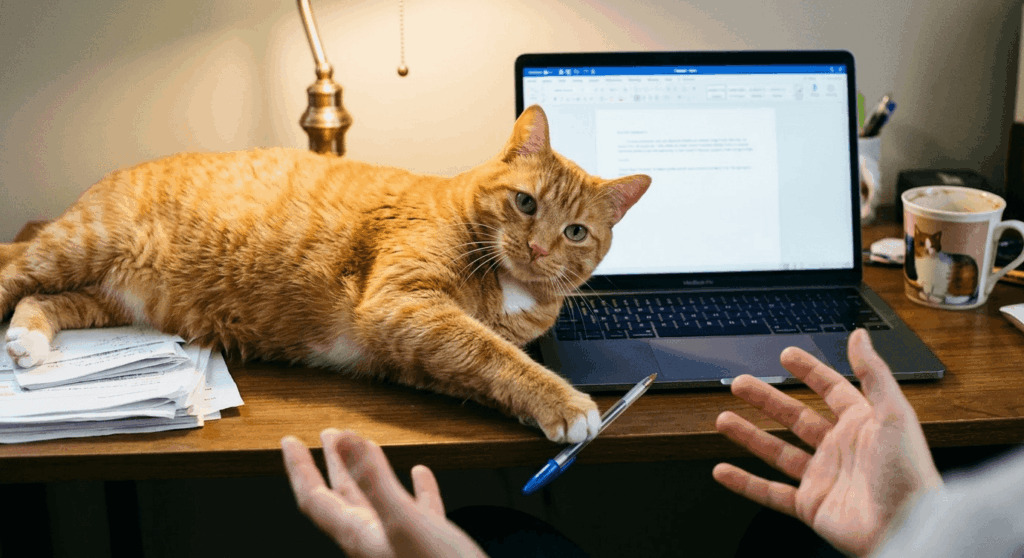
Table of Contents
Why Does My Cat Knock Things Over?
Cats knock things over because the behavior is interesting, rewarding, or useful to them. A cat does not understand “mess” the way a person does. A pen on the edge of a desk is not a work tool to your cat. It is a small movable object that reacts when touched.
When a cat taps an object, several things happen at once. The object moves, makes sound, changes position, and may fall. That gives the cat sensory feedback. If a person immediately reacts, the behavior also creates social feedback. The cat learns that pushing an object can make the environment respond.
For many cats, object knocking is a mix of normal hunting behavior, curiosity, boredom, and learned attention-seeking. The fix depends on which reward the cat is getting.
A cat who knocks things over once in a while may simply be exploring. A cat who does it every morning beside your bed may be using it as an alarm clock. A cat who suddenly starts knocking things over after years of not doing it may be reacting to stress, reduced play, pain, vision changes, or routine disruption.
5 Reasons Cats Knock Things Over
Reason 1: Hunting and Paw Testing
Cats use their paws to test objects. In nature, pawing helps a cat investigate whether something is alive, movable, safe, or worth chasing. Indoors, that same instinct can be directed at pens, cups, keys, plants, figurines, cords, or anything placed near an edge.
Small objects are especially tempting because they behave like prey. They slide, roll, wobble, bounce, or fall. A cat may tap lightly at first, then repeat the motion when the object moves. The movement itself becomes the reward.
This is why cats often choose objects near edges. A pen in the middle of the desk is mildly interesting. A pen near the edge can be pushed, watched, and dropped. The fall creates a clear result.
How to fix this reason:
- move small objects away from edges
- keep fragile items in drawers or closed containers
- offer safe objects that can be batted around
- use rolling toys, soft balls, or crinkle toys
- play with a wand toy before work or bedtime
- avoid leaving cups, glass, medication, candles, or sharp items accessible
The goal is not to stop paw testing completely. Paw use is normal. The goal is to redirect it toward safe objects.
Reason 2: Boredom and Understimulation
Indoor cats need mental work. If the day is too predictable and there is nothing to hunt, chase, climb, scratch, smell, or investigate, a cat may create their own activity. Knocking things over is easy entertainment because it produces movement and sound.
Boredom-related object knocking often happens when the owner is busy, on a computer, asleep, cooking, or ignoring the cat. The cat may walk across the desk, tap an object, watch it fall, and then repeat the behavior because it finally made something happen.
This is not spite. It is a cat solving boredom with the tools available.
Better outlets include:
- two short daily play sessions
- wand toy play that ends with a catch
- puzzle feeders
- treat hunts
- rotating toys
- window perches
- scratching posts
- climbing routes
- safe boxes or tunnels
- food puzzles for part of the daily meal
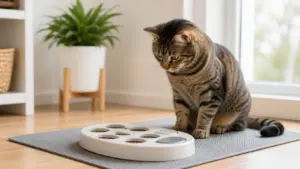
Puzzle feeders are especially useful for cats who like to manipulate objects. They let the cat paw, move, roll, and solve a problem in a safer way. For options, see our best cat puzzle feeders guide.
If the behavior happens mostly at night or early morning, add enrichment before the problem time. A short hunting-style play session before bed can reduce some overnight mischief.
Reason 3: Attention-Seeking
Some cats learn that knocking things over brings attention. The attention may be positive or negative. Talking, laughing, shouting, running over, picking the cat up, or chasing them can all reinforce the behavior.
From the cat’s view, the sequence is simple:
- Cat taps object.
- Object falls.
- Human reacts.
- Cat gets interaction.
Even scolding can become rewarding if the cat wants engagement. This is especially common with desk items, nightstand objects, water glasses, phones, pens, and anything the owner clearly cares about.
Attention-seeking knocking often happens when:
- the owner is working
- the owner is sleeping
- the cat wants food
- the cat wants play
- the cat wants access to a closed door
- the cat has learned a specific object gets a reaction
The fix is two-part. First, remove the easy reward by keeping tempting items out of reach. Second, give attention before the cat creates a problem. Schedule play, feeding, brushing, or quiet interaction before the usual knocking time.
If your cat knocks things over while you are watching, stay calm. Do not rush dramatically unless there is a safety issue. Quietly remove the object or block access, then reward better behavior later.
For cats who use mischief to get interaction, pair this section with our cat attention seeking behavior guide.
Reason 4: Curiosity and Cause-and-Effect Learning
Cats are excellent cause-and-effect learners. If one action makes something interesting happen, they may test it again. This is why a cat may push one object, pause, watch, then push another.
The behavior can look deliberate because it is deliberate. But deliberate does not mean malicious. The cat is experimenting.
A curious cat may knock over:
- cups
- pens
- makeup
- keys
- small decor
- charging cables
- desk supplies
- plant pots
- paper stacks
- lightweight bowls
Curiosity is easier to manage when the environment offers acceptable alternatives. Give the cat a “yes” version of the behavior. A shallow box with safe toys, a puzzle feeder, a treat ball, a snuffle mat, or a low shelf with cat-safe objects can satisfy the need to investigate.
Some cats prefer objects with specific features: rolling items, noisy items, shiny items, objects that wobble, or things that smell like food or the owner.
You can also use rotation. Cats often lose interest in toys that are available all the time. Put some toys away and bring them back later so they feel new.
Reason 5: Stress, Frustration, or Routine Disruption
Sometimes object knocking increases because something in the cat’s life has changed. The behavior may be a stress outlet, a way to seek control, or a response to frustration.
Possible triggers include:
- a new pet
- a new baby
- visitors
- construction noise
- changed work schedule
- reduced playtime
- food schedule changes
- a blocked window perch
- another cat guarding space
- litter box stress
- boredom after a move
- owner absence
- pain or discomfort
Stress-related knocking may appear with other signs: hiding, overgrooming, vocalizing, chasing another pet, appetite changes, litter box changes, clinginess, aggression, or sleeping in unusual places.
Do not treat sudden new knocking as “just naughty” if it appears with other behavior changes. Look at the whole pattern. A cat who knocks things over after losing a favorite perch may need environmental repair. A cat who starts knocking things over after a new cat arrives may need resource separation. A senior cat who becomes clumsy or knocks items unintentionally may need a veterinary check.

Object Knocking Fix Table
| What Your Cat Knocks Over | Likely Reason | Best Fix | Watch Out For |
|---|---|---|---|
| Pens, pencils, small desk items | Paw testing or attention | Clear desk edges and add safe rolling toys | Owner reaction may reinforce it |
| Cups or water glasses | Curiosity, sound, movement | Use lidded cups and move drinks away from edges | Broken glass and spills |
| Decor, frames, candles | Climbing path conflict | Create clear shelf routes and secure fragile items | Punishing normal movement |
| Plants | Texture, smell, boredom | Remove toxic plants and offer safe cat grass | Toxicity risk |
| Food containers | Hunger, smell, routine learning | Store food securely and feed predictable meals | Reinforcing begging |
| Nightstand items | Early morning attention | Use drawers and avoid reacting dramatically | Teaching wake-up behavior |
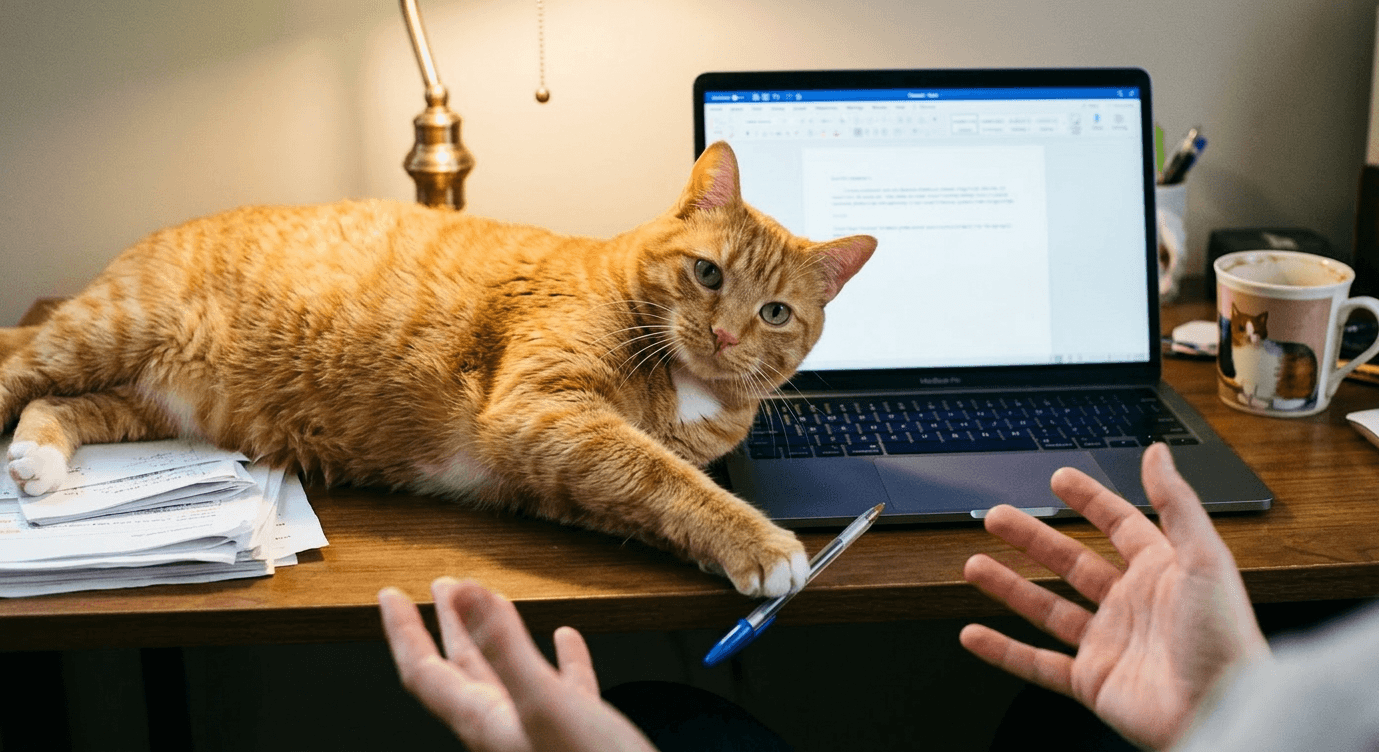
| Keyboard and office items | Attention or desk access | Create a nearby cat station | Work interruption can become the reward |
How to Stop a Cat From Knocking Things Over
The best fix is a combination of prevention, enrichment, and calm response. Do not rely on one tactic.
1. Remove the Easy Targets
Start with the objects that create safety risks or big reactions. Move glass, candles, medication, sharp tools, toxic plants, heavy decor, food containers, and electronics out of reach.
Use drawers, trays, cabinets, lidded cups, cable clips, and closed storage. This is not “letting the cat win.” It is removing unsafe opportunities.
Cats repeat behaviors that work. If knocking over a cup no longer creates a spill, noise, or reaction, the behavior loses some value.
2. Clear Edges and Pathways
Many cats knock objects over because those objects sit in travel paths. A shelf, desk, counter, windowsill, or nightstand may also be part of the cat’s route.
Instead of fighting the route, make it safer. Leave a clear path where the cat already walks. Move fragile objects away from the edge. Use heavier stable items if decor must stay out.
If your cat is using your desk as a path to reach a window, add a better route or a nearby perch.
3. Add a Better Outlet
Give your cat something appropriate to bat, chase, and manipulate. This is especially important for cats who knock things over because they enjoy movement.
Useful alternatives include:
- soft balls
- crinkle toys
- rolling treat toys
- puzzle feeders
- wand toys
- cardboard boxes
- tunnels
- kicker toys
- safe toy baskets
- food puzzles
Do not leave every toy out forever. Rotate them so they stay interesting.
For apartment cats, enrichment matters because the environment is smaller and more predictable. For a broader plan, see our indoor cat enrichment in small apartments guide.
4. Schedule Play Before the Problem Time
If your cat knocks things over at the same time each day, use timing. Play before the behavior usually starts.
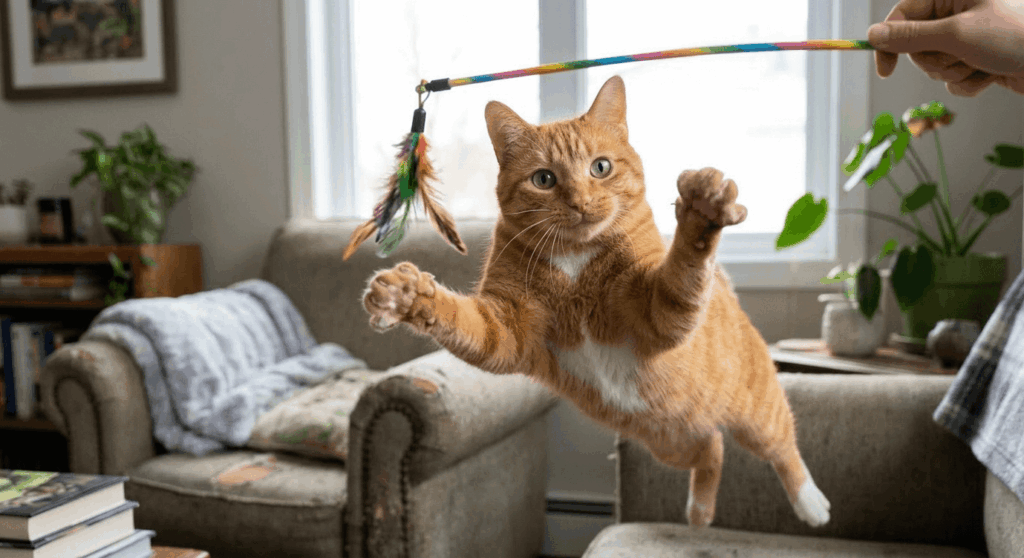
A good play session should feel like a hunt:
- Let the cat watch the toy.
- Move it like prey.
- Let the cat chase.
- Let the cat catch it.
- End with a small meal or normal feeding time if appropriate.
This sequence helps satisfy the behavior behind the knocking. Random toy waving may not work as well as a play session that lets the cat stalk and catch.
5. Reduce the Human Reaction
If the behavior is attention-driven, your reaction matters. Avoid yelling, chasing, laughing loudly, or making the event exciting.
If something unsafe falls, calmly remove the cat and clean up. If it is not unsafe, respond as neutrally as possible. Later, reward the cat when they use an appropriate toy, perch, or resting spot.
The goal is to make knocking boring and make better behavior rewarding.
6. Make Work Areas Cat-Friendly
If your cat knocks things off your desk, the desk may be valuable because you are there. In that case, the solution is not only clearing objects. Give your cat a nearby place to belong.
Try:
- a cat bed beside the desk
- a window perch near your workspace
- a small blanket on a side chair
- a puzzle feeder before work
- a wand toy session before meetings
- a closed drawer for tempting items
- cable management
- a keyboard cover when you step away
For more detailed workspace setup, see our how to entertain a cat while you work guide.
What Not to Do
Do not punish your cat for knocking things over. Punishment can make the cat fearful, increase stress, and damage trust. It also does not teach the cat what to do instead.
Avoid:
- yelling
- spraying water
- chasing
- hitting
- shoving
- locking the cat away as punishment
- frightening noises
- sticky traps
- harsh deterrents
- forcing the cat toward the fallen object
Also avoid turning the behavior into a game. If your cat knocks something down and you immediately chase them, the cat may learn that object knocking starts a fun interaction.
Do not use essential oils, strong scents, or harsh sprays as deterrents around cats. Some products can irritate cats or be unsafe.
The best approach is boring prevention plus interesting alternatives.
Apartment and Desk Setup Tips
In a small home, the same surfaces often serve multiple purposes. A desk may be a work area, a cat route, a window access point, and an attention zone. A shelf may be decor and vertical territory. A nightstand may be storage and an early morning cat alarm system.
Make the setup realistic.
For desks:
- keep pens in cups or drawers
- move drinks away from edges
- use lidded cups
- secure cables
- provide a nearby cat bed
- keep fragile items off the work surface
- offer a pre-work play routine
For shelves:
- leave a clear walking path
- remove fragile decor from cat routes
- use museum putty only where appropriate and safe
- avoid candles and glass near cat paths
- create a dedicated perch if the shelf leads to a window
For nightstands:
- use a drawer or tray
- remove glasses and medication
- charge phones away from the edge
- avoid reacting dramatically at night
- consider an automatic feeder if morning food demands are driving the behavior
For plants:
- remove toxic plants
- use heavier pots
- keep soil covered if digging is a problem
- offer safe cat grass only if appropriate
- do not assume “natural” plants are safe
The best apartment setup does not remove all personality from the home. It simply stops fragile, dangerous, or high-reward objects from being the easiest entertainment available.
Small Apartment Object-Knocking Prevention Plan
In a small apartment, object knocking becomes a bigger problem because everything is close together. A cat can move from the window to the desk, shelf, kitchen counter, nightstand, and coffee table in one short route. If those surfaces are full of lightweight objects, every patrol becomes a chance to knock something down.
The best fix is not removing every object from your home. The best fix is making the cat’s normal movement path less rewarding.
Step 1: Identify the Main Route
Watch where your cat walks before the knocking happens. Most cats have predictable routes.
Common routes include:
- window to desk
- sofa arm to side table
- kitchen counter to sink
- bed to nightstand
- bookshelf to dresser
- cat tree to nearby shelf
Once you know the route, clear the landing zones first. Do not start with the whole apartment.
Step 2: Sort Objects by Risk
Some objects are just annoying when knocked down. Others are dangerous.
High-risk objects include:
- glass cups
- candles
- essential oil bottles
- medications
- earrings or small jewelry
- batteries
- sharp tools
- ceramic decor
- hot drinks
- plants
- heavy items near edges
Move high-risk objects first. Then deal with the annoying but safer items later.
Step 3: Give the Cat a Better Job
Cats often knock things over because the object gives them feedback. It rolls, tips, makes noise, or gets a human reaction. Replace that with a legal object that does the same thing safely.
Better options include:
- ball track toys
- puzzle feeders
- treat balls
- soft crinkle toys
- batting toys inside a tray
- cardboard boxes with hidden toys
- a window perch with bird watching
If the behavior happens during work hours, pair this with the cat attention seeking behavior guide.
Step 4: Reduce the Human Reward
If your cat knocks something over and you immediately jump up, talk, chase, or feed them, the behavior may become a communication tool.
Instead:
- stay calm
- remove the object quietly
- do not feed immediately after knocking
- reward calm behavior later
- schedule play before the usual problem time
This is not ignoring your cat’s needs. It is changing which behavior earns attention.
Step 5: Review the Setup Weekly
For one week, track when knocking happens.
Write down:
- time of day
- location
- object type
- what happened before it
- how you responded
- whether the cat had play that day
Patterns usually appear quickly. If the knocking happens before meals, it may be food anticipation. If it happens during laptop time, it may be attention conflict. If it happens at night, it may connect to boredom or evening routine gaps.
When Knocking Things Over May Signal a Problem
Most object knocking is normal behavior, but sometimes it deserves closer attention.
Call your veterinarian or schedule a checkup if the behavior is sudden, intense, or paired with:
- appetite changes
- weight loss
- increased thirst
- vomiting
- litter box changes
- stumbling
- clumsiness
- vision changes
- hiding
- aggression
- confusion
- reduced jumping
- pain signs
- senior behavior changes
A senior cat who suddenly bumps into objects or knocks things over unintentionally may have vision, mobility, neurological, or pain-related issues. A cat who suddenly becomes destructive may be stressed or uncomfortable.
Behavior changes are information. They are not always medical emergencies, but they should not be ignored.
Frequently Asked Questions
1. Why does my cat knock things over when I am watching?
Your cat may have learned that knocking something over gets your attention. Even scolding, laughing, talking, or running over can reinforce the behavior if the cat wants interaction.
Move tempting objects away from edges, add play before the usual problem time, and respond calmly when it happens.
2. Are cats knocking things over out of spite?
No. Cats do not knock things over out of spite in the human sense. The behavior is usually driven by curiosity, hunting instinct, boredom, attention-seeking, or stress.
It may look personal because cats often target objects near you, but that is usually because your reaction is part of the reward.
3. Why does my cat knock things off my desk?
Your desk may contain small movable objects, smell like you, sit near a window, or become the place where your cat gets attention. Pens, keys, cords, and cups are especially tempting because they move or make noise.
Clear the edges, add a nearby cat perch, and give your cat a safe object or puzzle feeder before you start working.
4. How do I stop my cat from knocking over cups?
Use lidded cups, move drinks away from edges, and avoid leaving glasses unattended. If your cat is attracted to water, offer fresh water in a clean bowl or fountain and make sure the behavior is not being rewarded with a big reaction.
Glass cups should not be left where a cat can push them down.
5. Why does my cat knock things over at night?
Nighttime knocking often happens because the cat is awake, bored, hungry, or seeking attention. If you react every time, the behavior can become part of the night routine.
Remove nightstand objects, add play before bed, feed a measured evening meal, and avoid creating an exciting reaction unless there is a safety issue.
6. Should I punish my cat for knocking things over?
No. Punishment can increase stress and does not teach your cat a better behavior. Instead, remove tempting objects, provide better outlets, schedule play, and reward appropriate behavior.
7. What toys help cats who like knocking things over?
Cats who enjoy knocking objects often like rolling toys, soft balls, crinkle toys, puzzle feeders, treat balls, wand toys, tunnels, and safe objects they can bat without causing damage.
The best toys are ones that move, make mild sound, or let the cat use paws to solve a problem.
8. Can knocking things over be a sign my cat is bored?
Yes. Bored cats often create their own stimulation. If your cat knocks things over when nothing else is happening, increase play, food puzzles, climbing options, window access, and toy rotation.
9. When should I worry about this behavior?
Worry if the behavior starts suddenly, becomes obsessive, or appears with appetite changes, weight loss, stumbling, vision problems, litter box changes, hiding, aggression, confusion, or signs of pain.
In those cases, treat it as a possible health or stress signal and contact your veterinarian.
Final Thoughts
Cats knock things over because objects move, sound interesting, create reactions, and sometimes solve boredom or frustration. The behavior is usually normal, but the setup may be unsafe or too rewarding.
The best fix is not punishment. It is a better system: remove fragile objects, clear cat pathways, provide daily play, offer safe things to bat, reduce dramatic reactions, and make workspaces or nightstands less tempting.
If the behavior changes suddenly or comes with other signs, involve your veterinarian. Otherwise, treat object knocking as a clue. Your cat is telling you they need a safer outlet, a clearer environment, or a better routine.