How to tire out a cat before bed starts with one realistic idea: you are not trying to exhaust your cat like a dog after a long walk. You are trying to give your cat a predictable hunt, catch, eat, and calm-down routine before the apartment goes quiet.
This matters because many indoor cats save their best energy for the worst possible time. The lights go off, the human finally lies down, the hallway becomes a racetrack, and suddenly your cat has opinions, paws, and a full sprint schedule.
In a small apartment, that energy feels bigger. A few fast laps sound loud on hard floors. Jumping on the bed wakes you immediately. Meowing travels through shared walls. The goal is not to punish normal cat energy. The goal is to move the most active part of the evening earlier, before you are already exhausted.
This guide gives you a simple bedtime routine: start before your cat is wild, use prey-style play, let your cat catch the toy, feed the final measured meal after play, add enough daytime enrichment, and make nighttime boring enough that your cat stops treating it like the main event.
Quick Answer
A useful bedtime routine starts with a short hunting-style play session adapted to your cat’s age, health, mobility, and interest. Let your cat make several catches, offer the final measured meal, and then keep the apartment quieter.
Do not try to run your cat until they collapse. Most cats calm down better after play that feels like hunting: stalking, chasing, pausing, pouncing, catching, and eating. Random toy waving often makes cats more excited, not more settled.
If your cat’s nighttime activity is sudden, frantic, painful, confused, or paired with appetite, thirst, weight, litter box, mobility, breathing, or behavior changes, treat it as a health question first and call your veterinarian.
Important Apartment Safety Note
Keep bedtime play safe and controlled. Avoid laser-only play, rough hand play, loose strings, toys that can be swallowed, high jumps onto slippery floors, and forced exercise for overweight, senior, arthritic, or breathing-impaired cats.
A good routine should make your cat calmer, not more frantic. If your cat pants, hides, limps, coughs, collapses, becomes aggressive, or seems disoriented, stop the session and contact your veterinarian.
Table of Contents
Why Cats Get Active at Night
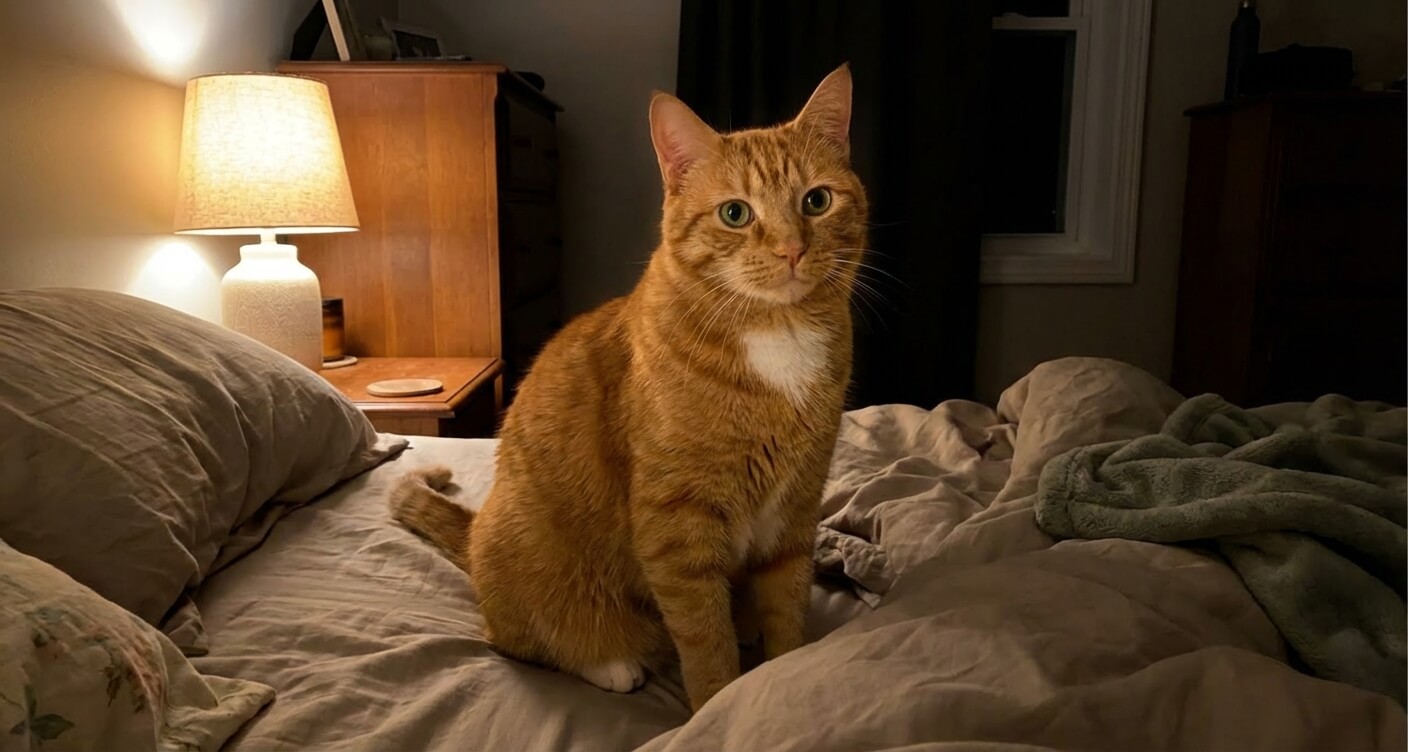
Cats are often most active around dawn and dusk. Indoor cats may also save energy all day and release it at night because the apartment becomes quiet, the owner finally becomes available, or the cat has learned that nighttime behavior gets attention.
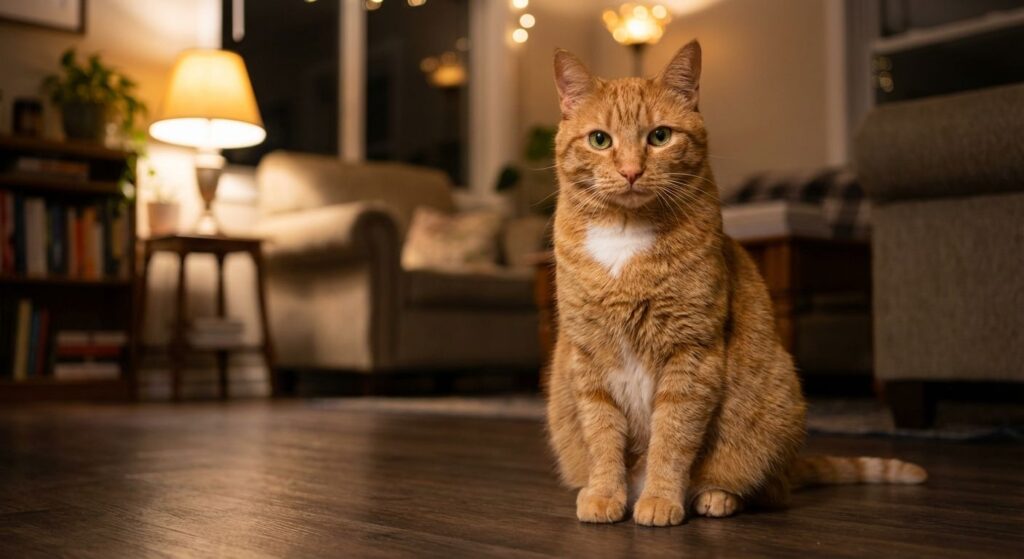
In a small apartment, normal cat energy can feel enormous. Running paws sound louder on hard floors, a short hallway becomes a racetrack, and one bed jump can wake the whole room. The goal is not to punish that energy. The goal is to give it a better place in the evening schedule.
Common reasons cats become active at night include:
- not enough daytime stimulation
- no predictable evening routine
- late meals or hunger patterns
- owner attention only happening at night
- boredom during work hours
- post-litter-box energy bursts
- stress, pain, or medical changes
- age-related confusion in senior cats
If the main problem is repeated nighttime sprinting, also compare the pattern with our guide to cat zoomies at night.
Why Tiring Out a Cat Before Bed Is About Rhythm, Not Exhaustion
A common mistake is thinking the goal is to make the cat physically exhausted. That is not usually how cats work. Cats are built for short bursts of effort, not long endurance exercise. A cat may sprint, pounce, wrestle, and leap for a few minutes, then pause and watch. That pause is normal. It does not mean the routine failed.
The better goal is rhythm. You want the evening to feel predictable: activity happens, the cat gets to complete the hunt, food follows, and the home becomes calm. When that pattern repeats, many cats begin to shift their most demanding energy earlier in the evening.
This matters especially in apartments because the owner’s schedule often becomes the cat’s schedule. If the home is quiet all day and exciting only when the owner is trying to sleep, the cat may learn that night is the best time to interact. The bedtime routine gives the cat a better outlet before the household shuts down.
The 7-Step Bedtime Routine
Step 1: Start Before Your Cat Is Already Wild
The best bedtime routine starts before the zoomies begin. If your cat usually gets loud at 11 p.m., start the routine around 9:30 or 10. Waiting until your cat is already sprinting makes the session harder because the cat is already overstimulated.
Choose the same time most nights. Cats learn patterns quickly. A predictable start time teaches your cat that evening activity has a beginning and an end.
A good first step is simple: dim the apartment slightly, put your phone away for ten minutes, bring out one interactive toy, and invite your cat into a short hunting session.
Step 2: Use Hunting-Style Play
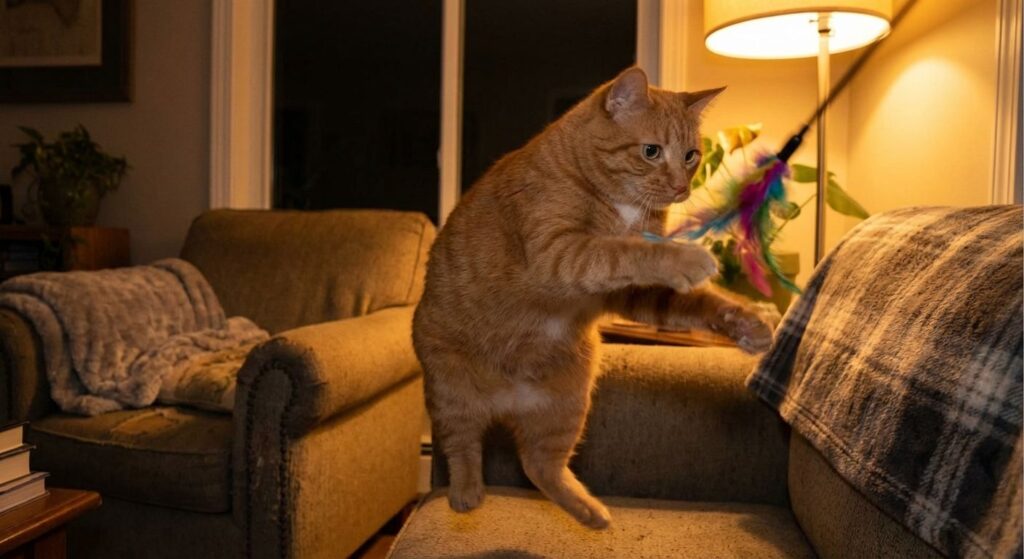
Random toy waving does not work as well as prey-like movement. Move the toy like something small trying not to be caught. Let it hide behind a chair leg, slide around a corner, pause under tissue paper, or move slowly across the floor before darting away.
Most cats prefer short bursts. Try 30 to 60 seconds of movement, then a pause. Let your cat stalk, crouch, and plan. The pause is not wasted time. It is part of the hunt.
Good bedtime toys include:
- wand toys
- feather teasers
- soft kicker toys
- crinkle tunnels
- rolling balls used briefly
- treat puzzles
- small plush toys for catching
If your cat loses interest quickly, rotate toy types instead of buying ten versions of the same thing. Our guide to the best cat toys for small apartments can help you choose toys that create real play without taking over the floor.
Avoid using your hands or feet as toys. That can teach your cat that bedtime attacks on blankets and ankles are part of the game.
How to Match the Toy to Your Cat’s Play Style
Not every cat wants the same kind of bedtime play. Some cats love aerial toys, but others become frustrated by toys that stay above their head. Some prefer floor prey that disappears behind furniture. Others want a soft kicker toy they can grab and bite.
If your cat watches but does not chase, slow the toy down. Move it along baseboards, under a paper bag, around the edge of a rug, or behind a chair leg. Many cats are more interested in a toy that tries to hide than a toy waved directly in their face.
If your cat chases but never settles, add more pauses and more catches. A high-energy cat may need several short hunting cycles instead of one long chaotic session. Let the cat stalk, pounce, catch, and reset.
If your cat is older, overweight, shy, or easily overstimulated, use low-impact play. Drag the toy slowly across the floor, let the cat swat from a resting position, or use a treat hunt with a measured portion of food. The goal is safe engagement, not acrobatics.
Step 3: Let Your Cat Catch the Toy
Many owners accidentally make play frustrating by never allowing the cat to win. If the toy always escapes, the cat may become more excited, not calmer.
Let your cat catch the toy several times during the session. After a catch, pause and let your cat bite, hold, bunny-kick, or carry it for a moment. Then slowly restart the game.
The final catch matters most. End the play session with a successful capture, not with the toy disappearing while the cat is still highly charged. That helps the routine feel complete.
This is the part many people skip because it looks small. But for some cats, never catching the toy is like ending a movie before the final scene. They are not tired; they are unfinished.
Step 4: Feed the Final Measured Meal After Play
The most useful bedtime pattern is play first, food second. This follows the natural sequence: hunt, catch, eat, groom, sleep.
Do not add extra calories just to calm your cat. Use part of the normal daily food allowance. If your cat eats multiple meals, make the last measured meal happen after the evening play session. If your cat eats wet food, this can be a small wet-food meal. If your cat eats dry food, use a measured portion in a puzzle feeder or slow feeder.
If your cat wakes you for food early in the morning, review your meal timing with our indoor cat feeding schedule guide.
If the problem is fast eating or boredom around dry food, a measured puzzle feeder can turn part of the meal into quiet work instead of midnight demands. For product options, compare our best cat puzzle feeders guide.
Step 5: Add Daytime Enrichment So Bedtime Does Not Do All the Work
A cat who sleeps all day may not be ready to sleep all night. The bedtime routine works better when the day includes small moments of movement, watching, sniffing, climbing, and food work.
If your cat seems to sleep far more than usual or is difficult to engage when awake, use our guide to why your cat sleeps so much to compare normal rest with lethargy and other warning signs.
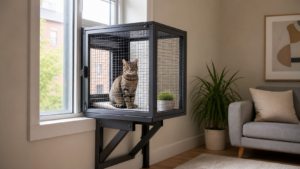
You do not need to entertain your cat every hour. You need to create small choices during the day: a window perch, a rotated toy, a puzzle feeder, a scratcher, a box, a perch, or a safe scent item.
If your cat is alone for long workdays, use our guide on how to entertain an indoor cat while at work to build a daytime plan that reduces evening pressure.
For a broader apartment setup, see our indoor cat enrichment in small apartments guide.
The bedtime routine works better when the day is not completely empty. A window perch, scratcher, rotated cardboard box, treat hunt, or short wand session after work can take pressure off the final bedtime play session.
You do not need a complicated schedule. You just need enough small activity during the day that midnight is not the first interesting thing your cat has seen in ten hours.
Step 6: Make the Apartment Boring After the Routine
After play and food, the home should become less interesting. Put away the wand toy. Reduce loud movement. Avoid starting another game when your cat meows or jumps on the bed. Keep your response calm and predictable.
This part is hard because cats are excellent at testing patterns. If your cat learns that meowing at midnight brings snacks, play, or dramatic attention, the behavior can become stronger.
You are not ignoring your cat’s needs. You are teaching that the active routine happens earlier and nighttime is quiet.
Step 7: Track the Pattern for One Week
Do not judge the routine after one night. Track it for seven days. Write down:
- play start time
- play length
- meal timing
- whether your cat caught the toy
- bedtime behavior
- nighttime waking
- morning behavior
- any appetite, litter box, or mobility changes
If the routine helps a little, keep going and adjust timing. If it makes your cat more intense, shorten the play session and make the toy movement slower. If nothing changes after a consistent week, the problem may not be exercise alone.
Bedtime Routine Table
| Problem | Likely Cause | Best First Fix |
|---|---|---|
| Cat sprints right after lights out | Energy released too late | Start play 60-90 minutes earlier |
| Cat bites feet under blankets | Hands/feet became play targets | Stop rough play and use wand toys |
| Cat cries for food at 4 a.m. | Meal timing pattern | Shift measured food later or use feeder |
| Cat plays for one minute then quits | Toy movement is too fast or boring | Use slower prey-like movement |
| Cat gets more hyper after play | Overstimulation | Shorten session and add more catches |
| Cat wakes owner for attention | Reinforced nighttime response | Move attention into evening routine |
| Senior cat vocalizes at night | Possible pain, confusion, or illness | Call vet if new or increasing |
How to Adjust the Routine by Cat Type
A young high-energy cat may need two short evening play sessions: one earlier after dinner and one closer to bedtime. Keep both structured. If the second session becomes too wild, move it earlier and make it slower.
An overweight cat may need lower-impact movement and more food puzzles. Avoid repeated high jumps or fast turns on slick floors. Use walking, stalking, gentle chasing, and treat hunts instead.
A senior cat may not need tiring out as much as reassurance, comfort, and pain-free access. If a senior cat becomes restless at night, look for pain, confusion, sensory loss, or medical changes before assuming boredom.
A shy cat may prefer play that happens partly under cover. Move the toy near a tunnel, beside a box, or along the edge of furniture. Do not drag the cat into open space if that makes them feel exposed.
A multi-cat household may need separate play turns. One bold cat can steal every chase while the quieter cat watches. If bedtime chaos involves more than one cat, give each cat a chance to complete the hunt.
Sample Evening Schedule
A simple evening routine might look like this:
8:30 p.m.
Light activity, normal household movement, no intense play yet.
9:15 p.m.
Five minutes of easy interaction: brushing, quiet petting, or a short toy preview.
9:45 p.m.
Main hunting-style play session. Use a wand toy or chase toy for a short session your cat tolerates well, with pauses and several successful catches.
10:00 p.m.
Final measured meal or food puzzle.
10:15 p.m.
Calm environment. Put away exciting toys, lower noise, and avoid rewarding new demands.
Overnight
Respond only to true safety or health concerns. Do not restart the entertainment cycle because the cat meowed once.
Adjust the schedule to your own bedtime. The exact clock time matters less than the sequence: play, catch, eat, calm.
Common Mistakes to Avoid
Mistake 1: Using the Laser Pointer Alone
Laser pointers can create frustration because the cat never truly catches anything. If you use a laser, keep it brief and end with a real toy, treat puzzle, or small food reward so your cat gets a physical finish.
I would not use a laser as the whole bedtime routine for an easily frustrated cat. It can raise arousal without giving the body a clear “done” signal.
Mistake 2: Playing Too Hard Too Late
Wild play right before you get into bed can leave some cats more activated. If your cat gets more intense after play, move the session earlier and slow the toy movement.
Mistake 3: Rewarding the Midnight Routine
If the cat wakes you and you immediately feed, play, or talk dramatically, the cat may learn that nighttime behavior works. Move rewards into the planned evening routine instead.
Mistake 4: Expecting One Toy to Solve Everything
Toys help, but routine matters more. The same wand toy can work beautifully at 8:30 p.m. and fail completely at midnight if your cat is already overstimulated.
Before buying more toys, check the sequence: Did play start early enough? Did the toy move like prey? Did your cat get to catch it? Did food come after? Did the apartment become boring afterward? The routine is what makes the toy useful.
Mistake 5: Ignoring Medical Changes
A cat who suddenly becomes active at night may not be “just bored.” Pain, itching, urinary discomfort, thyroid disease, cognitive dysfunction, hunger, or stress can change nighttime behavior.
When Bedtime Activity May Be a Health Sign
Call your veterinarian if nighttime activity is new, severe, or paired with:
- weight loss
- increased thirst
- larger urine clumps
- vomiting
- diarrhea or constipation
- limping or stiffness
- hiding
- confusion
- staring at walls
- sudden aggression
- excessive grooming
- appetite changes
- loud night vocalizing in a senior cat
A bedtime routine can help normal energy patterns. It cannot diagnose pain, thyroid disease, diabetes, kidney disease, urinary problems, arthritis, or cognitive dysfunction.
If the behavior comes with broader health changes, use our indoor cat health prevention guide to connect home observations with veterinary care.
7-Day Reset Plan
Day 1: Observe Without Changing Everything
Write down when your cat becomes active, what happened before it, when dinner happened, and how you responded.
Day 2: Move Play Earlier
Start the play routine before the usual problem time. Keep it short and focused.
Day 3: Add the Final Catch
Make sure your cat catches the toy several times and ends with a satisfying final catch.
Day 4: Move Food After Play
Give the final measured meal after the play session, not before.
Day 5: Add One Daytime Activity
Add a food puzzle, window perch session, toy rotation, or short midday play.
Day 6: Make Nighttime Boring
After the routine, avoid restarting play because your cat demands it.
Day 7: Review the Pattern
Look for improvement in intensity, timing, and duration. Even partial improvement means the routine is working.
How to Know the Bedtime Routine Is Working
The first sign is usually not perfect sleep. It is a smaller problem. Your cat may still wake up, but later. The running may be shorter. The meowing may stop sooner. The cat may settle after food instead of returning to the hallway.
Look for these early improvements:
- your cat starts expecting the play session
- the session ends more calmly
- nighttime sprinting starts later or becomes shorter
- your cat spends more time grooming or resting after the final meal
- you respond less during the night
- morning behavior becomes less frantic
If nothing improves after seven to ten consistent nights, change one variable at a time. Move play earlier, slow the toy, shorten the session, add more catches, shift the final meal, or add more daytime enrichment.
If the behavior gets worse, stop and reassess. A cat who becomes more frantic, more vocal, more aggressive, or more disoriented may not be dealing with ordinary bedtime energy.
Frequently Asked Questions
1. How long should I play with my cat before bed?
There is no single play duration that fits every cat. Start with a brief, enjoyable session and adjust to your cat’s age, health, breathing, coordination, and interest. Some cats prefer two shorter sessions.
2. What if my cat ignores the wand toy at night?
Try slower movement, hiding the toy, changing texture, or starting earlier. A cat who ignores a toy may still be interested in stalking, treat hunts, tunnels, or food puzzles.
3. Should I feed my cat before or after play?
For most cats, feed after play. The hunt-catch-eat sequence is more likely to lead to grooming and rest.
4. Is it okay to do this routine with two cats?
Yes, but watch whether one cat controls the toy. Some cats need separate short play sessions so the quieter cat gets a real chance to chase and catch.
5. Can an automatic feeder help?
An automatic feeder can help if early morning waking is food-related, but it should support the routine rather than replace play and enrichment.
6. Why does my cat get more hyper after play?
The session may be too intense, too late, too frustrating, or missing the catch-and-eat ending. Shorten the session, slow the toy, and add successful catches.
7. When should I call a veterinarian?
Call your veterinarian if the nighttime behavior is sudden, escalating, painful, confused, or paired with weight, appetite, thirst, urination, mobility, or litter box changes.
Final Thoughts
Learning how to tire out a cat before bed is not about draining every bit of energy from your cat. It is about giving the evening a rhythm your cat can understand: stalk, chase, catch, eat, groom, settle.
Start small. Play before your cat is already wild, let them win, feed the final measured meal after play, and make the apartment less interesting afterward. If the routine helps, repeat it for a week before changing everything again.
If your cat’s nighttime behavior is sudden, frantic, painful, confused, or paired with changes in appetite, thirst, weight, litter box use, breathing, or movement, involve your veterinarian. Not every midnight problem is boredom.
References
Schwartz, S. (2002). Separation anxiety syndrome in cats. Journal of the American Veterinary Medical Association.
Dantas, L.M.S. et al. (2016). Food puzzles for cats: Feeding for physical and emotional wellbeing. Journal of Feline Medicine and Surgery. DOI: 10.1177/1098612X16643614.
Amat, M. et al. (2009). Potential risk factors associated with feline behaviour problems. Applied Animal Behaviour Science, 121(2), 134–139. DOI: 10.1016/j.applanim.2009.09.012.
AAFP and ISFM Feline Environmental Needs Guidelines (2013).
Merck Veterinary Manual: Normal Social Behavior in Cats.
Cognitive dysfunction in cats: a syndrome we used to dismiss as “old age” (2010).