By IndoorCatExpert.com| Last Updated: March 2026
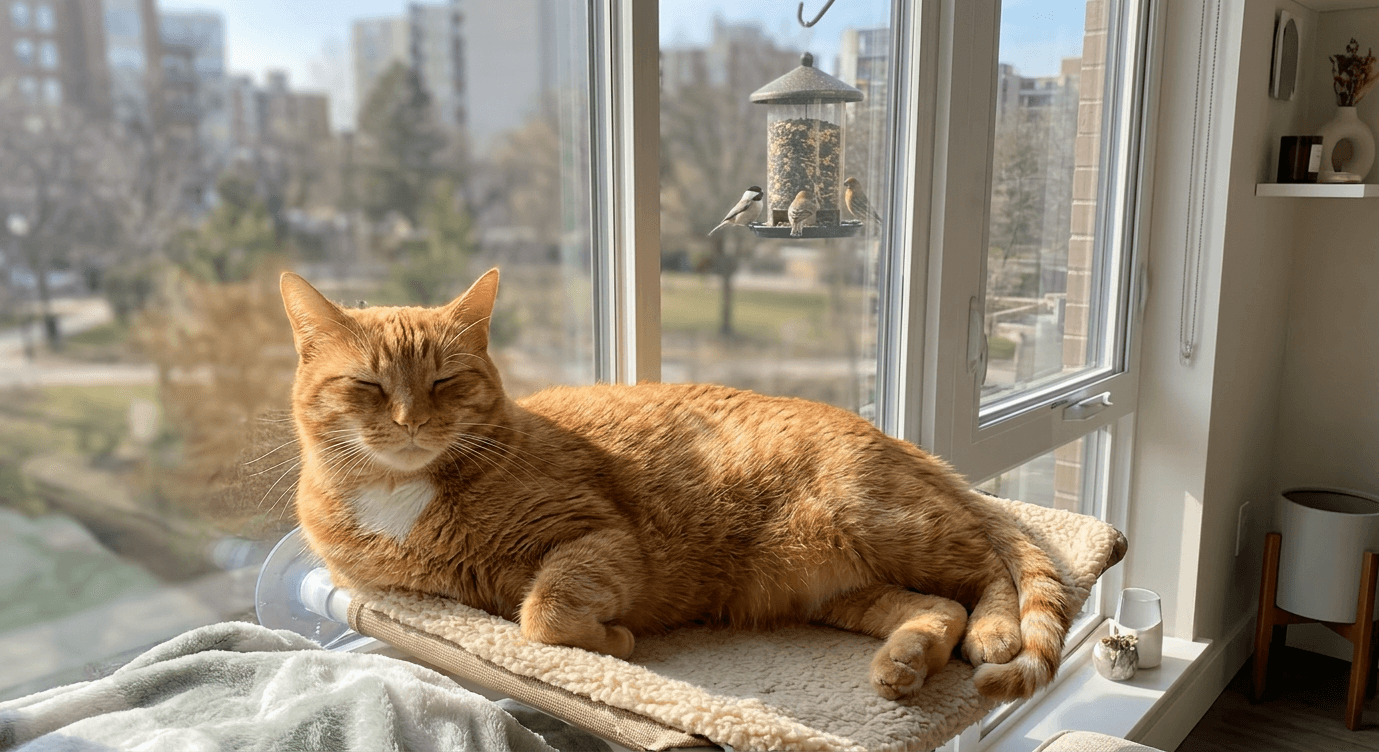
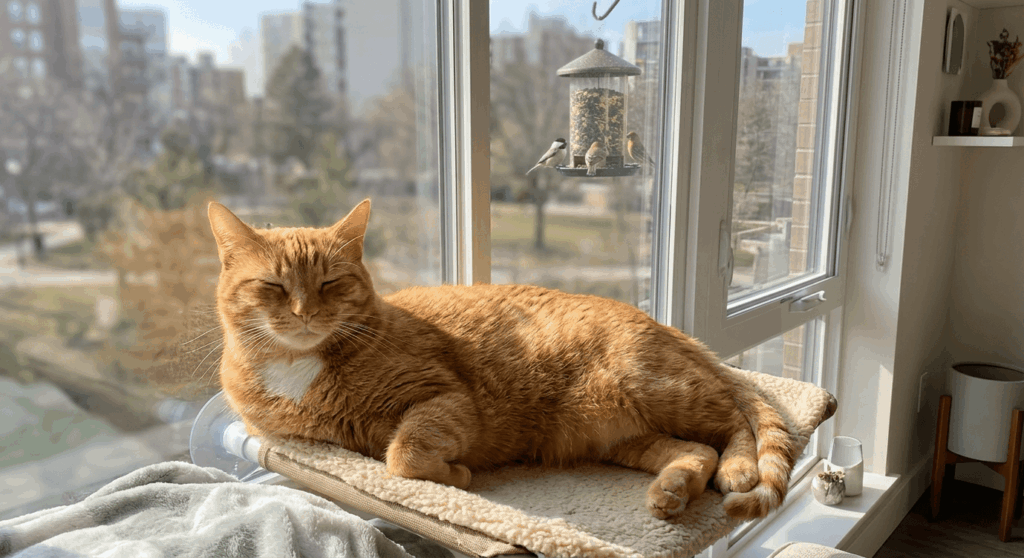
I’ll be honest with you: for the longest time, the idea of a cat window perch apartment setup genuinely terrified me. Oliver — my 12-pound orange tabby who carries himself with the confidence of a much thinner cat — is not exactly a lightweight. The image of him settling his full, gloriously round self onto a suction-cup platform, only to have the whole thing peel away from the glass and send him crashing down mid-nap, kept me from trying one for almost two years.
Then I finally did my research, found the right setup, installed it correctly, and watched Oliver spend his first afternoon glued to that window like he’d been waiting his entire life for this moment. It genuinely changed his daily routine — and I want to save you the two years I wasted being unnecessarily nervous.
Quick Answer
The safest cat window perch apartment setup uses heavy-duty suction cup hammocks rated for 25+ pounds, or no-drill sill-mounted platforms that rest on your windowsill with no adhesive at all. For heavy cats, clean the glass with rubbing alcohol, soak suction cups in warm water before mounting, and press firmly to form a proper seal. Both options are fully renter-friendly.
Why Every Indoor Cat Needs a Window View
There’s a reason behaviorists refer to windows as “cat television.” For an animal whose entire evolutionary history is built around watching, tracking, and reacting to movement, a window is one of the single richest sources of mental stimulation available indoors.
Without access to a good window view, cats lose the visual variety their brains genuinely crave. The result is the kind of flat, disengaged boredom I wrote about in detail when I first noticed Oliver over-grooming his belly and pushing plants off the sill.
Here’s what a window view provides that nothing else quite replicates:
- Constantly changing visual stimulation (birds, insects, weather, people)
- Exposure to natural light cycles, which supports healthy sleep rhythms
- A safe elevated vantage point that satisfies a cat’s need to survey their territory
- Passive, zero-effort enrichment that works even when you’re not home
A window perch takes all of that and makes it accessible. Without one, Oliver used to attempt to balance on the narrow sill itself — which was both precarious and, frankly, a little pathetic to watch.
To give your cat the best seat in the house for their ‘Cat TV,’ read our best cat window perches reviews to find a safe and stable sun-basking spot.
The 3 Best Types of Renter-Friendly Cat Window Perches
Not all perches are equal, and in an apartment context, the installation method matters just as much as the perch itself. Here are the three types worth your attention.
Type 1: Heavy-Duty Suction Cup Hammocks
This is the category I landed on for Oliver, and it’s the most popular option for good reason.
Modern suction cup hammocks are a world away from the flimsy ones you might remember from the early 2000s. The best versions use industrial-grade silicone cups with locking levers that actively increase suction when weight is applied — the heavier the cat, the tighter the seal. Brands like K&H Pet Products and Oster make hammocks rated for 25 to 50 pounds, which covers Oliver with room to spare.
Best for: Windows with clean, smooth glass surfaces and no textured or frosted finish.
Key specs to look for:
- Suction cups at least 4 inches in diameter
- A locking or twist-lock mechanism (not just a basic push-and-stick cup)
- Weight rating clearly stated on the packaging — aim for at least double your cat’s weight
- A hammock style rather than a flat shelf, so the fabric distributes weight evenly
Type 2: Windowsill-Resting Platforms (Zero Suction Required)
If your windows have a sill deep enough to support it, a sill-mounted platform is arguably the most stable option available — because it doesn’t rely on adhesion at all.
These perches essentially sit on the sill, sometimes with padded brackets that grip the sill’s edge, and the cat’s own weight keeps them in place. No suction, no adhesive, no tools, nothing that could possibly mark your apartment.
Best for: Windows with sills at least 3–4 inches deep, and cats who are particularly heavy or restless sleepers.
Brands worth looking at: Petpals, Kitty Cot (their “World’s Best Cat Perch” lives up to the name for sill-resting designs).
Type 3: Freestanding Cat Trees Positioned at the Window
This isn’t technically a window perch — but it deserves a mention here because for apartments where windows simply aren’t suitable for mounting anything, a tall cat tree positioned directly in front of the window achieves the same goal.
A window perch is actually one of the best hacks for adding vertical territory in a small apartment without taking up floor space — and I cover exactly how to layer vertical enrichment throughout a smaller home in my complete guide: indoor cat enrichment in small apartments.
Best for: Renters with large, active cats who need the extra stability of a floor-based structure, or apartments with sliding windows or non-standard glass surfaces.
Window perches are just the beginning. If you want to completely optimize your floor plan, check out our full guide to the best cat furniture small apartment setups.
The ‘Chubby Cat’ Installation Secret
This is the section I genuinely wish had existed before I started. Installing a suction cup perch for a heavier cat is not complicated — but there are a few specific steps that make the difference between a seal that holds for years and one that gives out at 2 a.m.
Step 1: Start With Perfectly Clean Glass
This is the most important step and the one most people skip.
Any trace of dust, fingerprints, window cleaner residue, or condensation will prevent the suction cup from forming a proper seal. I’m talking laboratory clean here.
What to do:
- Wipe the window with a microfiber cloth and rubbing alcohol (isopropyl, 70% or higher)
- Let it dry completely — don’t rush this
- Don’t touch the glass surface again before mounting
Step 2: Warm the Suction Cups in Hot Water
Cold, stiff silicone doesn’t conform well to glass. A warm, pliable suction cup creates a significantly stronger seal.
Before mounting, soak your suction cups in warm (not boiling) water for 5 to 10 minutes. This softens the silicone so it can mold itself precisely to the surface of your glass. It sounds almost too simple to make a real difference. It absolutely makes a real difference.
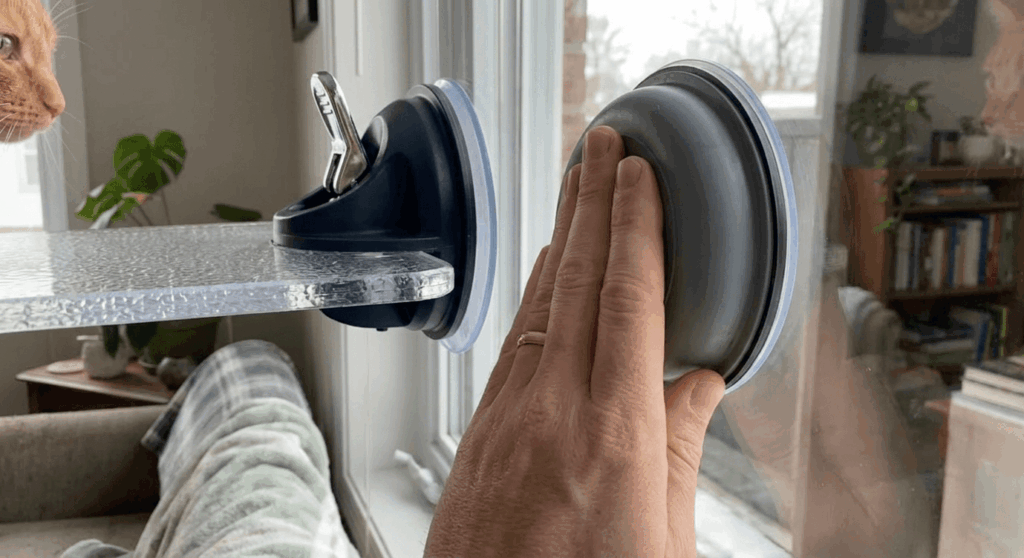
Step 3: Press, Lock, and Apply Pressure
Mounting isn’t a one-and-done push. Do it properly:
- Press the center of the cup firmly against the glass
- Squeeze outward from the center toward the edges to push all air out
- Engage the locking lever or twist mechanism
- Apply sustained pressure with your palm for a full 30 seconds per cup
Don’t hang anything from the perch for at least one hour after installation. Let the seal fully set before Oliver — or your cat — gets anywhere near it.
Step 4: The Weight Test Before Your Cat Uses It
Before you let your cat on the perch, do a manual weight test.
Hang a bag of rice, a jug of water, or any dead weight equal to your cat’s weight from the perch for 15 minutes. If it holds steady with no creaking or movement, it’s ready. If it shows any signs of slipping, remount and repeat the cleaning and soaking steps.
This step takes 15 minutes. It could save your cat from a fall. Do it.
Temperature and Draft Warnings Every Apartment Cat Owner Should Know
A window perch sounds idyllic — and for most of the year, it is. But windows in apartments come with a few seasonal issues that are worth thinking through before you set up a permanent perch there.
Winter: Cold Glass and Drafts
Glass is a poor insulator, and in winter, a perch pressed directly against a cold window can become genuinely uncomfortable — or worse, a source of ongoing chill for a cat sleeping there for hours.
What to do:
- Choose a hammock-style perch over a flat shelf — the fabric creates an air gap between your cat and the cold glass
- Add a self-warming pad or a fleece blanket to the perch surface
- Check for drafts around the window frame — if you can feel cold air moving, your cat definitely can
- In extreme cold snaps, consider moving the perch temporarily or blocking the draft with a draft stopper
Summer: Direct Sun and Overheating
This one surprises people. Cats love sun, yes — but a perch in direct southern or western sun exposure in summer can get genuinely hot, especially on upper floors.
Watch for these signs of overheating:
- Panting (cats don’t pant the way dogs do — if your cat is panting while resting, something is wrong)
- Restlessness or refusing to use the perch in the afternoon
- Seeking out cool tile or hiding under furniture after window time
Simple fixes: Sheer window film, a UV-filtering window cling, or simply repositioning the perch to a north-facing or east-facing window where the sun angle is less intense in the afternoon.
Always Keep the Window Itself Closed or Screened
This one feels obvious but I want to say it out loud anyway: a window perch should never be set up at an open, unscreened window.
Falls from apartment windows are one of the leading causes of serious injury in urban cats. If you want to give Oliver — or your cat — fresh air, use a properly fitted window screen and check it regularly for tears or loose edges. A cat in the grip of prey drive watching a bird will not think twice before going through a compromised screen.
Making the Perch Work Harder: Turning It Into an All-Day Entertainment Station
A perch on its own is great. A perch that’s been deliberately set up as a full enrichment zone is extraordinary.
Watching “Cat TV” from a window perch is one of the best forms of passive entertainment you can set up for a cat who’s home alone — and if your cat spends 8 or 9 hours by themselves while you work, this matters enormously. I put together a full guide on exactly how to keep a cat stimulated during the workday here: how to entertain an indoor cat while at work.
Here’s how to level up the perch setup:
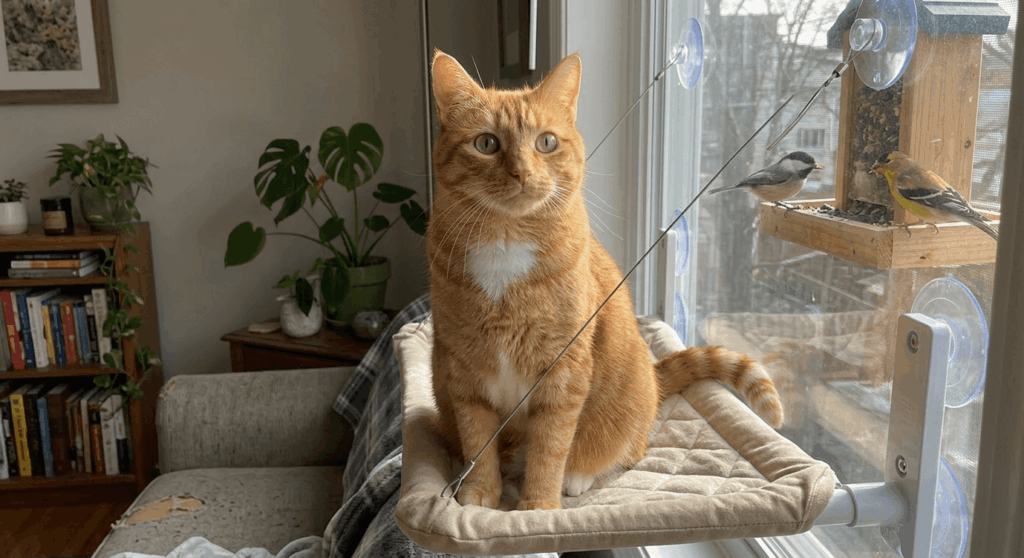
- Install a bird feeder directly outside the window — this transforms a static view into constant, unpredictable movement
- Add a squirrel or bird feeder suction cup on the exterior glass next to the perch, so wildlife gets even closer
- Play cat enrichment videos on a nearby TV or tablet during the day — pair screen time with the real window view for layered stimulation
- Rotate a small catnip toy on the perch weekly to keep the space smelling novel and exciting
- Position a fresh cat grass pot on the windowsill next to the perch — Oliver is absolutely obsessed with his
Key Takeaways
- Suction cup perches absolutely work for heavy cats — but only when installed correctly with clean glass, warmed cups, and a proper locking mechanism
- Sill-resting platforms are the most stable renter-friendly option if your windowsill depth allows it
- Always do a weight test with dead weight before letting your cat use the perch for the first time
- Temperature management matters — account for winter drafts and summer sun, not just the initial setup
- A bird feeder outside the window turns a simple perch into the most engaging thing in your cat’s daily life
- Never set up a perch at an open, unscreened window. Full stop.
Frequently Asked Questions
Will a suction cup perch damage my apartment window?
No — when installed and removed correctly, suction cup perches leave no marks on glass whatsoever. They use atmospheric pressure, not adhesive, so there’s nothing to peel, strip, or stain. When you’re ready to remove the perch, simply release the locking lever and peel the cup away gently from one edge. Wipe the glass clean afterward and there will be no trace it was ever there. This makes suction cup perches one of the most genuinely renter-safe options available.
What is the best cat window perch apartment setup for a heavy or overweight cat?
The best cat window perch apartment setup for a heavier cat combines two things: the right product and the right installation. Look for hammock-style suction cup perches with a stated weight capacity of at least 25 pounds (ideally 40+), with large-diameter locking suction cups. Brands like K&H Pet Products specifically engineer their cups to tighten under load, meaning a heavier cat actually creates a more secure seal. Pair this with the full installation process — clean glass, warmed cups, 30 seconds of firm pressure per cup, and a pre-use weight test — and a 12-pound cat like Oliver is well within safe limits.
How do I get my cat to actually use the window perch after I install it?
Some cats take to a new perch immediately. Others treat it with the profound suspicion that only cats are capable of. If your cat is hesitant, try these steps:
- Rub the perch fabric with a little catnip to make it smell interesting
- Place a worn T-shirt or blanket on the perch so it carries your scent
- Use a wand toy to draw your cat up onto the perch during a play session, so their first experience of it is positive
- Position a bird feeder outside the window — nature is often a more compelling motivator than anything we can manufacture
- Be patient. Oliver took four days before he voluntarily jumped onto his. Now I can’t get him off it.
If this helped you finally take the plunge on a perch setup, I’d love to hear how it goes — especially if your cat has strong opinions about the whole process, the way Oliver tends to have strong opinions about everything. Drop a comment below.
Disclaimer: This article reflects personal experience and general knowledge in feline enrichment and safety. It is not a substitute for veterinary advice. If your cat shows signs of injury or distress after a fall, contact your veterinarian immediately.