By the IndoorCatExpert.com, a cat who now has strong opinions about pâté
For the first two years of Oliver’s life, I fed him exactly one thing: dry kibble. It was convenient, affordable, and — if I’m being completely honest — I never thought much harder about it than that. The bag said “complete and balanced,” and that seemed good enough. It wasn’t until I started reading actual feline nutrition research that I realized how much I didn’t know. The debate around wet food vs dry food indoor cats is not just a preference question or a budget question — it’s a genuine biological one, with real implications for your cat’s long-term health. And the science has some clear things to say, even if the answer is more nuanced than “one is good and one is bad.”
Quick Answer
In the debate of wet food vs dry food indoor cats, science favors wet food for hydration, urinary tract health, and high protein bioavailability. Dry food offers convenience, longer shelf life, and excellent enrichment potential. A thoughtfully mixed feeding approach — wet food as the dietary foundation, dry food for foraging games — often delivers the best balance of health, enrichment, and budget.
The Biological Reality of Indoor Cats
To understand why this debate matters specifically for indoor cats, you first need to understand what domestic cats are built for — and how far removed the average indoor lifestyle is from that design.
Cats evolved as obligate carnivores in arid desert environments. Their primary prey — small rodents and birds — is composed of roughly 65–75% water. This means cats evolved to get the vast majority of their daily moisture from food, not from a separate water source.
Here’s the part that changes everything: cats have a chronically low thirst drive as a direct result of this evolutionary history. Their brains simply don’t trigger thirst signals the way dogs or humans do, because they were never designed to need a separate water source. In the wild, that worked perfectly. In a modern home where the primary food source is dry kibble containing only 8–10% moisture? It creates a slow, chronic hydration deficit that many cats live with for years without obvious symptoms — until it becomes a urinary or kidney problem.
This biological reality is the lens through which the entire wet vs. dry debate needs to be understood.
Indoor Cats Have Unique Nutritional Challenges
Beyond hydration, indoor cats face a specific set of challenges that their outdoor counterparts don’t:
- Lower caloric expenditure — less movement means easier weight gain
- No dietary variety — outdoor cats eat multiple prey types; indoor cats often eat one food for years
- Higher boredom baseline — a static environment reduces natural activity
- Stress-related urinary issues — indoor cats are statistically more prone to Feline Idiopathic Cystitis (FIC), which is directly linked to both stress and low hydration
These factors don’t automatically make dry food wrong. But they do make the hydration and protein quality questions more pressing for indoor cats specifically.
The Case for Wet Food: Moisture, Protein, and What the Research Shows
Let me be clear upfront: I’m not here to make anyone feel guilty about feeding dry food. I fed Oliver kibble exclusively for two years. This is about information, not judgment. That said, the scientific case for wet food as a primary diet for indoor cats is genuinely strong.
Hydration: The Single Biggest Argument
Wet cat food typically contains 70–80% moisture — closely mirroring the water content of whole prey. Dry kibble contains 8–10% moisture. That difference is not trivial.
Research published in the Journal of Feline Medicine and Surgery found that cats fed wet food had significantly higher total water intake and urine output than cats fed dry food — even when dry-fed cats had unlimited access to a water bowl. The cats simply didn’t drink enough water to compensate for the difference.
Why does this matter?
- Urinary tract health: Concentrated, low-volume urine is a primary risk factor for urinary crystals, blockages (especially in male cats), and Feline Idiopathic Cystitis
- Kidney function: Chronic mild dehydration over years places cumulative stress on the kidneys — a leading cause of death in senior cats
- Bladder health: Dilute urine flushes the bladder more effectively, reducing bacterial and crystal buildup
Because cats have such a naturally low thirst drive, feeding wet food is genuinely one of the most effective ways to increase an indoor cat’s total daily water intake and protect their urinary tract long-term. I cover the hydration piece in much more depth — including water fountain recommendations and signs of dehydration — in [How to Get an Indoor Cat to Drink More Water].
Protein Quality and Macronutrient Profile
Cats require a diet that is high in animal protein and moderate in fat, with minimal carbohydrate requirements. Here’s where dry and wet food diverge significantly:
全屏复制
| Nutrient | Typical Wet Food (Dry Matter Basis) | Typical Dry Food (Dry Matter Basis) |
|---|---|---|
| Protein | 40–55% | 28–35% |
| Fat | 20–35% | 10–20% |
| Carbohydrates | 2–10% | 30–50% |
| Moisture | 70–80% | 8–10% |
Note: “Dry matter basis” removes moisture to allow accurate comparison between wet and dry foods.
That carbohydrate figure for dry food is the one that catches most people off guard. Cats have extremely limited ability to digest and metabolize carbohydrates — they lack the salivary amylase enzyme that begins carbohydrate digestion in humans, and their intestinal disaccharidases (carb-digesting enzymes) are present in much lower quantities than in omnivores.
High-carbohydrate diets in cats are associated with:
- Obesity and blood sugar dysregulation
- Inflammatory bowel conditions
- Reduced satiety (cats feel less full on carb-heavy food, potentially eating more)
Wet food, particularly pâté-style formulas with named meat as the first ingredient, typically delivers a macronutrient profile far closer to what a cat’s biology expects.
Calorie Density and Weight Management
For indoor cats prone to weight gain, wet food offers a practical advantage: you can feed a larger volume of food for fewer calories. The high moisture content adds bulk and satisfaction without adding caloric load. This makes portion control more forgiving and helps cats feel genuinely full rather than leaving them hungry after a small kibble portion.
The Case for Dry Food: Where Kibble Actually Wins
Here’s the thing about dry food that nutrition conversations often skip past: it genuinely excels in several areas, and dismissing it entirely misses the full picture.
Convenience and Practicality
Let’s be honest about real life. Wet food:
- Spoils within 2–4 hours at room temperature
- Requires refrigeration after opening
- Costs significantly more per calorie than dry food
- Creates more mess and odor
For cat owners who work long hours, travel frequently, or are managing tight budgets, these are legitimate constraints — not laziness. Dry food can sit in a bowl safely all day. It doesn’t require refrigeration. It’s dramatically more affordable. For many households, an all-wet diet simply isn’t sustainable, and a sustainable imperfect diet beats an abandoned perfect one every time.
The Enrichment Advantage
This is dry food’s underappreciated superpower, and it has nothing to do with nutrition.
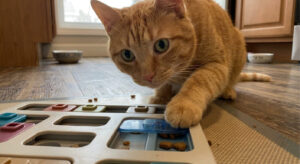
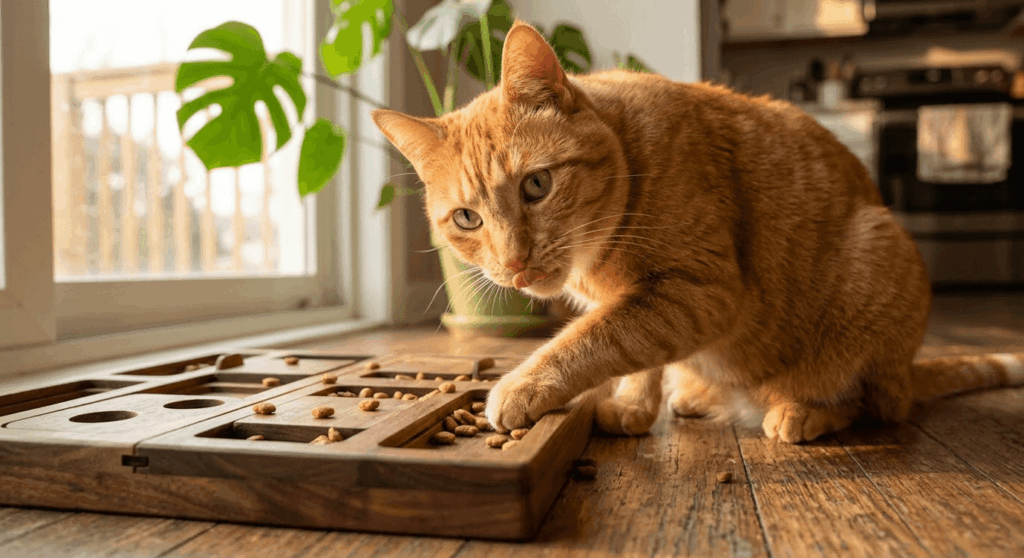
Dry kibble is the perfect enrichment tool. Individual pieces are small, lightweight, and easily hidden. You can scatter them across a snuffle mat, pack them into a puzzle feeder, roll them under furniture for a foraging game, or freeze them into a foraging toy. Wet food simply cannot do this.
For indoor cats — especially those in apartments — this matters enormously. Using a portion of your cat’s daily dry food allowance as enrichment fuel rather than bowl food turns a meal into a 20-minute mental workout. I’ve written a full breakdown of how to use kibble as part of a broader apartment enrichment strategy in [The Small Apartment Cat Survival Guide: 7 Pillars of Indoor Enrichment], including specific puzzle feeder recommendations by difficulty level.
Dental Health: The Real Story
You’ve probably seen dry food marketed with dental health claims. Let’s look at what the evidence actually shows.
The claim: Crunching kibble mechanically scrapes plaque from teeth.
The reality: Most cats don’t actually chew their kibble — they crack it and swallow. Even for cats that do chew, the kibble only contacts the tip of the tooth, not the gum line where periodontal disease actually develops. The Veterinary Oral Health Council (VOHC) has stated that standard dry kibble does not provide meaningful dental benefit. Only specific therapeutic dental diets (with a VOHC seal) have evidence behind them.
The real dental answer is regular tooth brushing, dental treats with the VOHC seal, or water additives — not the food texture itself.
Bottom line: Don’t choose dry food for dental benefits. That’s not where its genuine value lies.
For the actual, step-by-step process of keeping their teeth clean, read our ultimate guide on indoor cat dental health and brushing.
Busting the ‘Dry Food Cleans Teeth’ Myth (And Other Common Beliefs)
While we’re here, let’s clear up a few other persistent myths:
“Wet food causes diarrhea”
Partially true, temporarily. Transitioning to wet food too quickly can cause loose stools because of the dramatic increase in moisture and change in gut bacteria balance. A slow transition over 7–10 days — replacing 25% of the old food with new food every few days — prevents this almost entirely.
“Dry food is better for weight management because it’s less calorie-dense”
Actually backwards. Dry food is more calorie-dense per gram than wet food because it contains so little moisture. Calorie for calorie, wet food provides more volume and satiety. The reason dry food gets this reputation is that it’s often overfed in free-choice situations, not because of anything inherent to its caloric profile.
“Cats who eat wet food become picky and won’t eat dry food in an emergency”
True, and manageable. Cats can develop strong texture preferences, and a cat raised exclusively on wet pâté may refuse dry food when offered. The solution: expose your cat to multiple textures and formats from an early age, and include occasional dry food in their rotation even if it’s not the primary diet.
“Indoor cats need different formulas than outdoor cats”
Somewhat true. “Indoor cat” formulas typically have slightly reduced calories and added fiber for hairball management. Whether this justifies the “indoor” label varies by brand — read the ingredient panel and caloric content rather than relying on marketing language.
The Mixed Feeding Strategy: The Approach Most Vets Actually Recommend
Once you’ve decided what to feed, knowing exactly when to serve it is just as important. Check out our proven indoor cat feeding schedule to stop the begging.
After working through the science and spending two years experimenting with Oliver’s diet, here’s where I landed — and it’s the approach most feline veterinary nutritionists I’ve read support as a practical middle ground.
What Mixed Feeding Looks Like in Practice
Primary diet: Wet food (70–80% of daily calories)
- Served twice daily using the hunt-eat-sleep sequence (after play sessions)
- High-quality pâté or chunked formulas with named meat protein as the first ingredient
- No more than 2–4 hours at room temperature before removing
Secondary: Dry food (20–30% of daily calories)
- Measured daily allotment used entirely for enrichment — puzzle feeders, scatter feeding, foraging games
- Not left in a bowl for free-choice snacking
- Choose a high-protein, low-carbohydrate formula when possible
How to Transition From All-Dry to Mixed Feeding
Oliver resisted wet food for the first full week. Here’s the transition protocol that worked:
- Days 1–3: Add a small amount of wet food alongside kibble. Don’t reduce kibble yet.
- Days 4–6: Replace 25% of kibble with wet food by caloric equivalent.
- Days 7–10: Move to 50/50.
- Days 11–14: Shift to 70–80% wet food, 20–30% dry.
- Week 3 onward: Settle into your target ratio.
Patience is the key variable here. Some cats accept the transition in five days. Oliver took three weeks of persistent, non-dramatic offering before he ate wet food without side-eyeing me.
Reading Labels: What to Actually Look For
Whether you’re buying wet or dry, these are the markers of a nutritionally sound formula:
Green flags:
- ✅ Named animal protein as the first ingredient (chicken, salmon, turkey — not “meat” or “poultry by-products” as the primary source)
- ✅ AAFCO statement confirming “complete and balanced” for your cat’s life stage
- ✅ Taurine listed (essential amino acid cats cannot synthesize)
- ✅ Ingredient list you can mostly recognize
Red flags:
- ❌ Corn, wheat, or rice as first or second ingredients
- ❌ Artificial colors (cats are indifferent to food color — it’s entirely for human appeal)
- ❌ Vague protein sources (“animal digest,” “meat meal” without species named)
- ❌ “By-products” as the primary protein (occasional by-products are fine; leading with them is a different story)
A Note on Budget: You Don’t Have to Go All-In
I want to address this directly, because nutrition advice that ignores economic reality isn’t actually helpful.
Premium wet food fed exclusively to one cat can cost 60–60–120 per month depending on your location and brand. That’s a real number, and not everyone has it.
Some honest budget-friendly approaches:
- Use wet food for one meal daily and high-quality dry for the other — even partial wet feeding improves hydration meaningfully
- Buy store-brand wet food — the gap between budget and premium wet food is smaller than the gap between budget and premium dry food, because the moisture content itself is the primary benefit
- Prioritize wet food for cats with existing urinary or kidney issues — if your cat has health concerns, wet food moves from “preferable” to “medically important,” and that may reshape your budget priorities
- Use dry food strategically — reserving it entirely for enrichment activities rather than bowl feeding maximizes its value without increasing the quantity used
Frequently Asked Questions
👉 Is it okay to mix them when testing wet food vs dry food indoor cats?
Technically yes, but it’s not ideal for a few reasons. Wet food left mixed with dry kibble can make the kibble soggy and unappetizing, and it accelerates spoilage of the wet food component. More practically, serving them separately allows you to control portions accurately for each format. The better approach: serve wet food in a bowl at scheduled meal times, and use the dry food portion as enrichment in a puzzle feeder within the same day’s caloric budget.
👉 How much wet food should I feed my indoor cat per day?
The standard guideline is roughly 24–35 calories per pound of body weight per day for a healthy adult indoor cat, though this varies with age, activity level, and individual metabolism. A 10-pound moderately active indoor cat needs approximately 200–250 calories daily. A standard 3 oz can of wet food contains roughly 70–100 calories depending on brand. Always check the specific caloric content on the label and adjust portions based on your cat’s body condition score, not just weight. When in doubt, your vet can calculate a precise target.
👉 My cat refuses to eat wet food. What should I try?
Texture preference is usually the barrier. Try these strategies in order:
- Start with a topper — add a small amount of tuna juice or low-sodium chicken broth over kibble to introduce unfamiliar protein flavors
- Try multiple textures — some kibble-addicted cats will accept a shredded or gravy formula before they’ll touch pâté
- Warm it slightly — wet food served at room temperature or briefly warmed releases more aroma, which is how cats evaluate food palatability
- Don’t hover — put the food down and walk away. Cats often won’t eat with someone staring at them expectantly
- Be patient and consistent — offer wet food at every meal without making kibble simultaneously available. Most cats will come around within 1–3 weeks when they’re genuinely hungry and the alternative isn’t available.
⚠️ Important: If your cat refuses food entirely for more than 24–48 hours, see a vet. Cats who stop eating completely are at risk for hepatic lipidosis (fatty liver disease), which can develop quickly and is a genuine medical emergency.
To see how this fits into the big picture of feline nutrition, check out our master indoor cat diet guide.
References
- Buckley, C. M., Hawthorne, A., Colyer, A., & Stevenson, A. E. (2011). Effect of dietary water intake on urinary output, specific gravity and relative supersaturation for calcium oxalate and struvite in the cat. Journal of Feline Medicine and Surgery, 13(8), 561–566. https://doi.org/10.1016/j.jfms.2011.07.002
- Pierson, L. A. (2008). Feeding your cat: Know the basics of feline nutrition. CatInfo.org. Retrieved from https://catinfo.org (Written by a feline internal medicine specialist; widely cited in clinical feline nutrition contexts.)
- Zoran, D. L. (2002). The carnivore connection to nutrition in cats. Journal of the American Veterinary Medical Association, 221(11), 1559–1567. https://doi.org/10.2460/javma.2002.221.1559
Oliver has now developed the audacity to sniff a bowl of wet food, look up at me with visible disappointment, and walk away — which I choose to interpret as a sign that his palate has matured. We’ve come a long way from the cat who ate bargain kibble without a second thought.
Was this helpful? If you switched your cat from dry to wet food and lived to tell the tale, share your experience in the comments. The transition stories are always the most useful — and the most entertaining. 🐾