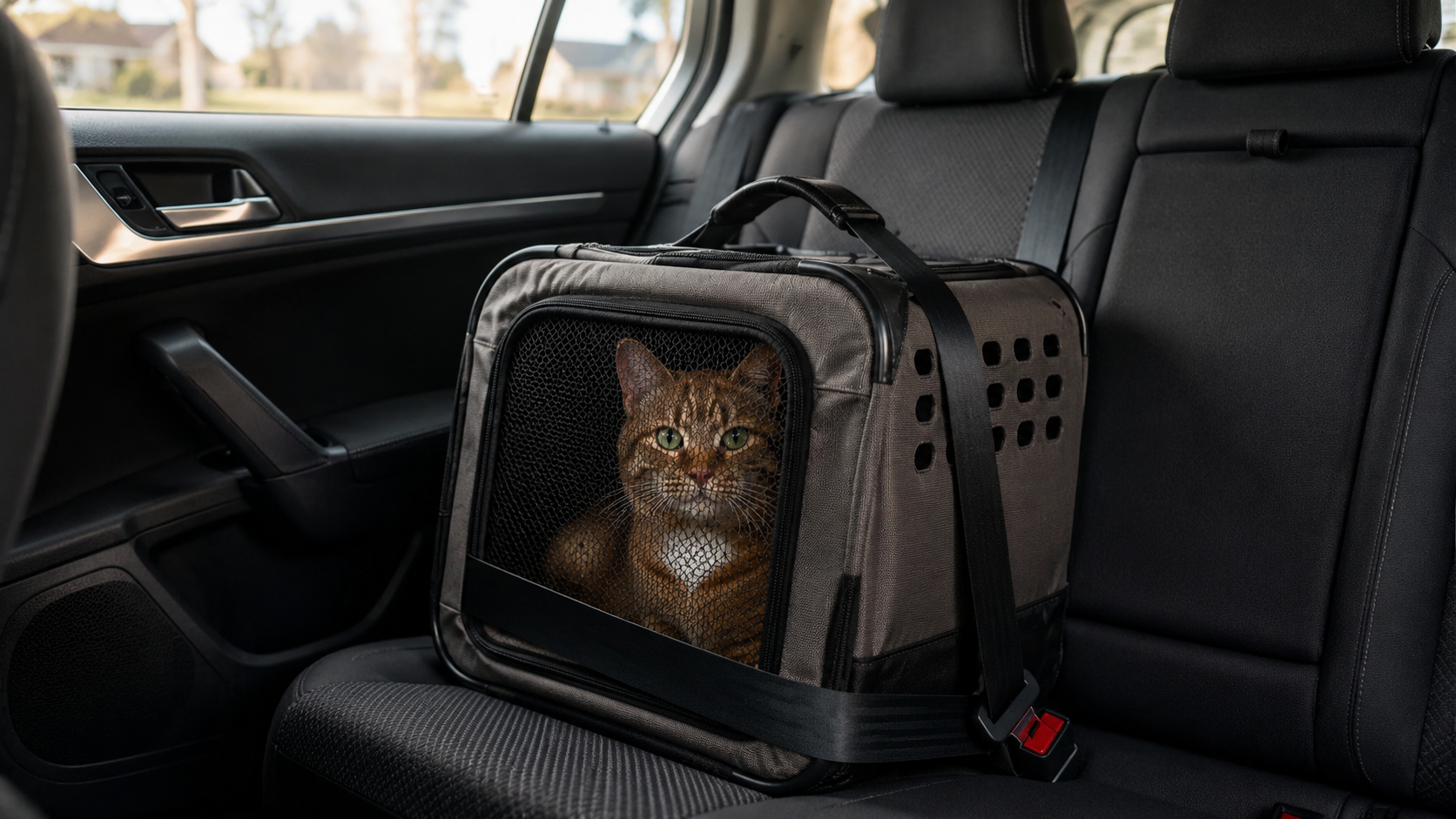
Traveling with a cat in a car is safer when the trip is planned before the carrier leaves home. Use a secure, well-ventilated carrier; prevent the carrier from sliding or tipping according to its instructions; keep the cabin comfortable; and never leave a cat unattended in a parked vehicle.
For a long drive, plan food, water, litter, identification, medication, and emergency contacts with your cat’s health and travel history in mind. A cat that pants, open-mouth breathes, collapses, repeatedly vomits, or becomes extremely weak needs prompt veterinary help.
Quick Answer: How Do You Travel with a Cat in a Car Safely?
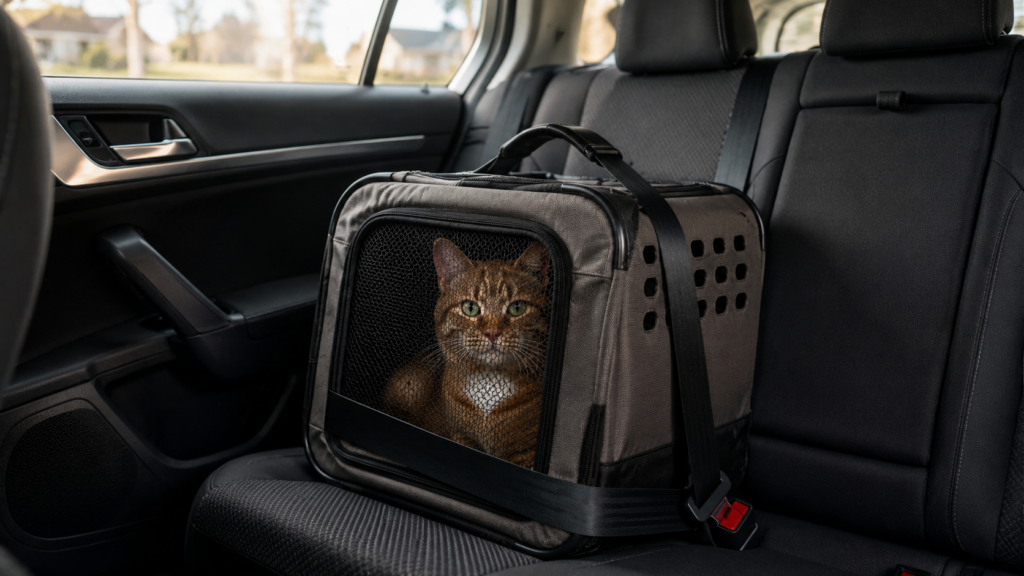
When traveling with a cat in a car, keep your cat inside a secure carrier, fasten the carrier with a seatbelt or approved restraint, keep the car cool and well ventilated, and plan rest stops for long trips. Do not let your cat roam loose in the car, sit on your lap, or leave them unattended in a parked vehicle.
For anxious cats, prepare the carrier in advance with familiar bedding, use scent support carefully, and ask your veterinarian whether anti-nausea or anti-anxiety medication is appropriate. Do not give gabapentin, sedatives, human medications, essential oils, or over-the-counter calming products without veterinary guidance.
For cats who panic before the car ride even starts, choosing one of the best cat carriers for nervous cats can make loading, seatbelt setup, and travel practice much easier.
Important Travel Safety Note
This guide is for general travel preparation, not veterinary medical advice. If your cat has heart disease, breathing problems, kidney disease, diabetes, urinary blockage history, severe anxiety, seizures, motion sickness, senior frailty, or current medication needs, ask your veterinarian before travel day. Contact a veterinarian or emergency clinic promptly if your cat pants, open-mouth breathes, collapses, has blue or pale gums, cannot urinate, vomits repeatedly, becomes extremely weak, or refuses food for more than 24 hours after travel.
Table of Contents
Pre-Trip Car Travel Checklist
Before traveling with a cat in a car, prepare the trip before the carrier ever leaves the apartment. Most bad car trips start with rushing: the carrier appears suddenly, the cat hides, the owner gets stressed, the car is already warm, and nobody has checked food, medication, or route timing.
Use this checklist before any longer drive.
| Travel Item | Why It Matters | What to Do |
|---|---|---|
| Carrier | Prevents escape and injury | Use a secure carrier with ventilation and a stable base |
| Familiar bedding | Reduces unfamiliar scent stress | Add a towel or blanket that smells like home |
| Seatbelt placement | Prevents sliding and tipping | Secure the carrier on the seat or floor according to carrier design |
| Temperature | Cats can overheat quickly | Cool the car before loading your cat |
| Water plan | Long trips may need hydration support | Bring water and a small bowl |
| Litter plan | Long trips or delays can create accidents | Pack a small travel litter setup if needed |
| Vet records | Useful for travel emergencies | Keep digital and physical copies |
| Medication | Missed doses can matter | Pack medication and written instructions |
| Cleaning supplies | Stress accidents happen | Bring paper towels, bags, and pet-safe cleanup supplies |
| Route plan | Reduces unnecessary delays | Plan stops before the trip |
Do not wait until the morning of travel to test the carrier, calming products, or car setup. A calm practice session at home is much safer than discovering a problem on the highway.
Why Car Travel Can Be Stressful for Cats
Car travel combines unfamiliar motion, vibration, noise, smells, visual stimulation, and removal from a familiar territory. Some cats vocalize, freeze, drool, vomit, eliminate, or try to escape; these signs can reflect fear, motion sickness, pain, overheating, or another medical problem.
Preparation cannot guarantee a calm trip, but carrier training, a stable carrier position, familiar bedding, comfortable temperature, and veterinary guidance can reduce avoidable stress. Practice with short, low-pressure sessions before a necessary long drive whenever possible.
7 Safety Tips for Traveling with a Cat in a Car
Tip 1: The ‘Home-to-Car’ Scent Bridge
Cats navigate their world almost entirely through olfactory information — scent is their primary language, and it is the most powerful tool you have when traveling with a cat in a car.
A gradual carrier-familiarization plan:
- Leave the carrier open in a familiar room well before the trip, with comfortable bedding inside.
- Reward voluntary investigation and brief stays; never force a practice session.
- Add a familiar towel or blanket on travel day. A breathable cover may reduce visual stimulation while preserving airflow.
- If using a feline pheromone product, follow its label exactly, allow sprayed surfaces to dry before the cat enters, and never spray it directly on the cat.
Familiar bedding and gradual carrier training can make the carrier less novel. These steps may help some cats, but they are not a substitute for veterinary advice when a cat has severe travel fear, motion sickness, breathing problems, or another medical condition.
Tip 2: Secure the Carrier and Prevent Escape
Keep the cat confined in a sturdy, well-ventilated carrier whenever the vehicle is moving. A loose cat can interfere with the driver, escape during a stop, or be injured during sudden braking.
- Choose a carrier large enough for the cat to stand, turn, and lie down naturally, with secure latches and no damaged seams or doors.
- Follow the carrier manufacturer’s vehicle-restraint instructions. Position it where it will remain stable and will not be struck by an inflating airbag.
- Before driving, push the carrier gently from several directions to confirm that it cannot slide, tip, or open.
- Keep doors and windows closed before opening the carrier at the destination or during an emergency stop.
For nervous cats, compare door access, ventilation, cleaning, and restraint compatibility in our guide to the best cat carriers for nervous cats.
Tip 3: Control Temperature and Watch Breathing
Cool or warm the cabin to a comfortable temperature before loading the cat, keep all carrier vents clear, and position the carrier away from direct hot sun or strong airflow. Never leave a cat unattended in a parked vehicle, regardless of the weather or planned stop length.
Check the cat at safe intervals without opening the carrier beside an open door. Panting or open-mouth breathing at rest, blue or very pale gums, collapse, marked weakness, or worsening breathing effort are urgent warning signs. Stop in a safe place, improve airflow and temperature without causing an escape, and contact an emergency veterinary clinic.
Tip 4: Ask Your Veterinarian About Nausea or Anxiety
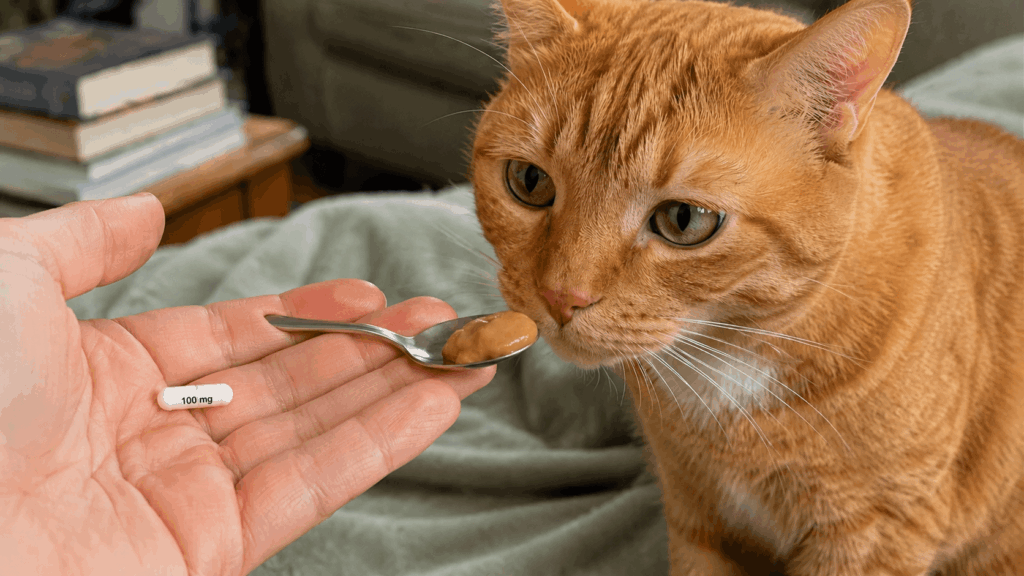
Some cats need prescription support for motion sickness or severe travel fear. The appropriate medication, dose, timing, and monitoring depend on the individual cat’s health, age, kidney function, current medicines, and previous response.
Gabapentin is one medicine veterinarians sometimes prescribe before transport or veterinary visits. A small randomized crossover study in 20 healthy cats with a history of stress found lower owner-rated transport stress after a veterinarian-directed preappointment dose, but sedation was common and ataxia, hypersalivation, and vomiting were also reported. That study does not establish a universal dose or protocol for every cat or for long-distance travel.
If your veterinarian prescribes a travel medication, follow the written instructions and ask whether a supervised trial at home is appropriate before travel day. Do not use leftover medication, human anxiety medicine, essential oils, CBD products, antihistamines, or over-the-counter sedatives unless your veterinarian specifically directs you to do so.
Tip 5: Reduce Visual Stimulation Without Blocking Airflow
A light, breathable towel or carrier cover may reduce visual stimulation for some cats. Cover only as much as the carrier design and cabin temperature safely allow, keep every ventilation opening clear, and make sure you can still monitor the cat.
A cover will not calm every cat and should never trap heat or restrict airflow. Persistent panting, open-mouth breathing, repeated vomiting, collapse, or extreme weakness requires prompt veterinary attention.
Tip 6: Plan Water and Litter Access for Long Drives
Long trips require a plan for hydration, elimination, delays, and cleanup, but there is no single safe break interval for every cat. Ask your veterinarian about an appropriate plan if your cat is very young, senior, diabetic, has kidney or urinary disease, takes scheduled medication, or has a history of travel distress.
- Pack water, a familiar low-dust litter, a compact litter pan, absorbent pads, waste bags, paper towels, and pet-safe cleaner.
- Offer water and litter only when the vehicle is safely parked and all doors and windows are closed.
- Do not open a carrier in a parking lot, at a fuel pump, beside an open vehicle door, or in an unsecured cargo area.
- A properly fitted harness and identification can provide secondary protection, but they do not replace a secure carrier and closed vehicle.
Cats vary widely in whether they will drink or use litter during a stop. The goal is to provide a safe opportunity without creating an escape risk or forcing the cat out of the carrier.
Long Drive Plan for Indoor Cats
Long Drive Plan for Indoor Cats
A short vet drive and a long relocation drive are different problems. For a short trip, your goal is secure containment and low stress. For a long trip, you also need to plan for timing, temperature, food, water, litter, medication, and recovery.
For drives under one hour, most cats do best with a secure carrier, familiar bedding, and no unnecessary stops. For longer drives, plan more carefully.
Before a long drive:
- confirm the carrier is secure
- cool the car before loading
- pack water
- pack familiar food
- bring medication if used
- carry a small litter option
- avoid loud music
- avoid strong air fresheners
- keep the route simple
- know where emergency veterinary care is available along the route
During the drive, keep the cabin calm. Speak normally if your voice helps, but do not over-stimulate your cat. Some cats settle faster when the carrier is partially covered with a light breathable blanket. Others do better with more visibility. Watch your cat’s response.
For very long trips, ask your veterinarian whether your cat needs a specific feeding, medication, or nausea-prevention plan. Do not experiment with sedatives, human medications, or new supplements on travel day.
Tip 7: Make an Individual Feeding and Motion-Sickness Plan
Do not apply a universal fasting schedule to every cat. Kittens, cats with diabetes, cats taking food-dependent medication, and cats with other medical conditions may be harmed by inappropriate fasting. Ask your veterinarian when and how much to feed before and during a long trip.
Signs that may accompany motion sickness include drooling, repeated swallowing, lip licking, vomiting, restlessness, or sudden quietness. If these occur, stop safely, check airflow and temperature, and contact your veterinarian for advice. Prescription anti-nausea treatment may be appropriate for future travel, but it should be selected for the individual cat.

If Your Car Trip Includes an Airport Transfer
Air travel has separate carrier, health-document, security, and medication rules. Check the current requirements of the airline, destination, USDA or other relevant authority, and your veterinarian before booking. Policies and fees change, so do not rely on a generic dimension, price, vaccine list, or certificate timeline.
At a security checkpoint, ask the screening authority about a private screening room if removing your cat from the carrier in an open terminal would create an escape risk. Keep secure identification on the cat and carrier. Sedation or anti-anxiety medication for air travel requires an individual veterinary risk assessment; it should never be presented as automatically appropriate.
For carrier preparation before the airport transfer, see our cat carrier training guide and our comparison of carriers for nervous cats.
After the Car Trip: What to Watch For
The trip does not end when the car stops. Many cats need time to recover after travel, especially if the drive involved heat, noise, motion sickness, crying, or a new location.
After arrival, move your cat to a quiet room before opening the carrier. Do not open the carrier in a parking lot, hallway, lobby, garage, or unfamiliar open space. Let your cat exit in a closed room with food, water, litter, and hiding space available.
Watch for:
- normal breathing
- ability to walk normally
- willingness to drink
- appetite returning
- litter box use
- reduced hiding over time
- no repeated vomiting
- no open-mouth breathing
- no collapse or severe weakness
Some cats hide after a car ride. That can be normal. The concern is hiding combined with refusal to eat, breathing changes, repeated vomiting, inability to urinate, severe distress, or signs of pain.
If the car trip is part of a move, pair this recovery step with the full moving with a cat to a new apartment plan so your cat has a safe room ready before arrival.
Frequently Asked Questions
1. How long can a cat stay in a carrier during a car trip?
There is no universal maximum that is appropriate for every cat. Trip length, temperature, carrier size, age, health, medication, and the cat’s ability to drink or eliminate all matter. Plan safe parked stops for long journeys and ask your veterinarian for an individual schedule when your cat has medical needs or a history of severe travel stress.
2. Should I feed my cat before a long drive?
Ask your veterinarian when to feed before and during the trip, especially for kittens, diabetic cats, cats with chronic disease, or cats taking medication with food. A smaller pre-trip meal may be suitable for some healthy adult cats, while fasting may be unsafe for others. Keep water available according to your veterinarian’s travel plan.
3. How do I stop my cat from crying in the car?
You may not be able to stop all crying, but you can reduce the triggers. Start with carrier training before travel day, use familiar bedding, keep the carrier secured, block excess visual stimulation with a breathable cover, and keep the car cool and quiet. If your cat cries intensely, pants, drools heavily, vomits, or panics on short drives, ask your veterinarian whether anti-nausea medication or prescription calming support is appropriate. Do not give sedatives or human medication without veterinary guidance.
4. Can I let my cat out of the carrier during a car trip?
No, not while the car is moving. A loose cat can crawl under pedals, distract the driver, escape through an open door, or be injured during sudden braking. Keep your cat inside a secure carrier whenever the vehicle is moving. For long trips, only open the carrier after all car doors and windows are closed and you are in a controlled space.
5. What should I pack when traveling with a cat in a car?
Pack a secure carrier, familiar bedding, a small amount of normal food, water, collapsible bowls, a portable litter pan, low-dust litter, waste bags, paper towels, an enzymatic cleaner, vaccination or medical records, ID tag information, and any veterinarian-prescribed medication. For long trips, also bring a towel or breathable carrier cover, backup bedding, and your veterinarian’s contact information.
Final Thoughts
Traveling with a cat in a car will probably never feel effortless. Cats are not built for sudden noise, vibration, changing scenery, and hours inside a carrier. But the trip becomes much safer when you control the things you can control: carrier security, temperature, familiar scent, rest-stop planning, food timing, and veterinary guidance for cats who need extra support.
The goal is not to force a cat to enjoy the road. It is to reduce preventable risk and stress through secure containment, gradual preparation, temperature control, an individualized food and medication plan, and prompt veterinary help when warning signs appear.
References
1.Stella, J. L., Lord, L. K., & Buffington, C. A. T. (2013). Sickness behaviors in response to unusual external events in healthy cats and cats with feline interstitial cystitis. Journal of the American Veterinary Medical Association, 238(1), 67–73.
2.van Haaften, K. A., Eichstadt Forsythe, L. R., Stelow, E. A., & Bain, M. J. (2017). Effects of a single preappointment dose of gabapentin on signs of stress in cats during transportation and veterinary examination. Journal of the American Veterinary Medical Association, 251(10), 1175–1181.
3.American Veterinary Medical Association. Transporting your pet.
4.International Cat Care. Travelling with your cat. https://icatcare.org/advice/travelling-with-your-cat/
5.American Veterinary Medical Association. Pets in vehicles.