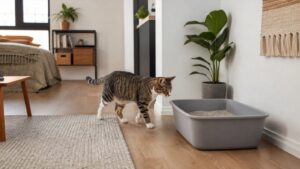
Finding the best cat litter odor control apartment setup is not just about buying the strongest-smelling litter. In a small home, the best litter needs to control urine odor, clump cleanly, create minimal dust, track less across the floor, and still feel comfortable enough that your cat actually uses the box.
In my apartment with Oliver, odor control became manageable once I found the right substrate and combined it with a strict daily routine. Daily scooping, regular deep cleans, proper ventilation, and choosing unscented, highly absorbent litter worked much better than trying to cover odors with sprays.
Quick Answer
The best cat litter odor control apartment choice for most indoor cats is a low-dust, unscented clumping litter with strong urine clumps and moderate tracking control. Clumping clay usually gives the strongest odor control, tofu litter is a good low-dust apartment option, crystal litter can work for owners who want less scooping, and natural pellet or paper litter may suit sensitive cats. Avoid relying on heavily scented litter to fix apartment odor. If the box still smells after daily scooping, the issue may be weak clumping, shallow litter depth, poor airflow, an old plastic box, or hidden urine residue around the litter area.
Important Safety Note
This guide is educational and cannot diagnose your cat at home. If your cat has sudden appetite changes, weight loss, vomiting, diarrhea, straining, blood, pain, hiding, aggression, excessive thirst, or litter box changes, contact your veterinarian promptly. For urinary blockage signs, deep bites, breathing distress, collapse, or inability to urinate, seek urgent veterinary care.
Table of Contents
Best Cat Litter Odor Control Apartment: Quick Picks
| Best for | Litter type | Why it works |
|---|---|---|
| Strongest odor control | Low-dust clumping clay | Forms tight urine clumps and removes waste cleanly |
| Low-dust small apartments | Tofu or soy-based clumping litter | Often lighter, lower dust, and easier to manage in small spaces |
| Low-maintenance routines | Crystal silica litter | Absorbs moisture and can reduce daily scooping workload |
| Sensitive cats | Paper or natural pellet litter | Lower fragrance exposure and a softer scent profile |
Litter choice is only one part of odor control. For the full small-space routine, see our litter box odor cleaning guide, which covers scooping, box washing, urine cleanup, tracking, and air quality.
How to Choose Odor-Control Litter for an Apartment
The best cat litter odor control apartment setup depends on more than smell. In a small home, litter also affects dust, tracking, floor cleanup, box placement, and whether your cat feels comfortable using the box every day.
Before choosing a litter, look at five factors:
- how tightly it clumps around urine
- how much dust it creates when poured or scratched
- how far it tracks outside the box
- whether it uses heavy fragrance
- how easily you can scoop and replace it on schedule
The strongest odor-control litter is not always the best choice for every cat. A litter that controls smell but creates dust, irritates paws, or makes your cat avoid the box can create a bigger problem than odor.
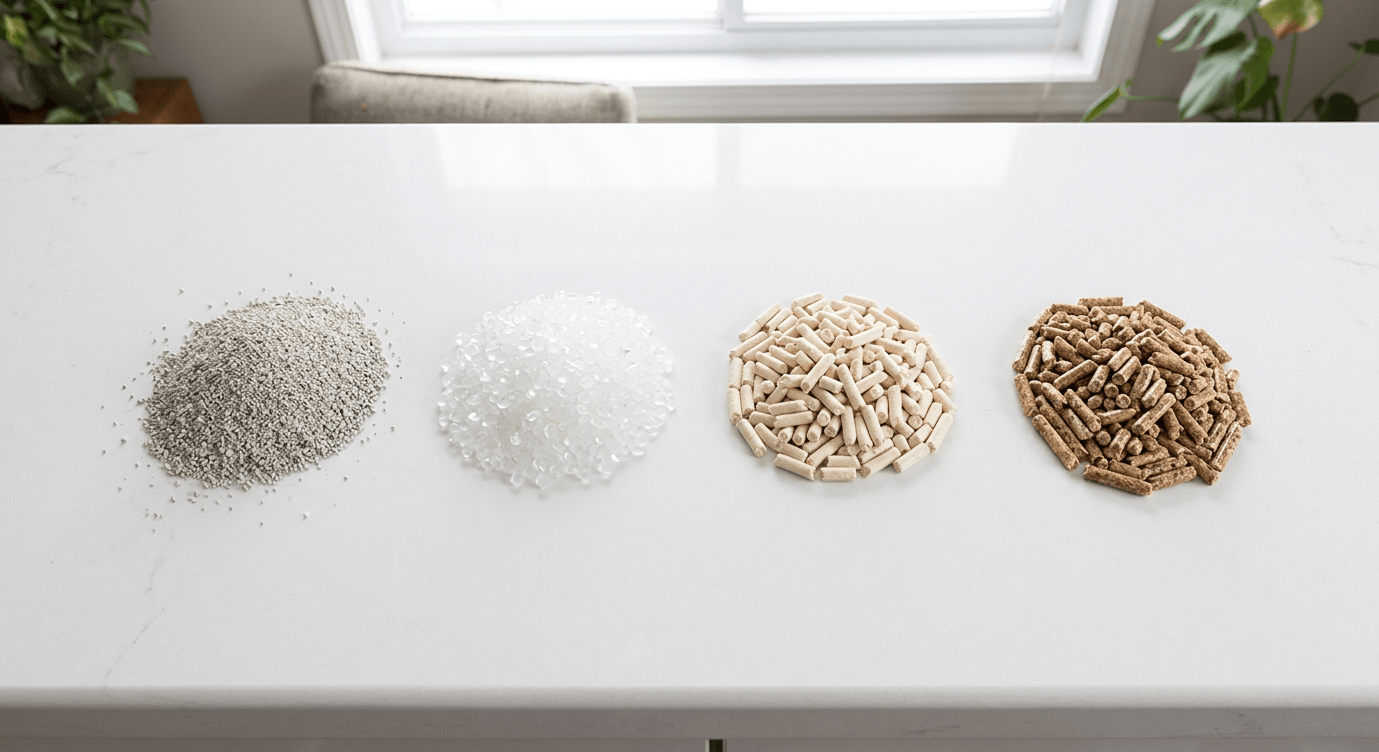
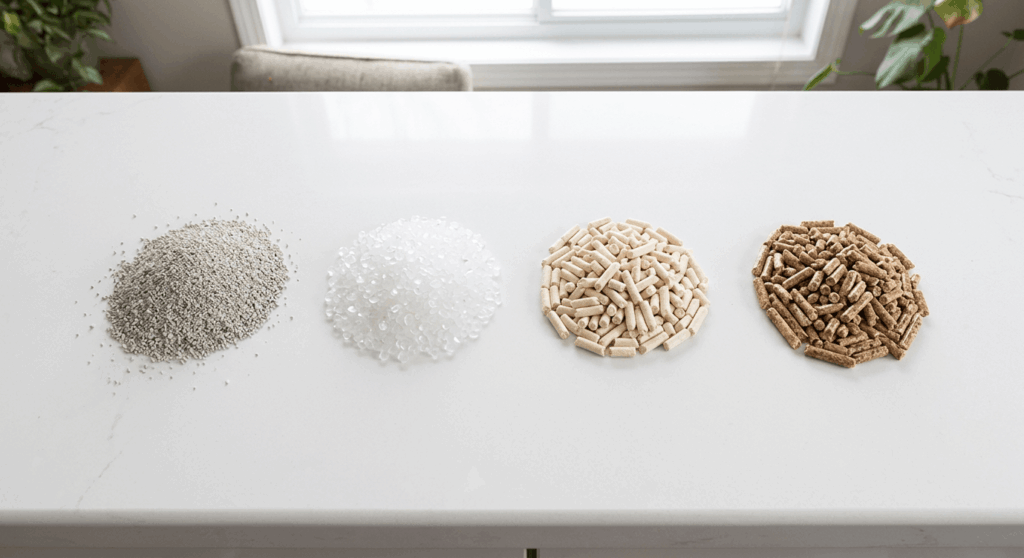
4 Best Litter Types for Apartment Odor Control
1. Low-Dust Clumping Clay Litter
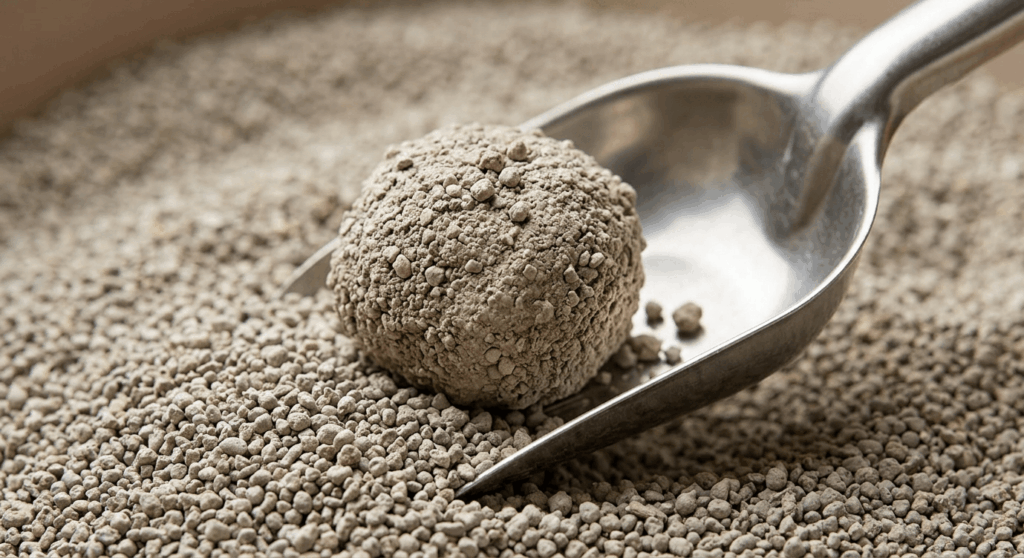
Low-dust clumping clay is often the strongest option for apartment odor control because it forms firm urine clumps that are easy to remove completely. This matters in small homes because broken clumps leave damp litter behind, and damp litter is where ammonia odor builds.
Clumping clay is usually the best fit when the litter box is close to the bathroom, bedroom, hallway, or living room and you need reliable daily odor control.
Best for:
- owners who scoop daily
- cats with strong urine odor
- apartments where the box is near living space
- multi-cat homes that need strong clumping
Watch out for:
- dust when pouring
- tracking across hard floors
- heavy bags
- scented formulas that may bother sensitive cats
Apartment fit:
Choose an unscented or lightly scented low-dust formula, use enough litter depth for full clumps, and pair it with a large litter mat. If you are scraping wet patches from the bottom of the box, the litter layer is probably too shallow or the clumping performance is too weak.
2. Tofu or Soy-Based Clumping Litter
Tofu or soy-based clumping litter can be a strong apartment option when you want lower dust, lighter bags, and easier daily scooping. It usually clumps well enough for one-cat homes and can be less dusty than many clay formulas.
Best for:
- small apartments with poor ventilation
- owners sensitive to dust
- cats who dislike heavy clay litter
- people who want lighter bags and easier disposal
Watch out for:
cats who refuse plant-based textures
weaker odor control than strong clay in some homes
possible tracking if pellets are small
higher price per pound
3. Crystal Silica Litter
Crystal silica litter can work well for apartment odor control because it absorbs moisture and can reduce how often the whole box smells wet. It is especially useful for owners who want less daily clump removal, but it is not the best fit for every cat.
Best for:
- single-cat apartments
- owners who want less frequent full litter changes
- boxes placed near bathrooms or laundry areas
- cats who accept crystal texture comfortably
Watch out for:
- some cats dislike the hard crystal feel
- urine color and volume may be harder to monitor
- odor can return suddenly when crystals are saturated
- dust level varies by brand
4. Paper, Pine, or Natural Pellet Litter
Paper, pine, and natural pellet litters are often best for cats who need a softer, lower-dust, or less irritating litter option. They can be helpful for sensitive paws, respiratory concerns, kittens, seniors, or cats recovering from certain procedures, but odor control depends heavily on cleaning frequency.
Best for:
- cats with sensitive paws
- low-dust homes
- senior cats or post-procedure cats when your vet approves
- owners who prefer natural or lightweight litter materials
Watch out for:
- weaker clumping or no clumping
- more frequent full changes
- pine scent that some cats dislike
- pellets that may feel uncomfortable to picky cats
Apartment Litter Material Comparison
| Litter type | Odor control | Dust level | Tracking | Best apartment use |
|---|---|---|---|---|
| Low-dust clumping clay | Strong | Medium to low | Medium | Best all-around odor control |
| Tofu or soy-based litter | Medium to strong | Low | Low to medium | Small spaces where dust matters |
| Crystal silica litter | Medium to strong | Low | Medium | Low-maintenance single-cat homes |
| Paper or natural pellet litter | Mild to medium | Low | Low | Sensitive cats and low-fragrance homes |
For most apartment cat owners, low-dust clumping clay is the safest starting point for odor control. If dust, weight, or fragrance is the bigger issue, tofu or natural pellet litter may be a better fit. Crystal litter can work well, but only if your cat accepts the texture and you replace it before saturation causes odor.
Common Apartment Mistakes
Mistake 1: Treating a Symptom as the Whole Problem
If odor suddenly changes, check waste, box condition, cleaning, and the cat’s toileting pattern before buying another product. Urination changes, straining, pain, or illness signs need veterinary attention.
Mistake 2: Using Strong Scents or Harsh Corrections
Strong scents, punishment, yelling, spray bottles, and forced handling often make apartment problems worse. Cats do not need fear to learn. They need safer choices, predictable routines, and owners who stop rewarding the wrong pattern by accident. For airborne dust and dander, odor-control litter works best alongside the right apartment air purifier for cat odor and hair.
Mistake 3: Ignoring Senior Cats
Senior cats may need softer surfaces, easier access, more frequent monitoring, and faster veterinary involvement. Any sudden change in a senior cat should be treated more cautiously than the same behavior in a young adult.
Mistake 4: Forgetting Multi-Cat Pressure
In multi-cat apartments, provide litter locations that each cat can reach without being blocked. Several boxes together may not offer the same choices as separate accessible locations.
Mistake 5: Making the Fix Too Complicated
The best fix is usually the one the owner will repeat. A perfect routine that lasts three days is less useful than a simple routine that lasts three months.
Practical Apartment Scenarios
Studio Apartment
In a studio, keep the litter route clear, use a comfortable washable mat, and choose a location you can scoop and clean easily without restricting access.
One-Bedroom Apartment
A one-bedroom gives one extra door, which can be powerful. Use the bedroom for quiet recovery, introductions, feeding separation, or a calm zone when visitors arrive.
Work-From-Home Owner
The cat may learn that interrupting works. A work-from-home plan should include scheduled attention, predictable food timing, and enrichment before meetings rather than reacting every time the cat escalates.
Owner Away All Day
Choose safe unsupervised setups. Avoid loose string, new objects that have not been tested, and anything that can trap or frighten the cat. Use predictable morning and evening routines to compensate for quiet daytime hours.
Multi-Cat Apartment
Use duplicate resources and separate zones. Shared resources are not truly shared if one cat controls access.
When to Change Your Litter Setup
Change only one part of the setup at a time. If odor is the main issue, start with scooping frequency, litter depth, and box washing before changing litter brands.
Consider changing litter if:
- urine clumps break apart during scooping
- the box smells within a few hours of cleaning
- dust is visible on nearby surfaces
- your cat avoids the box after a product change
- tracking or residue becomes harder to manage
Give a new litter at least one to two weeks unless your cat refuses the box, shows discomfort, or develops accidents. If litter box behavior changes suddenly, rule out medical causes before assuming the product is the problem.

Frequently Asked Questions
1. Is baking soda safe to mix into cat litter for extra odor control?
Do not rely on a universal baking-soda dose to control litter odor. Follow the litter manufacturer’s instructions and focus on scooping, cleaning, and suitable ventilation. For clarity, ammonia forms an alkaline solution in water. This does not establish that adding baking soda is suitable for every litter or cat; avoid dust and seek veterinary advice for respiratory sensitivity or ingestion concerns.
Replace it with each full litter change rather than adding continuously. Avoid baking soda products that include added fragrances or essential oils — these negate the benefit of using unscented litter in the first place.
2. What is the best cat litter odor control apartment dwellers can use if they have respiratory sensitivities?
For anyone in the household — human or feline — with asthma, allergies, or chronic respiratory conditions, silica gel crystals are the clear first choice. They produce essentially zero airborne dust, which is the primary respiratory irritant from clay litter. The tradeoff is lower cat acceptance rate and higher cost, but the respiratory benefit is meaningful and immediate.
If your cat refuses crystals after a slow transition attempt, tofu or pea fiber litter is the next best option — similarly low dust with a softer texture that most cats accept more readily than crystals. Both represent significant improvements over standard clay for respiratory-sensitive households. In either case, ensure the litter box is in a ventilated location and avoid any covered box design that concentrates particulates inside an enclosed space.
3. How do I know when my litter has stopped controlling odor effectively and needs a full change?
There are four reliable indicators that your litter has reached the end of its effective life — regardless of material type:
- The smell test at distance: A well-maintained box should be essentially odorless from more than three feet away. If you can smell it from across the room immediately after scooping, the litter bed itself is saturated
- Color change: Pale-colored litter that has turned uniformly gray, yellow, or dark indicates deep saturation beyond what scooping can address
- Clump quality degradation (clay): If fresh urine is no longer forming firm, discrete clumps — instead creating wet, crumbling masses or pooling at the bottom — the clay’s swelling capacity is exhausted
- Fresh litter immediately absorbs odor: The most definitive test — if newly added fresh litter takes on a smell within hours of being added to the box, the existing litter bed is contaminating it
When any of these indicators appear, no amount of additional scooping will restore odor control. A full litter replacement and deep box cleaning is the only solution. For clay in a single-cat household with twice-daily scooping, this point typically arrives at the two-to-three week mark. For silica gel, three to four weeks. For tofu and pine, one to two weeks depending on use intensity.
4. Is best cat litter odor control apartment something I can manage at home?
Often, yes, if the pattern is mild, gradual, and your cat is otherwise eating, drinking, using the litter box, moving normally, and behaving like themselves. Start with observation, safer placement, routine changes, and gentle environmental support. If the issue is sudden, severe, painful, or paired with health changes, contact your veterinarian.
5. How long should I try a routine before deciding it works?
For most non-urgent apartment cat routines, give a consistent change one to two weeks before judging it. Some behavior and environment changes need longer. Do not wait if your cat has pain, appetite changes, urinary signs, breathing changes, injury, or rapid decline.
6. What is the biggest mistake apartment cat owners make?
The biggest mistake is trying to solve the visible annoyance without asking why it is happening. A smell, behavior, feeding issue, or routine problem usually has a trigger. Fixing the trigger is more reliable than covering the symptom.
7. Do I need to buy products to solve this?
Not always. Many problems improve with better placement, cleaning, routine, enrichment, or observation. Products help when they support a clear plan. Buy the tool after you understand the problem, not before.
8. When should I call a veterinarian?
Call your veterinarian if the issue is sudden, repeated, painful, intense, or paired with appetite changes, vomiting, weight loss, increased thirst, urine changes, stool changes, hiding, aggression, confusion, limping, or senior decline.
Final Thoughts
The best cat litter odor control for apartments is usually the option that controls urine odor without creating dust, strong fragrance, tracking, or litter box avoidance. For many cats, that means an unscented low-dust clumping litter. For others, tofu, crystal, paper, pine, or pellet litter may fit better.
Do not judge odor control by the litter alone. Scooping frequency, litter depth, box washing, airflow, box age, and hidden urine residue all matter in a small home.
If the box still smells after daily scooping and a full reset, or if your cat is straining, peeing outside the box, producing unusually large clumps, or avoiding the litter area, treat it as a health or setup question instead of only a product problem.
References
- International Cat Care: Toileting problems in cats.
- Cornell Feline Health Center: Feline Lower Urinary Tract Disease.
- AAFP and ISFM Feline Environmental Needs Guidelines. https://doi.org/10.1177/1098612X13477537
- Merck Veterinary Manual: Disorders of the urinary system in cats. https://www.merckvetmanual.com/cat-owners/kidney-and-urinary-tract-disorders-of-cats
- Ellis, S. L. H., & Wells, D. L. (2010). The influence of olfactory stimulation on the behaviour of cats housed in a rescue shelter. Applied Animal Behaviour Science, 123(1), 56–63. — Referenced for feline olfactory sensitivity and litter substrate preference behavior.
- Neilson, J. C. (2004). Feline house soiling: Elimination and marking behaviors. Veterinary Clinics of North America: Small Animal Practice, 34(1), 279–301. https://doi.org/10.1016/j.cvsm.2003.09.001 — Referenced for litter substrate preference data and behavioral responses to litter box conditions in domestic cats.