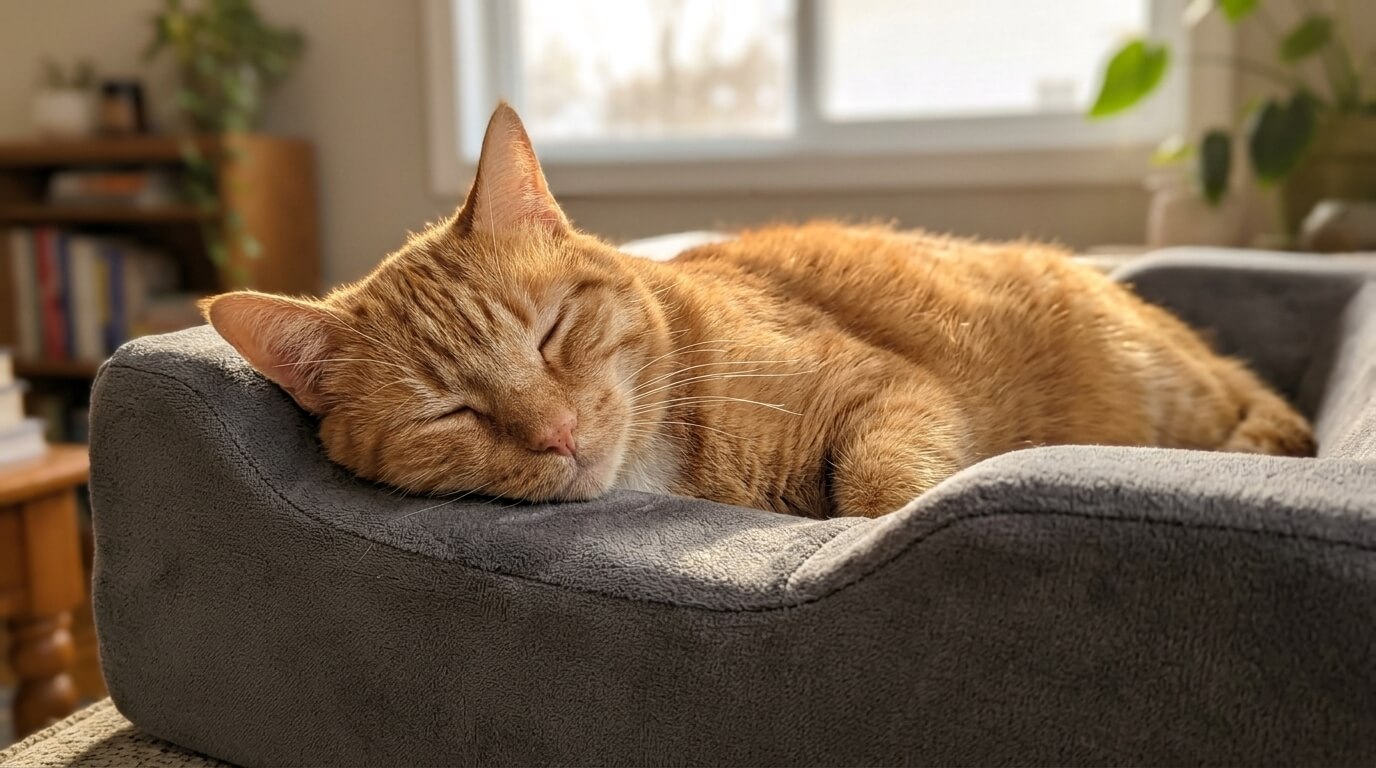
Best orthopedic cat bed choices for senior cats should make resting easier without creating a new obstacle. Look for a stable, nonslip base, a low step-in edge, enough room to change position, and a removable washable cover. Foam type matters less than whether the bed stays supportive under your cat’s weight and is easy for that individual cat to enter and leave.
A bed can improve comfort, but it cannot diagnose or treat arthritis. If your cat has recently stopped jumping, hesitates before lying down, grooms less, limps, hides, or changes sleeping locations, arrange a veterinary examination. Those changes should not be dismissed as normal aging.
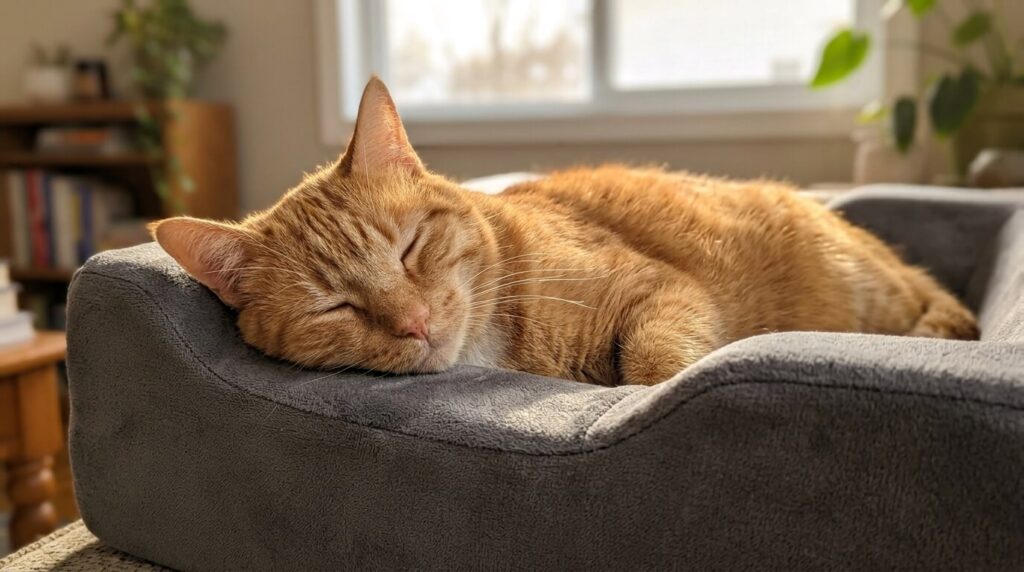
Quick Answer
For most older cats, the safest starting choice is a low-profile bed with a supportive foam base, a nonslip bottom, and a machine-washable cover. A heated model may suit a cat that actively seeks warmth, but use only a pet-specific, safety-certified product with an intact protected cord and enough unheated space for the cat to move away.
| Pick | Best for | Main strength | Main limitation |
|---|---|---|---|
| K&H Thermo Pet Pillow | Cold-seeking senior cats | Pet-specific regulated warmth and orthopedic foam base | Requires cord management |
| Aspen Pet Antimicrobial Orthopedic Bed | Cats that sprawl | Low-profile orthopedic foam and washable cover | Large 30 × 40-inch footprint |
| FurHaven Sofa Bed, solid orthopedic foam option | Cats that lean against a bolster | Open front with side support | Foam option must be selected carefully |
| FurHaven Orthopedic Crate Mat | Very low step-in access | Flat, nonslip, removable cover | Only two inches of egg-crate foam |
| Aspen Pet Self-Warming Oval Lounger | Cats that prefer a warm nest | No electrical cord | Not a true orthopedic foam bed |
How We Chose These 5 Beds
These are specification-based editorial picks, not results from a veterinary trial or our own laboratory testing. We checked current manufacturer information for access height, foam construction, cover care, nonslip features, dimensions, heating controls, and electrical-safety statements. Product designs and availability can change, so verify the current label and instructions before buying.
- Easy access: a flat pad or genuinely low front opening is preferable to a high-sided bed for a cat that avoids stepping or climbing.
- Stable support: the base should not collapse completely under the cat or slide across hard flooring.
- Room to reposition: measure your cat while relaxed and choose a sleep surface that permits curling and stretching.
- Practical cleaning: removable covers are useful for older cats with shedding, vomiting, or toileting accidents.
- Honest limits: “orthopedic” is a marketing term, not proof that a bed treats joint disease.
5 Best Orthopedic Cat Bed Options for Senior Cats
1. K&H Thermo Pet Pillow — Best Heated Option
Why it stands out: K&H describes this indoor bed as using an orthopedic foam base, bolsters, a removable washable cover, and a thermostatically controlled heater. The company also states that its heated pet products are safety certified. It is the most relevant pick when a senior cat consistently seeks warm places and can enter the bed without climbing.
Check before buying: confirm the current dimensions, wattage, care instructions, and certification on the exact model. Keep the cord fully visible and protected, and do not use it for a cat that chews electrical cords. A cat with poor mobility, reduced sensation, or an inability to move away from heat needs veterinary guidance before using any heated bed.
Official product information: K&H Thermo Pet Pillow.
2. Aspen Pet Antimicrobial Orthopedic Bed — Best Open Mattress
Why it stands out: Petmate lists a two-inch orthopedic egg-crate foam base, a low-profile design, and a removable machine-washable cover. Its flat rectangular surface avoids bolsters and may work well for a cat that sleeps stretched out.
Check before buying: the listed 30 × 40-inch size is designed for medium-to-large dogs and occupies substantial floor space. Measure the apartment location first. Egg-crate foam is not the same as a solid memory-foam slab, and the product page does not list a nonslip bottom, so add a stable nonslip surface if needed.
Official product information: Aspen Pet Antimicrobial Orthopedic Bed.
3. FurHaven Sofa Bed — Best Low-Front Bolster Design
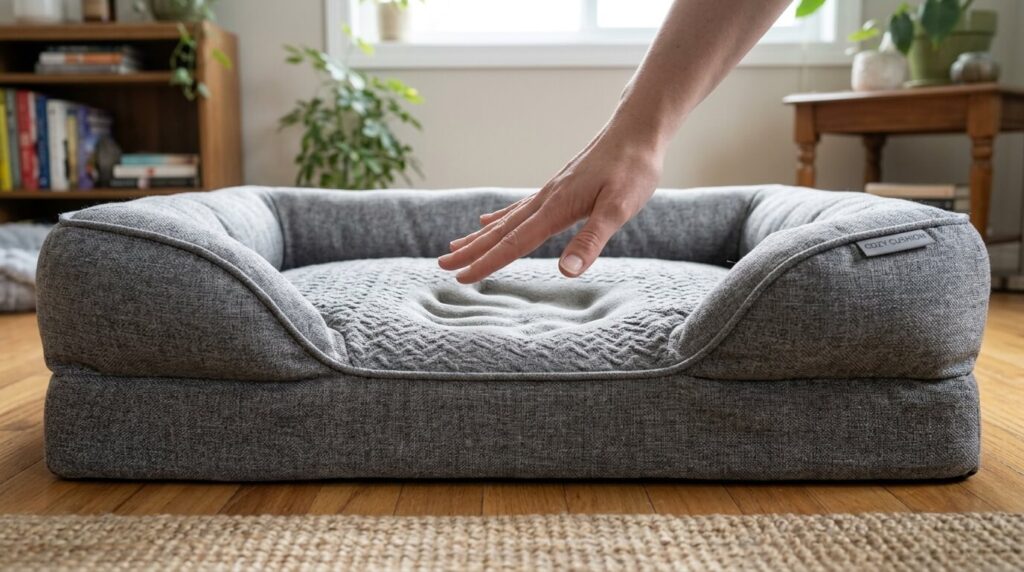
Why it stands out: this sofa-style bed has an open front, side and rear bolsters, and a removable machine-washable cover. FurHaven offers several mattress choices, including solid orthopedic foam and memory-foam options. The design can suit a cat that likes to rest against a raised edge but needs a clear front approach.
Check before buying: choose the mattress option deliberately; the same product page may offer materially different foam cores. Make sure the front edge is low enough for your cat and that the bolsters do not reduce the usable sleep surface too much.
Official product information: FurHaven Sofa Bed.
4. FurHaven Orthopedic Crate Mat — Best Flat, Easy-Access Pad
Why it stands out: the manufacturer lists a two-inch egg-crate foam core, nonslip base, removable cover, and flat step-on design. It can be useful when even a modest bolster is inconvenient or when you want a bed beside food, water, or another frequently used resource.
Check before buying: egg-crate foam is not the same as a thick solid memory-foam base. This is the access-focused and budget-conscious pick, not the strongest pressure-support choice for a heavier cat or one with substantial mobility limitations.
Official product information: FurHaven Orthopedic Crate Mat.
5. Aspen Pet Self-Warming Oval Lounger — Best No-Cord Warmth Alternative
Why it stands out: Petmate describes this lounger as using a heat-reflecting layer rather than electricity, with a plush sleep surface and nonskid bottom. It may suit a cat that wants warmth and a nest-like shape when an electrical cord is not appropriate.
Check before buying: this is a warmth-focused alternative, not a true orthopedic foam bed. Its raised sides may also be unsuitable for a cat that struggles to step over an edge. Choose it only when the shape matches your cat’s current movement and sleeping preferences.
Official product information: Aspen Pet Self-Warming Oval Lounger.
How to Choose the Right Bed for Your Cat
Measure the Cat and the Approach
Measure your cat from nose to the base of the tail while relaxed, then compare that length with the product’s usable sleeping area—not its outside dimensions. Also measure the height your cat must step over. A bed is not accessible if a thick rim or deep bolster blocks the easiest route.
Match the Shape to Current Sleeping Habits
- A cat that sprawls may prefer a flat rectangular mattress.
- A cat that leans against walls may prefer one or two soft bolsters.
- A cat that curls tightly may accept a shallow oval bed.
- A cat that already avoids enclosed beds should not be forced into a cave or high-sided lounger.
Test Placement Before Blaming the Bed
Place the new bed beside a location your cat already chooses, not in an isolated corner selected only for appearance. Keep the route clear, add a nonslip rug if the floor is slick, and give the cat a familiar blanket. Do not pick the cat up and repeatedly place them in the bed; voluntary investigation is safer and usually more successful.
If jumping and climbing are becoming difficult, our senior indoor cat care guide explains how to coordinate beds, ramps, litter boxes, food, water, and resting places.
Heated Cat Bed Safety Checklist
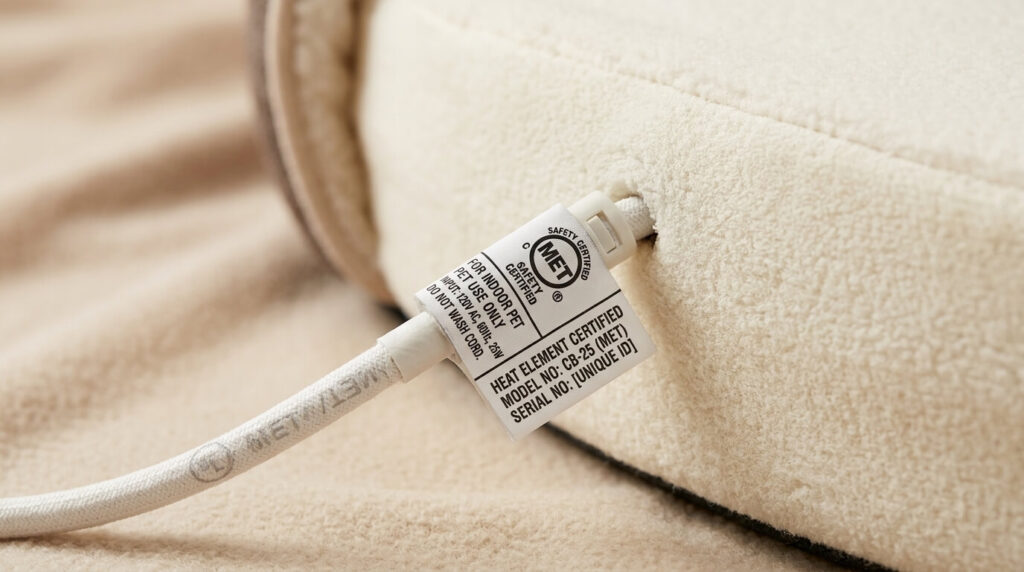
- Use a product designed for pets, not a human heating pad or an improvised heat source.
- Verify the safety certification claimed for the complete product and follow the current manufacturer instructions.
- Inspect the plug, cord, controller, cover, and heating area before use. Stop using the bed if any part is damaged, wet, unusually hot, or chewed.
- Route the cord where the cat cannot bite, pull, wrap around it, or trap it beneath furniture.
- Leave an easy exit and an unheated resting option nearby.
- Do not add thick blankets over the heating unit unless the instructions explicitly allow it.
- Ask your veterinarian before use if your cat has reduced mobility, reduced sensation, recent surgery, skin disease, incontinence, or difficulty moving away independently.
Warmth may be comforting, but it is not a substitute for diagnosis or pain control. AAHA and FelineVMA guidance emphasizes accessible resources, warm soft resting locations, nonslip footing, and veterinary assessment when an older cat’s mobility or behavior changes.
Frequently Asked Questions
Does an orthopedic bed treat feline arthritis?
No. A well-chosen bed may make rest and access more comfortable, but it does not treat the underlying disease. New stiffness, reduced jumping, poor grooming, limping, hiding, or irritability warrants veterinary assessment. See our guide to signs of cat arthritis for changes worth recording.
Is memory foam always best?
No single material is best for every cat. A thick supportive core can be useful, but access, stability, temperature, size, odor, cover texture, and placement also affect whether the cat will use it. A slightly simpler bed that the cat can enter safely is better than a premium bed with a difficult rim.
How should I clean the foam?
Follow the exact care label. Many covers are machine washable, while foam inserts usually require spot cleaning and complete air-drying. Never return a damp foam core to a closed cover, and never machine-wash or heat-dry the core unless the manufacturer specifically permits it.
What if my senior cat ignores the new bed?
Move it beside a current sleeping spot, add a familiar washable blanket, and keep the approach quiet and nonslip. Give the cat time to investigate. If the cat repeatedly chooses hard, warm, or unusually low locations, treat that preference as useful information and discuss any accompanying mobility change with your veterinarian.
Final Verdict
The best orthopedic cat bed is the one your senior cat can enter, leave, and reposition on without slipping or struggling. Start with a low, stable, washable bed that fits the cat’s actual sleeping posture. Choose heat only when it matches the cat’s preference and you can use it safely. Most importantly, pair environmental comfort with veterinary care whenever mobility or behavior changes.