You’ll remember the neighbor stray incident from my enzyme cleaner guide.
Oliver, stressed beyond his normal threshold by a territorial intruder pressing against the exterior of our building, had marked my guest bedroom mattress. We addressed that with the best enzyme cleaner protocol I had. We resolved the odor completely.
What we hadn’t resolved was Oliver himself.
Even after the cleaning, even after the stray stopped appearing, Oliver remained in a state of low-grade hypervigilance for weeks. He startled easily. He spent more time under the bed than on it. His grooming had increased to the point where I was monitoring for psychogenic alopecia. The acute stressor was gone, but his nervous system hadn’t received that memo.
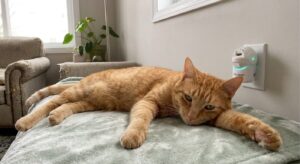
This is when I reached for the best cat calming diffusers in my professional toolkit—the same ones I use in our clinic examination rooms to lower the anxiety threshold before procedures and examinations. I’d recommended them to hundreds of clients. Now I was implementing them for my own cat, in my own apartment, with the particular investment that comes from it being personal.
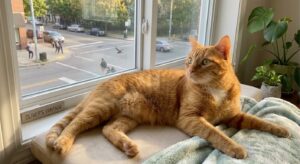
Fourteen days later, Oliver was back on the bed. The hypervigilance was gone. His grooming had normalized.
This guide covers exactly how pheromone diffusers work, which products are worth the investment, and the clinical placement strategy that makes the difference between a product that works and one that collects dust.
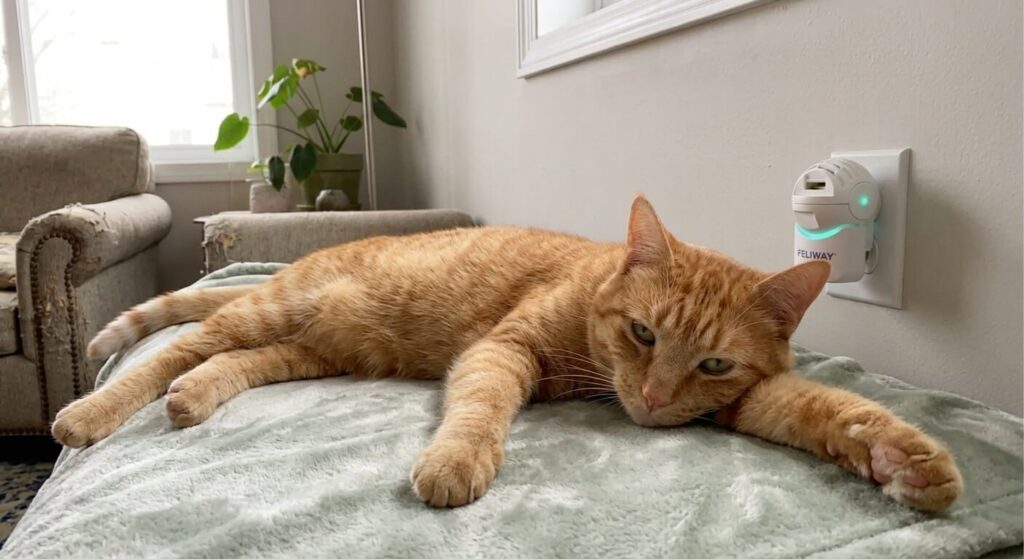
Quick Answer: Do Calming Diffusers Actually Work?
Yes, the best cat calming diffusers work by mimicking feline Facial Pheromone F3 or maternal appeasing pheromones (CAP). These odorless chemical signals communicate safety directly to the brain’s emotional center via the Vomeronasal Organ, bypassing the cognitive cortex entirely. They are clinically proven to reduce stress-related behaviors including marking and scratching, though results typically require 7-14 days to manifest fully.
Pheromones vs. Essential Oils: A Critical Safety Warning
Before I discuss any specific product, I need to address a dangerous category confusion that appears regularly in “calming diffuser” marketing: the conflation of pheromone therapy with essential oil aromatherapy.
These are categorically different things, and one of them is toxic to cats.
The Essential Oil Toxicity Problem
Essential oils—including lavender, eucalyptus, tea tree, peppermint, and many others marketed for their “calming properties”—are toxic to cats at various concentrations.
Cats lack the hepatic enzyme (UDP-glucuronosyltransferase) required to metabolize phenols and terpenes found in essential oils. These compounds accumulate rather than being cleared, causing:
- Hepatotoxicity (liver damage)
- Neurological effects (ataxia, tremors)
- Respiratory irritation
- In severe exposure: liver failure
Diffusing essential oils in a space where a cat lives is a veterinary emergency in slow motion. The airborne concentration from diffuser use is sufficient to cause toxic accumulation with regular exposure.
What Pheromone Products Actually Are
Synthetic pheromone products contain chemically synthesized analogs of natural feline pheromones. These are not aromatic compounds—they are species-specific chemical signals that:
- Are completely odorless to humans
- Work through the Vomeronasal Organ (Jacobson’s organ), not the olfactory epithelium
- Have no pharmacological activity in non-target species (humans, dogs)
- Have been through clinical safety and efficacy trials
The best cat calming diffusers are pheromone products. They are not aromatherapy products. If a product claims to calm your cat through pleasant scents or essential oils, it is not pheromone therapy and may be actively harmful.
The Neuroscience of Pheromone Therapy
Understanding how pheromones actually work at the neurological level helps explain both why they’re effective and why they take 7-14 days to show results.
The Vomeronasal Organ Pathway
Cats detect pheromones through the Vomeronasal Organ—a chemosensory structure located in the roof of the mouth, accessed through the vomeronasal duct. When you see a cat perform the Flehmen response (open-mouthed “grimace”), they’re actively pumping chemical signals into the Vomeronasal Organ for detection.
The Vomeronasal Organ connects directly to the amygdala (the brain’s emotional processing center) and hypothalamus, bypassing the cortex entirely. This is why pheromone effects don’t require the cat to consciously process or respond to them—the chemical signal communicates directly with the limbic system.
Practical implication: Pheromones are not a training tool or a behavioral modification technique. They modulate the emotional baseline—the anxiety threshold—within which behavior occurs. A cat whose amygdala is receiving “safety” signals has a lower arousal baseline and responds less intensely to stressors.
Facial Pheromone F3: What It Signals
Cats deposit Facial Pheromone F3 when they rub their cheeks against surfaces—a behavior called bunting. The chemical message this pheromone communicates is territorial familiarity: “I have investigated this location and assessed it as safe.”
Synthetic Facial Pheromone F3 (the active compound in Feliway Classic) communicates this safety signal continuously in the environment, reducing the vigilance state that a cat maintains in unfamiliar or threatening contexts.
The Cat Appeasing Pheromone (CAP)
A different pheromone class—Cat Appeasing Pheromone (CAP), also called Maternal Appeasing Pheromone—is produced by lactating queen cats in the sebaceous glands of the mammary region. This pheromone signals safety and reduces inter-cat tension.
Synthetic CAP (the active compound in Feliway Multicat) is specifically researched for inter-cat conflict reduction, as it mimics the pheromone that communicates “we are a safe social group” rather than territorial familiarity.
Feliway Classic vs. Multicat: Which One Do You Need?
The two primary Feliway formulations address different stress presentations, and selecting the wrong one reduces effectiveness significantly.
Feliway Classic: The Individual Stress Formula
Use when:
- Single-cat household with stress behaviors
- Stress triggers are environmental (new furniture, construction noise, visitors)
- Stress manifests as hiding, reduced appetite, or vertical scratching (marking)
- Post-incident recovery (Oliver’s situation exactly)
- Veterinary visit preparation
Active compound: Synthetic Facial Pheromone F3
What it does: Communicates territorial familiarity and safety throughout the environment.
Feliway Multicat: The Inter-Cat Tension Formula
Use when:
- Multi-cat household with tension, chasing, or conflict
- New cat introduction
- Resource competition (food, litter boxes, territory zones)
- Stress that manifests as inter-cat aggression or avoidance
Active compound: Synthetic Cat Appeasing Pheromone (CAP)
What it does: Mimics maternal appeasing pheromone to signal “safe social group” and reduce inter-cat threat perception.
In multi-cat households where territorial tension escalates to chasing and aggression, the Feliway Multicat diffuser is the appropriate starting intervention—though severe inter-cat aggression typically requires a more comprehensive behavioral management strategy alongside pheromone support. [How to Introduce a Second Cat in a Small Apartment (Step-by-Step Guide)]
Can You Use Both?
Yes. In households where both individual stress and inter-cat tension are present, using Feliway Classic in the primary stress zone (bedroom, hiding area) and Feliway Multicat in the shared living space is a clinically reasonable approach.
Top 4 Cat Calming Diffusers for 2025
🥇 The Gold Standard: Feliway Classic Diffuser
Price: $25-$35 (starter kit); $20-$25 (refill)
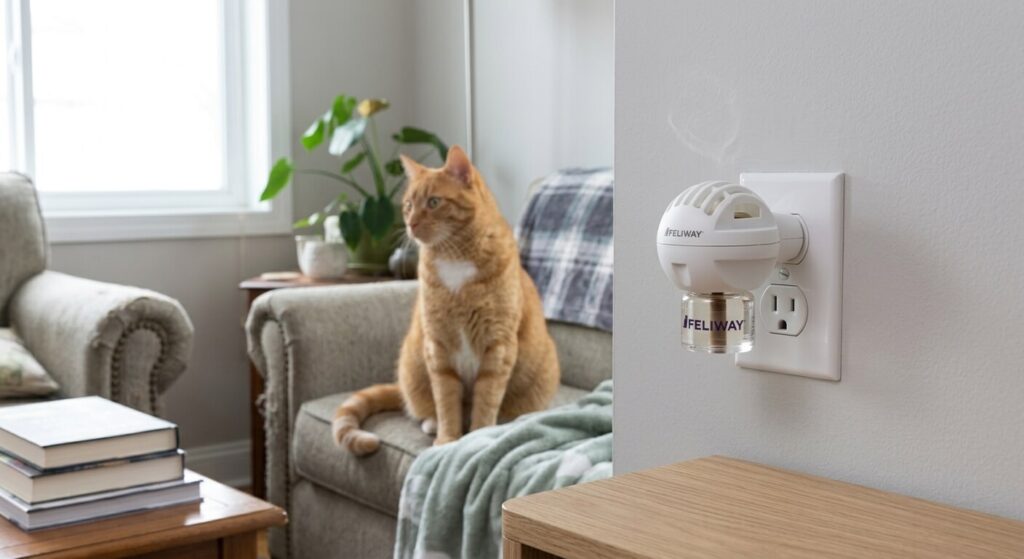
Twenty-three published clinical trials. That’s the research base behind Feliway Classic, and it’s what places it in a different category from every other product claiming to be among the best cat calming diffusers.
Technical specifications:
- Active compound: Synthetic Facial Pheromone F3 (feline facial fraction F3)
- Coverage area: Up to 700 square feet per diffuser
- Refill duration: 30 days (continuous diffusion)
- Heat mechanism: Electric warming element (no open flame)
- Human detection: Odorless to humans
The clinical evidence that matters:
The most cited Feliway Classic research (Mills & Mills, 2001) demonstrated statistically significant reduction in urine marking in 74% of cats, with complete resolution in 37% within 28 days. Subsequent trials have documented efficacy for scratching behavior, hiding, reduced appetite, and inter-human visitor stress.
This is peer-reviewed, placebo-controlled evidence—not manufacturer claims or testimonials.
In my clinical practice:
We run Feliway Classic diffusers in all examination rooms. The effect on patient behavior is measurable: cats who would otherwise require physical restraint for examination are more handleable in Feliway-diffused environments. This is the clinical application that convinced me of its efficacy before I ever used it personally.
For newly adopted shy cats, placing one of the best cat calming diffusers directly near their designated safe zone helps reduce hiding duration and accelerates the exploration phase that marks successful environmental adjustment. [Does Your Cat Have Separation Anxiety? Signs and Solutions]
Pros:
- Most evidence-based feline pheromone product available
- 23+ published clinical trials demonstrating efficacy
- 30-day refill duration (low maintenance)
- Odorless to humans (no lifestyle disruption)
- Covers 700 sq ft (adequate for most studio/one-bedroom apartments)
- Available in refill packs for ongoing use cost reduction
Cons:
- Results require 7-14 days minimum to manifest
- Not all cats respond (approximately 25% non-responder rate in clinical trials)
- Refill cost is an ongoing expense ($20-25/month)
- Not appropriate for inter-cat tension (use Multicat instead)
- Diffuser element must be replaced annually
Best for: Single-cat households, environmental stress, post-incident recovery, veterinary visit preparation, new home adjustment
🐱 The Multi-Cat Peacemaker: Feliway Multicat Diffuser
Price: $30-$40 (starter kit); $22-$28 (refill)
Where Feliway Classic is the individual stress solution, Feliway Multicat is the inter-cat relationship solution—and in multi-cat households, using Classic when Multicat is indicated is one of the most common implementation errors I see.
Technical specifications:
- Active compound: Synthetic Cat Appeasing Pheromone (CAP) / Maternal Appeasing Pheromone
- Coverage area: Up to 700 square feet
- Refill duration: 30 days
- Evidence base: Multiple published trials specific to inter-cat tension
The CAP mechanism for multi-cat peace:
Cat Appeasing Pheromone is produced by queen cats during lactation and communicates social cohesion—the chemical equivalent of “we are a bonded, non-threatening social group.” In cats who were not littermates and did not share early socialization, this signal bridges the social recognition gap.
Clinical trials for Feliway Multicat demonstrate significant reduction in:
- Chase behavior between cats
- Hissing and spitting frequency
- Resource competition at food stations
- Avoidance behavior between previously conflicted cats
Placement strategy for multi-cat households:
Position Feliway Multicat in the room where cats spend the most shared time—typically the living room or wherever the primary feeding station is located. The goal is to diffuse CAP into the shared space rather than individual sleeping areas.
Pros:
- Clinically validated for inter-cat tension specifically
- Addresses the correct pheromone pathway for social stress
- Same 700 sq ft coverage and 30-day refill as Classic
- Can be combined with Feliway Classic in complex multi-cat situations
- Significant evidence base for the specific use case
Cons:
- Not appropriate for single-cat households (use Classic instead)
- Same 7-14 day onset as Classic
- Refill cost ongoing
- Severe inter-cat aggression may require behavioral consultation beyond pheromone therapy
Best for: Multi-cat households with tension, new cat introductions, resource competition situations, households where cats live parallel but not harmonious lives
🌿 The Herbal Alternative: Comfort Zone Calming Diffuser with Lavender & Chamomile
Price: $18-$25 (starter); $14-$18 (refill)
I need to be clinically careful in this section, because the Comfort Zone product occupies genuinely different territory from Feliway.
A critical note on the formulation:
Comfort Zone uses a pheromone analog (not identical to Feliway’s patented F3 fraction) combined with lavender and chamomile extracts. This product warrants caution because of the essential oil components.
Technical specifications:
- Active compounds: Pheromone analog + lavender extract + chamomile extract
- Coverage area: Up to 650 square feet
- Refill duration: 30 days
- Evidence base: Limited compared to Feliway; primarily manufacturer data
My clinical position:
The lavender and chamomile concentrations in this product are at levels the manufacturer states are safe for cats in diffuser use. I have not seen clinical reports of toxicity at this specific product’s diffusion levels. However, I remain more cautious about any essential oil-containing product in a cat environment than I am about pure pheromone products.
When I might recommend it:
For owners who have tried Feliway Classic without adequate response (the approximately 25% non-responder population), this product’s different pheromone analog may engage cats who didn’t respond to the F3 fraction. The different chemical profile may reach cats through a different receptor pathway.
Pros:
- Lower price point than Feliway
- Alternative for Feliway non-responders
- Widely available in retail locations
- 650 sq ft coverage
Cons:
- Contains essential oil derivatives (lavender, chamomile)—monitor for any respiratory changes
- Less clinical evidence than Feliway Classic
- Pheromone analog (not identical F3 fraction)
- Not my first recommendation for clinical situations
Best for: Feliway non-responders, budget-conscious owners willing to monitor for sensitivity, mild stress situations rather than acute anxiety
💰 The Budget-Friendly Bundle: Feliway Classic 3-Pack Bundle
Price: $55-$70 (three diffusers + three months of refills)
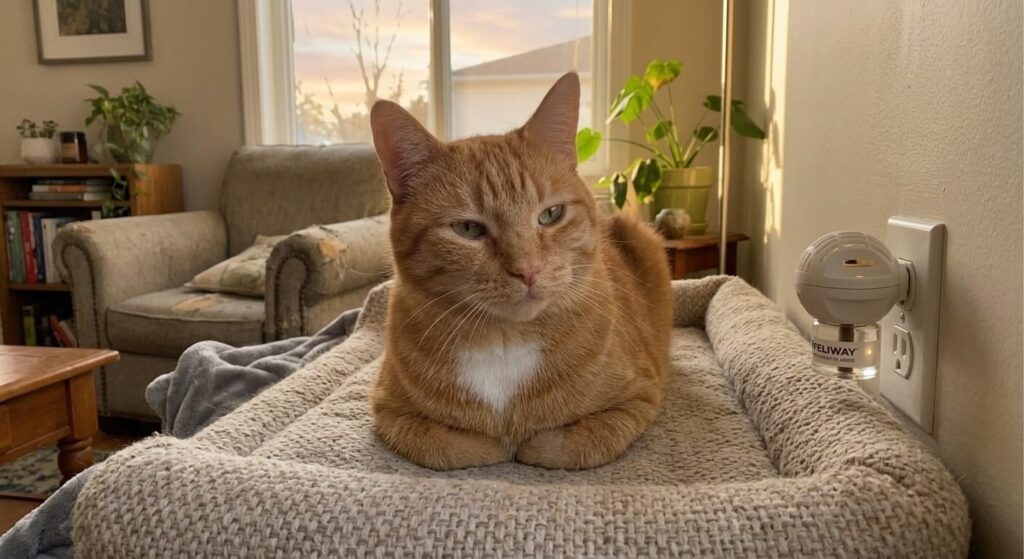
For owners who need the best cat calming diffusers in multiple rooms simultaneously—or who are setting up a whole-apartment diffusion strategy for the first time—the multi-pack bundle provides the same clinically validated Feliway Classic formula at meaningfully reduced per-unit cost.
Technical specifications:
- Contents: Three Feliway Classic diffusers + three 30-day refills
- Coverage: Three rooms or zones simultaneously
- Cost per room per month (bundle): Approximately $9-12 versus $20-25 single purchase
- Active compound: Identical to single Feliway Classic (synthetic Facial Pheromone F3)
When whole-apartment diffusion is clinically appropriate:
Single-room diffusion is adequate for localized stress—a cat who is stressed specifically in one area, or a small studio apartment where one diffuser reaches the entire space.
Whole-apartment diffusion is appropriate for:
- Generalized anxiety across multiple rooms
- Post-traumatic situations where the stressor was apartment-wide
- Multi-story homes where one diffuser cannot reach all zones
- Senior cats with cognitive dysfunction syndrome, where disorientation occurs throughout the home regardless of time of day
Pheromone therapy with the best cat calming diffusers provides meaningful comfort for senior cats experiencing nighttime disorientation associated with cognitive decline—a clinical application where continuous environmental safety signaling helps reduce the confusion-related vocalization that often accompanies feline cognitive dysfunction syndrome. [Signs Your Indoor Cat Is Stressed (And How to Help)]
Pros:
- Clinically identical to single Feliway Classic (same compound, same evidence)
- Significant per-unit cost reduction
- Enables whole-apartment diffusion strategy
- Single purchase covers 90-day evaluation period
- Multiple outlets covered from initial purchase
Cons:
- Higher upfront cost than single unit
- Requires planning appropriate outlet placement for multiple units
- Storage space for additional refills
- Ongoing refill cost once bundle period ends
Best for: Large apartments, multi-room stress situations, senior cats with cognitive dysfunction, initial 90-day trial with clinical evaluation
Where to Plug It In? (The “Airflow” Strategy)
Placement determines whether a diffuser performs at its clinical potential or underperforms at the margins of its coverage area. This is the implementation detail that most product instructions handle inadequately.
The Airflow Principle
Pheromone molecules are heavier than air. They diffuse into the room primarily through convection currents—warm air rising, cooling, and circulating. The diffuser’s position relative to your room’s airflow patterns determines the distribution of pheromone molecules.
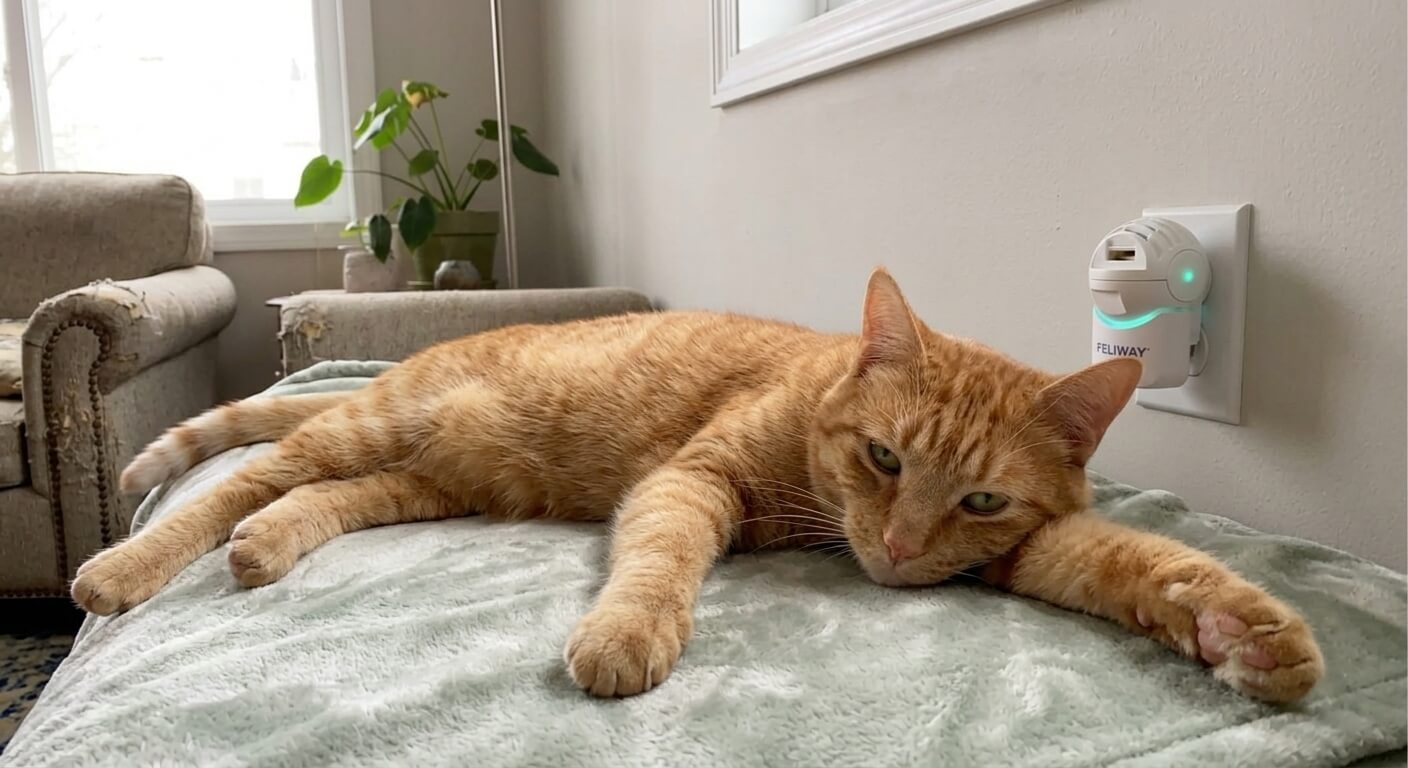
Optimal placement:
- On an interior wall (not an exterior wall where temperature differentials create convection that pushes warm air toward the exterior)
- Below the room’s air circulation height (approximately 12-24 inches above floor level—counter or low shelf height)
- Away from open windows (open windows create directional airflow that carries pheromones toward the exterior before room saturation occurs)
- Away from air conditioning vents (forced air creates directional currents that concentrate distribution toward the vent’s exhaust path rather than room-wide)
Room-Specific Placement Recommendations
For single-cat stress (Feliway Classic):
Place the diffuser in the room where the stress behavior is occurring. If your cat is marking a specific location, place the diffuser in that room—not adjacent to the marked spot (which would be too close to the marking trigger) but in the same room for zone saturation.
For multi-cat tension (Feliway Multicat):
Place in the primary shared space—the room where cats spend the most time together. The goal is to diffuse CAP into the air column of the shared territory.
For veterinary visit preparation:
Place the diffuser in the room where the carrier lives. This diffuses Facial Pheromone F3 into the carrier’s environment, supporting the carrier desensitization process.
For new home adjustment:
Place in the cat’s initial designated safe room—the confined space where a newly arrived cat should be introduced before having access to the full apartment. This is the room where diffuser support has the highest impact during the adjustment window.
What to Avoid
- Behind furniture: Blocks convection and prevents room distribution
- In a closet or enclosed alcove: Same problem as behind furniture
- Next to or behind a television: Heat from the TV disrupts the diffuser’s own heating element and potentially degrades the formula
- Near a food or water station: Cats should not ingest pheromone compounds, and proximity to feeding areas increases incidental oral exposure
FAQ
How long does it take for a cat diffuser to work?
The best cat calming diffusers typically show initial effects within 7 days, with full clinical response at 14-28 days. The delay reflects the time required for pheromone molecules to reach saturation concentration in the room environment, and for the limbic system’s anxiety threshold to shift in response to continuous signaling. Owners who evaluate after 3-4 days and conclude the product isn’t working are assessing before the therapeutic window has been reached. I recommend a minimum 28-day trial before concluding non-response.
Are cat calming diffusers safe for humans and other pets?
Pure synthetic pheromone products (Feliway Classic and Multicat) are species-specific—the Vomeronasal Organ receptor pathway that detects them is present in cats but not in humans or dogs. These products are odorless to humans and have no pharmacological activity in non-target species. They are documented as safe for use in households with humans, dogs, and other pets. The caveat applies to any product containing essential oil components—these carry toxicity risk for cats and should be evaluated individually.
Can I leave a cat calming diffuser plugged in 24/7?
Yes—the best cat calming diffusers are designed for continuous use. Feliway Classic and Multicat are rated for continuous diffusion and their efficacy depends on maintaining consistent pheromone concentration in the room environment. Turning them off overnight or intermittently allows concentration to drop below the therapeutic threshold. The diffuser’s heating element is engineered for continuous operation. The only maintenance required is monthly refill replacement when the liquid is depleted, and annual replacement of the diffuser element itself (reduced heating efficiency after 12 months of continuous use).
Scientific References
- Mills, D. S., & Mills, C. B. (2001). Evaluation of a novel method for delivering a synthetic analogue of feline facial pheromone to control urine spraying by cats. Veterinary Record, 149(7), 197-199. https://doi.org/10.1136/vr.149.7.197. This landmark randomized controlled trial demonstrated statistically significant reduction in urine marking in cats treated with synthetic Facial Pheromone F3 analog via diffuser, providing the primary evidence base for pheromone diffuser therapy in clinical feline practice.
- Cozzi, A., Lecuelle, C. L., Mège, C., Lafont-Lecuelle, C., Bichet, H., & Pageat, P. (2013). Induction of scratching behaviour in cats: A model to evaluate the efficacy of a synthetic analogue of feline facial pheromone. The Veterinary Journal, 196(3), 460-464. https://doi.org/10.1016/j.tvjl.2012.12.019. This controlled trial evaluated the mechanism of Facial Pheromone F3 in modifying territorial marking behavior, confirming that synthetic pheromone delivery via diffuser reduces scratching and marking behaviors through the Vomeronasal Organ pathway, with clinical significance for apartment-based feline stress management.