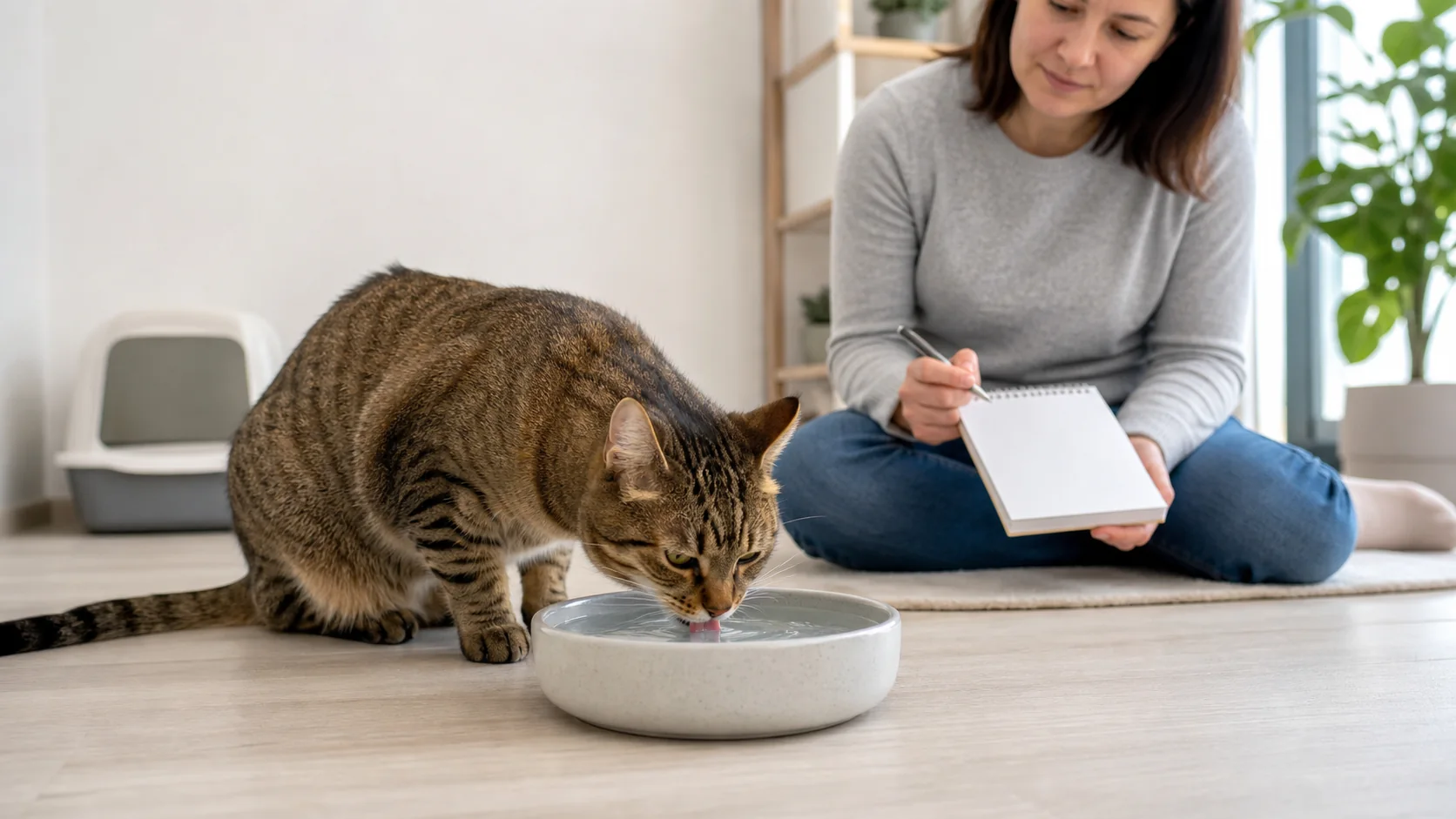
The most common symptoms of diabetes in cats are increased thirst, increased urination, weight loss despite a normal or increased appetite, weakness, reduced activity, poor coat condition, and—in some affected cats—a flat-footed stance in the hind legs. These signs do not prove that a cat has diabetes, but they warrant a veterinary examination and diagnostic testing.
Diabetes mellitus develops when a cat cannot produce enough effective insulin to control blood glucose. Without sufficient insulin action, glucose remains in the bloodstream instead of being used normally by the body’s cells. The resulting changes affect hydration, appetite, weight, energy, and eventually multiple body systems.
Do not attempt to diagnose diabetes by symptoms or a home glucose reading alone. Cats can develop temporary stress-related increases in blood glucose, and several other illnesses can cause similar signs. A veterinarian must confirm sustained hyperglycemia and evaluate the whole clinical picture.
Quick Answer: What Are the Symptoms of Diabetes in Cats?
Watch for these seven patterns:
- Drinking more water than usual
- Producing more urine or larger litter clumps
- Losing weight despite eating normally or more than usual
- Acting unusually hungry
- Becoming weak, tired, or less active
- Walking with the hind hocks lowered toward the floor
- Developing a dull, greasy, or poorly groomed coat
Vomiting, refusal to eat, marked lethargy, dehydration, weakness, collapse, or abnormal breathing can signal a serious complication such as diabetic ketoacidosis. These signs require urgent veterinary assessment rather than a routine appointment.
If your cat receives diabetes treatment and develops sudden weakness, tremors, disorientation, unusual sleepiness, seizures, vomiting, appetite loss, or other rapid changes, contact your veterinarian or an emergency veterinary service immediately. Follow the emergency plan for the exact medication. For cats taking Bexacat (bexagliflozin) or Senvelgo (velagliflozin), the FDA advises stopping that drug and contacting a veterinarian immediately if appetite or activity decreases, vomiting or diarrhea occurs, or the cat becomes weak or has difficulty walking. This drug-specific warning is not a general instruction to stop insulin; obtain urgent veterinary guidance about insulin and the next scheduled dose.
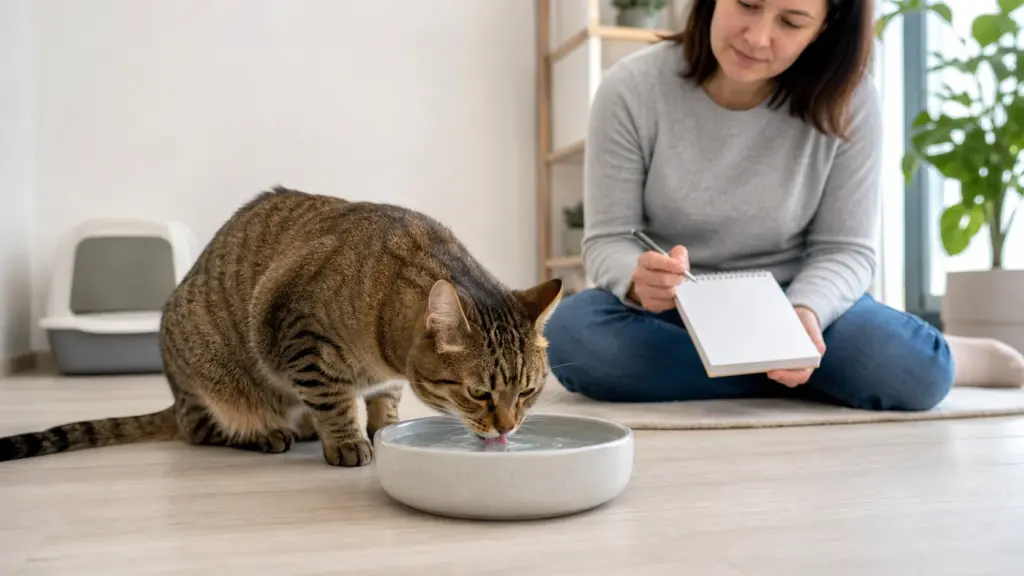
Table of Contents
Seven Symptoms of Diabetes in Cats
Individual signs can have many causes. Diabetes becomes more concerning when several signs develop together, especially increased thirst and urination combined with unexplained weight loss.
1. Increased thirst
A diabetic cat may visit the water bowl more often, drink for longer, empty the bowl faster, or seek water from sinks, faucets, glasses, or other unusual places. The change matters more than comparison with another cat because normal drinking varies with diet, weather, activity, kidney function, and other factors.
High blood glucose can exceed the kidneys’ ability to retain glucose. Glucose then enters the urine and pulls additional water with it. The resulting water loss contributes to dehydration and increased thirst.
Do not use a fixed household water-intake threshold to diagnose diabetes. Measuring total intake can be difficult in a multi-cat home, and cats eating wet food obtain substantial water from their meals. Instead, note a persistent change from your cat’s normal pattern and discuss it with a veterinarian.
Increased thirst can also occur with chronic kidney disease, hyperthyroidism, medication effects, and other conditions. Testing is needed to distinguish among them.
2. Increased urination
Increased urination often accompanies increased thirst. In a clumping litter, you may notice larger clumps, more clumps, a box that becomes wet sooner, or more frequent trips to the box.
Some cats urinate outside the litter box because urine volume has increased or because illness has changed their ability to reach or use the box comfortably. House soiling should therefore be treated as a potential medical clue before it is labeled a behavior problem.
Straining is different from simply producing more urine. A cat that repeatedly enters the box, strains, cries, or passes little or no urine may have a urinary obstruction or another urgent urinary problem. This is an emergency, particularly in male cats. Do not wait to see whether the sign resolves.
For other possible causes of litter box changes, see our guide to cat peeing outside the litter box.
3. Weight loss despite eating
Unexplained weight loss is one of the most important symptoms of diabetes in cats. A cat may continue eating well—or appear hungrier than usual—while losing fat and muscle.
When glucose cannot be used normally, the body turns to stored fat and protein for energy. Owners may notice a more prominent spine, hips, or shoulder blades, a looser collar, or a generally thinner appearance. Long hair can conceal the change, making regular weight records especially useful.
Weight loss with a good appetite is not specific to diabetes. Hyperthyroidism and several digestive or systemic diseases can produce a similar pattern. Any persistent or unexplained weight loss deserves veterinary assessment.
If you can weigh your cat without causing stress, record the result consistently using the same scale. A number is more useful when compared over time, but it does not replace body- and muscle-condition assessment by a veterinary professional.
4. Increased appetite
Some diabetic cats become unusually hungry because their tissues are not using glucose effectively. They may beg between meals, wake the household for food, steal another pet’s meal, or finish portions faster than before.
An increased appetite is not always present. A cat with uncomplicated diabetes may eat eagerly, while a cat that is becoming systemically ill may eat less or stop eating. Appetite loss in a known or suspected diabetic cat is more urgent than simple hunger and should prompt contact with a veterinarian.
Never assume that feeding more will correct diabetes-related weight loss. Changing portion size without understanding the cause can complicate weight and glucose management.
5. Weakness, lethargy, or reduced activity
A cat with diabetes may sleep more, play less, hesitate on stairs, stop using favorite perches, or seem generally weak. Owners sometimes mistake these changes for normal aging, particularly when they develop gradually.
Weakness has many possible causes, including pain, anemia, heart disease, kidney disease, electrolyte disturbance, and low blood glucose in a treated diabetic cat. The pattern must be interpreted alongside appetite, thirst, urination, weight, medication history, and examination findings.
Sudden or severe weakness is not a symptom to monitor casually. If your cat collapses, cannot stand, appears disoriented, has tremors, or experiences a seizure, seek immediate veterinary help.
6. A flat-footed hind-leg stance
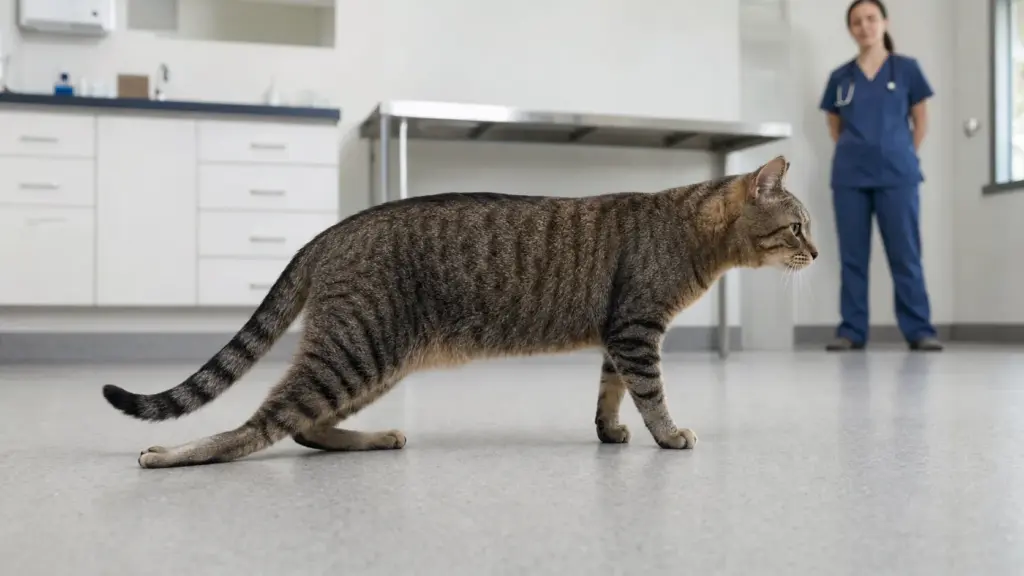
Some cats with diabetes develop peripheral neuropathy that affects the hind limbs. Instead of walking on the paws with the hocks elevated, the cat stands or walks with the hocks lowered toward or touching the floor. This is called a plantigrade stance.
Other signs can include hind-leg weakness, difficulty jumping, an unsteady gait, or reluctance to walk. The change may be easier to recognize in a side-view video taken while the cat walks naturally.
A plantigrade stance is strongly associated with feline diabetes, but owners should not diagnose neuropathy from posture alone. Orthopedic, neurologic, metabolic, and painful conditions can alter gait. A veterinarian needs to examine the cat and determine the cause.
Neuropathy may improve when diabetes is successfully managed, although response and recovery vary. Do not give supplements or change diabetes treatment without veterinary guidance.
7. Poor grooming or coat changes
An ill cat may groom less effectively. The coat can look dull, greasy, flaky, clumped, or unkempt. Overweight cats and cats with pain may also struggle to reach parts of the body, while dehydration or systemic illness can affect coat quality.
Coat change is a nonspecific sign. It becomes more concerning when it occurs with thirst, urination, weight loss, appetite change, or weakness.
Look for the overall pattern rather than trying to identify diabetes from one feature. A photograph taken under similar lighting can help you document a gradual change for the veterinary appointment.
Diabetic Ketoacidosis: Emergency Warning Signs
Diabetic ketoacidosis, commonly abbreviated DKA, is a serious and potentially fatal complication. It can occur when the body lacks enough effective insulin and begins producing excessive ketones while using fat for energy. DKA requires hospital treatment.
Possible warning signs include:
- vomiting
- refusal to eat or a major drop in appetite
- severe lethargy or weakness
- dehydration
- rapid or otherwise abnormal breathing
- collapse
- a sweet, fruity, or acetone-like breath odor
Breath odor is not always obvious and should not be used as a home test. A cat can have DKA without an owner detecting any unusual smell.
If a cat with known or suspected diabetes is vomiting, not eating, markedly weak, dehydrated, or breathing abnormally, contact a veterinarian or emergency hospital immediately. Do not wait for the next scheduled check, and do not try to correct the problem with food, water, insulin changes, or home remedies unless a veterinarian gives case-specific instructions.
DKA can also occur in cats receiving certain oral diabetes medications, sometimes without the extremely high blood glucose owners might expect. This is one reason that patient selection and ketone monitoring for these medications must be directed by a veterinarian.
Symptoms That Can Look Like Diabetes
The classic pattern of thirst, urination, weight loss, and appetite change raises concern for diabetes, but it is not diagnostic. Other possibilities include:
- chronic kidney disease
- hyperthyroidism
- urinary tract disease or infection
- liver disease
- pancreatic disease
- gastrointestinal disease
- medication effects, including some glucocorticoids
- pain, dental disease, or another illness affecting appetite and weight
More than one condition can occur at the same time. For example, a cat may have diabetes plus dental disease, pancreatitis, kidney disease, or another disorder that affects treatment response.
Give the veterinarian a complete medication and supplement list. Do not discontinue a prescribed steroid or other medication abruptly; instead, ask whether it could be affecting glucose control and how any change should be managed safely.
Which Cats Are at Greater Risk?
Diabetes can affect many cats, but risk is not determined simply by whether a cat lives indoors. Factors associated with greater risk or insulin resistance can include:
- overweight or obesity
- increasing age
- male sex
- low activity combined with excess calorie intake
- some medications that oppose insulin action
- endocrine disorders such as hypersomatotropism
- pancreatic disease and other concurrent illness
- individual or breed susceptibility
Indoor living can contribute indirectly when a cat receives more calories than needed and has few opportunities for activity, but it is not accurate to say that every indoor cat is at dramatically increased risk.
Weight management should be gradual and individualized. Never place a cat on a severe calorie restriction or allow prolonged fasting. If you are concerned about body condition, use our is my cat overweight guide as a starting point, then ask a veterinarian to set a safe target and feeding plan.
Cats with mild hyperglycemia but no clinical signs should not automatically receive diabetes medication. The 2026 AAHA guidelines recommend confirming the clinical situation, evaluating contributing conditions, optimizing weight when appropriate, and monitoring according to an individualized plan.
How Veterinarians Diagnose Feline Diabetes
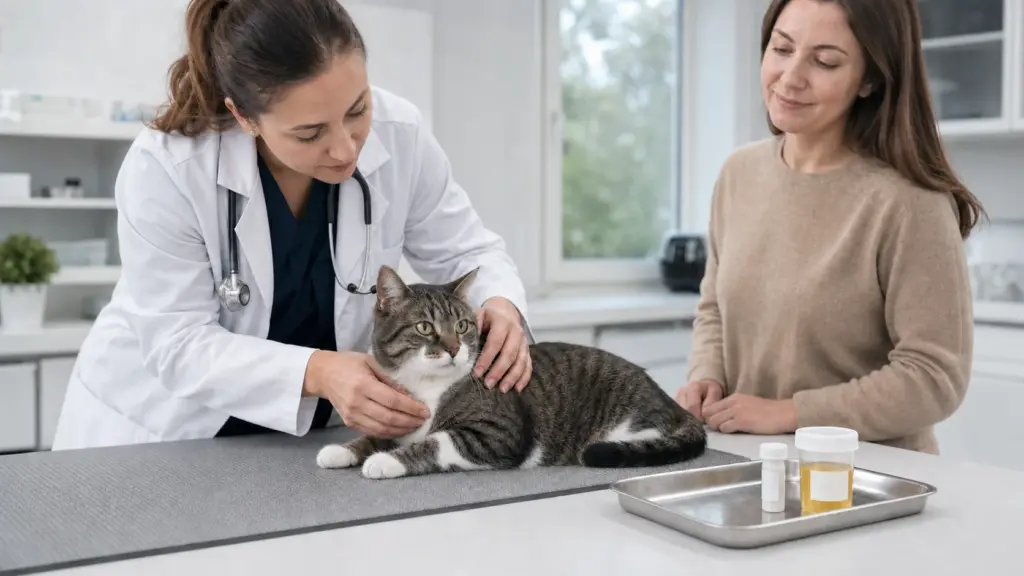
A diagnosis of diabetes requires more than recognizing symptoms or finding one elevated glucose value. Cats can experience stress hyperglycemia during travel, restraint, or a clinic visit.
The veterinary evaluation usually begins with a complete history and physical examination. Be prepared to discuss:
- appetite and feeding routine
- water intake
- litter box changes
- weight history
- activity and gait
- vomiting or diarrhea
- all medications and supplements
- previous illnesses and laboratory results
The 2026 AAHA feline diabetes guidelines recommend laboratory evaluation that may include a complete blood count, chemistry profile, urinalysis, and total thyroxine testing in cats with compatible clinical signs. The veterinarian may recommend additional tests based on age, examination findings, and suspected concurrent disease.
Blood and urine glucose
Persistent hyperglycemia and glucose in the urine support a diabetes diagnosis when they occur with compatible clinical signs. A single high clinic blood-glucose result may reflect stress rather than sustained disease, so context and repeat or home-environment information can matter.
Fructosamine
Fructosamine can help estimate average blood glucose over the recent past and can be useful when stress hyperglycemia complicates interpretation. It is an aid, not an infallible standalone test. Other medical conditions can influence the result.
Additional assessment
The veterinarian may look for ketones and conditions that contribute to insulin resistance or mimic diabetes. Diagnostic choices are based on the individual cat; not every patient needs the same test package.
Home glucose meters, continuous glucose monitors, urine strips, and other monitoring tools should be used only with veterinary instruction. A home value cannot safely be interpreted without considering the device, sampling technique, treatment, food intake, symptoms, and the veterinarian’s target for that patient.
Treatment: A Safe Overview
Feline diabetes can often be managed successfully, but treatment is individualized. The goals are to reduce clinical signs, support a healthy weight and quality of life, avoid hypoglycemia and ketosis, and monitor for remission or concurrent disease.
Insulin treatment
Injectable insulin remains an important treatment for feline diabetes. The product, concentration, delivery device, starting plan, and adjustments must be prescribed by a veterinarian.
Different insulins and syringes are not automatically interchangeable. Using the wrong syringe or misunderstanding a pen can cause a dangerous dosing error. Ask the veterinary team to demonstrate storage, mixing if applicable, measuring, injection, disposal, and what to do when a dose is missed or the cat does not eat.
Never increase, reduce, repeat, or stop insulin because of a single reading or a change in symptoms unless the veterinarian has given you a specific written protocol.
Oral SGLT2-inhibitor treatment
In the United States, certain once-daily SGLT2-inhibitor medications are licensed for selected newly diagnosed cats. They are not a simple replacement for insulin and are not appropriate for every patient.
The 2026 AAHA guidelines emphasize careful screening for concurrent illness and ketosis before treatment. Cats that are vomiting, eating poorly, dehydrated, markedly lethargic, losing severe body condition, ketotic, or otherwise metabolically unstable are generally not suitable candidates and may require insulin and more intensive care.
These medications require specific follow-up and ketone monitoring because ketoacidosis can occur even without extreme hyperglycemia. Owners should use them only under direct veterinary supervision and follow the product-specific plan exactly.
Dietary management
Nutrition is part of diabetes management, but there is no safe universal shopping list for every diabetic cat. The plan must consider current treatment, body condition, muscle condition, food preferences, other diseases, and whether the cat will reliably eat the recommended food.
Many diabetic cats benefit from a palatable diet that supports appropriate protein intake, controlled energy intake, and a carbohydrate strategy selected by the veterinary team. Wet food may be useful for some cats, but the label “wet” does not by itself define a suitable diabetic diet.
Do not abruptly switch food or reduce medication on your own. A meaningful diet change can alter glucose control and medication requirements. Cats receiving an SGLT2 inhibitor may also have treatment-specific dietary instructions during the initial period. Coordinate any change with the veterinarian managing the diabetes.
Raw diets are not required for diabetes management and can introduce nutritional and infectious-disease concerns. Do not substitute online carbohydrate calculations or ingredient-list rules for an individualized veterinary nutrition plan.
Activity and weight management
Appropriate play and activity can support muscle condition and healthy weight. The plan should match the cat’s age, mobility, neuropathy, pain, heart health, and current stability. Avoid suddenly forcing strenuous exercise on a weak or poorly regulated cat.
For broader feeding principles, see our indoor cat diet guide, but follow the treating veterinarian’s instructions when they differ from general advice.
Monitoring a Cat After Diagnosis
Successful management depends on the cat’s clinical response as well as laboratory data. The veterinary team may ask you to record:
- appetite
- water intake
- urine output
- body weight
- activity and gait
- vomiting or diarrhea
- every medication dose
- unusual behavior or possible low-glucose signs
The veterinarian may use rechecks, blood glucose curves, continuous glucose monitoring, fructosamine, urinalysis, ketone testing, or other methods. The appropriate combination differs between insulin-treated cats and cats receiving an SGLT2 inhibitor.
Do not chase a perfect number by changing treatment yourself. The 2026 AAHA guidance emphasizes monitoring the cat, not only the glucose values. Improving thirst, urination, appetite, energy, and weight trend can be meaningful, while a cat that looks ill needs assessment even if one number appears acceptable.
Bring the exact medication containers, insulin pen or syringe type, food information, and home records to appointments. If cost, work hours, injection difficulty, or monitoring stress is interfering with the plan, tell the veterinary team. A workable plan is safer than an idealized routine that cannot be followed consistently.
Hypoglycemia Warning Signs in a Treated Cat
Hypoglycemia means blood glucose has become too low. It is a potentially life-threatening complication, especially in a cat receiving insulin.
Possible signs include:
- sudden weakness
- unusual sleepiness or difficulty waking
- restlessness or abnormal behavior
- wobbling or poor coordination
- tremors
- disorientation
- collapse
- seizures
If you suspect hypoglycemia, follow the emergency instructions your veterinarian provided and contact a veterinary clinic immediately. If no plan is available, call the treating clinic or an emergency hospital for real-time directions. Do not force food or liquid into an unconscious or seizing cat, and do not guess the next medication dose.
Ask for a written emergency plan before a crisis occurs. The plan should explain what signs to watch for, which home supplies are appropriate for your cat, how to use them, when to travel to an emergency hospital, and what to do about the next scheduled treatment.
What Diabetic Remission Means
Some cats enter diabetic remission, meaning normal glucose regulation is maintained for a defined period without insulin or oral glucose-lowering medication. Remission is possible, but it is not guaranteed and does not mean the underlying vulnerability has disappeared.
Relapse can occur. Continued weight management, appropriate nutrition, home observation, and veterinary follow-up remain important.
Remission must be identified through professional monitoring. A cat receiving insulin can develop dangerous hypoglycemia if falling medication needs go unnoticed. Never stop insulin because drinking and urination improve or because a home reading appears lower than expected. Contact the veterinarian so the complete record can be reviewed and treatment adjusted safely.
Similarly, a cat receiving an SGLT2 inhibitor should not have medication stopped merely because symptoms improve. The veterinarian will decide when and how remission should be assessed.
Frequently Asked Questions
What are the first signs of diabetes in cats?
Increased thirst, larger or more frequent urine clumps, weight loss, and increased appetite are common early patterns. Some cats show only subtle changes. These signs require veterinary testing because kidney disease, hyperthyroidism, and other illnesses can look similar.
Can a cat have diabetes without drinking more water?
Yes. Not every cat displays every classic sign, and owners may not notice drinking changes when cats eat wet food, share bowls, or have multiple water stations. Unexplained weight loss, appetite changes, weakness, or abnormal gait still warrant evaluation.
Can I test my cat for diabetes at home?
Home monitoring can contribute useful information after a veterinarian has selected and explained an appropriate method. It cannot replace diagnosis. Stress hyperglycemia, device differences, technique, urine findings, clinical signs, and concurrent illness all affect interpretation.
Is hind-leg weakness always diabetic neuropathy?
No. A plantigrade stance is associated with feline diabetes, but arthritis, spinal disease, electrolyte abnormalities, neurologic disease, and other conditions can cause weakness or gait change. Record a video if safe and arrange an examination.
Is vomiting a symptom of cat diabetes?
Vomiting is not one of the most specific early signs, but it can occur when a diabetic cat becomes seriously ill, including with DKA. A known or suspected diabetic cat that is vomiting, not eating, weak, dehydrated, or breathing abnormally needs urgent veterinary assessment.
Can feline diabetes be treated with pills instead of insulin?
Certain SGLT2-inhibitor drugs are licensed for carefully selected newly diagnosed cats, but they are not suitable for every patient and require screening and monitoring for ketosis. Insulin remains appropriate for many cats, particularly those that are systemically unwell or unsuitable for an SGLT2 inhibitor. A veterinarian must choose the treatment.
Can diabetes in cats go into remission?
Yes, some cats enter remission after effective management and reduction of contributing insulin resistance. Remission is not a cure, can be followed by relapse, and must be confirmed through veterinary monitoring. Do not stop treatment simply because you think the cat is in remission; follow the medication-specific emergency instructions if illness or an adverse reaction occurs.
Can a diabetic cat have a good quality of life?
Many cats can live comfortably when treatment is effective and the care plan is realistic for the household. Success depends on individualized therapy, monitoring, communication with the veterinary team, and prompt attention to complications.
The Bottom Line
The key symptoms of diabetes in cats are increased thirst and urination, unexplained weight loss, increased appetite, weakness, reduced activity, hind-leg posture changes, and poor coat condition. No single sign confirms diabetes, but a combination—especially thirst, large urine clumps, and weight loss—should prompt a veterinary appointment.
Vomiting, appetite loss, severe lethargy, dehydration, collapse, or abnormal breathing may indicate DKA or another emergency. A treated diabetic cat with sudden weakness, tremors, disorientation, or seizures may be hypoglycemic. In either situation, obtain urgent veterinary guidance.
Diagnosis and treatment have changed substantially, including newer oral medications for selected cats, but safe management remains individualized. Do not calculate insulin doses, change food abruptly, or diagnose remission from online instructions. Follow your veterinarian’s treatment plan and the medication-specific emergency instructions described above. Keep clear home records and work with the veterinary team to build a plan that controls symptoms while avoiding hypoglycemia and ketosis.
For a broader routine covering home observations, weight, dental health, and preventive examinations, see our indoor cat health prevention guide.
References
- American Animal Hospital Association. 2026 AAHA Diabetes Management Guidelines for Cats: Introduction and Abbreviations. https://www.aaha.org/resources/2026-aaha-diabetes-management-guidelines-for-cats/introduction-and-abbreviations-and-acronyms/
- American Animal Hospital Association. Section 2: Recognizing Diabetes Mellitus in Cats. https://www.aaha.org/resources/2026-aaha-diabetes-management-guidelines-for-cats/section-2-recognizing-dm-in-cats/
- American Animal Hospital Association. Section 3: Diagnosing Diabetes Mellitus in Cats. https://www.aaha.org/resources/2026-aaha-diabetes-management-guidelines-for-cats/section-3-diagnosing-dm-in-cats/
- American Animal Hospital Association. Section 6: SGLT2 Inhibitor Treatment and Monitoring. https://www.aaha.org/resources/2026-aaha-diabetes-management-guidelines-for-cats/section-6-sglt2-inhibitor-treatment-and-monitoring/
- American Animal Hospital Association. Section 7: Insulin Treatment and Monitoring. https://www.aaha.org/resources/2026-aaha-diabetes-management-guidelines-for-cats/section-7-insulin-treatment-and-monitoring/
- American Animal Hospital Association. Section 9: Diabetic Remission. https://www.aaha.org/resources/2026-aaha-diabetes-management-guidelines-for-cats/section-9-diabetic-remission/
- American Animal Hospital Association. Section 12: Diabetic Ketoacidosis in Cats. https://www.aaha.org/resources/2026-aaha-diabetes-management-guidelines-for-cats/section-12-diabetic-ketoacidosis-in-cats/
- Cornell Feline Health Center. Feline Diabetes. https://www.vet.cornell.edu/departments-centers-and-institutes/cornell-feline-health-center/health-information/feline-health-topics/feline-diabetes