By the IndoorCatExpert.com, a cat I once proudly called “big-boned”
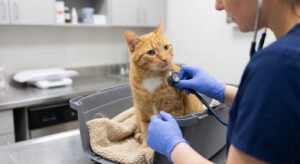
For the longest time, I genuinely thought Oliver was just a large cat. I called him “chonky.” I called him “a whole situation.” I posted photos of him sprawled across the sofa with captions like “living his best life.” People in the comments called him adorable. And he was adorable — but at his annual vet visit, when the veterinarian ran her hands along his sides and quietly said “I can’t feel his ribs at all,” something shifted in me. I went home and Googled is my cat overweight for the first time, and what I found made me feel equal parts guilty and determined. The “cute chubby cat” internet aesthetic had genuinely blinded me to the fact that Oliver was carrying dangerous excess weight — and I was the one responsible for it.
This article is for anyone who has ever lovingly called their cat “fluffy” or “big-boned” and wondered, in the back of their mind, whether something more serious might be going on.
Quick Answer
To know if your cat is overweight, use the Body Condition Score (BCS) system. You should be able to feel their ribs easily with gentle pressure, see a clear waistline from above, and notice a slight abdominal tuck from the side. If you cannot feel their ribs without pressing hard, or their belly hangs visibly, your cat is likely overweight and needs a dietary and activity adjustment.
Why Indoor Cats Are Prone to Weight Gain
Before we get into the assessment, I want to be clear about something: if your cat is overweight, you are not a bad owner. The conditions of modern indoor cat life make weight gain almost inevitable without deliberate intervention. Understanding why helps you fix it without beating yourself up.
The Indoor Life Is Designed for Comfort, Not Fitness
Outdoor cats roam territories that can span several miles. They hunt, climb, sprint, and patrol constantly. The physical demands of outdoor life burn enormous amounts of energy every single day.
Indoor cats live in a controlled, static environment where:
- Food appears in a bowl without any effort
- The temperature is always comfortable (no energy burned thermoregulating)
- There are no territorial threats requiring active patrol
- The most physically demanding activity available is often jumping to the sofa
This isn’t a criticism of keeping cats indoors — indoor cats live significantly longer and face far fewer health risks overall. But it does mean that caloric intake and energy expenditure are completely decoupled in a way that never happens in the wild, and that gap has to be managed deliberately.
Free-Feeding Is the Number One Culprit
Walk into almost any cat-owning household and you’ll find a bowl of dry kibble sitting out all day, refilled whenever it gets low. This is free-feeding, and it’s the single biggest driver of feline obesity in domestic cats.
Here’s the problem: cats are not natural grazers. In the wild, they eat what they catch — a small rodent or bird — and then they’re done until the next successful hunt. Their systems are not designed for unlimited, constant food access. When food is always available, many cats will eat out of boredom, habit, or mild anxiety rather than genuine hunger.
Oliver was free-fed for the first two years of his life. Looking back, it’s not surprising where he ended up.
Other Contributing Factors
- Age: Metabolism slows significantly after age 2–3, and again after 7
- Neutering/spaying: Altered cats have lower metabolic rates and reduced roaming instinct — studies suggest energy requirements drop by up to 30% post-neuter
- Breed predisposition: Some breeds (British Shorthairs, Ragdolls, Maine Coons) are genetically prone to carrying more weight
- High-carbohydrate diets: Dry kibble’s high carbohydrate content doesn’t align well with feline metabolism, contributing to fat storage
- Boredom: Cats who are under-stimulated often sleep more, move less, and eat more — a perfect storm for weight gain
The Feline Body Condition Score (BCS) Explained
The Body Condition Score is the gold-standard assessment tool used by veterinarians to evaluate a cat’s weight relative to their ideal body composition. It’s a 9-point scale:
全屏复制
| BCS Score | Description | What It Means |
|---|---|---|
| 1–3 | Ribs, spine, and hip bones visibly prominent | Underweight — vet visit needed |
| 4–5 | Ribs easily felt, slight fat covering, clear waist visible | Ideal weight |
| 6–7 | Ribs difficult to feel, waist barely visible, rounded abdomen | Overweight |
| 8–9 | Ribs not palpable under fat, no waist, significant abdominal fat pad | Obese — medical intervention needed |
Oliver, at his heaviest, was a solid 7. His veterinarian’s goal was to get him back to a 4–5. The difference in how he moved, played, and groomed himself after achieving that was genuinely striking.
The key insight about BCS: It’s not about the number on the scale. A 12-pound cat might be at a perfect BCS 5 if they’re a large-framed Maine Coon, while a 10-pound cat might be obese if they’re a naturally petite Siamese. Weight in pounds or kilograms is a starting reference point — body composition is what actually matters.
How to Do the At-Home Physical Check
You don’t need a vet’s office to get a reasonable BCS assessment. Here’s the three-part physical evaluation I now do with Oliver every month. You’ll need good lighting, a calm cat, and about three minutes.
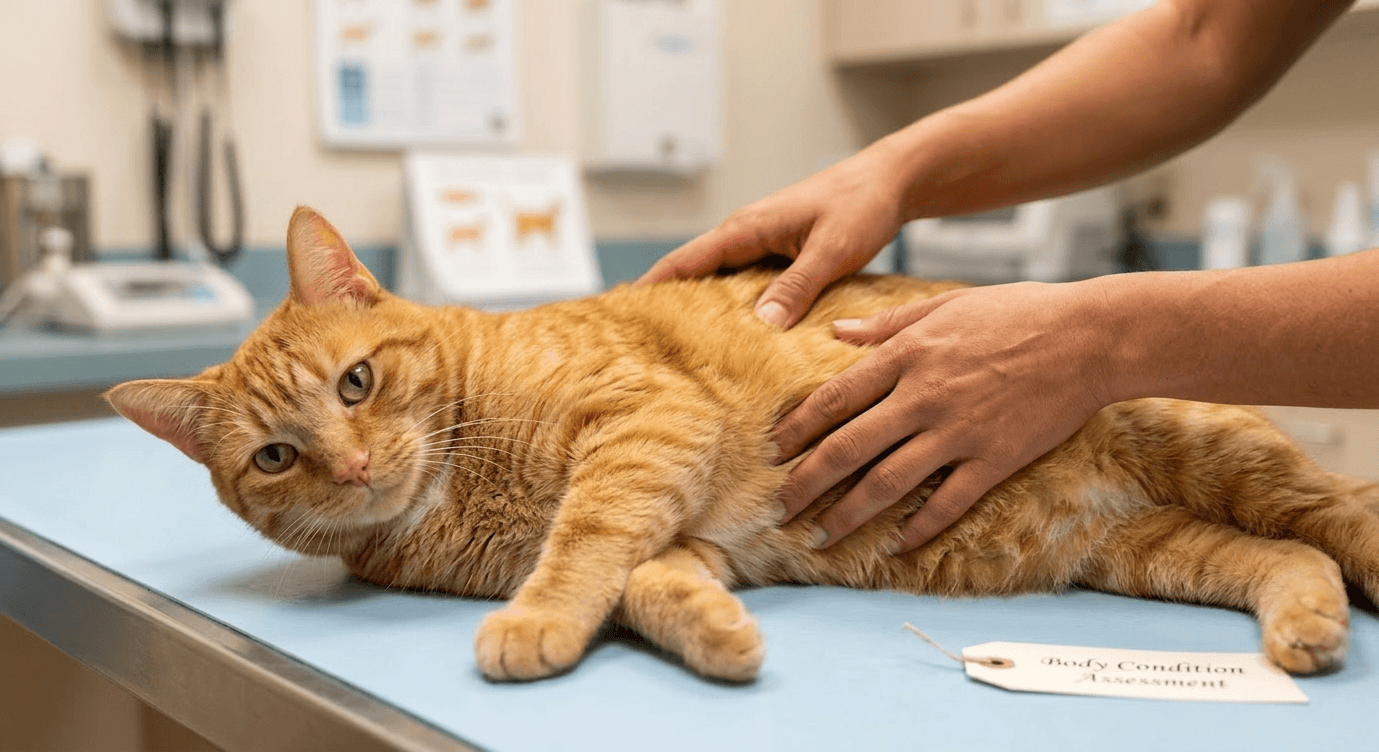
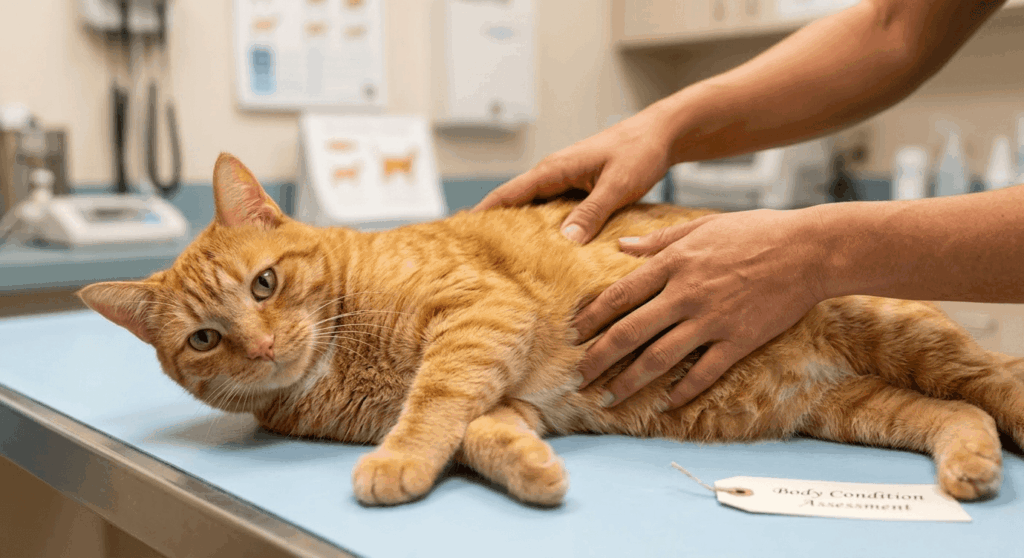
The Rib Test
This is the most informative single check you can do.
How to do it:
- Place your hands on either side of your cat’s ribcage, just behind their front legs
- Apply gentle pressure — about the same pressure you’d use to feel your own knuckles through the back of your hand
- Move your fingertips slowly along the ribs
What you should feel:
- ✅ Ideal (BCS 4–5): You can feel individual ribs clearly with gentle pressure, with a thin, even layer of fat covering them — like feeling your knuckles through a thin glove
- ⚠️ Overweight (BCS 6–7): You have to press noticeably to feel the ribs, and the fat layer feels thick and padded
- 🚨 Obese (BCS 8–9): You cannot feel individual ribs at all, even with firm pressure
For fluffy cats: Long fur can be genuinely deceptive. Part the fur and make direct skin contact before assessing. Oliver has enough fur to hide a multitude of sins, which is part of why I missed this for so long.
Key takeaway: If you have to press hard to find your cat’s ribs, or you can’t find them at all, your cat is carrying excess weight — regardless of how their fur makes them look.
The Overhead View
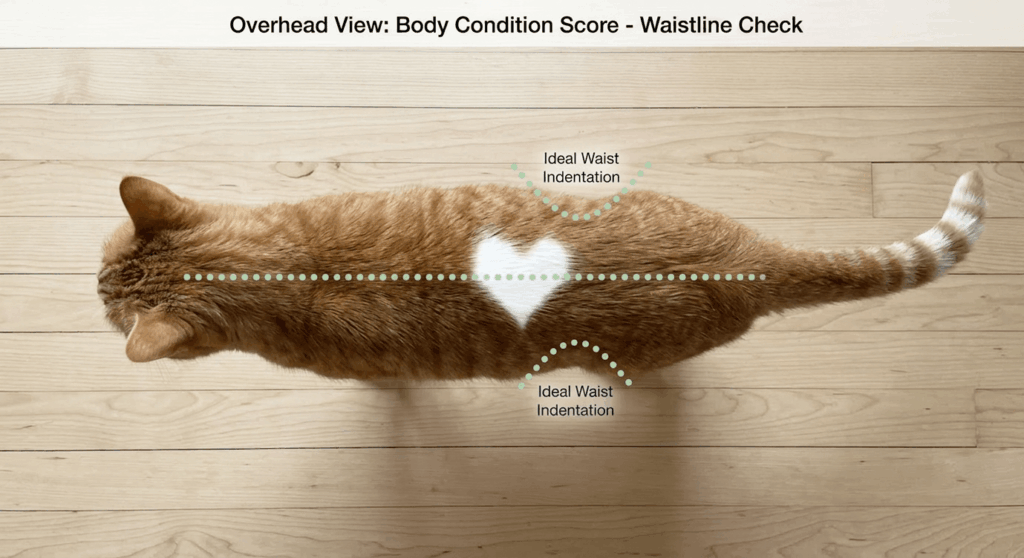
Stand directly above your cat while they’re standing or walking, and look straight down at their body shape.
What you should see:
- ✅ Ideal: A clear hourglass shape — the body widens at the shoulders, narrows at the waist behind the ribs, then widens slightly again at the hips
- ⚠️ Overweight: The waist is barely visible or absent — the body looks more like an oval or rectangle from above
- 🚨 Obese: The body is visibly wider at the middle than at the shoulders or hips — a rounded, barrel-like shape with no waist definition at all
This view is one that owners rarely take because we’re used to seeing our cats from the side or from the front. Getting directly overhead was genuinely eye-opening with Oliver — the waistline I assumed existed simply wasn’t there.
The Side Profile Check
Crouch down to your cat’s level and look at them from the side while they’re standing.
What you should see:
- ✅ Ideal: A slight upward tuck of the abdomen behind the ribcage — the belly gently rises toward the hips rather than hanging level or drooping
- ⚠️ Overweight: The belly hangs level with the chest, with no visible tuck
- 🚨 Obese: The belly visibly sags or droops below the chest line — sometimes swaying when the cat walks
A note on the “primordial pouch”: Many cat owners see a flap of skin and fat that hangs from the lower belly and assume it means their cat is overweight. This is the primordial pouch — a totally normal anatomical feature that all domestic cats have, regardless of weight. It’s thought to protect abdominal organs during fights and allow for expansion after large meals. A primordial pouch alone does not indicate obesity. The rib test and overhead waist check are more reliable indicators.
Health Risks of a ‘Chonky’ Cat
I want to spend a moment here because this is the section that really motivated me to take Oliver’s weight seriously. Overweight cats aren’t just “less athletic” — excess weight creates a cascade of compounding health problems that significantly impact both quality and length of life.
Diabetes Mellitus
Feline obesity is the single strongest risk factor for Type 2 diabetes in cats. Excess body fat causes insulin resistance — cells stop responding properly to insulin, and blood sugar regulation breaks down. Diabetic cats require daily insulin injections, regular glucose monitoring, and lifelong dietary management. The good news: cats who lose weight often go into diabetic remission. The better news: it’s largely preventable.
Joint Disease and Arthritis
Every pound of excess weight puts roughly 4–5 pounds of additional stress on a cat’s joints with every step. Overweight cats develop arthritis significantly earlier than lean cats, and because cats are masters at hiding pain, joint disease often goes undetected until it’s quite advanced. Signs include reluctance to jump, stiffness when rising, and reduced grooming of hard-to-reach areas.
Hepatic Lipidosis (Fatty Liver Disease)
Here’s a particularly cruel irony: overweight cats who stop eating — even for 24–48 hours due to illness, stress, or food change — are at high risk for hepatic lipidosis, where the body mobilizes fat stores so rapidly that the liver becomes overwhelmed and begins to fail. It’s one of the most common severe liver diseases in cats, and overweight cats are disproportionately vulnerable.
Urinary Tract Disease
Overweight cats are less active, drink less water, and have more sedentary lifestyles — all of which contribute to concentrated urine and increased risk of urinary crystals, blockages, and Feline Idiopathic Cystitis.
Reduced Lifespan
A landmark study published in the Journal of Veterinary Internal Medicine found that overweight cats had meaningfully shorter lifespans than cats maintained at ideal body weight. The difference wasn’t marginal. Weight management is genuinely one of the highest-impact things you can do for your cat’s longevity.
Grooming Difficulties
This one is less discussed but affects daily quality of life significantly. Overweight cats often cannot reach their lower back, base of tail, and hindquarters to groom properly. This leads to matting, skin infections, and a chronically unkempt coat — and it’s uncomfortable and undignified for the cat.
What to Do Next: A Clear Action Plan
If your at-home BCS check confirmed what you suspected, here’s where to start. I want to be direct: do not put your cat on a crash diet. Rapid weight loss in cats is medically dangerous (see hepatic lipidosis above). The goal is slow, steady, supervised weight loss — typically 0.5–1% of body weight per week.
Step 1: Get a Vet Baseline First
Before changing anything, schedule a vet visit. This matters for several reasons:
- Your vet can confirm your BCS assessment and give you an accurate target weight
- Blood work can rule out underlying conditions (hypothyroidism, though rare in cats, can contribute to weight gain)
- Your vet can calculate a precise daily caloric target for weight loss
- They can monitor progress and flag if weight loss is happening too quickly
Do not skip this step, especially if your cat is significantly overweight (BCS 7+).
Step 2: Address the Diet — Stop Free-Feeding
The dietary component is where the most significant change happens. Once you have your vet-recommended caloric target, the most important structural change you can make is transitioning away from free-feeding to measured, scheduled meals.
This means:
- Measuring every meal by weight or volume, not by guessing
- Removing the food bowl between meals rather than leaving it out
- Switching to wet food as the primary diet, or at minimum reducing high-carbohydrate dry kibble
The full dietary strategy — including how to calculate portions, choose the right food, and handle a cat who acts perpetually starving — is covered in detail in [How to Help Indoor Cat Lose Weight Without the Constant Meowing]. It’s the most important single resource if diet is where you’re starting.
Step 3: Build a Daily Exercise Routine
Diet changes alone will produce weight loss, but adding structured daily activity accelerates results, preserves muscle mass during weight loss, and dramatically improves your cat’s overall health and mental wellbeing.
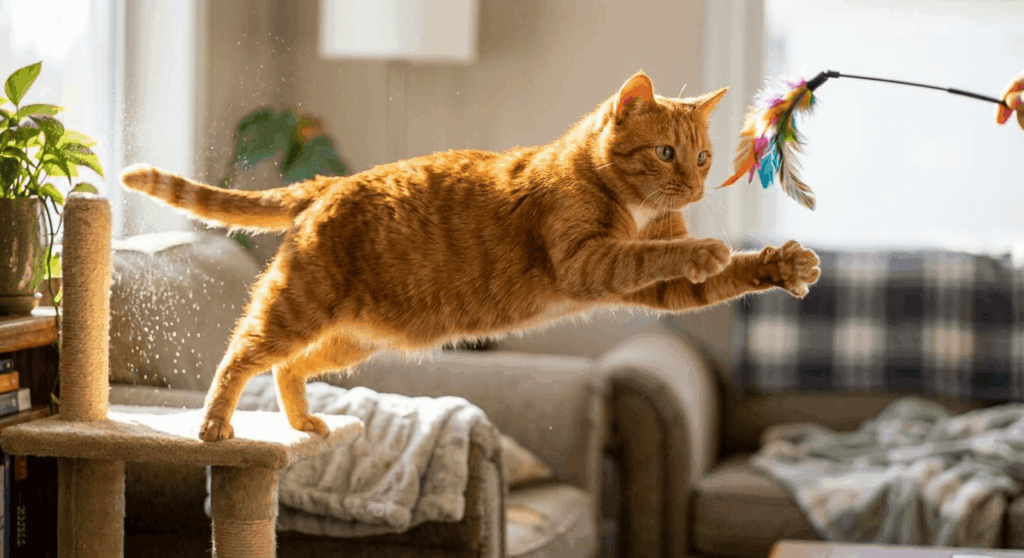
The goal is 20–30 minutes of active play per day, split across two sessions timed to your cat’s natural energy peaks at dawn and dusk. Use the hunt-catch-kill-eat biological sequence: interactive wand toy play followed immediately by a meal. For the complete framework on building this into a sustainable daily habit, I’ve put together a full indoor cat exercise routine in [How to Create an Exercise Routine for Your Indoor Cat] — it includes a formatted daily schedule and toy rotation strategy.
Step 4: Track Progress Monthly
Weigh your cat monthly — most vets will let you pop in for a quick weigh-in without an appointment, or you can use a baby scale at home. Track the number alongside a monthly BCS self-assessment.
Healthy weight loss rate: 0.5–1% of body weight per week
For a 14-pound cat: That’s roughly 1–1.5 ounces per week, or about half a pound per month
If weight loss stalls completely after 4–6 weeks of consistent effort, go back to your vet. Sometimes caloric targets need adjustment, or there’s an underlying issue affecting metabolism.
Step 5: Adjust the Environment
An enriched environment keeps a cat mentally engaged, physically active, and less likely to eat out of boredom:
- Puzzle feeders for at least one meal daily — eating becomes exercise
- Vertical space — cat trees and wall shelves encourage climbing and jumping
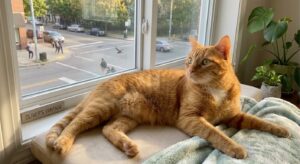
- Window access — passive enrichment that keeps them alert and stimulated
- Rotating toys — novelty maintains engagement and spontaneous play
A Word on Patience (And on Forgiving Yourself)
Oliver’s weight loss journey took eight months from his heaviest point to his veterinarian-confirmed ideal BCS. Eight months of measured meals, scheduled play, puzzle feeders, and more than a few evenings of him staring at his empty bowl with theatrical betrayal.
The progress wasn’t linear. There were weeks where the scale barely moved and weeks where it moved quickly. What mattered was the overall trend and the consistency of the routine.
What I didn’t expect was how much better he seemed — not just physically, but behaviorally. He played more. He groomed himself completely for the first time in what I realized had probably been years. He jumped onto the counter (annoying, but genuinely impressive). His coat improved. He seemed more comfortable in his body.
The cat I thought was “just a mellow, low-energy cat” turned out to be a cat who had been quietly uncomfortable and under-stimulated for years. That realization is still a little hard to sit with. But it’s also what makes the change feel worthwhile.
Frequently Asked Questions
Is my cat overweight or just fluffy?
This is one of the most common questions — and the answer is that fluffiness and overweight status are completely independent variables. A fluffy cat can absolutely be at a perfect BCS 5, and a short-haired cat can be significantly obese. The only way to know for sure is to do the physical BCS assessment — specifically the rib test — rather than relying on visual appearance alone. Part the fur, make direct contact with the skin, and feel for the ribs with gentle pressure. If you can feel them easily, your cat is likely at a healthy weight regardless of how voluminous their coat is. If you have to press firmly or can’t find them at all, fluffiness isn’t the explanation.
How quickly should my cat lose weight?
Safe feline weight loss is deliberately slow — 0.5–1% of body weight per week is the medically recommended rate. For a 14-pound cat, that’s roughly half a pound per month. This pace feels frustratingly gradual, but it exists for an important reason: cats who lose weight too rapidly are at serious risk for hepatic lipidosis (fatty liver disease), where the liver becomes overwhelmed processing mobilized fat stores. Never restrict your cat’s food drastically in an attempt to speed up results. If your vet has given you a caloric target and your cat isn’t losing weight after 6 weeks, go back for a reassessment rather than cutting calories further on your own.
Is my cat overweight if they weigh more than 10 pounds?
Not necessarily — and this is a really important point. There is no universal “healthy weight” number for cats. A petite female Siamese might be overweight at 9 pounds, while a large-framed male Maine Coon might be perfectly lean at 16 pounds. The number on the scale is a useful tracking tool, but it tells you almost nothing in isolation. Body Condition Score — assessed through the rib test, overhead waistline check, and side profile tuck — is always the more meaningful measurement. When in doubt, your veterinarian can give you a personalized ideal weight target based on your cat’s specific frame size and breed characteristics.
References:
- WSAVA Global Nutrition Committee: Feline Body Condition Score Chart
- Teng, K.T. et al. (2018). Strong associations of 9-point body condition scoring with survival and lifespan in cats. Journal of Veterinary Internal Medicine.
Oliver is now a sleek, moderately athletic cat who occasionally still gives me the eyes when his dinner bowl is empty. I consider this progress. He considers it a personal injustice. We’ve agreed to disagree.
Did this article help you see your cat differently? Share it with someone who might need a gentle nudge — sometimes we all just need someone to say “hey, let’s take a closer look” without making us feel terrible about it. And if you’ve been through a cat weight loss journey, drop your experience in the comments. 🐾