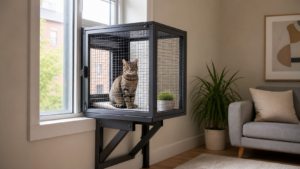
A kitten proof apartment starts with one safe room and a floor-level inspection of every place a curious kitten can chew, climb, enter, tip over, or swallow. Secure electrical cords, remove toxic plants and medicines, lock away cleaners, block inaccessible gaps, check windows and balcony doors, and store string-like or bite-size objects in closed containers. Then expand your kitten’s access gradually while you watch what attracts them.
Kittens are not simply smaller adult cats. They can fit behind appliances, climb unstable furniture, bite moving cables, and turn ordinary household objects into swallowing hazards. The goal is not to remove every interesting object. It is to make dangerous choices unavailable while providing safe places to hide, scratch, climb, eat, drink, eliminate, and play.
Quick Answer: How Do You Kitten Proof an Apartment?
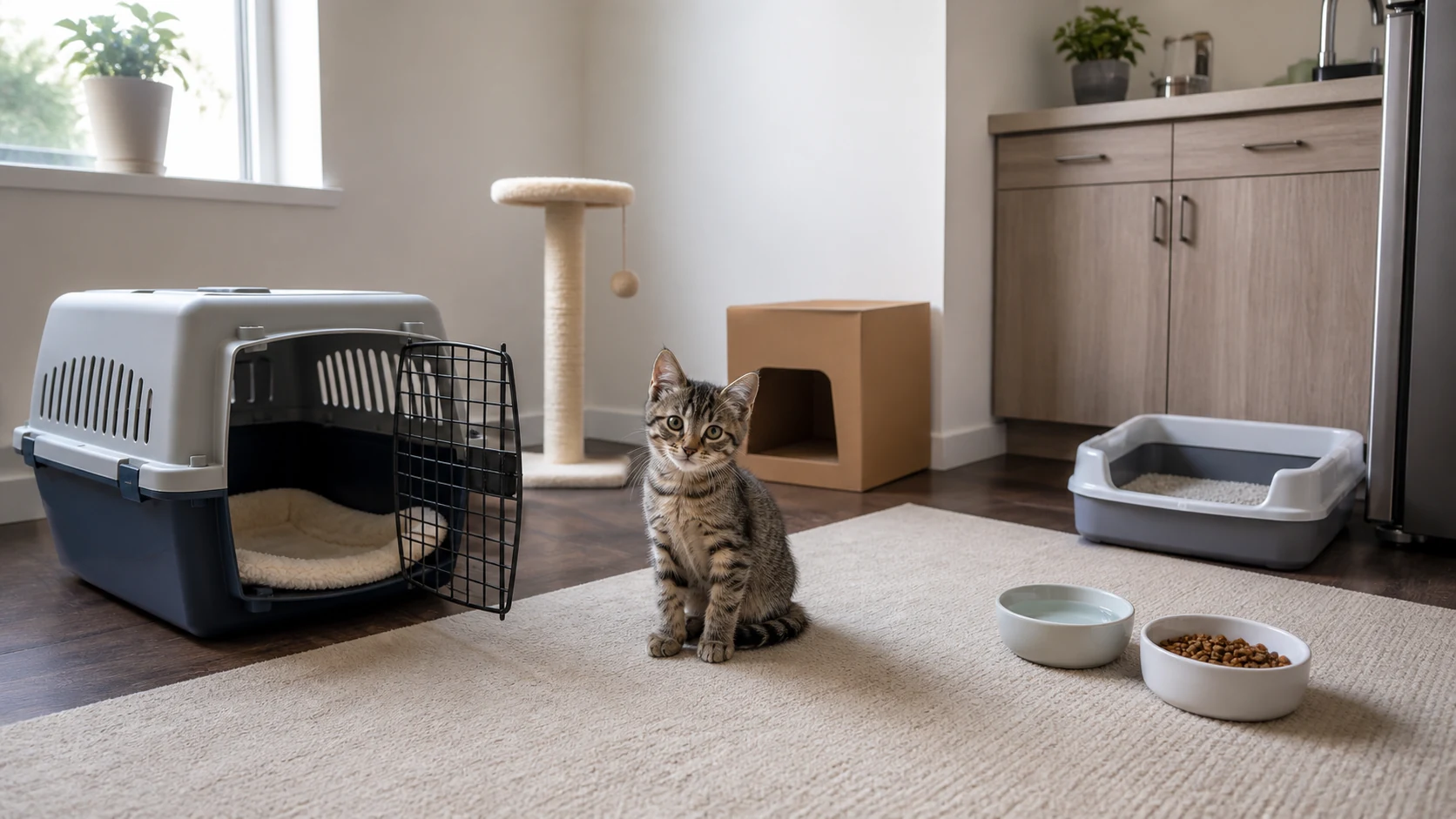
Prepare one quiet starter room before your kitten arrives. Place food, water, a low-entry litter box, bedding, a scratcher, safe toys, and an accessible hiding place inside it. Elsewhere in the apartment, cover or route cords, remove toxic plants, secure medications and chemicals, close toilets and trash cans, block dangerous gaps, stabilize furniture, inspect window screens, and prevent balcony access until it is fully enclosed.
Recheck the apartment as your kitten grows. A shelf, counter, cord, or window that was unreachable at ten weeks may become accessible a month later.
Urgent safety note: If your kitten may have swallowed string, ribbon, thread, a hair tie, medication, a toxic plant, cleaner, essential oil, or part of a toy, contact a veterinarian or animal poison-control service promptly. Do not wait for symptoms, do not induce vomiting unless a veterinary professional directs you to, and never pull string from the mouth or anus.
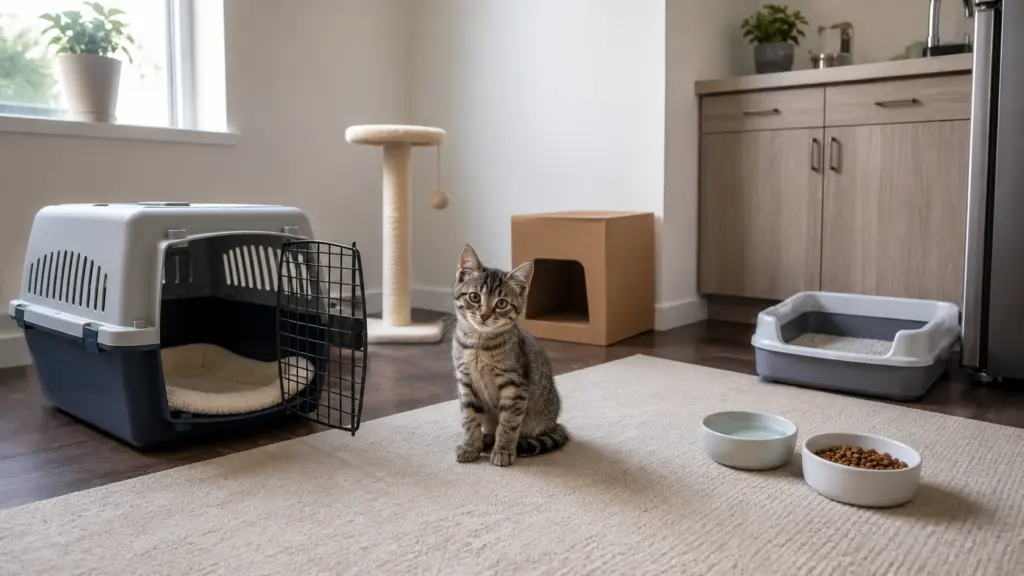
Table of Contents
Start With a Kitten-Eye-Level Inspection
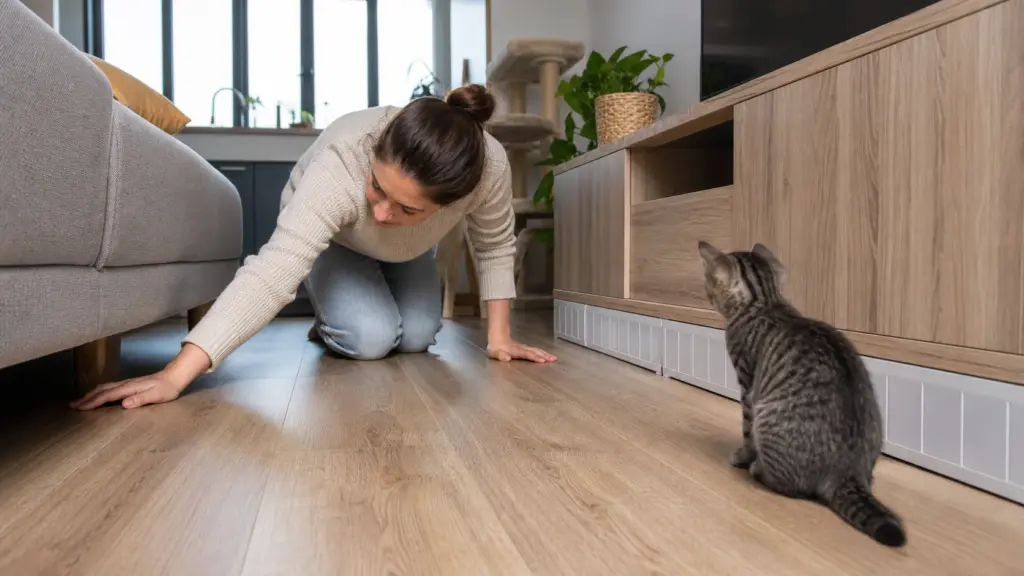
Get down on the floor and inspect each room from the height of a kitten. Look underneath, behind, and inside furniture rather than checking only visible surfaces. Ask five questions about every object:
- Can the kitten chew it?
- Can the kitten swallow part of it?
- Can the kitten climb or tip it?
- Can the kitten become trapped inside or behind it?
- Can it expose the kitten to heat, electricity, chemicals, or an escape route?
Pay particular attention to recliners, sofa beds, washers, dryers, dishwashers, refrigerators, radiators, box springs, folding furniture, and cabinets with loose doors. Kittens seek small, dark spaces because those spaces feel protected. Blocking a dangerous gap works best when you also provide an approved hiding place, such as an open carrier, covered bed, or sturdy cardboard box.
What to Put in the First Safe Room
A safe room gives a new kitten a manageable place to learn where essential resources are located. It is not punishment or long-term isolation.
Include:
- a low-entry litter box;
- the same food the kitten was already eating, unless your veterinarian advised a change;
- separate food and water stations;
- washable bedding;
- an open carrier or accessible hiding box;
- a stable vertical and horizontal scratching surface;
- two or three kitten-safe toys; and
- a comfortable temperature with no direct drafts.
Place the litter box away from food and water. Keep hiding places accessible so you do not have to move heavy furniture during an emergency. If other pets live in the apartment, keep the room closed initially and plan gradual introductions rather than allowing immediate face-to-face contact.
There is no universal 24-, 48-, or 72-hour deadline for opening the rest of the home. Expand access when the kitten is eating, drinking, using the litter box, resting, and interacting without appearing overwhelmed. A timid kitten may need longer than a confident one.
10 Essential Steps to Kitten Proof an Apartment
1. Block Dangerous Gaps Without Blocking Ventilation
Check behind the refrigerator, stove, washer, dryer, bathroom vanity, bed, sofa, entertainment unit, and freestanding cabinets. Block spaces where the kitten could become trapped or where you could not reach them safely.
Use rigid barriers, secured storage bins, purpose-made gap blockers, or furniture placement that cannot shift. Rolled towels and loose cardboard can work temporarily, but an active kitten may move or chew them.
Never cover appliance vents or reduce the clearance required by the manufacturer. Instead, place a secure barrier outside the required ventilation zone. Before operating a recliner, sofa bed, washer, dryer, or dishwasher, know exactly where the kitten is.
2. Secure Electrical Cords and Charging Cables
Unplug and store chargers when they are not in use. Route permanent cables behind furniture or through durable cord covers, and remove dangling loops that look like moving toys. Inspect covers frequently for tooth marks.
Do not depend on bitter spray as the main safeguard. Taste deterrents are inconsistent, may not be appropriate for every surface, and do not remove the electrical risk. Physical separation is more reliable.
If cable chewing has already started, use our guide on how to stop a cat from chewing cords to combine environmental management with safer alternative activities.
3. Remove String, Hair Ties, and Small Objects
String-like items can become dangerous gastrointestinal foreign bodies. Store sewing thread, ribbon, yarn, dental floss, fishing line, elastic bands, hair ties, hoodie cords, and gift-wrapping supplies behind a closed door.
Also remove small items that can be swallowed:
- earplugs and foam pieces;
- beads, coins, buttons, and jewelry;
- twist ties and rubber bands;
- medication tablets;
- small toy parts;
- plastic packaging;
- needles and pins; and
- broken pieces of scratchers or toys.
Supervise wand toys and toys with feathers, elastic, or strings, then store them after play. If string is visible in your kitten’s mouth or coming from the anus, do not pull it. Pulling may worsen internal injury; contact a veterinarian.
4. Verify Every Plant and Flower
Identify plants by their precise common and scientific names before keeping them in the home. Do not assume that a high shelf is sufficient—kittens climb, leaves fall, and pollen can spread.
True lilies in the Lilium genus and daylilies in the Hemerocallis genus are medical emergencies for cats. Leaves, petals, pollen, and vase water can all create exposure. The safest approach is not to bring these lilies into a cat household.
Other plants can cause different levels of irritation or toxicity, so verify each plant using a veterinary poison-control database. Unknown mixed bouquets should stay outside the kitten’s environment. Our cat-safe plants apartment guide can help you choose lower-risk greenery, but it does not replace checking the exact plant.
If you suspect exposure, remove access and call your veterinarian or poison control promptly. Do not give milk, oil, salt, hydrogen peroxide, or another home remedy unless a veterinary professional specifically directs it.
5. Lock Away Medications, Cleaners, and Pest Products
Store human and veterinary medications in their original labeled containers inside a secure cabinet. A high counter is not secure enough for a climbing kitten, and child-resistant packaging is not necessarily pet-resistant.
Use closed storage for:
- prescription and over-the-counter medicines;
- topical medicated creams;
- cleaning concentrates and disinfectants;
- laundry pods and dryer sheets;
- insecticides and rodenticides;
- antifreeze, paints, and solvents;
- nicotine products and e-cigarette refills; and
- essential-oil bottles.
Follow every cleaning-product label, ventilate as directed, and keep the kitten away until treated surfaces are dry when the label requires it. Never mix cleaning products. For routine floor care, choose methods appropriate for the flooring and follow our cat-safe floor cleaner guide.
Concentrated essential oils can be hazardous when swallowed, placed on fur or skin, or spilled where a cat can walk through them. Keep diffusers and oil containers where they cannot be knocked over, and discuss use with your veterinarian if the kitten has respiratory disease.
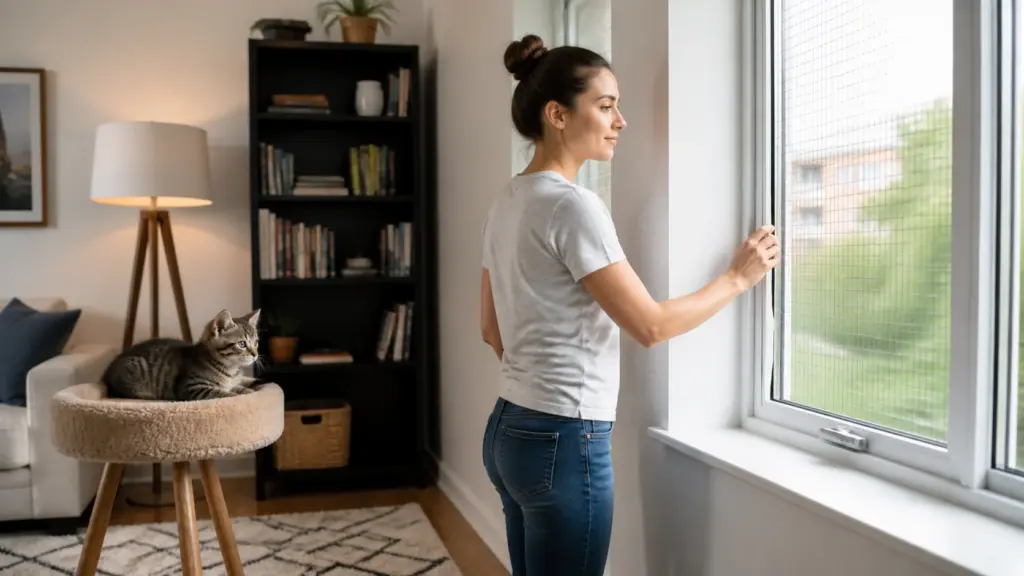
6. Inspect Windows, Screens, and Balcony Doors
An insect screen is not automatically a cat-proof barrier. Check whether the mesh, frame, fasteners, and latch can withstand pressure. Do not leave a kitten alone beside an open window with a loose or removable screen.
Move launch points away from unsafe openings. Beds, desks, cat trees, shelves, and chairs can give a kitten enough height to reach a window sooner than expected. Limit how far tilt-and-turn or partially opened windows can open, because narrowing gaps can create entrapment hazards.
Balcony access should remain closed until the entire area is secured against climbing, squeezing, and falling. Supervision alone cannot prevent every sudden jump or bolt. Review the cat-proof balcony apartment guide before allowing any balcony access.
7. Make Doors and Entryways Escape-Resistant
Create a consistent door routine. Before opening the front door, confirm where the kitten is. During deliveries, maintenance visits, or busy arrivals, place the kitten in the safe room behind a closed interior door.
Ask visitors not to hold the exterior door open. Move bags and boxes away from the entry so the kitten cannot hide inside them and be carried out accidentally. Check window and door latches after contractors, cleaners, or guests leave.
A baby gate may slow some kittens, but many cats can climb or jump one. Treat it as an extra layer rather than the only escape barrier.
8. Stabilize Furniture and Create Safe Climbing Options
Check bookcases, televisions, leaning mirrors, floor lamps, plant stands, narrow shelves, folding tables, and stacked storage. Anchor or remove anything that could tip when climbed. Hide dangling pull cords and secure blind cords so they cannot form loops.
Provide approved climbing and scratching areas with stable bases, nonslip surfaces, and safe landing space. A kitten is more likely to leave an unsafe shelf alone when a nearby perch provides a better view and reliable footing.
Inspect cat furniture after assembly and again after use. Tighten loose hardware, remove exposed staples, replace frayed strings, and retire toys with detachable pieces.
9. Set Up an Easy Litter Route
Choose a low-entry, uncovered box initially unless the kitten already uses another style confidently. Put it in a quiet, visible location that does not require crossing a noisy appliance area or passing another pet.
Use the litter the kitten knows when possible. Scoop regularly and avoid sudden simultaneous changes to the litter, box type, and location. In a larger apartment or when expanding access, a temporary second box can shorten the route.
Accidents are information, not disobedience. The kitten may not remember the location, may dislike the substrate, may feel blocked, or may have a medical problem. Contact a veterinarian if accidents accompany straining, frequent attempts, crying, diarrhea, constipation, blood, weakness, or appetite loss.
10. Supervise Expansion and Recheck as the Kitten Grows
Open one additional area at a time while you are present. Watch where the kitten goes first, what they try to chew, where they hide, and whether they can return to the litter box and safe room easily.
Keep a simple hazard log during the first week:
- attempted cord chewing;
- interest in plants or trash;
- inaccessible hiding spots;
- climbing routes;
- door rushing;
- unstable objects;
- litter-box mistakes; and
- damaged toys.
Change the environment after each discovery. Do not rely on yelling, spray bottles, or chasing. Punishment does not remove the hazard and may teach the kitten to explore it only when you are absent.
Repeat the floor-level inspection regularly during growth spurts. Kitten proofing gradually becomes ordinary cat-safe household management, but secure windows, stored chemicals, protected cords, and controlled string toys should remain permanent.
Room-by-Room Kitten Proof Apartment Checklist
Kitchen
- Cover or remove access to hot burners and turn pot handles inward.
- Check the dishwasher, oven, and cabinets before closing or operating them.
- Secure trash and food packaging.
- Store knives, cleaners, plastic bags, and breakable objects.
- Block access behind appliances without covering vents.
- Remove food rewards from counters.
Bathroom
- Close the toilet lid.
- Secure medication, floss, razors, cotton swabs, cleaners, and trash.
- Remove hair ties from counters and drains.
- Check gaps behind the vanity and around plumbing.
- Keep the floor dry enough to prevent slipping.
- Close washers and dryers and check inside before every use.
Bedroom
- Route phone and lamp chargers safely.
- Store jewelry, pills, hair ties, and sewing items.
- Block unreachable spaces under beds or provide an accessible alternative hide.
- Check box springs for torn fabric that permits entry.
- Secure windows and blind cords.
- Keep laundry hampers and closets free of trapping hazards.
Living Room
- Inspect recliners and sofa beds before moving them.
- Stabilize lamps, televisions, shelving, and mirrors.
- Remove toxic plants, candles, diffuser bottles, and small decorations.
- Cover media cables and speaker wires.
- Check balconies and windows.
- Store string toys after supervised play.
Entryway
- Keep exterior doors closed and use a safe-room routine for deliveries.
- Store shoelaces, bags, umbrellas, and packaging.
- Check that the kitten is not inside a delivery box before moving it.
- Make sure household members and visitors understand the door plan.
Signs That Require Prompt Help
Contact a veterinarian urgently if a kitten has trouble breathing, collapses, has a seizure, appears severely weak, sustains an electrical burn, falls from height, or may have swallowed a toxin or foreign object.
Other warning signs that deserve prompt veterinary advice include repeated vomiting, persistent diarrhea, refusal to eat, marked lethargy, abdominal pain or swelling, repeated unproductive retching, straining to urinate, sudden limping, or behavior that is dramatically different from normal.
For possible poisoning in the United States, you can contact your veterinarian, an emergency veterinary hospital, ASPCA Animal Poison Control Center at 888-426-4435, or Pet Poison Helpline at 855-764-7661. Fees may apply. If you live elsewhere, save the number of your regional veterinary poison service before an emergency occurs.
Bring or photograph the product label, plant, medication container, or chewed object when it is safe to do so. Do not delay the call while searching for symptoms online.
Common Kitten-Proofing Mistakes
Giving the Kitten the Whole Apartment Immediately
More space is not always more freedom. It can make the litter box harder to find and create too many hiding and escape routes before you understand the kitten’s behavior. Expand access according to confidence and reliable resource use, not a fixed schedule.
Assuming “Out of Reach” Is Safe
Kittens climb curtains, jump from furniture, open loose cabinets, and knock objects from counters. Closed storage and physical barriers are more reliable than height alone.
Blocking a Hide Without Providing Another
Hiding is normal. If you close the gap behind the sofa, offer a box, carrier, or covered bed where the kitten can retreat without becoming unreachable.
Buying Safety Products Without Testing Them
Adhesive locks, screen inserts, cable covers, gates, and furniture anchors vary in strength. Install them correctly, test them before the kitten arrives, and inspect them after repeated use.
Treating Supervision as a Substitute for Prevention
People look away, fall asleep, answer doors, and leave for work. Supervision is useful during exploration, but the environment must remain safe when attention shifts.
A Practical First-Week Expansion Plan
Use this as an observation framework, not a rigid timetable. Move more slowly if the kitten hides continuously, misses meals, has litter-box problems, or appears frightened. Contact your veterinarian when a health concern may be involved.
Arrival Day: Keep the World Small
Bring the carrier directly into the prepared room, close the door, and open the carrier. Allow the kitten to come out voluntarily. Avoid pulling them out or surrounding them with visitors. Show the locations of food, water, and litter without repeatedly moving the kitten between them.
Record whether the kitten eats, drinks, urinates, defecates, rests, and explores. Quiet hiding can be normal during adjustment, but the hiding place must remain accessible. Keep household noise predictable and do not use the first evening to introduce every room, person, or pet.
Early Exploration: Follow the Kitten, Not the Clock
When the kitten uses the safe-room resources confidently, open one additional kitten-proofed area while you supervise. Leave the safe-room door open so the kitten can retreat. Watch the route rather than directing the kitten toward every object.
The first destination often reveals the next safety job. A kitten may run behind a television, climb a curtain, investigate a plant, squeeze under a cabinet, or head toward the front door. Close the new area again if you discover a hazard. Fix it before the next exploration session.
Add Safe Outlets Before Removing Restrictions
A protected apartment still needs appropriate activity. Provide a stable scratching surface near the place the kitten tries to scratch, a low perch near a secure window, short interactive play sessions, food enrichment appropriate for the kitten, and accessible hiding choices.
Avoid creating a room where every natural kitten behavior is prohibited. Climbing, chasing, scratching, chewing, and hiding need safer outlets. Environmental prevention works better when the approved option is easy to find and rewarding to use.
End-of-Week Reinspection
Repeat the floor-level inspection after several supervised explorations. Check cord covers for tooth marks, barriers for movement, screens for looseness, toys for damage, and furniture hardware for shifting. Look behind appliances and inside cabinets for evidence that the kitten found a route you missed.
Update household rules based on what actually happened. If the kitten rushes the door, use the safe room during deliveries. If the kitten enters the laundry area, keep the door closed and check machines before use. If the kitten climbs to the windowsill, improve the screen and latch instead of assuming the first barrier is enough.
Kitten Proofing in a Rental Apartment
Renters need safety measures that protect both the kitten and the lease. Use removable cord channels, freestanding barriers, stable tension systems, nonslip mats, furniture straps appropriate for the wall type, and washable covers. Follow product instructions and obtain landlord approval when drilling or anchoring is restricted.
Do not choose an adhesive solution only because it is labeled renter-friendly. Test whether it can withstand repeated pulling and pawing without releasing. An adhesive hook that safely holds a lightweight decoration may not safely hold a climbing route, screen, shelf, or barrier.
Photograph the apartment before installation, keep hardware instructions, and inspect walls and window frames for existing damage. Never compromise kitten safety to avoid a small cosmetic mark; instead, discuss safe installation options with the property manager.
Useful rental priorities include:
- protecting cords without permanent rewiring;
- using stable freestanding scratchers and perches;
- preventing access to balcony and window gaps;
- placing washable mats beneath food, water, and litter areas;
- securing cabinets with removable locks that actually latch; and
- keeping an accessible carrier ready for alarms, inspections, or evacuations.
If Other Pets or Children Share the Apartment
A kitten-proof object is not automatically dog-proof or child-proof, and a safe setup for one kitten may not work in a multi-pet household. Use separate resources and controlled introductions.
Keep the starter room closed to resident pets at first. Exchange scents through bedding or soft cloths only after the new kitten has begun settling. Visual and physical introductions should be gradual, calm, and supervised. Do not place the kitten in a carrier while another animal crowds, barks, or paws at it.
Dogs may reach kitten food, litter, toys, and medications. They may also move barriers that a kitten could not. Place gates and storage based on the largest and strongest animal in the home, while remembering that a kitten may climb a gate the dog cannot cross.
Teach children to sit quietly and let the kitten approach. Wand toys should be used with adult supervision, and children should never pull a kitten from a hiding place, carry the kitten near an exterior door, or wake a sleeping kitten for play.
In multi-cat homes, provide more than one route to important resources so a resident cat cannot block the kitten. Separate litter, food, water, resting, and hiding areas reduce competition. Watch for guarding, stalking, persistent chasing, or a kitten who stops using resources when the other pet is present.
Prepare for Apartment Emergencies
Kitten proofing should include events that disrupt the normal layout. Smoke alarms, fire drills, maintenance workers, storms, and evacuations can open doors or move furniture.
Keep a suitable carrier assembled and accessible rather than buried in storage. Practice making the carrier a familiar resting place; our cat carrier training guide explains how to build that association without forcing the cat inside.
Store the veterinarian’s number, nearest emergency clinic, poison-control contacts, microchip details, and a recent photo where household members can find them. Keep a small emergency supply of food, water, litter, medication, and basic records. Do not store the only carrier on a balcony, in a locked external storage area, or behind objects that would be difficult to move quickly.
Before maintenance visits, place the kitten in the safe room with a sign on the closed door. After work is complete, inspect for open windows, loose screens, tools, nails, wire pieces, chemicals, and newly accessible wall or appliance gaps before releasing the kitten.
Frequently Asked Questions
When should I kitten proof my apartment?
Finish the first safe room and the highest-risk repairs before the kitten arrives. Continue improving the apartment after observing the kitten, because each kitten discovers different routes and objects.
How long should a kitten stay in one room?
There is no universal number of days. Expand access when the kitten is eating, drinking, using the litter box, resting, playing, and interacting comfortably. Introductions to resident pets may require a separate, slower process.
What are the biggest apartment hazards for kittens?
Common serious hazards include unsecured windows and balconies, electrical cables, string-like objects, toxic plants, medications, cleaners, pest products, small swallowed objects, mechanical furniture, and inaccessible spaces behind appliances.
Can I leave toys out when I am away?
Leave only sturdy toys that cannot be shredded, swallowed, tangled around the body, or caught on furniture. Put away wand toys, ribbons, yarn, elastic, and toys with loose feathers or detachable pieces after supervised use.
Is a window screen enough to protect a kitten?
Not automatically. Ordinary insect screens may loosen or pop out under pressure. Inspect the frame, mesh, fasteners, and latch, and use a purpose-appropriate secure barrier before leaving a window open around a kitten.
Should I use essential oils or bitter spray to stop chewing?
Do not apply essential oils to a kitten or use them as a chewing deterrent. Concentrated oils can create exposure risks. Physical cord protection and removal of access should be the primary approach. Ask your veterinarian before using any deterrent product.
What should I do if my kitten swallowed string?
Contact a veterinarian promptly, even if the kitten currently seems normal. Do not pull visible string from the mouth or anus and do not induce vomiting unless a veterinary professional directs you.
Final Thoughts
A kitten proof apartment is built in layers: one safe starter room, secure storage, protected cords, verified plants, escape-resistant windows and doors, stable furniture, an easy litter route, and supervised expansion. The most effective setup prevents access to danger while giving the kitten appropriate places to climb, scratch, hide, play, and rest.
Complete the high-risk work before arrival, then let the kitten show you what you missed. Recheck every room as jumping ability and confidence increase. When ingestion, poisoning, breathing difficulty, injury, or a sudden health change is possible, contact a veterinarian promptly instead of waiting for the apartment routine to solve a medical problem.
References
- U.S. Food and Drug Administration. “Potentially Dangerous Items for Your Pet.” https://www.fda.gov/animal-veterinary/animal-health-literacy/potentially-dangerous-items-your-pet
- U.S. Food and Drug Administration. “Properly Store Medications to Keep Your Pet Safe.” https://www.fda.gov/animal-veterinary/animal-health-literacy/properly-store-medications-keep-your-pet-safe
- American Veterinary Medical Association. “Household Hazards.” https://ebusiness.avma.org/files/productdownloads/HouseholdHazards-En.pdf
- ASPCA Animal Poison Control Center. https://www.aspca.org/pet-care/aspca-poison-control
- ASPCA. “Toxic and Non-Toxic Plants.” https://www.aspca.org/pet-care/animal-poison-control/toxic-and-non-toxic-plants
- ASPCA. “The Essentials of Essential Oils Around Pets.” https://www.aspca.org/news/essentials-essential-oils-around-pets
- International Cat Care. “Caring for Your New Kitten.” https://icatcare.org/resources/icatcare-kitten-booklet-2024.pdf