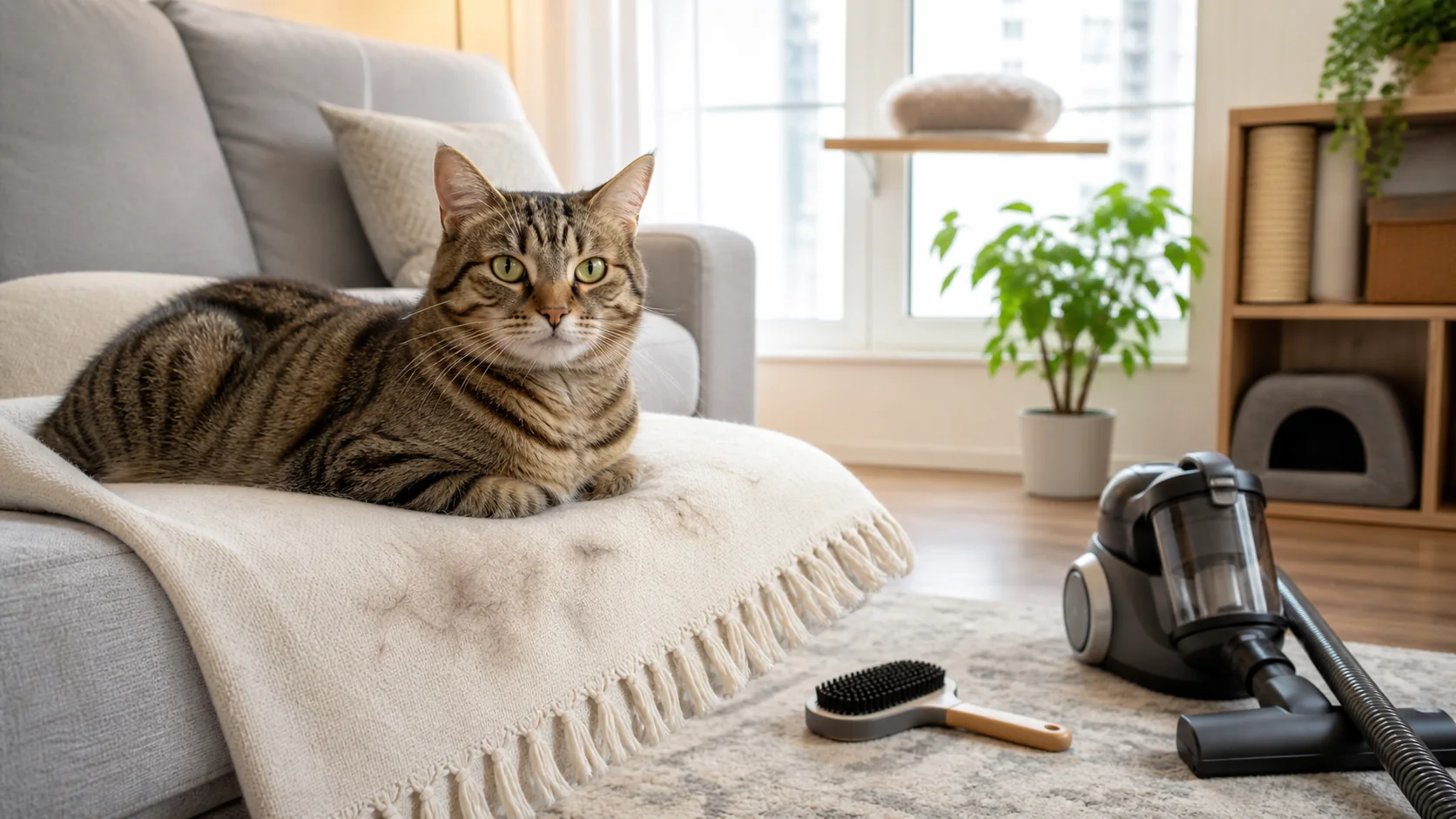
How to control cat hair in a small apartment starts with preventing loose fur from spreading—not chasing every strand after it lands. The most effective system combines gentle grooming, washable capture zones, targeted floor and fabric cleaning, and correctly sized air filtration for smaller airborne particles.
Cat hair and cat allergens are related but not identical. Visible fur settles on floors, bedding, clothing, and furniture. The major cat allergen Fel d 1 is carried on tiny particles from saliva and skin secretions and can remain in the environment even when visible hair has been removed. A lint roller may improve a black shirt, while source control, cleaning, ventilation, and filtration address different parts of the apartment.
The goal is not a completely hair-free home. It is a repeatable routine that keeps fur below the level where it spreads from one high-contact area to every room.
Quick Answer
To control cat hair in a small apartment:
- Identify the two or three places where your cat leaves the most fur.
- Remove loose coat with short, cat-tolerated grooming sessions.
- Put washable covers on favorite sleeping areas.
- Clean high-contact floors and routes before fur drifts elsewhere.
- Use the right tool for upholstery, seams, and clothing.
- Separate heavily furred laundry and maintain the washer and dryer.
- Use appropriately sized particle filtration when airborne dander is also a concern.
Start with the cat’s bed, favorite sofa corner, main walking route, and your own bedding. Those few locations usually produce most of the transfer. Cleaning them consistently is more useful than deep-cleaning the entire apartment once and abandoning the routine.
Important Health and Safety Note
Normal shedding varies by coat, season, age, grooming ability, and the individual cat. Sudden heavy shedding, bald areas, broken hair, skin redness, scabs, persistent scratching, excessive licking, a greasy or matted coat, weight change, appetite change, or reduced activity deserves veterinary attention.
Do not shave a healthy cat simply to reduce household hair. Do not use essential oils, strongly scented sprays, dryer sheets, or cleaning products directly on the cat’s coat. Stop grooming if the skin becomes irritated or the cat shows pain, fear, or escalating aggression.
If anyone in the home has asthma or a suspected cat allergy, discuss symptoms with a qualified healthcare professional. Cleaning and filtration may reduce exposure, but they are not substitutes for medical assessment or an individual treatment plan.
Table of Contents
Cat Hair, Dander, and Dust Need Different Tools
A small apartment makes several materials appear to be one problem. Separating them prevents wasted effort.
| Material | Where It Collects | Best First Response |
|---|---|---|
| Visible cat hair | Floors, upholstery, bedding, clothing, cat trees | Grooming, washable covers, vacuuming, rubber or fabric-safe hair tools |
| Fine dander and allergen-carrying particles | Air and settled household dust | Source control, damp dusting, ventilation when outdoor air is suitable, properly sized particle filtration |
| Embedded fur | Sofa seams, carpet edges, textured throws | Upholstery attachment, fabric-safe rubber tool, repeated passes from different directions |
| Hair in laundry | Blankets, washable covers, clothing | Remove loose hair before washing, avoid overloading, follow fabric and appliance instructions, clean the lint filter |
An air purifier will not pull embedded hairs from a sofa. A powerful vacuum will not prevent new loose coat from falling off the cat. A grooming tool will not remove allergen already distributed through bedding and dust. The system works because each tool has one clear job.
Why Cat Hair Feels Worse in a Small Apartment
Limited floor area concentrates the same daily shedding onto fewer surfaces. A cat may rotate between one bed, one sofa corner, one window perch, and the owner’s bed, creating repeated high-contact zones. People then carry that fur on socks and clothing to the rest of the home.
Air movement also relocates light hair and dust. Fans, HVAC outlets, open windows, robot vacuums, and ordinary foot traffic can push material toward baseboards, under furniture, and into corners. This is why a single weekly cleaning pass can feel ineffective: the largest sources remain active between sessions.
A practical apartment plan therefore works in this order:
- reduce loose fur at the source;
- capture it where the cat rests;
- remove it from the busiest routes;
- clean detailed surfaces when needed;
- manage fine airborne particles separately.
7 Easy Steps to Control Cat Hair in a Small Apartment
1. Map the Main Fur Hotspots
For three days, observe where your cat sleeps, grooms, jumps down, and rubs against furniture. Do not begin by buying equipment. First identify the surfaces producing most of the transfer.
Common hotspots include:
- the cat’s primary bed;
- one sofa cushion or armrest;
- the owner’s duvet or pillow area;
- a window perch;
- a cat-tree platform;
- the path between the litter box and living area;
- the floor beneath a grooming location;
- fabric dining chairs or an office chair.
Choose two levels of priority. Clean the main resting zone most frequently, because that is where loose fur becomes pressed into fabric. Clean surrounding routes on a simpler schedule. Baseboards, vents, and under-furniture areas can wait for a periodic reset.
This hotspot approach prevents a common apartment mistake: spending time on low-use surfaces while the cat’s favorite blanket continues distributing fur every day.
2. Remove Loose Fur From the Cat Gently
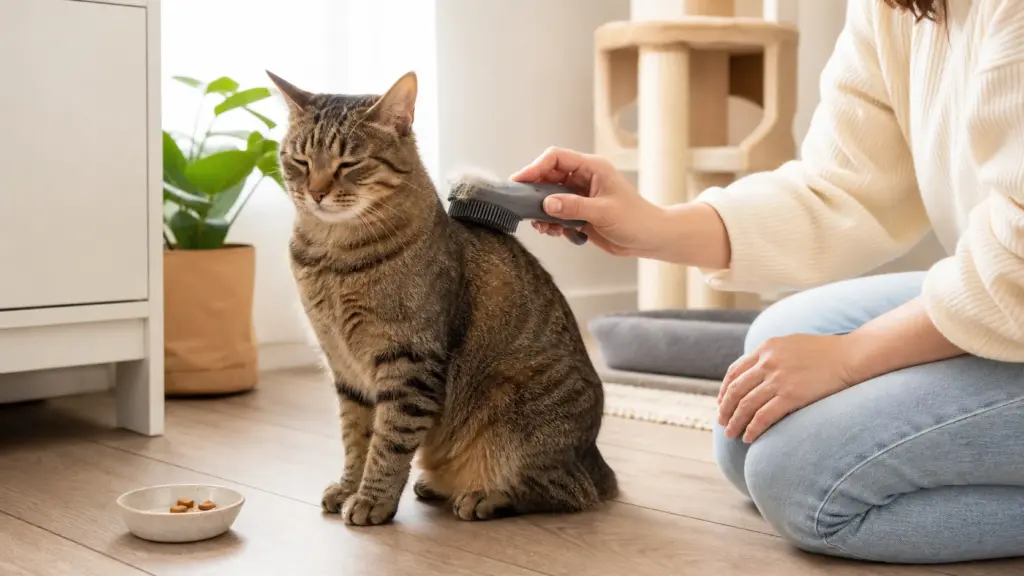
Regular brushing or combing removes loose hair before it reaches furniture and can help you notice skin or coat changes. The appropriate tool and frequency depend on coat length, density, mats, skin sensitivity, age, mobility, and the cat’s tolerance.
Start with short sessions when your cat is calm and already awake. Let the cat inspect the tool, make one or two gentle passes over a comfortable area such as the shoulder or back, reward calm participation, and stop before frustration builds. Increase duration gradually rather than trying to remove every loose hair in one sitting.
Tool categories include:
- soft rubber brushes or grooming gloves for cats who prefer a petting sensation;
- wide-toothed combs for longer coats and early tangles;
- slicker-style brushes used with light pressure where appropriate;
- undercoat tools used cautiously and only when suited to the coat.
No grooming schedule fits every cat. A brief session several times a week may work for one short-haired cat, while a long-haired cat or heavy seasonal shedder may need more frequent attention. Ask a veterinarian or qualified cat groomer for help with mats, painful skin, or uncertainty about the right tool.
If grooming is difficult, use our cat hates being brushed guide before increasing the session length. For a broader routine, see the indoor cat grooming guide.
3. Create Washable Capture Zones
It is easier to wash one throw than repeatedly extract hair from an entire sofa. Place a washable layer where the cat already chooses to sleep instead of trying to force the cat onto a new surface.
Useful capture layers include:
- a machine-washable cat-bed cover;
- a tightly woven throw on the preferred sofa cushion;
- a washable pad on the window perch;
- a removable blanket over the owner’s bed during the day;
- a washable mat beneath the grooming area.
Choose fabrics that can tolerate frequent cleaning and are easy to remove. Smooth, tightly woven materials usually release surface hair more easily than fleece, chenille, loose knits, or deep velvet. Check the fabric-care label before washing or drying.
Keep the system small. Two dependable covers are more useful than a stack of decorative blankets that are difficult to wash. If the cat changes sleeping spots, move the cover to the new hotspot rather than covering every surface permanently.
4. Clean Floors and Travel Routes Before Fur Spreads
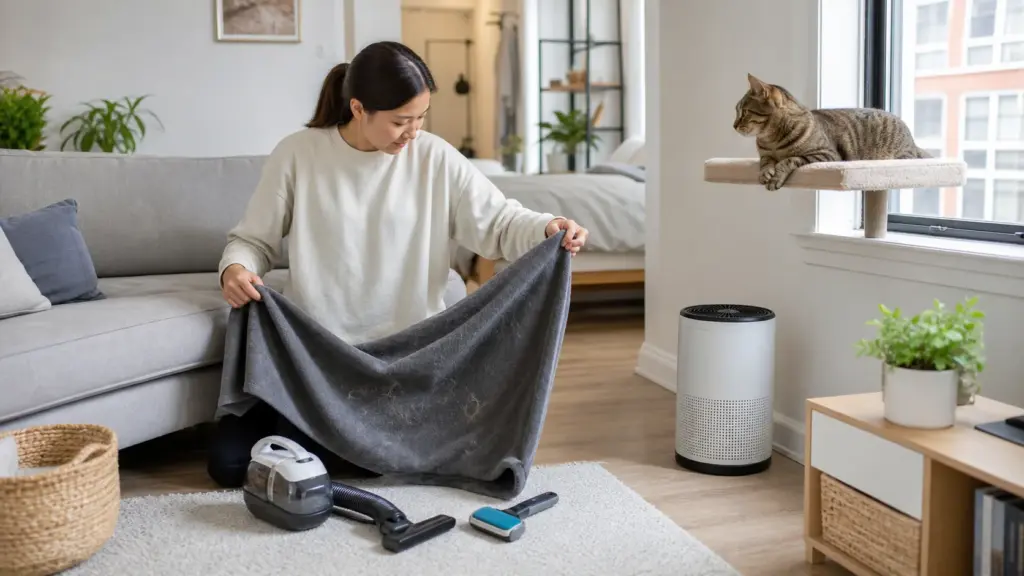
On hard floors, a vacuum designed for the surface or a slightly damp reusable microfiber tool can collect hair without simply pushing it across the room. Avoid soaking wood or laminate, and follow the flooring manufacturer’s care instructions.
On rugs and carpet, slow overlapping vacuum passes are usually more effective than moving quickly. Change direction on high-contact areas so the tool reaches hair lying along different fibers. Use an attachment around baseboards and the edges beneath furniture, where light hair accumulates.
A robot vacuum may help maintain open floor areas, but it does not replace cleaning upholstery, stairs, corners, cables, or tight spaces. Pick up strings and small cat toys before running it, and check the brush roll and bin frequently. Stop using any device that frightens the cat or blocks access to food, water, litter, or resting places.
Choose a frequency based on visible buildup rather than a rigid universal rule. A one-cat home with hard floors may need only quick hotspot maintenance, while a multi-cat home with rugs may need more frequent passes.
5. Match the Tool to Furniture and Clothing
Furniture cleaning is a separate, narrower job within the apartment system. Begin with the fabric manufacturer’s instructions and test any tool on an inconspicuous area.
Useful options include:
- a vacuum upholstery attachment for loose and embedded fur;
- a clean, dry rubber tool designed for fabric;
- a reusable lint brush for clothing and flat upholstery;
- a lint roller for small finishing areas;
- a crevice attachment for seams and cushion edges.
Work from the cleaner surrounding area toward the main fur deposit so hair does not spread back across a finished section. Remove cushions when possible and clean both the top surface and the seams where they meet the frame.
Avoid aggressive scraping on delicate weaves, leather finishes, or loosely woven fabric. Do not use a wet tool on upholstery unless the care label permits it.
For detailed couch, bedding, seam, and fabric methods, use our separate guide on how to get cat hair off furniture. That article covers removal from existing surfaces; this article focuses on preventing whole-apartment buildup.
6. Use a Laundry Routine That Removes Hair Before Washing
Washing a heavily furred blanket without preparation can move hair around the drum and onto other items. Remove as much loose hair as practical before loading the machine.
A simple routine is:
- shake the item in an appropriate location where hair can be collected;
- use a lint brush, roller, or fabric-safe vacuum attachment on heavy deposits;
- wash heavily furred cat bedding separately from everyday clothing when practical;
- leave enough room for items to move in the drum;
- follow the textile label and appliance instructions;
- inspect and clean the dryer lint filter as directed by the manufacturer;
- wipe visible hair from the appliance interior after the cycle if needed.
Do not assume vinegar, fabric softener, dryer sheets, or a laundry additive is safe for every textile, appliance, person, or pet. Products that add fragrance or residue are unnecessary for the basic hair-control method. Mechanical removal before washing is the most predictable first step.
Keep clean laundry away from the cat’s main sleeping surface. A closed hamper, closet, or drawer prevents freshly cleaned fabric from immediately becoming another capture zone.
7. Use Air Filtration for Fine Particles, Not Sofa Hair
Portable air cleaners are designed for a room or defined area. They can reduce airborne particles but cannot remove all pollutants, replace source control, or clean fur already attached to floors and fabric.
When choosing a particle air cleaner:
- match the Clean Air Delivery Rate, or CADR, to the room or open area served;
- consider the entire connected space in an open-plan apartment;
- keep the intake and outlet unobstructed;
- place the unit where the cat and people spend substantial time;
- replace or clean filters according to the manufacturer’s directions;
- consider noise at a speed you will actually run;
- avoid devices that intentionally produce ozone.
HEPA describes a high-efficiency mechanical particle filter. It does not mean the device removes every source of odor, gas, or allergen from a home. Activated carbon is used for some gases and odors, while CADR describes particle-cleaning performance rather than gas removal.
If filtration is part of your plan, compare room size, replacement-filter cost, noise, and airflow in our guide to the best air purifier for cat hair and odor.
A Realistic Cleaning Schedule
Use visible buildup to adjust the schedule. The following is a starting framework, not a rule for every home.
| Frequency | Small-Apartment Task |
|---|---|
| Daily or as needed | Pick up obvious fur from the main sleeping area; empty a full robot-vacuum bin |
| Several times a week | Brief grooming if tolerated; clean the main floor route and preferred fabric hotspot |
| Weekly | Wash or rotate capture covers; vacuum upholstery and rugs; inspect grooming tools |
| Monthly | Clean under movable furniture, baseboards, vents, cat-tree fabric, and appliance areas |
| According to instructions | Maintain vacuum filters, brush rolls, air-cleaner filters, washer, and dryer |
If the routine takes too long, reduce its scope before abandoning it. One clean resting cover, one clear floor route, and one short grooming session form a useful minimum system.
How to Set Up a Studio Apartment
In a studio, divide the home into functional hair-control zones rather than trying to create separate rooms.
Resting Zone
Place a washable cover on the cat’s highest-use bed or furniture spot. Store a clean replacement nearby so the first cover can be washed without leaving the surface unprotected.
Grooming Zone
Choose an easy-to-clean floor with good light. Keep the brush and rewards in a closed container nearby. Clean the loose hair immediately after the session so it does not drift.
Entry and Clothing Zone
Keep a lint brush near the door or wardrobe instead of beside the cat’s bed. Use a closed hamper and put clean clothing away promptly.
Airflow Zone
Keep purifier intakes, HVAC returns, fans, and vents clear. Avoid placing a cat bed directly where strong airflow repeatedly moves loose hair across the apartment.
Multi-Cat and Long-Haired Cat Adjustments
More cats do not merely add more fur; they may create several competing resting areas. Give each cat an accessible washable rest surface and observe which zones receive the most use. Groom cats separately if one interrupts or intimidates another.
Long-haired cats may need more frequent combing and closer attention to friction areas behind the ears, beneath the front legs, around the hindquarters, and under collars or harnesses. Do not cut mats close to the skin with household scissors. Cat skin is thin and can be pulled into a mat; seek professional help when a mat is tight, extensive, painful, or close to sensitive anatomy.
Senior cats, overweight cats, and cats with arthritis may leave more loose hair because they cannot groom every area comfortably. Reduced grooming can also be a sign of pain or illness, so address accessibility and discuss a coat change with the veterinarian.
Common Cat-Hair Control Mistakes
Trying to Eliminate Every Hair
A zero-hair standard creates unnecessary work and encourages overcleaning. Aim for controlled hotspots, clean clothing storage, and manageable weekly buildup.
Cleaning Surfaces but Ignoring the Cat’s Coat
If loose fur remains on the cat, surfaces refill quickly. Gentle grooming is source control, but it must remain voluntary and comfortable.
Buying an Air Purifier for Visible Floor Hair
Filtration targets airborne particles. Floor hair still needs grooming, covers, and surface cleaning.
Using One Method on Every Fabric
A rubber tool that works on a durable sofa may damage a delicate weave. Test first and follow care labels.
Using Fragrance to Make the Apartment Feel Cleaner
Fragrance does not remove fur or allergens. Avoid exposing the cat to unnecessary scented sprays, powders, essential oils, or residues.
Treating Abnormal Hair Loss as a Housekeeping Problem
Cleaning cannot correct parasites, allergies, pain, endocrine disease, stress-related overgrooming, or other medical causes of coat change.
When Shedding May Need Veterinary Attention
Contact your veterinarian when shedding or coat condition changes suddenly or occurs with:
- bald or thinning areas;
- red, crusted, wounded, or painful skin;
- persistent scratching or chewing;
- excessive grooming;
- new mats or inability to groom;
- weight loss or appetite change;
- vomiting, diarrhea, or lethargy;
- flea dirt or suspected parasites;
- a greasy, dull, or unusually flaky coat;
- a behavior or mobility change.
Take clear photographs of the affected area and note when the change began. Do not apply human skin products, essential oils, flea products intended for dogs, or unprescribed medication.
Frequently Asked Questions
How can I control cat hair in a small apartment without vacuuming every day?
Concentrate on the main source zones. Brush your cat in short tolerated sessions, cover the favorite sleeping surface, clean the busiest floor route, and store clean clothes behind a door or in drawers. This prevents spread and reduces the amount of full-apartment cleaning required.
Will an air purifier remove cat hair?
It may capture some light airborne material, but it will not remove most visible hair from floors, furniture, bedding, or clothing. Use filtration for airborne particles and use grooming, washable covers, and surface tools for visible fur.
What is the easiest fabric to keep free of cat hair?
Smooth, tightly woven, washable materials are generally easier to maintain than fleece, chenille, velvet, and loose textured weaves. Actual performance depends on the fabric finish, color contrast, static, and care instructions.
Should I shave my cat to stop shedding?
No, not solely for household hair control. Shaving does not stop follicles from producing and releasing hair, and it can create skin, temperature, coat, and stress concerns. A veterinarian or qualified groomer may recommend clipping for severe mats or a medical reason.
How often should I brush my cat?
There is no universal schedule. Coat type, coat condition, season, age, health, and tolerance all matter. Begin with short sessions and adjust according to loose hair, tangles, and comfort. Ask a veterinarian or groomer about long coats, dense undercoats, painful skin, or repeated mats.
Does cat hair cause cat allergies?
The hair itself is not the main cat allergen. Proteins from saliva and skin secretions can attach to dander, hair, fabric, and dust. Removing visible hair can improve cleanliness, but allergy management may also require medical advice, source control, cleaning, and filtration.
What should I clean first when guests are coming?
Clean the cat’s main sleeping surface, the seating guests will use, the entry and main walking route, and the bathroom. Put away loose blankets and clean clothing. A focused pass is faster and more useful than moving every piece of furniture.
Final Thoughts
How to control cat hair in a small apartment is ultimately a source-and-hotspot problem. Remove loose coat gently, give shed hair a washable place to land, clean the highest-transfer routes, and use furniture tools only where they are needed.
Treat filtration as support for airborne particles rather than a replacement for grooming and surface cleaning. Keep the routine simple enough to repeat, and adjust it when the cat’s coat, health, season, or preferred resting places change.
If shedding becomes sudden, patchy, uncomfortable, or accompanied by other symptoms, move the problem out of the cleaning category and contact your veterinarian.
References
- Cornell University College of Veterinary Medicine. Choosing and Caring for Your New Cat — Grooming. https://www.vet.cornell.edu/departments-centers-and-institutes/cornell-feline-health-center/health-information/feline-health-topics/choosing-and-caring-your-new-cat
- U.S. Environmental Protection Agency. Guide to Air Cleaners in the Home. https://www.epa.gov/indoor-air-quality-iaq/guide-air-cleaners-home
- U.S. Environmental Protection Agency. What Is a HEPA Filter? https://www.epa.gov/indoor-air-quality-iaq/what-hepa-filter
- American College of Allergy, Asthma & Immunology. Pet Allergies. https://acaai.org/allergies/allergic-conditions/pet-allergies/