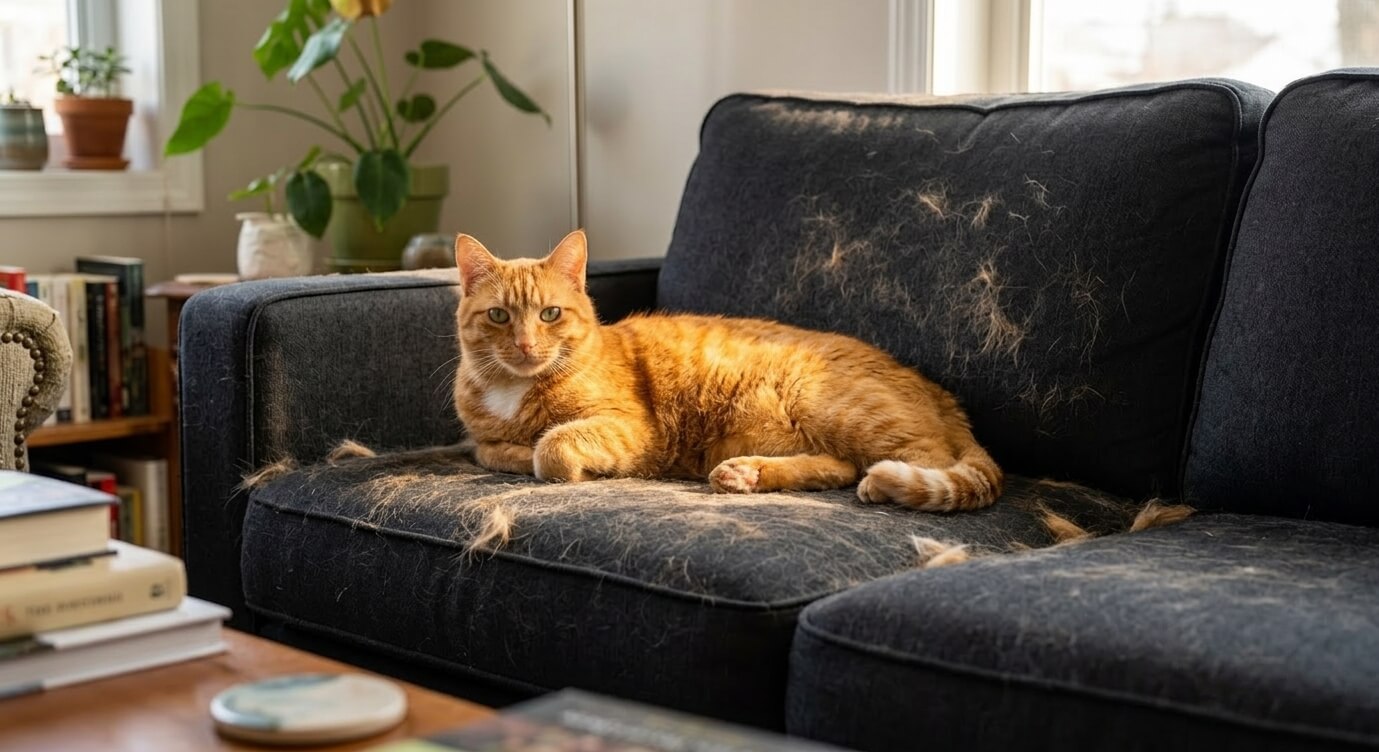
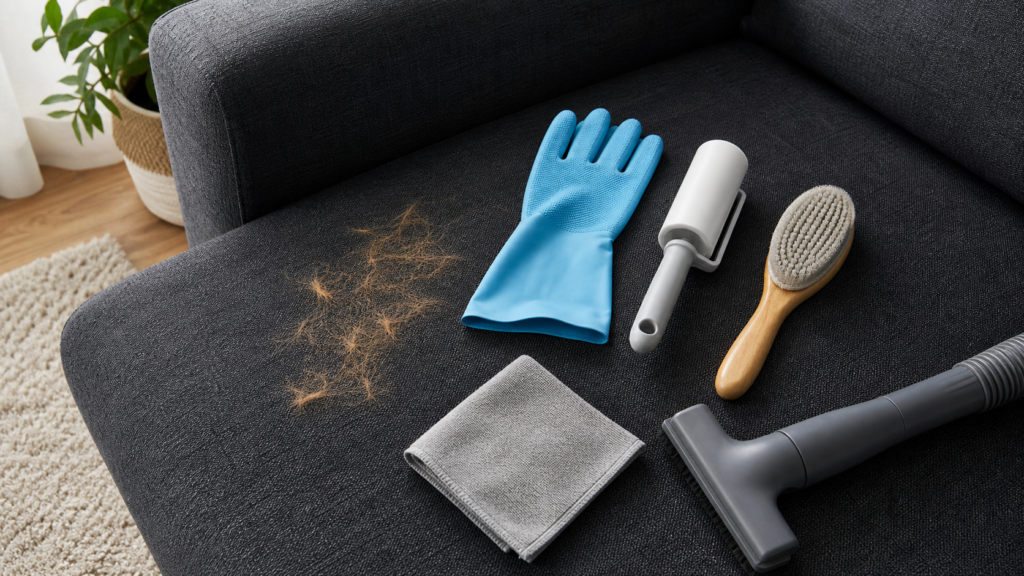
Get cat hair off furniture by matching the cleaning method to the surface. A slightly damp rubber glove or upholstery squeegee works well for embedded hair, a reusable lint roller handles quick touch-ups, and a vacuum upholstery tool removes fur from seams and textured fabric.
Start with the gentlest dry or lightly damp method and test it on a hidden area first. Leather, velvet, woven upholstery, blankets, and removable covers need different handling, so the fastest method is the one that removes the hair without damaging the furniture.
Quick Answer
The fastest way to get cat hair off furniture is to loosen the fur before trying to vacuum it. On durable fabric upholstery, use a clean, slightly damp rubber glove or rubber squeegee to gather the hair into clumps, then vacuum the cushion seams with an upholstery or crevice attachment.
Use a lint roller for small surface patches, a dry or lightly damp microfiber cloth for leather and other smooth surfaces, and the care-label-approved wash or dryer setting for removable covers and blankets. Test every brush, scraper, damp tool, or cleaning product on a hidden area first, especially on velvet, loosely woven fabric, leather, and delicate upholstery.
Regular brushing can reduce the amount of loose fur reaching the furniture. For a complete coat-care routine, see our indoor cat grooming guide.
Important Cleaning Safety Note
Begin with dry or lightly damp hair-removal tools whenever possible. A clean rubber glove, microfiber cloth, reusable lint roller, upholstery brush, or suitable vacuum attachment can remove fur without leaving a cleaning-product residue on the surface.
Before using water or a fabric-cleaning product, check the furniture manufacturer’s care label and test a hidden area. Do not soak upholstery, leather, seams, cushions, electrical furniture components, or foam padding. Excess moisture can leave water marks, damage finishes, or remain trapped inside cushions.
Keep your cat away while you clean and until the furniture is completely dry. Do not apply essential oils, concentrated fragrance sprays, disinfectants, bleach, ammonia, or other household chemicals to a cat’s sleeping area unless the product label specifically permits that surface and you can follow all ventilation, dilution, drying, and pet-reentry instructions.
If a product spills on your cat’s coat or paws, prevent licking and contact your veterinarian or a pet poison service for product-specific advice. Do not induce vomiting or apply another chemical to the coat unless a veterinary professional instructs you to do so.
Why Cat Hair Sticks to Furniture
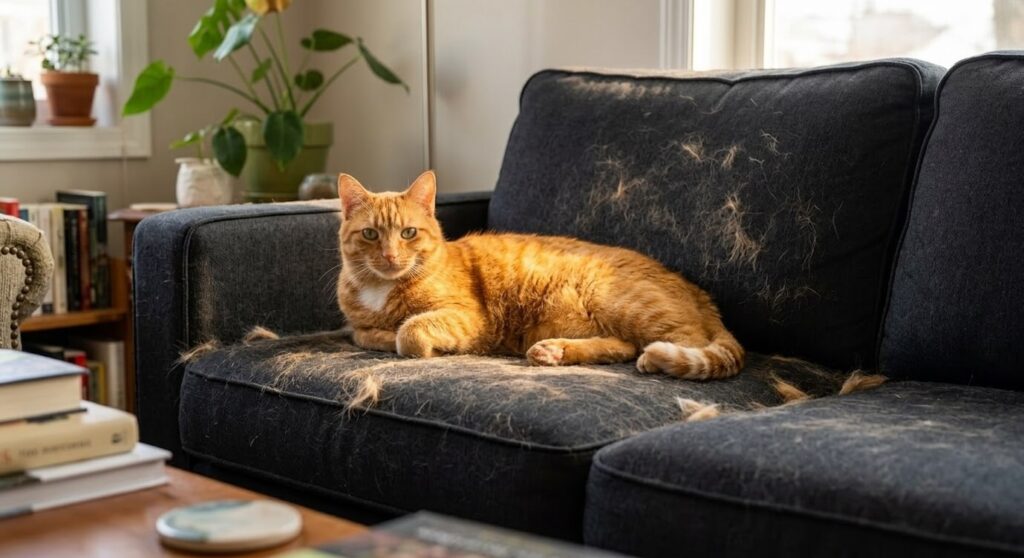
Cat hair sticks to furniture because of texture, static, friction, and repeated contact. Fabric fibers trap hair. Static makes fine hair cling. Soft upholstery holds loose undercoat. Blankets and cushions collect hair because cats sleep in the same places every day.
In apartments, this feels worse because the same furniture serves many roles. The sofa may be the cat’s bed, your workspace, your guest seating, and the main lounging area. Hair builds up quickly because there are fewer separate rooms and fewer places for shedding to spread out.
The goal is to remove hair before it embeds deeply. Fresh hair is easier to lift than hair that has been pressed into fabric for days.
Before You Start: Match the Method to the Surface
Check the furniture care label before using moisture, heat, a cleaning solution, or an abrasive tool. If the manufacturer provides cleaning instructions, those instructions take priority over general pet-hair advice.
Next, identify whether the hair is loose or embedded. Loose surface fur can usually be lifted with a reusable lint roller, dry microfiber cloth, or rubber glove. Hair pressed into seams or textured upholstery may need a vacuum upholstery attachment, crevice tool, or a gentle fabric brush.
Match the first method to the surface:
- Tightly woven fabric: Start with a rubber glove or upholstery attachment.
- Loose or delicate weave: Use low suction and a soft brush after testing a hidden area.
- Velvet or fabric with a visible nap: Follow the manufacturer’s care instructions and work gently in the direction of the nap.
- Leather or faux leather: Start with a clean, dry microfiber cloth. Use moisture or leather-care products only when permitted by the care label.
- Wood, plastic, or sealed smooth surfaces: Use a dry or lightly damp microfiber cloth, then dry the surface.
- Removable blankets and covers: Follow the textile care label and remove loose fur before washing.
- Seams, piping, and cushion gaps: Use a crevice attachment at a suction level that does not pull or distort the fabric.
Avoid using a metal blade, razor, pumice stone, or aggressive scraper on furniture. Even tools marketed for pet hair can snag threads, flatten a fabric’s nap, scratch leather, or damage protective finishes. Test any unfamiliar tool on a hidden area before cleaning a visible section.
7 Essential Easy Methods to Get Cat Hair Off Furniture
Method 1: Rubber Glove for Fast Clumping
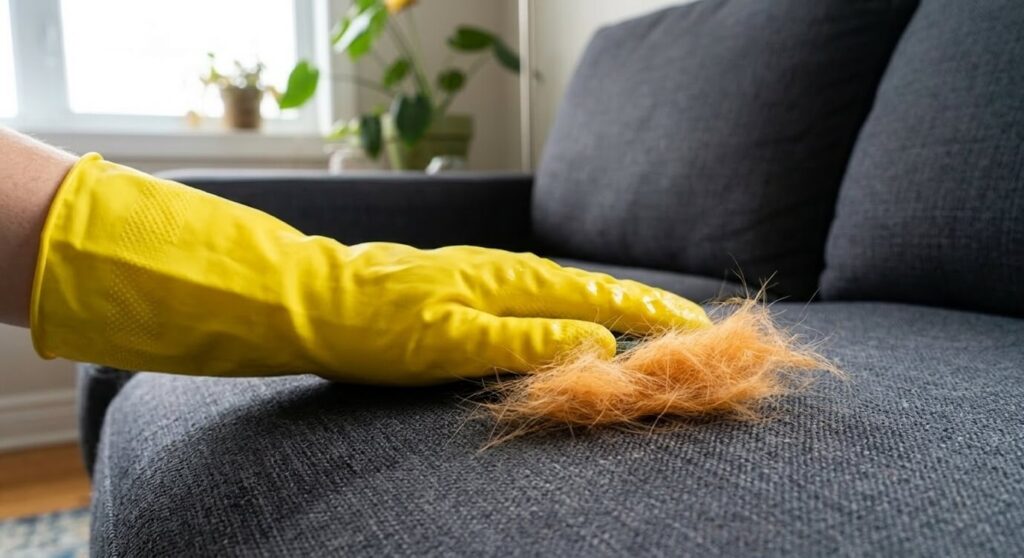
A clean rubber glove can gather loose and lightly embedded cat hair into clumps on many durable fabric surfaces. Put on the glove and make short, controlled strokes across a small test area. Collect the loosened fur by hand, then vacuum any remaining hair from seams and cushion edges.
Try the glove dry first. If the furniture care instructions allow light moisture, dampen the glove very slightly and wring away all visible water before touching the fabric. The glove should feel barely tacky, not wet.
This method may work well on:
- tightly woven fabric sofas
- durable upholstered chairs
- removable cushions
- washable cat-bed covers
- sturdy low-pile fabric
- blankets before laundering
Do not use a damp glove on moisture-sensitive upholstery, unfinished leather, suede, electrical furniture components, or any surface whose care label prohibits water. Stop if the glove changes the fabric’s color, texture, or nap.
Method 2: Lint Roller for Small Visible Areas
A lint roller is useful when you need a quick surface cleanup before guests arrive or before sitting down. It works best on visible hair that sits on top of fabric.
Use short strokes and replace sheets as soon as they lose stickiness. For large sofas, lint rollers can become expensive and wasteful, so use them as a touch-up tool rather than the main cleaning system.
Best for:
- clothing
- throw pillows
- small cushions
- guest chairs
- last-minute cleanup
Method 3: Pet Hair Vacuum Attachment for Deep Fabric
A vacuum with a pet hair attachment is better for hair that has worked into fabric. Use a motorized upholstery tool, rubberized pet tool, or brush attachment depending on your vacuum.
Move slowly. Fast vacuuming removes surface dust but may leave embedded hair behind. For woven fabric, vacuum in multiple directions. For delicate fabric, test a hidden area first.
Vacuuming is especially useful for:
- couch seams
- cushion edges
- fabric chairs
- rugs near furniture
- cat trees
- upholstered beds
If your apartment has heavy hair and odor issues together, an air purifier for cat hair and odor can support the routine, but it will not replace brushing or furniture cleaning.
Method 4: Damp Microfiber Cloth for Smooth Surfaces
For leather, faux leather, wood, and smooth furniture surfaces, use a slightly damp microfiber cloth. Wipe gently, rinse the cloth, wring it out, and repeat.
Avoid soaking seams or using harsh cleaners. Smooth furniture usually does not trap hair deeply, but hair can collect in corners, stitching, and cushion gaps.
Best for:
- leather sofas
- faux leather chairs
- wood furniture
- plastic surfaces
- side tables
- window perches
Method 5: Fabric Brush or Pet Hair Scraper for Embedded Hair
When a rubber glove or vacuum cannot lift hair from textured upholstery, try a soft upholstery brush or a reusable pet-hair tool specifically designed for fabric. Work slowly in short strokes and check the surface frequently for pulled threads, fuzzing, color change, or flattening of the nap.
Use this method cautiously on:
- tightly woven sofas
- sturdy textured upholstery
- durable removable cushions
- washable cat-bed covers
- low-pile rugs when the manufacturer permits brushing
Do not assume every tool marketed as a pet-hair scraper is safe for furniture. Metal-edged tools, sharp blades, pumice-style stones, and aggressive scraping can snag woven fabric, cut loops, scratch leather, or permanently change velvet and other napped materials.
Test the tool in a hidden area first. Use minimal pressure and stop immediately if fibers begin lifting with the hair. For delicate, antique, loose-weave, suede, leather, or velvet furniture, follow the manufacturer’s care instructions or consult a professional upholstery cleaner.
Method 6: Washer and Dryer Routine for Blankets and Covers
For machine-washable blankets and removable covers, remove as much loose cat hair as possible before putting the item into the washer. Shake it outdoors when appropriate, then use a rubber glove, reusable lint roller, or vacuum attachment to lift the remaining surface fur.
Check the textile care label before washing or drying. Wash the item separately when it carries a heavy layer of hair, avoid overloading the machine, and use only the water temperature and cycle permitted by the manufacturer.
If the care label allows machine drying, use the approved heat setting. Some fabrics may permit a short no-heat or low-heat tumble that helps move loose hair into the lint filter, but heat can shrink, warp, or damage certain covers. Do not use a dryer setting that conflicts with the label.
Clean the dryer lint filter before and after the cycle. After laundering heavily fur-covered items, check the washer drum, door seal, filter, and any manufacturer-accessible drain area for remaining hair. Follow the appliance manual rather than removing panels or attempting maintenance that is not designed for the user.
Method 7: Prevention With Grooming and Furniture Covers
The easiest hair to remove is the hair that never reaches the sofa. Regular brushing reduces loose hair before it falls onto furniture. Washable throws protect favorite sleeping spots. A dedicated cat blanket can concentrate hair in one place.
This does not mean your home has to look messy. Choose covers that match your furniture and wash them regularly. The goal is to create a removable layer between your cat and the upholstery.
For broader coat control, connect this routine with our indoor cat grooming guide.
Best Method by Furniture Type
| Furniture Type | Best Method | Watch Out For |
|---|---|---|
| Fabric sofa | Rubber glove, vacuum attachment | Embedded hair in seams |
| Velvet chair | Gentle brush in one direction | Crushing the nap |
| Leather sofa | Damp microfiber cloth | Water in seams |
| Throw blanket | Shake, wash, dryer lint trap | Overloading washer |
| Cat bed | Vacuum, wash cover | Hair trapped in corners |
| Cushions | Lint roller, rubber glove | Hair around piping |
| Rugs near furniture | Vacuum slowly | Hair pressed into fibers |
Surface-by-Surface Cleaning Plans
The seven methods work best when they are combined in the right order for the furniture. Use the care label as the final authority, test a hidden area, and stop if color, texture, sheen, stitching, or the direction of the fabric nap changes.
Durable Woven Sofa
Remove cushions and washable throws first. Make a slow dry pass with a rubber glove or rubber squeegee to roll surface hair into lines that can be picked up. Follow with the upholstery attachment, then use the crevice tool along piping, under cushions, and where the seat meets the back. Change direction once rather than scrubbing repeatedly; fur caught across the weave may release from a second angle. Finish by vacuuming the floor around the sofa so displaced hair does not return immediately.
Velvet and Napped Fabric
Velvet, velour, chenille, and other fabrics with a visible direction need lighter handling. Check the manufacturer’s instructions before brushing or adding moisture. Start with low suction through an upholstery attachment that does not drag the nap, working in the approved direction. A dry microfiber cloth or very soft fabric brush may lift remaining surface fur when the label permits it. Avoid aggressive back-and-forth rubbing, sharp scrapers, adhesive that pulls fibers, and wetting a large area. If a test patch looks flattened, streaked, or lighter, stop and use a professional upholstery cleaner.
Leather and Faux Leather
Hair usually stays on top of a smooth surface but collects in stitching, folds, and cushion gaps. Lift loose fur with a clean, dry microfiber cloth, then vacuum seams with a non-scratching crevice tool held slightly above the surface. Use a barely damp cloth only when the care instructions permit it, and dry the area afterward. Do not substitute a general household spray for a leather-approved product. Test any conditioner or cleaner in a hidden location because it can darken, soften, or change the finish.
Removable Covers, Throws, and Blankets
Remove as much fur as possible before laundering so the washer is not asked to handle a thick coat of loose hair. Shake the item where appropriate, use a rubber glove or reusable roller, and check folds and fasteners. Wash and dry only according to the textile label. Do not overload the machine, and clean the dryer lint filter before and after the cycle. Inspect the washer drum, door seal, and any user-accessible filter afterward. A dedicated washable throw on the cat’s preferred seat concentrates hair on one easy-to-clean layer.
Wood, Plastic, and Sealed Surfaces
Use a dry microfiber cloth first so the hair clings to the cloth rather than floating into the room. If the surface instructions allow moisture, follow with a lightly damp cloth and dry it promptly. Work from the highest surface downward, including shelves, side tables, window-perch frames, and chair legs, then clean the floor. Avoid pushing moisture into joints, unfinished wood, veneer edges, charging ports, recliner controls, or other electrical components.
Cat Trees, Beds, and Deep Seams
Disconnect electrical beds or heated pads before cleaning and follow their instructions. Remove washable pads, then loosen hair from carpeted platforms with a rubber brush or suitable upholstery tool. Vacuum slowly around cubbies, platform edges, scratching-post bases, and the underside of beds. Do not pull loose carpet loops or sisal strands with a sharp tool. If a cover cannot be removed, use less moisture than you would on a washable textile because padding can stay damp long after the surface feels dry.
A Two-Pass Method for Stubborn Fur
Embedded hair often resists a vacuum because static and friction hold it across the fabric. The first pass should loosen and gather; the second should remove.
- Pass one—release: On a tested, durable fabric, make short strokes with a rubber glove, soft upholstery brush, or fabric-safe reusable tool. Work one cushion-sized area at a time and collect each ridge of hair before it spreads.
- Pass two—extract: Vacuum the loosened area slowly, then use the crevice attachment for seams and piping. Empty or clean the tool when airflow drops rather than pressing harder.
Repeat the two passes once from a different direction if the fabric tolerates it. More pressure is not necessarily more effective. Stop when threads lift, the nap changes, leather marks, a tool catches stitching, or moisture leaves a visible edge. A small amount of remaining fur is preferable to permanent surface damage.
Keep Clean Furniture From Recollecting Hair
After cleaning, vacuum the nearby floor and rug, wash the cat’s preferred throw, and clean the brush or vacuum attachment. Otherwise, airflow and normal movement can transfer loose fur straight back to the sofa. Place a washable cover only on the area your cat uses most rather than covering every piece of furniture. Brush your cat on a comfortable schedule, but stop if grooming causes fear, skin irritation, or pain. The goal is a manageable cycle: remove loose coat, protect the favorite resting spot, clean fresh surface fur early, and reserve deep cleaning for seams and high-contact areas.
Troubleshooting Common Cleaning Problems
If a tool appears to move fur around instead of collecting it, stop and check the surface rather than applying more pressure. On woven upholstery, work in short strokes in one direction and clear the tool frequently. On smooth furniture, switch from a dry cloth to a barely damp microfiber cloth. If fur returns as soon as the fabric dries, static is probably part of the problem; raise indoor humidity moderately and avoid soaking the upholstery.
When hair remains deep in piping, button tufts, or the gap between cushions, use a crevice attachment with gentle suction after loosening the fur by hand. Do not force a rigid scraper into seams, because it can cut stitching or pull loops from textured fabric. For an unknown or delicate material, test the least aggressive method on a hidden area and allow it to dry completely before treating the visible surface.
If the furniture still looks dusty after the hair is gone, the remaining material may be dander, litter dust, or fabric debris rather than fur. Vacuum it with the correct attachment and follow the manufacturer’s care instructions. Avoid layering fragranced sprays over the problem: they do not remove allergens or hair, and a cat may lick residue from the coat after resting on the treated surface.
How to Reduce Static
Static makes cat hair cling more tightly to furniture. Dry indoor air, synthetic fabrics, fleece blankets, and repeated friction can all make static worse.
To reduce static:
- use a lightly damp rubber glove
- wash throws regularly
- avoid over-drying blankets
- use washable cotton covers when possible
- brush your cat regularly
- keep humidity comfortable
- vacuum before hair embeds
Do not spray strong fragrances or harsh fabric products around cat resting areas. Cats spend time directly on these surfaces and groom their fur afterward.
A 15-Minute Apartment Reset
Use one repeatable route instead of deep-cleaning every surface. Start where your cat sleeps most often, then follow the hair outward.
- Remove and shake out the washable throw or cover.
- Gather surface fur with the fabric-safe tool from the table above.
- Vacuum seams, piping, cushion gaps, and the nearby floor slowly.
- Clean the cat bed, perch, or chair beside the main resting spot.
- Replace the cover and clean the reusable tool according to its instructions.
Repeat the quick surface step every few days and use the full reset weekly as a starting point. Adjust the schedule for your cat’s coat, season, and favorite surfaces. For whole-home prevention rather than furniture removal, see how to control cat hair in a small apartment.
When More Fur Deserves Attention
Furniture hair alone cannot diagnose a health problem, and shedding varies with coat type, season, temperature, grooming, and where a cat rests. Check your cat directly when the amount of fur changes suddenly.
- bald or thinning patches
- redness, sores, dandruff, or a strong skin odor
- frequent scratching, licking, biting, or overgrooming
- a greasy, matted, or poorly maintained coat
- weight loss, appetite change, vomiting, lethargy, or behavior change
Contact your veterinarian when these signs are new, persistent, or worsening. Regular brushing may reduce loose coat, but it should be comfortable and appropriate for the cat; our indoor cat grooming guide explains how to build a gentler routine.
Frequently Asked Questions
What is the fastest way to get cat hair off furniture?
For many durable fabric surfaces, a clean rubber glove is a fast first option because it gathers loose hair into clumps before vacuuming. Try it dry first and use only slight moisture when the furniture care instructions permit it. For smooth surfaces, delicate upholstery, velvet, or leather, follow the manufacturer’s care instructions and choose a surface-appropriate method.
Why does cat hair stick to my couch so badly?
Cat hair sticks because fabric texture, static, pressure, and repeated sleeping spots push hair into the upholstery. Woven and synthetic fabrics often trap hair more than smooth surfaces.
How often should I clean cat hair off furniture?
Clean the surfaces your cat uses most whenever visible hair begins to collect. In many homes, a quick pass every few days and a more thorough weekly vacuum is practical, but the right frequency depends on your cat’s coat, shedding level, furniture fabric, season, and cleaning preferences. Removing loose hair before it becomes embedded usually makes the job easier.
Can grooming reduce cat hair on furniture?
Yes. Brushing removes loose hair before it lands on furniture. It is one of the most effective ways to reduce repeated buildup.
Does velvet furniture attract more cat hair?
Velvet can show hair clearly and should be cleaned gently in the direction of the nap. Test tools carefully so you do not damage the surface.
What removes cat hair from blankets?
Shake the blanket first, use a rubber glove or lint roller for loose hair, then wash and dry according to the care label. Clean the dryer lint trap before and after.
Final Thoughts
The easiest way to get cat hair off furniture is to use the gentlest method that fits the surface. Loosen fur with a rubber glove or suitable upholstery tool, vacuum seams and cushion edges, wipe smooth surfaces with microfiber, and follow the care label for washable covers.
A short routine is more effective than waiting for hair to become deeply embedded. Protect your cat’s favorite resting spot with a washable layer, remove visible fur every few days, vacuum high-use areas regularly, and brush your cat when they tolerate it comfortably.
If shedding or coat condition changes suddenly, check the cat rather than treating the issue as a cleaning problem alone. Persistent bald areas, irritated skin, excessive grooming, pain, appetite changes, or behavior changes deserve veterinary attention.
References
- VCA Animal Hospitals. Grooming and Coat Care for Your Cat. https://vcahospitals.com/know-your-pet/grooming-and-coat-care-for-your-cat
- ASPCA. The Essentials of Essential Oils Around Pets. https://www.aspca.org/news/essentials-essential-oils-around-pets
- U.S. Environmental Protection Agency. Indoor Air Quality. https://www.epa.gov/indoor-air-quality-iaq