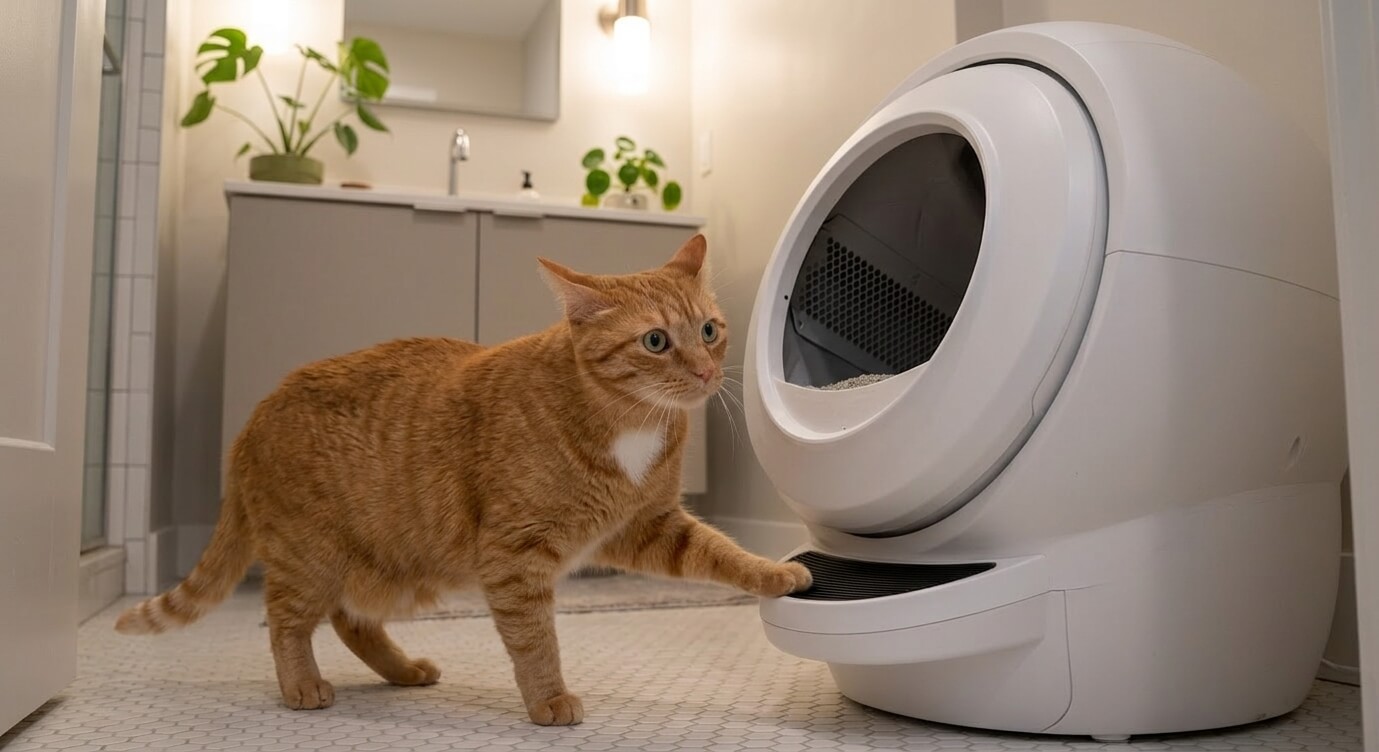
Quick Summary: If you’re looking for the best self cleaning litter boxes for apartments, you’ve come to the right place. Living in a small space means odor control and safety sensors are non-negotiable. After testing the top models, here is my vet-tech-approved guide to the most reliable automatic units for 2025.
I have to tell you something embarrassing.
I had been living with Oliver in my 600-square-foot New York apartment for about eight months when my friend Dana came over for dinner. She walked through the door, stopped in the entryway, and made a face. Not a dramatic, theatrical face. Just a small, involuntary tightening around the eyes and nose that told me everything.
She didn’t want to sit on my couch.
I had gone completely nose-blind. I cleaned Oliver’s traditional litter box daily—or what I thought was daily. I used baking soda. I positioned a small fan nearby. I burned candles. And apparently none of it was working well enough for anyone who hadn’t been slowly desensitized by eight months of gradual exposure.
That was the moment I started seriously researching the best self-cleaning litter boxes for apartments, and my vet tech background made me an extremely difficult customer. I wasn’t just looking for convenience—I was paranoid about sensor safety (pinch points and entrapment risks are real and underreported), respiratory hazards from fine litter dust in a sealed space, and motor noise in a small apartment where every sound carries.
I tested three models over fourteen months. Here’s the honest, clinical breakdown.
Quick Answer: Is an Automatic Litter Box Worth It for Apartment Dwellers?
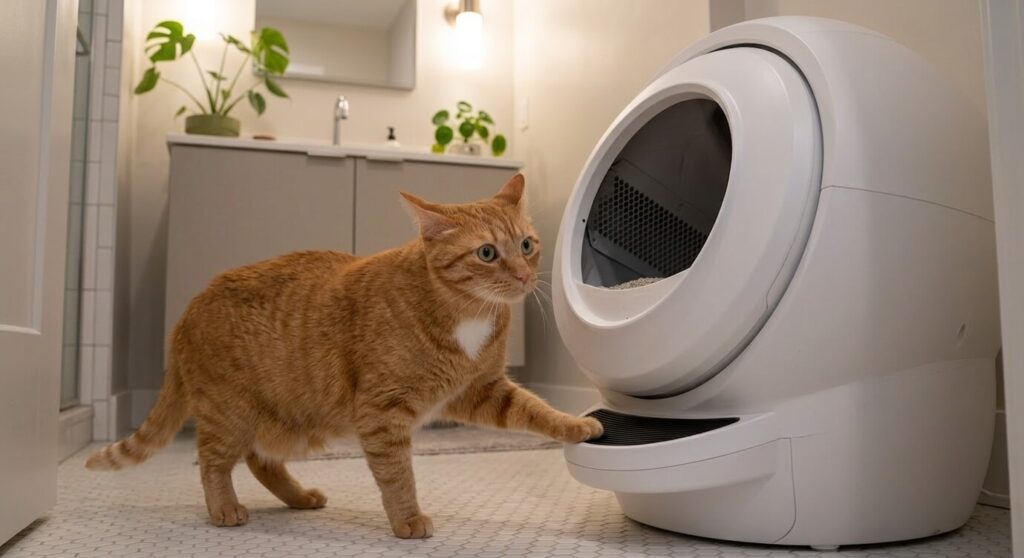
Yes, the best self-cleaning litter boxes for apartments are worth the investment if you prioritize odor control and time-saving in small spaces. They are ideal for maintaining a pristine environment, but only if you choose a model with triple-layer safety sensors and high-quality carbon filtration. However, they require specific clumping litter to function correctly.
Why the Best Self Cleaning Litter Boxes for Apartments are Essential for Odor Control.
Here’s the physics of the problem that nobody explains clearly enough.
In a large house, litter box odor has room to dissipate. It spreads through multiple rooms, gets absorbed by larger volumes of air, and generally stays manageable with basic maintenance. In a 600-square-foot apartment, there is nowhere for that ammonia and hydrogen sulfide to go.
Your small apartment is essentially a sealed odor-concentration chamber.
The Chemistry of What You’re Actually Smelling
Litter box odor isn’t one smell—it’s a cocktail of compounds:
- Ammonia: Released as urea breaks down, causes the sharp “burning” smell
- Hydrogen sulfide: The deeper, more unpleasant “rotten” undertone
- Skatole and indole: Compounds from fecal matter; pungent even at low concentrations
- Mercaptans: Sulfur-containing compounds that human noses detect at parts per billion
In a studio or one-bedroom apartment, these compounds accumulate between cleanings faster than ventilation can clear them. A traditional box scooped once daily is, chemically speaking, a problem for the other 23 hours.
Why I Became Nose-Blind (And Why You Probably Are Too)
Olfactory adaptation is a genuine neurological phenomenon. Your brain stops registering constant background odors as a survival mechanism—it prioritizes novel information.
The result: you stop smelling your apartment’s litter box situation approximately six to eight weeks after it develops. Your guests never had that adaptation period. They smell everything.
This isn’t a hygiene failing. It’s neuroscience. But it’s fixable.
Top Features Every Apartment Owner Needs
After fourteen months of testing and a vet tech’s critical eye, these are the features that genuinely separate good apartment self-cleaning litter boxes from expensive disappointments.
Safety Sensors: The Feature I Refuse to Compromise On
This is where I get clinical and slightly intense, and I make no apologies for it.
Automatic litter boxes work by rotating a globe, activating a conveyor, or raking waste into a sealed drawer—all while potentially containing your cat. Early models had single-sensor systems that detected weight on the platform. That’s not sufficient.
Here’s what can go wrong with inadequate sensors:
- A cat partially exits during a cycle and gets trapped at the opening
- A curious cat re-enters immediately after a cycle begins
- A small cat doesn’t trigger the weight sensor threshold but is still inside
- A cat sleeps in the box (yes, Oliver did this twice)
As a vet tech, I’ve heard from colleagues who have treated cats injured by automatic litter box mechanisms. It’s not common, but it happens, and it’s entirely preventable by choosing units with multi-layer sensor systems.
What to look for:
- Infrared motion sensors: Detect movement inside the globe, not just weight
- Weight sensors: Detect cat presence on the platform
- Post-use timing delays: Unit will not cycle for a minimum of 3-7 minutes after a cat exits
- Anti-pinch detection: Motor stops and reverses if resistance is detected mid-cycle
Any unit without at least three of these four layers is not going into my apartment. Full stop.
Footprint Size: The Apartment Tax
Self-cleaning litter boxes are larger than traditional boxes. This is unavoidable—the mechanics require space.
What varies significantly is how that space is configured:
- Globe-style units (Litter-Robot): Tall vertical footprint, smaller floor area than expected
- Drawer-style units: Low profile, wider floor spread
- Dome units: Moderate height, wide base
For apartments, vertical footprint is usually preferable to horizontal spread. A unit that’s 24 inches tall but only 22 inches wide takes up far less functional floor space than a unit that’s 12 inches tall but 36 inches wide.
Placement matters enormously in small spaces. Strategic positioning near vertical structures like cat trees can help you reclaim floor area—something I cover in detail in my guide on small apartment layout optimization for cat owners. [How to Keep Litter Box From Smelling in Small Apartment: 7 Golden Rules]
Carbon Filtration and Odor Control Mechanisms
This is the feature that separates the units that solve my Dana Problem from the ones that don’t.
Effective odor control requires:
- Sealed waste drawer or chamber: Waste that sits in open air continues releasing compounds; a sealed compartment dramatically reduces ongoing odor output
- Carbon filtration at the exhaust: Activated carbon adsorbs the remaining volatile compounds before air leaves the unit
- Replaceable filter system: Carbon saturates over time; a unit with a non-replaceable filter becomes ineffective within months
Some units add UV sterilization or baking soda-infused liners. These help but are secondary to the sealing and carbon combination.
Decibel Levels in Small Apartments
A litter box motor running at 2 AM in a 600-square-foot apartment is a very different experience than the same motor in a large house.
Motor noise ranges significantly across models:
- Quiet models: 40-45 dB (comparable to a quiet library)
- Average models: 50-60 dB (comparable to a normal conversation)
- Loud models: 65+ dB (comparable to a busy office)
In a small apartment with thin walls, I would not recommend anything above 50 dB for overnight cycling.
App Connectivity and Health Monitoring
This feature graduated from “luxury” to “clinically useful” for me when I realized what the data actually tells you.
Modern connected litter boxes track:
- Visit frequency: Changes in urination frequency are an early indicator of urinary tract issues, diabetes, or kidney disease
- Visit duration: Extended time in the box can indicate constipation or dysuria
- Weight trends: Some units track cat weight at each visit
- Usage patterns: Irregular patterns can signal stress or behavioral change
As a vet tech, I find this data genuinely valuable. Catching a urinary pattern change at home before it becomes an emergency is real, practical health monitoring.
Top 3 Self-Cleaning Litter Boxes for Apartments in 2025
🥇 The Gold Standard: Litter-Robot 4
Price: $699
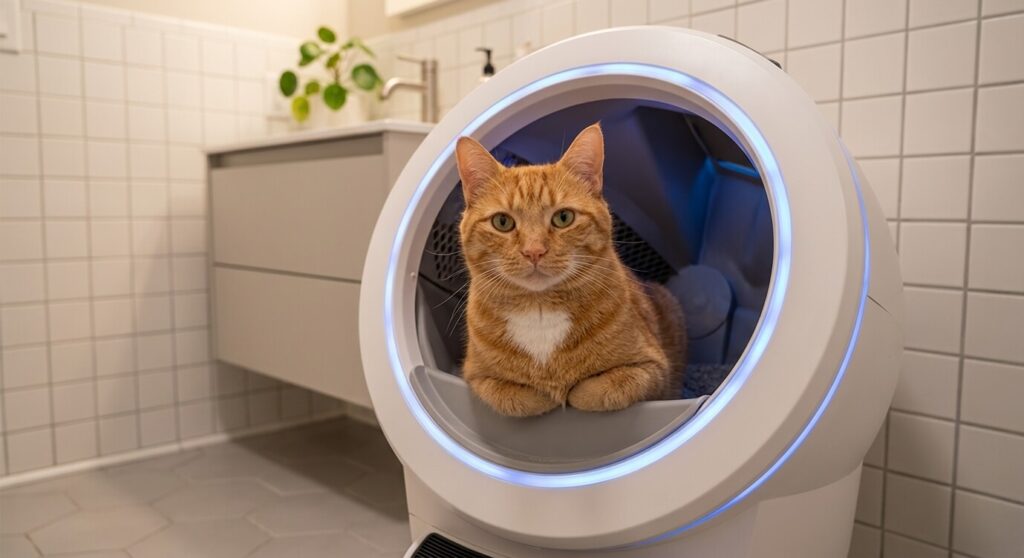
I resisted the Litter-Robot for a long time because of the price. Then I did the math on litter usage, liner costs, and my time, and I bought one.
The Litter-Robot 4 is the current generation of what has become the category standard for good reason. The globe design is genuinely clever: waste falls through a screen as the globe rotates, separating clumps from clean litter and depositing them in a sealed drawer below.
Technical specifications:
- Safety sensors: Weight sensor + OmniSense™ dual infrared sensor array (detects cat presence inside globe regardless of cat size)
- Cycle noise level: Approximately 40-45 dB—the quietest full-size automatic unit I tested
- Footprint: 22″ W × 27″ D × 29.5″ H (tall but narrow)
- Waste drawer capacity: Holds approximately 7-10 days of waste for a single cat
- App features: Visit frequency, weight tracking, drawer level monitoring, cycle history
- Connectivity: Wi-Fi, Bluetooth
Why it wins for apartments:
The sealed waste drawer is, in my testing, genuinely odor-contained. I could not detect litter box smell standing directly next to the unit 24 hours after use. For Dana-proofing a small apartment, this is the primary metric that matters.
The noise level at 40-45 dB is low enough that mid-cycle cycling didn’t wake me from the bedroom with the door closed.
Oliver accepted it within four days. I used the manufacturer’s transition protocol: placed his old box next to the new unit for three days, removed the old box on day four. No resistance.
The sensor system is the most comprehensive I tested. The OmniSense array detects cats inside the globe even when they’re curled up and not pressing the weight sensor—which directly addresses the “sleeping cat” scenario that concerned me.
Pros:
- Best-in-class odor containment
- Quietest motor in its category
- Comprehensive multi-layer safety sensors
- Detailed health monitoring app
- Accepts most premium clumping litters
- Strong customer support and warranty
Cons:
- Highest upfront cost in the category ($699)
- Globe is large; won’t fit in very small bathrooms
- Requires clumping litter (no crystal or non-clumping compatibility)
- Proprietary waste drawer liners recommended (ongoing cost)
- Some cats take 1-2 weeks to accept the globe shape
Best for: Single-cat apartments where odor control and health monitoring are the priority, owners who will use it for 3+ years and can amortize the cost
🤫 The Quietest Model: PetSafe ScoopFree Crystal Pro
Price: $179 – $229
If the Litter-Robot’s price is genuinely out of reach, or if your apartment layout truly can’t accommodate a globe unit, the PetSafe ScoopFree Crystal Pro occupies a different but legitimate niche.
This unit uses crystal litter trays rather than clumping clay, which fundamentally changes its odor control mechanism. Silica crystal litter absorbs liquid and dehydrates solid waste, dramatically reducing bacterial growth and the associated ammonia production.
Technical specifications:
- Safety sensors: Single infrared safety bar across the entry point + 20-minute post-use delay
- Cycle noise level: Approximately 45-48 dB (raking mechanism is quiet; no globe motor)
- Footprint: 27.5″ L × 19″ W × 6″ H (wide and low-profile)
- Waste containment: Covered hood over the rake deposit zone
- App features: Basic usage counter on Pro model
- Litter type: Silica crystal only (proprietary trays available)
Why it works for some apartments:
The low-profile design slides under certain furniture configurations, which can be genuinely useful in studios where every floor inch counts. The crystal litter system produces noticeably less dust than clay clumping litters—a meaningful respiratory advantage in a sealed small space.
For cats or owners who are sensitive to fine clay dust, this is the unit I recommend.
The safety limitation I need to be transparent about:
The single infrared bar at the entry detects a cat entering or exiting but does not detect a cat that’s already positioned inside when a cycle begins. The 20-minute delay mitigates this significantly but doesn’t eliminate it for cats who spend long periods in the box. For most cats this is fine; for cats who sleep in their litter box (a behavioral concern worth addressing separately), I’d recommend a different unit.
Pros:
- Most affordable automatic option with genuine odor control
- Crystal litter dramatically reduces dust (respiratory benefit)
- Low-profile fits more apartment layouts
- Very quiet raking mechanism
- Disposable trays make deep cleaning effortless (swap monthly)
Cons:
- Single-layer safety sensor (not ideal for unusual cat behaviors)
- Crystal litter trays are an ongoing cost ($20-25/month)
- Tray requires full replacement, not just waste removal
- Limited health monitoring features
- Low-profile means less waste containment than globe models
Best for: Budget-conscious owners, cats sensitive to clay dust, apartments where a globe won’t physically fit
🏢 The Space-Smart Pick: PETKIT PURA MAX
Price: $449 – $499
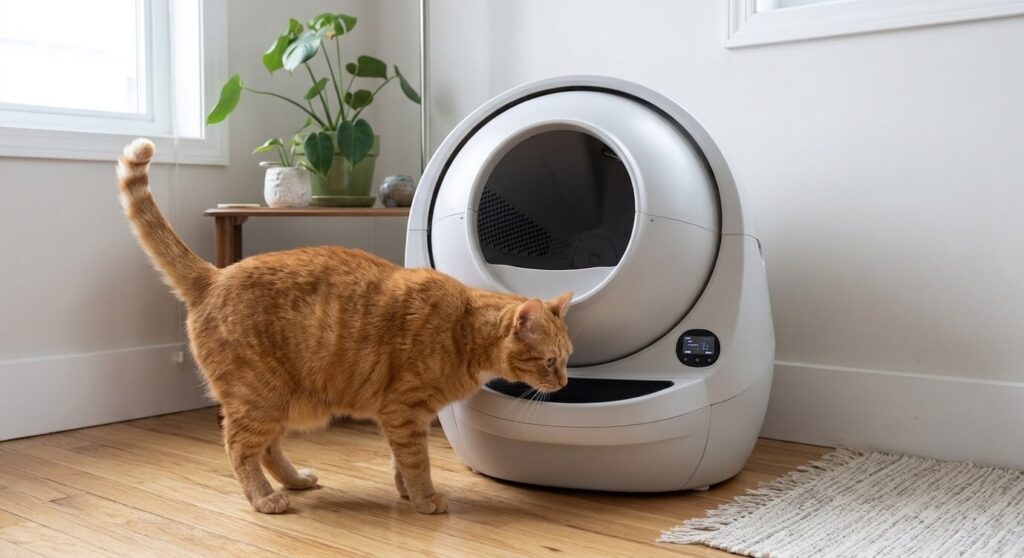
The PETKIT PURA MAX sits at an interesting intersection: it offers premium features approaching the Litter-Robot at a lower price point, with a design philosophy specifically suited to smaller spaces.
Technical specifications:
- Safety sensors: Triple-layer system—weight sensor + infrared motion sensor + radar sensor (detects movement even without direct line of sight)
- Cycle noise level: Approximately 48-52 dB (slightly louder than Litter-Robot 4)
- Footprint: 20.5″ W × 24″ D × 26″ H (slightly more compact than Litter-Robot)
- Waste drawer: Sealed with carbon filter; holds 7-8 days single-cat waste
- App features: Visit frequency, weight tracking, real-time alerts, multiple cat profiles
- Connectivity: Wi-Fi, Bluetooth, works with Alexa
Why it earns its place:
The radar sensor is the technical feature that separates PETKIT’s safety system from most competitors. Infrared sensors can be “fooled” by a cat sitting very still; radar detects movement and presence independently of heat signature or motion threshold.
For Oliver—who, I cannot stress this enough, has fallen asleep inside litter boxes on multiple occasions—the three-layer detection system gives me confidence that a cleaning cycle won’t initiate with him curled up inside.
The app ecosystem is genuinely competitive with Litter-Robot, and the price difference of $200+ is meaningful for some buyers.
Pros:
- Best sensor system for the price point (triple-layer including radar)
- Strong health monitoring app
- Slightly smaller footprint than Litter-Robot 4
- Good carbon filtration odor control
- Competitive multi-cat support
Cons:
- Motor noise slightly higher than Litter-Robot (noticeable in overnight cycling)
- Customer service infrastructure less established than Litter-Robot
- Software updates occasionally cause connectivity issues
- Slightly steeper learning curve for app setup
Best for: Tech-forward owners who want near-premium features at a mid-tier price, safety-conscious owners with cats who have unusual litter box behaviors
The Hidden Costs: What the $500 Price Tag Doesn’t Tell You
Let me be the person who shows you the full financial picture before you buy.
Litter Costs
All rotating globe-style self-cleaning boxes require clumping litter. Not just any clumping litter—ideally a low-dust, high-quality clay or tofu-based clumping formula that forms tight, discrete clumps rather than crumbling.
These machines require premium clumping litter to function correctly; using the wrong litter type causes clogs, sensor errors, and residue buildup that can void your warranty. [How Often Should You Clean a Litter Box? (The Real Answer)]
Monthly litter cost for a single cat:
- Budget clumping litter: $15-20/month
- Premium low-dust clumping litter: $30-45/month
Liner and Filter Costs
| Item | Frequency | Cost |
|---|---|---|
| Waste drawer liners | Weekly-biweekly | $10-20/month |
| Carbon replacement filters | Monthly | $8-15/month |
| Deep clean enzyme solution | Monthly | $5-10/month |
Electricity
These units draw minimal power during standby but run motors for each cycle. Estimated electricity cost: $2-5 per month at average US rates. Not significant, but worth including in honest accounting.
Deep Cleaning Costs (The Part People Skip)
“Self-cleaning” is a marketing description, not a maintenance-free promise.
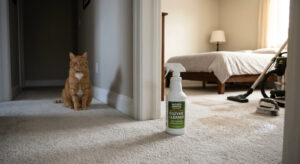
The globe, drawer, and sensors require manual deep cleaning monthly to prevent odor accumulation in the unit itself, bacterial biofilm on sensor surfaces, and litter residue interfering with the mechanism. Self-cleaning doesn’t mean zero maintenance—the globe still needs a thorough scrub with cat-safe enzyme cleaners once a month to prevent bacterial buildup that even carbon filters can’t address. [How to Stop Cat Litter Tracking All Over Your Apartment]
True 12-Month Cost Comparison:
| Item | Litter-Robot 4 | PETKIT PURA MAX | ScoopFree Crystal Pro |
|---|---|---|---|
| Unit cost | $699 | $469 | $199 |
| Litter/trays (12 mo) | $360-480 | $360-480 | $240-300 |
| Liners/filters (12 mo) | $180-240 | $150-200 | $60-80 |
| 12-Month Total | $1,239-$1,419 | $979-$1,149 | $499-$579 |
Is It Actually Worth It?
For my specific situation—600 square feet, one cat, a visitor who didn’t want to sit on my couch—the answer is an unambiguous yes.
The math that made it obvious for me:
- Traditional litter box + premium litter + scooping time (5 min/day × 365 = 30 hours/year)
- 30 hours of my time has a value
- Odor control failure has a social and quality-of-life cost
- Health monitoring via app caught one early pattern change that I flagged to my vet
The emotional ROI—not worrying about what my apartment smells like, not scooping daily, catching health data—is harder to quantify but genuinely real.
FAQ
Do automatic litter boxes smell worse in small apartments?
The opposite is true when you choose the right model. A self-cleaning box that cycles within minutes of use and seals waste in a carbon-filtered drawer will produce significantly less ambient odor than a traditional box that sits for hours between manual scoopings.
The key is choosing a unit with a fully sealed waste chamber—open-top waste receptacles on cheaper models defeat the purpose entirely in small spaces. In my 600-square-foot apartment, the Litter-Robot 4’s sealed drawer reduced detectable litter odor by what I’d estimate is 90% compared to my previous traditional box setup.
What is the best self cleaning litter boxes for apartments with multiple cats?
The best self cleaning litter boxes for apartments housing multiple cats need two things above all else: rapid cycle time and high-capacity waste containment. The Litter-Robot 4 handles up to four cats with its 7-10 day drawer capacity and quick 3-minute cycle time, making it the top recommendation for multi-cat apartments.
The PETKIT PURA MAX also supports multiple cat profiles in the app, tracking each cat’s visit frequency individually, which is valuable for monitoring health across a multi-cat household. For budget-conscious multi-cat owners, the PetSafe ScoopFree requires more frequent tray replacement but remains functional with two cats.
Are automatic litter boxes actually safe for cats?
Yes—when you choose units with multi-layer sensor systems and follow the manufacturer’s transition protocol. The safety concerns are real but manageable: single-sensor budget units present more risk than premium multi-sensor models.
From a vet tech perspective, I recommend looking for units with at minimum a weight sensor, an infrared motion sensor, and a post-use timing delay of no less than three minutes. Introduce the unit gradually alongside the existing box to reduce the stress of transition, and monitor your cat’s usage patterns for the first two weeks to ensure they’re entering and exiting comfortably.
Finding the best self cleaning litter boxes for apartments depends on your budget and space, but for Oliver and me, it was a game-changer.
Scientific References
- Ellis, S. L. H., & Wells, D. L. (2010). The influence of olfactory stimulation on the behaviour of cats housed in a rescue shelter. Applied Animal Behaviour Science, 123(1), 56-63. This study documents the significant impact of environmental odor compounds on feline stress behavior and elimination habits, supporting the importance of odor management in confined spaces where cats live at high density relative to square footage.
- Batterman, S., Godwin, C., Chernyak, S., Jia, C., & Charles, S. (2012). Household ammonia concentrations and their determinants in residences. Atmospheric Environment, 46, 7028-7038. This peer-reviewed environmental health study documents indoor ammonia concentration levels from common household sources including animal waste, finding that small, poorly ventilated spaces accumulate ammonia at rates that can approach irritant thresholds—directly relevant to respiratory health considerations for both cats and owners in small apartments.