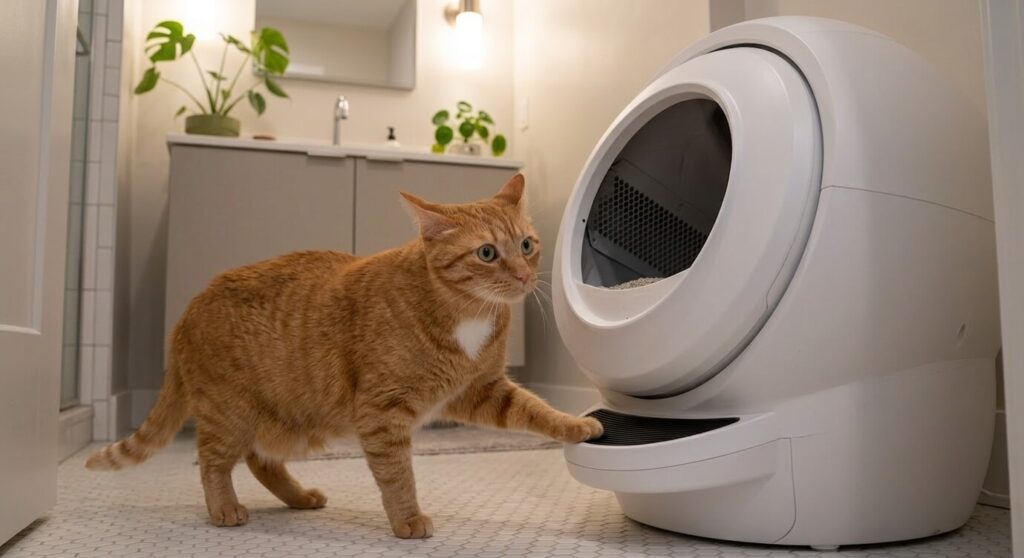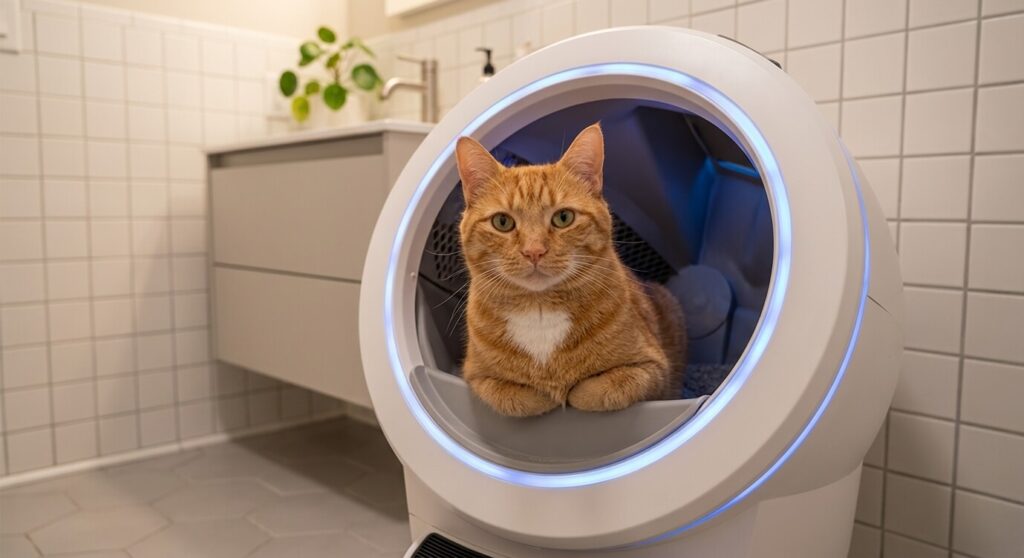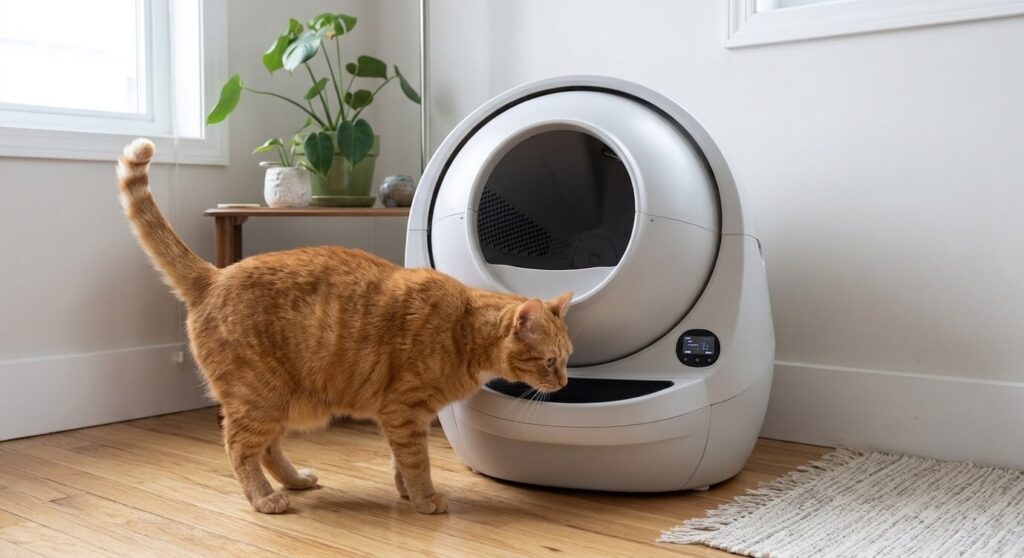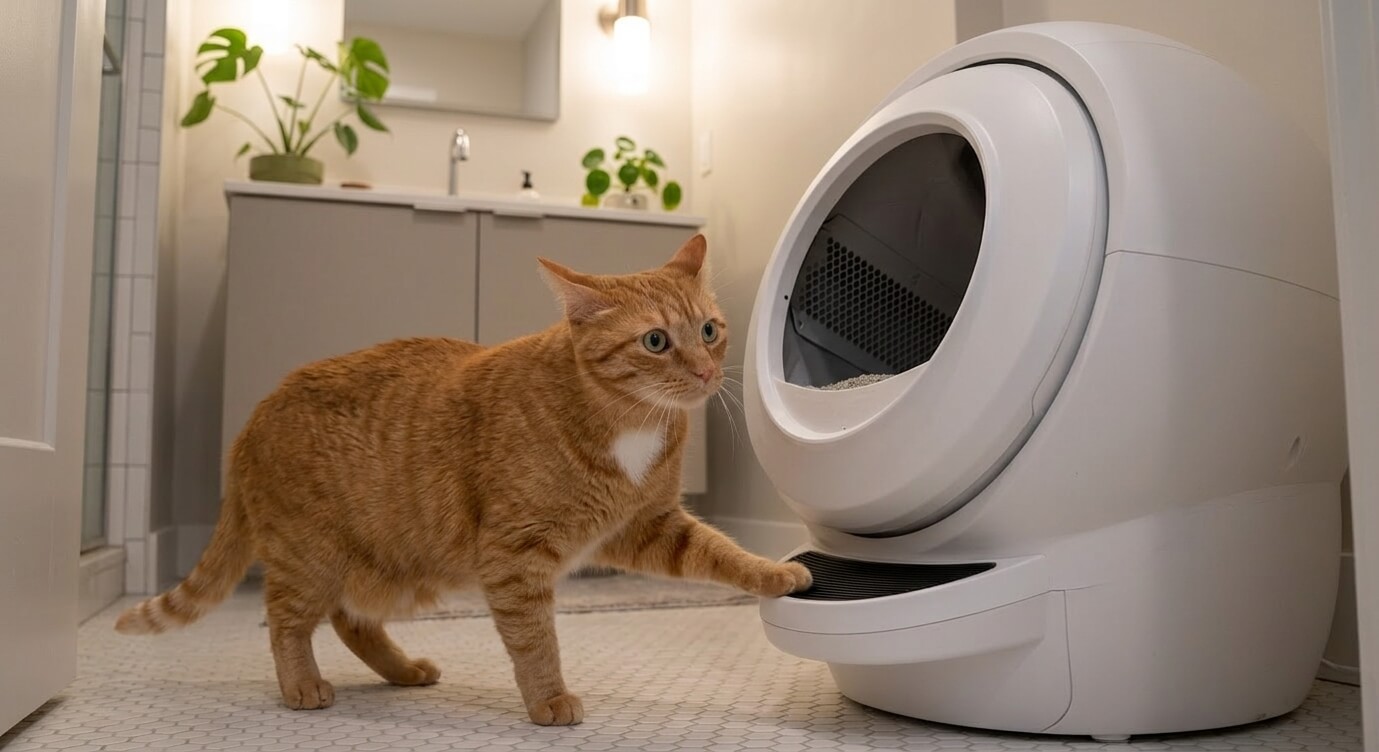
Best self cleaning litter boxes for apartments are worth considering if odor control, daily scooping, and small-space maintenance are real problems for you. The right model should have strong safety sensors, sealed waste storage, manageable noise, and a footprint that actually fits your apartment. This guide compares three apartment-friendly options and explains when an automatic litter box is worth the cost—and when a simple traditional box is still the better choice.

Disclosure: This article may contain affiliate links. If you buy through these links, Indoor Cat Expert may earn a commission at no extra cost to you. Selections are based on current manufacturer manuals and specifications, apartment practicality, safety features, odor-control design, maintenance needs, and indoor-cat use cases. Indoor Cat Expert has not completed controlled hands-on testing of every model in this comparison.

Odor can be difficult to judge in a small apartment because people who live with a smell every day may gradually notice it less. That makes sealed waste storage, regular cleaning, and honest maintenance requirements more useful selection criteria than dramatic odor promises.

A self-cleaning litter box may reduce how long waste remains exposed, but no model makes odor management automatic. Drawer seals, compatible litter, ventilation, cleaning frequency, and the cat’s health all affect the result.

For apartment owners, the practical question is whether a machine reduces daily scooping without creating new problems such as noise, difficult deep cleaning, a cramped entry, or unreliable cat detection.

Do not use scented candles, essential-oil diffusers, or fragrance-heavy products to mask litter odor around cats. Address exposed waste, litter choice, box hygiene, ventilation, and veterinary causes of unusually strong odor instead.

This comparison prioritizes documented safety systems, odor containment, litter compatibility, maintenance access, noise-related features, current manufacturer support, and the footprint required in a small home.

Disclosure: Indoor Cat Expert has not conducted a controlled hands-on test of every model in this guide. The comparison is based on current manufacturer manuals and product specifications, with limitations identified where claims could not be independently verified. Product features and availability can change, so confirm the current manual before purchasing.

How We Choose Self-Cleaning Litter Boxes

Self-cleaning litter boxes on Indoor Cat Expert are selected for apartment cat owners who need odor control, lower scooping workload, and a cleaner small-space routine without creating new safety, noise, cleaning, or litter box avoidance problems.

The comparison considers:

  • cat safety and entry comfort
  • waste drawer odor control
  • cleaning and disassembly difficulty
  • noise level in small apartments
  • size and footprint
  • litter compatibility
  • sensor reliability
  • power and app reliability
  • suitability for shy, senior, large, or multi-cat households
  • whether the box makes daily health monitoring harder

A self-cleaning litter box can reduce scooping work, but it should not make you blind to health changes. You still need to notice urine clumps, stool changes, blood, diarrhea, constipation, sudden odor changes, or changes in how often your cat uses the box.

This guide may include affiliate links. If you buy through these links, Indoor Cat Expert may earn a commission at no extra cost to you. Recommendations are based on apartment fit, cat safety, cleaning burden, and practical daily use, not commission size.


Quick Answer: Is an Automatic Litter Box Worth It for Apartment Dwellers?

Yes, the best self-cleaning litter boxes for apartments can be worth it if odor control, daily scooping, and small-space maintenance are real problems for you. The best models for apartments have reliable safety sensors, sealed waste drawers, carbon filtration, manageable noise, and a footprint that does not block normal traffic.

They are not right for every cat. Kittens, very small cats, senior cats with mobility problems, cats who fear motor noise, or cats with active urinary or stool changes may do better with a simple traditional box until your veterinarian says otherwise.


Why Odor Control Matters More in Apartments

A self-cleaning litter box should make maintenance easier, not make health monitoring harder. Before switching, make sure your cat can enter comfortably, turn around normally, tolerate the motor sound, and leave before any cleaning cycle starts.

Do not use an automatic litter box as a way to ignore waste changes. You still need to check urine amount, stool quality, blood, diarrhea, constipation, sudden odor changes, and how often your cat uses the box.

If your cat is straining, crying in the box, producing little urine, peeing outside the box, hiding, vomiting, or suddenly avoiding the litter box, contact your veterinarian before treating the problem as a product upgrade.

The Chemistry of What You’re Actually Smelling

Litter box odor isn’t one smell—it’s a cocktail of compounds:

  • Ammonia: Released as urea breaks down, causes the sharp “burning” smell
  • Hydrogen sulfide: The deeper, more unpleasant “rotten” undertone
  • Skatole and indole: Compounds from fecal matter; pungent even at low concentrations
  • Mercaptans: Sulfur-containing compounds that human noses detect at parts per billion

In a studio or one-bedroom apartment, these compounds accumulate between cleanings faster than ventilation can clear them. A traditional box scooped once daily is, chemically speaking, a problem for the other 23 hours.

Why People Can Become Less Aware of Litter Odor

Olfactory adaptation is a genuine neurological phenomenon. Your brain stops registering constant background odors as a survival mechanism—it prioritizes novel information.

The result: you stop smelling your apartment’s litter box situation approximately six to eight weeks after it develops. Your guests never had that adaptation period. They smell everything.

This isn’t a hygiene failing. It’s neuroscience. But it’s fixable.

A self-cleaning box can reduce daily scooping, but it does not replace the full litter-area routine. For the complete apartment setup around odor, floor residue, litter mats, and deep cleaning, see our litter box odor cleaning guide.


Key Features Every Apartment Owner Needs

The features below are based on current manuals and manufacturer specifications. They help distinguish a practical apartment model from one that is too large, difficult to maintain, or unsuitable for a particular cat.

Safety Sensors: The Feature You Should Not Compromise On

Sensor design matters, but sensors are not a reason to ignore the user manual or leave an unsuitable cat unattended with a machine.

Automatic litter boxes work by rotating a globe, activating a conveyor, or raking waste into a sealed drawer—all while potentially containing your cat. Early models had single-sensor systems that detected weight on the platform. That’s not sufficient.

Here’s what can go wrong with inadequate sensors:

  • A cat partially exits during a cycle and gets trapped at the opening
  • A curious cat re-enters immediately after a cycle begins
  • A small cat doesn’t trigger the weight sensor threshold but is still inside
  • A cat remains inside the box longer than expected

Choose a model with documented cat-detection, cycle-interruption, anti-pinch, and overload protections. Follow the manufacturer’s minimum-weight, flooring, placement, and maintenance instructions. No sensor system should be described as risk-free.

What to look for:

  • Infrared motion sensors: Detect movement inside the globe, not just weight
  • Weight sensors: Detect cat presence on the platform
  • Post-use timing delays: Unit will not cycle for a minimum of 3-7 minutes after a cat exits
  • Anti-pinch detection: Motor stops and reverses if resistance is detected mid-cycle

Do not rely on an invented minimum number of sensors. Compare what each sensor actually detects, how the machine responds during a cycle, and what placement or weight limits are stated in the manual.

For a deeper safety checklist before buying, see our guide to automatic litter box safety sensors.

Footprint Size: The Apartment Tax

Self-cleaning litter boxes are larger than traditional boxes. This is unavoidable—the mechanics require space.

What varies significantly is how that space is configured:

  • Globe-style units (Litter-Robot): Tall vertical footprint, smaller floor area than expected
  • Drawer-style units: Low profile, wider floor spread
  • Dome units: Moderate height, wide base

For apartments, vertical footprint is usually preferable to horizontal spread. A unit that’s 24 inches tall but only 22 inches wide takes up far less functional floor space than a unit that’s 12 inches tall but 36 inches wide.

Placement matters enormously in small spaces. Strategic positioning near vertical structures like cat trees can help reclaim floor area, but the machine still needs the clearances and firm, level surface stated in its manual. [How to Keep Litter Box From Smelling in Small Apartment: 7 Golden Rules]

Carbon Filtration and Odor Control Mechanisms

In apartments, odor containment depends on how quickly waste is moved, how well the drawer closes, and how consistently the drawer and globe are cleaned.

Effective odor control requires:

  1. Sealed waste drawer or chamber: Waste that sits in open air continues releasing compounds; a sealed compartment dramatically reduces ongoing odor output
  2. Carbon filtration at the exhaust: Activated carbon adsorbs the remaining volatile compounds before air leaves the unit
  3. Replaceable filter system: Carbon saturates over time; a unit with a non-replaceable filter becomes ineffective within months

Some units add UV sterilization or baking soda-infused liners. These help but are secondary to the sealing and carbon combination.

Decibel Levels in Small Apartments

A litter box motor running at 2 AM in a 600-square-foot apartment is a very different experience than the same motor in a large house.

Motor noise ranges significantly across models:

  • Quieter operation: look for sleep modes, delayed cycles, and manufacturer documentation about motor or raking noise
  • Apartment placement: avoid positioning the unit beside a bed or against a wall shared with a neighbor
  • Cat response: use a gradual introduction and watch for avoidance or startle behavior during a cycle

Manufacturers do not always publish comparable third-party noise measurements. If the box will sit near a bedroom, look for a sleep mode or adjustable cycle delay and avoid relying on unverified decibel claims.

App Connectivity and Health Monitoring

App records can help owners notice changes in visit frequency or weight trends, but they are observation tools rather than diagnostic devices.

Modern connected litter boxes track:

  • Visit frequency: A sustained change may be worth discussing with a veterinarian
  • Visit duration: Extended time in the box can indicate constipation or dysuria
  • Weight trends: Some units track cat weight at each visit
  • Usage patterns: Irregular patterns can signal stress or behavioral change

A change in litter-box visits can support a conversation with a veterinarian, but app data cannot determine whether a cat has urinary obstruction, constipation, diarrhea, kidney disease, or another condition.


Self-Cleaning Litter Box Decision Table

SituationBest ChoiceWhy It WorksWatch Out For
Small apartment with odor problemsEnclosed automatic box with strong drawer sealHelps contain waste odor between cleaningsPoor ventilation can trap smell inside
Cat is nervous around noiseQuiet rake-style or delayed-cycle modelReduces startle risk after litter box useAvoid loud cycling near sleeping areas
Senior or arthritic catLow-entry or open-style designEasier to enter and exit comfortablyHigh steps may cause avoidance
Large catOversized automatic boxGives enough turning and digging spaceSome automatic boxes are too cramped
Multi-cat homeHigh-capacity model with reliable sensorsHandles heavier use and reduces overflowStill inspect waste daily
Tiny bathroom or hallwayCompact model with front accessSaves space and keeps cleaning reachableDo not block exits or doorways
Owner wants health trackingApp-enabled model plus visual checksCan help show frequency patternsApp data does not replace observing stool and urine

Safety Note Before You Switch

A self-cleaning litter box should make cleaning easier, not hide medical changes. Check the waste drawer and litter area daily enough to notice changes in urine amount, stool shape, blood, mucus, diarrhea, constipation, strong new odor, or sudden changes in litter box frequency.

Call your veterinarian promptly if your cat strains, cries in the box, visits the box repeatedly with little urine, stops using the box, produces blood, has persistent diarrhea, seems constipated, or suddenly changes bathroom behavior. These signs should not be treated as a product problem first.


This guide focuses on three self-cleaning litter boxes that make the most sense for apartment owners. This guide does not list every popular automatic litter box because many models are too large, difficult to clean, poorly documented, or unsuitable for small-space cat households. A shorter list is more useful when the goal is choosing a box that actually fits daily apartment life.

Top 3 Self-Cleaning Litter Boxes for Apartments

Best Overall: Litter-Robot 4

Price: $699

The Litter-Robot 4 has a premium purchase price, so compare its footprint, compatible litter, recurring supplies, warranty, and maintenance requirements before deciding whether the convenience is worth the cost.

The Litter-Robot 4 is the current generation of what has become the category standard for good reason. The globe design is genuinely clever: waste falls through a screen as the globe rotates, separating clumps from clean litter and depositing them in a sealed drawer below.

Why it works for apartments: Litter-Robot 4 is the strongest premium option when odor control, sealed waste storage, app tracking, and multi-cat capacity matter more than upfront price.

Best for: one- or two-bedroom apartments, multi-cat homes, owners who want app data, and people who need better odor control than a traditional open box can provide.

What to watch out for: It is expensive, large, and still needs drawer emptying, filter replacement, litter refills, and monthly deep cleaning. Measure your space before buying.

Technical specifications:

  • Safety sensors: Weight sensor + OmniSense™ dual infrared sensor array (detects cat presence inside globe regardless of cat size)
  • Cycle noise: Whisker describes QuietSift® technology but does not publish a directly comparable independent apartment noise test on the current product page
  • Footprint: 22″ W × 27″ D × 29.5″ H (tall but narrow)
  • Waste drawer capacity: Holds approximately 7-10 days of waste for a single cat
  • App features: Visit frequency, weight tracking, drawer level monitoring, cycle history
  • Connectivity: Wi-Fi, Bluetooth

Why it wins for apartments:

The Litter-Robot 4 uses a covered waste drawer with a carbon filter. That design may reduce exposed-waste odor, but results depend on litter, drawer-emptying frequency, cleaning, room temperature, and the cat’s urine and stool.

Whisker markets QuietSift® technology and allows the cleaning delay to be adjusted. Owners placing the unit near a bedroom should still evaluate sound tolerance and use the sleep or delay settings when appropriate.

Transition time varies. Whisker recommends placing the unit where the old box was, keeping both boxes available initially, adding a small amount of used litter for familiarity, and leaving the machine off until the cat is comfortable.

The safety system combines curtain sensors, a weight scale, anti-pinch sensors, overload detection, and other safety zones according to Whisker. The manual also requires a firm, level surface and a minimum cat weight of 3 lb (1.36 kg) for automatic mode.

Pros:

  • Best-in-class odor containment
  • Quietest motor in its category
  • Comprehensive multi-layer safety sensors
  • Detailed health monitoring app
  • Accepts most premium clumping litters
  • Strong customer support and warranty

Cons:

  • Highest upfront cost in the category ($699)
  • Globe is large; won’t fit in very small bathrooms
  • Requires clumping litter (no crystal or non-clumping compatibility)
  • Proprietary waste drawer liners recommended (ongoing cost)
  • Some cats take 1-2 weeks to accept the globe shape

Best for: Single-cat apartments where odor control and health monitoring are the priority, owners who will use it for 3+ years and can amortize the cost


Quietest Budget Option: PetSafe ScoopFree Crystal Pro

Price: $179 – $229

If the Litter-Robot’s price is genuinely out of reach, or if your apartment layout truly can’t accommodate a globe unit, the PetSafe ScoopFree Crystal Pro occupies a different but legitimate niche.

This unit uses crystal litter trays rather than clumping clay, which fundamentally changes its odor control mechanism. Silica crystal litter absorbs liquid and dehydrates solid waste, dramatically reducing bacterial growth and the associated ammonia production.

Why it works for apartments: This option can reduce daily scooping and is quieter than many rotating globe-style machines, which matters in studios and bedrooms.

Best for: single-cat apartments, owners who prefer crystal trays, and people who want lower daily maintenance without buying the most expensive unit.

What to watch out for: Crystal litter is not accepted by every cat, and replacement trays can become expensive. It is also less flexible if your cat needs a specific clumping litter.

Technical specifications:

  • Safety sensorsSingle infrared safety bar across the entry point + 20-minute post-use delay
  • Cycle noise: a raking mechanism may sound different from a rotating globe; verify current manufacturer information and owner feedback.
  • Footprint: 27.5″ L × 19″ W × 6″ H (wide and low-profile)
  • Waste containment: Covered hood over the rake deposit zone
  • App features: Basic usage counter on Pro model
  • Litter type: Silica crystal only (proprietary trays available)

Why it works for some apartments:

The low-profile design slides under certain furniture configurations, which can be genuinely useful in studios where every floor inch counts. The crystal litter system produces noticeably less dust than clay clumping litters—a meaningful respiratory advantage in a sealed small space.

For owners who want to avoid clumping clay, a compatible ScoopFree crystal model may be worth comparing, provided the cat accepts crystal litter.

The safety limitation to check:

The single infrared bar at the entry detects a cat entering or exiting but does not detect a cat that’s already positioned inside when a cycle begins. The 20-minute delay mitigates this significantly but doesn’t eliminate it for cats who spend long periods in the box. For most cats this is fine; for cats who sleep in their litter box (a behavioral concern worth addressing separately), choose a model whose manual documents appropriate detection for that behavior or keep the unit in manual mode.

Pros:

  • Most affordable automatic option with genuine odor control
  • Crystal litter dramatically reduces dust (respiratory benefit)
  • Low-profile fits more apartment layouts
  • Very quiet raking mechanism
  • Disposable trays make deep cleaning effortless (swap monthly)

Cons:

  • Single-layer safety sensor (not ideal for unusual cat behaviors)
  • Crystal litter trays are an ongoing cost ($20-25/month)
  • Tray requires full replacement, not just waste removal
  • Limited health monitoring features
  • Low-profile means less waste containment than globe models

Best for: Budget-conscious owners, cats sensitive to clay dust, apartments where a globe won’t physically fit


Best Space-Smart Pick: PETKIT PURAMAX 2

Price: $449 – $499

The PETKIT PURAMAX 2 sits at an interesting intersection: it offers premium features approaching the Litter-Robot at a lower price point, with a design philosophy specifically suited to smaller spaces.

Why it works for apartments: PETKIT PURAMAX 2 is a space-smart option for owners who want automatic cleaning, app features, and odor control in a smaller footprint than some premium competitors.

Best for: small apartments, tech-friendly owners, and cats who are comfortable with enclosed or semi-enclosed litter box designs.

What to watch out for: Check entry size, interior turning space, and your cat’s comfort with enclosed boxes. Some cats dislike covered or enclosed litter areas even when the machine works well.

Technical specifications:

  • Safety sensorsTriple-layer system—weight sensor + infrared motion sensor + radar sensor (detects movement even without direct line of sight)
  • Cycle noise: no comparable independent measurement was found; place it away from sleeping areas and use cycle-delay features when available.
  • Footprint: 20.5″ W × 24″ D × 26″ H (slightly more compact than Litter-Robot)
  • Waste drawer: Sealed with carbon filter; holds 7-8 days single-cat waste
  • App features: Visit frequency, weight tracking, real-time alerts, multiple cat profiles
  • Connectivity: Wi-Fi, Bluetooth, works with Alexa

Why it earns its place:

The radar sensor is the technical feature that separates PETKIT’s safety system from most competitors. Infrared sensors can be “fooled” by a cat sitting very still; radar detects movement and presence independently of heat signature or motion threshold.

PETKIT states that PURAMAX 2 uses proximity and weight sensors and an anti-pinch structure. Owners should follow the stated 3.3–22 lb (1.5–10 kg) cat-weight range, keep the unit level, and confirm that the cat can turn comfortably inside.

The app ecosystem is genuinely competitive with Litter-Robot, and the price difference of $200+ is meaningful for some buyers.

Pros:

  • Best sensor system for the price point (triple-layer including radar)
  • Strong health monitoring app
  • Slightly smaller footprint than Litter-Robot 4
  • Good carbon filtration odor control
  • Competitive multi-cat support

Cons:

  • Motor noise slightly higher than Litter-Robot (noticeable in overnight cycling)
  • Customer service infrastructure less established than Litter-Robot
  • Software updates occasionally cause connectivity issues
  • Slightly steeper learning curve for app setup

Best for: Tech-forward owners who want near-premium features at a mid-tier price, safety-conscious owners with cats who have unusual litter box behaviors


The Hidden Costs: What the $500 Price Tag Doesn’t Tell You

Include the full financial picture before buying.

Litter Costs

All rotating globe-style self-cleaning boxes require clumping litter. Not just any clumping litter—ideally a low-dust, high-quality clay or tofu-based clumping formula that forms tight, discrete clumps rather than crumbling.

If you are not sure which litter type will control odor without clogging the machine or bothering your cat, compare our guide to the best cat litter odor control for apartments before choosing clay, tofu, crystal, or natural pellet litter.

These machines require premium clumping litter to function correctly; using the wrong litter type causes clogs, sensor errors, and residue buildup that can void your warranty. [How Often Should You Clean a Litter Box? (The Real Answer)]

Monthly litter cost for a single cat:

  • Budget clumping litter: $15-20/month
  • Premium low-dust clumping litter: $30-45/month

Liner and Filter Costs

ItemFrequencyCost
Waste drawer linersWeekly-biweekly$10-20/month
Carbon replacement filtersMonthly$8-15/month
Deep clean enzyme solutionMonthly$5-10/month

Electricity

These units draw minimal power during standby but run motors for each cycle. Estimated electricity cost: $2-5 per month at average US rates. Not significant, but worth including in honest accounting.

Deep Cleaning Costs (The Part People Skip)

“Self-cleaning” is a marketing description, not a maintenance-free promise.

The globe, drawer, and sensors require manual deep cleaning monthly to prevent odor accumulation in the unit itself, bacterial biofilm on sensor surfaces, and litter residue interfering with the mechanism. Self-cleaning doesn’t mean zero maintenance—the globe still needs a thorough scrub with cat-safe enzyme cleaners once a month to prevent bacterial buildup that even carbon filters can’t address. [How to Stop Cat Litter Tracking All Over Your Apartment]

True 12-Month Cost Comparison:

ItemLitter-Robot 4PETKIT PURAMAX 2ScoopFree Crystal Pro
Unit cost$699$469$199
Litter/trays (12 mo)$360-480$360-480$240-300
Liners/filters (12 mo)$180-240$150-200$60-80
12-Month Total$1,239-$1,419$979-$1,149$499-$579

Even automatic boxes still need a cleaning schedule. If you are not sure how often to scoop, wipe, empty, or deep clean the litter area, start with our guide on how often to clean a litter box.

Is It Actually Worth It?

For a small apartment, the answer is yes only when the machine fits the available space, the cat accepts it, the owner can maintain it, and the recurring litter and liner costs are reasonable.

A more realistic cost calculation includes:

  • Traditional litter box + premium litter + scooping time (5 min/day × 365 = 30 hours/year)
  • The time saved from less frequent manual scooping has personal value, but the amount varies by household
  • Odor control failure has a social and quality-of-life cost
  • App visit and weight trends may help an owner notice a change worth discussing with a veterinarian

Convenience and reduced exposed-waste time may be valuable, but they should be weighed against purchase price, recurring supplies, cleaning work, possible mechanical failure, and the need to retain direct observation of urine and stool.


Frequently Asked Questions

1. Are automatic litter boxes actually safe for cats?

Automatic litter boxes can be safe for many adult cats when the sensors work reliably, the entry is comfortable, and the cleaning cycle does not start while the cat is inside. The safest models use reliable weight or motion sensors, delayed cleaning cycles, and enough interior space for the cat to turn around normally.

They are not always ideal for kittens, very small cats, senior cats with mobility problems, cats who panic around noise, or cats with active urinary or stool issues that need close monitoring.

2. Do self-cleaning litter boxes replace daily litter box cleaning?

No. A self-cleaning litter box reduces scooping work, but it does not remove the need for daily inspection. You still need to check the waste drawer, litter level, odor, tracking, and whether your cat is using the box normally.

Daily checks matter because changes in urine, stool, frequency, odor, or box avoidance can be early signs of health or stress problems.

3. Do automatic litter boxes smell worse in small apartments?

The opposite is true when you choose the right model. A self-cleaning box that cycles within minutes of use and seals waste in a carbon-filtered drawer will produce significantly less ambient odor than a traditional box that sits for hours between manual scoopings.

The key is choosing a unit with a fully sealed waste chamber—open-top waste receptacles on cheaper models defeat the purpose entirely in small spaces. A sealed drawer can reduce exposed-waste odor compared with leaving clumps in an open box, but the amount of improvement has not been independently established for every apartment.

4. What is the best self-cleaning litter box for apartments with multiple cats?

The best self cleaning litter boxes for apartments housing multiple cats need two things above all else: rapid cycle time and high-capacity waste containment. For multiple cats, prioritize sufficient interior space, reliable identification or weight tracking, easy drawer checks, and a backup traditional box. Drawer-emptying frequency will be shorter as the number of cats increases.

PETKIT states that PURAMAX 2 records litter-box use and weight through its app. PetSafe offers several current ScoopFree models with different litter and waste systems; verify the specific model rather than assuming features are shared across the range.

5. Can kittens use self-cleaning litter boxes?

Most manufacturers set a minimum weight or age for automatic litter boxes because safety sensors may not detect very small kittens reliably. For kittens, a simple low-entry traditional litter box is usually safer until they are large enough to meet the manufacturer’s requirements and have stable litter box habits.

6. How often do you still need to clean a self-cleaning litter box?

A self-cleaning litter box reduces scooping, but it does not remove maintenance. You still need to empty the waste drawer, wipe dirty surfaces, clean sensors, replace filters or liners, and deep clean the unit according to the manufacturer’s instructions. In small apartments, neglected drawers and sensors can still create odor quickly.


Final Thoughts

The best self cleaning litter boxes for apartments are worth considering if your biggest problems are daily scooping, odor control, travel days, or keeping a small home easier to maintain. But they are not magic appliances. The right choice still depends on your cat’s size, age, confidence, litter habits, and tolerance for noise or movement.

For most apartment owners, the best option is the safest model that fits your space, has reliable sensors, controls odor well, and is easy enough to deep clean. A smaller or cheaper unit is not a good deal if your cat avoids it, the waste drawer smells, or the machine is difficult to maintain.

If your main issue is odor, start with the full litter-area routine before assuming a machine will fix everything. If your main issue is time, travel, or daily scooping fatigue, a self-cleaning box may be a worthwhile upgrade.


References

Share this post

Subscribe to our newsletter

Keep up with the latest blog posts by staying updated. No spamming: we promise.
By clicking Sign Up you’re confirming that you agree with our Terms and Conditions.

Related posts