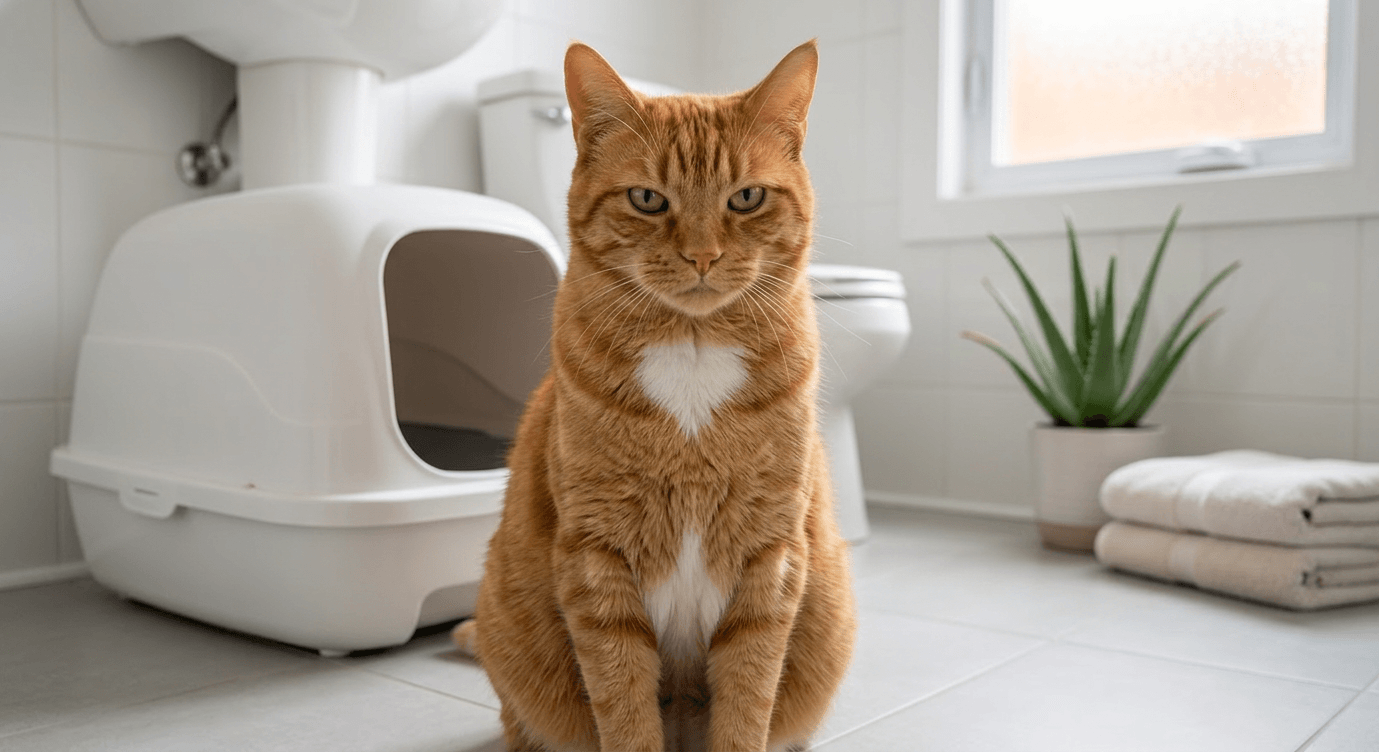
How often clean litter box routines should happen depends on the number of cats, litter type, box size, odor level, and whether your cat has health concerns. For most single-cat homes, daily scooping is the baseline. In a small apartment, I would not wait until the box smells bad; by then, the litter area has usually been unpleasant for your cat for a while.
With Oliver, the routine that worked best was boring but reliable: scoop once a day, check the litter area weekly, and deep clean before the plastic box starts holding odor. It made the apartment calmer for both of us, which is honestly the whole point.
Quick Answer
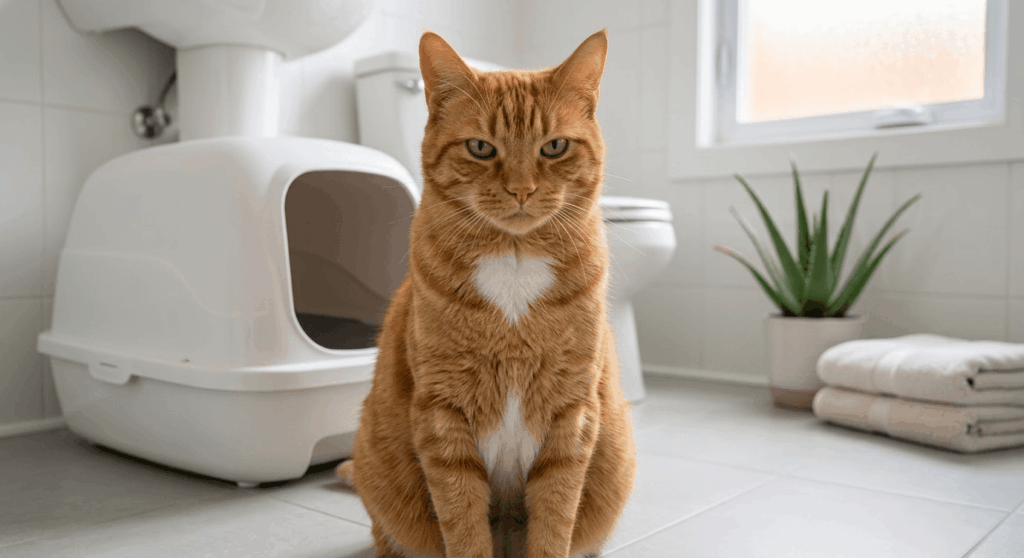
Most single-cat litter boxes should be scooped at least once daily. The box itself usually needs a full litter change and wash every 2 to 4 weeks, depending on litter type, odor, box condition, and how heavily your cat uses it.
Two-cat homes usually need scooping twice daily. Kittens, senior cats, cats with urinary changes, and cats with diarrhea or constipation may need closer monitoring. If the box routine suddenly changes because your cat is peeing more, producing tiny clumps, straining, hiding, or avoiding the box, treat that as a health signal, not just a cleaning problem.
Important Safety Note
This guide is educational and cannot diagnose your cat at home. If your cat has sudden appetite changes, weight loss, vomiting, diarrhea, straining, blood, pain, hiding, aggression, excessive thirst, or litter box changes, contact your veterinarian promptly. For urinary blockage signs, deep bites, breathing distress, collapse, or inability to urinate, seek urgent veterinary care.
Table of Contents
If the problem has already turned into accidents outside the box, use this cleaning routine alongside our guide to why cats pee outside the litter box.
How Often Should You Clean a Litter Box?
For most indoor cats, the litter box should be scooped at least once a day and washed on a regular schedule. In apartments, daily scooping matters even more because the box is usually close to living space, bedrooms, bathrooms, or hallways.
A simple rule works for most homes:
- scoop daily for one cat
- scoop twice daily for two or more cats
- top up litter when the depth gets low
- fully change litter on schedule
- wash the box before odor builds into the plastic
If your apartment smells even after scooping, the issue may be shallow litter, weak clumps, old plastic, poor airflow, or hidden urine residue around the box.
The right cleaning frequency depends on how quickly waste becomes odor, not only on a fixed calendar. A single healthy cat using strong clumping litter may do well with one thorough scoop per day. A multi-cat apartment, a cat with large urine clumps, or a box placed near the bedroom may need a stricter routine.
Think of litter box cleaning in three layers:
- daily waste removal
- weekly area maintenance
- monthly box reset
Daily scooping controls fresh odor. Weekly maintenance catches litter dust, mat buildup, and floor residue. Monthly deep cleaning prevents the box itself from becoming the odor source.
If you only scoop but never wash the box, odor can slowly settle into scratches in the plastic. If you wash the box but leave urine clumps sitting too long, the apartment may still smell. A good routine needs both.
If cleaning frequency is only one part of the problem, our litter box odor cleaning guide also covers odor control, litter tracking, urine cleaners, air purifiers, and small-apartment routines.
Daily Litter Box Cleaning Routine
Daily cleaning should focus on removing urine clumps and feces completely. Do not just stir the litter or cover waste with clean litter. That traps odor inside the box.
A good daily routine includes:
- removing all urine clumps
- removing all feces
- checking whether clumps are breaking apart
- topping up litter if the depth is low
- wiping obvious urine spots on the box edge or floor
- checking whether your cat’s output looks normal
For clumping litter, aim for about 3 inches of litter depth. If urine reaches the bottom of the box, odor will build faster and the box will be harder to clean.
A daily scoop is also a quick health check. You do not need to overanalyze every clump, but you should notice patterns. A sudden increase in urine clump size, repeated tiny clumps, diarrhea, constipation, or missing stool can all matter.
In a small apartment, daily cleaning is also easier than rescue cleaning. Once urine clumps break apart or damp litter reaches the bottom of the box, the job becomes slower and smellier. Removing waste while clumps are still firm keeps the box easier to maintain.
A simple daily routine can take less than two minutes:
- scoop urine clumps first
- remove feces completely
- shake clean litter back into the box
- check the litter depth
- wipe obvious edge mess
- tie off waste immediately
If the box is in a bathroom or laundry area, avoid leaving the waste bag open in the trash. That can make the room smell even when the box itself is clean.
My practical rule is simple: make daily scooping easier than skipping it. Keep the scoop, waste bags, and a small trash routine close to the box. If you have to walk across the apartment looking for supplies, the habit becomes easier to postpone.
Weekly Litter Box Cleaning Routine
Weekly cleaning depends on litter type, number of cats, and odor level. Even if you scoop daily, the box area still needs attention.
Once a week, check:
- the litter mat
- the floor around the box
- the wall or baseboard near the box
- the scoop holder
- the outside and rim of the box
- whether the litter smells stale
In small apartments, the area around the box often causes as much smell as the box itself. Damp litter crumbs, urine edges, and dust can collect outside the box.
For a full small-space cleaning system, see our litter box odor cleaning guide.
Weekly maintenance is where many apartment odor problems are solved. The box may look clean after scooping, but the surrounding area often tells the real story.
Check the litter mat, nearby floor, baseboards, and wall behind the box. High-peeing cats, enthusiastic diggers, and cats who jump out quickly can leave small amounts of litter dust or urine residue outside the box. These tiny messes are easy to miss, but they can create a stale smell over time.
For weekly cleaning, avoid heavily scented sprays around the litter area. Cats have a strong sense of smell, and a harsh fragrance near the box can make some cats less comfortable using it. A mild cleaner for ordinary dust and an enzyme cleaner for urine spots is usually a better approach.
If the mat smells even after shaking or vacuuming, wash it according to the product instructions or replace it. A dirty litter mat can become the hidden odor source in an otherwise clean setup.
Monthly Deep Cleaning Routine
Most litter boxes need a deeper wash at least once a month. Some homes need it more often, especially with multiple cats, strong urine odor, or older plastic boxes.
A monthly deep clean usually means:
- empty all litter
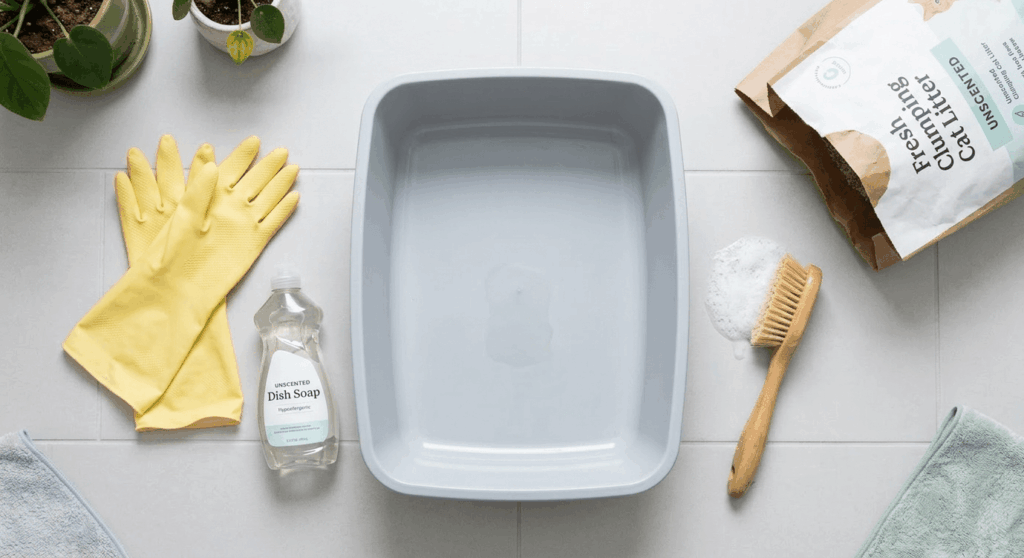
- wash the box with mild, cat-safe cleaner
- rinse thoroughly
- dry completely
- refill with fresh litter
- replace worn litter mats if they hold odor
Avoid harsh fragrances, bleach residue, or strong cleaners that may make the box unpleasant for your cat. If the box still smells after washing, the plastic may be scratched and holding urine odor.
Monthly deep cleaning is not just about making the box look nicer. It resets the litter environment before old residue becomes normal background smell.
When you wash the box, pay attention to corners, seams, and scratched areas. Plastic boxes can hold odor in tiny scratches, especially if urine has reached the bottom repeatedly. If the box still smells after washing and drying, replacing the box may help more than changing litter brands.
Let the box dry completely before adding fresh litter. Damp plastic plus fresh litter can create clumping problems and stale odor. If you have space, keep a backup litter box so your cat still has access while one box dries.
For senior cats or cats with arthritis, use deep cleaning time to check whether the box is still easy to enter. A box that worked last year may become uncomfortable if your cat’s mobility changes.
Cleaning Schedule by Number of Cats
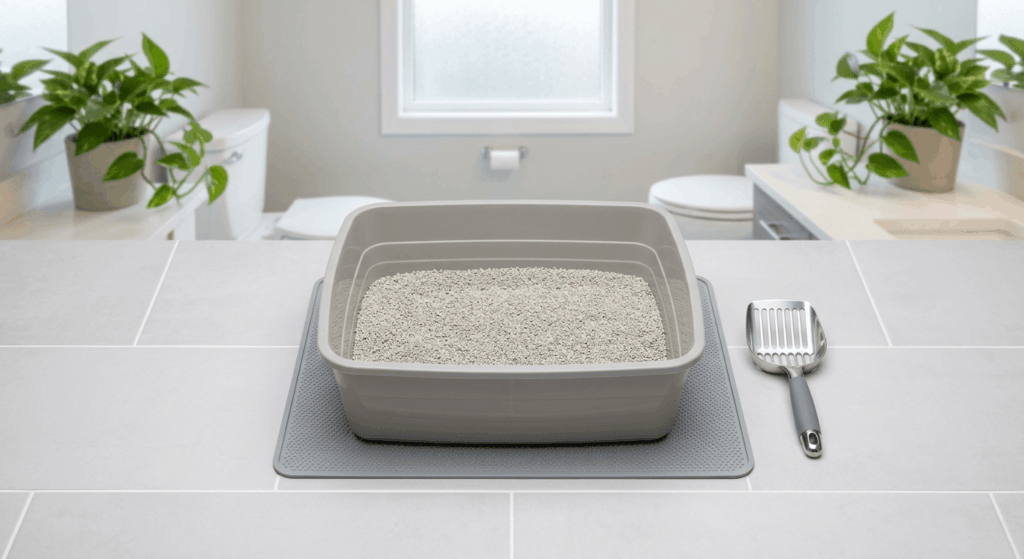
The number of cats changes the cleaning schedule more than many owners expect. Two cats do not simply create “a little more” waste. They also create more scent overlap, more territorial pressure, and less time before the box feels used.
If multiple cats share one box, odor and avoidance risk increase quickly. When possible, provide more than one box and place them in different accessible areas instead of lining them all up in one corner. Separate box locations give cats more choice and make it easier to notice which box is getting the most use.
One Cat
For one healthy adult cat, scoop once daily and deep clean the box on a regular schedule. If your cat produces large urine clumps or the box is near your main living space, scooping twice daily may work better.
Two Cats
For two cats, scoop at least twice daily if they share a box area. Ideally, provide more than one box. Odor builds faster when multiple cats use the same box, and some cats avoid a box that already smells like another cat.
Three or More Cats
For three or more cats, daily cleaning is not enough if there are too few boxes. Scoop multiple times per day and increase the number of boxes when possible. Multi-cat homes also need closer monitoring because changes in one cat’s urine or stool can be harder to notice.
Cleaning frequency matters even more when multiple cats share a small home. For the full resource setup beyond litter boxes, see our multi-cat apartment living guide.
Cleaning Schedule by Litter Type
Different litter types need different cleaning habits. A schedule that works for clumping clay may not work for crystal litter, tofu litter, or pellet litter.
The key is to watch how the litter fails. Some litters fail by leaving broken clumps. Some fail by becoming dusty. Some fail by holding odor until they suddenly smell very strong. Others break down into damp material that needs partial replacement.
Use the package directions as a starting point, but let your apartment conditions guide the final routine. Humidity, ventilation, box size, and urine volume all change how often the litter needs attention.
Clumping Clay Litter
Scoop daily and remove clumps fully. If clumps break apart, odor will return quickly. Fully change and wash the box when the litter smells stale or the box bottom develops residue.
Tofu or Soy-Based Litter
Scoop daily and store the litter in a dry area. Humidity can affect performance. Replace the litter when clumps weaken, odor lingers, or the texture changes.
Crystal Litter
Crystal litter absorbs moisture, so the schedule depends on saturation. Stir or maintain it according to the product instructions, but do not rely only on the package timeline. In apartments, odor may become noticeable before the litter looks fully used.
Paper, Pine, or Pellet Litter
Pellet litters may need more frequent partial changes because wet material can break down. Remove saturated pellets or sawdust regularly and replace the litter before odor spreads.
Signs You Are Not Cleaning Often Enough
You may need to clean more often if:
- the box smells within a few hours of scooping
- urine clumps break apart
- litter sticks to the bottom of the box
- your cat hesitates before entering
- your cat scratches outside the box
- your apartment smells even when the box looks clean
- the litter mat or floor holds odor
- your cat starts peeing outside the box
A dirty box is not just an odor problem. It can also make some cats avoid the box.
Apartment Odor Control Tips
Apartment litter box odor control starts with cleaning frequency, but setup matters too.
Use enough litter depth, keep the box in a ventilated area, avoid heavy fragrance, and clean the floor around the box. If odor still lingers, the problem may be old plastic, hidden urine residue, poor airflow, or the wrong litter for your cat’s urine volume.
Air purifiers and carbon filters can help, but they should come after daily scooping and box cleaning are already consistent.
If odor is still a problem after daily scooping, do not immediately add perfume or deodorizing powder. Work through the basics first:
- Is the litter deep enough?
- Are clumps staying firm?
- Is the box too old or scratched?
- Is the box in a poorly ventilated corner?
- Is the litter mat holding odor?
- Is there urine residue near the box?
- Is the trash can becoming the smell source?
In apartments, the smell may come from the whole litter zone, not just the litter. The scoop, waste bags, mat, nearby floor, and airflow all affect the result.
This is where a lot of owners feel unfairly defeated. They are scooping, but the apartment still smells. Usually that means the odor source has moved: the mat, the trash can, the box scratches, the floor edge, or a hidden urine spot nearby.
Common Litter Box Cleaning Mistakes
The biggest mistake is scooping too little and then trying to fix odor with scented litter or sprays.
Other common mistakes include:
- using too little litter
- not washing the box itself
- ignoring the litter mat
- keeping the box in a poorly ventilated corner
- using strong cleaners that leave residue
- waiting too long to replace an old plastic box
- assuming odor is normal in a cat home
A clean litter box should not make the whole apartment smell.
When Litter Box Changes May Signal a Health Problem
Cleaning frequency will not fix medical problems. Call your veterinarian if your cat suddenly urinates more often, produces very large clumps, strains, cries in the box, leaves very small urine spots, has blood in urine, or starts peeing outside the box.
Sudden odor changes can also matter. Stronger urine smell may come from dehydration, diet changes, urinary issues, diabetes, kidney disease, or other health concerns.
Frequently Asked Questions
1. How often should I scoop a litter box?
Most indoor cats need the litter box scooped at least once a day. In apartments, once daily should be treated as the minimum because odor spreads faster in small spaces.
For two cats, scoop at least twice daily if possible. If your cat produces large urine clumps, has soft stool, or the box is near your bedroom, bathroom, or living area, a second daily scoop can make a big difference.
2. How often should I completely change cat litter?
It depends on the litter type, number of cats, and odor level. For clumping litter, many single-cat homes can fully change the litter and wash the box every few weeks, as long as daily scooping is consistent.
You may need a full change sooner if:
- the litter smells stale even after scooping
- urine clumps break apart
- damp litter sticks to the bottom
- the box smells after washing
- your cat hesitates before using it
Crystal, pellet, tofu, and paper litters have different replacement schedules, so use the product instructions as a starting point and adjust based on smell, texture, and your cat’s behavior.
3. How often should I clean a litter box for two cats?
For two cats, scoop at least twice daily and deep clean the box area more often than you would for one cat. Two cats create more urine, more feces, and more scent overlap, so odor builds faster.
If both cats share one box, cleaning becomes even more important. Ideally, use more than one litter box so one cat does not avoid the box because it already smells like the other cat.
4. Is it okay to clean a litter box once a week?
Scooping only once a week is usually not enough for indoor cats. Waste left in the box for several days can create strong odor, make clumps harder to remove, and cause some cats to avoid the box.
A better routine is daily scooping plus deeper cleaning on a regular schedule. If you can only do one thing consistently, make daily waste removal the priority.
5. Why does my litter box still smell after scooping?
If the box still smells after scooping, the odor may be coming from something other than fresh waste.
Common causes include:
- urine clumps breaking apart
- litter that is too shallow
- urine stuck to the bottom or sides of the box
- an old scratched plastic box
- a dirty litter mat
- hidden urine on the floor or wall nearby
- poor airflow around the box
If odor continues, clean the box area with an appropriate cleaner and check whether the box itself needs to be replaced.
6. How often should I wash the litter box itself?
Most litter boxes should be washed on a regular schedule, not only when they smell bad. For many single-cat homes, washing every few weeks works well. Multi-cat homes, strong urine odor, or shallow litter may require more frequent washing.
Use a mild, cat-safe cleaner, rinse thoroughly, and dry the box completely before adding fresh litter. Avoid strong fragrance or cleaner residue because some cats may avoid a box that smells harsh.
7. When should litter box changes make me call a veterinarian?
Call your veterinarian if litter box changes are sudden, severe, or connected with signs of discomfort.
Watch for:
- straining in the box
- crying while urinating
- very small urine spots
- blood in urine
- frequent trips to the box
- sudden accidents outside the box
- much larger urine clumps than usual
- drinking much more water
- hiding, appetite loss, or unusual behavior
Cleaning routines can fix odor and maintenance problems, but they cannot diagnose urinary pain, kidney disease, diabetes, constipation, or other medical issues.
Simple Litter Box Cleaning Checklist
Use this checklist if you want a routine you can repeat without overthinking it.
Daily:
- scoop urine clumps
- remove feces
- check litter depth
- tie off waste
- notice unusual urine or stool changes
Weekly:
- clean the litter mat
- wipe the floor around the box
- check for urine edge marks
- inspect the scoop and waste area
- top up litter if needed
Monthly:
- empty the box
- wash with a mild cat-safe cleaner
- rinse and dry fully
- refill with fresh litter
- check whether the plastic still holds odor
As needed:
- replace old scratched boxes
- use enzyme cleaner for urine residue
- increase scooping in multi-cat homes
- call a veterinarian for sudden litter box changes
Final Thoughts
How often clean litter box routines need to happen is not about being perfect. It is about keeping the box clean enough that your cat keeps trusting it and your apartment does not slowly become the litter area.
Start with the baseline: scoop daily, check the surrounding floor and mat weekly, and wash the box before old plastic starts holding odor. If you have multiple cats, strong urine odor, loose stool, or a box near your bedroom or living area, tighten the schedule instead of waiting for the smell to remind you.
A clean litter box is one of those quiet routines that protects everything else: odor, furniture, floors, your cat’s comfort, and your own sanity in a small space.
References
- International Cat Care: Toileting problems in cats. https://icatcare.org/advice/soiling-indoors/
- Cornell Feline Health Center: Feline Lower Urinary Tract Disease. https://www.vet.cornell.edu/departments-centers-and-institutes/cornell-feline-health-center/health-information/feline-health-topics/feline-lower-urinary-tract-disease
- AAFP and ISFM Feline Environmental Needs Guidelines. https://doi.org/10.1177/1098612X13477537
- Merck Veterinary Manual: Disorders of the urinary system in cats. https://www.merckvetmanual.com/cat-owners/kidney-and-urinary-tract-disorders-of-cats