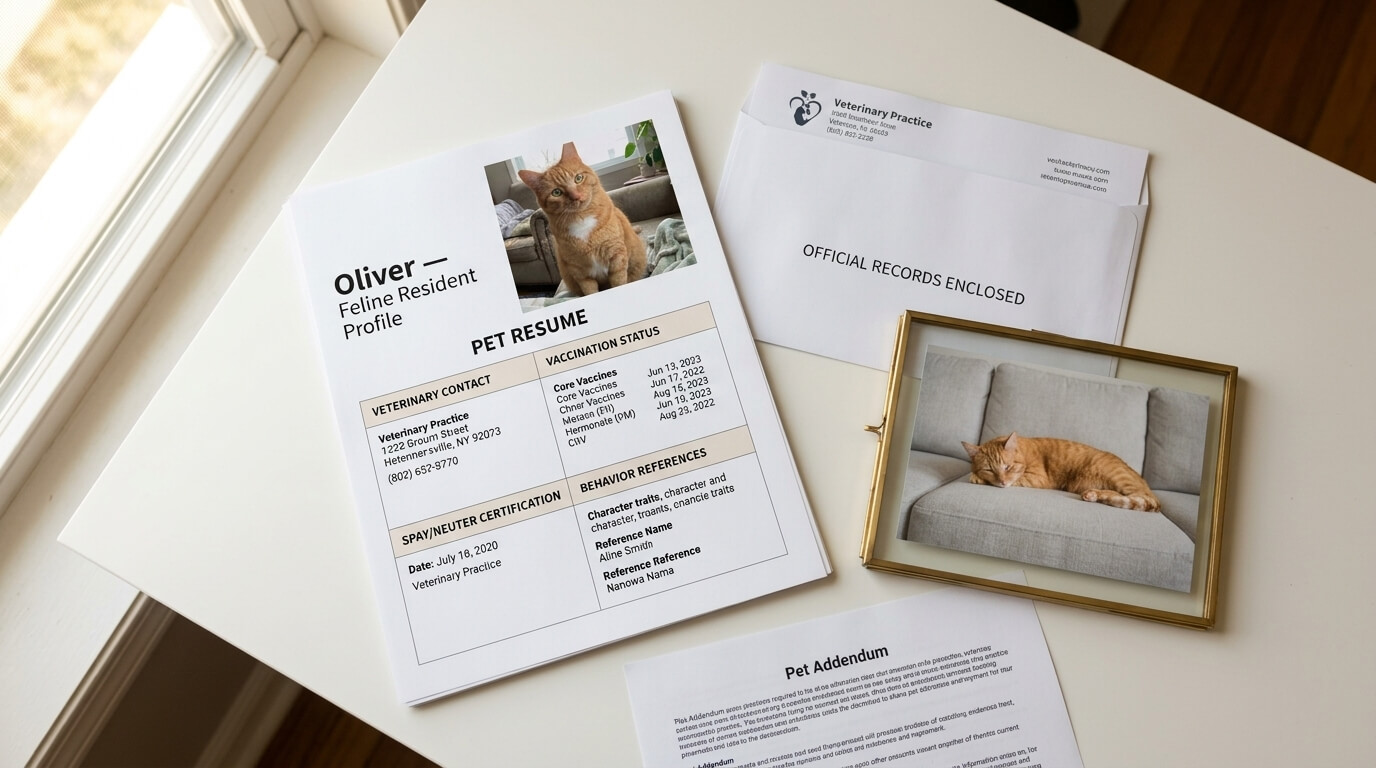
The most useful renting with a cat tips are practical: ask about the written policy, describe your cat accurately, show current records, and explain how you manage litter, scratching, cleaning, and damage reporting. A careful application can support a conversation, but cannot prove that a cat will never cause damage or guarantee landlord approval.
Quick Answer
Prepare a short pet profile, relevant veterinary records, references you have permission to share, and a realistic care plan. Ask the landlord which documents they actually need before sending personal information. Keep any agreed pet terms in writing.
Rental and Legal Note
Rules vary by location, building, tenancy, and the circumstances of the application. This is general preparation guidance, not legal advice. Before offering a deposit, monthly fee, cleaning obligation, or pet addendum, check applicable local rules and the lease with a qualified local housing professional if needed. Do not pay extra simply because a generic article suggests it.
Understand the Concern Before Making the Case
Ask whether the issue is the building policy, a prior damage experience, odor, noise, insurance restrictions, or missing information. Do not assume every “no pets” listing is negotiable. A specific question is more useful than trying to promise that none of the usual risks apply.
| Concern | Useful evidence | What not to promise |
|---|---|---|
| Scratching | Suitable scratching surfaces and a response plan | No possible marks or damage |
| Litter odor | Cleaning routine and accessible box location | No smell under any circumstances |
| Noise | Honest history and how changes are handled | Permanent silence |
| Move-out condition | Photographs and agreed inspection process | Unreviewed financial obligations |
| Unknown cat history | Accurate records and references | Invented rental or medical history |
Seven Renting with a Cat Tips
1. Make a short, factual pet profile
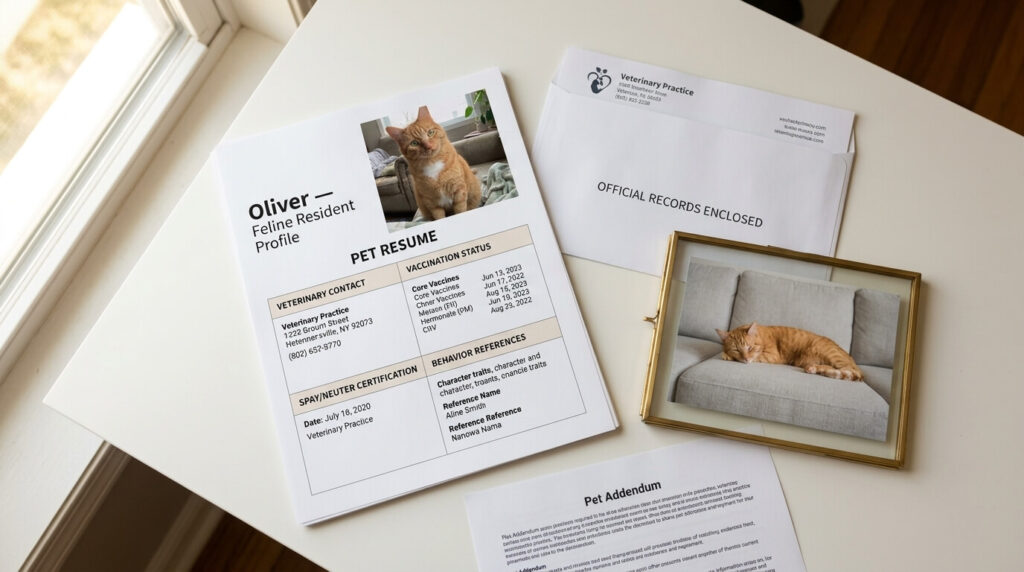
Include the cat’s name, age, a clear photo, indoor/outdoor routine, and relevant care information. Describe known litter, scratching, or noise issues honestly and explain the management plan. If the cat has never lived in a rental, say so; a prospective plan is not evidence of previous success.
Keep the profile easy to scan. A one-page summary with supporting records available on request is usually more practical than a large promotional packet. Obtain permission before naming a reference or sharing their contact details.
2. Request records, not a veterinary guarantee
Ask your practice which existing records it can provide or whether a brief factual letter is appropriate. Vaccination and procedure records can document care, but a clinic visit cannot prove how a cat will behave in a future apartment. Fees, timing, and what the practice is willing to certify vary.
Example request: “I am preparing a rental application. Could you provide the relevant vaccination and spay/neuter records you hold for my cat? Please let me know what documentation is available and any fee.” Do not ask the practice to certify facts it has not established.
3. Describe spay/neuter and identification status accurately
Use the records you actually have. Do not claim that neutering eliminates every possibility of urine marking, noise, escape attempts, or odor. If records are missing, ask the veterinarian what can be established; a landlord’s visual inspection cannot verify surgical history.
State microchip status if relevant, and keep registration details current with the registry. A chip supports identification but does not guarantee return after an escape. Share only the documentation the application needs, not your entire account or unrelated records.
4. Show a specific apartment-protection plan
Name the surfaces you will protect, where scratching options will go, and how you will inspect for new damage. Photos of an existing setup can support the explanation without proving future behavior. See scratching redirection and the rental cat-proofing guide.
For litter, explain scooping, full cleaning, waste disposal, and accident cleanup. Use apartment odor-control steps and, if considering furniture concealment, safe hidden litter placement. Access and ventilation matter more than making the box invisible.

5. Offer an introduction only when appropriate
A meeting is optional and should not put the cat through unnecessary travel or handling. Ask whether photos and records are sufficient. If both parties want a meeting and the cat is comfortable with it, agree on a secure setting and keep the carrier available. Do not force the cat to emerge or perform.
A quiet meeting is not proof of future temperament, and unfamiliar surroundings can change behavior. Use our car travel safety guide if transport is necessary. Cancel or shorten the meeting if the cat shows distress.
6. Review written terms before agreeing
Ask how permission will be recorded and check that the document describes the correct animal and property. Clarify responsibilities, notice procedures, inspections, and any proposed costs. Do not sign a template merely because it is labeled a pet addendum; obtain local advice about unclear or disputed terms.
Do not hide a pet or rely on an informal statement that conflicts with the lease. Keep a copy of the permission and the documents you submit. If the decision is no, ask whether there is a review process or focus on housing that explicitly accepts cats.
7. Discuss costs without inventing a standard price
There is no single appropriate pet-deposit or monthly-fee figure for every rental. Ask for the property’s written terms, verify what is permitted locally, and assess affordability before offering anything. Avoid informal cash payments or open-ended promises to refinish floors regardless of their condition.
Example wording: “I am happy to review any pet terms that apply to this property and are allowed locally. Could you send the proposed terms in writing so I can understand the amounts, conditions, and responsibilities?” This starts a discussion; it is not acceptance of a charge.
Sample Message to a Landlord
Adapt this example only with facts that are true: “Hello, I am interested in the apartment. Would you consider an application with one indoor cat? I can provide a short pet profile, relevant records, references if available, and a plan for litter care, scratching, cleaning, and damage reporting. Could you let me know the building’s written pet policy and what information you need?”
Move-In and Move-Out Documentation
- Photograph the property’s existing condition and record pre-existing marks using the agreed process.
- Keep relevant written communications and receipts.
- Report new problems promptly and follow the lease and applicable rules.
- Use cleaning methods appropriate for the surface and product label.
- Arrange the agreed inspection and keep a copy of its findings.
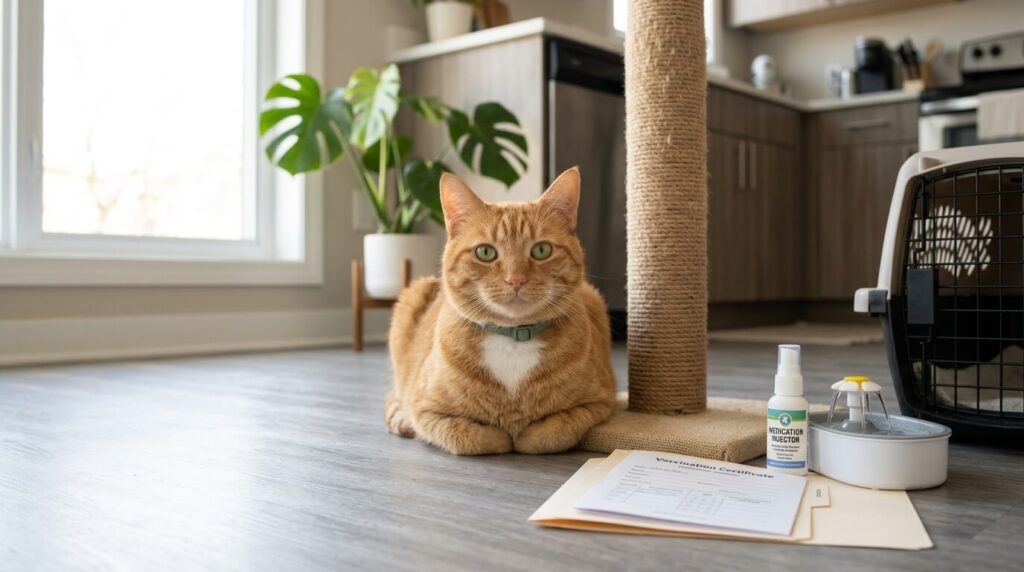
A tidy setup can make maintenance easier, but style is not evidence that damage is impossible. Our cat-friendly interior design guide offers layout ideas that preserve access to essential resources.
Assistance-Animal Requests Are a Separate Question
Do not present an ordinary pet application as an assistance-animal request just to avoid a policy or fee. If your request relates to a disability, seek current official guidance and qualified local advice about the appropriate process. Do not assume a purchased certificate establishes eligibility or that ordinary pet terms apply unchanged.
Frequently Asked Questions
Can I promise my cat will never damage the apartment?
No. Describe your prevention and response plan instead. Previous references can document actual experience but cannot guarantee a future outcome.
Should I send every veterinary record?
Ask what is needed first. Provide accurate, relevant documentation and avoid unnecessary personal information. A medical record is not a general behavior warranty.
What if the landlord still refuses?
Ask for the applicable policy or decision in writing if appropriate. For a dispute or accommodation question, get jurisdiction-specific advice. Otherwise, concentrate the search on properties that accept cats rather than offering escalating payments.
Final Thoughts
Good preparation replaces vague assurances with verifiable information and a realistic plan. Keep claims modest, protect personal information, and make sure written terms are understood before committing.