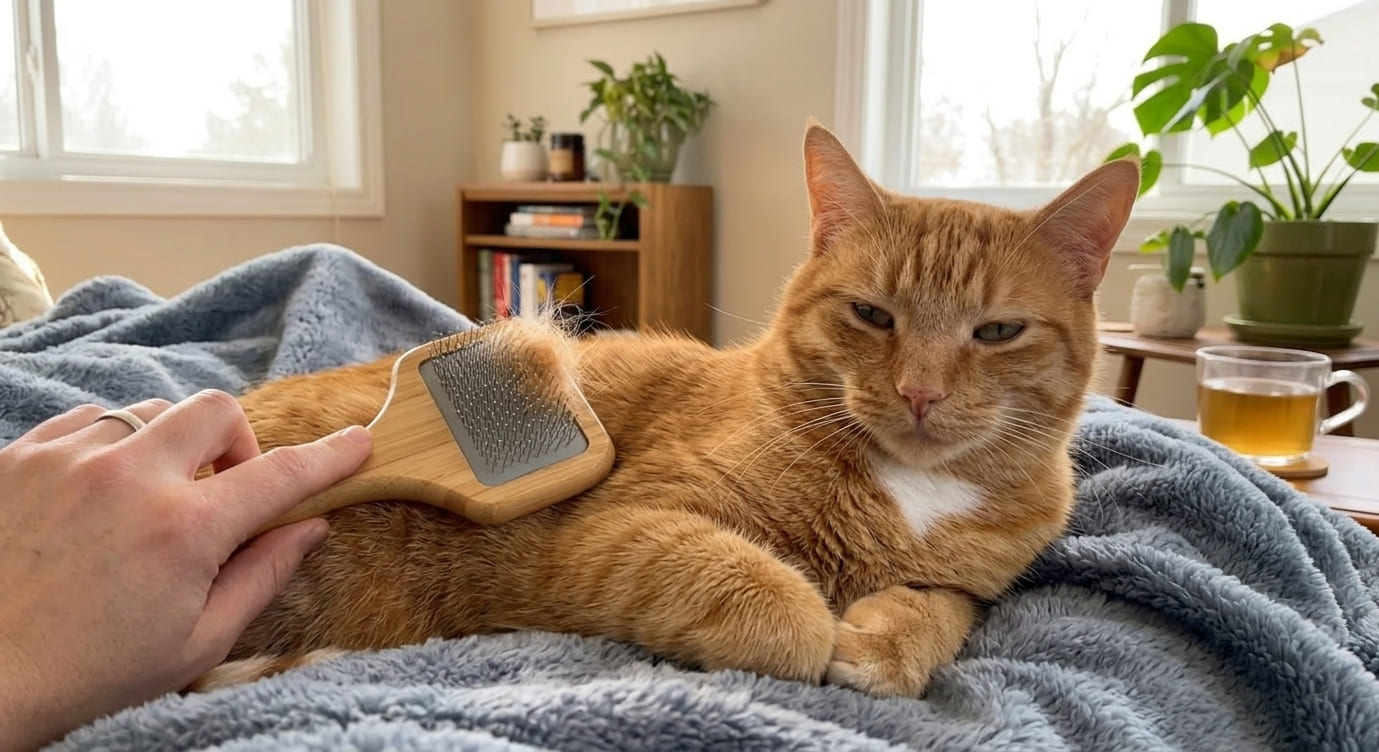
Indoor cat grooming guide routines are not about making a cat look polished. They are about removing loose fur, preventing painful mats, noticing skin and nail changes, and building a calm handling routine your cat can tolerate in a small apartment.
A practical indoor cat grooming guide includes brushing one to several times per week depending on coat length, nail checks every two to four weeks, occasional ear and eye checks, and baths only when truly needed. Long-haired cats, seniors, overweight cats, and cats with arthritis often need more help because they cannot groom every area comfortably.
Grooming should be gentle and brief. Stop if your cat becomes panicked, painful, or aggressive, and contact your veterinarian for mats close to the skin, sudden coat changes, bald patches, sores, heavy dandruff, parasites, or painful ears.
Quick Answer
An indoor cat grooming guide should focus on brushing, nail care, skin checks, ear and eye observation, shedding control, hairball prevention, and knowing when grooming changes may signal a health problem. Most short-haired indoor cats need brushing one to three times per week, while long-haired, senior, overweight, or heavy-shedding cats may need more frequent help.
Indoor cats still groom themselves, but they do not always groom enough. Seasonal shedding, weight gain, arthritis, dental pain, stress, and aging can all change how well a cat maintains its coat. A good routine should be gentle, short, predictable, and based on your cat’s coat type and tolerance.
If grooming suddenly becomes difficult, painful, excessive, or neglected, treat that as a possible health signal rather than a simple hygiene problem.
Important Grooming Safety Note
Never force grooming if your cat is panicking, growling, panting, biting, hiding, or showing pain. Stop the session and try again later with a shorter, easier step.
Do not cut mats close to the skin with scissors. Cat skin is thin and can be pulled into the mat, making accidental cuts more likely. Severe mats, painful skin, sudden coat changes, bald patches, wounds, ear odor, eye discharge, drooling, or grooming avoidance should be checked by a veterinarian or professional groomer.
Table of Contents
Why Indoor Cat Grooming Matters
Indoor cats spend a large part of the day grooming, but self-grooming does not solve every problem. Loose hair still collects in the coat. Nails can grow sharp or overlong. Long-haired cats can develop mats. Senior or overweight cats may struggle to reach the back, hips, belly, or base of the tail. Cats with dental pain, arthritis, skin irritation, or stress may groom less or groom too much.
Grooming also gives owners a quiet way to notice early changes. A brush session can reveal weight loss, new lumps, flaky skin, tender spots, dandruff, fleas, mats, coat thinning, or areas the cat no longer wants touched. These signs may appear before the cat looks obviously sick.
If grooming reveals live fleas, reddish-black flea dirt, persistent scratching, small scabs, or sudden over-grooming, review whether indoor cats need flea treatment and contact your veterinarian before choosing or combining parasite products.
In apartments, grooming matters even more because loose hair, dander, litter dust, and hairballs are concentrated in a smaller space. A predictable grooming routine can reduce hair on furniture, make shedding easier to manage, and help you notice health changes sooner.
Indoor Cat Grooming Schedule
| Grooming Task | Typical Frequency | Notes |
|---|---|---|
| Brushing short-haired cats | 1-3 times per week | More often during heavy shedding |
| Brushing long-haired cats | Daily or near daily | Prevent mats before they tighten |
| Nail checks | Every 1-2 weeks | Trim small amounts as needed |
| Ear and eye checks | Weekly | Look for odor, redness, discharge, or squinting |
| Skin and coat check | Weekly | Check for mats, flakes, bald spots, wounds, or tenderness |
| Hairball monitoring | Ongoing | Frequent vomiting needs a vet check |
| Full home health check | Monthly | Pair grooming notes with weight and behavior changes |
The schedule should fit the cat. A calm short-haired cat may need only a few minutes several times a week. A long-haired senior cat may need daily maintenance. A cat who hates grooming may need 30-second sessions at first.
How to Build a Grooming Routine Your Cat Accepts
The best indoor cat grooming guide is not the one with the most tools. It is the one your cat will actually tolerate. Many grooming problems happen because owners wait until the coat is already tangled, then try to do a long session when the cat is uncomfortable.
Start with the easiest part of the body. For many cats, that means cheeks, shoulders, or the upper back. Avoid the belly, legs, tail, and mats during the first few sessions. The goal is to teach your cat that grooming is predictable and short.
Use the same location if possible. A towel on the sofa, a low table, or a quiet corner can become the grooming spot. Keep sessions brief. Thirty seconds is enough for a nervous cat. Stop before your cat gets angry, not after.
Rewards help, but timing matters. Give a treat after a calm brush stroke, after touching the paw, or after your cat stays relaxed for a few seconds. Do not wait until the cat is already biting or fleeing.
A good routine grows slowly: touch, reward, one brush stroke, reward, stop. Over time, the cat learns that grooming is not a trap.
If your cat already reacts badly to the brush, use our full guide for when a cat hates being brushed before trying longer grooming sessions.
7 Essential Indoor Cat Grooming Tips
1. Brush Based on Coat Type
Short-haired cats usually need brushing to remove loose hair, reduce shedding, and help with hairball control. A soft rubber brush, grooming glove, or gentle slicker may work well depending on the coat.
Medium-haired cats often need more attention around the chest, armpits, belly, back legs, and base of the tail. These areas can trap loose hair and begin matting before the rest of the coat looks messy.
Long-haired cats need the most consistent routine. The goal is not to make the coat look perfect once a month. The goal is to prevent small tangles from becoming painful mats. Daily or near-daily short sessions are usually easier than one long battle.
Brush in the direction of hair growth. Start with easy areas such as the cheeks, shoulders, or back. Leave sensitive areas for later sessions after your cat trusts the routine.
2. Check for Mats Before They Become Painful
Mats are not just cosmetic. They can pull on the skin, trap moisture, hide irritation, and make movement uncomfortable. Common mat areas include behind the ears, under the front legs, under the collar area, the belly, back legs, and base of the tail.
Small tangles may be loosened gently with fingers or a comb if the cat is comfortable. Tight mats should not be pulled. If a mat is close to the skin, painful, large, or in a sensitive area, ask a professional groomer or veterinarian for help.
Do not wait until a long-haired cat looks visibly messy. By the time mats are obvious from across the room, they may already be uncomfortable.
3. Trim Nails in Small Sessions
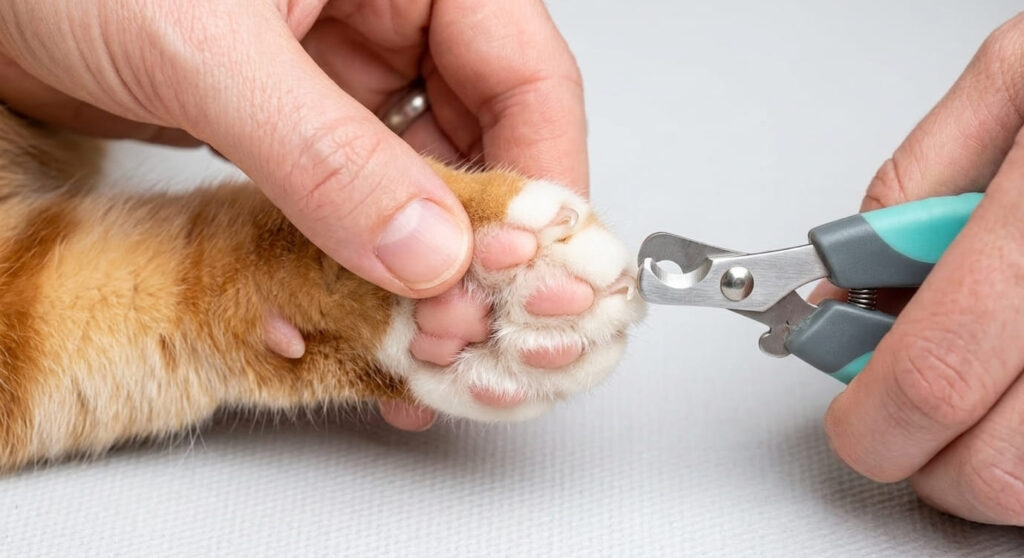
Indoor cats still need nail checks because scratching posts do not always wear nails evenly. Overgrown nails can snag fabric, curve toward the paw pad, or make walking uncomfortable, especially for senior cats.
Do not try to trim every nail in one session if your cat hates it. Trim one or two nails, reward the cat, and stop. A tiny successful session is better than a full trim that teaches your cat to fear nail care.
Use sharp cat nail clippers and trim only the clear tip. Avoid the quick, which is the pink area containing blood vessels and nerves. If you are unsure, ask your vet or groomer to demonstrate.
4. Watch Ears, Eyes, and Skin
Grooming time is also observation time. You do not need to clean ears or eyes aggressively. You just need to notice what changes.
Healthy ears should not smell bad, look very red, or contain heavy dark debris. Healthy eyes should not be swollen, squinting, painful, or producing thick discharge. Skin should not have open sores, scabs, bald patches, hot spots, or sudden dandruff.
Most healthy cats do not need routine ear cleaning. If your veterinarian has recommended home cleaning, follow our guide on how to clean cat ears safely, including which warning signs mean you should stop and arrange a veterinary examination.
If your cat drools, resists face handling, drops food, has bad breath, or chews on one side, the issue may be dental rather than grooming-related. Pair this routine with our indoor cat dental health guide.
5. Manage Shedding Before Hair Spreads Everywhere
Shedding is normal, but apartments make it more visible. Hair collects on sofas, beds, rugs, curtains, clothing, and air filters because the same small space is used every day.
The best shedding control starts on the cat, not the furniture. Regular brushing removes loose hair before it spreads through the home. During seasonal shedding, increase brushing frequency rather than waiting until hair is everywhere.
Brushing works best as part of a whole-home routine. Learn how to control cat hair in a small apartment with washable covers, targeted cleaning, laundry habits, and properly sized air filtration.
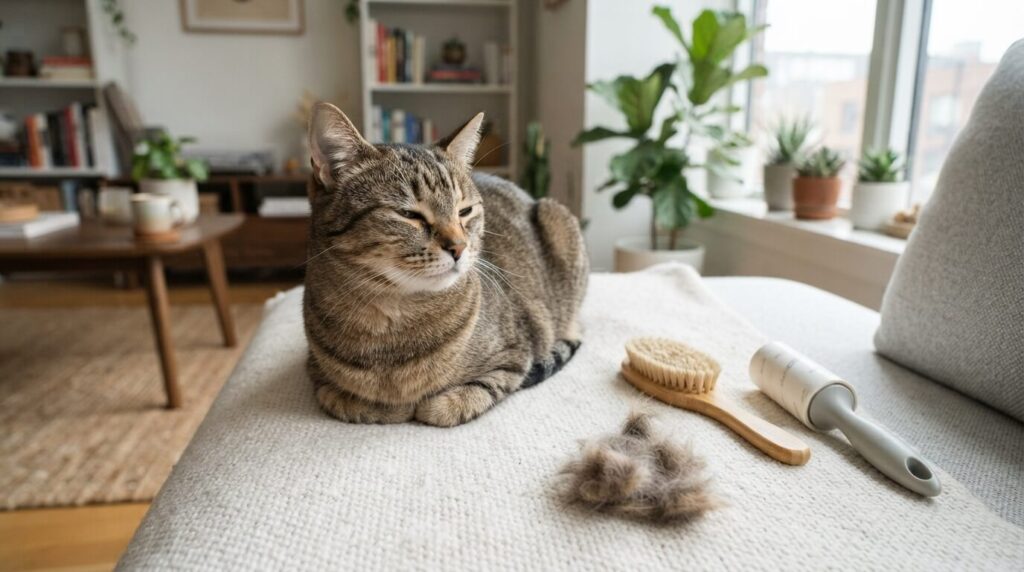
For furniture cleanup, use washable throws, a lint roller, a rubber brush, or a vacuum attachment designed for pet hair. If your main issue is hair on upholstery, use our guide on how to get cat hair off furniture.
6. Reduce Hairballs With Routine, Not Panic
Hairballs happen when swallowed hair accumulates and is vomited up. Occasional hairballs can happen, especially during shedding seasons or in long-haired cats. Frequent vomiting, repeated retching, appetite loss, constipation, lethargy, or vomiting that does not look like a typical hairball should be discussed with a veterinarian.
Gentle brushing removes loose fur that a cat might otherwise swallow, but evidence that brushing prevents hairballs is limited. Do not assume every vomiting episode is a hairball; contact your veterinarian if vomiting recurs or the pattern changes.
If the episode contains food, foam, bile, blood, or no visible hair, use our cat vomiting vs hairball guide to decide what to record before you call your vet.
For a deeper plan, connect this section with your cat hairball prevention guide.
7. Know When Grooming Changes Mean a Vet Visit
A sudden grooming change can be an early health signal. A cat who stops grooming may be in pain, overweight, arthritic, stressed, nauseous, depressed, or too weak to groom normally. A cat who overgrooms may have itching, pain, fleas, allergies, stress, or skin disease.
Call your veterinarian if you notice:
- sudden poor grooming
- greasy or clumped coat
- new mats in a cat who usually stays neat
- bald patches
- red or irritated skin
- excessive licking
- wounds or scabs
- bad odor
- drooling or mouth pain
- weight loss
- stiffness or reluctance to jump
- repeated vomiting or retching
For a broader monthly routine, use our cat health check at home guide.
Grooming Schedule by Coat Type
Short-Haired Cats
Short-haired cats usually need the simplest routine. Brush one to three times per week, check nails every one to two weeks, and look at skin, ears, eyes, and coat condition weekly.
Even short-haired cats can shed heavily. If your cat leaves hair on every chair, adjust gentle brushing during shedding periods. If your cat vomits hairballs often, contact your veterinarian rather than relying on brushing alone.
Medium-Haired Cats
Medium-haired cats often look easy until tangles develop under the legs, belly, chest, or tail. Brush several times per week and check friction areas with your fingers.
A comb can help find small tangles that a brush misses. Keep sessions short so the cat does not become defensive.
Long-Haired Cats
Long-haired cats need preventive grooming. Daily or near-daily brushing is usually easier than trying to remove mats later. Pay attention to armpits, belly, chest, rear legs, and the base of the tail.
If your cat already has tight mats, do not pull them out. Get professional help and then restart a maintenance routine after the coat is comfortable.
Senior or Overweight Cats
Senior and overweight cats may struggle to groom the back, hips, belly, or rear end. These cats may need more help even if they have short hair.
Keep grooming low-impact. Let the cat stand or lie comfortably. Avoid forcing difficult positions. If grooming suddenly becomes harder, check for pain, arthritis, dental disease, or weight changes.
Grooming Needs by Life Stage
Kittens usually need grooming as training more than maintenance. Short, positive sessions teach them that brushing, paw handling, and gentle body checks are normal. Do not turn kitten grooming into wrestling. The habit matters more than the amount of hair removed.
Adult cats often need consistency. A healthy adult short-haired cat may keep the coat tidy, but brushing still helps reduce shedding and lets you notice skin or weight changes. Adult long-haired cats need more prevention because mats can form even when the cat seems clean.
Senior cats need the most observation. A senior cat may stop grooming the back, hips, belly, or rear end because of arthritis, weakness, dental pain, obesity, or cognitive changes. If a senior cat’s coat becomes greasy, clumped, or matted, do not assume laziness. Look for pain or illness.
Overweight cats may need help reaching the lower back and rear body. Be gentle around the belly and hips. Combine grooming support with weight tracking and veterinary advice rather than only brushing more.
Multi-cat homes need individual routines. One cat may love brushing while another hides. Do not assume the same tool, schedule, or handling style will work for every cat.
Indoor Cat Grooming Tools
You do not need a large grooming kit. Start with tools your cat tolerates.
Useful tools include:
- soft brush or grooming glove for short coats
- metal comb for medium and long coats
- slicker brush used gently
- cat nail clippers
- styptic powder for nail accidents
- washable towel or grooming mat
- treats for short sessions
- lint roller or pet hair tool for furniture
Avoid harsh deshedding tools if they irritate the skin or make your cat avoid grooming. The best tool is the one you can use regularly without turning grooming into a fight.
How to Choose the Right Brush
The right brush depends on coat type, skin sensitivity, and your cat’s tolerance. A tool that works beautifully for one cat may feel too scratchy, loud, or intense for another.
For short-haired cats, a soft rubber brush or grooming glove is often enough. These tools remove loose hair without pulling too much. They are also easier for cats who dislike traditional brushes.
For medium-haired cats, a metal comb can help find small tangles before they become mats. Use it gently and do not drag it through resistance. If the comb catches, stop and separate the hair with your fingers first.
For long-haired cats, you may need a combination of a comb and a gentle slicker brush. The comb checks for hidden tangles, while the brush helps remove loose surface hair. The sensitive areas need the most patience: armpits, belly, chest, rear legs, and tail base.
Avoid tools that remove too much hair too quickly if your cat has thin skin, irritation, senior stiffness, or fear of grooming. More aggressive tools are not always better. If your cat avoids you after grooming, the tool may be too uncomfortable or the session may be too long.
Hairballs, Shedding, and Apartment Cleaning
Indoor grooming and apartment cleaning work together. Brushing reduces the amount of hair your cat swallows and the amount that spreads through the room. Cleaning reduces loose hair and dander in resting areas.
Focus on the places your cat actually uses: favorite chair, bed, window perch, rug, scratcher, and blanket. Wash soft bedding regularly. Use washable covers where possible. Vacuum or brush furniture before hair becomes embedded.
If hairballs or vomiting become more frequent, contact your veterinarian rather than treating the change with brushing alone. You can continue gentle grooming while you seek advice, especially if vomiting is forceful or paired with appetite loss, lethargy, constipation, or weight loss.
Grooming can reduce swallowed loose fur, but recurring vomiting should not automatically be blamed on hairballs; learn how to tell cat vomiting from a hairball.
Apartment Cleaning Routine That Supports Grooming
Grooming works better when the apartment is easy to clean. Loose hair gathers where your cat sleeps, jumps, scratches, and watches the world. Instead of trying to clean every surface every day, focus on the high-use zones.
Start with bedding and blankets. Wash or shake out favorite blankets regularly. If your cat sleeps on your sofa or bed, use a washable cover that can be cleaned before hair becomes embedded.
Next, handle soft furniture. A rubber pet hair brush, lint roller, damp rubber glove, or vacuum upholstery tool can remove hair from fabric. Cleaning small amounts often is easier than waiting until the furniture looks coated.
Then check air movement. Hair and dander collect near vents, fans, heaters, and under furniture. If your cat sheds heavily, clean these areas more often during seasonal coat changes.
Finally, connect cleaning with grooming. If the sofa is covered in hair, brush your cat before only cleaning the sofa. Otherwise, you remove yesterday’s hair while today’s loose coat is still ready to fall.
When Grooming Problems Are Medical
Grooming problems are sometimes the first visible sign of illness. A cat who suddenly stops grooming may not be lazy. A cat who suddenly licks one spot repeatedly may not be bored.
Possible medical causes include:
- arthritis
- dental pain
- obesity
- skin allergies
- fleas or mites
- wounds
- urinary discomfort
- nausea
- kidney disease
- thyroid disease
- diabetes
- stress or anxiety
- cognitive changes in senior cats
Look at the whole pattern. A messy coat plus weight loss is different from normal shedding. Overgrooming plus bald patches is different from occasional licking. Hairballs plus repeated vomiting need more attention than one seasonal hairball.
Common Grooming Mistakes
Mistake 1: Waiting Until the Cat Looks Messy
Preventive grooming is easier than mat removal. Brush before the coat looks bad, especially with long-haired cats.
Mistake 2: Making Sessions Too Long
Many cats tolerate short sessions better. Stop while the cat is still calm. You can always do another minute tomorrow.
Mistake 3: Pulling Mats
Pulling mats hurts and can make the cat fear grooming. Loosen only small tangles gently. Get help for tight mats.
Mistake 4: Ignoring Medical Red Flags
Poor grooming, overgrooming, bald patches, bad odor, drooling, or sudden coat changes may signal a health issue.
Mistake 5: Using Human Products
Do not use human shampoo, essential oils, harsh cleaners, or scented products on cats unless your veterinarian specifically approves them.
Monthly Grooming Checklist
Once a month, do a calm grooming review:
- check coat texture
- look for mats
- check nails
- look at ears and eyes
- notice breath and drooling
- feel for lumps or tender spots
- check skin for flakes, redness, or scabs
- notice weight or body shape changes
- review hairball frequency
- clean favorite bedding
- wash grooming tools
This checklist should not replace veterinary care, but it can help you catch changes earlier.
What to Write Down After Grooming
You do not need a complicated grooming journal, but a few notes can help you notice patterns. This is especially useful for senior cats, long-haired cats, cats with hairballs, and cats with skin or weight changes.
Write down anything that is new or repeated:
- mats in the same location
- sudden dandruff
- greasy coat
- bald spots
- overgrooming one area
- more hairballs than usual
- resistance to touching one body part
- nail overgrowth
- ear odor
- eye discharge
- bad breath
- weight or body shape change
Patterns matter more than one imperfect session. One small tangle may not mean much. Tangles in the same place every week may mean your cat cannot reach that area. A single hairball may be ordinary. Frequent vomiting deserves a veterinary conversation.
Good notes also make vet visits easier. Instead of saying “something seems off,” you can say, “Over the last month, he stopped grooming his lower back, developed mats near the hips, and resists being touched there.” That is much more useful information.
Frequently Asked Questions
1. How often should I brush an indoor cat?
Most short-haired indoor cats need brushing one to three times per week. Long-haired cats may need daily or near-daily brushing. Senior, overweight, or heavy-shedding cats may need extra help.
2. Do indoor cats need baths?
Most indoor cats do not need routine baths. Bathing may be needed for specific messes, medical conditions, or mobility issues, but it should be done safely and with cat-safe products.
3. Can grooming reduce hairballs?
Brushing removes loose fur and may reduce the amount swallowed, but research has not established how reliably it prevents hairballs. Frequent vomiting should not be assumed to be a normal hairball pattern.
4. How do I groom a cat who hates being touched?
Start with very short sessions. Touch one easy area, reward, and stop. Use a soft brush or grooming glove first. Do not begin with nails, belly, mats, or sensitive areas.
If your cat leaves when the brush appears, bites during grooming, or cannot tolerate more than one or two strokes, follow our complete seven-step plan for a cat that hates being brushed.
5. How do I cut my cat’s nails if they hate it?
Trim one nail at a time if needed. Pair nail handling with treats. If your cat panics or the nails are overgrown, ask a veterinarian or groomer for help.
6. What grooming signs mean I should call a vet?
Call your vet for sudden poor grooming, bald patches, wounds, red skin, bad odor, repeated vomiting, drooling, mouth pain, ear odor, eye discharge, or grooming changes paired with weight loss, hiding, or pain.
Final Thoughts
A good indoor cat grooming guide is not about making your cat look perfect. It is about comfort, prevention, and early observation.
Start with short brushing sessions, check nails regularly, watch skin and coat changes, prevent mats, manage shedding, and take sudden grooming changes seriously. When grooming becomes part of the normal routine, it helps both the cat and the apartment feel easier to manage.
References
- Cannon, M. (2013). Hair balls in cats: a normal nuisance or a sign that something is wrong? Journal of Feline Medicine and Surgery, 15(1), 21–29. https://pubmed.ncbi.nlm.nih.gov/23254238/
- American Society for the Prevention of Cruelty to Animals (ASPCA). (n.d.). Cat Grooming Tips. https://www.aspca.org/pet-care/cat-care/cat-grooming-tips
- Cornell Feline Health Center: The Special Needs of the Senior Cat. The Special Needs of the Senior Cat
- VCA: Grooming and Coat Care for Cats. https://vcahospitals.com/know-your-pet/grooming-and-coat-care-for-your-cat
- International Cat Care: Cat Caregiver Guide — Home Modifications (grooming section). Cat Caregiver Guide — Home Modifications