The best cat brushes for indoor cats depend on coat length, undercoat, loose hair, skin condition and how much handling a cat accepts. No brush is guaranteed to prevent hairballs or suit every cat. This guide compares five named tools using manufacturer specifications and veterinary grooming guidance checked October 12, 2026. Indoor Cat Expert has not conducted clinical trials or hands-on product tests.
Disclosure: This article may contain affiliate links. We may earn a commission at no extra cost to you. Check the exact size and availability before purchase.
Quick answer
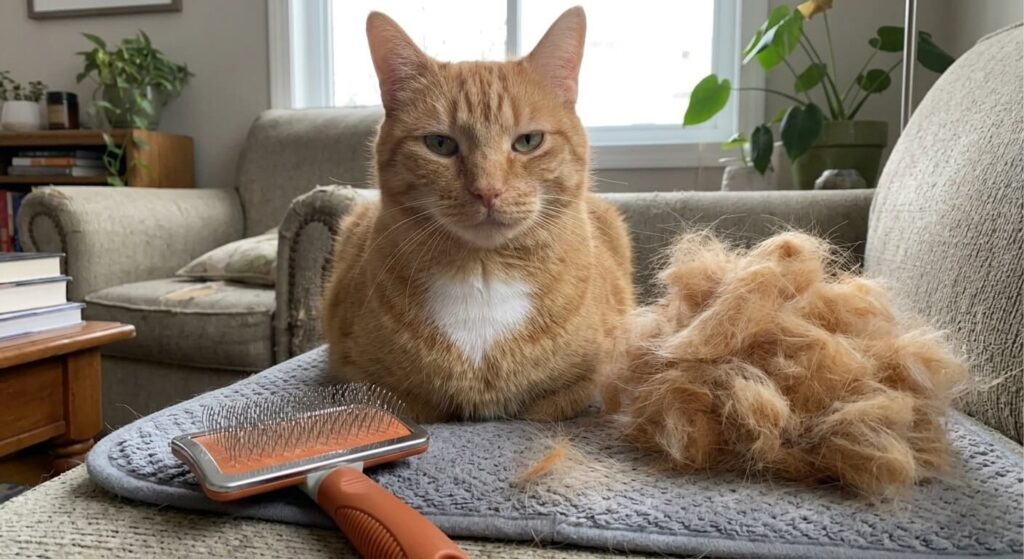
A soft rubber tool such as KONG Cat ZoomGroom or a Four Paws Love Glove may be an easier introduction for a cat that dislikes pin brushes. A suitable slicker may help with loose hair in a longer coat, but it must not scrape skin. FURminator’s cat undercoat tool is for an appropriate shedding coat on dry, unmatted fur, not for every cat. Chris Christensen Baby G has long pins and is not marketed as cat-specific. Painful or tight mats need professional assessment, not harder brushing.
Choose by coat, skin and the cat’s response
Frequency is individual. Coat length, density, seasonal shedding, skin health and tolerance matter more than a universal daily or weekly rule. A short-coated cat may need only occasional help with loose fur; a long or dense coat may need more frequent checking and gentle maintenance. If grooming reveals sores, parasites, redness, pain or new excessive shedding, ask a veterinarian. Our indoor-cat grooming guide covers the broader routine.
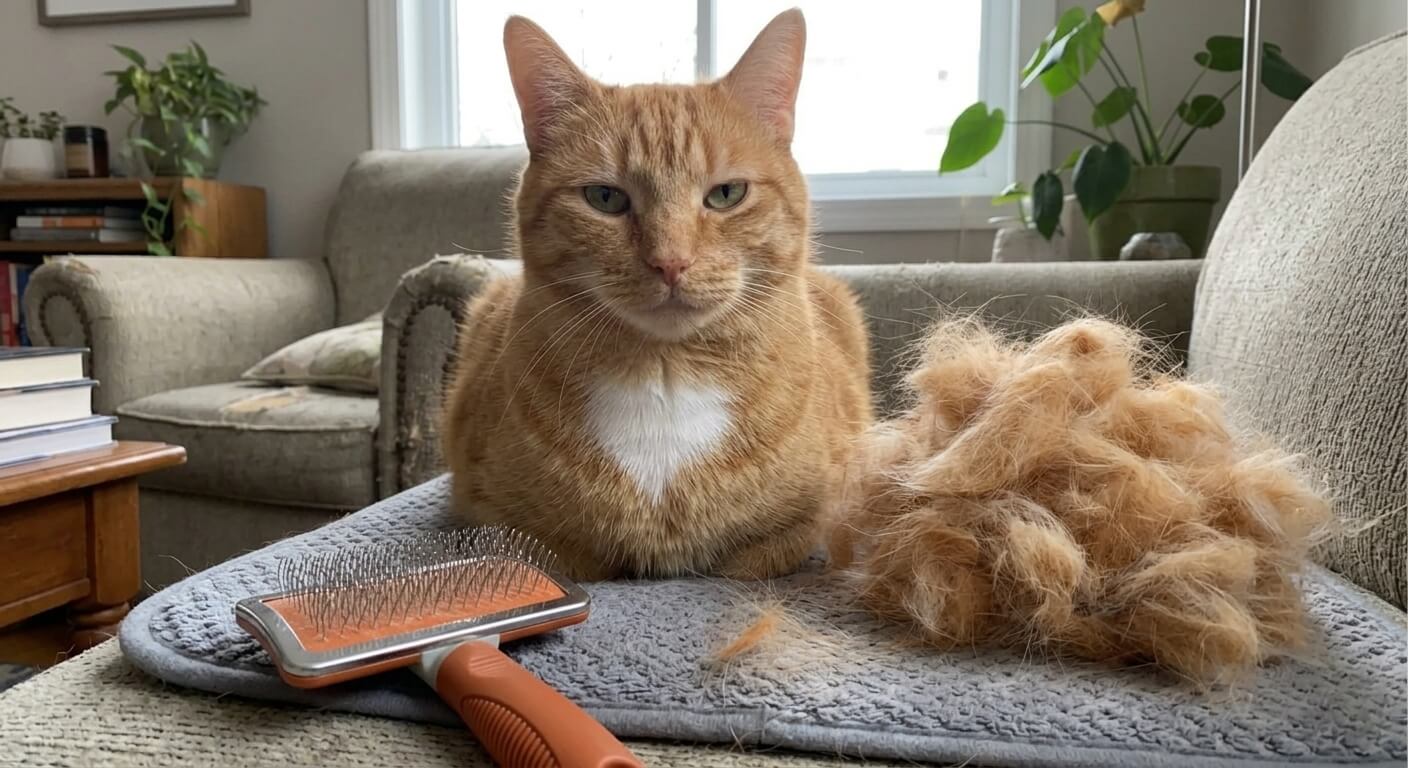
Introduce a tool during a calm moment, allow the cat to sniff it, try a very brief gentle stroke, and stop when the cat pulls away or shows tension. Avoid restraint to complete a preset session. A rubber tool collects surface hair but will not safely remove a tight mat. A slicker or undercoat tool needs light pressure and careful monitoring of the skin.
Five cat-brush options compared
| Product | Tool type | Best use case | Limit |
|---|---|---|---|
| Hertzko Self-Cleaning Slicker Brush | Pin slicker | General loose hair and superficial tangles | Use light pressure; no zero-scratch guarantee |
| KONG Cat ZoomGroom | Rubber/TPE brush | Gentle surface grooming | Not a tight-mat remover |
| FURminator Cat Undercoat deShedding Tool | Undercoat edge | Matched size and coat type on dry, unmatted fur | May irritate skin if pressed or overused |
| Four Paws Love Glove Cat Grooming Mitt | Soft rubber-nub mitt | Cat that prefers a petting-like motion | Limited for dense undercoat or mats |
| Chris Christensen Baby G Slicker | Small-head, long-pin slicker | Careful maintenance of longer or denser coat | Not cat-specific or risk-free |
1. Hertzko Self-Cleaning Slicker Brush
Hertzko markets this self-cleaning brush for cats and dogs with long or short coats. The release mechanism makes hair removal from the brush easier, but it does not make the pins automatically safe for every skin type. Use short, light strokes; do not push through resistance or promise that it cannot scratch. A comb and professional help may be more appropriate for a close mat.
2. KONG Cat ZoomGroom
KONG describes the Cat ZoomGroom as 100% TPE and suitable for dry brushing or bathing. Its flexible surface may be easier for some cats to tolerate than metal pins. Use gentle circular motions if the cat enjoys them, but stop if the skin becomes red or the cat objects. It is not a substitute for assessing painful matting.
3. FURminator cat undercoat deShedding tool
Choose the exact cat size and short- or long-hair version for your animal. The manufacturer’s small short-hair model is listed for cats under 10 lb; another model is needed for a different coat or size. The maker directs users to inspect the skin, remove mats first, work on a dry coat in the direction of hair growth, avoid repeated forceful passes, and stop if irritation appears. We do not treat the manufacturer’s percentage reduction claim as an independent result.
4. Four Paws Love Glove Cat Grooming Mitt
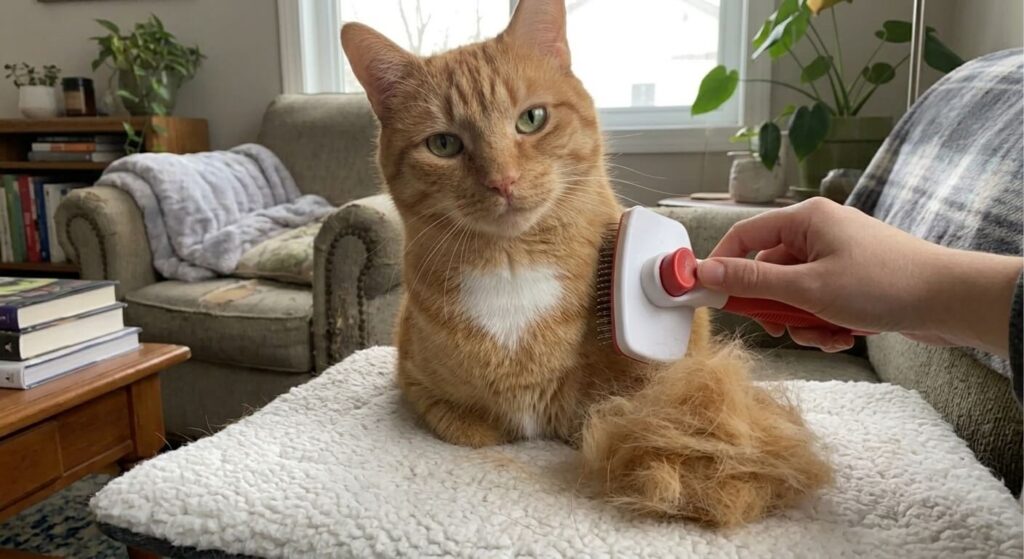
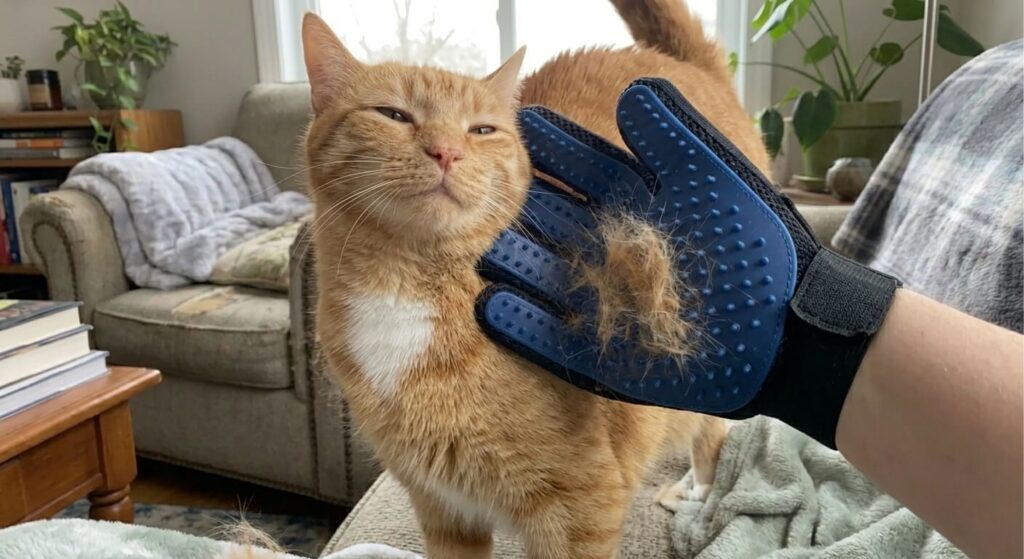
Four Paws lists flexible rubber nubs and an adjustable strap for its cat grooming mitt. This is a distinct, lower-intensity option for surface loose hair and a cat that accepts hand-like grooming. It cannot clear a dense undercoat or painful mat by itself.
5. Chris Christensen Baby G Slicker
The manufacturer lists Baby G within its Big G line with 27 mm pins and a smaller head. It may be useful for careful work through a longer or denser coat in small sections. It is not advertised as a cat-specific brush, has no guarantee of being suitable for sensitive skin, and should not be used forcefully on a mat or irritated area. Owners without experience with long pins should seek technique guidance.
Avoid skin irritation and handle mats safely
- Check the coat and skin first. Do not use a deshedding edge over a sore, inflamed area or a tight mat.
- Brush lightly with the coat. Keep sessions short enough that the cat remains relaxed and can leave.
- Pay extra attention to thinly coated or sensitive areas. Do not repeatedly work the same spot to fill a time target.
- If the cat flinches, skin reddens, or the tool catches, stop and reassess.
- For a mat close to skin, do not cut it out with household scissors or force a slicker through it. VCA warns that skin can be injured; ask a veterinarian or qualified groomer to assess safe removal.
Heavy shedding or recurrent hairballs can have several causes. Brushing may help collect loose hair but is not a medical treatment. See our hairball guide and vomiting-versus-hairball guide for warning signs.
Frequently asked questions
How often should I brush?
There is no fixed schedule for all cats. Check the coat regularly and adjust to coat type, shedding, skin and tolerance. Stop if the cat is distressed.
Can I brush out a tight mat?
Do not force it. A mat near the skin can be painful and difficult to distinguish from skin when cutting. Seek veterinary or qualified grooming help.
What if my cat hates brushes?
Start with a brief, predictable, low-pressure contact and let the cat opt out. A rubber brush or mitt may be easier to introduce. See our guide to cats that resist brushing.