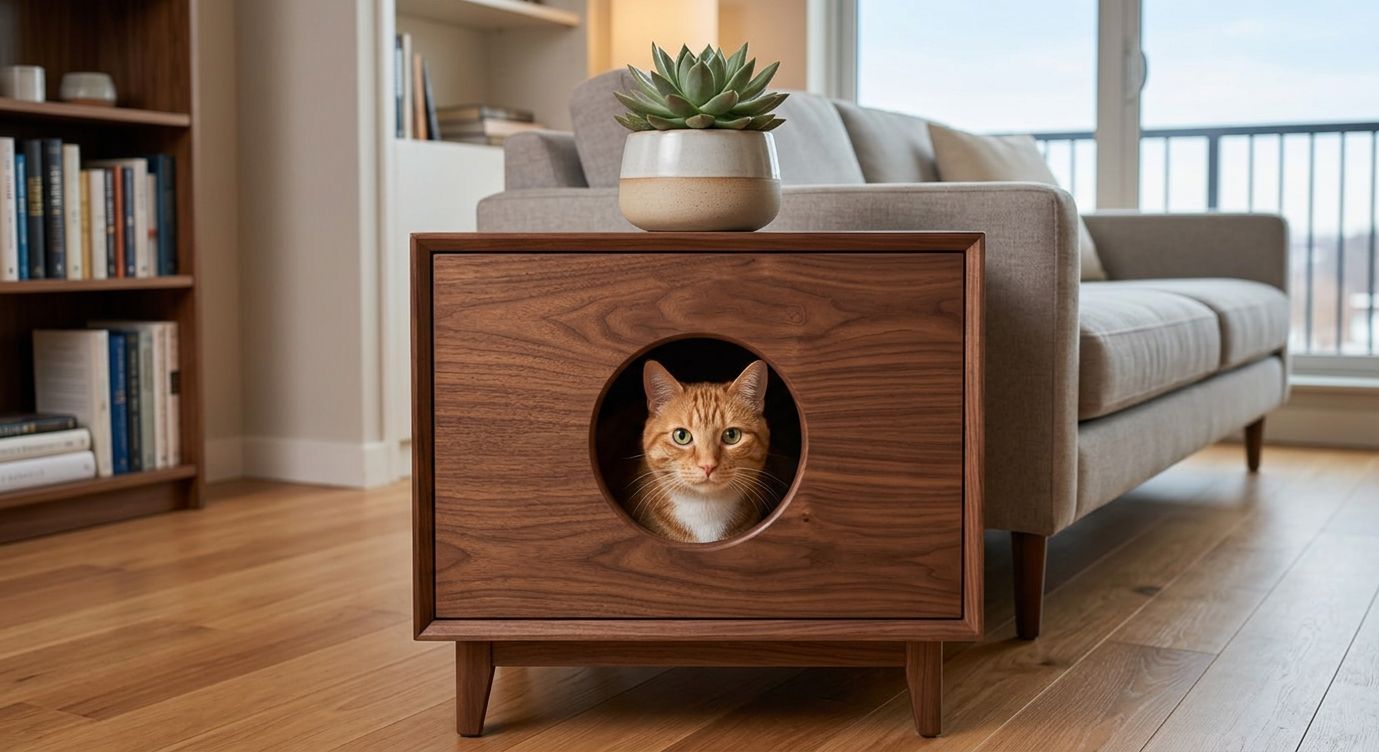
Hide litter box small apartment setups safely by focusing on ventilation, multiple escape routes, and ease of cleaning. A hidden litter box is not about forcing a cat into a human schedule; it is about keeping visual clutter and odor under control while respecting feline biological needs. In a small home, every object does several jobs: the window is entertainment, the couch is territory, the litter area is hygiene infrastructure, and the hallway may be the only sprint lane your cat has. That is why litter box placement and concealment needs a system rather than a single trick.
The biggest mistake is treating visual clutter, odor traps, blocked access, and small-space placement as a personality flaw. Most indoor cats are responding to access, timing, scent, boredom, discomfort, hunger, stress, or learned rewards. When the environment changes, the behavior usually changes too. The goal is to make the healthier option obvious, repeatable, and low-friction for both you and your cat.
For apartment cats, the practical question is not “What would be perfect?” It is “What can I repeat on a normal weekday when I am tired, the floor space is limited, and the neighbors can hear every loud crash?” A good plan survives real life: work schedules, tiny kitchens, rental rules, shared walls, and the fact that cats notice patterns faster than we do.
Use this guide as a decision framework. Start with the lowest-risk change, observe your cat’s response for a few days, and then adjust. If the issue involves pain, appetite change, vomiting, urinary signs, sudden aggression, severe fear, or major behavior change, treat it as a veterinary question before treating it as a training problem.
Quick Answer
Hide litter box small apartment works best when you combine one immediate environmental fix with a repeatable routine. For most apartment cats, that means removing the reward for the unwanted behavior, adding a better legal alternative, and keeping the timing consistent long enough for the new pattern to become predictable.
Start with three questions: what is the cat getting from this behavior, what safe replacement can provide the same benefit, and what part of the apartment setup is making the unwanted behavior too easy? Once you answer those, the solution becomes much less mysterious.
A good first-week plan is simple: choose one main fix, make it visible and easy for your cat to use, remove competing rewards, and track the behavior for seven days. Do not change five things at once if you want to know what actually helped.
Important Apartment Safety Note
Safety comes before convenience. Avoid punishment, fear-based tools, essential oils, unsafe adhesives, unstable furniture, loose strings, small chewable parts, and any setup that blocks access to food, water, litter, hiding, or rest. Apartment solutions should make your cat’s environment clearer and safer, not more stressful or harder to navigate.
Table of Contents
What Makes a Hidden Litter Box Safe?
A hidden litter box should solve the human problem without creating a cat problem. The goal is not just to make the box disappear. The setup still needs airflow, easy access, enough turning space, and a cleaning routine you can actually maintain.
A safe hidden litter box should have:
- at least one easy entrance
- enough space for the cat to turn around
- ventilation so odor and moisture do not build up
- a surface that is easy to wipe or wash
- enough light that the cat does not feel trapped
- a location away from food and water
- quick access for daily scooping
If the hidden setup makes the box harder to enter, harder to clean, or more likely to trap odor, it may look better for humans but work worse for your cat.
A good hidden setup should pass a simple test: your cat should be able to enter, turn, dig, eliminate, cover, and leave without feeling trapped. If the space is so tight that your cat has to crouch awkwardly or back out of the opening, it is too small.
Ventilation is just as important as appearance. A cabinet with no airflow can trap ammonia smell, moisture, and litter dust. That makes the area unpleasant for your cat and harder for you to keep clean.
Before choosing any hidden setup, check four things:
- Can your cat enter without squeezing?
- Can your cat turn around inside?
- Can you scoop without taking the entire setup apart?
- Can air move through the space?
If the answer to any of these is no, choose a more open design.
Decision Table: Best Hidden Litter Box Setup by Space
| Apartment space | Best hidden option | Watch out for |
|---|---|---|
| Studio apartment | Ventilated furniture or open visual shield | Odor near sleeping area |
| Small bathroom | Corner screen or shelf-style setup | Humidity and poor airflow |
| Entryway | Bench with side access | Noise, foot traffic, and door stress |
| Closet | Modified door or curtain setup | Trapped odor and difficult cleaning |
| Laundry nook | Open side-access box | Machine noise and detergent storage |
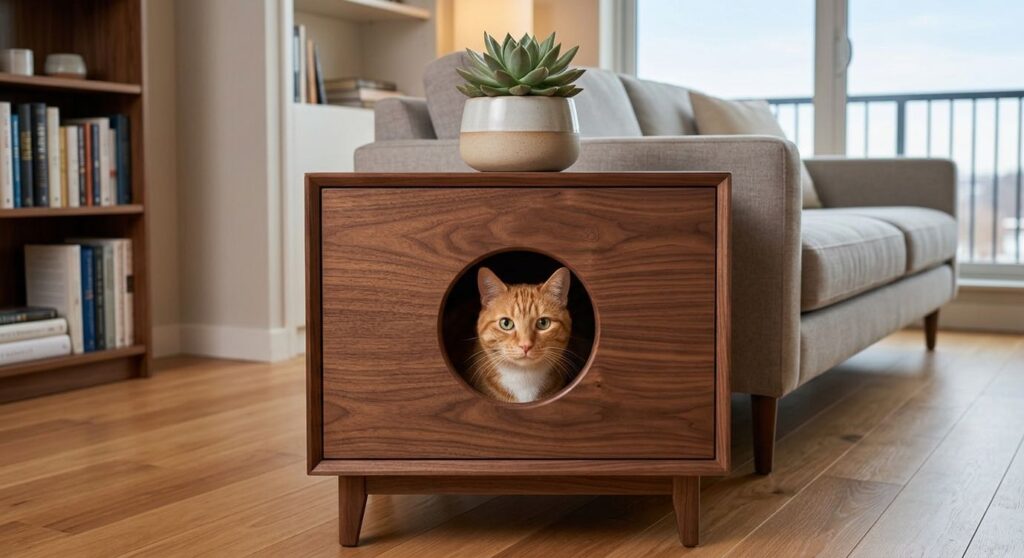
| Living room | Side table or plant stand camouflage | Too much enclosure or poor ventilation |
Use the table as a starting point, not a fixed rule. The best hidden litter box setup depends on your cat’s confidence, size, age, mobility, and litter habits.
A shy cat may prefer a quieter corner with partial visual shielding. A senior cat may need an open, low-entry box instead of furniture. A high-peeing cat may need taller sides and washable walls more than a decorative cabinet.
When in doubt, choose the setup that changes the cat’s experience the least. Visual shielding is usually safer than full enclosure because it hides the box from humans without making the box feel new, dark, or cramped to your cat.
7 Ways to Hide a Litter Box in a Small Apartment
Idea 1: Ventilated Litter Box Furniture
Litter box furniture is one of the easiest ways to hide a box in a living room, hallway, or bedroom corner. It can look like a bench, cabinet, side table, or storage unit while keeping the litter area visually contained.
Best for:
- studio apartments
- living rooms
- renters who cannot modify walls or doors
- owners who want the box out of direct view
Watch out for:
- poor ventilation
- furniture that is too small
- hard-to-clean interiors
- entrances that are awkward for large or senior cats
Choose furniture with side vents, a wide entrance, and enough interior space for your cat to turn comfortably. Avoid tight cabinets that trap ammonia smell. If you use furniture, scoop daily and wipe the interior regularly.
When shopping for litter box furniture, measure the inside space, not just the outside dimensions. Many cabinets look large but have a small usable interior once the walls, entrance panel, and hinges are included.
Look for:
- side vents or open slats
- a wide entrance
- enough room for a full-size box
- a surface you can wipe clean
- easy front or top access for scooping
- space for a small mat or litter-catching area
Avoid furniture that requires you to pull the whole box through a narrow opening every time you scoop. If cleaning feels annoying, the setup will fail even if it looks good.
Idea 2: Bathroom Corner With a Screen or Shelf
A bathroom corner can work well because it is usually easy to clean and separated from food areas. Instead of fully enclosing the box, use a small screen, shelf, or visual divider to make the area less noticeable.
Best for:
- small bathrooms
- tile floors
- cats who prefer open boxes
- owners who want easy cleaning access
Watch out for:
- shower humidity
- poor ventilation
- blocked access when the door is closed
- cleaning products stored too close to the box
Keep the box away from strong cleaner smells and make sure your cat can access it at all times. If the bathroom door is often closed, this setup may fail.
Bathroom setups work best when the room stays dry and accessible. If the bathroom door is often closed, use a door holder or choose another location. A perfect hidden corner does not help if your cat cannot reach it when needed.
Humidity is the main risk. Steam from showers can make litter smell stale faster and may weaken some clumping litters. If the litter box is in the bathroom, keep the area ventilated and avoid placing the box directly beside the shower or tub.
A simple open box plus a low screen is often better than a fully enclosed cabinet in a bathroom.
Idea 3: Entryway Bench With Side Access
An entryway bench can hide the box while giving you storage or seating. Side access is usually better than front access because it lets the cat enter without stepping into the busiest walking path.
Best for:
- apartments with a small entry zone
- cats who are not nervous around doors
- owners who want a furniture-style solution
Watch out for:
- door noise
- guests walking past the box
- litter tracking into shoes
- cats who feel rushed or exposed
Use a large litter mat inside or just outside the bench. If your cat is easily startled by the front door, choose a quieter location.
Entryway setups should be used carefully because the front door can be stressful for some cats. Doorbells, guests, shoes, bags, and hallway noise may make the area feel less secure.
This option works best for confident cats and quieter entryways. If your cat is shy, easily startled, or likely to bolt toward the door, choose a calmer location.
Place the entrance on the side, not directly facing the front door. This gives your cat a more protected path in and out.
Idea 4: Closet Setup With the Door Modified Safely
A closet can hide a litter box well, but it is also one of the easiest setups to get wrong. A closed closet traps odor and makes the box less inviting.
Best for:
- closets with airflow
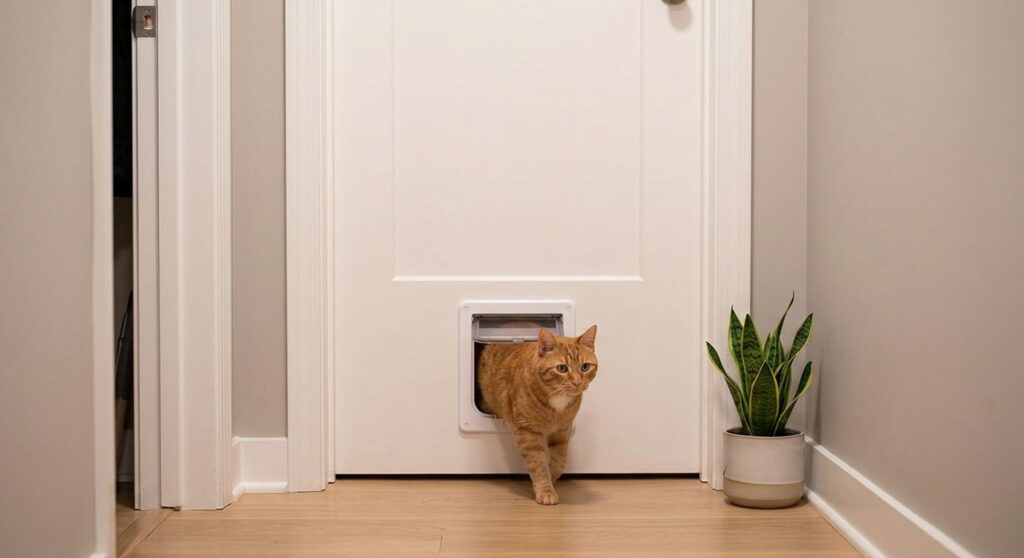
- renters who can use a curtain instead of a door
- cats who already like private spaces
Watch out for:
- sealed doors
- poor light
- stored chemicals
- cramped access
- forgetting to scoop because the box is hidden
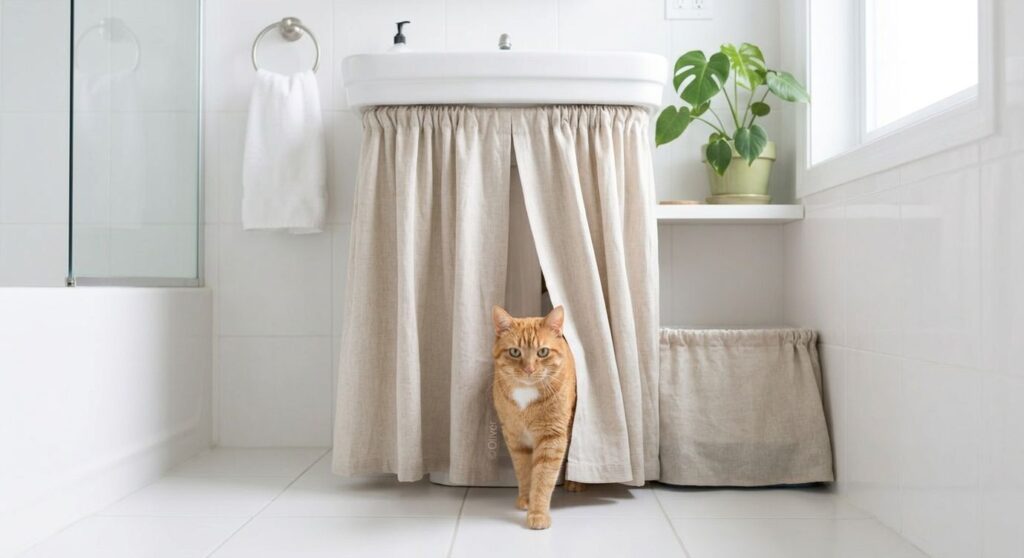
If you use a closet, keep the entrance open with a curtain, pet door, or safe door holder. Do not store detergents, bleach, or scented products right beside the litter box.
Closet setups need a maintenance plan. Because the box is out of sight, it is easier to forget daily scooping. Set a reminder or keep the scoop and waste bags nearby so the routine stays visible.
Remove anything scented, dusty, toxic, or chewable from the closet. Detergents, dryer sheets, air fresheners, plastic bags, and small stored items do not belong right beside the litter box.
If the closet smells when you open it, the setup needs more airflow or more frequent cleaning.
Idea 5: Under-Sink or Laundry Nook Setup
An under-sink area or laundry nook can work if it stays dry, ventilated, and quiet. This setup is best when the box remains easy to pull out for cleaning.
Best for:
- utility corners
- washable floors
- small apartments with limited furniture space
Watch out for:
- plumbing leaks
- machine noise
- cleaning chemicals
- tight spaces that are difficult to scoop
Keep the box away from detergent, dryer sheets, and strong fragrances. If the laundry machines scare your cat, choose a calmer location.
Laundry and utility spaces can be practical, but they should not feel unpredictable. Sudden washer spin cycles, dryer vibration, or stored cleaning products can make some cats avoid the area.
Keep the litter box away from detergent spills and strong fragrance. If you store cleaning products in the same area, keep them sealed and physically separated from the box.
This setup is best for cats who are already comfortable with household noise.
Idea 6: Plant Stand or Side Table Camouflage
Sometimes the best way to hide a litter box is not to enclose it. A plant stand, side table, open shelf, or decorative screen can block the view while keeping the box open and breathable.
Best for:
- cats who dislike covered boxes
- apartments with limited airflow
- owners who want a low-risk change
- senior cats who need easy entry
Watch out for:
- toxic plants
- unstable decor
- blocking the cat’s exit path
- making the area too cluttered
This is often the safest first option because it improves appearance without changing the litter box experience too much.
Only use cat-safe plants near the litter area. Avoid lilies and other toxic plants completely. Even if the plant is placed for decoration, curious cats may chew leaves or dig in soil.
This style works best when the box remains open and easy to access. The goal is visual softness, not total concealment. A side table, open shelf, or screen can make the area feel intentional without trapping odor.
Idea 7: Open Box With Visual Shielding
An open box with smart placement can be better than a hidden cabinet. Place the box beside a wall, behind a low divider, or in a low-traffic corner where it is not the first thing visitors see.
Best for:
- cats who refuse enclosed boxes
- high-peeing cats
- senior cats
- owners who prioritize function over furniture
Watch out for:
- litter tracking
- visible mess
- poor mat placement
- placing the box too close to food or water
If your cat already uses the open box reliably, do not rush to replace it with furniture. A visual shield may solve the human problem without risking box avoidance.
This is often the best option for cats who dislike covered boxes. A visual shield can be as simple as a folding screen, low shelf, open side table, or strategic corner placement.
The advantage is that nothing changes about the box itself. Your cat still has the same entry, same smell profile, same airflow, and same ability to escape. For sensitive cats, that can matter more than making the box disappear completely.
If you are unsure which option to try first, start here.
What Not to Do When Hiding a Litter Box
Do not hide the box so well that you forget to clean it. A hidden box still needs daily scooping and regular washing.
Avoid:
- sealed cabinets with no ventilation
- tiny furniture that prevents turning
- entrances that are too small
- boxes placed beside loud appliances
- scented liners or sprays inside enclosures
- litter areas near food and water
- moving the box suddenly without transition
The biggest mistake is solving the visual problem while creating odor, access, or avoidance problems.
Small Apartment Layout Examples
Studio Apartment
Use a ventilated furniture piece, open visual shield, or side-table camouflage. Keep the box away from the bed if possible, and use a large mat to control tracking.
One-Bedroom Apartment
A bathroom, hallway nook, or entry bench can work. Choose the location that is easiest to scoop daily, not only the one that hides the box best.
Multi-Cat Apartment
Avoid forcing multiple cats into one hidden box. Multi-cat homes need more access, not less. If you use hidden furniture, consider more than one box location.
How to Control Odor in a Hidden Litter Box
Hidden boxes need stronger odor management because airflow is often reduced. Scoop daily, use enough litter depth, wash the box on schedule, and avoid sealed enclosures.
For the full small-space routine, see our litter box odor cleaning guide.
If odor builds up inside furniture, the solution is usually better ventilation and cleaning, not stronger fragrance. Scented sprays can make the area less comfortable for your cat.
Hidden litter boxes often smell worse when the enclosure is too tight, the entrance is too small, or the interior surface absorbs odor. If the smell builds inside the furniture, your cat notices it before you do.
To reduce odor:
- scoop daily
- use enough litter depth
- keep the entrance open and breathable
- wipe the interior surfaces weekly
- avoid scented sprays inside the enclosure
- clean any urine edges with enzyme cleaner
- replace old plastic boxes that hold smell
Do not rely on air fresheners. They may make the cabinet smell better to humans, but they do not remove the waste source and may bother your cat.
How to Transition Your Cat to the New Setup
Do not move the litter box suddenly if your cat is used to the old location. Place the new setup near the current box first, and let your cat investigate it.
A simple transition:
- keep the old box available at first
- place the new hidden setup nearby
- use the same litter your cat already accepts
- avoid adding strong scents
- reward calm exploration
- wait until your cat uses the new setup reliably
If your cat avoids the hidden setup, go back one step. The goal is a cleaner apartment, not a box your cat refuses to use.
A successful transition should feel boring. Your cat investigates the new setup, recognizes the same litter smell, and gradually accepts the new location or enclosure.
Watch for warning signs:
- your cat sniffs but will not enter
- your cat enters but leaves quickly
- your cat eliminates beside the setup
- your cat waits too long to use the box
- your cat starts using another hidden area instead
If any of these happen, make the setup more open. Remove the door, widen the entrance, move the box closer to the old location, or return to the previous box style and try visual shielding first.
Common Mistakes to Avoid
The biggest mistake is choosing the prettiest hiding spot instead of the safest litter box setup. A cabinet, bench, or screen only works if your cat can enter easily, turn around, dig, cover, and leave without feeling trapped.
Another common mistake is using a sealed enclosure with poor airflow. A hidden box that traps odor will quickly become unpleasant for your cat, even if it looks tidy from the outside. If the enclosure smells when you open it, it needs more ventilation or a simpler design.
Do not make the entrance too small. Large cats, senior cats, and nervous cats may avoid a narrow opening. If your cat hesitates at the entrance or backs out, the setup is probably too cramped or too dark.
Avoid moving the litter box suddenly. Cats rely on familiar bathroom locations, and a sudden move into furniture or a closet can cause confusion. Keep the old box available during the transition, and move gradually if the new location is far away.
Do not use scented liners, sprays, or air fresheners inside a hidden box. Fragrance can build up in enclosed spaces and may make the box less comfortable for your cat. Fix odor with scooping, ventilation, litter depth, and cleaning instead.
Finally, do not hide the box so well that you forget to maintain it. Hidden litter boxes still need daily scooping, mat cleaning, and regular washing. A setup that is hard to clean will not stay successful for long.
Hidden Litter Box Checklist
Before you commit to a hidden setup, check the basics.
Cat access:
- entrance is wide enough
- cat can turn around inside
- senior cats can enter comfortably
- no scary noise near the box
Odor control:
- enclosure has airflow
- box can be scooped daily
- interior surfaces are wipeable
- no scented sprays or liners are needed
Apartment fit:
- setup does not block a walkway
- litter mat fits near the exit
- box is not beside food or water
- cleaning supplies are not stored against the box
Renter safety:
- no drilling unless allowed
- no permanent door cuts without permission
- no moisture damage to floors or cabinets
- setup can be moved for inspection or cleaning
If the hidden setup passes this checklist, it is much more likely to work long term.
Related Apartment Guides
A hidden box still needs odor control that works in a small apartment. Read our litter box odor control apartment.
If litter follows your cat out of the hidden area, fix tracking next. Read our stop cat litter tracking apartment.
For kickers and stand-up pee cats, a high-sided box may matter more than furniture. Read our best high-sided litter box.
If your cat avoids the hidden box, compare the behavior with our litter avoidance guide. Read our why cats pee outside the litter box.
FAQ
1. Are enclosed litter boxes safe in small apartments?
They can be safe if they are large enough, ventilated, and easy to clean. Avoid sealed cabinets or tiny boxes that trap odor and make your cat feel cramped.
2. Will my cat stop using the box if I move it into furniture?
Some cats may hesitate if the change is sudden. Keep the old setup available during the transition and use the same litter at first. If your cat avoids the furniture setup, slow down and make the entrance easier.
3. How do I keep a hidden litter box from smelling?
Scoop daily, use enough litter depth, clean the interior surfaces, and make sure the setup has airflow. Do not rely on scented sprays inside a closed cabinet.
4. What is the safest way to hide a litter box for a senior cat?
Use an open or low-entry box with visual shielding instead of a tight enclosure. Senior cats may struggle with high entries, top-entry boxes, or narrow furniture openings.
5. Can I put a litter box in a closet?
Yes, but only if the cat has constant access and the closet is ventilated. A curtain, door holder, or pet door is safer than a fully closed door.
6. Can I hide a litter box without buying furniture?
Yes. Use a screen, side table, shelf placement, plant-safe visual divider, or strategic corner layout. Often, visual shielding is safer than a fully enclosed cabinet.
7. When should I call a veterinarian?
Call your veterinarian if your cat suddenly avoids the litter box, urinates outside the box, strains, cries in the box, produces very small urine spots, or shows blood in urine. Do not assume the hidden setup is the only cause.
Final Thoughts
The best way to hide litter box small apartment setups is to balance appearance with cat comfort. A hidden box should still be easy to enter, easy to clean, and well ventilated.
If your cat already uses the current box reliably, make changes slowly. Start with visual shielding or better placement before switching to a fully enclosed furniture setup.
A litter box that looks beautiful but traps odor or causes avoidance is not a good apartment solution. The best setup is the one your cat uses consistently and you can clean without friction.
References
Ellis, S.L.H. et al. (2013). AAFP and ISFM Feline Environmental Needs Guidelines. Journal of Feline Medicine and Surgery, 15(3), 219–230. | Neilson, J.C. (2004).
Feline house soiling: Elimination and marking behaviors. Veterinary Clinics of North America: Small Animal Practice, 33(2). | Sung, W. & Crowell-Davis, S.L. (2006).
Elimination behavior patterns of domestic cats in homes with and without other cats. Journal of the American Veterinary Medical Association.
AAFP and ISFM feline environmental needs guidelines
-300x169.png)
-300x169.png)
-300x169.png)