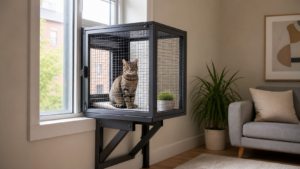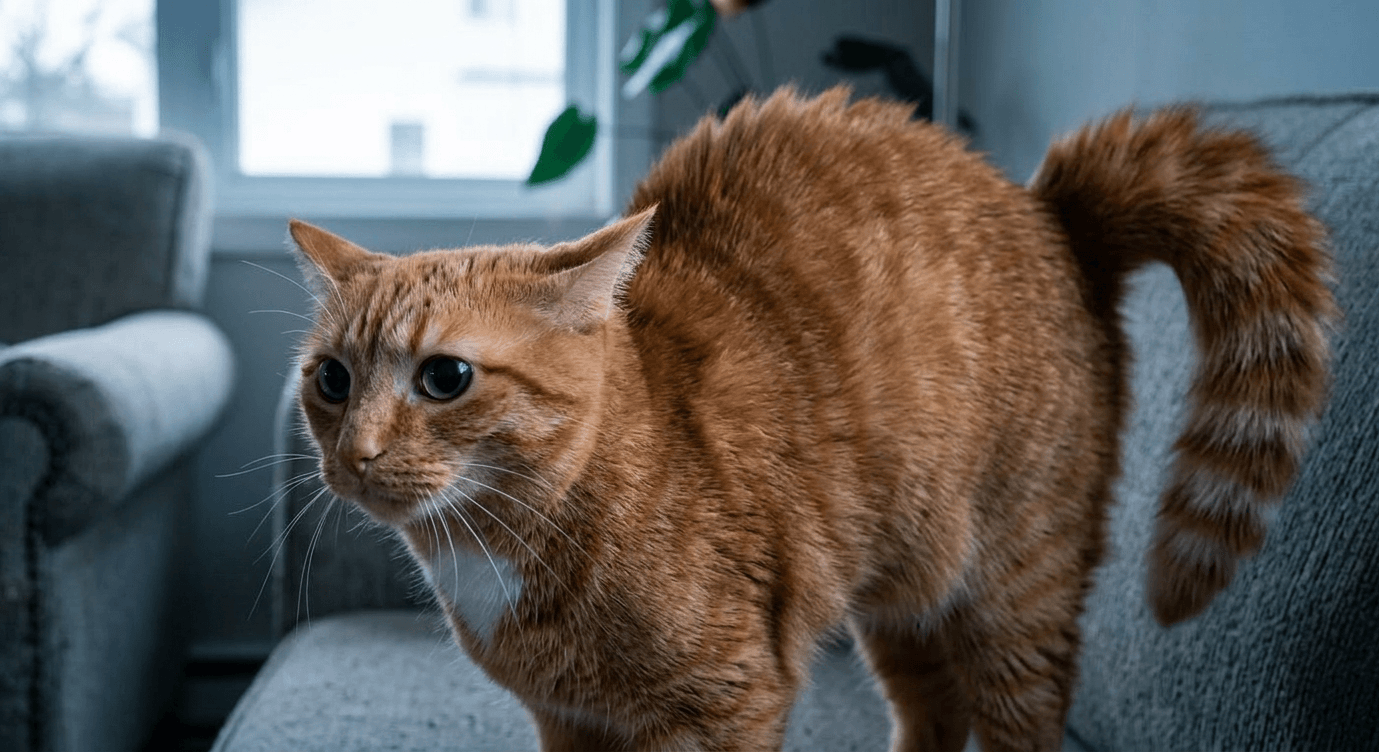
Indoor cat suddenly aggressive behavior should be treated as a warning sign, not as a personality problem. Sudden aggression can come from pain, fear, redirected frustration, overstimulation, stress, resource pressure, or a medical change that is not obvious from the outside.
The safest response is to create distance, reduce stimulation, avoid punishment, and look for what changed before the aggression happened. Do not grab, chase, yell at, or force contact with an aggressive cat. If the behavior is new, intense, repeated, or paired with appetite, litter box, mobility, breathing, or personality changes, contact your veterinarian.
This guide explains the most common reasons an indoor cat suddenly becomes aggressive and what to do next without making the situation more dangerous.
Quick Answer
An indoor cat may suddenly become aggressive because of pain, fear, redirected aggression, overstimulation, stress, or conflict over resources. The first step is safety: stop interaction, give the cat space, remove people and other pets from the immediate area, and avoid punishment.
If the aggression is new, severe, repeated, or paired with hiding, appetite changes, weight loss, vomiting, litter box changes, limping, vocalizing, confusion, or reduced mobility, schedule a veterinary check. Sudden aggression can be one of the first visible signs that a cat is uncomfortable or medically unwell.
Sudden aggression should always be handled carefully, but it also helps to compare it with other indoor cat behavior patterns. Our indoor cat behavior guide can help you decide which behavior path fits best.
Safety Note
This guide is for educational purposes only and does not replace veterinary advice.
If your cat has a diagnosed medical condition, sudden symptoms, appetite changes, weight loss, vomiting, urination problems, breathing difficulty, severe pain, poisoning risk, or rapid decline, contact your veterinarian before relying on a product or home-care change.
Indoor Cat Expert articles are created by the Indoor Cat Expert Editorial Team and follow our Editorial Policy.
Table of Contents
Why an Indoor Cat May Suddenly Become Aggressive
Sudden aggression in an indoor cat usually means something changed. The change may be obvious, such as a new pet, loud noise, visitor, move, or stressful handling. It may also be hidden, such as dental pain, arthritis, urinary discomfort, nausea, injury, vision changes, or another medical problem.
Cats rarely become aggressive “for no reason.” They may become aggressive because they feel unsafe, painful, trapped, overstimulated, blocked from a resource, or unable to reach the real trigger. The behavior may look sudden to the owner, but the cat may have been showing quieter signs first: tail flicking, hiding, avoiding touch, staring, freezing, growling, dilated pupils, flattened ears, reduced play, or changes in appetite and litter box habits.
The first job is not to decide whether the cat is “bad.” The first job is to prevent injury and gather information. What happened right before the aggression? Who was nearby? Was the cat touched? Was there noise outside? Was another animal visible? Did the cat seem painful, startled, trapped, or overexcited?
The answer guides the next step.
4 Serious Causes of Sudden Aggression
Cause 1: Pain or Medical Discomfort
Pain is one of the most important causes to consider when an indoor cat suddenly becomes aggressive. A cat who feels pain may bite, swat, growl, hiss, or avoid contact when touched. The aggression may happen during brushing, picking up, petting, nail trimming, play, or even normal movement through the home.
Possible pain sources include:
- dental disease
- arthritis
- injury
- abdominal pain
- urinary discomfort
- constipation
- ear pain
- skin irritation
- wounds
- nausea
- eye or vision problems
- neurological changes
A cat with pain may not limp or cry. Many cats hide discomfort. Instead, they may become irritable, avoid stairs, resist being picked up, stop jumping, sleep more, hide, groom less, or react aggressively when touched in a specific area.
Pain-related aggression often appears when:
- the cat is picked up
- the cat is touched near the back, hips, belly, mouth, or tail
- the cat is brushed
- the cat is moved from a resting place
- the cat is startled while sleeping
- a child or another pet approaches too closely
Do not keep testing the sore area. If your cat reacts aggressively when touched, stop handling and schedule a veterinary check. Repeatedly touching the area can make the cat more defensive and may increase the risk of bites.
If your cat is senior, overweight, recently injured, suddenly hiding, eating less, drinking more, straining in the litter box, or moving differently, treat aggression as a possible health sign first. For prevention planning, connect this with your annual vet visit indoor cat guide.
Cause 2: Fear, Startle, or Defensive Aggression
A frightened cat may become aggressive if they feel trapped or unable to escape. Defensive aggression is not the cat trying to dominate the home. It is the cat trying to create distance.
Common triggers include:
- loud noises
- visitors
- children moving quickly
- being grabbed
- being cornered
- unfamiliar smells
- vacuum cleaners
- construction sounds
- moving furniture
- being forced into a carrier
- being approached while hiding
- a new animal in the home
A fearful cat may show warning signs before aggression: crouching, dilated pupils, ears back, tail tucked, hissing, growling, hiding, freezing, or trying to escape. If the person keeps approaching, the cat may swat or bite.
The safest response is to back away. Do not reach into a hiding spot. Do not drag the cat out. Do not block the exit. Give the cat a quiet room, dim lighting, water, litter access, and time.
Fearful cats recover better when they are allowed to choose distance. Once calm, you can rebuild confidence gradually with predictable routines, treats, soft voice, and no forced contact.
Cause 3: Redirected Aggression
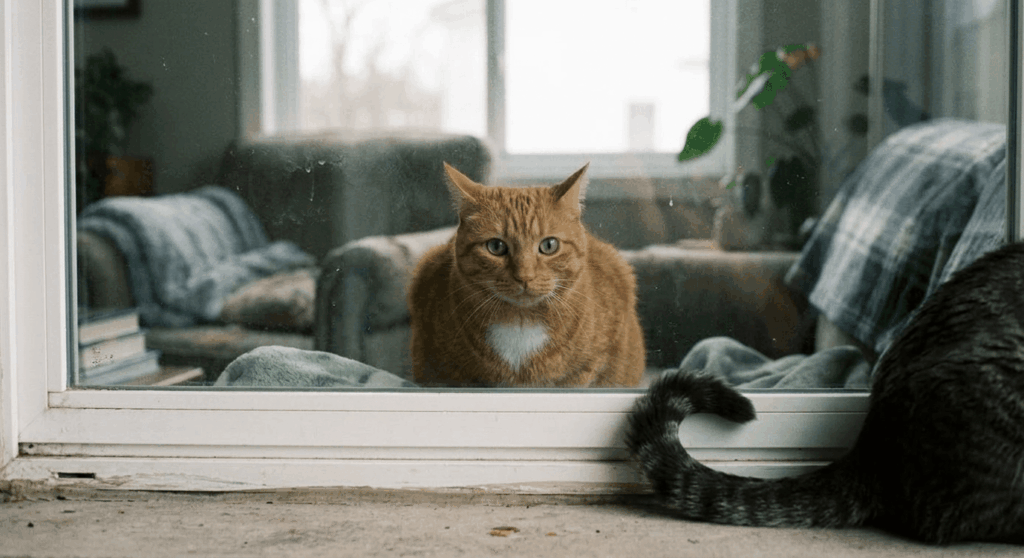
Redirected aggression happens when a cat becomes highly aroused by one trigger but attacks a different target. For example, your cat may see an unfamiliar cat outside the window, hear a loud animal, smell another pet, or become startled by a noise. If a person or another pet approaches at that moment, the cat may bite or attack them instead.
This can be confusing because the target did not cause the problem. The cat’s nervous system is already activated, and the nearest moving person or animal becomes the outlet.
Common redirected aggression triggers include:
- outdoor cats visible through windows
- birds or wildlife outside
- neighborhood animals near doors
- loud hallway noise
- another pet fighting
- unfamiliar animal smells
- vet visit smells on another cat
- sudden loud sounds
Redirected aggression can be intense. Do not try to pick up or comfort the cat while they are highly aroused. Give space. Separate pets safely. Block the outside view if needed. Let the cat calm down before reintroducing interaction.
If two cats in the home fight after redirected aggression, do not immediately place them together again. They may need temporary separation and a gradual reintroduction, especially if one cat now associates the other with the scary event.
Cause 4: Stress, Overstimulation, or Resource Pressure
Some sudden aggression comes from stress that has been building. Indoor cats may live in a small space where food, water, litter boxes, resting spots, doorways, windows, and owner attention are all limited. If the cat feels blocked or pressured, aggression may appear.
Stress triggers include:
- too few litter boxes
- food competition
- another cat guarding a hallway
- lack of safe resting places
- no vertical space
- noisy home routines
- unpredictable handling
- too much petting
- rough play
- boredom
- lack of escape routes
- a new pet or person
- conflict with another cat
Overstimulation is also common. A cat may enjoy petting at first, then suddenly bite when the touch becomes too much. Warning signs can include tail flicking, skin rippling, ears turning sideways, head turning toward the hand, tense body, paw movement, or sudden stillness.
Stop before the cat reaches the bite point. Shorter petting sessions are better than pushing past warning signs.
In multi-cat homes, resource pressure can look subtle. One cat may block another from food, litter, windows, doorways, or the owner. The victim may become defensive or the guarding cat may become more aggressive. For more detail, see our guide to resource guarding in multi-cat homes.
If aggression appears with hiding, overgrooming, vocalizing, appetite change, or litter box changes, also review the signs your indoor cat is stressed.
A sudden increase in clinginess, vocalizing, or irritability can be part of a wider behavior change; review our cat attention seeking guide and contact your veterinarian when the change is new or accompanied by physical signs.
If the behavior happens mainly during rough play, ankle attacks, or biting hands during play sessions, compare it with our guide on why cats bite during play or overstimulation.
Aggression Trigger Decision Table
| What Happened First | Possible Cause | Best First Step | Watch Out For |
|---|---|---|---|
| Cat was touched, picked up, or brushed | Pain or body sensitivity | Stop handling and schedule a vet check | Limping, hiding, appetite change |
| Cat saw another cat outside | Redirected aggression | Separate pets and block the view temporarily | Attacking another pet or person |
| Cat was petted for a while, then bit | Overstimulation | Stop earlier and watch body language | Tail flicking, skin twitching, ears back |
| New pet, visitor, move, or noise | Fear or stress | Create a quiet safe room | Hiding, spraying, appetite change |
| Food, litter, doorway, or resting spot conflict | Resource pressure | Add separate resources | One cat blocking another |
| Sudden aggression in senior cat | Pain, confusion, or illness | Call the veterinarian | Night vocalizing, weight loss, stiffness |
Apartment Aggression Trigger Map
When an indoor cat suddenly becomes aggressive, the trigger is often easier to understand when you map the apartment instead of only judging the cat. Small homes compress everything: windows, food, litter boxes, human movement, other pets, hallway noise, and resting zones.
Use this map to narrow the likely trigger.
| Location | Possible Trigger | What to Check First |
|---|---|---|
| Window or balcony door | Outdoor cat, bird, dog, delivery noise | Look for redirected aggression |
| Food area | Hunger, food guarding, routine pressure | Check meal timing and other pets |
| Litter box area | Blocked access or pain | Watch posture, frequency, and avoidance |
| Bed or sofa | Overstimulation or sleep interruption | Stop petting earlier and give space |
| Hallway | Startle, crowding, trapped feeling | Add escape routes and avoid cornering |
| Doorway | Territorial pressure or sudden sound | Reduce traffic and separate pets |
| Work desk | Attention conflict or frustration | Add planned play before work sessions |
| Multi-cat route | Resource guarding | Check whether one cat controls access |
The location matters because aggression is rarely random. A cat who bites only near a window may be reacting to outdoor triggers. A cat who swats near the litter box may be guarding space or feeling pain. A cat who attacks after petting may be overstimulated, not “mean.”
If the pattern involves another cat blocking food, litter, or resting spaces, compare it with our resource guarding in multi-cat homes guide.
What to Do in the First 24 Hours
The first 24 hours after sudden aggression should be calm and practical. Do not try to “fix” everything immediately. Your goal is safety, distance, observation, and deciding whether veterinary care is needed.
1. Create Safe Distance
Stop the interaction. Move slowly. Do not stare, chase, grab, or corner the cat. If possible, let the cat move away on their own.
If the cat is blocking a doorway or acting highly aroused, give them time. Use a thick blanket, large piece of cardboard, or closed door only if you need to safely create separation. Avoid direct handling.
2. Separate Pets Temporarily
If another pet was involved, separate them. Do not let them “work it out.” Cats can develop lasting fear after a fight.
Give each cat food, water, litter, and a resting place. Reintroduce them only after both are calm. If aggression was intense, repeated, or directed at another cat, take reintroduction slowly.
3. Remove the Trigger
If the trigger was visible, reduce access. Close blinds if an outdoor cat caused arousal. Stop petting if overstimulation caused the bite. Put away food if competition caused conflict. Give visitors instructions or create a quiet room.
4. Write Down What Happened
Record the timeline while it is fresh:
- time of day
- location
- who was present
- what happened right before
- body language
- whether the cat was touched
- whether another animal was visible
- whether food, litter, or resting spots were involved
- whether the cat has eaten and used the litter box normally
This information helps your veterinarian or behavior professional identify the pattern.
5. Check for Medical Red Flags
Look for changes in appetite, thirst, litter box use, walking, jumping, grooming, breathing, hiding, vomiting, stool, or urination. Do not force a full body inspection if the cat is defensive.
If you suspect pain, illness, or injury, call your veterinarian.
What Not to Do
Avoid anything that increases fear or arousal.
Do not:
- yell
- hit
- chase
- spray water
- corner the cat
- force petting
- force pickup
- punish after the event
- lock the cat away without resources
- let pets fight it out
- test the trigger repeatedly
- use your hands as toys
- ignore sudden aggression in a senior cat
Punishment may stop the behavior in the moment, but it often increases fear and makes future aggression more likely. It also teaches the cat that people are unpredictable.
Do not assume the cat is being spiteful or dominant. Sudden aggression is usually about pain, fear, arousal, stress, or resource pressure.
The 72-Hour Reset Plan After Sudden Aggression
After a sudden aggression incident, the goal is not to force the cat back to normal immediately. The goal is to reduce arousal, prevent rehearsal of the aggressive behavior, and collect enough information to decide whether the next step is environmental management, behavior adjustment, or veterinary care.
This 72-hour outline is a way to organize a calm environment and observations, not a recommendation to wait three days for medical care. Contact a veterinarian as soon as new, severe, repeated, or unexplained aggression appears, especially with pain or other health changes. Seek urgent care for breathing trouble, inability to urinate, collapse, seizures, serious injury, or rapid decline.
First 12 Hours: Safety and Distance
Give the cat space. Do not chase, scold, grab, stare, or force handling. If another pet was involved, separate them calmly with a closed door.
Keep the environment simple:
- dim the room if the cat is overstimulated
- reduce visitors and noise
- avoid direct handling unless medically necessary
- provide food, water, litter, and resting space
- let the cat choose distance
- keep children away from the cat during the reset
If the cat is injured, limping, breathing abnormally, unable to urinate, repeatedly vomiting, or acting disoriented, contact a veterinarian urgently.
12 to 24 Hours: Identify the Pattern
Write down exactly what happened. Do not rely on memory.
Track:
- time of day
- location
- who was nearby
- what happened right before the aggression
- whether food, litter, play, petting, or another animal was involved
- whether the cat seemed painful, frightened, or trapped
- whether there were outdoor animals or hallway sounds
- whether this was the first episode or part of a pattern
This record helps you avoid guessing. It also helps your veterinarian if the aggression may be pain-related.
24 to 48 Hours: Rebuild Predictability
Return to calm routine, but do not recreate the exact trigger too soon. If the aggression happened during petting, avoid long petting sessions. If it happened near a window, block the view temporarily. If it happened between cats, keep separation and reintroduce slowly.
Use predictable care:
- meals at normal times
- short play sessions
- quiet litter access
- no forced cuddling
- no rough play with hands
- no sudden room changes
- no punishment
Predictability lowers stress and makes the next trigger easier to see.
48 to 72 Hours: Decide the Next Step
By this point, continue the safer setup only if the cat is stable and a clear trigger has been addressed. Do not wait until this stage to call a veterinarian: contact one when aggression is new, repeated, severe, unexplained, or paired with appetite change, hiding, vocalizing, litter box changes, limping, vomiting, or touch sensitivity.
Sudden aggression is especially important in older cats, cats with urinary history, cats with arthritis signs, cats who hide more than usual, and cats who react when touched in one specific area.
For a broader health baseline, use the annual vet visit indoor cat guide.
How to Prevent the Next Incident
Prevention depends on the trigger. Once you know the pattern, adjust the environment and routine.
If Pain May Be Involved
Schedule a veterinary exam. Avoid touching sensitive areas. Use gentle handling. Do not pick the cat up unless necessary. Provide easy access to food, water, litter, and resting spots.
If Fear Is the Trigger
Create safe hiding areas, reduce noise, avoid forced greetings, and let the cat approach at their own pace. Visitors should ignore the cat unless the cat chooses interaction.
If Outdoor Cats Trigger Aggression
Block the view temporarily, use window film, close blinds at problem times, or prevent access to the window when outdoor cats are present. Clean scent marks near doors if neighborhood cats spray nearby.
If you also find urine on doors, walls, curtains, or window areas, use our cat spraying vs peeing guide to check whether the problem looks like territorial marking.
If Petting Triggers Biting
Shorten petting sessions. Stop at the first warning sign. Pet areas your cat clearly enjoys, often cheeks or chin, and avoid belly, tail base, or overstimulating strokes if those cause tension.
If Multi-Cat Pressure Is Involved
Add separate resources. Use multiple feeding stations, multiple litter boxes, separate resting spots, and vertical routes. Watch doorways and narrow halls where one cat may block another.
If Play Turns Aggressive
Use wand toys instead of hands. End play with a catch. Avoid rough wrestling. Provide kicker toys for grabbing and biting.
When to Call a Veterinarian
Call your veterinarian if aggression is sudden, repeated, severe, directed at people or pets, or unusual for your cat.
Call especially quickly if aggression appears with:
- appetite loss
- weight loss
- vomiting
- diarrhea
- increased thirst
- straining to urinate
- blood in urine
- limping
- reduced jumping
- hiding
- drooling
- bad breath
- facial swelling
- confusion
- seizures
- breathing changes
- collapse
- obvious pain
- senior behavior changes
A veterinary exam does not mean the behavior is definitely medical. It means medical causes should be ruled out before treating sudden aggression as a training problem.
Frequently Asked Questions
1. Why is my indoor cat suddenly aggressive?
An indoor cat may suddenly become aggressive because of pain, fear, redirected aggression, overstimulation, stress, resource pressure, or a medical change. Sudden aggression should be treated as information, not bad behavior.
Look at what happened right before the incident and whether your cat has any appetite, litter box, mobility, or behavior changes.
2. Should I punish my cat for sudden aggression?
No. Punishment can increase fear and make aggression worse. Do not yell, hit, spray water, chase, or corner the cat. Create distance, reduce stimulation, and identify the trigger.
3. Can pain make a cat aggressive?
Yes. Pain is one of the most important causes to rule out. Dental disease, arthritis, injury, urinary discomfort, abdominal pain, skin irritation, or other medical problems can make a cat bite, hiss, or swat when touched.
4. What is redirected aggression in cats?
Redirected aggression happens when a cat becomes aroused by one trigger, such as an outdoor cat, loud noise, or another animal, but attacks a nearby person or pet instead. The target did not cause the problem; they were simply close when the cat was highly aroused.
5. Why does my cat suddenly bite while being petted?
Your cat may be overstimulated, painful, fearful, or done with the interaction. Watch for warning signs such as tail flicking, skin twitching, ears turning sideways, tension, or the head turning toward your hand.
Stop petting before the bite point.
6. Should I separate my cats after a sudden fight?
Yes, separate them calmly if there has been a fight. Do not let them keep confronting each other. Give each cat resources and time to calm down before reintroduction.
7. When is sudden cat aggression an emergency?
It may be urgent if the aggression is severe, your cat seems painful, cannot urinate, has trouble breathing, collapses, has seizures, has a serious wound, or suddenly behaves in a very abnormal way. If a person is bitten and the skin is broken, seek medical advice.
8. Can stress cause sudden aggression?
Yes. Stress can build until the cat reacts aggressively. New pets, visitors, loud noise, food competition, blocked resources, lack of escape routes, and multi-cat pressure can all contribute.
Final Thoughts
An indoor cat suddenly becoming aggressive is not something to dismiss or punish. It is a signal that something in the cat’s body, environment, or emotional state has changed.
Start with safety. Create distance, reduce stimulation, separate pets if needed, and avoid punishment. Then look for the trigger: pain, fear, redirected aggression, overstimulation, stress, or resource pressure.
If the aggression is new, repeated, severe, or paired with health changes, involve your veterinarian. Once medical concerns are addressed, most behavior plans become clearer and safer.
The best response is calm, practical, and observant: protect everyone, lower the pressure, and solve the cause instead of fighting the symptom.
References
International Cat Care: Introducing Cats
Overall, K. L., & Dyer, D. (2005). Enrichment Strategies for Laboratory Animals from the Viewpoint of Clinical Veterinary Behavioral Medicine: Emphasis on Cats and Dogs. ILAR Journal, 46(2), 202–216. doi:10.1093/ilar.46.2.202.