By a cat parent who mistook a medical emergency for bad behavior — and will never make that mistake again.


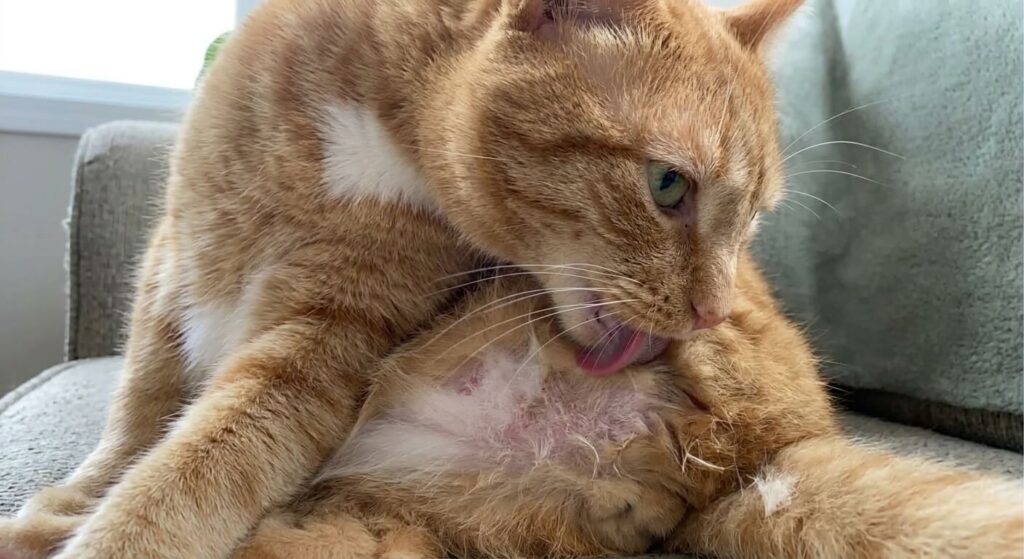
Three years ago, the apartment directly below mine began a renovation that lasted eleven weeks. I am talking about jackhammers at 8 AM, intermittent power tool noise throughout the day, and vibrations that Oliver could feel through every surface he touched. Within two weeks, he had developed a bald patch the size of a golf ball on his lower belly from repetitive licking I hadn’t even noticed happening.

Within three weeks, he urinated outside his litter box four times in a single week — always on soft surfaces, always near the bedroom. I was confused, then frustrated, then genuinely worried that something was wrong with our relationship. My vet, Dr. Chen, was the one who reframed everything. She explained that what I was witnessing were not acts of defiance but rather textbook signs indoor cat is stressed at a level that was beginning to manifest as physical illness.

That reframe changed how I interpreted everything about Oliver’s behavior going forward, and it is the perspective I want to give you before things escalate the way they did for us.


Quick Answer

The most common signs indoor cat is stressed include inappropriate elimination outside the litter box, excessive over-grooming that creates visible bald patches, prolonged hiding beyond normal napping behavior, decreased or absent appetite, and sudden unprovoked vocalization. Because cats suppress visible signs of distress instinctively, these behavioral changes frequently indicate that anxiety has already reached a severe level — and several of them can also signal a medical emergency requiring immediate veterinary assessment.


Why Cats Are So Vulnerable to Environmental Stress

Understanding why cats respond to stress the way they do makes their behavior make sense in a way that prevents the “spite” misinterpretation I fell into.

Cats are simultaneously predators and prey animals. Their evolutionary history required them to hunt successfully while also avoiding being hunted — a dual-role existence that produced a nervous system finely calibrated for threat detection and rapid stress response.

In practical terms, this means:

  • Their baseline threat-monitoring is always active — a cat is never fully “off duty” the way a human relaxing on a sofa is; some portion of their neural resources is continuously scanning for environmental anomalies
  • Their stress response activates quickly and resets slowly — a threatening stimulus can elevate a cat’s cortisol and sympathetic nervous system activation for hours after the trigger has passed
  • Their coping resources are territorial — unlike dogs, who manage stress primarily through social contact with their pack, cats manage stress primarily through environmental control; knowing their territory is safe is the core of their psychological security

When that territorial security is disrupted — by construction noise and vibration that they cannot escape, cannot confront, and cannot control — their stress system activates without a resolution pathway. The cortisol keeps circulating. The threat-monitoring stays elevated. The behavioral and eventually physical consequences follow.

The indoor environment amplifies this in a specific way: an outdoor cat experiencing a stressor can leave. They can expand their territory, find distance from the threat, and physically remove themselves from the stimulus. An indoor cat cannot. The stressor is present in the only territory they have, and there is nowhere to go.

This is not a character flaw in your cat. It is a neurological reality of a highly sensitive animal in an enclosed environment.


The Hidden Signs Indoor Cat Is Stressed

This is the section that I most wish I had read before Oliver’s construction episode, because stress in cats is genuinely subtle until it is suddenly not.

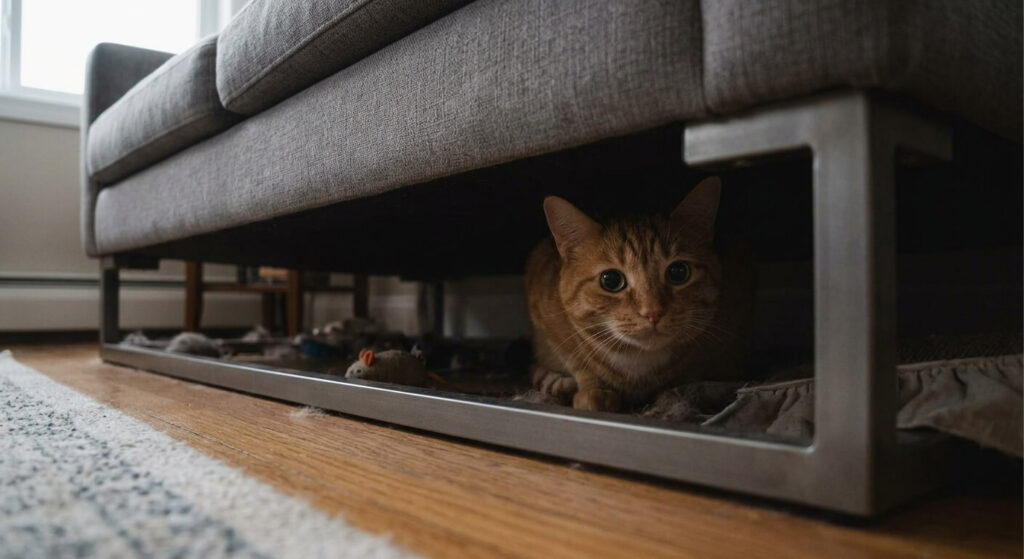
Cats do not display distress the way dogs do — no panting, no destructive behavior born from obvious panic, no following you around seeking reassurance. They get quieter. They disappear. The changes are gradual, easy to rationalize, and by the time they become impossible to miss, the stress has typically been building for weeks.

Over-Grooming and Psychogenic Alopecia

Over-grooming — technically called psychogenic alopecia when stress-driven — is the stress behavior that surprised me most, because it looks so much like normal grooming behavior that it is easy to miss the point at which it crosses a threshold.

What’s happening neurologically: Grooming releases endorphins and provides a brief, reliable reduction in anxiety. A chronically stressed cat discovers this and begins grooming not for coat maintenance but as a self-soothing behavior — the cat equivalent of repetitive stress behaviors in humans. The problem is that they continue past the point of skin tolerance.

What to look for:

  • Thinning fur in the areas a cat can most easily reach — the lower belly, inner thighs, the strips along the flanks, and the base of the tail
  • visible bald patch that has a clean, even edge (distinguishing it from fungal infection or parasites, which tend to produce ragged or irregular edges)
  • Catching them in the act — extended grooming sessions focused on a single area, returning to the same spot repeatedly within a short timeframe
  • Increased fur on surfaces they frequently rest on, despite what seems like normal external coat coverage

Important differential: Bald patches can also be caused by ringworm, parasitic infestation, allergies, or hormonal conditions. A veterinary examination to rule out these physical causes is necessary before attributing alopecia to stress.

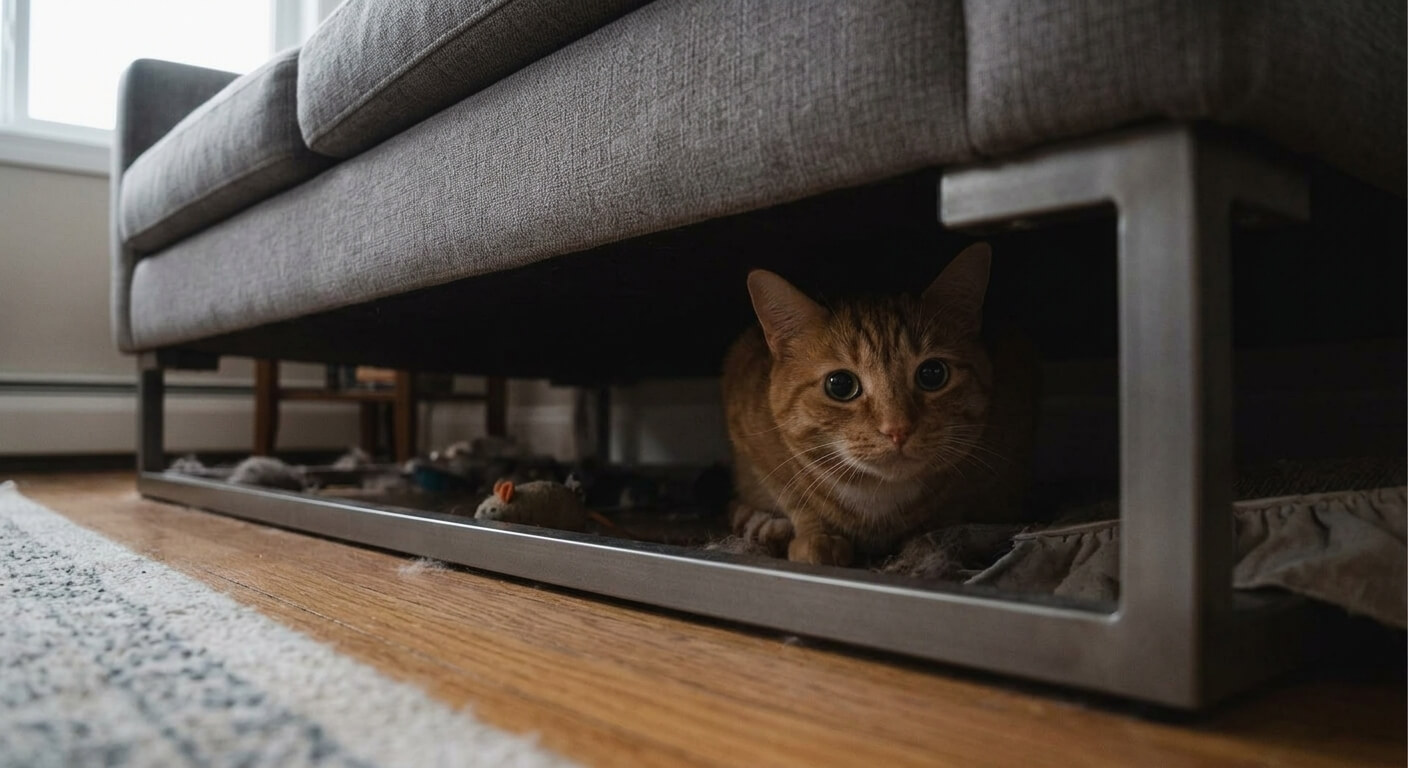
Prolonged Hiding

Every cat hides sometimes — a nap in a dark closet, retreating to an under-bed spot during a thunderstorm. This is normal and healthy.

Stress-related hiding is distinguished by:

  • Duration that extends beyond the resolution of an obvious trigger
  • Choosing hiding spots that are more concealed than usual — inside a closet’s far corner, behind the water heater, spaces they have never used before
  • Refusing to come out for food, for interaction, or for extended periods
  • Visible tension when approached in the hiding spot — ears back, eyes wide, body pressed flat

A cat who is hiding for more than 24 continuous hours without eating or using the litter box is not just stressed — they may be medically unwell, and a veterinary assessment is warranted regardless of whether a clear stressor is identifiable.

Appetite Changes

Both directions of appetite change — increased and decreased — can signal stress in cats.

Reduced appetite: In acute stress, the sympathetic nervous system suppresses the digestive drive; a cat in active anxiety may simply not eat. More than 24–36 hours of complete appetite absence in an adult cat risks hepatic lipidosis (fatty liver disease), which is a medical emergency independent of the stress that triggered it.

Increased appetite or food guarding: In some cats, particularly those with resource insecurity (common in multi-cat households where one cat controls food access), stress produces anxiety-based overeating or hypervigilance around the food bowl.

Vocalization Changes

New or increased vocalization — particularly low, persistent yowling that doesn’t correspond to feeding time or play requests — is a stress indicator worth taking seriously.

In senior cats, new vocalization patterns may overlap with cognitive dysfunction syndrome or hyperthyroidism rather than being purely stress-driven. Any significant change in vocalization frequency or character in a cat over eight years warrants bloodwork.

Changes in Social Behavior

  • A previously social cat who suddenly withdraws from interaction
  • A previously independent cat who becomes unusually clingy and inseparable
  • Increased aggression toward people or other animals without obvious immediate provocation

It is critical to distinguish between a cat who is simply under-stimulated and bored versus one who is genuinely anxious — they can look superficially similar but require different interventions, and we covered the specific behavioral signatures of each in our guide to indoor cat boredom. [Read our complete guide to recognizing the signs of a bored indoor cat here → 10 Signs Your Indoor Cat Is Bored (And How to Fix It)]


Litter Box Issues: Stress vs. Medical Emergency

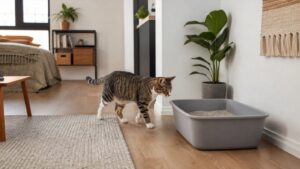
Inappropriate elimination — urinating or defecating outside the litter box — is the stress symptom that most frequently gets misread as behavioral defiance, and it is the one most likely to have a physical rather than purely behavioral cause.

This is the rule I now follow without exception: Any cat eliminating outside the litter box gets a veterinary examination within 48 hours of the first incident. Not after it happens three times. Not after I’ve tried changing the litter. Within 48 hours.

Here is why that rule exists.

The Three Possible Causes

1. Pure stress response: The cat associates the litter box itself with anxiety — if the stressor is near the litter box, they avoid it. Or, stress has disrupted their normal elimination routine so significantly that they lose the location-specific habit temporarily.

2. Feline lower urinary tract disease (FLUTD): Stress is a primary trigger for urinary inflammation, crystal formation, and bladder wall changes that make urination painful. The cat eliminates outside the box because the box location is associated with pain — they are seeking a “new” place where elimination might not hurt.

3. Urethral obstruction: A male cat (more commonly) who has developed a urethral blockage may make repeated attempts to urinate outside the box, producing little or nothing. This is a life-threatening emergency. A blocked cat will die within 24–48 hours without veterinary intervention.

Distinguishing factors:

BehaviorLikely Cause
Normal volume urine, soft surface preferenceStress-related avoidance
Small frequent spots, possibly with bloodFLUTD/urinary inflammation
Repeated straining with no urine producedEmergency — possible obstruction
Defecation outside box, normal consistencyStress or box aversion
Crying in the litter boxPain — veterinary assessment immediately

Do not wait to see if it resolves on its own. The cost of a vet visit for a stress-related elimination issue is manageable. The cost — in money, suffering, and potential loss — of a missed urethral obstruction is not.


Idiopathic Cystitis (FIC): When Stress Becomes Physical

This is the condition that Oliver was diagnosed with during the construction period, and it is far more common than most cat owners realize.

Feline Idiopathic Cystitis (FIC) — also called Feline Interstitial Cystitis or Pandora Syndrome in more recent veterinary literature — is a painful inflammatory condition of the bladder that occurs without infection, stones, or structural abnormality. The “idiopathic” designation historically indicated unknown cause, but extensive research, particularly by Dr. Tony Buffington at Ohio State University, has established strong evidence that chronic environmental stress is the primary driver in many cases.

The mechanism involves the stress-response system directly affecting bladder wall permeability and inflammatory pathways. A chronically elevated cortisol environment — sustained by a stressor the cat cannot escape or resolve — disrupts the protective glycosaminoglycan layer of the bladder wall, allowing irritants from urine to contact the bladder lining and cause inflammation.

Symptoms of FIC:

  • Frequent trips to the litter box with small amounts of urine produced
  • Crying or vocalizing during urination
  • Blood-tinged urine (hematuria)
  • Excessive licking of the genital area
  • Urinating outside the litter box on soft surfaces
  • In male cats: complete inability to urinate (obstruction — emergency)

FIC is managed, not cured. The treatment approach addresses both the immediate physical symptoms and the underlying environmental stress simultaneously:

  • Veterinary pain management and anti-inflammatory treatment for the acute episode
  • Increased dietary moisture (wet food, water fountain) to dilute urine and reduce bladder irritation
  • Environmental modification to address the identifiable stressor
  • Pheromone therapy and potentially anxiolytic medication for the underlying anxiety
  • Long-term dietary management

If chronic stress is left unaddressed, it can escalate beyond physical symptoms into behavioral expressions like redirected aggression — where a cat in a state of sustained anxiety suddenly attacks a person or another pet with no apparent immediate trigger — and we covered exactly why this happens and how to manage it in our complete guide to sudden feline aggression. [Read our complete guide to sudden indoor cat aggression here → Why Is My Indoor Cat Suddenly Aggressive? Causes and Solutions]


Fast Solutions to Lower Your Cat’s Baseline Anxiety

Environmental modification is the most powerful and most sustainable intervention available for feline stress — and several changes can be implemented today, before any veterinary appointment.

Synthetic Pheromone Diffusers

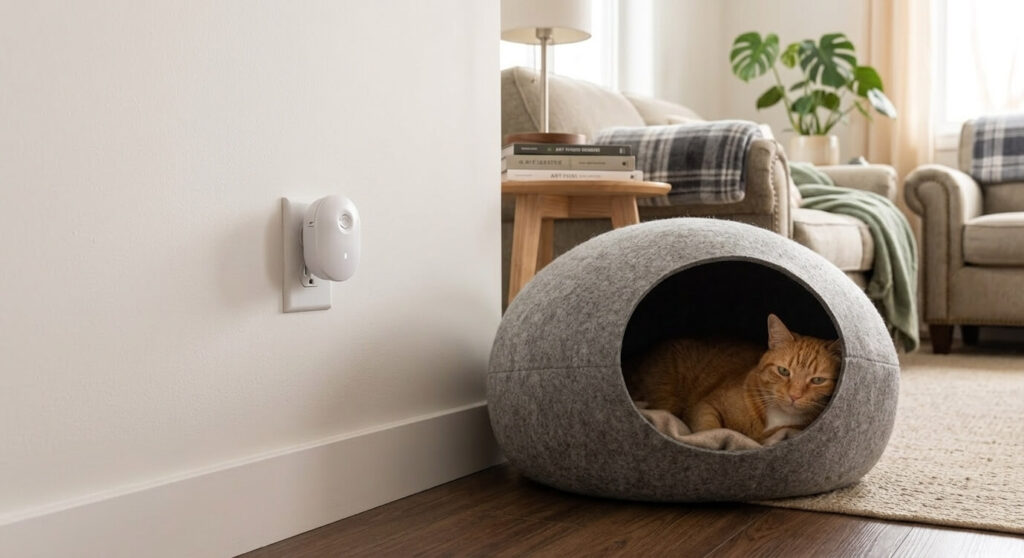
Plug-in synthetic feline facial pheromone diffusers replicate the calming signal cats produce when they rub their face on surfaces they consider safe and familiar. These “happy markers” communicate environmental security at a chemical level that the cat’s nervous system responds to below conscious processing.

Implementation for maximum effect:

  • Place in the room where your cat spends the most time and in the room closest to the identified stressor
  • Run continuously — the effect builds over days and requires constant presence to maintain
  • Replace the refill cartridge on schedule — an expired cartridge provides no benefit
  • Do not expect immediate results — most cats show measurable behavioral response within seven to fourteen days of consistent use; acute stress episodes may require this combined with other interventions

These diffusers are not sedatives. They lower baseline anxiety, which increases your cat’s capacity to cope with environmental challenges without triggering the stress cascade.

Enclosed Cave Beds and Safe Spaces

A cat who has no accessible hiding spot is a cat whose nervous system cannot find relief from elevated threat-monitoring. Hiding is active stress management, not avoidance.

What makes a good stress-relief hiding spot:

  • Enclosed on multiple sides with a single entry point — the “cave bed” design provides this naturally; a covered, hooded bed with one opening allows the cat to observe the entrance while their back and sides are protected
  • Elevated if possible — height adds a dimension of safety for cats, as elevated positions allow visual monitoring without proximity to floor-level threats
  • In a quiet location away from the primary stressor — near the identified noise source is not helpful; create distance from the trigger
  • Lined with your worn clothing — your scent is a genuine anxiety anchor for a cat with a secure human attachment

Multiple hiding spots throughout the apartment are more valuable than one perfect one — a cat should never feel cornered into a single retreat option.

Increased Predictable Routine

Chronic stress is sustained by unpredictability. A cat whose daily experience is reliable — feeding at the same times, play sessions at the same times, household activity following recognizable patterns — experiences lower baseline cortisol than one whose environment feels random.

During and after a stress event:

  • Maintain feeding times with precision — meal timing is the single most powerful routine anchor available
  • Keep play sessions scheduled — two fifteen-minute wand toy sessions at consistent times per day
  • Reduce novel introductions — this is not the time to rearrange furniture, bring home new objects, or introduce visitors or new animals

Calming Nutritional Supplements

Several supplements have peer-reviewed or practitioner-supported evidence for mild-to-moderate anxiety reduction in cats:

L-Theanine: An amino acid found naturally in green tea that promotes alpha-brain-wave activity associated with calm alertness. Available in cat-formulated chewable supplements. Works best for mild situational anxiety rather than severe chronic stress.

Hydrolyzed milk casein (Zylkene-type products): A naturally derived compound from milk protein that interacts with GABA receptors — the same receptor class as many anti-anxiety medications — producing calming effects without sedation. Well-tolerated, available over-the-counter, and supported by several clinical studies in cats.

Alpha-casozepine: Often the active ingredient in the casein-derived products; look for this on the ingredient list of supplements marketed for cat anxiety.

Important note: Supplements are appropriate for mild-to-moderate anxiety and are not a substitute for veterinary assessment when stress has already produced physical symptoms like FIC or significant behavior change. They work as part of a comprehensive approach, not as a standalone solution.

Environmental Complexity

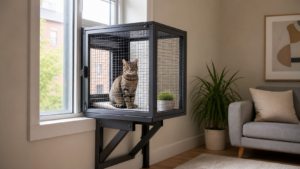
A cat with a richer, more complex environment has more behavioral resources for coping with stress — more choices, more territory to patrol, more elevated positions from which to monitor their world from a position of advantage.

During a stressor period, add:

  • An additional elevated resting option — a temporary cat tree or cardboard box stack near a window
  • A window bird feeder outside the primary observation window — passive visual enrichment that redirects anxious attention outward and toward something interesting
  • An extra litter box in a different location — stress frequently disrupts litter box routine; a second option reduces the consequence of avoidance


When to Call the Vet: Non-Negotiable Red Flags

Environmental modification and home management are appropriate first responses to mild stress — but there are specific presentations that require a veterinary call the same day, not after trying other things first.

Call Your Vet Today If You Observe:

  • Any male cat straining to urinate with little or no output — this is a potential urethral obstruction; do not wait overnight
  • Complete appetite absence for more than 24 hours in any cat
  • Blood in the urine — visible pink or red coloring, or bloody spots outside the litter box
  • Neurological signs — sudden loss of coordination, head tilting, walking in circles, seizure activity
  • Collapse or extreme weakness
  • Crying or vocalizing continuously in a way that is clearly not communicative
  • Rapid or labored breathing
  • Panting in a cat — cats are not normal panters; panting indicates either severe pain, respiratory compromise, or extreme heat stress

Schedule an Appointment Within 48–72 Hours For:

  • Any litter box avoidance, even a single episode
  • Visible bald patches from grooming, with or without skin irritation
  • Hiding lasting more than 24 hours
  • Behavioral aggression that is new or dramatically escalated
  • Significant appetite reduction lasting more than 48 hours
  • Any behavior change you cannot identify a clear cause for

The general principle: When in doubt, call. A brief phone consultation with your veterinary practice costs nothing and can tell you whether you’re managing an environmental issue appropriately or whether you need to be seen urgently.


FAQ

1. What are the signs indoor cat is stressed that most owners miss until they become serious?

The signs indoor cat is stressed that are most consistently missed until they escalate are the gradual ones — coat thinning from over-grooming (because it develops slowly and the cat is usually doing it when you’re not watching), subtle appetite changes (a cat eating slightly less per day doesn’t look alarming until you realize it’s been happening for two weeks), and increased time in hiding spots (normalized as “he just likes it under there”).

The signs most owners respond to fastest are the ones that involve human inconvenience — litter box avoidance and aggression — but by the time these appear, the stress has typically been building for a significant period. The habit worth developing is a monthly intentional assessment: looking at coat condition, monitoring food bowl levels with actual attention, and noting whether your cat’s time distribution between their various resting spots has shifted.

2. Can a cat get physically sick just from stress?

Yes — and the mechanism is well-established in veterinary medicine. Chronic stress produces sustained elevation of cortisol and other stress hormones that have direct physical consequences: suppressed immune function (making a stressed cat more susceptible to viral upper respiratory infections they might otherwise resist), direct inflammatory effects on the bladder wall (the mechanism driving stress-induced FIC), gastrointestinal disruption (stress colitis, producing soft stools or diarrhea), cardiovascular stress (elevated heart rate and blood pressure over extended periods), and skin and coat changes from both hormonal effects and the mechanical damage of over-grooming.

The relationship between psychological state and physical health in cats is not metaphorical — it is physiological, direct, and clinically documented. A stressed cat is a medically compromised cat.

3. My cat’s stress trigger (construction, new baby, new pet) isn’t going away. What do I do long-term?

When the stressor is permanent or extended rather than temporary, the management approach shifts from short-term anxiety reduction to building your cat’s long-term coping capacity. This involves: maximizing environmental complexity so they have more territory and behavioral resources to draw from; establishing an absolutely predictable daily routine as an anchor of stability within an unpredictable broader situation; using pheromone diffusers continuously rather than situationally; and having a frank conversation with your veterinarian about whether anti-anxiety medication is appropriate.

For sustained, significant stressors — a new baby, a permanent new pet, a chronic noise environment — short-term behavioral interventions frequently reach their ceiling, and prescription anxiolytic medication (fluoxetine, gabapentin, buspirone, or others depending on your cat’s specific presentation) can provide the physiological support that allows your cat to function and adapt rather than deteriorate. Medication in this context is not a last resort — it is a welfare intervention that prevents cumulative physical and psychological damage.


References

  1. Amat, M., Camps, T., & Manteca, X. (2016). Stress in owned cats: behavioural changes and welfare implications. Journal of Feline Medicine and Surgery, 18(8), 577–586. https://journals.sagepub.com/doi/10.1177/1098612X15590867
  2. Buffington, C. A. T. (2011). Idiopathic cystitis in domestic cats—beyond the lower urinary tract. Journal of Veterinary Internal Medicine, 25(4), 784–796. https://onlinelibrary.wiley.com/doi/10.1111/j.1939-1676.2011.00732.x

Disclaimer: This article reflects the personal experience of a cat owner and draws on published veterinary behavioral medicine research. It is not a substitute for professional veterinary assessment. If your cat is showing signs of physical distress — straining to urinate, blood in urine, complete appetite loss, or neurological symptoms — please contact your veterinarian immediately rather than attempting home management alone.

Share this post

Subscribe to our newsletter

Keep up with the latest blog posts by staying updated. No spamming: we promise.
By clicking Sign Up you’re confirming that you agree with our Terms and Conditions.

Related posts