
Moving apartment with cat is stressful because your cat is not just changing addresses. They are losing familiar scent maps, sleeping routes, hiding spots, window views, litter placement, and the predictable sounds that told them the old apartment was safe. The safest move is not a single moving-day trick. It is a staged protocol: prepare the carrier early, build a safe room before boxes move, control doors during the move, release your cat gradually, and monitor appetite, litter habits, hiding, and stress signals for the first month.
If hiding, overgrooming, appetite change, or litter issues continue, compare the pattern with our guide to signs your indoor cat is stressed.
The best way to handle moving apartment with cat is to treat the move as a territory transfer. Start two to four weeks before moving day by making the carrier normal, packing gradually, preserving familiar scent items, and choosing one quiet safe room in the new apartment. On moving day, your cat should be confined before movers arrive and transported in a secure carrier.
After arrival, keep your cat in the safe room with litter, water, food, bedding, familiar scent, and hiding space. Do not release them into the whole apartment immediately. Most cats do better with a gradual release over several days to several weeks, depending on appetite, litter use, confidence, and stress behavior.
Quick Answer
Moving apartment with cat is safest when you plan around escape prevention, carrier security, a quiet safe room, and slow access to the new home. The biggest mistake is letting a cat roam while doors are open, movers are entering, furniture is shifting, or the new apartment is still chaotic.
Use a simple plan: prepare the carrier early, keep one room stable during packing, create a closed moving-day safe room, transport your cat only in a secure carrier, set up one room in the new apartment before release, and expand access slowly after your cat is eating, drinking, and using the litter box.
If your cat is senior, medically fragile, very fearful, or has a history of bolting, ask your veterinarian about moving-day planning before the move.
Important Moving Safety Note
The highest-risk moments are open doors, unfamiliar hallways, elevators, stairwells, parking lots, movers entering and leaving, and the first release into the new apartment.
Do not carry your cat loose in your arms during the move. Use a secure carrier. Even a calm indoor cat can panic when furniture moves, strangers enter, doors slam, or the building smells unfamiliar.
Call your veterinarian if your cat does not eat, cannot urinate, vomits repeatedly, hides without coming out for basic needs, breathes abnormally, collapses, seems painful, or becomes suddenly aggressive after the move.

Table of Contents
Why Moving Is Stressful for Indoor Cats
Indoor cats depend on familiar territory. They know where the litter box, food, water, windows, beds, hiding places, and daily routines belong. Moving changes almost all of that at once.
A cat may hide, vocalize, pace, refuse food briefly, avoid the litter box, cling to the owner, or try to escape. These are stress responses, not bad behavior.
Apartment moves can be especially stressful because they may include elevators, shared hallways, narrow doors, movers, neighbor noise, parking lots, and limited rooms where the cat can safely stay separated.
If your cat already shows stress patterns, compare them with our signs your indoor cat is stressed guide before the move.
Apartment Moving Risk Map
Moving apartment with cat is difficult because several stressors happen at the same time. Your cat is not only seeing boxes. They are losing scent markers, hearing new noises, watching furniture disappear, and being exposed to open doors. In an apartment, those stressors are compressed into narrow hallways, elevators, shared entrances, parking areas, and rooms with fewer hiding options.
Use this table to decide what needs the most planning before moving day.
| Moving Risk | Why It Matters | Safer Plan |
|---|---|---|
| Open doors | Cats can bolt into halls, stairwells, parking areas, or unknown rooms | Keep the cat in a closed safe room before doors open |
| Carrier panic | A frightened cat may scratch, hide, or escape during loading | Practice carrier time before the move |
| Lost scent markers | Familiar furniture, rugs, and bedding may disappear at once | Keep several familiar items unwashed |
| Loud movers | New voices and heavy footsteps can trigger hiding or defensive behavior | Use one quiet room away from traffic |
| New litter location | A cat may not immediately understand where the box is | Put litter box inside the first safe room |
| Elevator or hallway noise | Sound carries strongly in apartments | Cover the carrier lightly and move quickly |
| New smells | Paint, cleaners, previous pets, or building odors may feel threatening | Ventilate and clean before full access |
| Routine disruption | Food, litter, sleep, and attention patterns change | Keep meal times and litter type stable |
The safest plan is not to make the move “exciting.” The goal is to make it boring, predictable, and controlled. A calm cat does not need to inspect every box, greet every mover, or explore the new apartment on the first night.
7 Safe Steps for Moving Apartment With Cat
1. Prepare the Carrier Early
The carrier should not appear only on moving day. Place it in your home one to two weeks before the move if possible. Leave the door open, add a familiar blanket, and let your cat investigate without pressure.
Feed treats near the carrier, then inside it. For cautious cats, even walking near the carrier calmly is progress. The goal is not perfect carrier love. The goal is to reduce panic before the stressful day.
If your cat panics in carriers, use a full cat carrier training guide before the next move or vet trip.
2. Keep One Room Stable During Packing
Packing disrupts territory. Boxes appear, furniture moves, familiar hiding places disappear, and the apartment starts smelling different. Keep one room as normal as possible until moving day.
That room should include food, water, litter box, bedding, hiding space, and the carrier. Keep a few familiar scent items available instead of washing or packing everything at once.
3. Use a Closed Safe Room on Moving Day
Before movers arrive or doors start opening, place your cat in one closed room with essentials. Put a clear sign on the door that says “Cat inside. Do not open.”
This prevents escape and keeps your cat away from noise, strangers, open doors, and moving furniture.
4. Move Your Cat in a Secure Carrier
Move your cat in a carrier, not loose in your arms. Keep the carrier closed in the hallway, elevator, car, lobby, and parking area.
If your cat cries, scratches, or vomits during transport, wait until you are inside a closed safe room before opening the carrier.
If your cat has a bolting history, pair this plan with our guide on how to stop a cat from running out the door.
5. Set Up the New Safe Room First
Before opening the carrier, prepare one quiet room in the new apartment. Add litter box, food, water, familiar bedding, hiding space, scratching option, and a few familiar items.
Let your cat come out of the carrier on their own. Some cats explore quickly. Others stay inside for hours. Both can be normal.
6. Expand Access Slowly
Do not release your cat into the whole apartment immediately. Wait until your cat is eating, drinking, using the litter box, and moving around the safe room with some confidence.
Then open one new area at a time. Keep windows closed, balcony doors locked, and exterior doors controlled. The safe room should stay available as a retreat.
7. Watch Food, Litter, and Stress Signs
After the move, track eating, drinking, urination, stool, hiding, grooming, vocalizing, and door interest.
If litter box accidents begin after the move, first consider stress and access, but do not ignore medical causes. Use our cat peeing outside the litter box guide after ruling out urgent health issues.
Packing Week Plan for Apartment Cat Owners
The week before the move is where many cat moving problems begin. Owners often focus on moving day itself, but cats usually start reacting when boxes appear, furniture shifts, and familiar pathways disappear.
7 Days Before the Move
Start by choosing the room that will stay most stable until moving day. This may be a bedroom, office, bathroom, or quiet corner room. Put your cat’s familiar bed, litter box, water, and scratching option there. Do not make this room perfect. Make it predictable.
Leave the carrier open in the room with a blanket or towel inside. If your cat avoids the carrier, do not force them in. Feed treats near it, then inside it, then close the door for short calm moments only after your cat is comfortable.
If carrier fear is a major issue, pair this plan with our cat carrier training guide.
5 Days Before the Move
Begin packing low-risk items first: books, decor, seasonal items, extra linens, and storage items your cat does not use. Avoid suddenly removing your cat’s favorite sleeping spot, window perch, scratching post, or litter area unless you must.
If your cat is already anxious, keep one or two familiar pathways open. For example, do not block the route from the bed to the litter box with stacked boxes. In a small apartment, even a few boxes can change the whole map of the home.
3 Days Before the Move
Prepare the new apartment safe room plan. Decide exactly where food, water, litter, bedding, carrier, and hiding space will go before the cat arrives. If possible, bring a familiar blanket, towel, or bed that smells like the old home.
Do not wash every cat item before the move. Familiar scent is useful. A perfectly clean new setup may look better to humans, but it may feel less safe to a cat.
The Night Before Moving
Keep food and water normal. Do not experiment with new food, new litter, new calming products, or new treats the night before moving. If your cat vomits, refuses food, hides intensely, or has diarrhea from stress, you need a simple plan, not another change.
Pack a cat-only bag with:
- usual food
- bowls
- litter and scoop
- trash bags
- paper towels
- familiar bedding
- medication if used
- vet records if needed
- carrier
- one or two familiar toys
- cleaning supplies for accidents
This prevents the common problem of arriving at the new apartment and realizing the litter scoop, food, or medication is buried in a box.
Moving Day Checklist
| Task | Why It Matters |
|---|---|
| Carrier ready | Prevents escape during transport |
| Cat safe room closed | Keeps cat away from movers and open doors |
| Familiar blanket packed separately | Preserves calming scent |
| Litter box available | Reduces accidents and stress |
| Food and water easy to find | Avoids searching through boxes |
| New safe room set up first | Prevents overwhelming full-apartment release |
| Windows and doors checked | Reduces escape risk |
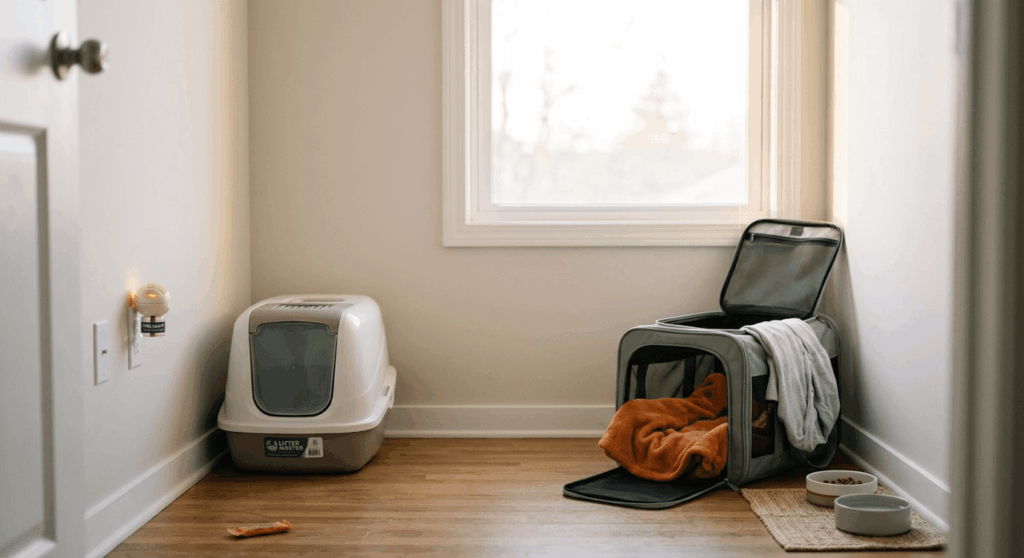
New Apartment Safe Room Setup
The safe room should be quiet, closed, and simple. It does not need to be beautiful. It needs to feel predictable.
Include:
- litter box
- food
- water
- familiar blanket
- carrier with the door open
- hiding spot
- scratcher
- one or two familiar toys
Avoid placing the litter box directly beside food or water. Keep the room calm and let your cat choose when to explore.
First 72 Hours in the New Apartment
The first three days after moving apartment with cat should be quiet and structured. Many cats do not need full apartment access right away. They need proof that food, water, litter, hiding space, and familiar people are still available.
Day 1: Keep the World Small
On the first day, keep your cat in the safe room. This is not punishment. It gives your cat a smaller territory to map. The room should include litter box, water, food, bedding, hiding space, and a familiar scent item.
Let your cat come out of the carrier on their own. Some cats walk out immediately. Others stay inside for hours. Both can be normal. Do not shake the carrier, pull the cat out, or open the whole apartment because you feel bad.
Check three things before bedtime:
- Has your cat found the litter box?
- Has your cat had access to water?
- Is your cat breathing normally and able to rest?
Eating may be reduced for a short time after a stressful move, but complete refusal to eat should not be ignored, especially in kittens, senior cats, overweight cats, diabetic cats, or cats with known medical issues.
Day 2: Add Familiar Routine
Keep meals predictable. Sit quietly in the room without forcing interaction. If your cat approaches, offer calm attention. If your cat hides, let hiding remain available.
You can begin opening one additional area only if your cat is eating, drinking, using the litter box, and moving around the safe room with some confidence. If the cat is still frozen, hiding constantly, or refusing the litter box, keep the territory smaller.
If litter box accidents begin after the move, do not assume your cat is being stubborn. Stress, access confusion, urine marking, and medical issues can overlap. Use our guide to cat peeing outside the litter box if accidents appear.
Day 3: Expand Slowly
If your cat is stable, open one new area at a time. Do not release your cat into the entire apartment while boxes, cords, open windows, cleaners, and furniture parts are still everywhere.
Watch how your cat moves. A confident cat sniffs, pauses, retreats, returns, and explores in short sessions. A stressed cat may crouch low, freeze, hide under furniture, vocalize, swat, refuse food, or rush from room to room without settling.
The best sign is not “my cat explored everything.” The best sign is “my cat can return to food, water, litter, and rest.”
Common Mistakes to Avoid
Mistake 1: Letting the Cat Roam During Packing
Packing creates open doors, unstable hiding places, and noise. Keep your cat in a secure room during the busiest parts.
Mistake 2: Opening the Carrier Too Soon
Do not open the carrier in a hallway, elevator, car, parking lot, or unfinished moving zone.
Mistake 3: Washing Every Familiar Blanket
Your cat needs familiar scent. Keep at least one unwashed blanket, bed, or towel available.
Mistake 4: Giving Full Apartment Access Immediately
Too much space too soon can overwhelm a nervous cat. Start with one room and expand gradually.
Mistake 5: Moving the Litter Box Too Quickly
Start with the litter box in the safe room. Once your cat is comfortable, move it slowly to the final location or add a second box during transition.
Special Moving Situations
Moving With a Senior Cat
Senior cats often need a slower move because vision, hearing, mobility, and confidence may already be reduced. Keep litter access easy. Avoid making the first safe room require stairs, jumping, or slippery floor walking. If your senior cat has arthritis, choose a low-entry litter box rather than a tall box that requires climbing.
Senior cats may also hide pain more quietly than younger cats. Limping, appetite change, confusion, litter accidents, or sudden irritability after a move should not be dismissed as normal adjustment.
Moving With Multiple Cats
If you have more than one cat, do not assume they will comfort each other during the move. Some bonded cats do better together. Others become more tense when forced into the same room under stress.
If the cats normally compete for food, litter access, beds, or doorways, set up multiple resources in the new apartment quickly. That means more than one resting spot, more than one water station, and a litter plan that does not trap one cat behind another.
For a broader small-home setup, use our multi-cat apartment living guide.
Moving With a Cat Who Bolts
A cat with a bolting history needs stricter door control. Keep them behind two barriers whenever possible: closed room plus carrier, or closed room plus closed apartment door.
Put a clear sign on the moving-day room door that says “Cat inside. Do not open.”
If your cat has already tried to rush through apartment doors, pair this moving plan with our guide on how to stop a cat from running out the door.
Moving With a Cat Who Hides
A hiding cat needs access to safe hiding, but not unreachable hiding. Under a bed may be fine if you can monitor the cat. Inside walls, behind appliances, under reclining furniture, or inside box piles is unsafe.
In the new apartment, give your cat a cardboard box, covered bed, carrier, or open closet corner as a legal hiding place. Do not remove every hiding option. A cat who has nowhere to hide may feel more threatened, not more social.
When to Call a Veterinarian
Call your veterinarian if your cat:
- does not eat for 24 hours
- does not urinate
- strains in the litter box
- vomits repeatedly
- hides and will not come out for basic needs
- breathes abnormally
- collapses
- seems painful
- becomes suddenly aggressive
- has ongoing diarrhea
- shows severe stress despite a quiet setup
For senior cats, diabetic cats, kidney disease cats, heart disease cats, kittens, or cats on medication, ask your vet before moving day about feeding, medication timing, and stress management.
Signs the Move Is Going Well
A successful move does not always look dramatic. Many cats adjust quietly. Look for small signs of recovery:
- eating normal meals again
- drinking normally
- using the litter box
- grooming
- sleeping in open areas
- exploring in short sessions
- returning to familiar people
- playing briefly
- using scratching posts or beds
- walking with a normal posture
Some cats adjust in a day. Others need one to two weeks. The important point is trend. A cat who is hiding less, eating better, and exploring more is moving in the right direction.
Signs Your Cat Needs More Help
Call your veterinarian if your cat refuses food, strains to urinate, repeatedly vomits, has diarrhea that continues, hides without improvement, breathes abnormally, collapses, shows sudden aggression, or seems painful.
Also call if a known medical condition is involved. Cats with diabetes, kidney disease, urinary history, heart disease, senior mobility problems, or prescription diets need a more careful moving plan.
Stress can trigger behavior changes, but stress should not become a reason to ignore medical signs. If the change is sudden, intense, painful, or paired with appetite, urine, stool, breathing, weight, or mobility changes, treat it as a health question first.

Frequently Asked Questions
1. How long does it take for a cat to adjust to a new apartment?
Many cats begin settling within a few days, but full adjustment can take several weeks. Confident cats may explore quickly, while cautious cats may need longer.
2. How long should I keep my cat in one room after moving?
Keep your cat in one room until they are eating, drinking, using the litter box, and moving around calmly. For some cats this is one day. For others it may be several days.
3. Should I feed my cat before moving day travel?
For many healthy cats, a small normal meal earlier in the day is better than a heavy meal right before transport. If your cat has medical needs, ask your veterinarian.
4. What if my cat hides for days after moving?
Hiding can be normal, but your cat still needs to eat, drink, and use the litter box. If your cat is not eating or seems unwell, call your veterinarian.
5. Can I use calming diffusers when moving with a cat?
Calming diffusers may help some cats, but they should support the plan, not replace carrier safety, a safe room, and slow introduction.
6. Should I move the litter box later?
Yes, but gradually. Start with the litter box in the safe room. Once your cat is comfortable, move it slowly to the final location or add a second box during transition.
Final Thoughts
Moving apartment with cat is safest when you make the move small and predictable from your cat’s point of view. Use a secure carrier, a closed safe room, familiar scent, slow access, and careful door control.
The goal is not to make the move stress-free. The goal is to make it secure enough that your cat can rebuild confidence one step at a time.
References
VCA: Stress reduction for cats. https://vcahospitals.com/know-your-pet/stress-reduction-for-cats
AVMA: Traveling with your pet FAQ. https://www.avma.org/resources-tools/pet-owners/petcare/traveling-your-pet-faq
International Cat Care: Moving house with your cat. https://icatcare.org/advice/moving-house-with-your-cat/
AAFP/ISFM Environmental Needs Guidelines. https://journals.sagepub.com/doi/10.1177/1098612X13477537
Kessler, M. R., & Turner, D. C. (1999). Socialization and stress in cats (Felis silvestris catus) housed singly and in groups in animal shelters. Animal Welfare, 8(1), 15–26. Universities Federation for Animal Welfare.
Amat, M., Camps, T., & Manteca, X. (2016). Stress in owned cats: Behavioural changes and welfare implications. Journal of Feline Medicine and Surgery, 18(8), 577–586. https://doi.org/10.1177/1098612X15590867
Kessler, M. R., & Turner, D. C. (1999). Socialization and stress in cats (Felis silvestris catus) housed singly and in groups in animal shelters. Animal Welfare, 8(1), 15-26.
Amat, M., Camps, T., & Manteca, X. (2016). Stress in owned cats: Behavioural changes and welfare implications. Journal of Feline Medicine and Surgery, 18(8), 577-586.
National Animal Welfare Trust. Moving house with a cat.
Vets4Pets. Moving house with your cat.
-300x169.png)
-300x169.png)
-300x169.png)