Multi-cat apartment living can work beautifully, but it needs more structure than a single-cat home. In a small space, cats share the same rooms, litter areas, feeding zones, resting spots, windows, and human attention. Small friction points can turn into food stealing, litter box tension, resource guarding, chasing, blocking, or stress.
This guide brings together our most useful multi-cat apartment articles, including feeding routines, microchip feeders, separate meals, litter box planning, vertical space, and conflict prevention. Start with the problem you are seeing now, then use the related guides to build a calmer shared home.
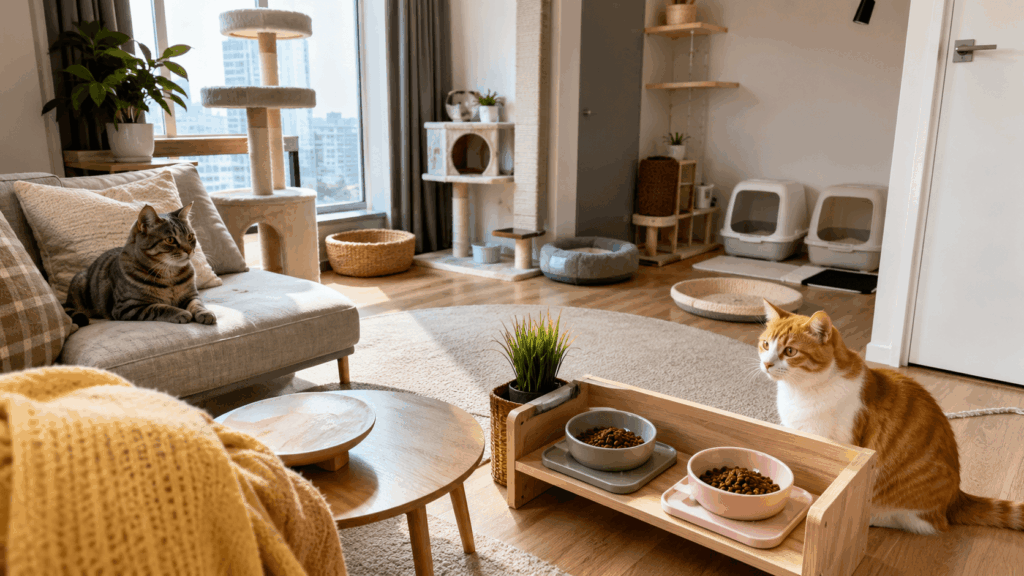
Table of Contents
Multi-Cat Apartment Living: Start Here
If you live with two or more cats in a small home, start with the basics: food, litter boxes, resting zones, escape routes, and predictable routines.
Two Cats in a Studio Apartment
Two cats can live in a studio apartment, but the space needs to be divided by function instead of square footage. This guide explains how to set up food, litter, sleep, play, and vertical zones when there are no extra rooms.
Read next: Two Cats in a Studio Apartment
Multi-Cat Resource Guarding Solutions
Resource guarding can look subtle in cats. One cat may block a hallway, stare near the food bowl, guard a window, or control access to the litter box. This guide explains how to identify and reduce resource pressure.
Read next: Multi-Cat Resource Guarding Solutions
Feeding Multiple Cats in an Apartment
Food is one of the most common sources of tension in multi-cat homes. In apartments, separate feeding can be harder because there may be fewer rooms and fewer doors. The goal is to protect each cat’s food without making the routine too complicated.
How to Feed Multiple Cats Separately
Separate feeding helps prevent food stealing, overeating, underfeeding, diet mixing, and stress around meals. This guide explains practical feeding zones, timing, room separation, and small-space setups.
Read next: How to Feed Multiple Cats Separately
How to Stop One Cat Stealing Another Cat’s Food
If one cat eats fast and then steals from another bowl, both cats can suffer. One may gain weight while the other eats too little. This guide explains step-by-step tactics for food thieves in apartments.
Read next: How to Stop One Cat Stealing Other Cats Food
Best Slow Feeder Cat Bowl
Slow feeders can help fast eaters, food thieves, and cats who inhale meals. They are not a full multi-cat solution by themselves, but they can make a separate feeding routine easier.
Read next: Best Slow Feeder Cat Bowl
Microchip Feeders and Prescription Diet Protection
Microchip feeders are especially useful in multi-cat apartments because they create food separation without requiring a separate room. They are most helpful when one cat needs a prescription diet, weight control, allergy food, or protected wet food.
Best Microchip Cat Feeder
A microchip feeder can protect meals from the wrong cat and reduce daily monitoring. This guide compares feeder options for multi-cat homes, including wet food support, RFID tags, app tracking, and intruder prevention.
Read next: Best Microchip Cat Feeder
Microchip Cat Feeder Prescription Diet
If one cat needs kidney, urinary, diabetes, allergy, or weight-control food, cross-contamination matters. This guide explains how microchip feeders can protect medical diets in multi-cat homes.
Read next: Microchip Cat Feeder Prescription Diet
For broader feeding and weight routines, also see our apartment cat feeding and weight control guide.
Litter Boxes in Multi-Cat Apartments
Litter boxes can become a major stress point in shared spaces. Even if cats appear peaceful, one cat may avoid a box because another cat blocks the path, watches from nearby, or leaves strong scent behind.
How Often to Clean a Litter Box
Multi-cat homes need more frequent scooping and closer observation. This guide explains daily, weekly, and monthly litter box cleaning schedules by number of cats and litter type.
Read next: How Often to Clean a Litter Box
Cat Peeing Outside the Litter Box
In multi-cat apartments, peeing outside the box may involve medical issues, box access, territorial stress, marking, dirty litter, or senior mobility. This guide helps you sort safe next steps.
Read next: Cat Peeing Outside Litter Box
Best High Sided Litter Box
High-sided boxes can help with high peeing, scatter, and edge mess. In multi-cat apartments, they can also reduce cleanup stress when one cat digs aggressively or pees high.
Read next: Best High Sided Litter Box
For a full litter-area routine, see our litter box odor cleaning guide.
Space Sharing, Escape Routes, and Vertical Territory
In a small apartment, cats need ways to share space without constantly facing each other. Vertical space, separate resting zones, and multiple paths through the home help reduce pressure.
A good multi-cat apartment setup usually includes:
- more than one resting zone
- more than one feeding area
- more than one litter route if possible
- vertical space such as shelves, trees, or window perches
- no dead-end trapping near food or litter
- separate play sessions for high-energy cats
- predictable routines for meals and sleep
Conflict often happens when one cat controls a doorway, hallway, window, litter route, or food station. Watch for silent blocking, staring, chasing, swatting, or one cat waiting for another to move.
Practical Multi-Cat Apartment Setup
Multi-cat apartment living works best when every essential resource has more than one safe access path.
A calmer multi-cat apartment usually starts with resource mapping. Walk through your home and ask:
- Where do the cats eat?
- Where do they drink?
- Where do they sleep?
- Where are the litter boxes?
- Where do they play?
- Where can each cat escape?
- Where does tension usually happen?
If every important resource is in one corner, the cats have fewer choices. Spread resources where possible, even if the apartment is small.
You do not always need more products. Sometimes the fix is moving one bowl, adding a second water station, turning a litter box entrance, opening a second resting spot, or feeding one cat on a higher surface.
Common Multi-Cat Apartment Mistakes
The biggest mistake is assuming that quiet means peaceful. Some cats do not fight loudly. Instead, one cat may control access while the other avoids food, litter, windows, or people.
Another common mistake is feeding all cats from bowls placed side by side. This may look tidy, but it can create pressure for slower eaters or cats who dislike close-contact meals.
Do not rely on one litter box for multiple cats if you can avoid it. If space is limited, prioritize cleanliness, access, and separate routes.
Avoid making every change at once. If you change food, litter, box location, and furniture layout in the same week, you will not know what helped or what stressed the cats.
For behavior and stress context, the American Association of Feline Practitioners offers helpful guidance on multi-cat household tension and feline environmental needs.
Recommended Next Step
If your main problem is food stealing, start with separate feeding and microchip feeder guides.
If your main problem is litter tension, start with litter box cleaning, access, and accident guides.
If your main problem is chasing, blocking, or guarding, start with resource guarding and space-sharing articles.
Multi-cat apartment living is less about having a large home and more about giving each cat predictable access to the things they need.