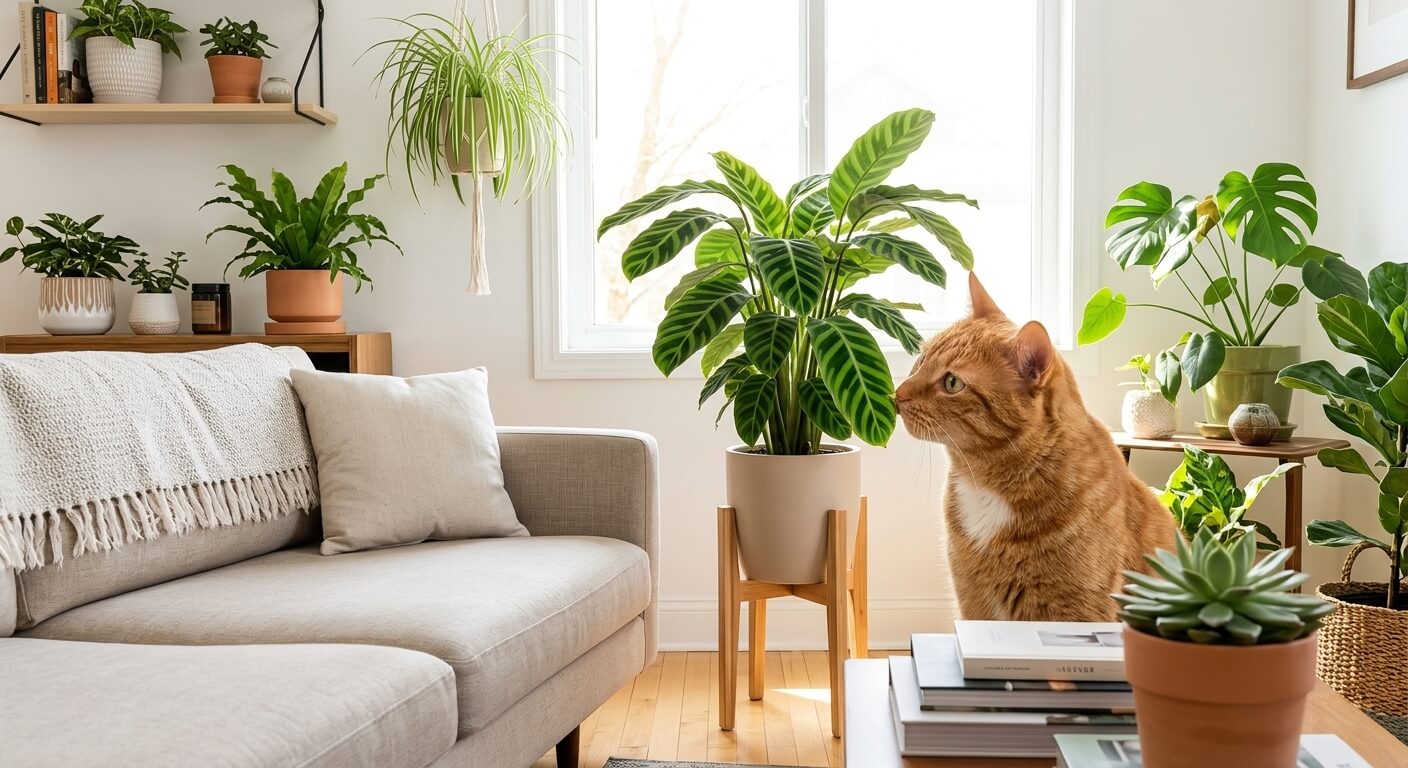
Cat safe plants apartment owners choose should be checked before they come home, not after your cat has already chewed a leaf. Store labels can be vague, and common plant names are messy, so I always verify the scientific name before trusting a plant around a cat.
A plant can be “cat safe” and still be a bad fit for your apartment. If it tips easily, sheds soil, invites constant chewing, or sits in the only sunny window your cat patrols all day, it can still become a problem. Safe means non-toxic, stable, manageable, and placed in a way your cat can live with.
Good cat safe plants apartment options include spider plant, Boston fern, parlor palm, areca palm, calathea, prayer plant, peperomia, ponytail palm, and cat grass. Avoid lilies, sago palm, pothos, philodendron, dieffenbachia, aloe, jade, and unknown mixed plant baskets.
If your cat is already chewing leaves, use our guide on how to stop a cat from eating plants before adding more greenery.
Quick Answer
The safest cat safe plants apartment choices are plants you can identify clearly, verify against a trusted toxicity database, and place where your cat cannot knock them over or dig in the soil. Cat grass, spider plant, Boston fern, parlor palm, areca palm, calathea, prayer plant, peperomia, haworthia, African violet, orchid, ponytail palm, bamboo palm, cast iron plant, and catnip or catmint are common options to consider.
Do not rely on common names alone. Before buying, check the scientific name and avoid lilies completely in cat homes. Even non-toxic plants can cause vomiting or mess if your cat eats too much, so use heavy pots, covered soil, hanging baskets, plant stands, or a cat grass decoy when needed.
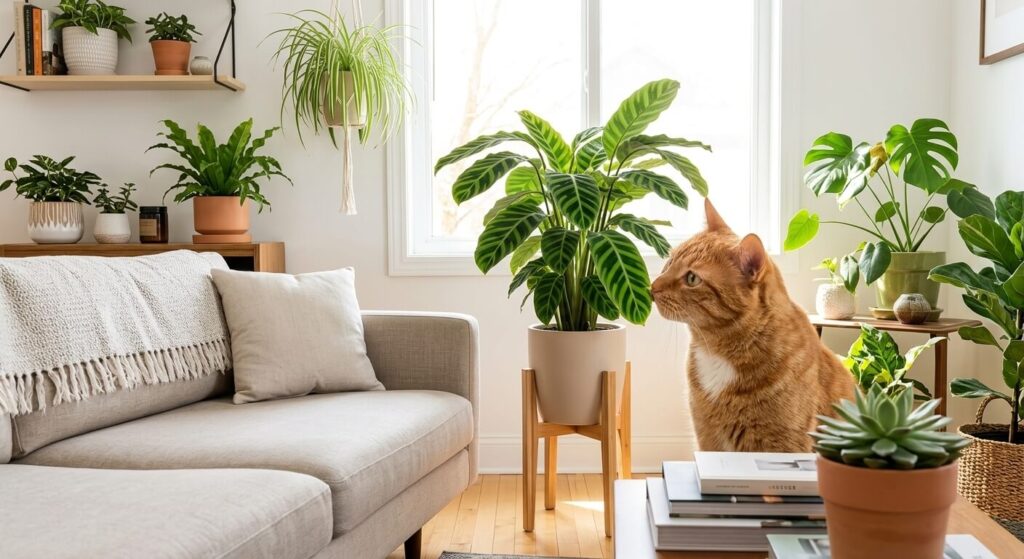
Table of Contents
How to Verify a Plant Before Buying
Plant safety note: if your cat chews a plant and then vomits repeatedly, drools, has diarrhea, becomes weak, refuses food, trembles, collapses, or may have eaten a toxic plant, contact your veterinarian or a pet poison hotline promptly. Lilies are especially dangerous for cats.
Plant safety starts before the plant comes home. Store labels can be vague, and common names can describe several different plants. Scientific names matter when checking toxicity.
Apartment plant management is about access. A non-toxic plant on the floor may still become a digging station, chewing target, or toppled pot. Placement is part of safety.
Before bringing plants into a home with a young cat, use this kitten proof apartment checklist to review plants, cords, windows, cleaners, and other hazards at the same time.
A cat grass decoy works best when the rest of the plant setup is less interesting: heavier pots, covered soil, stable stands, and enough play that digging is not the only project in the room.
Cat Safe Plants Apartment Safety Rules
Cat safe plants apartment planning starts with one rule: never assume a plant is safe because it is common, pretty, or sold in a home decor store. Many popular apartment plants are risky for cats, especially lilies, pothos, philodendron, dieffenbachia, sago palm, aloe, jade, and many mixed succulent arrangements.
Before buying any plant, check the exact plant name, not just the store label. “Palm,” “fern,” “ivy,” “succulent,” and “lily” can describe very different plants with very different safety profiles.
Use this basic safety system:
- identify the exact plant species before buying
- check the plant against a trusted toxicity list
- avoid lilies completely in cat homes
- avoid unknown mixed plant baskets
- keep fertilizers, soil additives, pesticides, and plant food away from cats
- treat chewing, vomiting, drooling, weakness, tremors, or appetite loss as a reason to call your veterinarian
A plant being “cat safe” does not mean your cat should eat unlimited amounts of it. It usually means the plant is not known as a major toxin, but chewing can still cause vomiting, stomach upset, or choking risk.
15 Cat Safe Plants for Apartments
These plants are better choices for indoor cat homes, but they still need normal supervision. The safest apartment plant setup is not just choosing safer plants; it is choosing plants your cat is less likely to destroy, dig in, or chew constantly.
1. Cat Grass
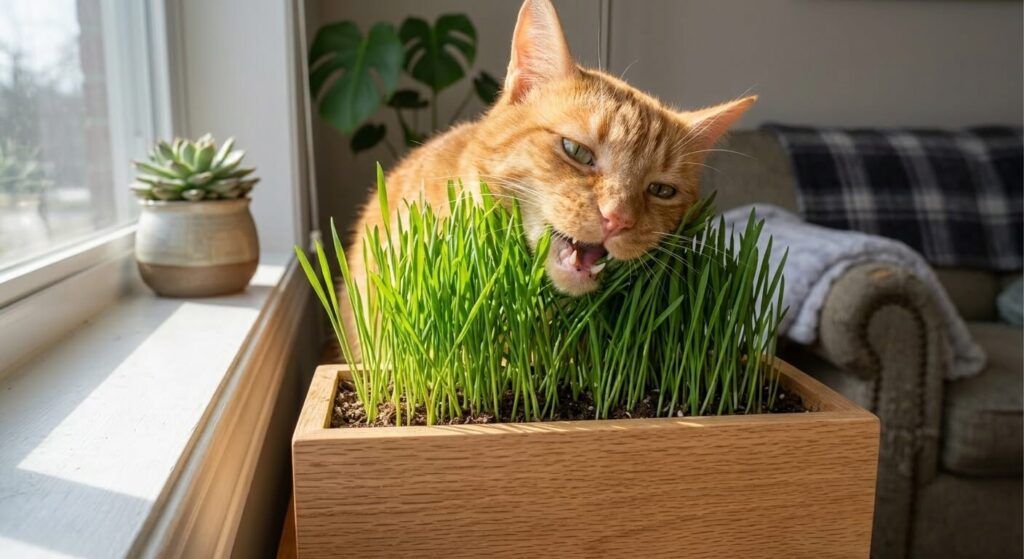
Cat grass is one of the most useful plants for apartment cats because it gives plant-chewing cats a legal target. It is usually grown from wheat, oat, barley, or rye grass.
If you want a ready-to-grow setup instead of buying seeds and trays separately, compare our guide to the best cat grass kits for indoor cats.
Best for:
- cats who chew houseplants
- apartment owners who want a simple starter plant
- enrichment near a window
- redirecting plant interest away from decor plants
Watch out for:
- mold in wet soil
- overgrown blades that become messy
- cats vomiting after eating too much
- bowls that tip over easily
Apartment tip: grow cat grass in a shallow, heavy container and replace it regularly instead of trying to keep one tray alive forever.
2. Spider Plant
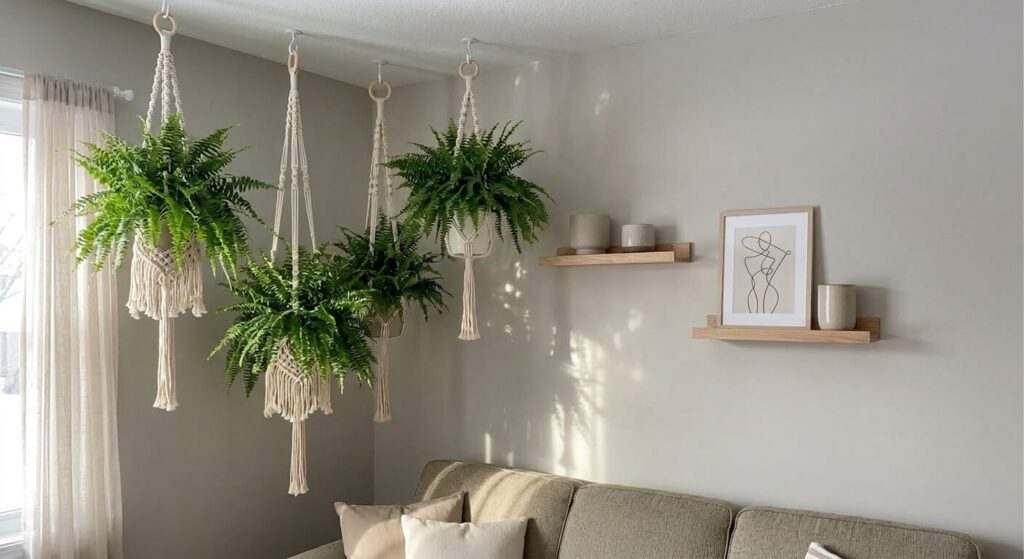
Spider plants are popular because they tolerate apartment light well and are generally considered cat safe. Many cats are fascinated by the dangling leaves, so placement matters.
Best for:
- shelves
- hanging planters
- bright indirect light
- homes where the plant needs to survive beginner care
Watch out for:
- chewing
- dangling baby plants that invite play
- soil digging
- overwatering
Apartment tip: if your cat treats spider plant like a toy, hang it higher or place cat grass nearby as the legal chewing option.
I would not place a spider plant where the baby plants dangle at cat-face height. Some cats treat those hanging shoots like toys, and then the “safe plant” becomes a daily chewing habit.
3. Boston Fern
Boston fern can work well in apartments with humidity and indirect light. It adds greenery without relying on toxic trailing vines.
Best for:
- bathrooms with natural light
- plant stands
- humid apartments
- owners who enjoy regular watering
Watch out for:
- dry air
- shedding fronds
- messy soil
- cats pawing through the plant
Apartment tip: keep Boston fern in a stable pot with a saucer, because it can become messy if placed near a narrow walkway.
This is a pretty option, but not a tidy one. If you already feel overwhelmed by litter dust, fur, and plant debris, choose a cleaner plant before choosing a fern that sheds fronds into a narrow walkway.
4. Areca Palm
Areca palm gives the look of a larger indoor plant without the same toxicity concern as some dangerous “palm” plants. This matters because not all palms are safe.
Best for:
- bright corners
- living rooms
- visual screening
- renters who want a big plant without drilling
Watch out for:
- cats chewing long fronds
- confusion with unsafe palms
- large pots that invite digging
- tipping risk
Apartment tip: use decorative stones too large to swallow over the soil surface, or use a plant cover, if your cat digs.
5. Parlor Palm
Parlor palm is usually easier to manage than larger palms and works well in smaller apartments.
Best for:
- low to medium light
- shelves or plant stands
- small living rooms
- owners who want a low-maintenance plant
Watch out for:
- overwatering
- playful batting at leaves
- soil digging
- plant stands that wobble
Apartment tip: choose a heavy planter and avoid placing it beside a cat’s favorite running path.
6. Calathea
Calathea plants have dramatic leaves and are often chosen for style-focused apartments. They can be a good alternative to unsafe decorative foliage plants.
Best for:
- cat friendly interior design
- medium indirect light
- owners who want patterned leaves
- bedrooms or living rooms
Watch out for:
- humidity needs
- crispy leaf edges
- cats batting at broad leaves
- sensitivity to poor water quality
Apartment tip: calathea works best where it can be admired but not used as a cat toy.
7. Prayer Plant
Prayer plant is another attractive option for apartments because it stays relatively compact and has interesting leaf movement.
Best for:
- tabletops
- shelves
- small plant corners
- bright indirect light
Watch out for:
- overwatering
- trailing stems becoming tempting
- leaf damage from chewing
- pots placed too close to edges
Apartment tip: put it on a stable shelf rather than a narrow windowsill if your cat jumps near plants.
8. Peperomia
Peperomia is useful for small apartments because many varieties stay compact and do not need large pots.
Best for:
- desks
- shelves
- small windowsills
- low-clutter plant setups
Watch out for:
- confusing varieties at the store
- overwatering
- small pots that tip
- cats batting leaves off shelves
Apartment tip: use peperomia where you want greenery without giving up floor space.
9. Haworthia
Haworthia can give the “succulent” look without using more concerning succulent options. Still, verify the exact plant before buying.
Best for:
- sunny windowsills
- small pots
- minimal watering
- renters with limited space
Watch out for:
- mixed succulent arrangements
- sharp pot edges
- cats knocking small pots down
- soil digging
Apartment tip: avoid buying unlabeled succulent bowls. Choose one clearly labeled plant instead.
This is the succulent-style option I would consider before buying a random mixed succulent bowl. The problem with mixed bowls is not just toxicity; it is that you may not know exactly what each plant is.
10. African Violet
African violets are compact flowering plants that can work well in apartments with bright indirect light.
Best for:
- small shelves
- windowsills
- color without large plants
- owners who want flowers indoors
Watch out for:
- delicate leaves
- overwatering
- cats batting flowers
- crowded window ledges
Apartment tip: keep African violets away from narrow ledges where a cat may jump and knock them down.
11. Orchid
Many common orchids are considered safer choices for cat homes and give a polished look without taking much space.
Best for:
- bright indirect light
- minimalist apartments
- shelves
- owners who want flowers without heavy fragrance
Watch out for:
- decorative moss
- plant stakes
- cats chewing flower stems
- unknown sprays or fertilizers
Apartment tip: remove loose decorative moss if your cat tries to pull or chew it.
12. Ponytail Palm
Ponytail palm is not a true palm in the risky sense, and many cats enjoy batting at the thin leaves. That means it may be safe but still tempting.
Best for:
- bright rooms
- plant stands
- owners who want a sculptural plant
- low-water routines
Watch out for:
- leaf chewing
- tipping
- cats treating it like a toy
- overwatering
Apartment tip: if your cat becomes obsessed with the leaves, move it out of reach and offer wand play or cat grass instead.
13. Bamboo Palm
Bamboo palm can work for cat owners who want a larger soft-looking plant, but plant identification matters.
Best for:
- larger rooms
- corners
- visual privacy
- bright indirect light
Watch out for:
- confusion with lucky bamboo, which is not the same
- digging
- chewing
- large pot access
Apartment tip: do not buy “bamboo” casually. Confirm the exact plant before bringing it home.
14. Cast Iron Plant
Cast iron plant is useful because it tolerates lower light and neglect better than many houseplants.
Best for:
- low-light apartments
- busy owners
- corners
- simple plant setups
Watch out for:
- cats digging in large pots
- dust on broad leaves
- overwatering
- heavy containers
Apartment tip: wipe leaves monthly and keep the pot stable.
15. Catnip or Catmint
Catnip can be useful enrichment, but it should be treated differently from decorative plants because many cats react strongly to it.
Best for:
- supervised enrichment
- balcony-safe planters
- rotating stimulation
- cats who respond positively to catnip
Watch out for:
- overstimulation
- chewing too much
- spilled soil
- cats guarding the plant
Apartment tip: offer catnip in short sessions instead of leaving a full plant available all day.
Toxic Plants Apartment Cat Owners Should Avoid
Some plants are not worth the risk in a cat home, especially in a small apartment where separation is difficult. Avoid these unless they are completely inaccessible and you are confident your cat cannot reach fallen leaves, petals, pollen, or water from the vase.
High-risk plants include:
- lilies
- pothos
- philodendron
- dieffenbachia
- sago palm
- aloe
- jade plant
- oleander
- English ivy
- azalea
- tulip and daffodil bulbs
- cyclamen
- snake plant
- ZZ plant
- monstera
Lilies deserve special caution because even small exposures can be dangerous for cats. If a cat may have chewed a lily, brushed against pollen, or drunk vase water, contact a veterinarian or poison control resource immediately.
How to Stop Cats from Digging in Plant Pots
Many plant problems are not toxicity problems at first. They are access problems. A cat may dig because the soil smells interesting, the pot is near a window, the texture feels good, or the plant area has become part of the cat’s daily patrol route.
Try this sequence:
- Move the plant away from the cat’s main runway.
- Use a heavier pot that cannot tip easily.
- Cover exposed soil with large, cat-safe stones that cannot be swallowed.
- Add a legal digging or foraging activity elsewhere.
- Offer cat grass as a legal chewing target.
- Avoid punishment, spraying, or yelling.
- Watch whether the behavior decreases over one to two weeks.
If your cat is obsessively eating soil, chewing nonfood items, vomiting, losing weight, or acting unusually hungry, treat that as a health question, not just a plant habit.
For a deeper behavior plan, use our how to stop a cat from eating plants guide.
Cat Safe Plants Apartment Comparison Table
| Plant | Best Apartment Use | Care Level | Watch Out For |
|---|---|---|---|
| Cat grass | Legal chewing target | Easy | Mold and overeating |
| Spider plant | Hanging or shelf plant | Easy | Dangling leaves invite play |
| Boston fern | Bathroom or humid corner | Medium | Dry air and messy fronds |
| Areca palm | Large safe-looking greenery | Medium | Chewing and pot digging |
| Parlor palm | Compact floor or shelf plant | Easy | Wobbly stands |
| Calathea | Stylish foliage | Medium | Humidity needs |
| Prayer plant | Small decorative plant | Medium | Trailing stems |
| Peperomia | Small shelves and desks | Easy | Tiny pots tipping |
| Haworthia | Safer succulent look | Easy | Mixed succulent confusion |
| African violet | Small flowering plant | Medium | Delicate leaves |
| Orchid | Clean decorative flowers | Medium | Moss and stakes |
| Ponytail palm | Sculptural bright-room plant | Easy | Cats playing with leaves |
| Bamboo palm | Larger visual screen | Medium | Name confusion |
| Cast iron plant | Low-light corners | Easy | Large pot digging |
| Catnip/catmint | Supervised enrichment | Easy | Overstimulation |
Apartment Placement Tips for Cat Safe Plants
The safest plant is still a poor choice if it is placed in the wrong spot. In apartments, plants often compete with litter boxes, windows, shelves, desks, and narrow walking paths.
Use these placement rules:
- keep plants away from litter boxes
- avoid placing plants on narrow ledges your cat uses
- do not block windows your cat already values
- keep toxic or unknown plants out of the home
- avoid lightweight pots on high shelves
- keep plant food and fertilizers in closed storage
- use hanging planters only if the hook and ceiling mount are secure
- keep plants away from hot radiators, vents, and unstable furniture
If plants are part of your design plan, pair this article with our cat friendly interior design guide.
Related Apartment Guides
If your cat keeps chewing plants, start with the behavior problem first. Read our how to stop a cat from eating plants guide.
If you want plants on a balcony, review balcony safety before adding greenery. Read our cat proof balcony apartment guide.
If you are building a safer outdoor-style setup, compare enclosed options in our catio ideas apartment guide.
If you want plants to fit the room without creating clutter or hazards, use our cat friendly interior design guide.
If you want a legal chewing option, compare indoor growing options in our best cat grass kits guide.
Frequently Asked Questions
1. What are the best cat safe plants for low-light apartments?
The best cat safe plants apartment dwellers with low-light conditions can reliably grow are Calatheas (which actively prefer indirect light and decline in direct sun), Peperomias (particularly the rubber-leafed varieties that store water and tolerate shade), Spider Plants (which adapt to lower light while growing more slowly), and Parlor Palms (one of the most shade-tolerant palms available).
For extremely low light — north-facing windows or rooms with limited natural light — Calathea orbifolia and most Peperomia varieties are the most forgiving options. Avoid expecting any plant to thrive in a room with no natural light at all; even shade-tolerant plants require some ambient daylight for photosynthesis.
2. Are succulents safe for cats?
This is the question I get most frequently, and the answer is: it depends entirely on the species, which is why the genus-level answer you’ll find in many articles is insufficient and potentially dangerous. Safe succulents: Haworthia species (zebra plant, haworthia fasciata), Echeveria species, and most Sempervivum (hens and chicks) are verified safe by the ASPCA.
Toxic succulents: Aloe Vera — extremely popular, widely considered a “beneficial” plant — is toxic to cats, causing vomiting, diarrhea, lethargy, and in significant ingestion, tremors. Jade Plant (Crassula) is also toxic. The visual similarity between safe and unsafe succulents makes species-level verification against the ASPCA database non-negotiable before purchasing any succulent for a cat-inhabited home.
When the holidays roll around, this safety mindset is more important than ever. Read our seasonal survival guide on how to cat proof christmas tree setups to avoid toxic needles and emergency vet bills.
3. My cat seems obsessed with eating my plants even with cat grass available. What else can I do?
A cat who persists in eating houseplants despite cat grass availability is usually communicating one of a few things: the cat grass isn’t fresh enough (cats strongly prefer actively growing, vibrant grass to older yellowing grass — increase your rotation frequency), the houseplant in question has a specific texture or scent that the cat finds particularly appealing independent of the grass-eating drive, or the behavior has a stress or anxiety component that is driving oral stimulation seeking. For growing options, compare our best cat grass kits guide.
Use our indoor cat enrichment in small apartments guide for a full setup.
For the middle case — a specific plant obsession — the hanging planter solution is your most reliable physical intervention. For the anxiety-driven case, revisiting your cat’s enrichment environment and baseline stress level is more productive than plant management alone. If your cat is eating non-food items compulsively (fabric, plastic, paper), that warrants a conversation with your vet about pica, which has both behavioral and potential nutritional components.
4. Are cat-safe plants completely safe for cats to eat?
No. Non-toxic plants are safer choices, but chewing large amounts can still cause vomiting or stomach upset. Use cat grass for chewing and keep decorative plants managed.
5. What plants should apartment cat owners avoid?
Avoid lilies, sago palm, pothos, philodendron, dieffenbachia, aloe, jade, and any plant you cannot identify. Always verify the scientific name in a trusted toxicity database.
6. How do I stop my cat from digging in plant pots?
Use heavy pots, cover soil with safe large stones, place plants on stands, offer cat grass, and increase play or foraging. Avoid cocoa mulch, chemical deterrents, and sharp materials.
7. Is cat grass worth growing in an apartment?
Yes, for many cats. Cat grass gives a safer chewing target and can reduce interest in decorative plants, but it still needs supervision and replacement when moldy or ragged.
Final Thoughts
Cat safe plants apartment choices are not about building a perfect indoor jungle. They are about choosing greenery that will not turn into a poison risk, a digging project, or a daily chewing battle.
Start with a few plants you can identify clearly and place safely. If your cat is a determined chewer, add cat grass first and make the decorative plants less interesting. If you cannot verify a plant, do not bring it home just because it looks harmless.
The safest apartment plant setup is usually simple: fewer unknown plants, heavier pots, covered soil, no lilies, and a cat who has something better to chew than your favorite windowsill plant.
References
- ASPCA. (n.d.). Toxic and Non-Toxic Plants List. https://www.aspca.org/pet-care/animal-poison-control/toxic-and-non-toxic-plants
- Fitzgerald, K. T. (2010). Lily toxicity in the cat. Topics in Companion Animal Medicine, 25(4), 213–217. https://pubmed.ncbi.nlm.nih.gov/21147474/
- Pet Poison Helpline: Lilies. https://www.petpoisonhelpline.com/poison/lilies/
- ASPCA: Toxic and Non-Toxic Plants. https://www.aspca.org/pet-care/animal-poison-control/cats-plant-list
- FDA: Poisonous plants and pets. https://www.fda.gov/animal-veterinary/animal-health-literacy/potentially-dangerous-items-your-pet