Indoor cat vaccination schedule questions usually start with one assumption: if a cat never goes outside, vaccines may not matter. That sounds logical, but it is not quite how feline risk works.
An indoor cat can still be exposed through boarding, vet visits, grooming appointments, open doors, new cats, foster animals, wildlife contact, or diseases carried indoors on clothing and shoes. Vaccines are not about treating illness after it appears. They are about reducing the risk of serious infectious disease before exposure happens.
This guide explains the basic indoor cat vaccination schedule for kittens and adult cats, the difference between core and non-core vaccines, why rabies rules depend on local law, and what side effects should make you call your veterinarian.
Quick Answer: What is the Ideal Indoor Cat Vaccination Schedule?
A typical indoor cat vaccination schedule includes a kitten series for core vaccines, a booster around one year later, and adult boosters based on vaccine type, local law, lifestyle, and your veterinarian’s risk assessment. Core vaccines commonly include FVRCP, which covers feline viral rhinotracheitis, calicivirus, and panleukopenia. Rabies vaccination may also be required by law even for indoor-only cats.
FeLV vaccination is often recommended for kittens and young cats, then reassessed later based on exposure risk. Adult indoor-only cats do not automatically need every non-core vaccine every year. The safest approach is to review your cat’s age, medical history, lifestyle, boarding plans, household cats, and local disease risks with your veterinarian.
Vaccines work best as part of a complete prevention plan. For routine exams, home monitoring, dental care, weight tracking, and early warning signs, see our cat health prevention guide.
Important Veterinary Note
This article is for educational purposes only and is not a substitute for veterinary diagnosis, treatment, or emergency care.
Indoor cats can hide pain and illness until symptoms become serious. Contact a veterinarian promptly if your cat has sudden behavior changes, repeated vomiting, appetite loss, weight loss, urination changes, blood in urine or stool, breathing difficulty, collapse, seizures, severe pain, poisoning risk, injury, or any rapid decline.
For ongoing prevention, pair home observation with regular veterinary exams. Indoor Cat Expert articles are created by the Indoor Cat Expert Editorial Team and follow our Editorial Policy.
Table of Contents
Why Indoor Cats Still Need Vaccine Planning
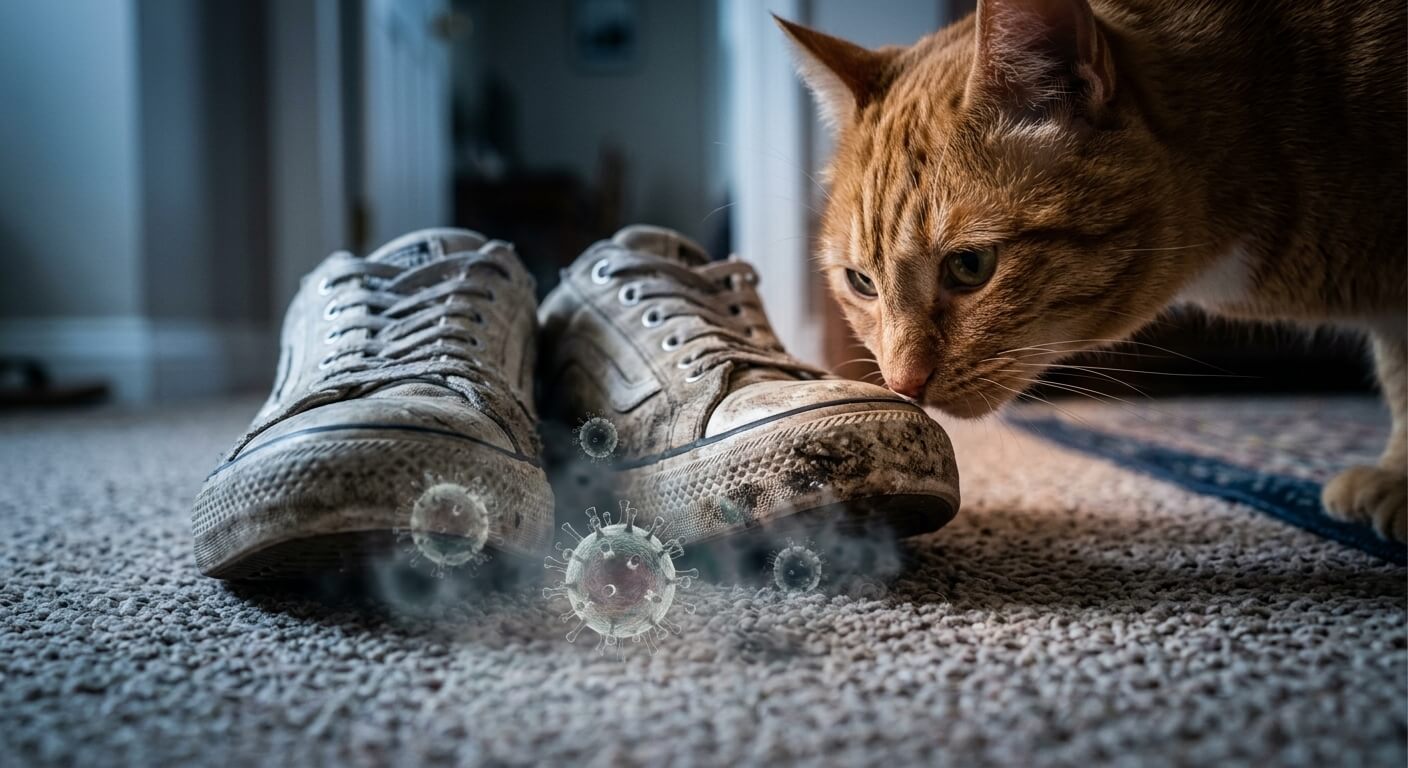
The concept I use to explain infectious disease risk to indoor cat owners is what I think of as the shoelace pipeline — the invisible chain of exposure pathways that connect an apartment cat on the twelfth floor to every pathogen in the surrounding urban environment.
Consider what your shoes contact in a single day in New York City: subway floors, park grass, building lobbies, veterinary clinic waiting rooms, friend’s apartments where cats live, pet store floors. Consider what your hands touch: other people’s cats, borrowed cat carriers, surfaces in pet supply stores. Consider what comes into your apartment: packages handled at distribution centers, veterinary staff who visited your home, a friend who fostered a litter of kittens last month.
The specific transmission pathways that make indoor cats vulnerable:
- Fomite transmission — viruses and bacteria carried on inanimate objects including shoes, clothing, hands, and bags
- Respiratory and fomite exposure — close contact, droplets and contaminated hands or objects can transmit some feline respiratory pathogens; shared-building air alone is not a reason to diagnose exposure.
- Visitor-carried exposure — guests who own or have contacted cats outside your household carry pathogens on their clothing
- New pet introductions — a new kitten or rescue cat brought into the household can carry disease even if they appear healthy at acquisition
- Escaped cat exposure — even brief unsupervised outdoor excursions, balcony access, or contact with a neighbor’s cat in a shared hallway create exposure windows
- Veterinary clinic visits — the clinic environment itself, despite cleaning protocols, is an environment where pathogen concentration is higher than in most private homes
Feline panleukopenia virus can persist in the environment and is resistant to many routine cleaners. If contamination is suspected, ask a veterinarian or shelter-medicine professional about an effective disinfectant, dilution, surface pre-cleaning and contact time rather than relying on one household recipe.
Core vs. Non-Core Vaccines for Indoor Cats
The feline vaccination landscape divides cleanly into two categories, and understanding this division is the foundation of building an appropriate indoor cat vaccination schedule.
Core Vaccines are recommended for every cat regardless of lifestyle, geographic location, or owner preference. They protect against diseases that are either universally environmentally present, potentially fatal without vaccination, or zoonotic (transmissible to humans). For indoor cats, the core vaccines are the entire medically necessary vaccination program in most cases.
Non-Core Vaccines are recommended based on specific lifestyle risk factors — outdoor access, multi-cat household density, geographic prevalence of specific pathogens, or boarding and travel history. Most strictly indoor cats in single-cat households do not require non-core vaccines, though your veterinarian may recommend them based on individual circumstances.
| Vaccine Type | Common Examples | Indoor Cat Relevance | Ask Your Vet About |
|---|---|---|---|
| Core vaccine | FVRCP | Usually recommended because these diseases can be serious and exposure is not always obvious | Product type, booster interval, previous records |
| Rabies | Rabies vaccine | Often required by local law, even for indoor cats | Your state or local legal requirement |
| Risk-based vaccine | FeLV | Often important for kittens and cats with exposure to other cats | Age, testing, household cats, outdoor escape risk |
| Other non-core vaccines | Chlamydia, Bordetella, others | Usually based on specific exposure risk | Boarding, shelter history, outbreaks, multi-cat settings |
Core Vaccines for Indoor Cats
FVRCP — The Three-in-One Protection:
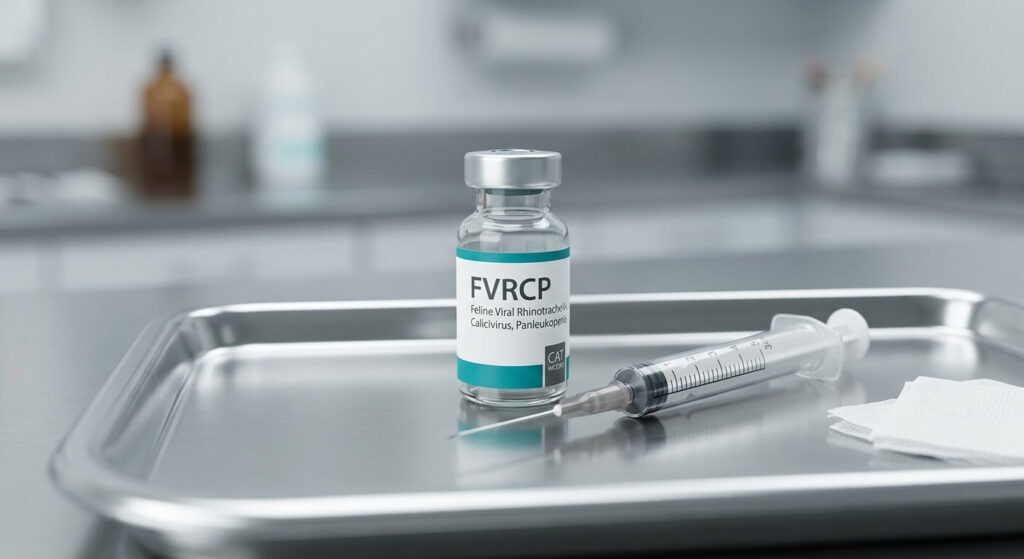
The FVRCP is a combination vaccine targeting three distinct pathogens. Understanding what each component protects against — and why indoor cats need all three — is covered in detail in our complete guide to feline infectious diseases and their prevention.
- Feline Viral Rhinotracheitis (FVR) — caused by Feline Herpesvirus Type 1; the leading cause of upper respiratory infection in cats; spreads via airborne droplets and fomites; causes severe conjunctivitis, nasal discharge, and corneal ulceration; creates lifelong latent infection with stress-triggered reactivation
- Calicivirus (FCV) — a highly mutable RNA virus causing upper respiratory signs, oral ulceration, and in virulent systemic strains, potentially fatal systemic vasculitis; extremely stable in the environment; multiple strains mean vaccination reduces severity rather than guaranteeing complete protection
- Panleukopenia (FPV) — caused by Feline Parvovirus; destroys rapidly dividing cells including the intestinal epithelium and bone marrow precursors; carries a mortality rate of 25–90% in unvaccinated cats; the environmental stability of the parvovirus makes it a legitimate threat to cats who have never stepped outside
Rabies:
Legally required for cats in most US states and many countries regardless of indoor/outdoor status. A legally mandated component of any indoor cat vaccination schedule. We address the legal dimension specifically in its own section below.
Non-Core Vaccines — When They Apply to Indoor Cats
- FeLV (Feline Leukemia Virus) — recommended for outdoor cats, cats in multi-cat households where FeLV status is unknown, and kittens regardless of planned lifestyle (the American Association of Feline Practitioners recommends FeLV vaccination for all kittens); not typically required for confirmed single-cat indoor adults with no exposure risk
- FIV (Feline Immunodeficiency Virus) — currently no USDA-licensed FIV vaccine is available in the United States. Ask your veterinarian about current local recommendations if your cat has outdoor exposure, bite wounds, or contact with unknown cats.
- Chlamydophila felis — relevant in multi-cat environments with documented infection history; not routinely recommended for single-cat indoor households
- Bordetella bronchiseptica — relevant for cats in boarding or high-density rescue environments; generally not indicated for isolated indoor cats
Indoor Cat Vaccination Schedule by Life Stage
Kitten Indoor Cat Vaccination Schedule (6 Weeks to 16 Weeks)
The kitten vaccination series accounts for the gradual waning of maternally derived antibodies (MDA) — the immune protection transferred from the queen to her kittens through colostrum. MDA is protective initially but also interferes with the kitten’s own vaccine response.
Because the timing of MDA waning varies between individual kittens, the series vaccination approach ensures that at least one dose is received after MDA levels have dropped sufficiently to allow active immune response.
| Age | Typical discussion with the veterinarian |
|---|---|
| From 6 weeks | Begin FVRCP when indicated; repeat every 3–4 weeks until 16–20 weeks of age. |
| From 8 weeks | FeLV: two doses 3–4 weeks apart for kittens and cats under one year; test before vaccination and reassess later risk. |
| By local-law timing | Rabies vaccination using an approved product and legally required schedule. |
| About 6–12 months after the kitten series | Veterinarian reviews boosters, product labels, health and exposure risk. |
Key kitten vaccination principles:
- Doses should be spaced 3–4 weeks apart — shorter intervals do not allow adequate immune response development
- Kittens should be in good health at the time of each vaccination — fever, active infection, or significant stress at the time of vaccination reduces the immune response generated
The AAHA/AAFP schedule generally continues the FVRCP kitten series every 3–4 weeks until 16–20 weeks of age because maternal antibodies can interfere with earlier doses. The exact plan depends on age at first vaccination, product label and risk.
Adult Indoor Cat Vaccination Schedule (1 Year and Beyond)
At one year of age (first adult boosters):
- FVRCP booster — required regardless of kitten series completion
- Rabies booster — required; some jurisdictions accept a 3-year Rabies vaccine at this point if the label permits it
Ongoing adult indoor cat vaccination schedule:
| Vaccine | Recommended Interval | Notes |
|---|---|---|
| FVRCP | Every 1–3 years | 3-year schedule appropriate for low-risk indoor adults; veterinarian assesses individual risk |
| Rabies | Annually or every 3 years | Determined by the specific vaccine product used and local legal requirements |
| FeLV | Annually if risk present | Reassess need at each wellness visit |
The 3-year FVRCP consideration:
The American Association of Feline Practitioners (AAFP) guidelines support extending the FVRCP booster interval to every 3 years for adult cats with documented vaccination history and low-risk lifestyles. This does not mean every indoor cat automatically qualifies for the 3-year schedule — your veterinarian should assess individual risk factors including whether the cat ever contacts other cats, uses boarding facilities, or has a history of upper respiratory disease before extending the interval.
Using a stress-free carrier and transport approach is key to ensuring your cat stays on the indoor cat vaccination schedule without creating the carrier-aversion and travel phobia that causes owners to defer veterinary appointments — and our guide to stress-free carrier training for cats provides a step-by-step protocol for making vet visits genuinely manageable.
If carrier stress is the reason you delay appointments, start with our cat carrier training guide before the next vaccine visit.
Side Effects: When to Call the Clinic
Understanding the normal post-vaccination response spectrum is the component of the indoor cat vaccination schedule discussion that most owners do not receive adequate guidance on, and it is the gap that causes unnecessary alarm after routine vaccinations and occasionally masks genuine adverse reactions that do require attention.
Normal post-vaccination responses (24–48 hours):
- Mild lethargy — the most common post-vaccination sign; a cat who sleeps more than usual for 24 hours is showing a normal immune activation response
- Mild discomfort at the injection site — the cat may flinch when the injection site is touched; this resolves within 48 hours in the vast majority of cases
- Mild fever — up to approximately 39.5°C (103.1°F) for 24–48 hours represents a normal immune response; fevers above this threshold or persisting beyond 48 hours warrant a call to the clinic
- Reduced appetite — mild food reduction for 24 hours is normal; complete appetite loss beyond 24 hours is not
Signs that require same-day veterinary contact:
- Facial swelling, hives, or urticaria — signs of acute allergic reaction typically appearing within 30 minutes to 4 hours of vaccination
- Vomiting or diarrhea within 4 hours of vaccination
- Difficulty breathing — any respiratory distress following vaccination is an emergency
- Collapse or extreme weakness
- A lump at an injection site that persists for 3 months, is larger than 2 cm, or continues growing 1 month after vaccination should be evaluated and may need biopsy (the “3-2-1” rule).
The FISS consideration and Adjuvant-free vaccines:
Feline injection-site sarcoma is rare and can occur after injections. Current guidelines do not establish that one vaccine type eliminates the risk; veterinarians reduce harm through individualized vaccination and recommended distal injection sites.
Ask which licensed product and injection site your veterinarian recommends for your cat. Product selection should consider disease risk, local law, vaccine history and available evidence rather than assuming that “adjuvant-free” means risk-free.
Injection site protocol: The AAFP recommends specific anatomical locations for each vaccine to facilitate identification of any injection-site reaction and to optimize surgical management if FISS develops. Rabies vaccines should be administered in the right distal hind limb, FVRCP in the right shoulder region, and FeLV in the left distal hind limb. Ask your veterinarian about their injection site protocol.
Vaccinations are only half of the shield. Vaccination is only one part of preventive care. Fleas, parasites, and carried-in exposure can still affect apartment cats, so review our guide on do indoor cats need flea treatment.
Rabies Vaccination: Local Law Still Matters
Rabies vaccination occupies a unique position in the indoor cat vaccination schedule because it is simultaneously a medical recommendation and a legal requirement — and the legal dimension exists independent of any individual veterinarian’s medical judgment or any owner’s risk assessment.
The legal reality:
Rabies vaccination is legally mandated for domestic cats in the majority of US states, the District of Columbia, and many international jurisdictions. The specific requirement — annual versus triennial, age of first vaccination, certificate requirements — varies by state and sometimes by municipality. New York State, for example, requires rabies vaccination for all cats over 4 months of age and mandates a current certificate be maintained.
Why the law applies to indoor cats:
The legal requirement for rabies vaccination does not include an indoor cat exemption in any US jurisdiction I am aware of. The public health rationale is straightforward: rabies vaccination laws exist primarily to protect human public health, not animal welfare.
A bat entering a home can create a possible rabies exposure. The required response depends on the cat’s vaccination status, the exposure or bite circumstances, and state or local public-health rules. Contact animal control or public health promptly; CDC guidance distinguishes a healthy animal that bites a person from an animal exposed to rabies, so do not assume euthanasia is automatically required.
The practical consequence: An indoor cat without current rabies vaccination is in violation of the law in most US jurisdictions, is not protected against a genuine (if low-probability) exposure pathway, and creates a legal liability for the owner in the event of any biting incident regardless of context.

FAQ
1. Does a senior indoor cat still need vaccines?
Yes, with some nuance. Senior cats — generally defined as cats 11 years and older — have immune systems that respond less robustly to vaccine antigens than younger adults, but they remain at risk for the diseases the indoor cat vaccination schedule protects against. The AAFP guidelines do not recommend discontinuing vaccination in senior cats as a routine policy.
However, the interval and specific vaccine selection should be reassessed at each wellness visit in the context of the individual cat’s overall health status. A senior cat with chronic kidney disease, hyperthyroidism, or significant immunosuppression may have a modified vaccination protocol recommended by their veterinarian — not elimination of vaccination, but individualized timing and product selection. Rabies vaccination legal requirements apply to senior cats equally to younger adults.
Vaccines are one part of preventive care. For a broader plan covering checkups, dental health, weight, senior changes, and warning signs, see our indoor cat health prevention guide.
2. Are cat vaccines safe?
Vaccines are generally well tolerated, but no product is risk-free. The veterinarian should balance disease exposure, age, health, previous reactions, product label and local law for each cat.
Injection-site sarcoma is rare. Watch the injection site and use the 3-2-1 rule above; discuss product and site choice with the veterinarian rather than relying on a single formulation as a guarantee.
3. What is the most important shot in the indoor cat vaccination schedule?
If I have to choose a single most important component of the indoor cat vaccination schedule, it is the Panleukopenia component of the FVRCP — for two reasons. First, Panleukopenia is the disease with the highest mortality rate among the conditions vaccinated against, carrying a fatality rate of 25–90% in unvaccinated cats without intensive supportive care.
Second, the Feline Parvovirus that causes Panleukopenia is the most environmentally stable of the vaccinated pathogens — surviving on surfaces for up to 12 months and resistant to most standard disinfectants — making fomite transmission to indoor cats a genuine ongoing risk regardless of how completely the cat’s outdoor exposure is controlled.
The Rabies vaccine is equally essential from a legal compliance standpoint, but the Panleukopenia component of the FVRCP is the vaccine I think of as the life-saving anchor of the indoor cat vaccination schedule.
Final Thoughts
An indoor cat vaccination schedule is not about assuming your cat is in constant danger. It is about making a calm, evidence-based plan for diseases that can be serious, legally important, or difficult to predict.
For most indoor cats, that means keeping core vaccines current, following local rabies law, reassessing FeLV and other non-core vaccines based on real exposure risk, and reviewing the plan at each wellness visit. Keep the vaccination record with the cat’s emergency information.
The best schedule is not the most aggressive schedule. It is the one your veterinarian builds around your cat’s age, health history, lifestyle, local law, and actual exposure risk.
References
Stone, A. E. S., Brummet, G. O., Carozza, E. M., Kass, P. H., Petersen, E. P., Sykes, J., & Westman, M. E. (2020). 2020 AAHA/AAFP Feline Vaccination Guidelines. Journal of Feline Medicine and Surgery, 22(9), 813–830.
American Animal Hospital Association. (2020). 2020 AAHA/AAFP Feline Vaccination Guidelines.
American Animal Hospital Association. (2021). 2021 AAHA/AAFP Feline Life Stage Guidelines.
Scherk, M. A., Ford, R. B., Gaskell, R. M., Hartmann, K., Hurley, K. F., Lappin, M. R., Levy, J. K., Little, S. E., Nordone, S. K., & Sparkes, A. H. (2013). 2013 AAFP Feline Vaccination Advisory Panel Report. Journal of Feline Medicine and Surgery, 15(9), 785–808.